When to Pick Jalapeños: Green, Red, and How to Tell They Are Ripe
Jalapeños are one of the most forgiving peppers to harvest, because there is no single perfect moment. Pick them dark green for that classic crisp, sharp heat, or leave them to turn red for something sweeter and hotter.
The real skill is reading the signs the plant gives you, including one that is almost unique to jalapeños. This guide covers when to pick jalapenos at every stage, what those pale lines on the skin mean, and how to harvest without harming the plant.
The Short Answer: Dark Green, or Wait for Red
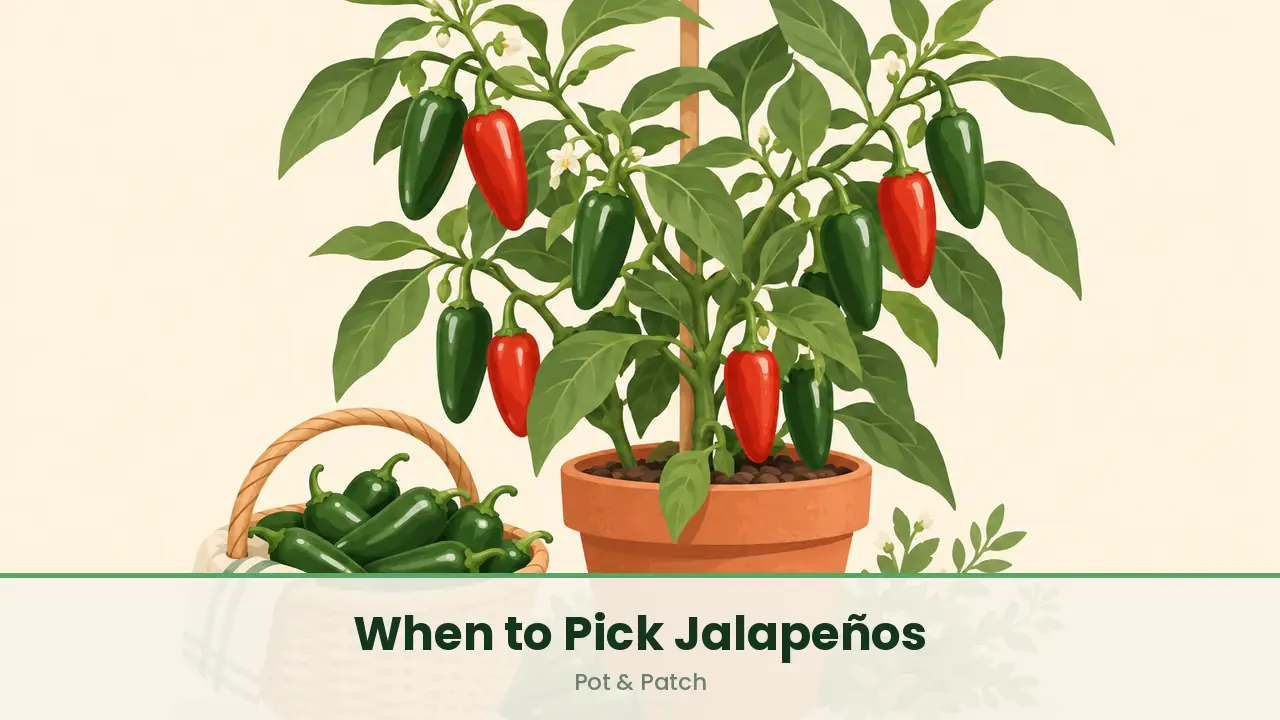
Most jalapeños are picked at the glossy dark green stage, once they reach full size of about 3 to 5 inches. For most varieties that is roughly 70 to 80 days after transplanting, and it gives you the firm, crunchy pepper most recipes expect.
Leaving them longer is not a mistake, though. A jalapeño left on the plant keeps ripening to red, growing sweeter and hotter as it goes. Which stage is right depends entirely on what you want from the pepper.
Corking: The Jalapeño’s Ripeness Signal
Here is the sign most pepper guides skip, and it is the single most useful one for jalapeños. As a jalapeño matures, fine pale or tan lines appear on the skin, running the length of the pepper. This is called corking.
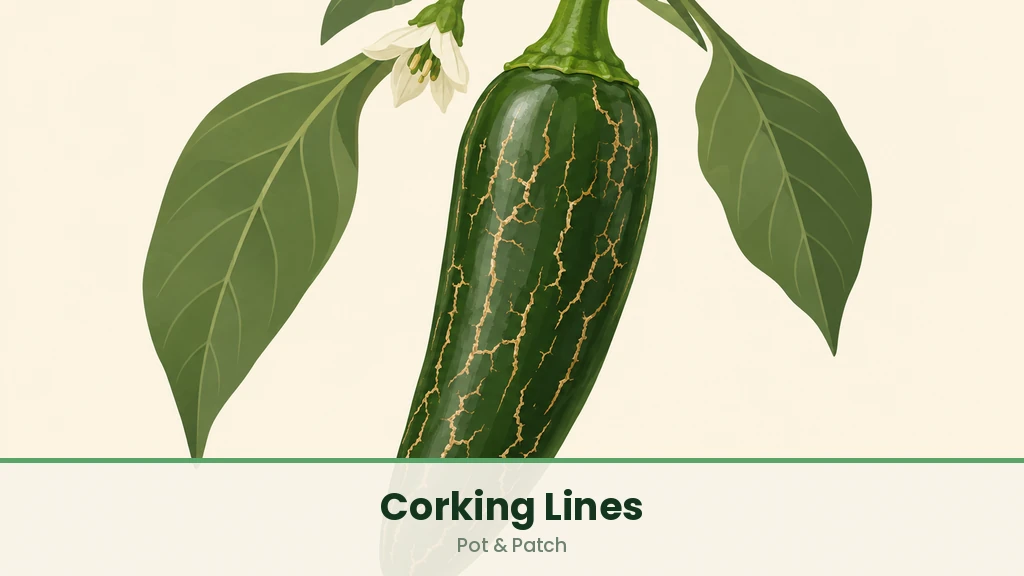
Corking happens when the flesh grows faster than the skin can keep up, usually after good watering and strong sun. It is a reliable signal that the pepper is mature and full of flavor, and it is completely safe to eat. In fact, many chili lovers prize a well-corked jalapeño.
Signs a Jalapeño Is Ready to Pick
Beyond corking, a few checks confirm a jalapeño is ready for harvest.
Full size. The pepper has reached about 3 to 5 inches, depending on variety, and feels plump. Early types run smaller, so check your seed packet.
Firm and glossy. A ready jalapeño is firm with shiny, deep green skin. If it feels soft, it is past its prime.
Snaps off cleanly. Hold the branch and lift the pepper. A ripe one releases with a clean snap. If you have to tug, as the saying goes, it is still growing.
Jalapeño Ripening Stages: Green to Red
Yes, every jalapeño will turn red if you leave it on the plant long enough. Green is simply the unripe stage. Left alone, the pepper darkens, sometimes shows harmless black patches, and finally ripens to bright red.
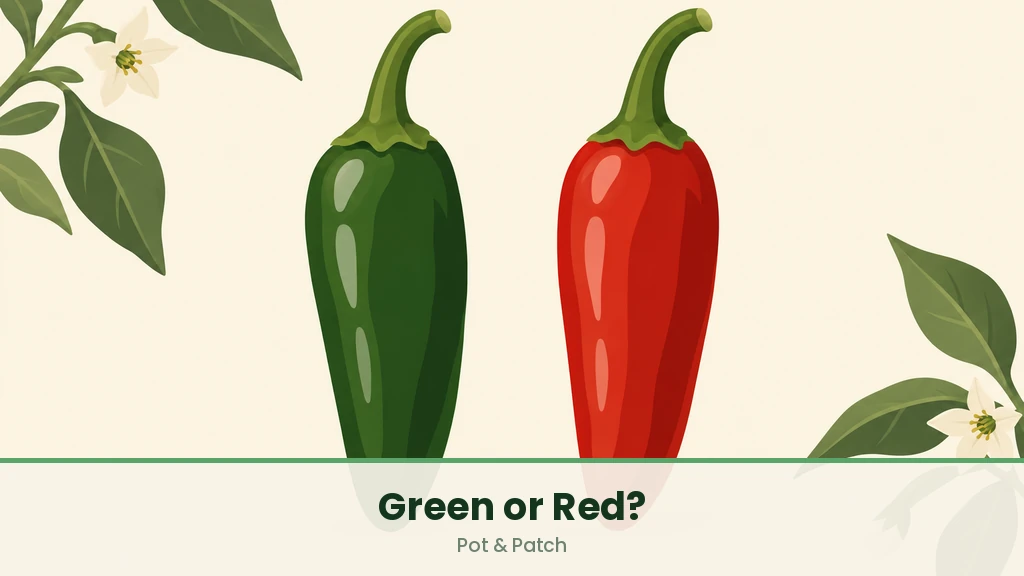
The two stages are genuinely different peppers to cook with. Green jalapeños are crisp and sharp, perfect for pickling, poppers, and salsa. Red jalapeños are fully ripe, fruitier, and sweeter.
There is one fact that surprises people: red jalapeños are usually hotter, not milder. As the pepper ripens it builds more capsaicin, the compound behind the heat, so a red jalapeño often carries more punch than the same green one.
From immature to fully ripe, a jalapeño passes through a few clear color stages. Use this chart to read exactly where yours is and decide when to pick.
| Color stage | What it means | Best for |
|---|---|---|
| Pale light green | Immature and still growing, mild | Leave it on the plant |
| Glossy dark green | Mature, crisp, classic fresh heat | Pickling, poppers, salsa |
| Dark with red streaks | Ripening, heat near its peak | Maximum spice |
| Fully red | Fully ripe, fruity, sweet, hottest | Sauces, drying, fresh eating |
How to Pick Jalapeños for More Heat
If heat is your goal, timing and treatment both matter. Jalapeños rate roughly 2,500 to 8,000 on the Scoville scale, and you can nudge them toward the top of that range.
Let the peppers ripen toward red, since heat climbs as they color up and peaks around the turn. A gentle trick is to ease off watering a little as the fruit ripens, because a mildly stressed plant produces more capsaicin. Just do not let the plant actually wilt, which our guide on how often to water pepper plants helps you balance.
How to Pick Jalapeños Without Hurting the Plant
Jalapeño stems are woody and the branches snap easily, so never yank a pepper off by hand. Pulling can tear away a whole branch along with the fruit you wanted.
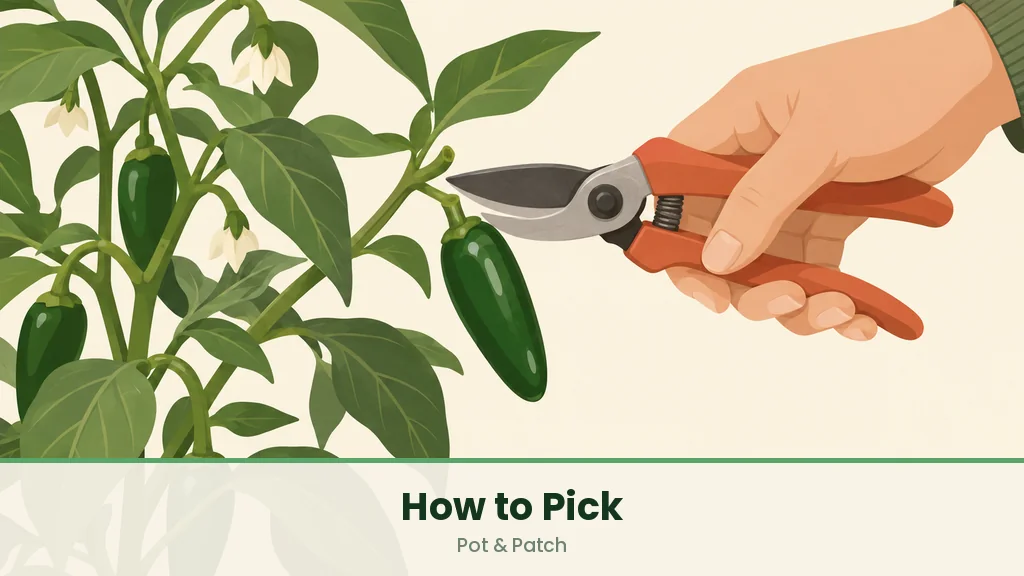
Use clean, sharp pruners or scissors and cut the stem, leaving about half an inch attached to the pepper. Wear gloves, since jalapeño capsaicin lingers on skin and stings if it reaches your eyes. Pick regularly too, because harvesting green peppers promptly pushes the plant to set more fruit.
Do Picked Jalapeños Keep Ripening?
Partly. A jalapeño that has already started to turn red or dark will keep ripening off the plant, reddening on a sunny windowsill over a few days. A firm, light green one, though, will mostly stay green.
So when frost threatens, which ends the season for these warm-weather plants, pick everything. Use the green ones as they are, and let any that have begun to color finish indoors.
When to Pick Jalapeños: The Quick Version
Pick jalapeños at full size, about 3 to 5 inches, firm and glossy with pale corking lines on the skin. Take them dark green for crisp, classic heat, or wait for red to get them sweeter and hotter.
Cut rather than pull, wear gloves, and pick often to keep the plant producing. For harvest advice across every pepper you grow, see our guide on when to pick peppers, or visit our pepper growing hub for more.
Frequently Asked Questions
When should you pick jalapeños?
Pick jalapeños once they reach full size of 3 to 5 inches, feel firm, and show glossy dark green skin, often with pale corking lines. That is usually about 70 to 80 days after transplanting. Leave them longer only if you want them red.
Do jalapeños turn red?
Yes. Every jalapeño ripens from green to red if left on the plant. Green is the unripe stage, and red is fully ripe, sweeter, and usually hotter. Most growers pick green, but red is perfectly good to eat.
Are red jalapeños hotter than green ones?
Usually, yes. As a jalapeño ripens to red it builds more capsaicin, so it tends to be both sweeter and hotter than the same pepper picked green. Green jalapeños have a crisper, sharper heat.
What are the white lines on my jalapeños?
Those are corking, fine pale or tan lines that form as the pepper grows quickly. Corking is harmless, safe to eat, and a good sign the jalapeño is mature. Pick corked peppers before the skin splits.
How do you pick jalapeños off the plant?
Cut them with clean, sharp pruners or scissors, leaving about half an inch of stem on the pepper. Never pull or twist, since the woody stems break easily. Wear gloves to avoid capsaicin stinging your skin and eyes.
How long do jalapeños take to grow?
Most jalapeños are ready about 70 to 80 days after transplanting, or roughly 3 to 4 months from seed. Early varieties can be picked around 60 days. Warm weather and full sun speed things along.
When is jalapeño season?
Jalapeños crop from mid to late summer into early fall in most of the US, usually July until the first frost. Plants start setting fruit once the weather is reliably warm and keep producing until cold stops them.
How can you tell if a jalapeño has gone bad?
A fresh jalapeño is firm with smooth, glossy skin. Toss any that feel soft or mushy, look shriveled, show dark sunken spots, or have mold. Pale corking lines, though, are normal and perfectly safe to eat.