Bell Pepper Plant Stages: From Seedling to Ripe Pepper, Step by Step
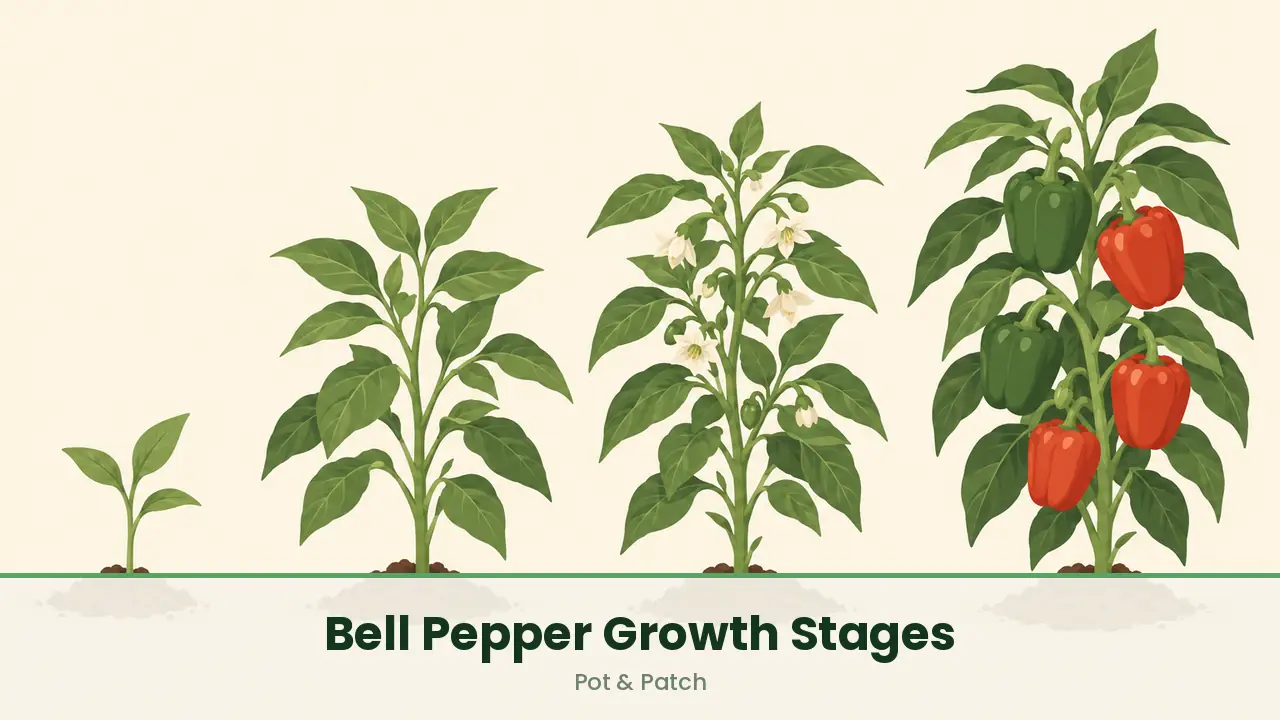
A bell pepper travels a long way from a tiny flat seed to a plant hung with glossy red and green fruit. The whole trip takes roughly three to four months, and it moves through the same clear stages every time.
Knowing those stages tells you what is normal, what comes next, and why your plant is doing what it is doing. This guide walks every bell pepper plant stage in order, through the plant’s whole life cycle from germination to a fully ripe pepper, with rough timings so you always know where your plant stands.
The Bell Pepper Plant Stages at a Glance
Bell peppers are slow, steady growers, so patience is part of the plan. Here is the full timeline before we walk through each stage in detail. Timings are counted from sowing seed and shift with warmth and variety.
| Stage | Rough timing from sowing | What you see |
|---|---|---|
| Germination | Week 1 to 2 | Seed sprouts with two slim seed leaves |
| Seedling | Weeks 2 to 6 | True leaves appear, slow leafy growth |
| Vegetative growth | Weeks 6 to 10 | Transplanted out, bushes up with branches |
| Flowering | Weeks 8 to 11 | Small white star-shaped blooms |
| Fruit set and growth | Weeks 10 to 15 | Green peppers swell to full size |
| Ripening | Weeks 14 onward | Green turns red, yellow, or orange |
All told, expect about 60 to 90 days from transplanting to the first full-size green pepper, and a few weeks more for it to ripen to full color.
Stage 1: Germination
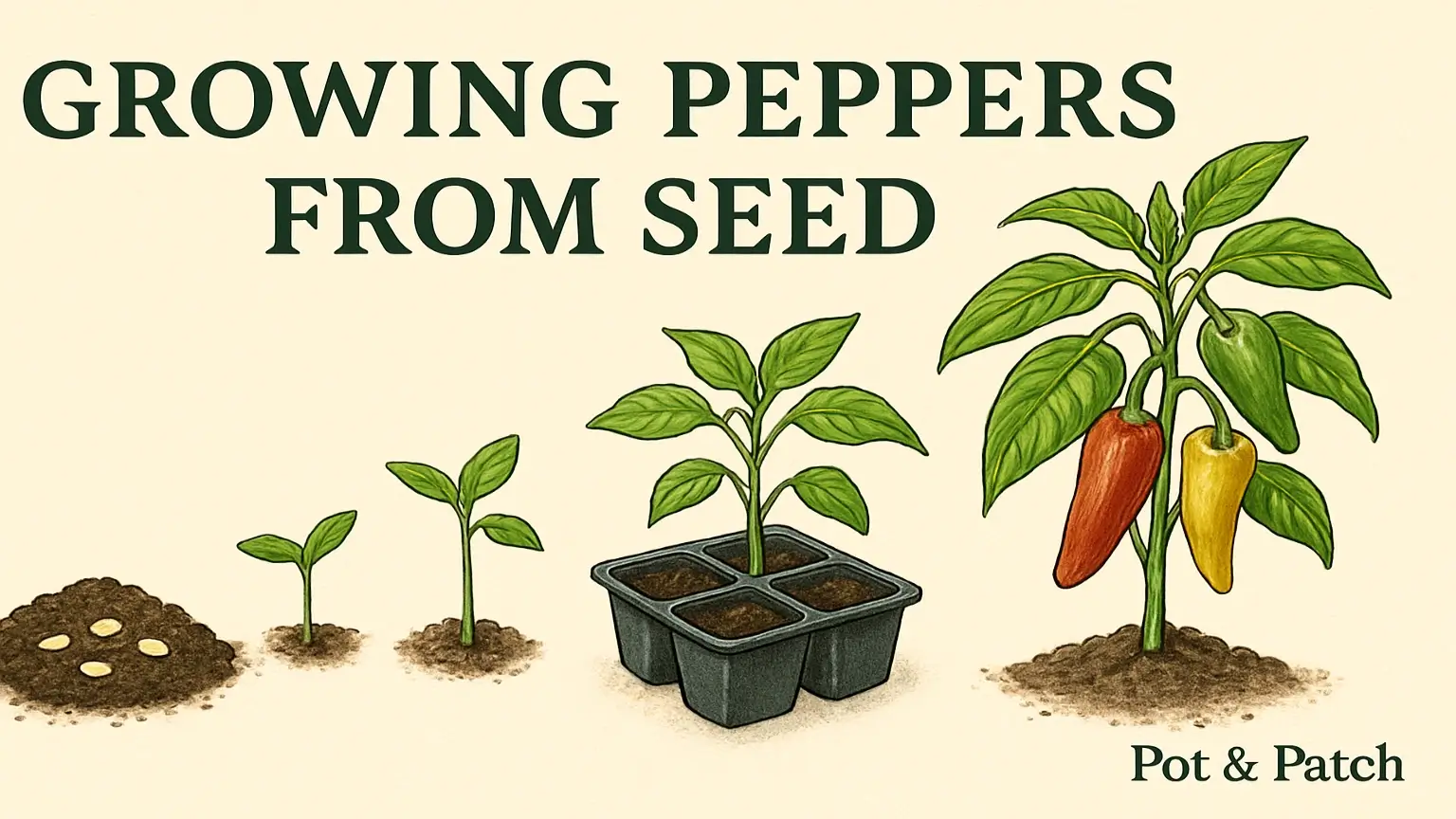
Everything starts underground in warmth. Bell pepper seeds germinate best in soil around 80 to 85 F, and they are famously slow about it, usually taking one to two weeks and sometimes longer in cooler conditions.
When the seed sprouts, it pushes up two long, narrow seed leaves called cotyledons. These are not true leaves, just the plant’s starter pack of energy. Because peppers need that steady warmth, most growers start them indoors on a heat mat.
Stage 2: Seedling
Once the first true leaves appear, which look like miniature pepper leaves, the plant is a seedling. This stage runs for several weeks and tests your patience, since bell peppers grow slowly here while they build roots and a few sets of leaves.
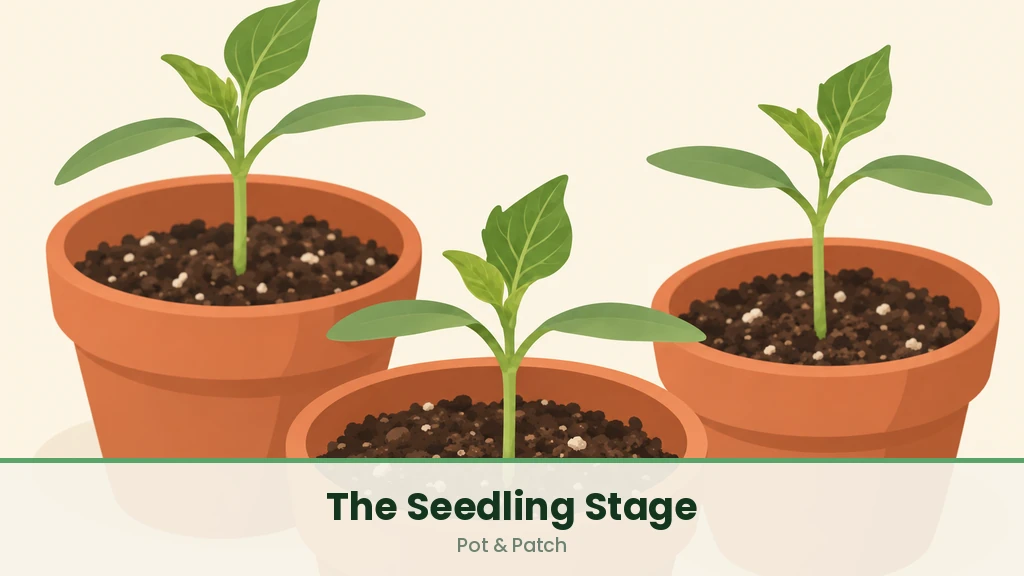
Give seedlings bright light for 14 to 16 hours a day so they do not stretch thin and leggy. Our guide on growing peppers from seed covers the indoor stage in full. By about six to eight weeks, the seedling is ready to face the outdoors.
Stage 3: Transplanting and Vegetative Growth
This is where the plant finally picks up speed. After hardening off, seedlings go outside once the soil has warmed to about 65 F and nights stay reliably above 55 F. Rushing a pepper into cold ground stalls it for weeks.
Expect a brief sulk for a week or two after transplanting while roots settle, then strong growth. Through the vegetative stage the plant pours its energy into leaves, branches, and a sturdy frame, eventually reaching 2 to 3 feet tall. For the full planting routine, see our guide on how to grow bell peppers.
Stage 4: Flowering
Around eight to eleven weeks in, and a few weeks after going outside, the first flowers appear. They are small, white, and star or bell-shaped, usually in little clusters at the joints where branches meet.
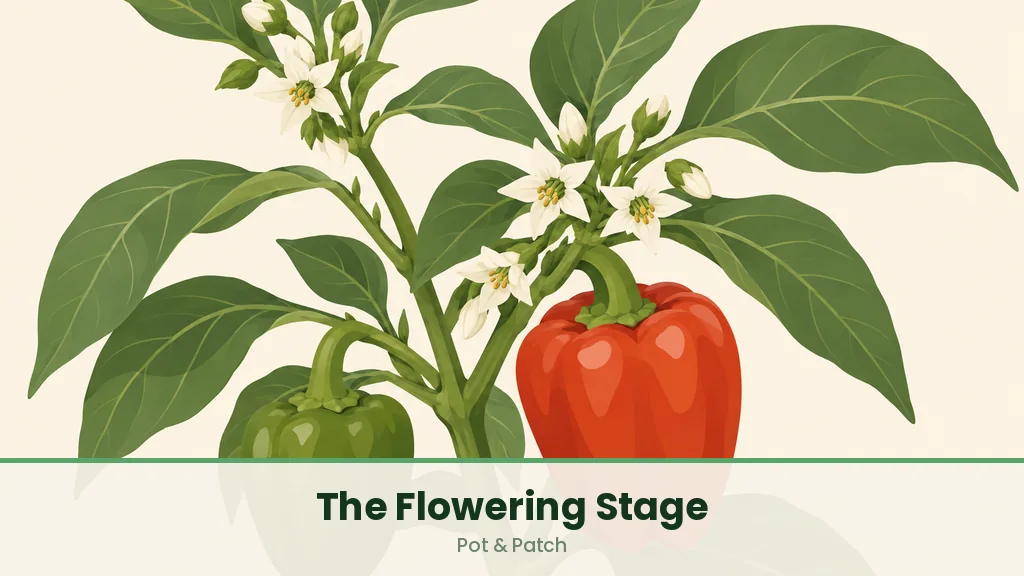
Bell pepper flowers are self-fertile, so each one can pollinate itself, though a passing breeze or bee helps. This stage is sensitive to temperature. Blooms often drop without setting fruit when nights climb above about 75 F or fall below 55 F, or when days push past 90 F. If your plant flowers but sets no fruit, our guide on pepper plant flowers but no fruit explains why.
Stage 5: Fruit Set and Growing
Once a flower is pollinated, its base swells and a tiny green pepper appears in place of the faded bloom. That is fruit set, and from there the pepper grows fast, often visibly larger every couple of days.
Not every flower becomes a pepper, and that is normal. A healthy plant usually carries six to eight full-size bells at a time, and the fruit reaches its mature size well before it changes color.
Stage 6: Ripening From Green to Color
Here is the stage that confuses the most people. A full-size green bell pepper is mature but not yet ripe. Left on the plant, nearly every bell ripens on to red, and some varieties to yellow, orange, purple, or chocolate brown.
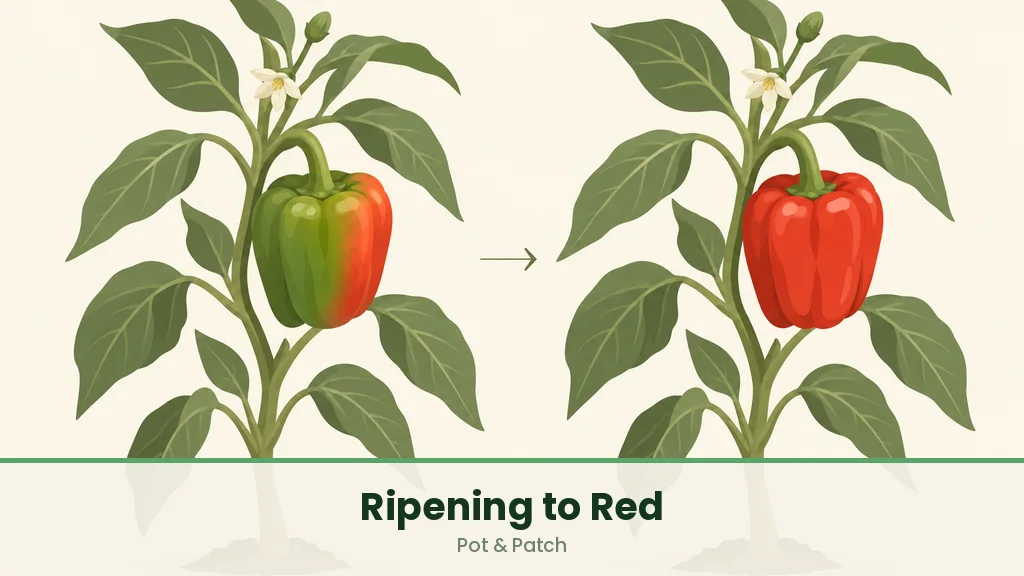
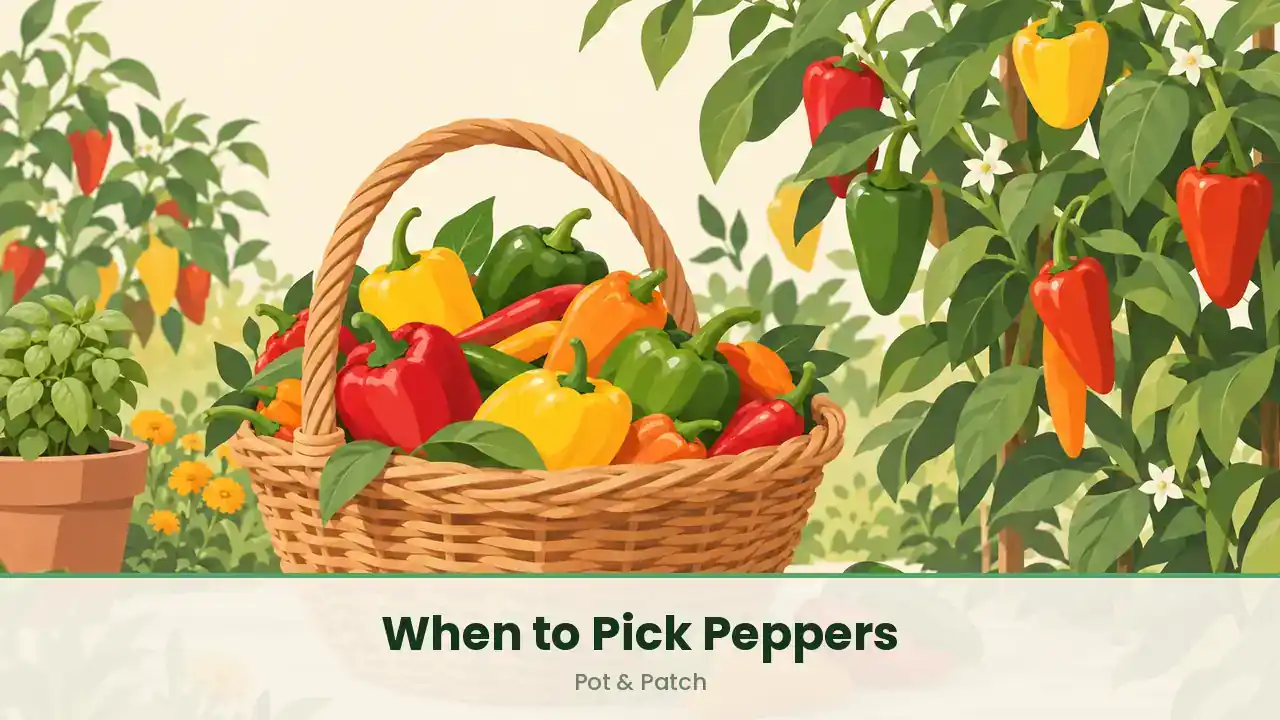
The color change begins as a blush on the sunniest side of the fruit, then spreads over the next two to three weeks until the whole pepper has turned. As it ripens it grows sweeter and richer in vitamins. You can pick at any point, green for a tangier, more plentiful crop or colored for sweetness, as our guide on when to pick peppers explains.
What Can Slow the Stages Down
If your plant seems stuck, the cause is almost always one of a few things. Peppers simply pause when they are unhappy.
Cold is the usual culprit, since chilly soil and nights below 55 F stall growth at every stage. Too little light makes seedlings stretch and weakens the plant, transplant shock buys a week or two of standstill, and extreme heat makes flowers drop so no fruit sets. Fix the conditions and the plant picks the timeline back up where it left off.
Bell Pepper Growth Stages: The Short Version
A bell pepper sprouts in a week or two, spends a slow month or more as a seedling, bushes out after transplanting, then flowers, sets green fruit, and finally ripens to color over its last few weeks. Start to finish, that is three to four months of steady progress.
Watch which stage your plant is in and you will know what to expect next and whether it is on track. For everything else on this crop, visit our pepper growing hub.
Frequently Asked Questions
How long does a bell pepper take to grow from seed to harvest?
About 100 to 120 days from sowing to a full-size green pepper, and a few weeks more for it to ripen to red. From transplanting out, most bells reach green harvest in 60 to 90 days.
What are the growth stages of a bell pepper plant?
Six main stages: germination, seedling, vegetative growth, flowering, fruit set, and ripening. The plant sprouts, builds leaves and branches, blooms, sets green fruit, then ripens that fruit to its final color.
Why is my bell pepper plant growing so slowly?
Usually cold or low light. Bell peppers stall in soil below 65 F and nights under 55 F, and seedlings in weak light stretch and lag. Warmth and bright light get them moving again.
Do all bell peppers turn red if you leave them?
Most do, but it depends on the variety. A full-size green bell is mature but unripe, and left on the plant it usually ripens to red, or to yellow, orange, or purple depending on the type.
Are bell pepper plants annual or perennial?
They are perennials grown as annuals in most climates. In frost-free regions a bell pepper can live and fruit for several years, but a hard frost kills it, so most gardeners replant each season.