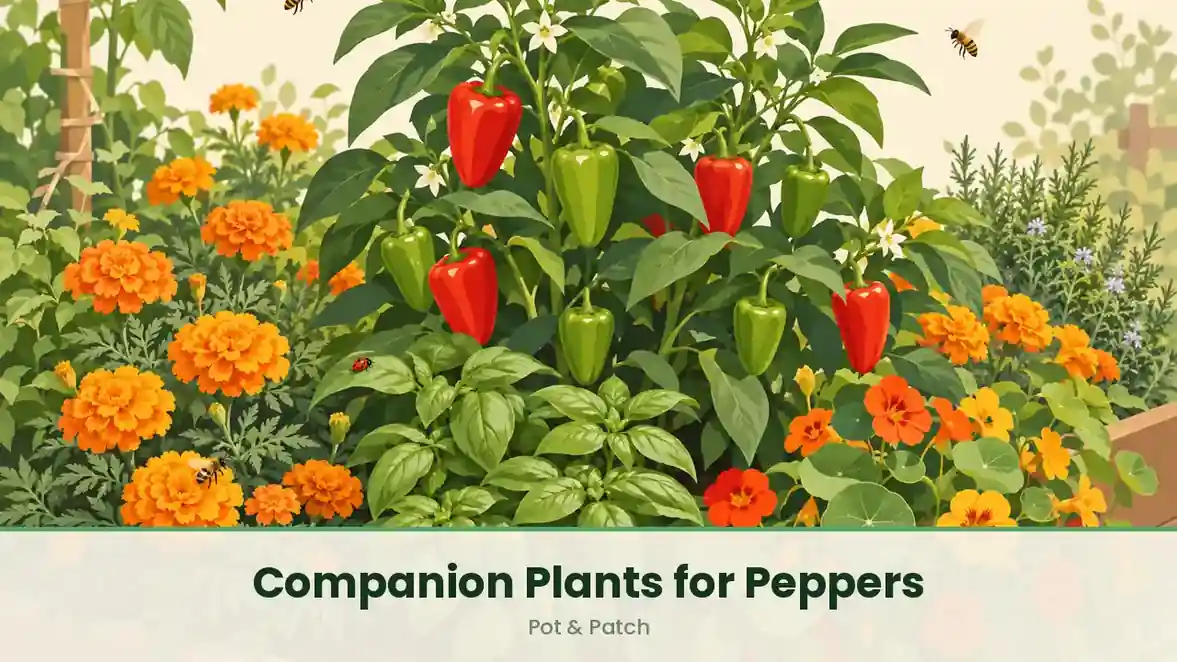
Companion Plants for Peppers: What to Grow and What to Avoid Nearby
Companion planting for peppers is part solid gardening and part garden folklore. The right neighbors really can draw pests away, invite in the insects that eat them, and make better use of your space. Plenty of popular advice, though, is passed around without much to back it up.
So this guide sorts the two. Below are the companion plants for peppers that earn their keep, what each one actually does, and the handful of plants worth keeping at a distance. Where a claim rests on tradition rather than evidence, it says so.
Good Companion Plants for Peppers at a Glance
Here is the quick-reference chart. Each companion is grouped by the job it does, with the details in the sections that follow.
| Companion plant | What it does for peppers |
|---|---|
| Nasturtium | Trap crop that lures aphids away |
| Sweet alyssum | Draws hoverflies and parasitic wasps that eat aphids |
| Dill and cilantro | Flowers attract ladybugs and lacewings |
| Basil | Shares peppers’ heat and sun; handy in the kitchen |
| Chives, onions, garlic | Aromatic border said to deter aphids and beetles |
| Lettuce and spinach | Living mulch that shades soil and blocks weeds |
| Carrots, beets, radish | Loosen soil; harvested before peppers fill in |
| Marigold | Pollinators and predators (not a standalone nematode fix) |
| Bush beans | Fix nitrogen in the soil for the next season |
Flowers That Pull Pests Away and Bring Helpers In
Flowers do two useful jobs near peppers. Some act as a decoy that pests prefer, and others feed the beneficial insects that hunt aphids and caterpillars.
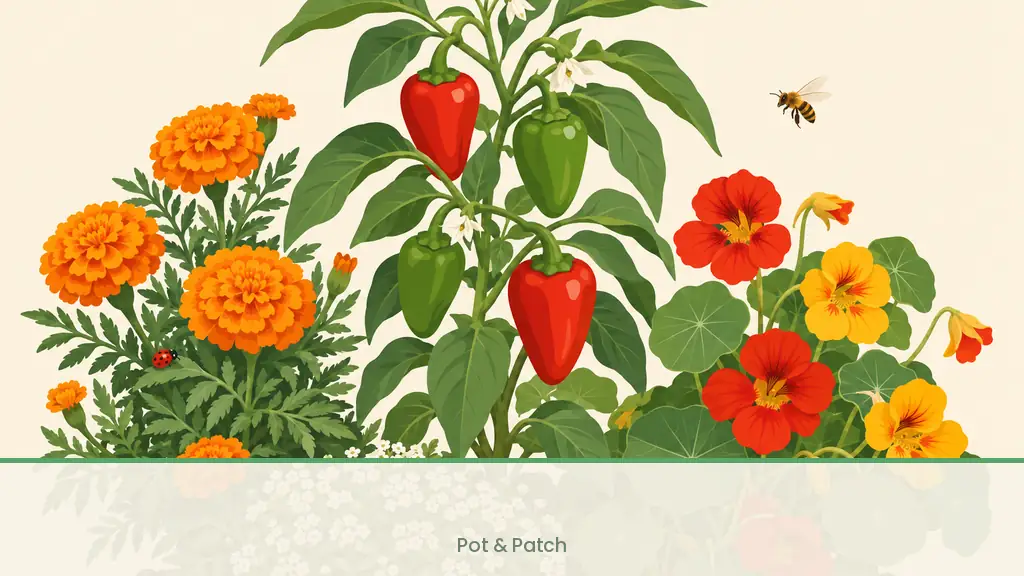
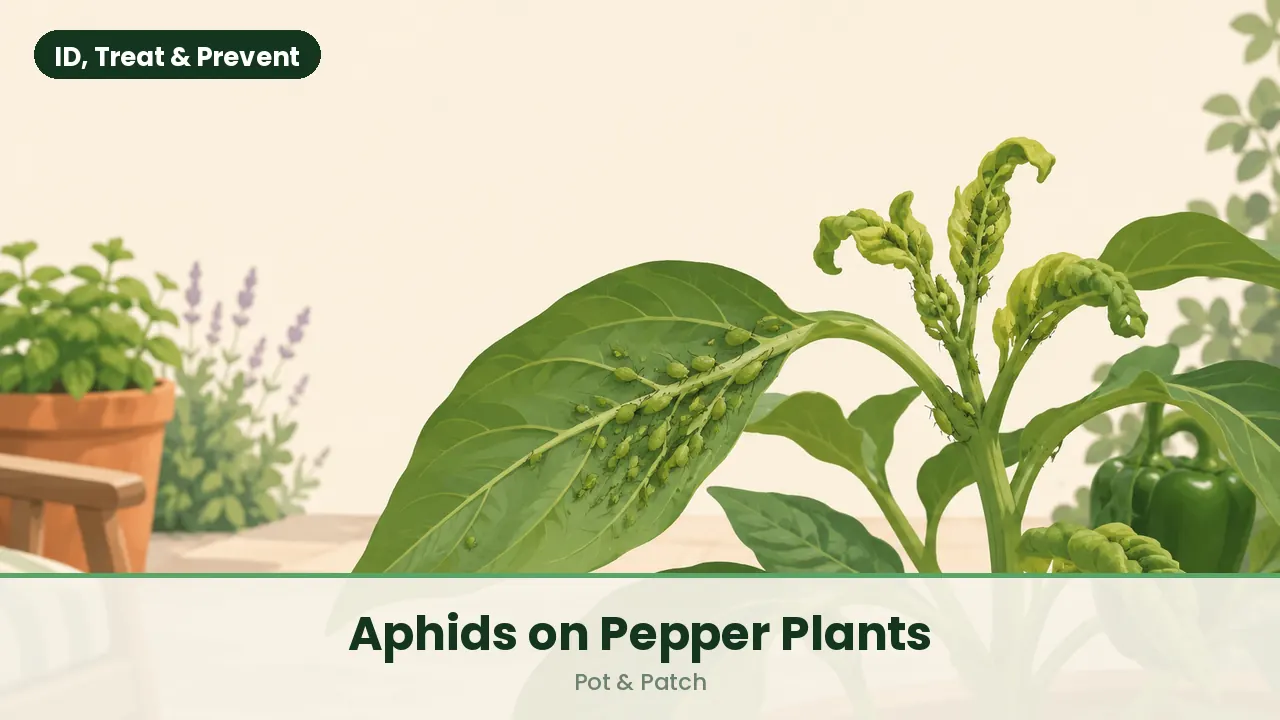
Nasturtiums are the classic trap crop. Aphids often swarm them in preference to nearby vegetables, which keeps the pressure off your peppers. Plant them a short distance away, not right in the pepper’s lap, so the aphids they attract stay put. If aphids are already a problem, our guide on aphids on pepper plants covers the direct fixes.
Sweet alyssum is one of the better-supported picks. Its tiny flowers are a magnet for hoverflies and parasitic wasps, and research on alyssum grown alongside other crops has linked it to lower aphid numbers. It stays low, so it doubles as ground cover.
Marigolds are worth growing for the pollinators and predators their flowers attract. Just be clear-eyed about the famous nematode claim, which gets its own section below, because it does not work the way most lists suggest.
Petunias round out the group. They are widely grown near peppers to draw pollinators and are reputed to deter aphids, though that pest-repelling reputation rests more on gardener experience than on study data.
Herbs That Earn Their Place
Herbs fit neatly among peppers because many share the same love of heat and sun, and several attract helpful insects when allowed to flower.
Dill and cilantro are the standouts, and for a real reason. Let them bolt and flower, and their blooms bring in ladybugs, lacewings, and parasitic wasps that prey on aphids and caterpillars. Succession sow cilantro every couple of weeks so some is always flowering.
Chives, garlic, and onions carry a strong scent that is commonly said to put aphids and beetles off. The evidence is thin, but alliums take up little room and share peppers’ conditions, so there is no harm in tucking them along a border.
Basil is the herb everyone recommends. It genuinely thrives in the same heat and moisture as peppers, which makes it a sensible neighbor. The popular idea that it improves pepper flavor, however, is pure tradition with no study behind it. Grow it because it is useful in the kitchen and shares the bed happily, not for a flavor boost.
Low Growers That Act as Living Mulch
Peppers stand tall and leave bare soil around their base. Low, quick crops fill that gap, shading the ground, holding moisture, and crowding out weeds.
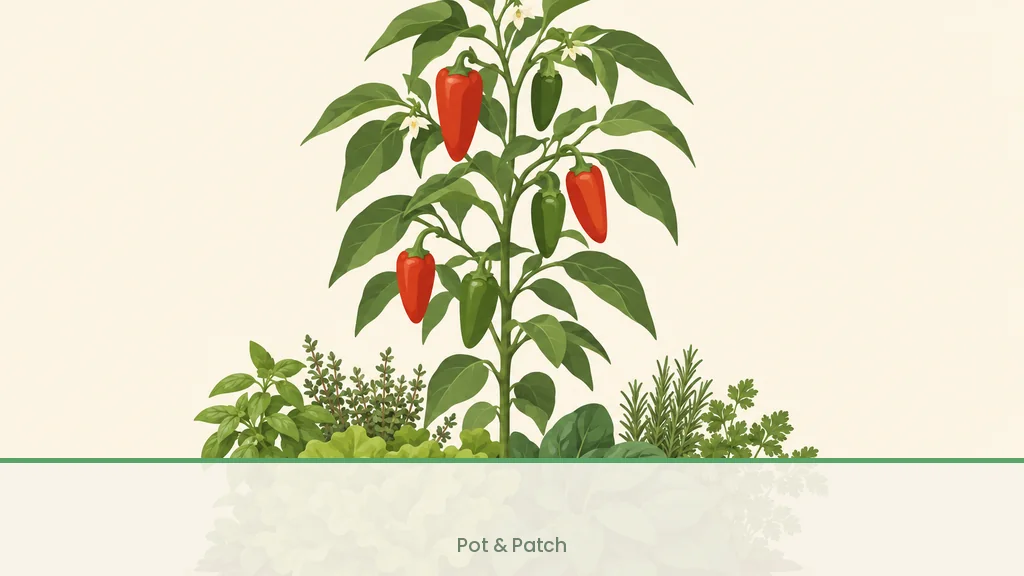
Lettuce and spinach are ideal. They grow fast in spring and fall, stay short, and actually appreciate the light shade a pepper plant casts as the weather warms. They are harvested long before the peppers need the room.
Carrots, beets, and radishes work the same way below ground. Their roots loosen and aerate the soil, they do not compete for light, and radishes in particular are pulled so quickly they are gone before peppers hit full size.
Beans and the Nitrogen Question
Legumes like bush beans and peas are regular companion suggestions because they fix nitrogen in the soil. That part is true, but the timing is often misunderstood.
Most of that nitrogen becomes available only after the legume dies and its roots break down, so a bean growing beside a pepper is not feeding it much during the season. The real payoff comes next year for whatever grows in that spot. Stick to bush types too, since tall pole beans can shade peppers and steal their sun. For feeding peppers now, our guide on the best fertilizer for pepper plants is the reliable route.
Marigolds and Nematodes: What Actually Works
This is the most repeated piece of pepper companion advice, and the most misleading. The usual version, tuck a few marigolds among your peppers to stop root-knot nematodes, does not work.
The research it is based on used marigolds very differently. Arizona Cooperative Extension explains that controlling nematodes means growing a solid stand of French marigolds (Tagetes patula) as a cover crop over a full season, then tilling them into the soil, which starves the pest of the roots it feeds on. Only certain French varieties are effective, and a scattering of plants interplanted with your peppers simply does not reach that threshold.
So grow marigolds near peppers if you like the flowers and the pollinators they bring. Just do not count on a few of them to clear a nematode problem, because that is not how the effect works.
What Not to Plant Near Peppers
A few neighbors are better kept apart. The reasons range from shared diseases to plain competition.
| Keep away from peppers | Why |
|---|---|
| Tomatoes, potatoes, eggplant | Same nightshade family, so they share pests and soil diseases |
| Fennel | Reputed to release growth-inhibiting compounds; easy to site elsewhere |
| Brassicas (cabbage, broccoli, kale) | Heavy feeders that compete for the same nutrients |
| Black walnut | Roots release juglone, which is toxic to peppers |
The nightshade rule deserves a note, because it is softer than most lists make it sound. Eggplant and even tomatoes can share a bed with peppers if you space them well for airflow. The firm rule is rotation: never plant peppers where another nightshade grew the year before, since soil diseases like verticillium and blight build up and carry over. Keeping tomatoes and peppers in separate beds each season is the point, not keeping them a few feet apart on a single day.
Brassicas are a gentler case of competition rather than harm. They are hungry plants, so in a small bed they can leave peppers short on nutrients. Give them their own space and both will do better. Fennel is best grown off on its own regardless, as it makes a poor neighbor to most vegetables.
Laying Out Pepper Companions
Good companion planting is really good design. Match plants by their needs and let each fill a different layer.
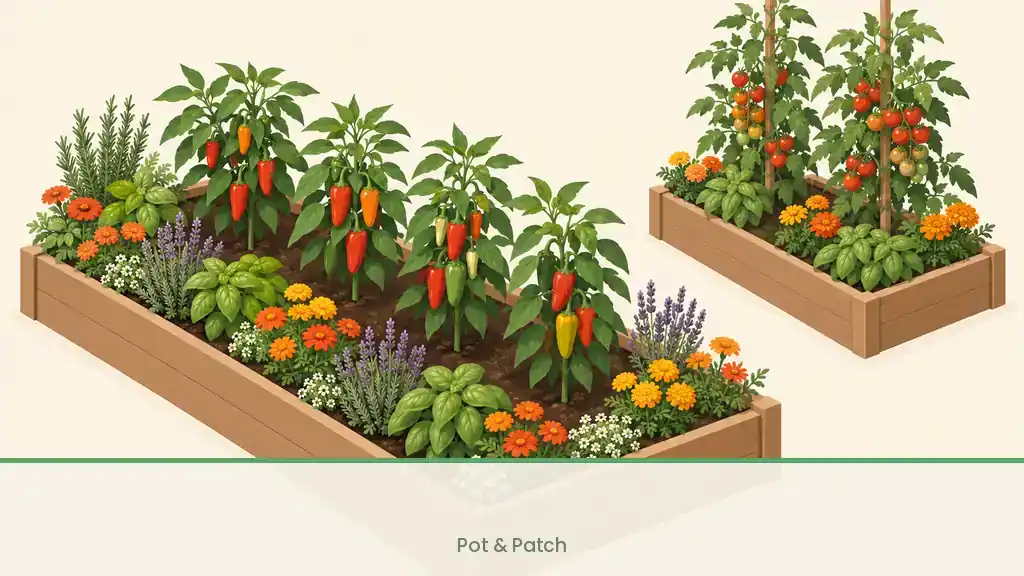
Group companions that want the same full sun and steady moisture as peppers, set the low growers like lettuce and alyssum at the base, and keep trap crops like nasturtium a little apart at the bed’s edge. Give your peppers enough room to begin with, which our guide on how far apart to plant peppers lays out, then slot companions into the gaps. The same thinking works in pots, where a pepper underplanted with alyssum or a few herbs makes a tidy, productive container, as our guide on growing peppers in containers shows.
The Honest Takeaway
If there is one lesson in all of this, it is that diversity does more than any single magic pairing. A pepper bed dotted with a few flowers and herbs draws in more pollinators and pest predators and leans less on sprays, which is the genuine win behind companion planting.
So plant some alyssum and dill for the beneficial insects, use low crops to cover bare soil, keep your nightshades rotated year to year, and enjoy the marigolds for what they truly offer. For more on growing a strong crop, visit our pepper growing hub.
Frequently Asked Questions
What are the best companion plants for peppers?
Nasturtiums, sweet alyssum, dill, cilantro, and basil are among the best. They draw in pollinators and pest-eating insects or share peppers’ growing conditions, while low crops like lettuce and spinach cover bare soil.
What should not be planted near peppers?
Keep peppers away from other nightshades (tomatoes, potatoes, eggplant) in the same bed year after year, and from fennel, brassicas, and black walnut. The main rule is to rotate nightshades between seasons to avoid shared soil diseases.
Can you plant tomatoes and peppers together?
Yes, with care. They enjoy the same conditions, so they can share a bed if spaced for airflow. Just rotate them to a new spot the next year, since both are nightshades that pass on the same pests and diseases.
Do marigolds really protect peppers from nematodes?
Not as a few interplanted flowers. Nematode control needs a full cover crop of French marigolds grown a whole season and tilled into the soil. Grown near peppers, marigolds still help by attracting pollinators and beneficial insects.
What are good companion plants for peppers in pots?
Low, shallow-rooted plants work best, such as sweet alyssum, basil, chives, or lettuce tucked around the base. They cover the soil and share the pepper’s sun and water without crowding its roots.
Can you plant cucumbers and peppers together?
Yes. Cucumbers and peppers enjoy the same warm, sunny spot and steady water, so they grow well as neighbors. Give the cucumber a trellis or room to sprawl so it does not shade or crowd the pepper.