Aphids on Pepper Plants: How to Identify, Treat, and Prevent Them
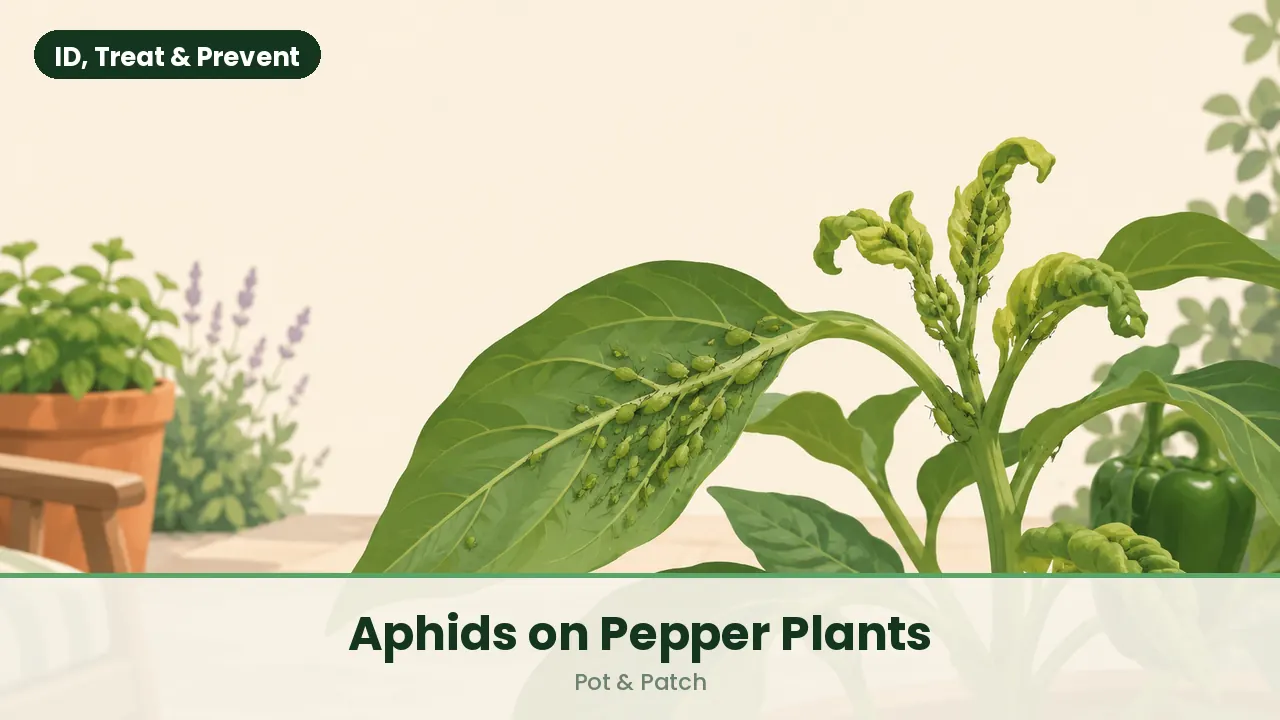
Aphids on pepper plants are one of the most common garden pests, and they multiply fast. A handful of these tiny sap-suckers can become hundreds in a week, clustering on tender new growth. The good news is they are also one of the easiest pests to control.
This guide covers how to identify aphids on peppers, the damage they cause, and how to get rid of them safely, starting with the gentlest methods. It works the same for bell peppers, jalapenos, and hot peppers.
How to Identify Aphids on Peppers
Aphids are small, soft-bodied insects about 2 to 4 millimeters long. They come in green, black, yellow, brown, pink, or gray, so color alone will not confirm them.
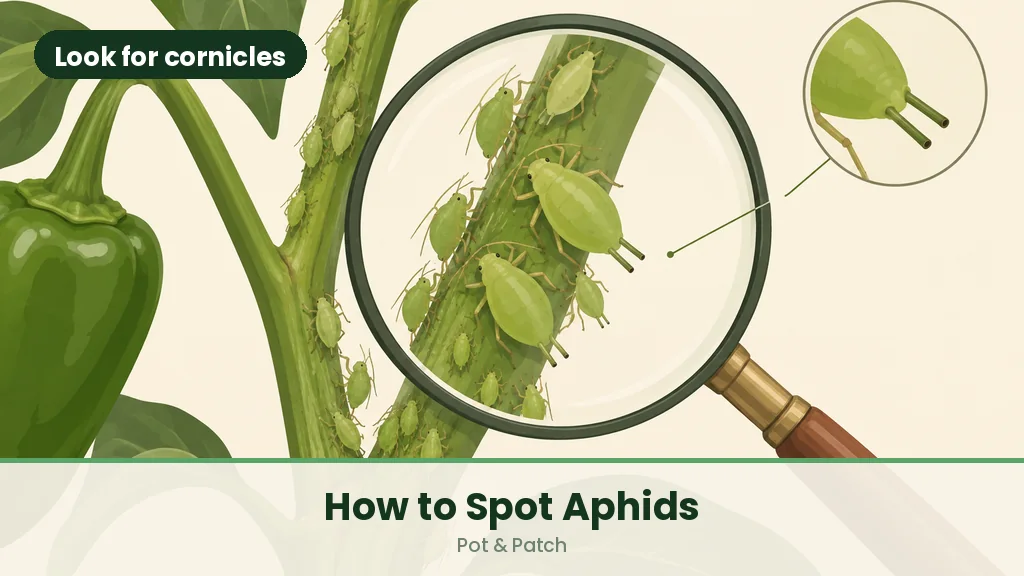
The giveaway is a pair of tiny tubes, called cornicles, sticking out from their rear. UC IPM notes these tailpipes set aphids apart from every other insect, so look for them with a hand lens.
You will usually find aphids crowded on the undersides of leaves and on new shoots. Unlike many bugs, they do not scatter quickly when disturbed.
Signs of Aphid Damage
Often you notice the damage before the insects. A few clues point straight to aphids.
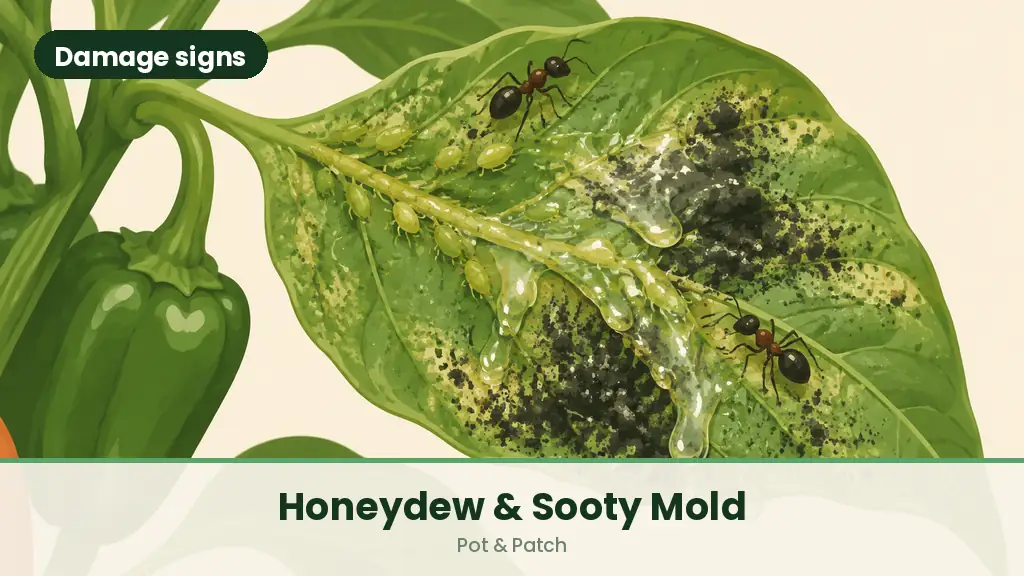
Sticky honeydew. Aphids excrete a sugary waste that coats leaves and stems. It feels sticky and shiny.
Sooty mold and ants. Black sooty mold grows on the honeydew, and ants show up to farm the aphids for it. A trail of ants is a strong hint.
Curled, yellow leaves. Heavy feeding curls, yellows, and stunts new growth. Aphids can also spread plant viruses as they feed.
Do You Even Need to Treat Them?
This is the question most guides skip. A few aphids rarely hurt an established pepper plant.
Step in when colonies are large, new growth is curling, or the plant is young and struggling. Otherwise, a quick water blast and some patience is often enough.
How to Get Rid of Aphids on Pepper Plants
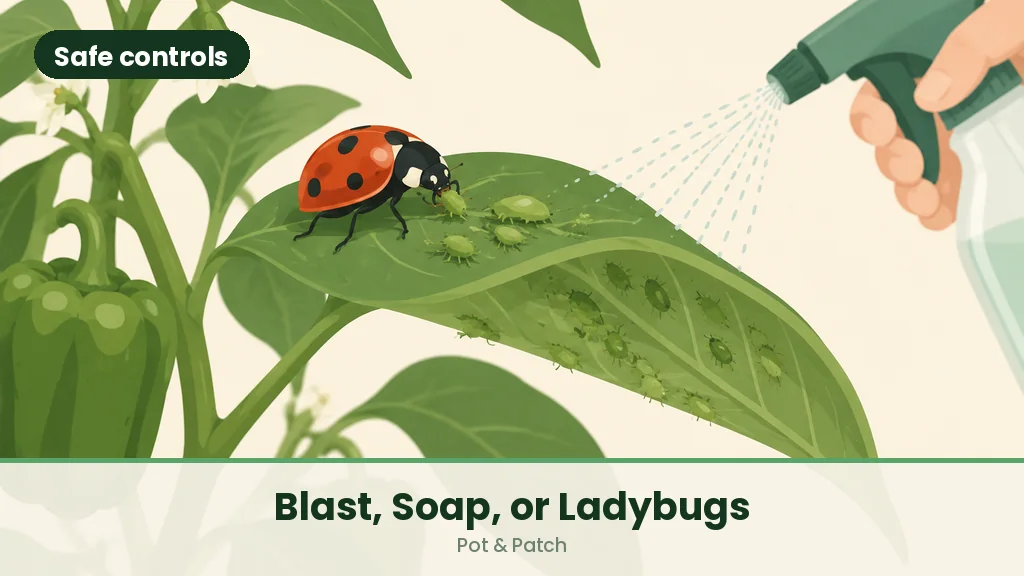
Start with the gentlest method and move up only if needed. This protects the helpful insects that eat aphids for you.
| Method | Best for |
|---|---|
| Blast with water | First response, light infestations |
| Prune infested leaves | Curled or heavily covered growth |
| Insecticidal soap | Moderate infestations |
| Neem oil | Persistent colonies |
| Beneficial insects | Ongoing outdoor control |
1. Blast them off with water
A strong stream of water knocks aphids off and they rarely climb back. Aim up at the leaf undersides and spray in the morning so leaves dry quickly.
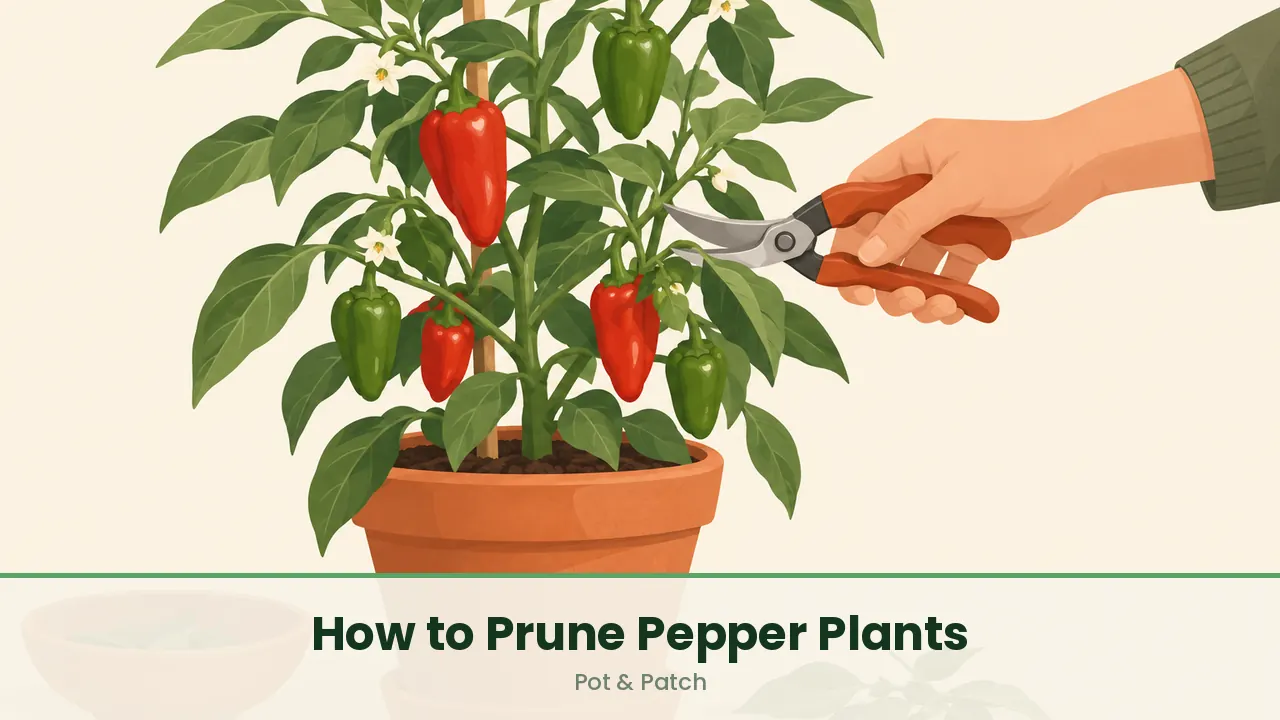
2. Prune heavily infested leaves
Curled leaves shelter aphids from both sprays and predators. Snip off badly infested or curled growth and bin it, rather than composting it.
3. Insecticidal soap
Soap smothers aphids on contact, so coverage matters. Spray the undersides thoroughly, repeat every few days, and apply in the evening, never on a water-stressed plant or above 90 F.
4. Neem oil
Neem slows aphid feeding and breeding. Mix about 1 tablespoon neem oil and a teaspoon of mild soap per gallon of water, shake well, and spray in the evening.
5. Bring in beneficial insects
Lady beetles, lacewings, and hoverfly larvae devour aphids. Attract them by planting alyssum and other small flowers, which our guide on growing peppers in containers can help you fit around pots.
What Not to Do
Reaching for a strong bug spray usually backfires. Broad-spectrum insecticides kill the lady beetles and wasps that keep aphids in check.
UC IPM warns this can actually make aphid problems worse over time, as the pests rebound without their predators. Skip the heavy chemicals and stick to soap, oil, and water.
How to Prevent Aphids on Pepper Plants
A few habits keep aphids from taking hold again. Prevention beats treatment every time.
Check weekly. Scan leaf undersides and new growth twice a week so you catch colonies early.
Go easy on nitrogen. Excess nitrogen pushes soft new growth that aphids love. Use a balanced, slow-release feed instead.
Invite predators and use mulch. Keep flowers nearby for beneficial insects, and reflective mulch can repel aphids and reduce virus spread. If your leaves are already curling or yellowing, our guides on pepper plant leaves curling and yellow leaves on pepper plants help you confirm the cause.
Aphids on Pepper Plants: Quick Recap
Look for soft-bodied bugs with cornicles on leaf undersides, plus sticky honeydew and ants. Treat only when numbers are high, starting with a water blast, then soap or neem, and let beneficial insects do the rest.
Skip the broad chemicals and keep checking weekly. For more help, visit our pepper growing hub.
Frequently Asked Questions
What is the fastest way to get rid of aphids on peppers?
A strong blast of water knocks most aphids off right away. Follow up with insecticidal soap on the leaf undersides for stubborn colonies.
Will aphids kill my pepper plant?
Rarely. A few aphids do little harm, though large colonies curl new growth and can spread viruses. Treat heavy infestations and young plants promptly.
Can I eat peppers with aphids on them?
Yes. Just rinse the peppers well under water before eating. Aphids are harmless to people, only a problem for the plant.
Does dish soap kill aphids on pepper plants?
A mild soap and water spray smothers aphids on contact. Coat the undersides of leaves and repeat every few days until they are gone.
What keeps aphids away from pepper plants?
Weekly checks, modest nitrogen, nearby flowers for predators, and reflective mulch all help. Catching colonies early is the best prevention.