
How to Pollinate Tomato Plants by Hand: Easy Methods That Work
Tomato plants can pollinate themselves, but sometimes their flowers need a little help. If you’re growing tomatoes indoors, in a greenhouse, or on a sheltered balcony, there may not be enough wind or insect activity to release pollen naturally.
Learning how to pollinate tomato plants is surprisingly simple. You can gently shake the flower clusters, tap the stems, or use a vibrating electric toothbrush to help release pollen. Most outdoor tomatoes do this naturally, so hand pollination is usually optional.
The trick is knowing when to help, how to handle the flowers, and what conditions support successful fruit development.
This guide explains how tomato pollination works, three easy methods you can try, and how to encourage healthy fruit production without damaging delicate blossoms.
How Do Tomato Plants Get Pollinated?
Tomato flowers contain both male and female reproductive structures, allowing a single flower to produce fruit through self-pollination.
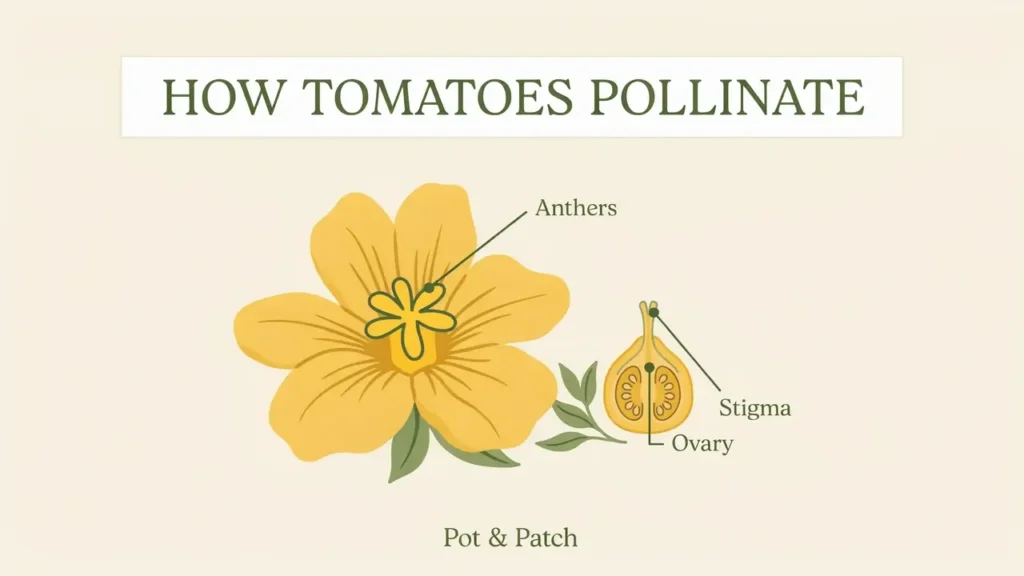
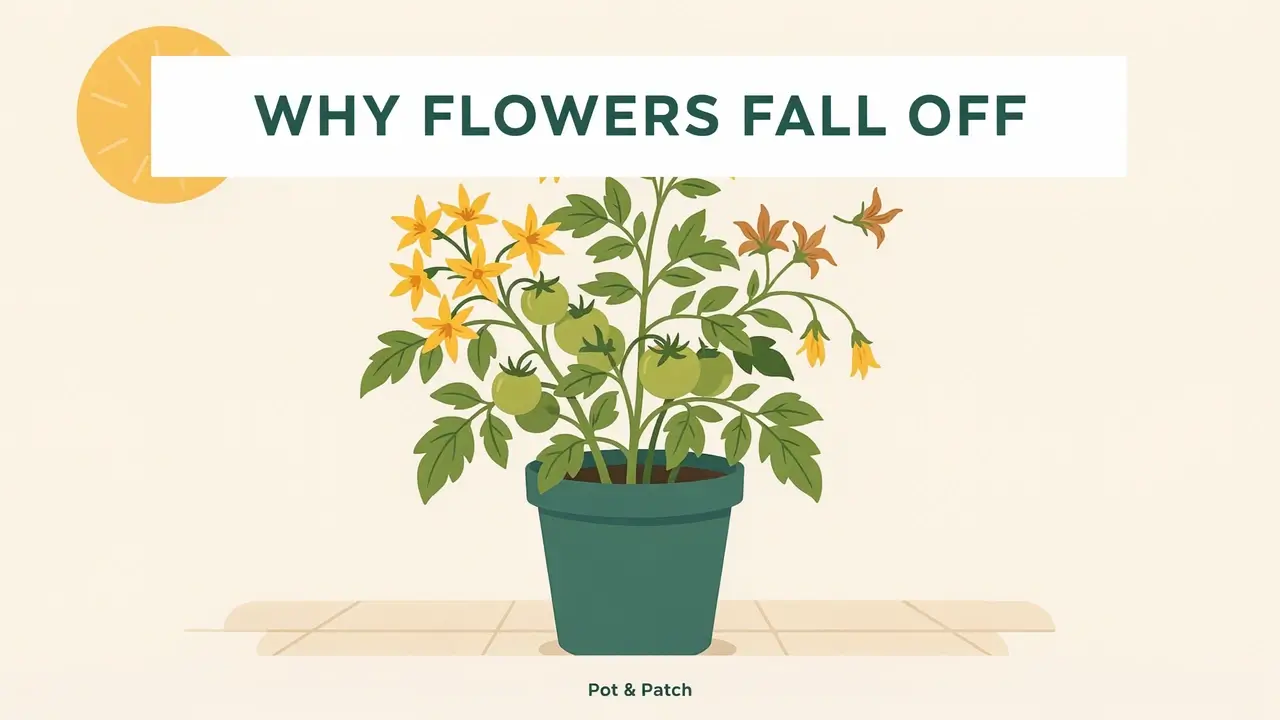
The yellow petals surround a group of pollen-producing anthers, which form a cone around the flower’s central female structure.
When the flower vibrates, pollen can be released from the anthers and reach the stigma, the part of the flower that receives pollen.
If pollination and fertilization succeed under suitable growing conditions, the ovary at the base of the flower can develop into a tomato.
Wind, insect activity, and ordinary plant movement can all help release pollen.
Are Tomato Plants Self-Pollinating?
Yes. Tomato plants are generally self-pollinating and self-fertile. That means a single tomato plant can produce fruit without another tomato plant nearby.
You do not need to plant separate male and female tomato plants. Each typical tomato flower has both pollen-producing and pollen-receiving structures.
However, self-pollination does not mean pollen always reaches the stigma without movement. Tomato anthers release pollen most effectively when the flower is vibrated.
Outdoors, breezes and visiting insects often provide enough movement naturally. Indoors or inside a protected greenhouse, flowers may receive less vibration, making occasional hand pollination useful.
Do Tomato Plants Need Bees?
Tomato plants do not require bees to produce tomatoes.
However, certain bees, especially bumblebees, are excellent tomato pollinators because they can perform a behavior called buzz pollination.
During buzz pollination, a bee grips the flower and vibrates its flight muscles, helping release pollen from the anthers. This is different from the way some other flowers depend on insects to transfer pollen between separate plants.
Honeybees are not effective buzz pollinators of tomato flowers, although they may occasionally visit them. In an outdoor garden, a combination of natural airflow and suitable pollinating insects is often sufficient for fruit production.
Do You Need to Hand Pollinate Tomato Plants?
Not every tomato plant requires hand pollination. If your outdoor tomatoes are producing healthy fruit, natural pollination is probably working well enough.
Hand pollination is most useful when flowers receive little natural movement.
| Growing Situation | Is Hand Pollination Useful? |
|---|---|
| Outdoor garden with regular breeze | Usually unnecessary |
| Open patio with good airflow | Often unnecessary |
| Sheltered balcony | May be helpful |
| Indoor tomato plant | Often useful |
| Small home greenhouse | Often useful |
| Greenhouse with active bumblebee pollination | Usually unnecessary |
| Plant struggling in extreme heat | Vibration alone may not solve fruit-set problems |
If your tomato plant is healthy and has newly opened flowers, a little gentle vibration may help when natural airflow is limited.
However, additional pollination will not necessarily increase yields when the flowers are already receiving adequate pollen.
How to Pollinate Tomato Plants by Hand
The easiest way to hand-pollinate tomatoes is to imitate the natural movement produced by wind or buzzing insects. You do not need expensive equipment.
Start with gentle shaking. If that is inconvenient, a vibrating toothbrush can provide a more targeted method.
Method 1: Gently Shake Tomato Flower Clusters
This is the simplest method for most home gardeners.
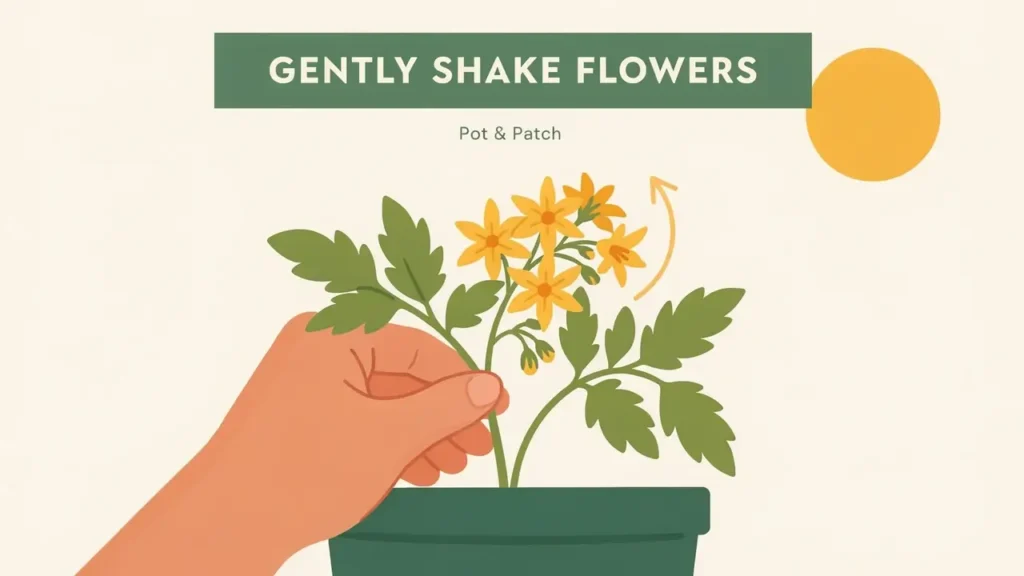
What you need: Just your hand.
Follow these steps:
- Find a tomato flower cluster with several open yellow blossoms.
- Hold the stem gently below the flowers.
- Lightly shake or tap the flower cluster for a few seconds.
- Avoid pulling, bending, or squeezing the blossoms.
- Repeat on other open flower clusters if needed.
The movement helps pollen leave the anthers and reach the receptive stigma. You do not need to shake the entire plant forcefully. A gentle tap or short vibration is enough to imitate natural movement.
This approach works well for cherry tomatoes, patio tomatoes, and other varieties grown in containers.
Method 2: Use an Electric Toothbrush
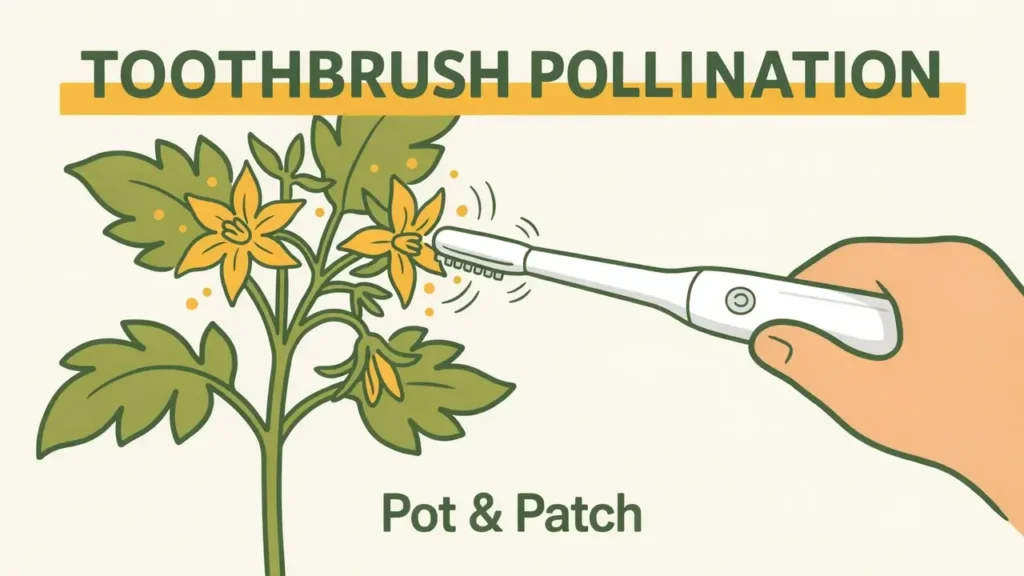
A small electric toothbrush can imitate some of the vibration created by buzz-pollinating bees. It is especially useful for tomato flowers growing indoors or inside protected greenhouses.
What you need: A clean, battery-powered electric toothbrush.
To use it:
- Locate an open tomato flower or flower cluster.
- Switch on the toothbrush.
- Carefully touch the vibrating handle or a suitable non-bristle part against the flower stalk near the blossom.
- Hold it briefly to transmit vibration.
- Move to another open flower cluster.
- Avoid pressing the brush head directly against delicate petals, anthers, or the stigma.
A brief vibration is generally sufficient. There is no benefit to repeatedly striking or damaging the flowers.
You may occasionally see a small puff of yellow pollen when conditions are suitable, but pollen is not always visible to the naked eye.
Do not assume a flower failed simply because you did not see pollen fall.
Method 3: Use a Small Paintbrush or Cotton Swab
A soft artist’s brush or clean cotton swab is another option, although it is generally less direct than vibrating the flower. Tomato flowers have anthers arranged around the stigma, so accessing pollen with a brush can be awkward.
If you choose this approach:
- Select a fully open flower.
- Use a small, clean, soft brush.
- Gently contact the pollen-bearing area without tearing the flower.
- Carefully transfer any collected pollen toward the stigma.
- Avoid forcing the brush into the flower’s center.
This technique can work, but it is easy to damage the flower if handled roughly.
For most gardeners, gentle shaking or vibration is easier and better suited to tomato flower structure.
Best Time to Pollinate Tomato Flowers
Late morning is often a practical time for hand pollination, particularly when the flowers are dry and temperatures are moderate.
Pollen release depends partly on temperature and humidity.
Very damp conditions may make pollen less likely to shed freely, while extreme heat can reduce pollen viability and successful fruit development.
For outdoor tomato plants, choose a dry period when temperatures are comfortable rather than attempting pollination during the hottest part of a summer afternoon.
Inside a greenhouse, pay attention to the growing environment rather than the clock alone. The ideal time varies with weather, ventilation, and local conditions. If the flowers are wet from watering or condensation, allow them to dry before attempting vibration.
How Often Should You Hand Pollinate Tomatoes?
When hand pollination is useful, gently vibrating newly opened flowers every other day or a few times per week is a practical approach.
Tomato flowers open over time, so one treatment will not reach every blossom that develops later. There is no need to repeatedly vibrate the same flower throughout the day.
A simple routine is to:
- Inspect plants for newly opened yellow flowers.
- Gently vibrate the open flower clusters.
- Repeat as additional flowers open.
- Monitor whether small tomatoes begin developing.
If your plants are setting fruit normally without help, you can reduce or stop manual pollination. More frequent handling is not automatically better. The purpose is to support pollen release, not to subject the plants to unnecessary stress.
How to Pollinate Indoor Tomato Plants
Indoor tomato plants often receive less wind and insect activity than outdoor plants. That makes hand pollination particularly useful when flowers begin opening.
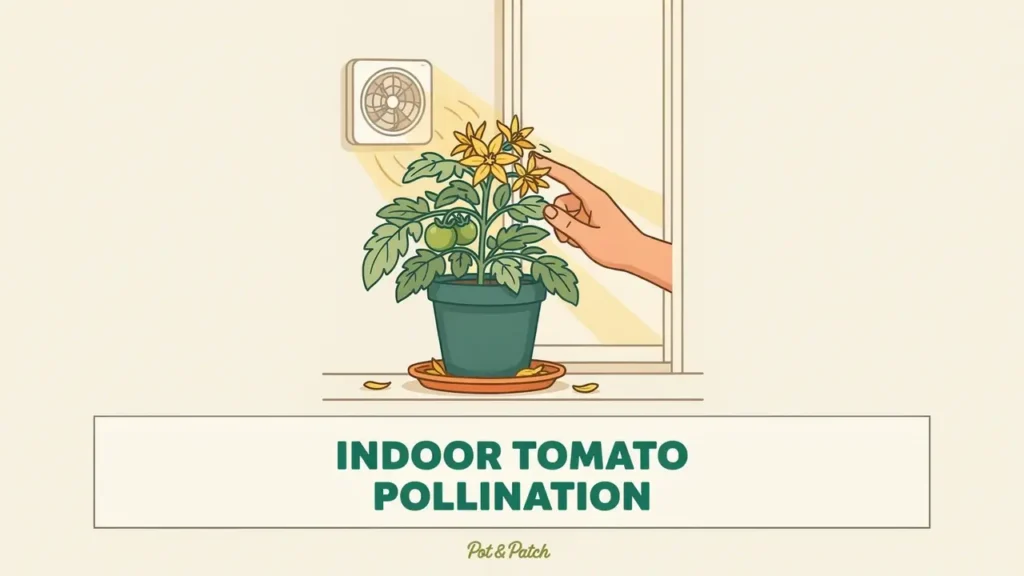
You can gently shake the flower clusters or use a vibrating toothbrush to release pollen. Good airflow from suitable ventilation or a gently circulating fan may also help create movement around the plants.
However, avoid directing a powerful fan at delicate stems and flowers.
Successful indoor fruiting depends on more than pollination.
Tomatoes also need adequate light, suitable temperatures, consistent moisture, and balanced nutrients to support flowering and fruit development.
If plants do not receive enough light, hand pollination cannot compensate for the underlying growing problem.
Our guide to growing tomatoes indoors covers the broader requirements for maintaining productive plants inside your home.
Can You Pollinate Tomatoes Indoors Without Bees?
Yes. Bees are not required because tomato flowers are self-fertile. You can use gentle flower vibration to help release pollen.
A small electric toothbrush is particularly convenient for compact tomato plants growing on indoor shelves or near bright windows.
Just remember that pollination assistance is only one part of successful indoor tomato production.
Tomato Pollination in Greenhouses
Greenhouses can provide protected growing conditions, but limited airflow may reduce natural flower movement. Commercial tomato growers often use managed bumblebee colonies or mechanical vibration to support pollination.
For a small home greenhouse, gently shaking or vibrating open flower clusters may be enough when natural movement is limited.
How to Hand Pollinate Greenhouse Tomatoes
Check plants regularly for open blossoms. Choose a time when flowers are dry and the greenhouse is not excessively hot.
Use a vibrating toothbrush or gently tap the flower clusters.
Repeat when additional flowers open, especially if you do not have effective pollinating insects inside the greenhouse.
Ventilation is also important. High humidity can interfere with pollen release, while unsuitable temperatures can reduce pollen viability.
Do Greenhouse Tomatoes Need Bees?
No, but managed bumblebees are often used in commercial greenhouse tomato production. They can provide effective flower vibration without requiring workers to pollinate each cluster manually.
For a small home greenhouse with just a few tomato plants, hand pollination is usually more practical than purchasing a managed pollinator colony.
How to Pollinate Tomatoes on a Balcony or Patio
Container tomatoes growing outdoors often benefit from natural airflow. However, sheltered balconies, enclosed patios, and locations surrounded by tall walls may receive relatively little wind.
In these situations, occasional hand pollination can be useful.
Try the following routine:
- Check for open flowers during the morning.
- Gently shake the flower stems.
- Avoid damaging branches or plant supports.
- Repeat when new flowers open.
- Watch for developing fruit.
You do not need to move pollen between separate tomato plants.
Keep the plant well-supported so the stems are not damaged during handling.
Strong winds can also damage containers and branches, so do not intentionally expose plants to harsh conditions simply to improve pollination.
If you’re growing tomatoes in a small outdoor space, see our complete guide to growing tomatoes in containers for advice on pots, soil, and plant care.
How to Tell If Tomato Flowers Were Pollinated
You generally cannot confirm successful pollination immediately by looking at a flower. The clearest sign is that the small ovary behind the blossom begins to enlarge into a developing tomato.

As fruit growth begins, the petals may wilt and dry, and a tiny green tomato becomes visible. This process takes time, and the pace varies with temperature, variety, and growing conditions.
Signs That Fruit Is Developing
Look for:
- A small green swelling at the base of the flower.
- Continued enlargement of the ovary.
- Drying petals as the fruit develops.
- A cluster of young tomatoes forming where flowers previously appeared.
A flower dropping its petals is not necessarily a problem. The important distinction is whether the developing ovary remains and begins to grow. Not every flower on a tomato plant will become fruit.
How Long After Pollination Do Tomatoes Start Growing?
Under favorable conditions, noticeable fruit enlargement may begin within several days after successful pollination and fertilization.
However, development varies, so there is no exact day when every flower must show a tiny tomato. Allow time for the ovary to grow before judging the result. Avoid pulling apart flowers to inspect them, as this can damage potential fruit.
Why Tomato Pollination Sometimes Fails
Even correctly performed hand pollination cannot guarantee fruit set.
Successful tomato production depends on viable pollen, receptive flowers, suitable temperatures, and overall plant health.
Temperature Is Too High or Too Low
Extreme temperatures can interfere with pollen production and fertilization. Prolonged daytime heat, particularly when nights also stay very warm, may reduce fruit set.
Cool conditions can also interfere with normal pollination. Gently shaking flowers cannot fully correct pollen that has become nonviable because of temperature stress.
Humidity Interferes With Pollen Release
High humidity can make pollen less likely to separate freely from the anthers. Very dry conditions can also create pollination difficulties.
In greenhouses, suitable ventilation and environmental management are important.
Flowers Are Not Ready
Hand pollination works best with open, mature tomato flowers. Closed buds are not ready for the same treatment. Check regularly as flower clusters develop rather than repeatedly handling immature buds.
Plant Stress Affects Fruit Set
Inadequate water, poor root conditions, or insufficient light can affect flowering and fruit development. Maintain stable growing conditions while allowing natural or assisted pollen release.
If your tomatoes are showing moisture-related stress, our guide to watering tomatoes in pots explains how to assess root-zone moisture without relying on a rigid schedule.
These factors deserve attention when manual pollination does not lead to developing fruit, but they are not reasons to increase vibration indefinitely.
Common Tomato Hand-Pollination Mistakes
Hand pollination is simple, but a few common mistakes can reduce its usefulness.
Shaking Flowers Too Hard
Tomato flower clusters are delicate.
Forceful shaking can damage stems or dislodge flowers.
Use gentle vibration instead.
Using the Toothbrush Bristles on the Flower
Pressing moving bristles against petals or reproductive structures can injure them. Apply vibration to the nearby flower stalk with a suitable non-bristle part of the device.
Pollinating During Extreme Heat
Even if pollen is released, unsuitable temperatures may prevent successful fruit set. Choose a more favorable time and address excessive greenhouse heat where possible.
Assuming Every Flower Needs Help
Outdoor tomatoes often pollinate adequately through natural wind and insect movement. Hand pollination is an optional tool, not a mandatory daily chore.
Expecting Immediate Tomatoes
A pollinated flower does not become a visible tomato instantly. Watch for gradual enlargement of the ovary rather than repeatedly disturbing the blossom to check progress.
Frequently Asked Questions
Can One Tomato Plant Pollinate Itself?
Yes. Tomato plants generally have self-fertile flowers containing both male and female reproductive structures. One healthy tomato plant can produce fruit without a second plant.
How Do You Hand Pollinate Tomatoes With an Electric Toothbrush?
Turn on a clean electric toothbrush and briefly apply vibration to the flower stalk near an open blossom. Avoid touching the reproductive structures with the moving bristles. Repeat on newly opened flower clusters as needed.
How Often Should I Shake Tomato Flowers?
If natural pollination is limited, gently shaking newly opened flower clusters every other day or a few times weekly is a practical routine. Stop or reduce assistance if your plants are setting fruit normally.
Can You Hand Pollinate Cherry Tomatoes?
Yes. Cherry tomatoes can be hand-pollinated using the same gentle shaking or vibration methods used for larger tomato varieties.
Do Tomato Plants Need Two Plants to Pollinate?
No. Ordinary garden tomato varieties are self-fertile. A second tomato plant is not required for successful pollination.
Do Indoor Tomato Plants Need Hand Pollination?
Indoor tomato plants often benefit from manual flower vibration because they receive less wind and insect activity. However, adequate lighting, temperature, and general plant health remain essential.
How Long Does It Take for a Pollinated Tomato Flower to Form Fruit?
The ovary may begin enlarging within several days under favorable conditions, but visible development varies with variety, temperature, and plant health. Look for a small green fruit behind the drying flower.
Why Are My Tomato Flowers Not Producing Fruit After Hand Pollination?
Possible reasons include temperature extremes, high or very low humidity, poor pollen viability, inadequate lighting, and plant stress. Hand pollination helps move pollen, but it cannot overcome every condition that interferes with fruit development.
Final Thoughts
Learning how to pollinate tomato plants is useful when you’re growing tomatoes indoors, in a greenhouse, or in a sheltered patio garden.
Start with gentle shaking of the flower clusters. A vibrating electric toothbrush offers another easy option, especially when natural airflow is limited.
Remember that tomatoes are normally self-pollinating, so healthy outdoor plants often need no extra help.
The best results come from combining suitable growing conditions with gentle pollination assistance only when it is needed.
For more small-space gardening advice, visit the Pot & Patch tomato growing guides.