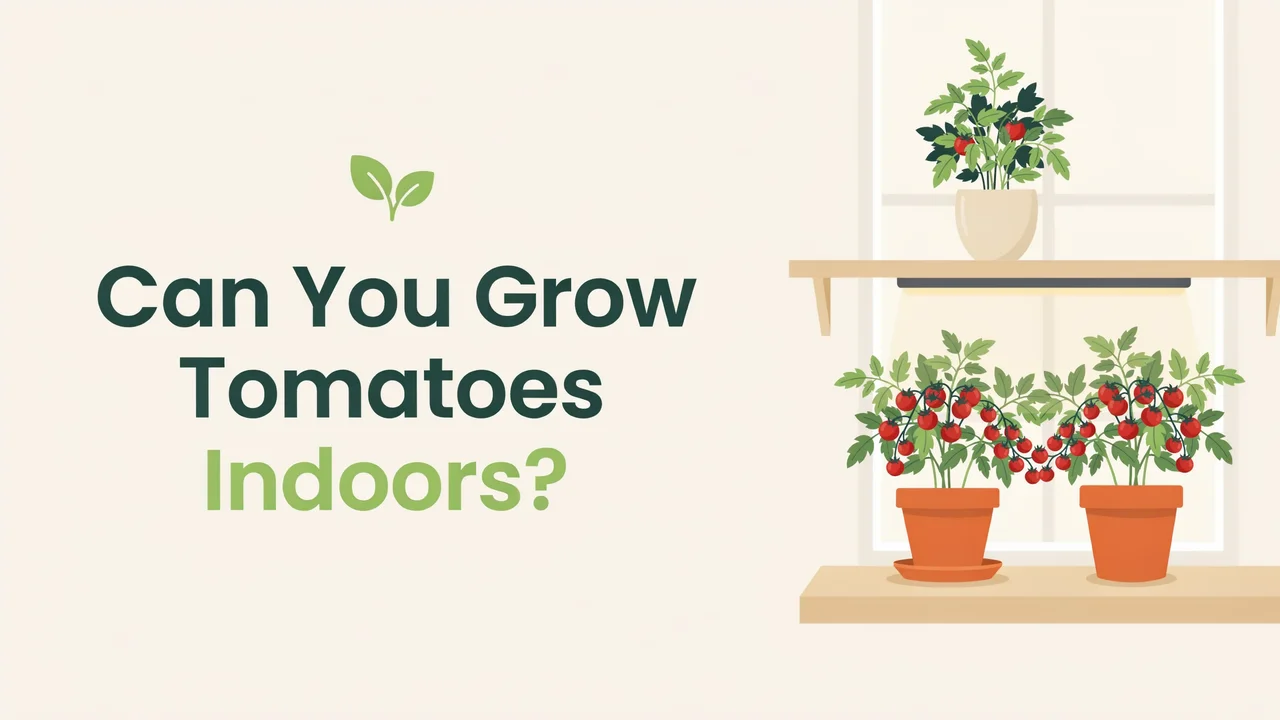
Can You Grow Tomatoes Indoors? Everything You Need to Get It Right
Yes, you can grow tomatoes indoors, and you can even harvest them in the depths of winter. It takes more effort than growing outside, but it is well within reach for a home grower.
The catch is light. Tomatoes are one of the most sun-hungry crops you can grow, and an average room does not come close to a summer garden. Get the light right and the rest is manageable.
This guide covers what actually matters: how much light indoor tomatoes need, which varieties suit a windowsill, how to hand-pollinate, and whether the whole thing is worth it.
The Short Answer
Tomatoes will grow and fruit indoors as long as you can give them enough light, steady warmth, and a little help with pollination.
The plants do not care whether they are inside or out. They only care about their conditions. If you can roughly copy a warm, bright summer day, an indoor tomato will flower and set fruit.
The honest part: your harvest will usually be smaller and slower than an outdoor crop. For many people, fresh tomatoes in January still make that trade worthwhile.
How Much Light Do Indoor Tomatoes Really Need?
This is where most indoor tomatoes fail, so it is worth getting right.
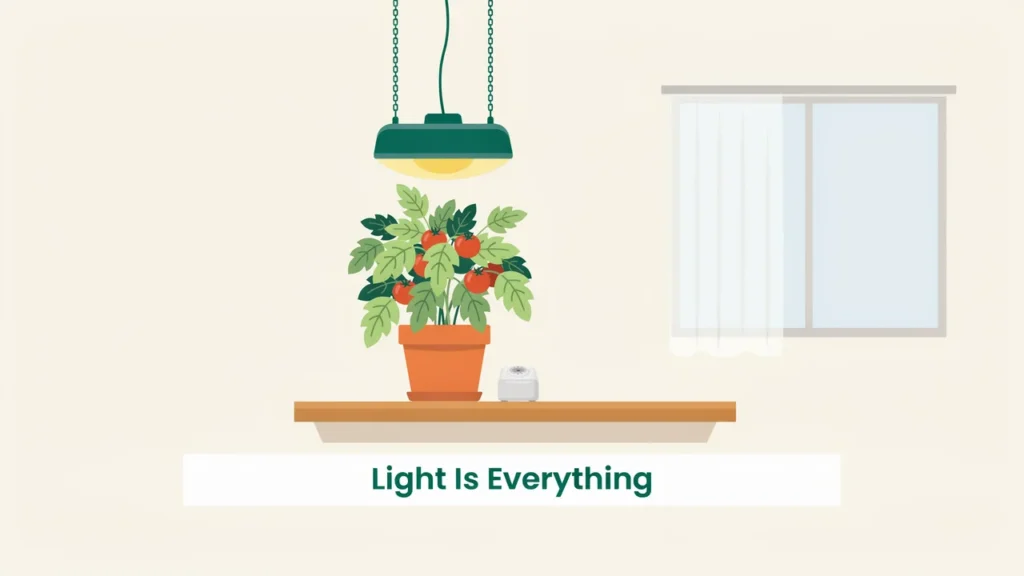
A bright windowsill can grow leafy plants, but weak winter light often is not strong enough to set a good crop of fruit. Window glass with a UV coating cuts the useful light further. For reliable fruit, most setups need a grow light.
You do not need an expensive system. University extension guidance is clear that a plain cool-white fluorescent tube or a cheap shop light works fine for tomatoes. An adjustable desk lamp or a shop fixture hung on chains does the job.
A few numbers to aim for:
- Run lights for 14 to 16 hours a day during growth
- Keep the plant tops within 2 to 6 inches (5 to 15 cm) of the bulbs
- Use a timer so the schedule stays consistent
One detail many guides miss: tomatoes need a dark period to fruit properly, so do not leave lights on around the clock. Around six hours of darkness is enough. If your only option is a room with poor natural light, treat the grow light as the main source, not a backup. For crops that cope better with dim spots, see our guide to vegetables that grow in shade.
Best Tomatoes to Grow Indoors
Space and light both push you toward small plants. Large indeterminate types can be grown indoors, but they need a lot of light, a big container, and constant pruning.
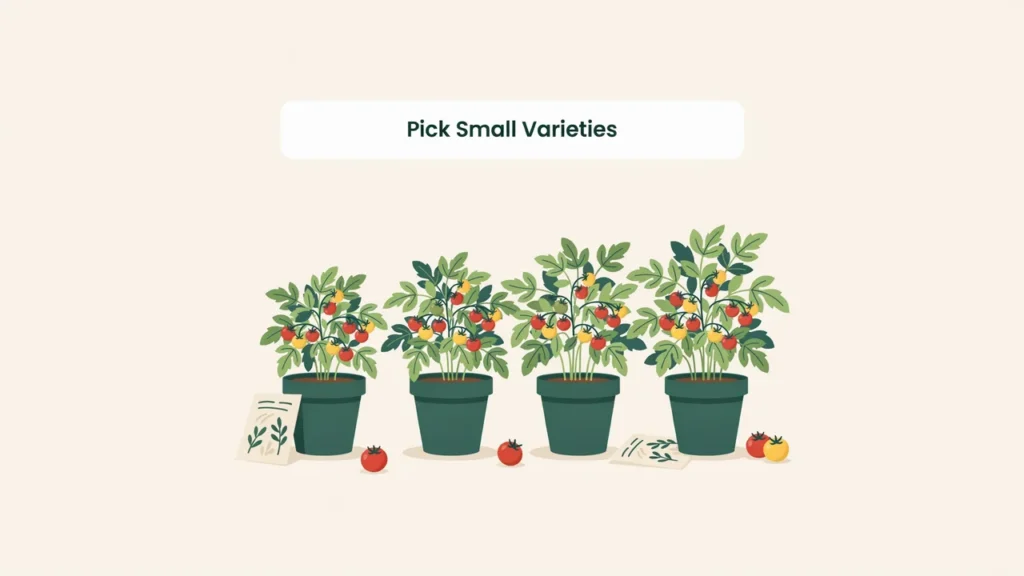
For most people, compact micro-dwarf and dwarf varieties are the smart choice. They stay around one to two feet tall, fruit quickly, and fit under a modest light or on a sunny sill.
Varieties that suit indoor growing well include:
- Tiny Tim and Micro Tom, both true micro-dwarfs
- Terenzo and Lizzano, compact trailing cherries
- Red Robin and Balcony, small and windowsill-friendly
Most of these are sold as seeds rather than plants, so you will likely start from seed. Since the plant lives indoors, normal outdoor planting dates do not apply. You can sow at any point in the year. For the wider range of pot-friendly types, start from our tomatoes hub.
Pot, Compost and Temperature
Indoor tomatoes are forgiving on container size because the varieties are small.
A one-gallon pot suits the smallest micro-dwarfs. Slightly larger varieties do better in a two to three-gallon pot. As always with tomatoes, err on the larger side rather than cramming roots into something tight. For the full sizing detail, see our guide on the best container size for tomatoes.
Keep the basics simple:
- Use a quality potting mix, never ordinary garden soil
- Make sure the pot has drainage holes and a tray beneath
- Keep the mix evenly moist, never bone dry or waterlogged
Temperature matters more indoors than people expect. Tomatoes suffer below about 10°C (50°F), and fruit set drops off above roughly 32°C (90°F). Aim for a steady 18 to 24°C (65 to 75°F) by day, a little cooler at night. Keep plants away from cold draughts and from radiators that dry the air. For the full planting and feeding routine, our guide to growing tomatoes in containers walks through it step by step.
You’re the Bee: Pollinating Indoors
Here is the problem that catches new growers out. Their plant flowers beautifully, then every bloom drops without a single tomato.
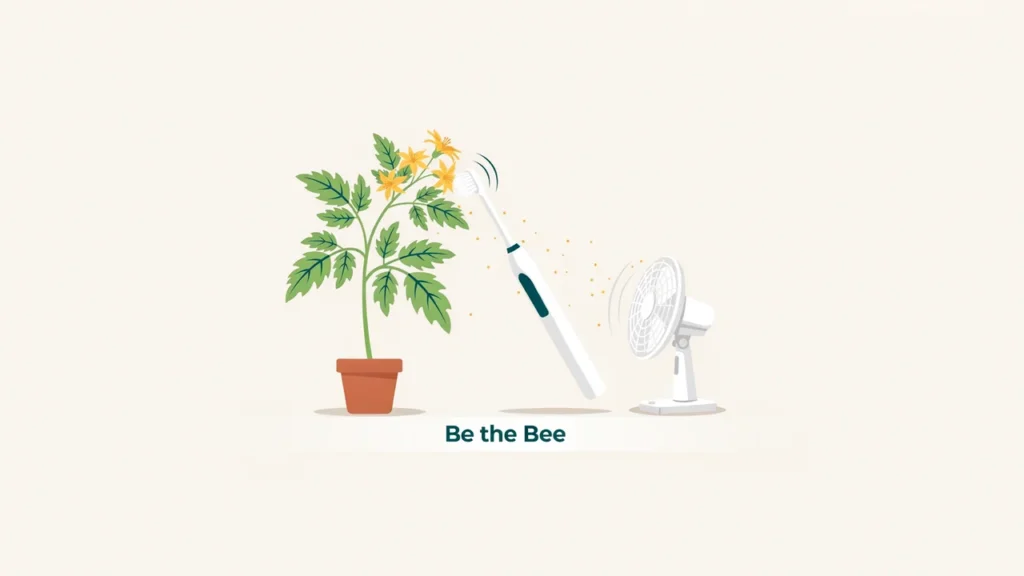
The cause is almost always pollination. Tomatoes are self-pollinating, so each flower can fertilise itself. But the pollen still needs a nudge to move, and outdoors that nudge comes from wind and bees. Indoors there is neither.
So you become the bee. Once flowers appear, help them along every couple of days:
- Gently shake or tap the flower stems to jostle the pollen loose
- Or run a small oscillating fan near the plants for a few hours a day
- Or touch a switched-on electric toothbrush to the base of each flower cluster
Do this mid-morning, when flowers are most receptive. It takes seconds and makes the difference between a bare plant and a full one.
Growing Tomatoes Indoors in Winter
Winter is the season most people ask about, and it is very doable.
The appeal is real: no frost, no outdoor pests, and fresh fruit while the garden sleeps. The challenge is that winter days are short and dim, which makes your grow light non-negotiable rather than optional.
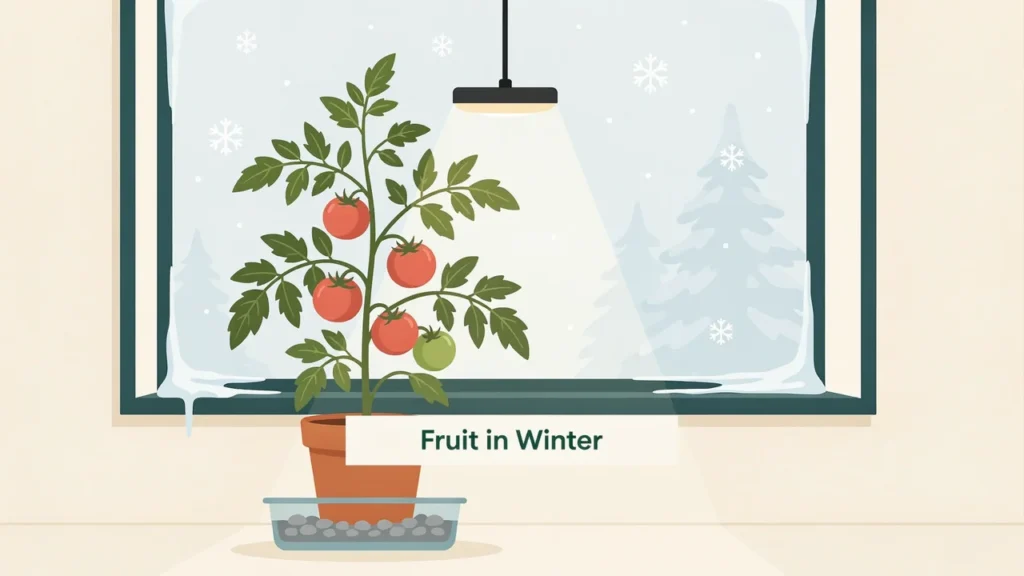
For winter growing, lean on the light schedule above and watch two things closely. Indoor air from heating often drops very dry, so group plants or add a little humidity. And soil stays wet far longer in winter, since there is no sun or wind pulling moisture out, so water less often than you would in summer.
Bringing Outdoor Plants Inside for Winter
You can also bring an existing outdoor plant indoors before the cold arrives, though results vary.
Move it in before nights turn cold, well ahead of any frost. A large mature plant will struggle with the drop in light, so trim it back and expect a lighter crop. Compact plants transition far better than sprawling ones.
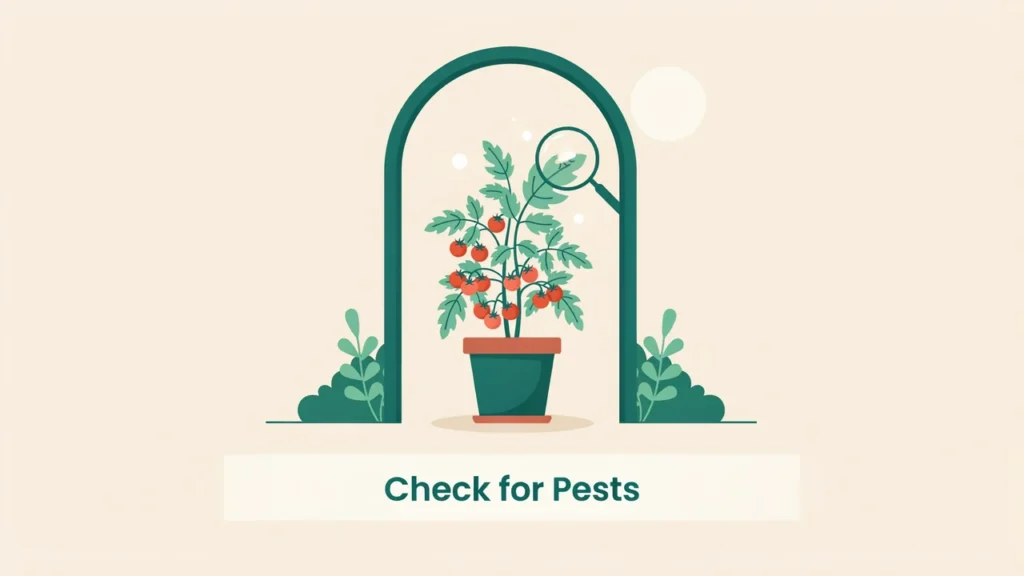
One rule matters above all: check for pests first. Whitefly, aphids, and spider mites hitch a ride indoors and spread fast in warm, dry rooms. Inspect the leaves, rinse the plant, and quarantine it away from your houseplants for a week or two.
Growing Tomatoes on a Windowsill
A windowsill is the simplest indoor setup, and for the right variety it can work without any special kit.
Stick to true micro-dwarfs like Tiny Tim or Micro Tom. Choose the brightest window you have, ideally one that faces the sun for most of the day, and keep it free of cold draughts.
Be realistic about the harvest. A sunny sill in spring or summer can ripen a handful of cherry tomatoes. In dim winter light, even a micro-dwarf will usually need a small grow light to fruit well. Rotate the pot every few days so the plant does not lean toward the glass.
Is It Worth It?
Honest answer: it depends on why you are doing it.
If you want a reliable, heavy tomato harvest, indoors will disappoint you. Yields are smaller, fruit ripens slower, and the light and pollination demands are real work. Fruiting crops like tomatoes are genuinely harder indoors than leafy greens or herbs.
If you want fresh tomatoes out of season, a fun winter project, or simply have no outdoor space, it is absolutely worth it. Just start fresh each season, since indoor plants tire and grow less productive after one run.
If you do have any outdoor room, even a small paved area, that route is far easier. Our guide to growing tomatoes on a patio covers that low-effort option.
Common Indoor Tomato Problems
- Tall, thin, floppy plants: Not enough light. Lower the grow light closer and extend the hours.
- Flowers but no fruit: A pollination or heat issue. Hand-pollinate, and check the room is not too warm.
- Black sunken patch on the fruit base: Blossom end rot, from uneven watering. Keep moisture steady.
- Tiny flying insects around the soil: Fungus gnats, usually from overwatering. Let the top of the mix dry between waterings.
- Sticky leaves or fine webbing: Aphids or spider mites. Wipe the leaves and treat early before they spread.
FAQ
Can you grow tomatoes indoors all year round?
Yes, but you will need a grow light and steady warmth to keep plants fruiting through the darker months. Sow fresh seed through the year for a continuous supply.
Is a sunny window enough to grow tomatoes indoors?
Sometimes, for tiny micro-dwarf varieties in bright seasons. For reliable fruit, and for winter, most plants need a grow light on top of the window.
How long does it take to get tomatoes indoors?
Expect roughly two to four months from seed to ripe fruit, depending on the variety and how strong your light is. Cherry types are quickest.
Why do my indoor tomato flowers keep falling off?
Usually a lack of pollination, or a room that runs too hot or too cold. Hand-pollinate every couple of days and keep temperatures steady.
Final Thoughts
Growing tomatoes indoors comes down to three things: enough light, steady warmth, and playing the part of the bee. Nail those and even a small windowsill plant will reward you.
Start small with a micro-dwarf, add a cheap light if your window is dim, and treat the first crop as a trial run. Fresh tomatoes in the middle of winter tend to be worth the effort.