When to Transplant Tomato Seedlings: Timing, Hardening and Planting
Knowing when to transplant tomato seedlings can make the difference between plants that settle in quickly and seedlings that struggle after moving outdoors.
Tomatoes are warm-season plants. Indoor-grown seedlings need time to adjust to stronger sunlight, wind, temperature changes, and a new root environment before they are planted in their permanent location.
The safest approach is to wait until frost danger has passed, outdoor conditions are suitable, and the seedlings have been properly hardened off. Then you can move them into a garden bed, raised bed, or final container without rushing the process.
This guide covers both when and how to transplant tomato seedlings, including readiness signs, hardening off, planting depth, spacing, leggy seedlings, containers, raised beds, and early aftercare.
When to Transplant Tomato Seedlings
The best time to transplant tomato seedlings is after the danger of frost has passed and the soil has warmed.
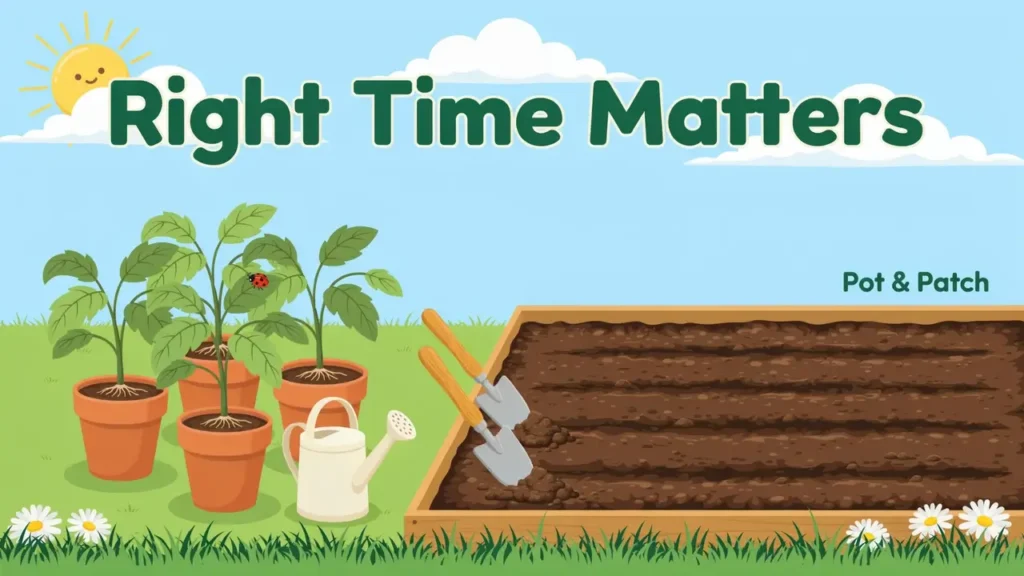
Do not choose a planting date only because the calendar says it is spring. Conditions vary widely between USDA zones, regions, elevations, and even individual yards.
A simple readiness checklist looks like this:
| Check | What You Want to See |
|---|---|
| Frost | Local frost danger has passed |
| Soil | Soil is no longer cold from early spring weather |
| Seedling | Healthy, sturdy growth |
| Leaves | Several developed true leaves |
| Roots | Root ball holds together without being severely root-bound |
| Hardening | Seedling has gradually adjusted to outdoor conditions |
| Weather | No severe cold, wind, or extreme heat expected immediately after planting |
Local weather should always take priority over a fixed date.
How Weather Changes When to Transplant Tomato Seedlings
Air temperature is only part of the decision.
Tomato seedlings raised indoors have been growing in a protected environment. Suddenly moving them into cold soil, strong wind, intense sun, or chilly nights can stress them.
During hardening off, warm-season crops such as tomatoes should be protected when nighttime temperatures fall into the upper 40s to around 50°F.
That does not mean 50°F is a universal transplanting rule for every garden. It is better treated as a warning that tomatoes are tender plants and should not be rushed into cold spring conditions.
Check your local forecast as planting day approaches. If an unusual cold snap is expected, keeping the plants protected for a little longer is usually preferable to planting simply because you reached a planned date.
How Big Should Tomato Seedlings Be Before Transplanting?
There is no single perfect tomato seedling height that works for every variety and growing situation.
A healthy seedling is more important than an exact measurement.
Look for a plant that is:
- Sturdy rather than extremely thin and stretched
- Growing several true leaves
- Free from serious yellowing, wilting, or visible disease symptoms
- Established enough that the growing mix stays together around the roots
- Not so root-bound that a dense mass of circling roots has formed
If your tomato seedlings are still very small and weak, give them more growing time instead of using height alone as a signal to plant.
If they are growing well but the outdoor weather is not ready, you may need to move them into a larger temporary pot.
For the earlier stages of raising tomatoes indoors, see our guide to growing tomatoes from seeds.
Potting Up vs. Transplanting Tomato Seedlings Outside
The word “transplanting” can describe two different jobs.
| Potting Up | Final Outdoor Transplant |
|---|---|
| Moves a seedling into a larger pot | Moves the plant to its permanent location |
| Usually done while seedlings are still indoors | Usually happens after hardening off |
| Gives developing roots more room | Establishes the plant for the growing season |
| May happen more than once | Usually the final major move |
Potting up is usually done when seedlings outgrow their original cells or small pots.
Outdoor transplanting happens later, once the plant has been prepared for garden conditions.
This guide focuses mainly on the final transplant into a garden, raised bed, or outdoor container.
Harden Off Tomato Seedlings Before Planting
Hardening off gradually prepares indoor seedlings for outdoor life.
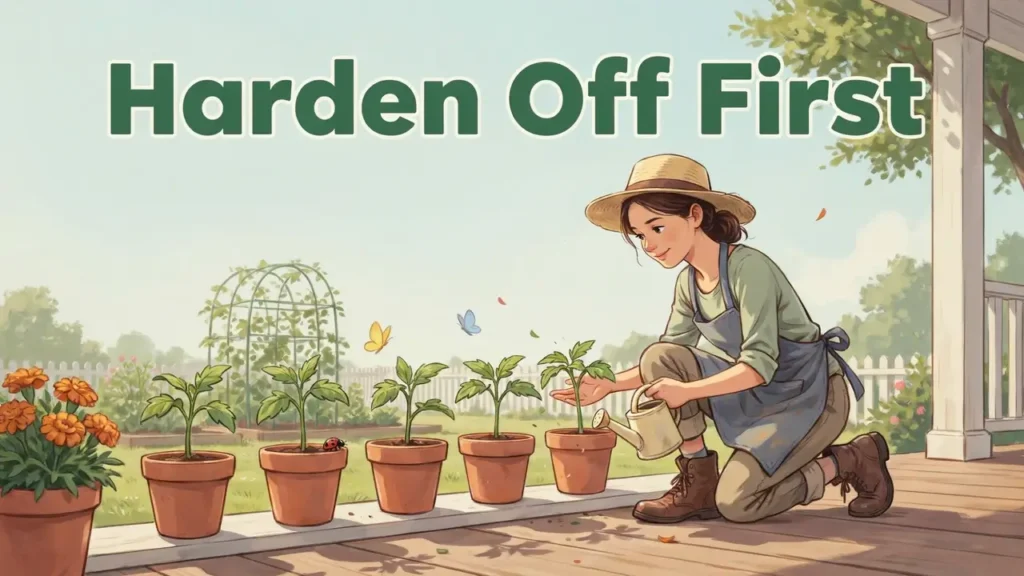
Inside, young tomatoes are protected from direct sun, strong wind, temperature swings, and rapid moisture loss. Moving them directly from that environment into full outdoor conditions can cause unnecessary stress.
Plan on roughly one to two weeks for hardening off.
Start by placing the seedlings outside in a shaded, wind-protected location for a limited period.
Over the following days:
- Gradually increase the amount of time they spend outdoors.
- Introduce more direct sunlight little by little.
- Keep them protected from unusually strong wind.
- Bring them back inside when temperatures are too cold for tender tomatoes.
- Keep an eye on moisture because small containers can dry quickly outdoors.
- Avoid letting the plants wilt severely during the process.
By the end of hardening, the plants should be better prepared for the brighter light and more variable conditions of their permanent location.
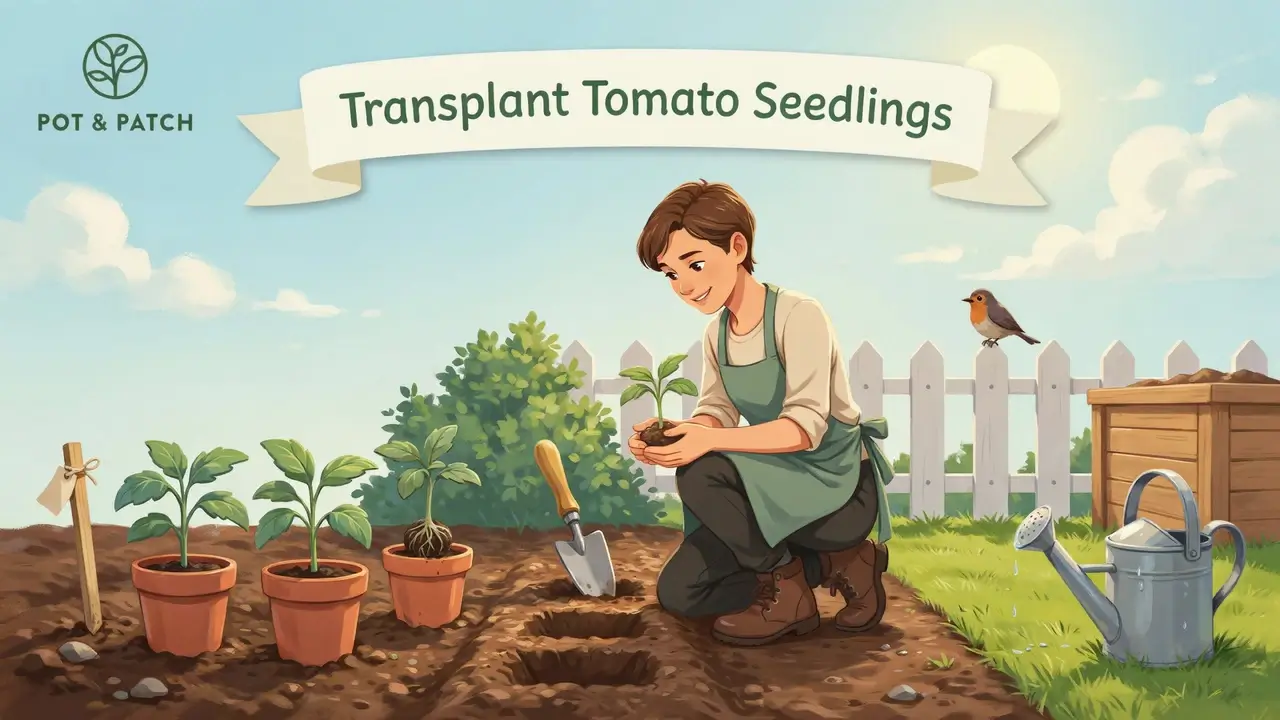
How to Transplant Tomato Seedlings Step by Step
Once conditions are suitable and your seedlings are hardened, the physical planting process is fairly simple.
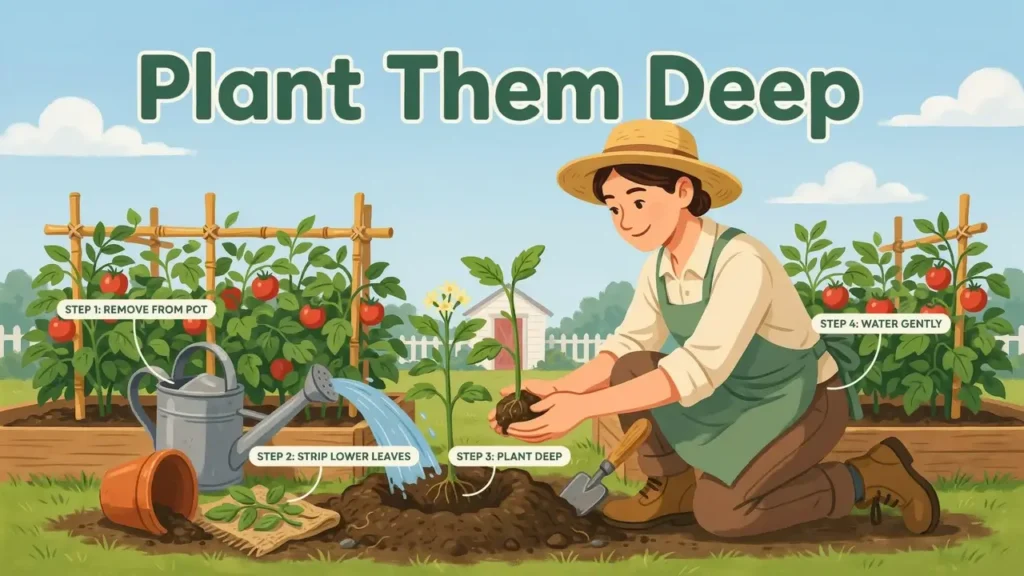
1. Water the Seedlings Before Transplanting
Water the plants before taking them out of their pots.
Moist growing mix usually holds together better around the roots, which makes it easier to remove the root ball with less disturbance.
2. Prepare the Final Planting Location
Prepare your garden soil, raised bed, or container before removing the tomato from its nursery pot.
This prevents the root ball from sitting exposed while you look for tools or finish digging.
If you are growing in containers, make sure the pot is large enough for a mature tomato and has adequate drainage.
Our guides to growing tomatoes in containers and choosing the best container size for tomatoes cover those decisions in detail.
3. Dig the Planting Hole
Dig a hole wide enough to accommodate the root ball without forcing or folding the roots.
For a normal, non-grafted tomato seedling, the hole can be deeper than the root ball because tomatoes can produce additional roots from buried portions of their stems.
4. Remove the Seedling Carefully
Do not yank the tomato plant upward by its stem. Tip the container and ease the root ball out.
If needed, gently press the bottom or sides of the container to help release it. Try to keep as much of the growing medium around the roots as practical.
5. Remove Lower Leaves if Planting Deeply
If you plan to bury part of the stem, remove the leaves that would otherwise end up underground.
Leave healthy foliage above the final soil line. This is especially helpful with tall or slightly leggy transplants.
6. Set the Tomato Deeper Than It Grew in the Pot
Unlike many garden plants, tomatoes can form roots along buried stem tissue.
You can plant a standard tomato seedling deeper than it grew in its nursery pot, sometimes up toward the first true leaves. There is one important exception for grafted tomato plants, covered below.
7. Backfill Around the Roots
Return soil around the root ball and buried stem. Firm it gently enough to remove large air gaps, but do not heavily compact the soil around the roots.
8. Water Immediately
Water thoroughly after planting.
This helps settle soil around the root system and ensures the root ball is moist while the plant begins establishing itself.
9. Add Support
If your tomato will use a cage, stake, spiral, or trellis, installing support around planting time can make the job easier. It also reduces the need to push stakes through an established root zone later.
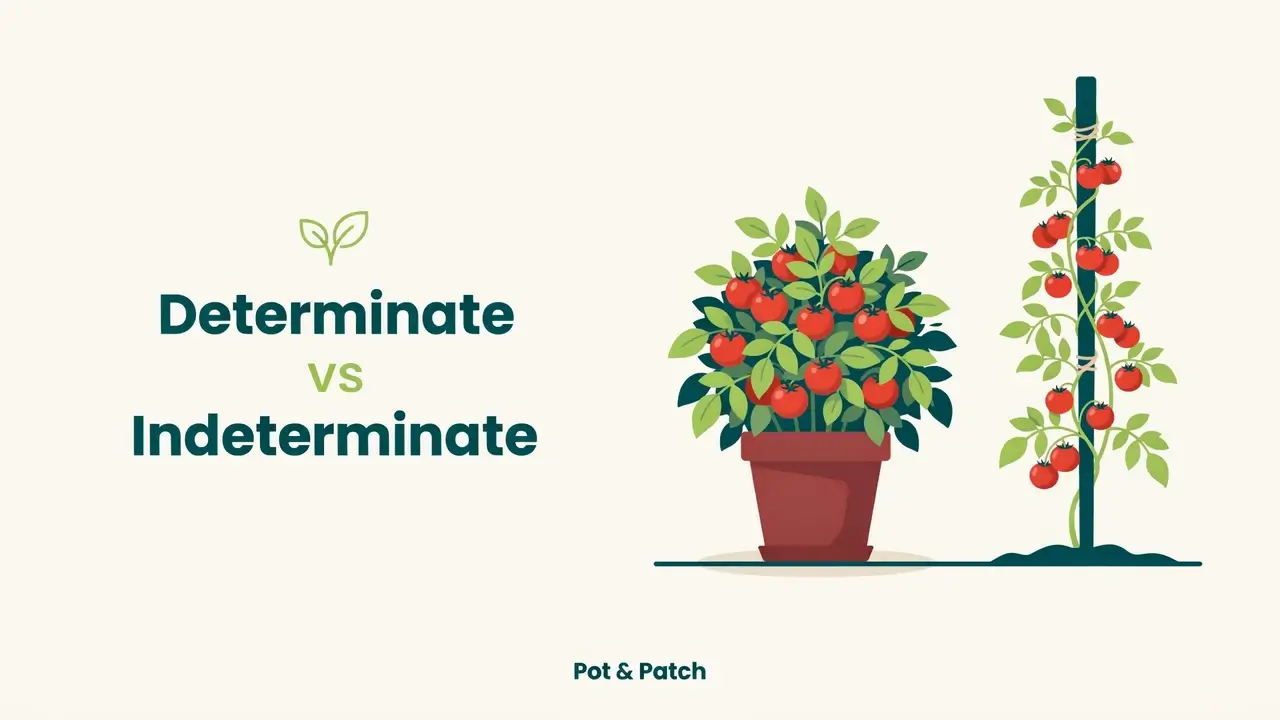
Your support method will partly depend on whether you are growing a determinate or indeterminate variety.
See our guide to determinate vs. indeterminate tomatoes for the differences.
How Deep Should You Plant Tomato Seedlings?
Tomatoes are unusual because buried portions of a healthy stem can develop additional roots.
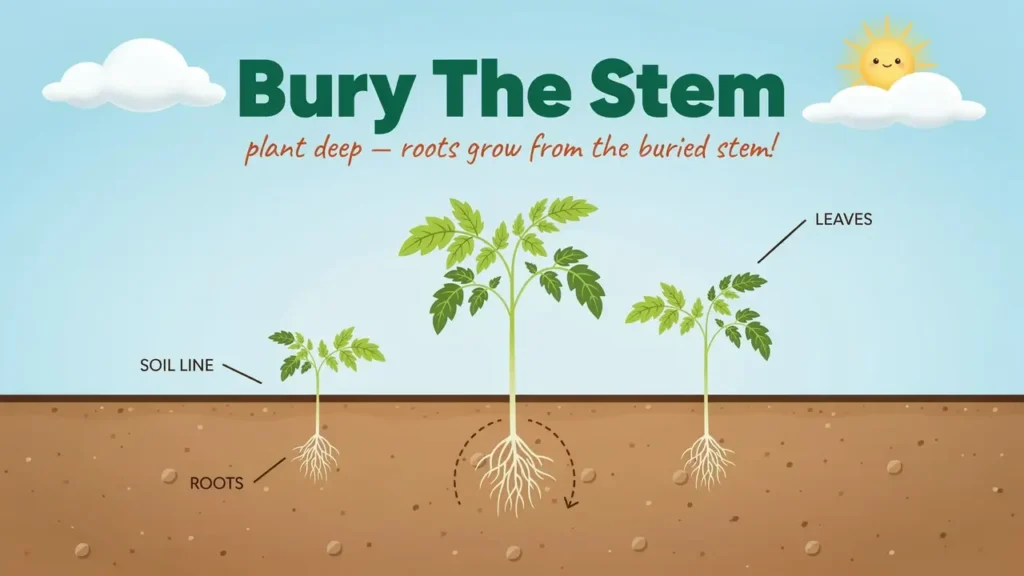
For a standard non-grafted tomato, you can remove the lowest leaves and bury a portion of the stem rather than keeping the original potting-soil level even with the garden surface.
Do not bury healthy foliage.
The goal is to place bare lower stem underground while keeping the main leafy portion above the surface.
A Special Rule for Grafted Tomato Plants
Do not use the same deep-planting method with a grafted tomato. The graft union needs to remain above the soil.
If the graft union is buried, the upper portion of the plant can produce its own roots and bypass the rootstock. If you bought a grafted seedling, check the label and identify the graft before planting.
How Far Apart Should Tomato Seedlings Be?
Spacing depends on the tomato’s growth habit and how you plan to support it.
A useful starting point is:
| Tomato Training Style | Example Spacing |
|---|---|
| Staked indeterminate | 1.5 to 2 feet |
| Caged tomato | 2 to 3 feet |
| Sprawling tomato | 3 to 4 feet |
| Determinate tomato | About 1.5 to 2 feet |
Treat these as general garden guidelines rather than rules for every cultivar. Always consider the expected mature size, support system, seed packet directions, airflow, and available growing space.
How to Transplant Leggy Tomato Seedlings
A tall, stretched tomato seedling is not automatically a lost plant. Tomatoes are particularly suited to deeper planting because buried stems can form roots.
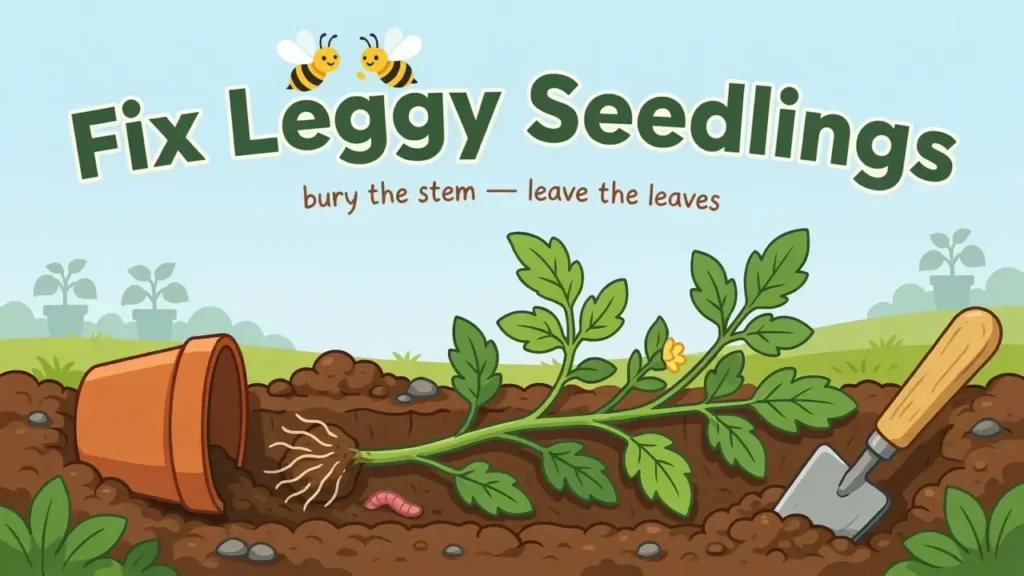
For a leggy transplant, remove suitable lower leaves and either plant the stem deeper or use a shallow trench.
To use the trench method:
- Dig a shallow horizontal trench.
- Lay the root ball and lower bare stem into the trench.
- Gently angle the growing tip upward.
- Cover the lower stem with soil.
- Keep the leafy growing portion above the ground.
- Water thoroughly.
Avoid sharply bending a stiff stem because it can snap.
Again, this deep or trench method is for standard tomato plants, not grafted plants whose graft union must remain above the soil.
Transplanting Tomato Seedlings Into Containers
The basic transplanting technique is similar in a container, but the final pot becomes the entire root environment for the plant.
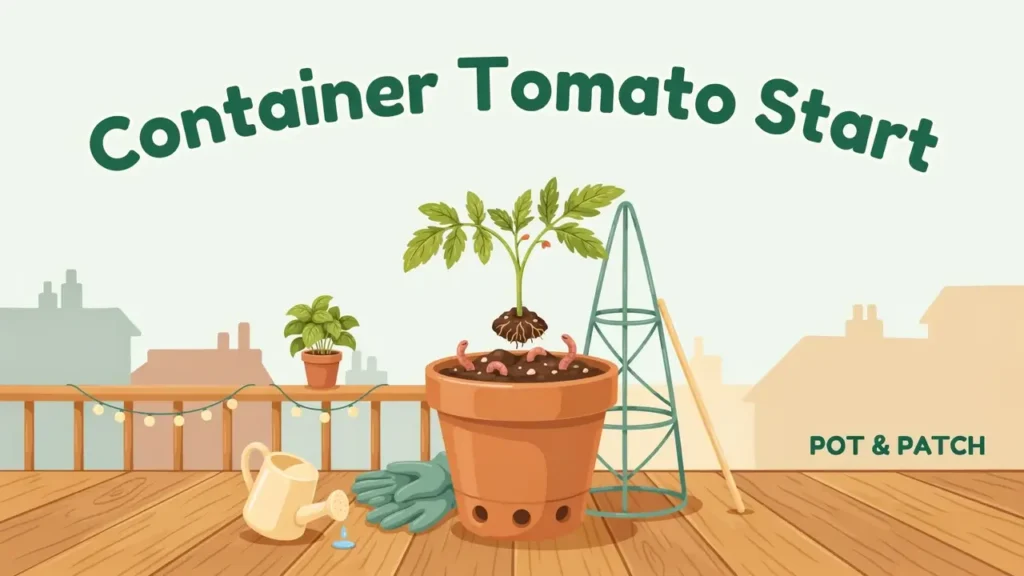
Use a container with drainage holes and enough soil volume for the tomato variety you are growing.
Plant a standard seedling deeply where appropriate, water thoroughly after planting, and add the support system early.
Container-grown tomatoes also depend more heavily on you for watering because their roots cannot spread into surrounding garden soil.
For complete container care, including potting mix, watering, feeding, sunlight, and support, continue with our growing tomatoes in containers guide instead of duplicating those topics here.
Transplanting Tomato Seedlings Into Raised Beds
Raised beds follow the same basic outdoor transplanting process.
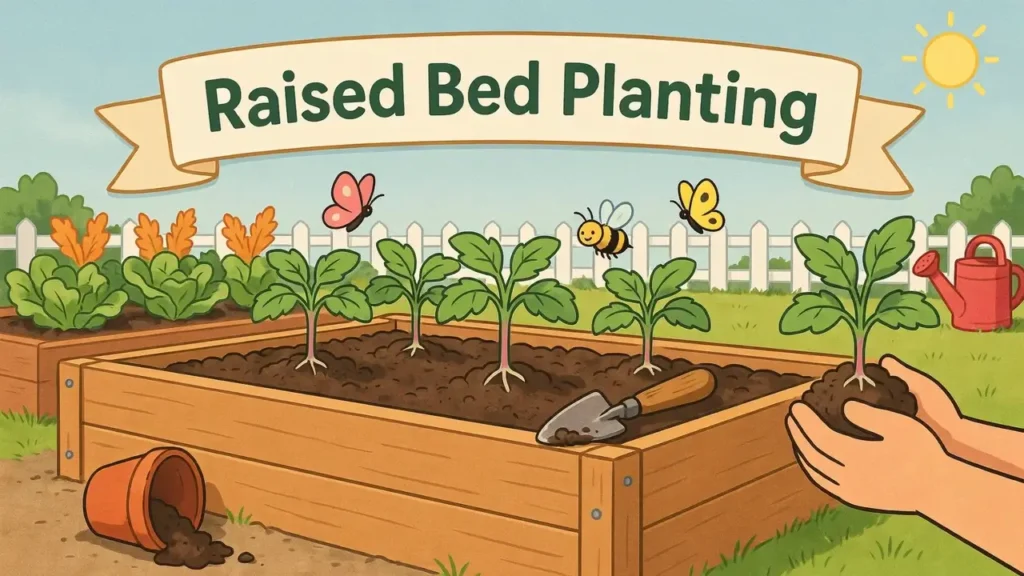
Harden the seedlings first, wait for suitable conditions, space the plants for their mature growth habit, plant standard tomatoes deeply where appropriate, and water after planting. The larger concern in a raised bed is planning the tomato’s mature footprint.
Tall indeterminate tomatoes can shade smaller crops if their location is not considered in advance. For soil preparation, bed planning, support, and season-long care, see our guide to growing tomatoes in raised beds.
How to Reduce Tomato Transplant Shock
Some stress after moving a plant is possible because the root system and leaves are suddenly dealing with a new environment. The best strategy is prevention.
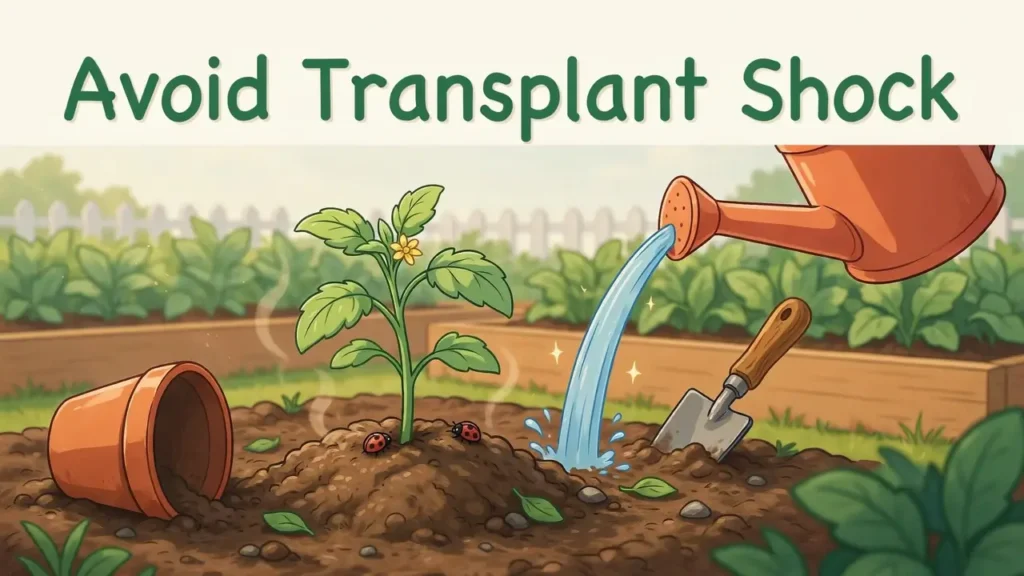
To reduce unnecessary stress:
- Harden seedlings before planting.
- Water them before removing them from their pots.
- Keep the root ball intact as much as possible.
- Avoid leaving roots exposed to sun and wind.
- Transplant during mild conditions when possible.
- Water immediately after planting.
- Do not let the new root zone dry completely.
- Avoid keeping the soil constantly waterlogged.
A little temporary drooping does not necessarily mean the plant is failing, but severe or continuing wilt deserves attention.
Check soil moisture first, then consider heat, cold, root damage, wind, or other growing problems.
What to Do After Transplanting Tomato Seedlings
The first few days should be about helping the roots establish, not pushing the plant into rapid growth.
Keep the Root Zone Moist
Check the soil regularly.
A newly transplanted tomato has not yet extended roots far into the surrounding soil, so it may dry out faster than an established plant. Keep the root ball evenly moist during establishment, but avoid keeping the soil constantly saturated.
Watch the Weather
A newly planted tomato is still vulnerable to unexpected cold, strong wind, and unusually hot conditions. Keep an eye on the forecast, especially during the first part of the season.
Check the Plant Daily at First
Look for:
- Wilting
- Broken stems
- Drying soil
- Pest damage
- Support ties rubbing against the stem
Early problems are usually easier to correct before the plant becomes large.
Let the Plant Establish
Do not make every aspect of tomato care part of the transplanting process.
Once the plant is established, watering, feeding, pruning, staking, flowering, and fruit production become part of normal tomato care rather than transplant care.
Common Tomato Transplanting Mistakes
Planting Too Early
Warm afternoons can arrive well before spring frost risk is over.
Wait for consistently suitable outdoor conditions rather than reacting to a few warm days.
Skipping Hardening Off
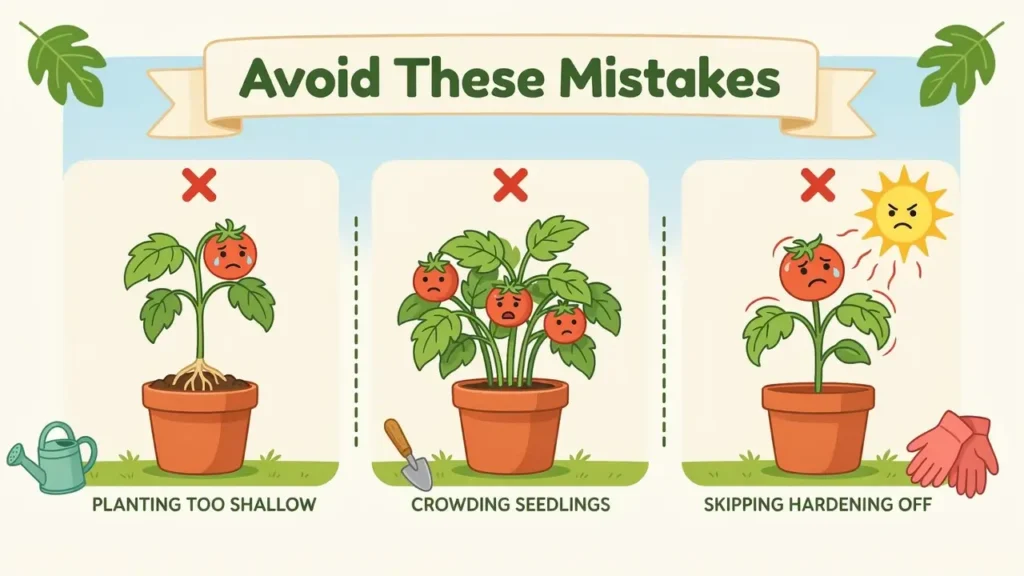
A plant raised under indoor lights or protected greenhouse conditions has not adapted to full outdoor sun and wind.
Gradual acclimation makes the transition less abrupt.
Pulling the Plant by the Stem
The stem is easy to damage.
Release the root ball from the container instead of pulling the plant out from above.
Letting the Root Ball Dry Out
Have the planting location prepared first and water the seedling beforehand.
Do not leave exposed roots sitting in sun or wind while you work elsewhere.
Forgetting That Tomatoes Can Be Planted Deeply
Standard tomato seedlings do not have to remain at their original pot depth.
Burying some bare stem can encourage additional rooting.
Burying a Grafted Tomato Too Deeply
Grafted tomatoes are the important exception.
Keep the graft union above the soil so the upper portion of the plant does not root into the ground.
Crowding Plants
Small seedlings can make generous spacing feel wasteful.
Remember that you are spacing mature tomato plants, not the seedlings you see on planting day.
Frequently Asked Questions
When should I transplant tomato seedlings outside?
The main signals are local frost risk, warmed soil, suitable weather, a healthy plant, and successful hardening off.
Do not rely only on a calendar date because spring conditions vary by region.
How many true leaves should tomato seedlings have before transplanting?
There is no universal number that every tomato seedling must reach.
Look for a healthy, established plant with several developed true leaves and a root system strong enough to hold its growing medium together.
Plant condition and outdoor weather are more useful than counting leaves alone.
Should I water tomato seedlings before transplanting?
Yes.
Watering before transplanting helps keep the root ball moist and together while the plant is being moved.
Can I bury the stem of a tomato seedling?
Yes, for standard non-grafted tomatoes.
Tomatoes can develop roots along buried portions of their stems, which is why deeper planting is commonly recommended.
Do not bury the graft union of a grafted tomato.
Can leggy tomato seedlings still be transplanted?
Yes.
Tall seedlings can often be planted deeper or positioned in a shallow trench with part of the bare stem buried.
Keep the leafy growing tip above the soil.
How long should I harden off tomato seedlings?
Plan on roughly one to two weeks.
Increase outdoor exposure gradually instead of moving seedlings directly from indoor conditions into full sun and wind.
When can tomato seedlings stay outside overnight?
That depends on local conditions and how thoroughly the plants have been hardened.
Protect tender tomato seedlings during cold nights, especially when temperatures are expected to fall into the upper 40s or around 50°F.
Frost remains a much more serious concern, so always check your local forecast.
Is morning or evening better for transplanting tomatoes?
Avoid the harshest conditions when possible.
Morning, late afternoon, or a cool and cloudy period is generally preferable to transplanting during intense midday heat.
The goal is to reduce water stress while the roots settle into their new environment.
Final Thoughts
Learning when to transplant tomato seedlings is mostly about matching a healthy plant with suitable outdoor conditions.
Wait until frost danger has passed and the soil has warmed. Harden seedlings gradually, water them before planting, protect the roots during the move, and plant standard tomato seedlings deeply enough to take advantage of their ability to root along buried stems.
Once your tomatoes are established, the next steps depend on where you are growing them.
Continue with our guides to growing tomatoes in containers or growing tomatoes in raised beds for season-long care.