Why Is My Tomato Plant Wilting? Causes and How to Fix It
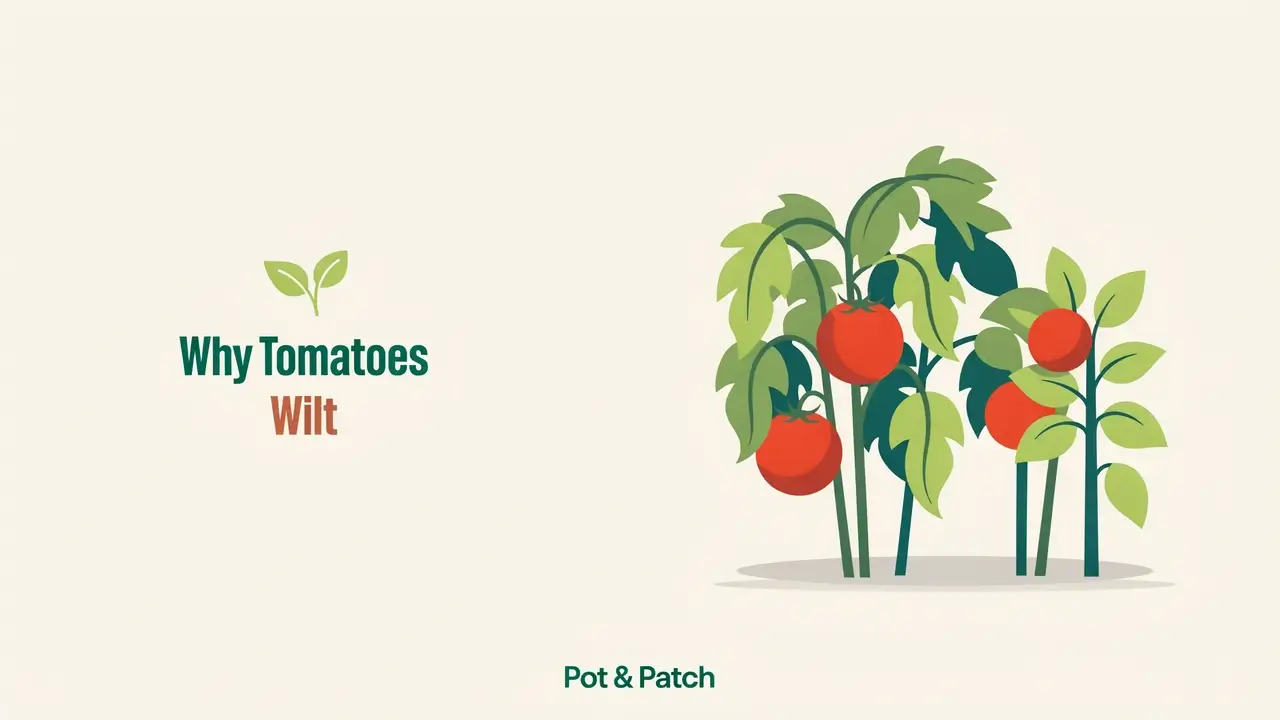
A wilting tomato plant is the garden’s version of a warning light. Sometimes it means nothing serious, just a thirsty plant on a hot afternoon. Other times it signals a disease that will kill the plant no matter what you do.
The difference matters, because the first group is easily fixed and the second means removing the plant before it spreads. The good news is that a few simple checks tell you which one you are dealing with.
This guide walks you through diagnosing the cause and acting on it, from the common and curable to the serious and not.
First, Is It Just Heat or Thirst?
Before assuming the worst, rule out the harmless causes, which account for most wilting.
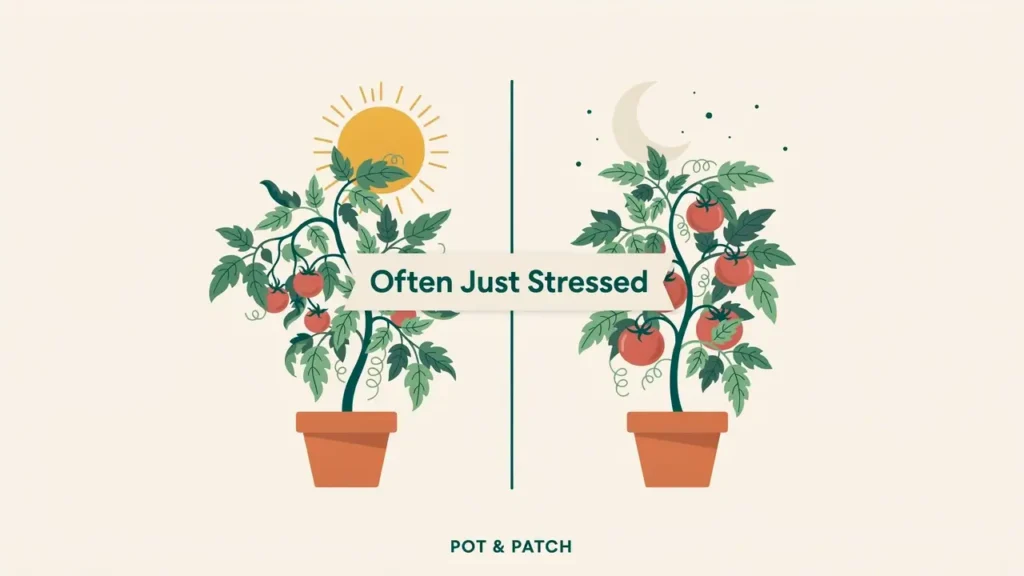
Tomatoes often droop in the heat of the afternoon as a way to conserve moisture, then perk back up in the evening or after a drink. If your plant wilts in the midday sun but recovers overnight, that is a normal stress response, not a disease. The same goes for a recently transplanted seedling, which may sulk for a few days before settling in.
These plants bounce back. It is the wilting that does not recover, or comes with other symptoms, that needs closer attention.
How to Diagnose Wilting
Three quick checks narrow the cause down fast.
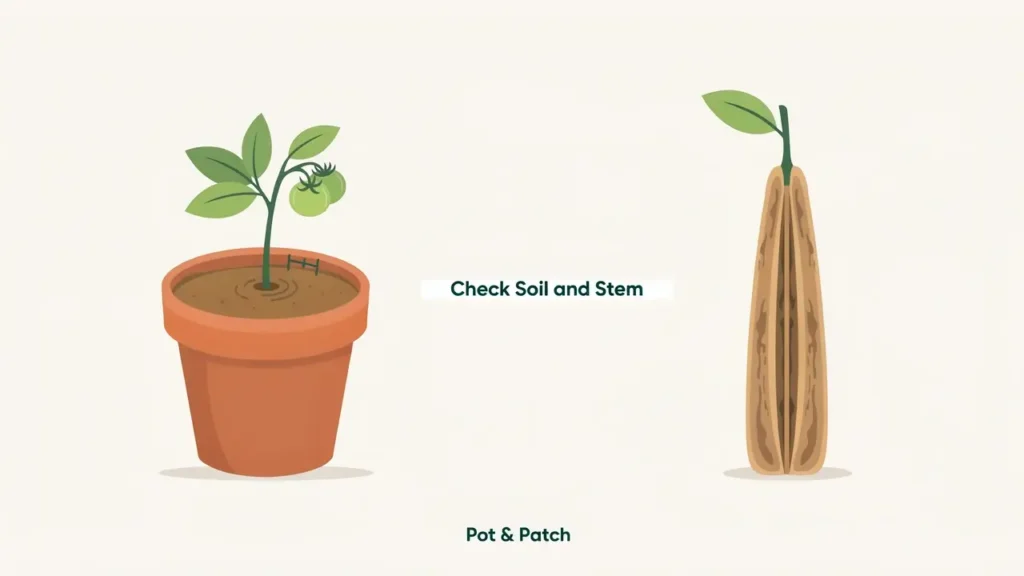
- Check the soil. Dry and crumbly points to underwatering. Soggy and wet points to overwatering and root rot.
- Note the pattern. Does it recover at night, or stay wilted? Is one side affected, or the whole plant? Did it come on slowly or overnight?
- Split a stem. Cut a wilted stem near the base and look inside. Brown streaks in the outer tissue point to a vascular disease, and the details below tell you which one.
| What you see | Likely cause | Fixable? |
|---|---|---|
| Dry soil, recovers after watering | Underwatering | Yes |
| Soggy soil, wilts more after watering | Overwatering, root rot | Often, if caught early |
| Midday droop, recovers at night | Heat or transplant stress | Yes |
| One-sided yellowing, brown streaks up the whole stem | Fusarium wilt | No |
| Whole-plant yellowing, brown streak only 10 to 12 inches up the stem | Verticillium wilt | No |
| Sudden wilt while still green, hollow watery stem | Bacterial wilt | No |
| Rapid collapse, white mold and seed-like lumps at the base | Southern blight | No |
Watering Problems (The Most Common Cause)
Watering mistakes cause more wilting than everything else combined, and they cut both ways.
Underwatering is the simplest. The soil dries out, the plant cannot hold itself up, and it wilts. Check that the soil is moist a few inches down, and water deeply and consistently rather than in light sips.
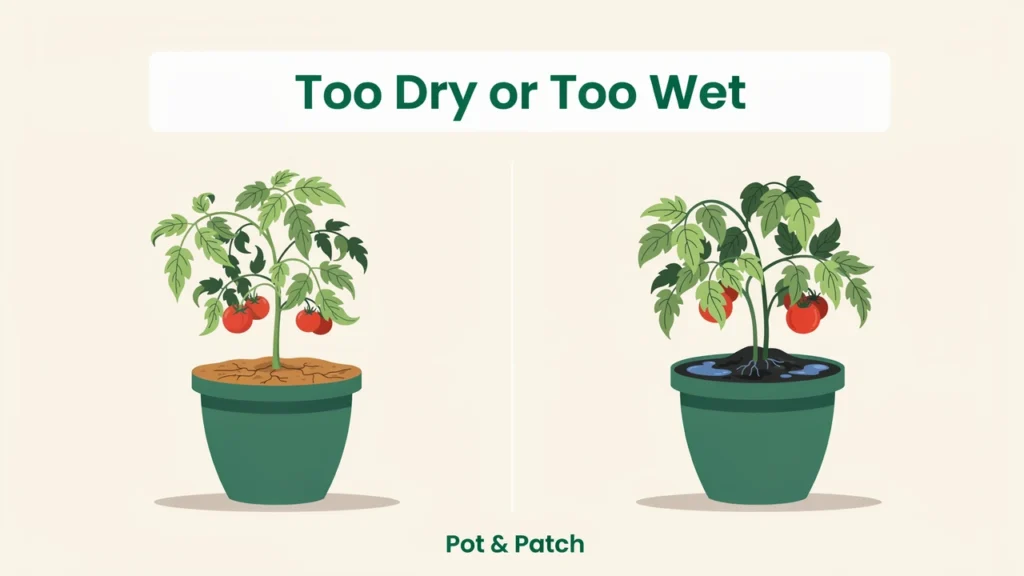
Overwatering is sneakier. When soil stays waterlogged, the roots cannot get oxygen and begin to rot, which stops them taking up water at all. The tell is counterintuitive: the plant wilts even though the soil is wet, and it often looks worse after watering. The fix is to let the soil dry out and improve drainage.
Container plants are especially prone to both, since pots dry fast but also stay soggy if they lack drainage holes. Always check the soil with a finger before watering a pot.
Heat and Transplant Stress
On very hot days, tomatoes wilt on purpose, curling and drooping to reduce the leaf surface losing moisture. A plant that recovers by evening is fine. Help it along with mulch to keep the soil cool and moist, and some afternoon shade during a heat wave.
Newly planted seedlings also wilt from the shock of moving outdoors, particularly if they were not hardened off first. This passes within a few days as the roots establish.
Fungal Wilt Diseases: Fusarium and Verticillium
These two soil-borne fungi are the serious, incurable wilts. Both invade through the roots and clog the plant’s water-conducting tissue, so the plant slowly starves of water even in moist soil.
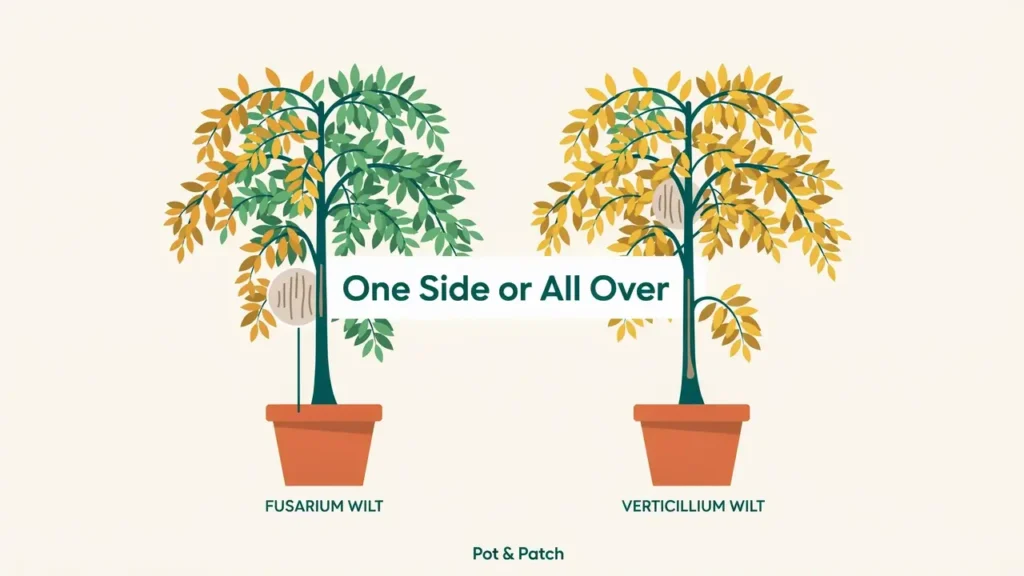
They look similar, but you can tell them apart. Fusarium wilt usually yellows and wilts one side of the plant or one side of a branch first, and when you split the stem the brown discoloration runs all the way up. Verticillium is slower and more even, affecting the whole plant, often with V-shaped lesions on the leaflets, and its stem browning reaches only about 10 to 12 inches (25 to 30 cm) up from the base. Both may wilt by day and recover at night early on.
There is no cure for either. Remove and destroy affected plants, do not compost them, and do not replant tomatoes or other nightshades in that spot for several years. The best defense is prevention: choose resistant varieties, marked with a V or F after the name, and rotate your crops. If yellowing is the main symptom you are seeing, our guide on why tomato leaves turn yellow helps separate a wilt disease from a simple nutrient issue.
Bacterial Wilt
Bacterial wilt is the most dramatic of the lot. Caused by a soil bacterium that thrives in hot (above 85°F or 29°C), wet conditions, it can drop a healthy-looking plant in a day or two.
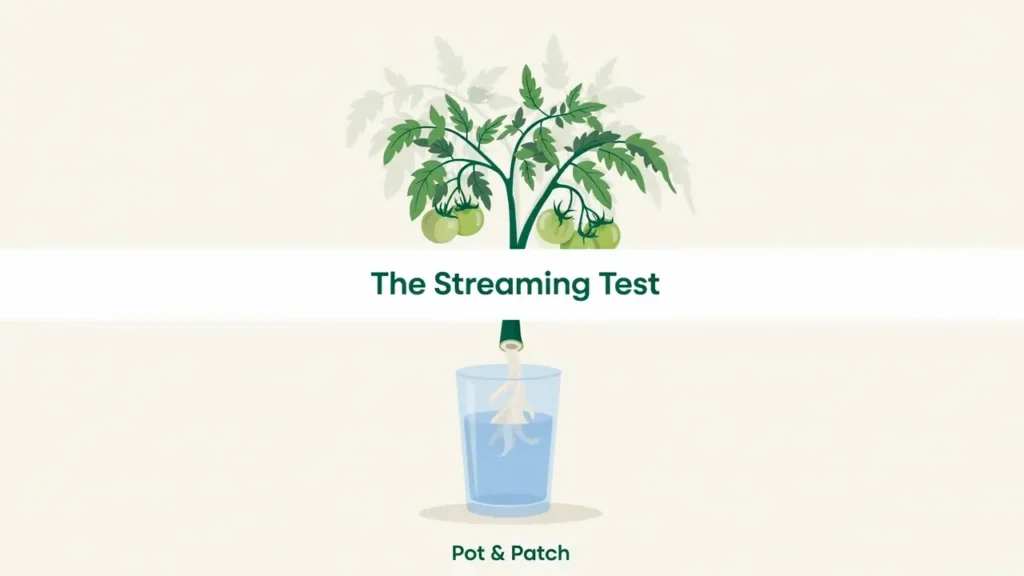
The giveaway is that the plant wilts while the leaves are still green, with no yellowing first, and the collapse comes on suddenly. There is a simple test to confirm it. Cut a section of wilted stem near the base, and suspend it in a glass of clear water. If, within a few minutes, a milky white stream oozes out of the cut end, that is the bacteria, and the diagnosis is confirmed. Inside, the stem is often dark, watery, and hollow.
There is no treatment. Remove the plant immediately, bag it, and keep it away from healthy plants. Note that “wilt-resistant” varieties labeled V and F resist the fungal wilts, not this one.
Other Causes
A few less common culprits are worth knowing:
- Southern blight causes rapid wilting, with telltale white mold strands and small tan, seed-like lumps at the base of the stem.
- Tomato spotted wilt virus brings wilting along with bronzing and ring spots, often on the fruit. It is spread by thrips and cannot be cured.
- Stalk borers tunnel into the stem, cutting off water flow. Look for a small hole near the base.
- Root-knot nematodes attack the roots, leaving them lumpy and galled, and the plant wilts despite good watering.
- Walnut trees nearby release a compound called juglone that is toxic to tomatoes, causing them to wilt and decline.
Can You Save a Wilting Tomato Plant?
It depends entirely on the cause. If the wilting is from heat, thirst, overwatering, or transplant shock, the plant will recover once you correct the problem, and often quite quickly.
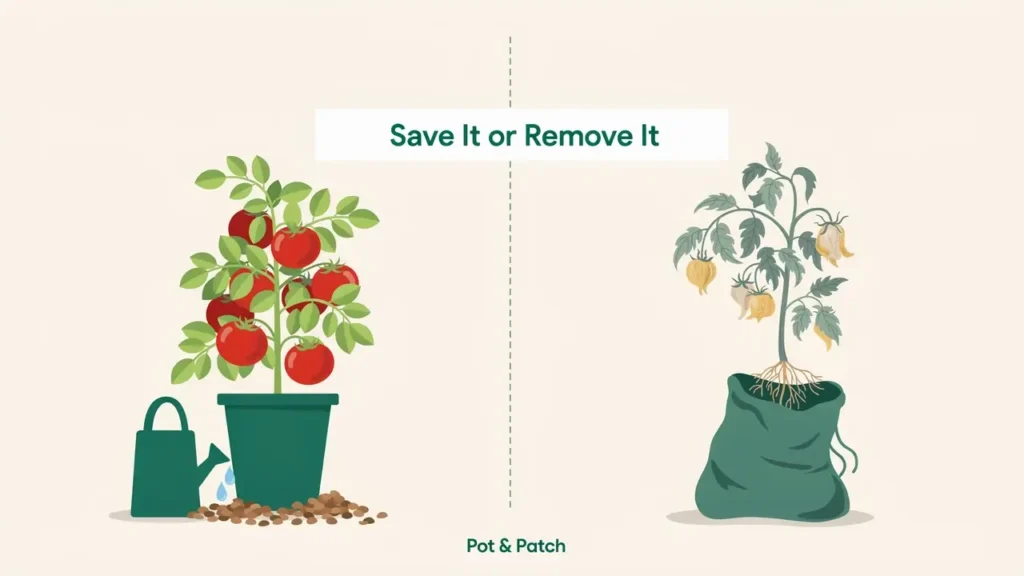
If it is one of the vascular diseases, Fusarium, Verticillium, or bacterial wilt, there is no saving it. The water-conducting tissue is permanently blocked, and the plant should be removed to protect the rest of your garden. The hard rule of thumb: a plant that recovers overnight can be saved, while one that stays wilted with discolored inner stems cannot.
How to Prevent Wilting
Most wilting is avoidable with good basic care:
- Water consistently and deeply, and let the soil surface dry slightly between waterings.
- Mulch around plants to hold steady moisture and keep roots cool.
- Make sure beds and pots drain well, and build raised beds in soggy spots.
- Choose disease-resistant varieties, shown by letters like V and F on the label.
- Rotate where you grow tomatoes, and clear away plant debris at season’s end.
FAQ
Why does my tomato plant wilt after watering?
That usually means overwatering and root rot, not thirst. Waterlogged roots cannot take up water, so the plant wilts even in wet soil. Let it dry out and improve drainage.
My tomato plant wilted overnight. What happened?
A sudden, dramatic wilt while the leaves are still green often points to bacterial wilt. Check by cutting a stem and suspending it in water to look for milky streaming.
Will my tomato plant recover from wilting?
If the cause is heat, watering, or transplant stress, yes. If it is a vascular wilt disease, with brown discoloration inside the stem, it will not, and should be removed.
Why are my potted tomatoes wilting?
Usually a watering issue. Pots dry out fast in heat but also stay soggy without drainage holes. Check the soil before watering and make sure the pot drains freely.
Final Thoughts
When a tomato wilts, resist the urge to panic or to simply pour on more water. Check the soil, watch whether it recovers at night, and if in doubt, split a stem to look inside.
Most wilting is just heat or watering, and easily fixed. Save your concern for the plant that stays collapsed with discolored stems, the sign of a disease where the kindest move is to remove it and protect the healthy plants around it.