Determinate vs Indeterminate Tomatoes: Differences and Which to Grow
Every tomato variety falls into one of two groups: determinate or indeterminate. The label describes how the plant grows, and it decides how much space you need, how you support the plant, whether you prune it, and when you harvest.
Get this one distinction right and almost every other tomato decision becomes easier. Choosing the wrong type for your space is the most common reason a plant outgrows its spot or disappoints at harvest.
Here is what each type means, which popular varieties belong to which group, and how to pick the right one for your garden.
Determinate vs Indeterminate Tomatoes: The Quick Answer
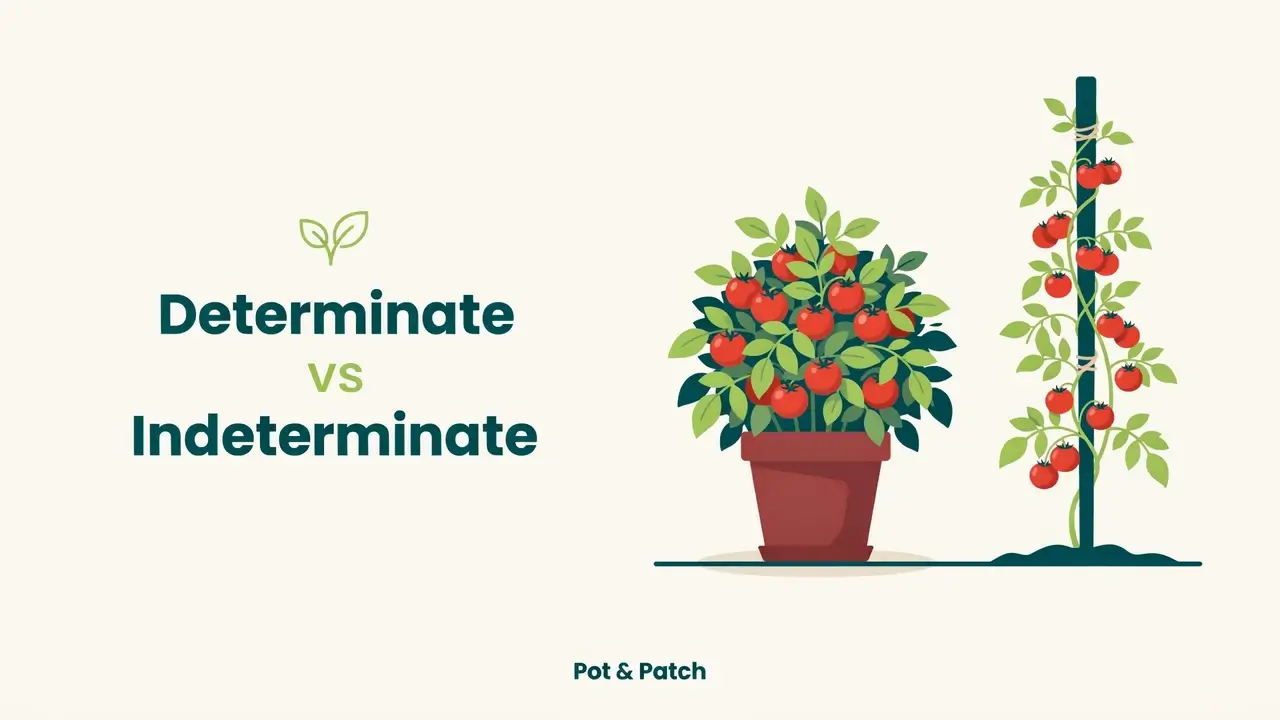
The difference comes down to growth habit. Determinate tomatoes grow to a fixed size and ripen most of their fruit in one short burst. Indeterminate tomatoes keep growing and producing until frost kills them.
| Feature | Determinate | Indeterminate |
|---|---|---|
| Growth habit | Bush, fixed size | Vining, keeps growing |
| Height | 2 to 4 ft (0.6 to 1.2 m) | 6 to 10 ft (1.8 to 3 m) or more |
| Harvest | One concentrated flush | Continuous until frost |
| Support | Stake or small cage | Tall cage or trellis needed |
| Pruning | Little to none | Regular suckering helps |
| Best for | Small spaces, containers, batch canning | Long season, flavour, slicers |
For beginners and small spaces, determinate types are the easier start. If you want fresh tomatoes all summer and have room to support tall plants, indeterminate is worth the extra work.
What Are Determinate Tomatoes?
Determinate tomatoes are often called bush tomatoes. Their final size is set by genetics, so the plant grows to a certain point, then stops and puts its energy into fruit.
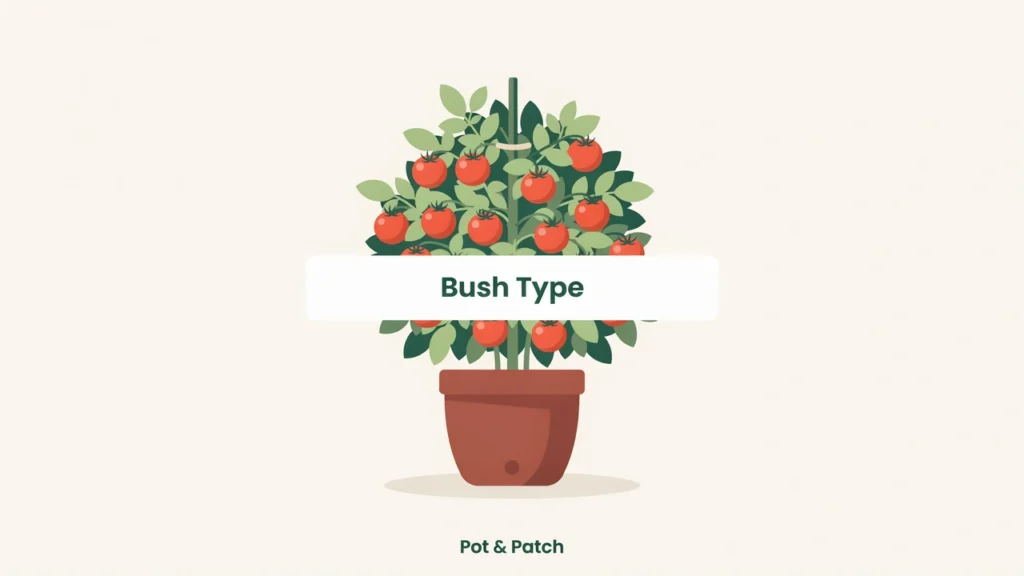
Most reach 2 to 4 feet (0.6 to 1.2 m) tall and stay compact. Once the tips set flower buds, upward growth ends, and the plant ripens its crop over roughly four to five weeks. After that flush, it slows down and is mostly finished for the season.
That habit brings a few clear benefits:
- They fit small gardens, pots, and patios thanks to their compact size.
- They need only light support, such as a stake or short cage.
- Their concentrated harvest is ideal if you want a batch of tomatoes at once for sauce or canning.
The trade-off is a shorter season. When the plant is done, it is done, so many gardeners stagger plantings a few weeks apart to spread the harvest.
What Are Indeterminate Tomatoes?
Indeterminate tomatoes are vining plants. Rather than stopping at a set height, the main stem keeps extending and setting new flowers all along its length until cold weather ends the season.
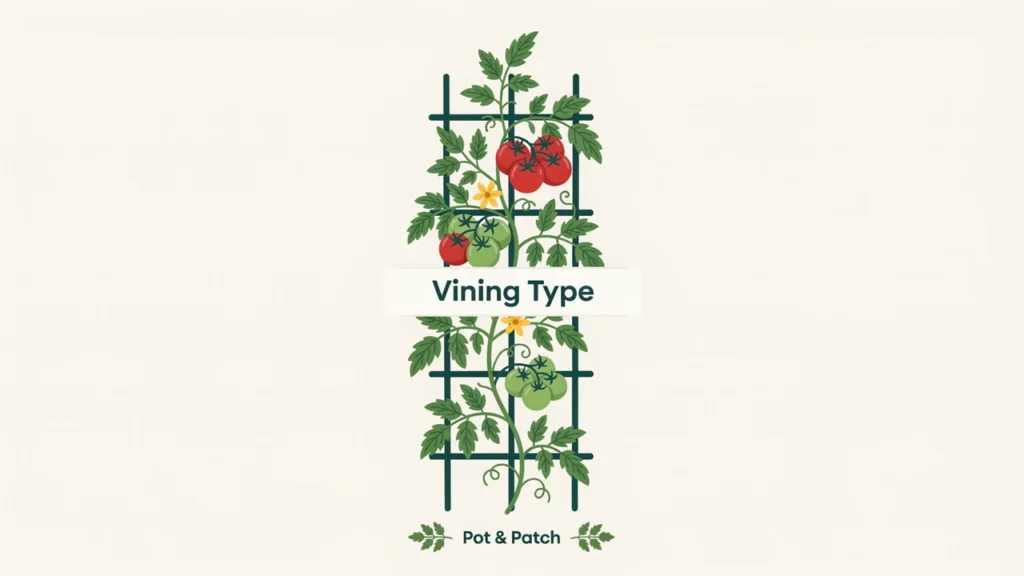
These are the giants of the tomato patch, commonly reaching 6 to 10 feet (1.8 to 3 m) and sometimes taller with good support. Instead of one flush, they deliver a steady trickle of fruit for months.
Most heirlooms and many of the best-flavoured varieties are indeterminate. The longer ripening window and higher leaf-to-fruit ratio give the fruit more time to develop complex, sweeter flavour.
The catch is that they demand more from you:
- They need strong, tall support: a sturdy cage, stakes, or a trellis.
- They benefit from regular pruning to stay manageable and healthy.
- They take up real vertical space, which rules out most small containers.
Semi-Determinate Tomatoes
A few varieties sit between the two groups. Semi-determinate tomatoes, sometimes called semi-bush, share traits of both.
They tend to bear fruit over a fairly concentrated period like a determinate, but grow a little larger and produce more branches, so they need more support than a true bush type. Celebrity is a well-known example, along with Homestead and Marmande.
If you want something between compact and sprawling, a semi-determinate is a sensible middle path.
Which Tomato Varieties Are Determinate or Indeterminate?
Growth habit is set by the variety, not by how you grow it. Here is where the most popular tomatoes fall, based on how each is classified by seed sources and growers.
| Variety | Type |
|---|---|
| Roma | Determinate |
| San Marzano | Indeterminate |
| Rutgers | Determinate |
| Marglobe | Determinate |
| Patio | Determinate |
| Celebrity | Semi-determinate |
| Beefsteak (most) | Indeterminate |
| Big Boy, Better Boy, Big Beef | Indeterminate |
| Brandywine | Indeterminate |
| Cherokee Purple | Indeterminate |
| Black Krim | Indeterminate |
| Mortgage Lifter | Indeterminate |
| Amish Paste | Indeterminate |
| Sungold | Indeterminate |
| Sweet 100 | Indeterminate |
| Early Girl | Indeterminate |
| Most cherry and grape types | Indeterminate |
Two common points of confusion are worth clearing up.
San Marzano surprises people. It is a paste tomato, and most paste types are determinate, but the classic Italian San Marzano is indeterminate and grows into a tall vine. Some hybrid, bush-style versions exist, so check the label if you specifically want a compact one.
A single variety name can also cover both habits. Early Girl is indeterminate, for instance, but Bush Early Girl is determinate. When in doubt, the packet is the final word.
How to Tell Which Type You Have
You rarely need to guess. The information is usually printed right where you buy the plant or seed.

- Check the seed packet or plant tag. Look for the words determinate or indeterminate, often shortened to Det. or Ind.
- Watch for the word bush. If bush appears in the variety name, it is almost always determinate.
- Look it up. A quick check in a seed catalogue or the variety description confirms it.
- Observe the plant. A compact plant that sets fruit heavily then stops is determinate. One that keeps climbing and flowering is indeterminate.
If you are starting your own plants, the classification is listed on most seed packets, which our guide to growing tomatoes from seeds covers in more detail.
Pruning: Why the Rules Are Opposite
Pruning is where the two types need completely different treatment, and getting it backwards costs you fruit.
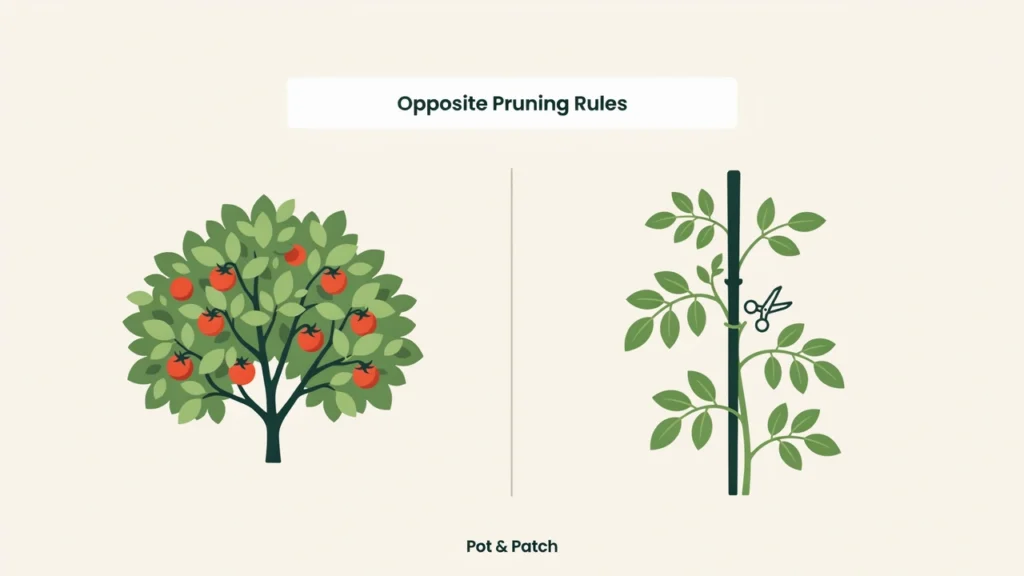
Determinate tomatoes should get little to no pruning. Because they set fruit at the tips of their branches, removing side shoots (suckers) cuts off future tomatoes and lowers your total yield. University extension guidance is clear that suckering a bush-type plant reduces its crop. Just remove any leaves touching the soil and leave the rest alone.
Indeterminate tomatoes are the opposite. Since they grow endlessly, thinning the suckers to one or two main stems improves airflow, reduces disease, and channels energy into larger fruit. This is a season-long task, not a one-time job. Pinch out suckers as they appear, and top the plant late in the season if it outgrows its support.
In short: leave determinate plants alone, and prune indeterminate ones regularly.
Support and Staking by Type
Both types grow better off the ground, but they need very different structures.
Determinate plants are short enough that a single stake or a standard tomato cage handles them. Set it in place at planting time so you do not disturb the roots later.
Indeterminate plants need serious support. Use a tall, strong cage of at least 4 to 5 feet (1.2 to 1.5 m), heavy stakes with twine, or a trellis they can climb. Flimsy cages collapse under a mature vine loaded with fruit.
Which Type Should You Grow?
The right choice comes down to your space and your goal.
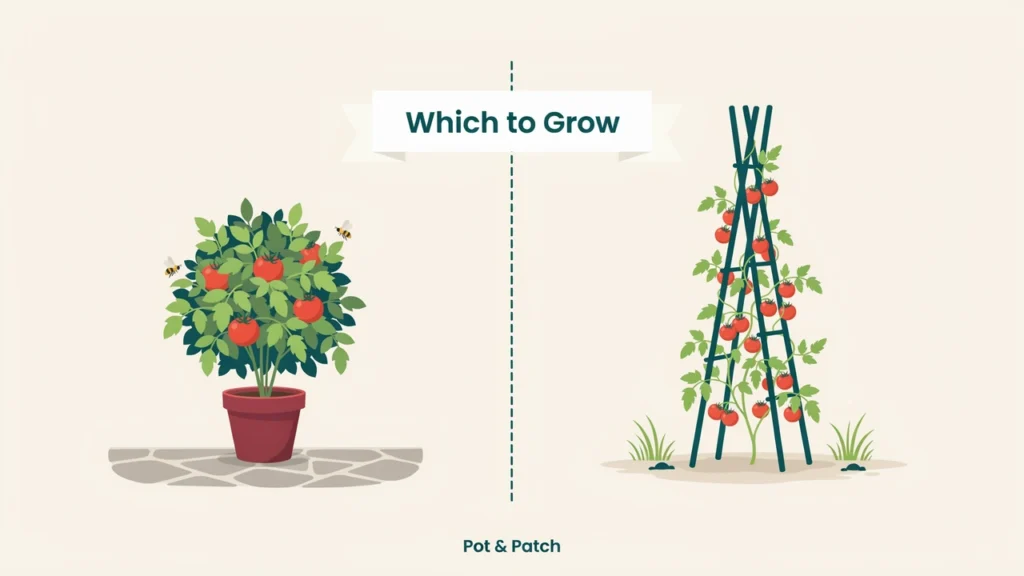
Choose determinate tomatoes if you have a small garden, grow in containers, or want a big batch of fruit at once for sauce and preserving. They are the practical pick for balconies and patios, where a compact plant in a pot is far easier to manage. For that route, see our guide to growing tomatoes in containers and the best container size for tomatoes.
Choose indeterminate tomatoes if you have room for tall plants, want fresh tomatoes across the whole season, and care most about flavour. Many gardeners grow both: a couple of determinates for an early, concentrated harvest and some indeterminates for a long run of slicing tomatoes.
If your space is a paved area or balcony, our guide to growing tomatoes on a patio shows how to make either type work in pots. To browse varieties first, start from our tomatoes hub.
FAQ
Are Roma tomatoes determinate or indeterminate?
Roma is a determinate variety. The fruit sets and ripens within a short window, which is exactly what you want when preserving a batch of sauce at once.
Are San Marzano tomatoes determinate or indeterminate?
Indeterminate, despite being a paste type. The classic San Marzano grows into a tall vine and needs strong support. A few bush-style hybrids exist, so check the tag.
Are cherry tomatoes determinate or indeterminate?
The large majority are indeterminate and keep cropping into autumn. A few dwarf, container-friendly cherry types are determinate instead, so check the label.
Are beefsteak tomatoes determinate or indeterminate?
Most beefsteak varieties are indeterminate, growing tall and fruiting over a long season.
Should you prune determinate tomatoes?
Very little. Heavy pruning removes the branch tips where the fruit forms and reduces your harvest.
How tall do indeterminate tomatoes grow?
Usually 6 to 10 feet (1.8 to 3 m), and vigorous varieties can go taller with good support.
Final Thoughts
The determinate versus indeterminate choice is really about matching a plant to your space and your plans. Determinate types keep things compact and give you a quick, concentrated harvest. Indeterminate types ask for more support and pruning but reward you with months of fruit.
Once you know which type you are growing, staking, pruning, and harvesting all fall into place. Pick the habit that fits your garden, and the plant will do the rest.