Why Are My Tomato Leaves Turning Yellow? Causes and Fixes
Yellow leaves on a tomato plant are not a diagnosis on their own. They are a symptom, and the plant usually tells you exactly what is wrong if you know where to look. Most yellowing comes down to one of three things: a nutrient shortage, a disease, or simply the natural aging of old leaves.
The trick is reading the clues. Which leaves are turning yellow, the top or the bottom, and in what pattern, points you straight to the cause.
This guide walks you through that diagnosis and the fix for each cause, starting with the most common.
First, Is It Normal?
Before you worry, rule out the harmless causes.
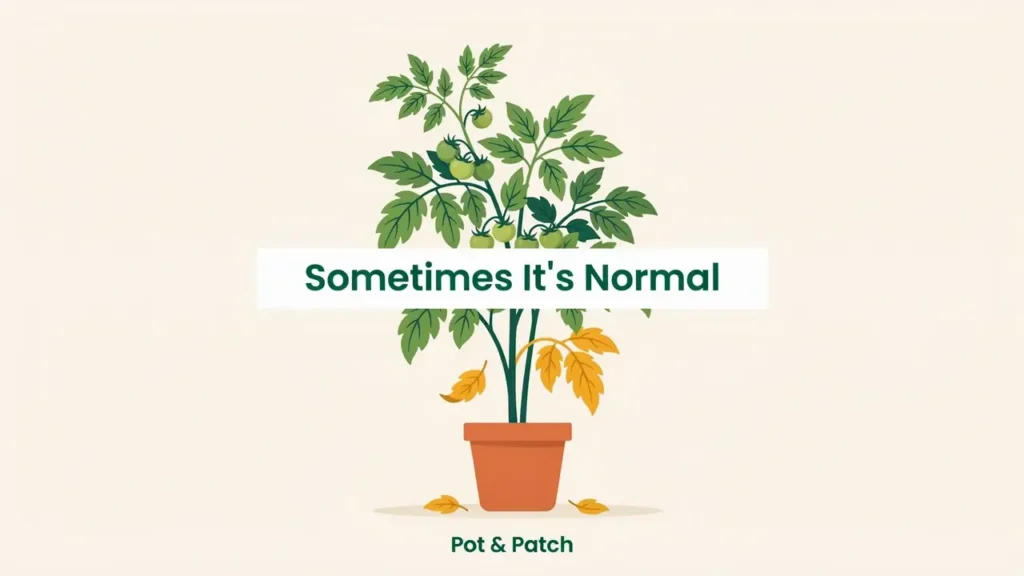
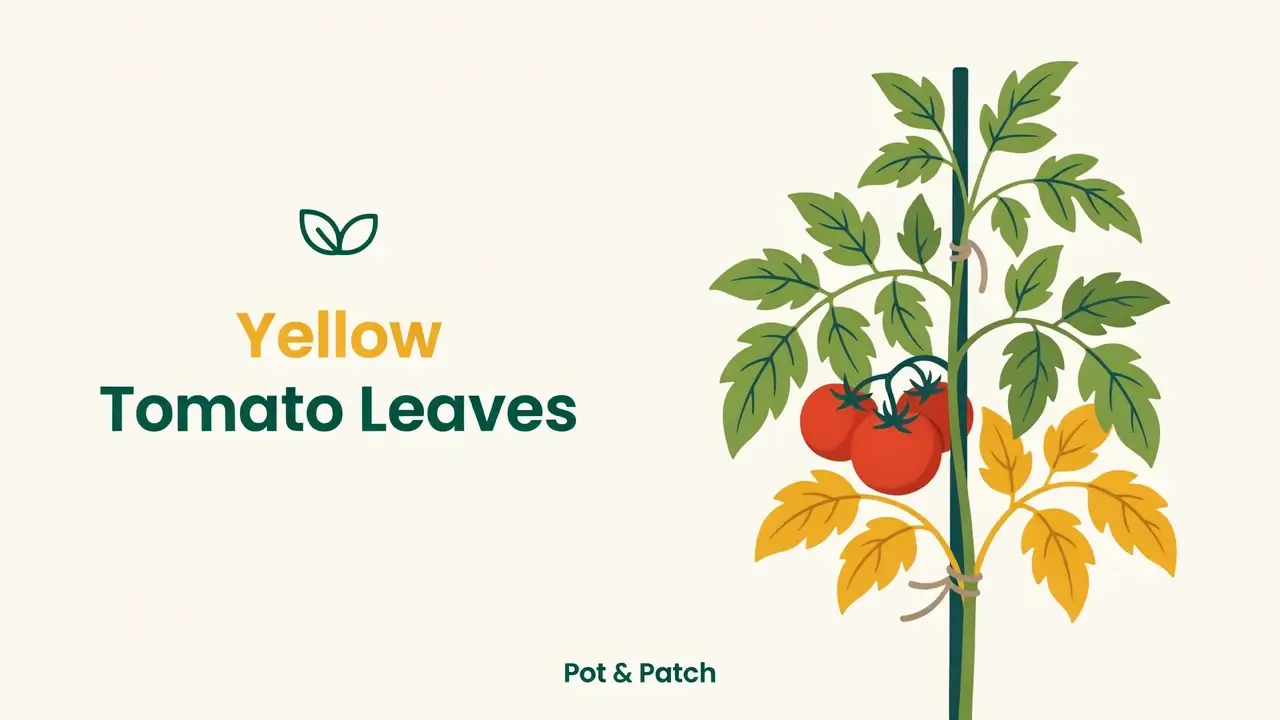
The lowest leaves on a plant, especially the first seedling leaves, naturally yellow and drop as the plant grows and the canopy fills in. If it is only the oldest leaves right at the base, and the rest of the plant looks healthy, this is usually nothing to fix.
Newly moved plants also yellow for a while. Yellowing is one of the first signs of transplant shock, and it passes on its own as the plant settles. Hardening off seedlings before planting out reduces it.
Diagnose It First: Which Leaves, What Pattern?
This one step saves a lot of guesswork, because different causes hit different parts of the plant.
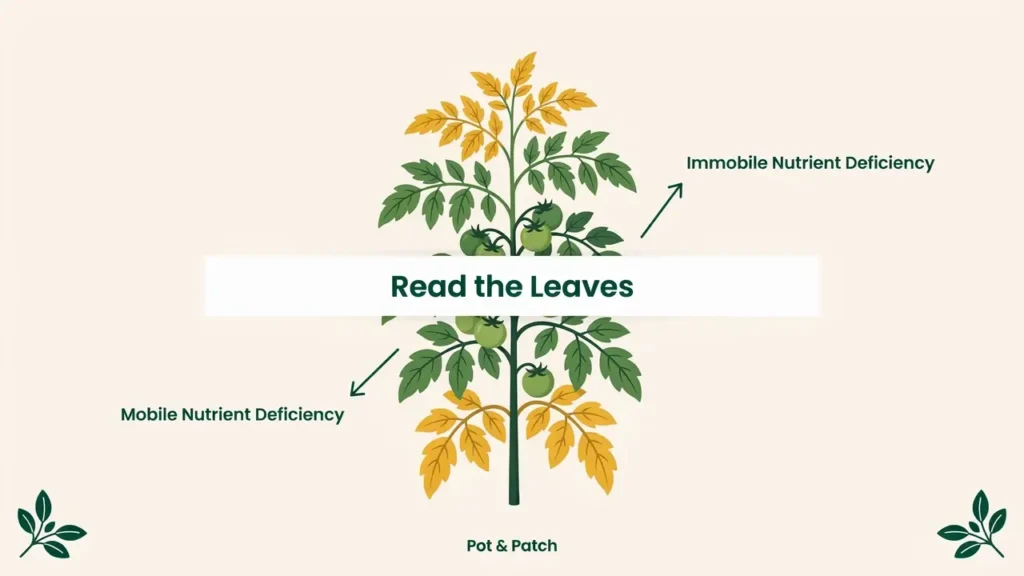
Nutrients fall into two groups. Mobile nutrients, like nitrogen, magnesium, and potassium, can be moved around inside the plant, so when they run short the plant pulls them from old leaves to feed new growth. That means a shortage shows on the lower, older leaves first. Immobile nutrients, like iron, sulfur, and calcium, cannot be moved, so a shortage shows on the upper, newest leaves first.
Disease and watering problems have their own signatures too. Use this as a quick reference:
| Where and pattern | Likely cause |
|---|---|
| Lowest, oldest leaves yellow and drop | Normal aging |
| Lower leaves, whole leaf uniform pale yellow, spindly plant | Nitrogen deficiency |
| Lower leaves, yellow between green veins with small brown dots | Magnesium deficiency |
| Lower leaves, yellow then brown scorched edges | Potassium deficiency |
| Upper, new leaves yellow with green veins | Iron deficiency |
| Upper, new leaves uniform pale | Sulfur deficiency |
| Whole plant yellow and drooping while soil is wet | Overwatering |
| Yellow with dry brown edges and wilting | Underwatering |
| Uneven yellow patches, spots, or yellowing on one side | Disease |
The single most useful question is simply: top or bottom? Nitrogen and most fungal problems start low. Iron and viruses start high.
Watering Problems: The Most Common Cause
More tomatoes yellow from watering mistakes than anything else, and overwatering is the usual culprit.
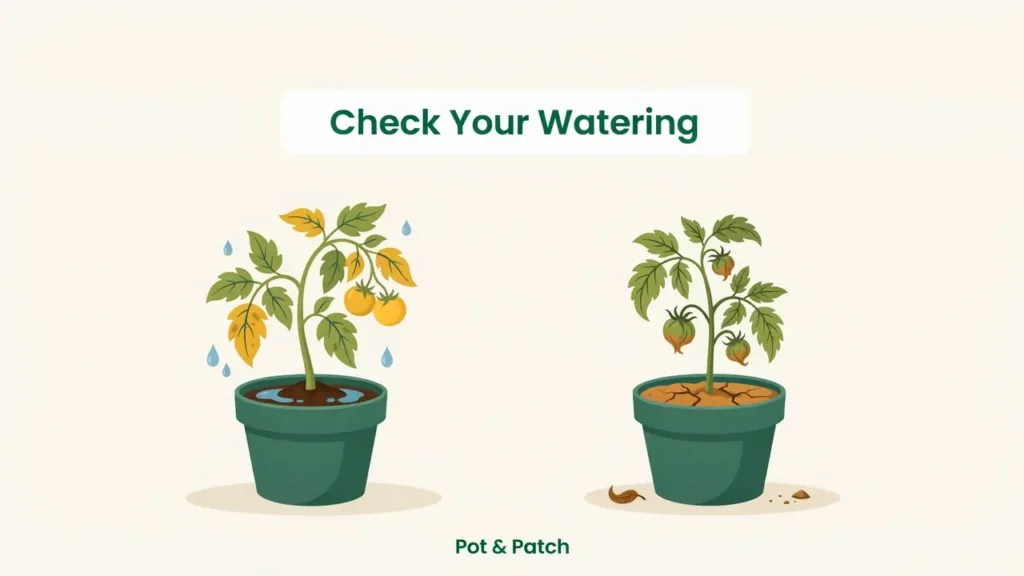
An overwatered plant can look confusing. The leaves droop and turn yellow even though the soil is wet, because waterlogged roots cannot take up oxygen or move nutrients. If the soil is soggy and the plant looks limp and yellow, ease off and let it dry out, and check that the pot or bed drains freely.
Underwatering looks different. You will see yellowing along with wilting and dry, brown leaf edges, and the soil will be dry well below the surface. The fix is deeper, more consistent watering.
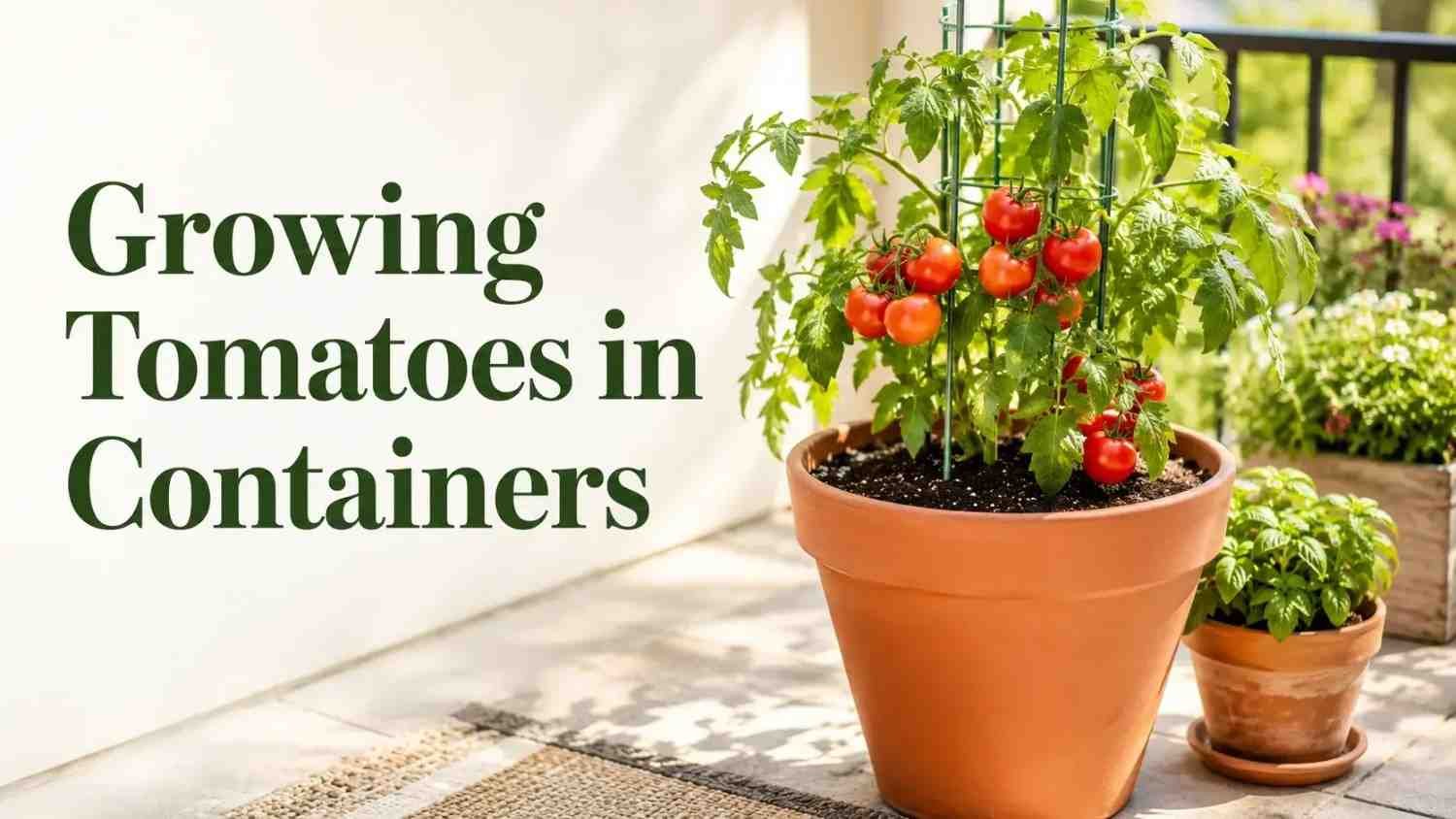
Container tomatoes are especially prone, because pots dry out fast and are easy to overwater in turn. Check the soil with a finger before watering rather than watering on a fixed schedule. Inconsistent moisture also drives blossom end rot on the fruit, so steady watering solves two problems at once.
Nutrient Deficiencies
If watering is not the issue, a nutrient shortage is the next thing to check. Tomatoes are heavy feeders, and nitrogen is the most common deficiency simply because people underfeed them.
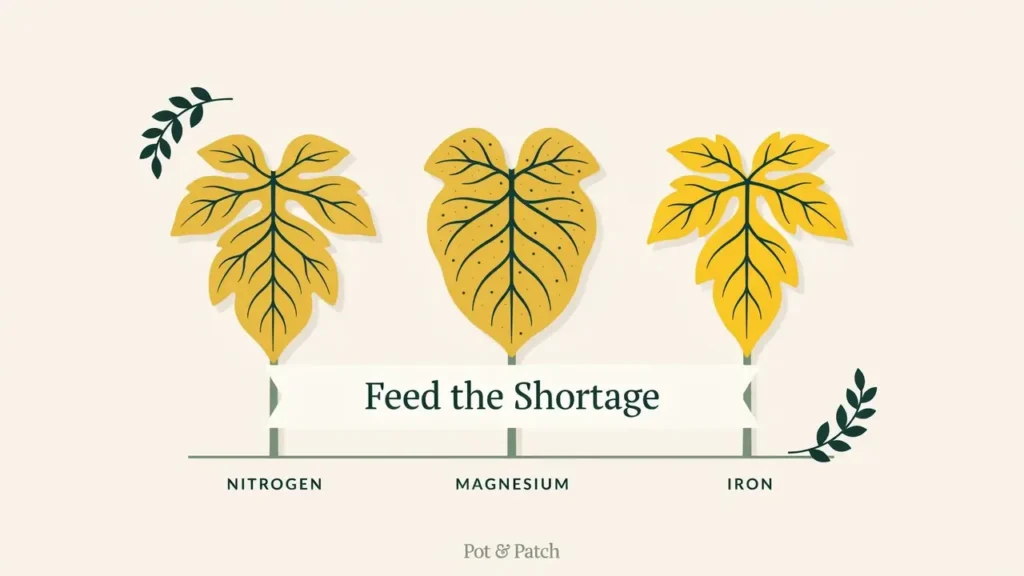
- Nitrogen: Older, lower leaves turn a uniform pale yellow, the whole leaf, and the plant looks thin and spindly, sometimes with purple-tinged stems.
- Magnesium: Older leaves yellow between the veins while the veins stay green, often with small whitish or brown spots, starting at the leaf edges.
- Potassium: Older leaf edges yellow, then turn brown and scorched, and may curl.
- Iron: The newest, uppermost leaves yellow while the veins stay green. This is common in alkaline soil above pH 7, where iron is present but the plant cannot absorb it.
- Sulfur: New leaves turn a uniform pale yellow, similar to nitrogen but on the top of the plant.
For most deficiencies, a balanced feed corrects the problem. Our guide to the best fertilizer for tomatoes in containers covers what to use and when. If yellowing keeps returning, a soil test is worth doing, since it tells you what is actually short and checks your pH.
A quick word on Epsom salt. It only helps if the problem is genuinely a magnesium shortage. If magnesium is already adequate, adding Epsom salt does nothing useful and can throw off the balance of other nutrients, so test before reaching for it.
Diseases That Cause Yellowing
Disease yellowing usually looks uneven, appearing in patches or alongside spots, rather than the smooth, whole-leaf yellowing of a nutrient shortage.
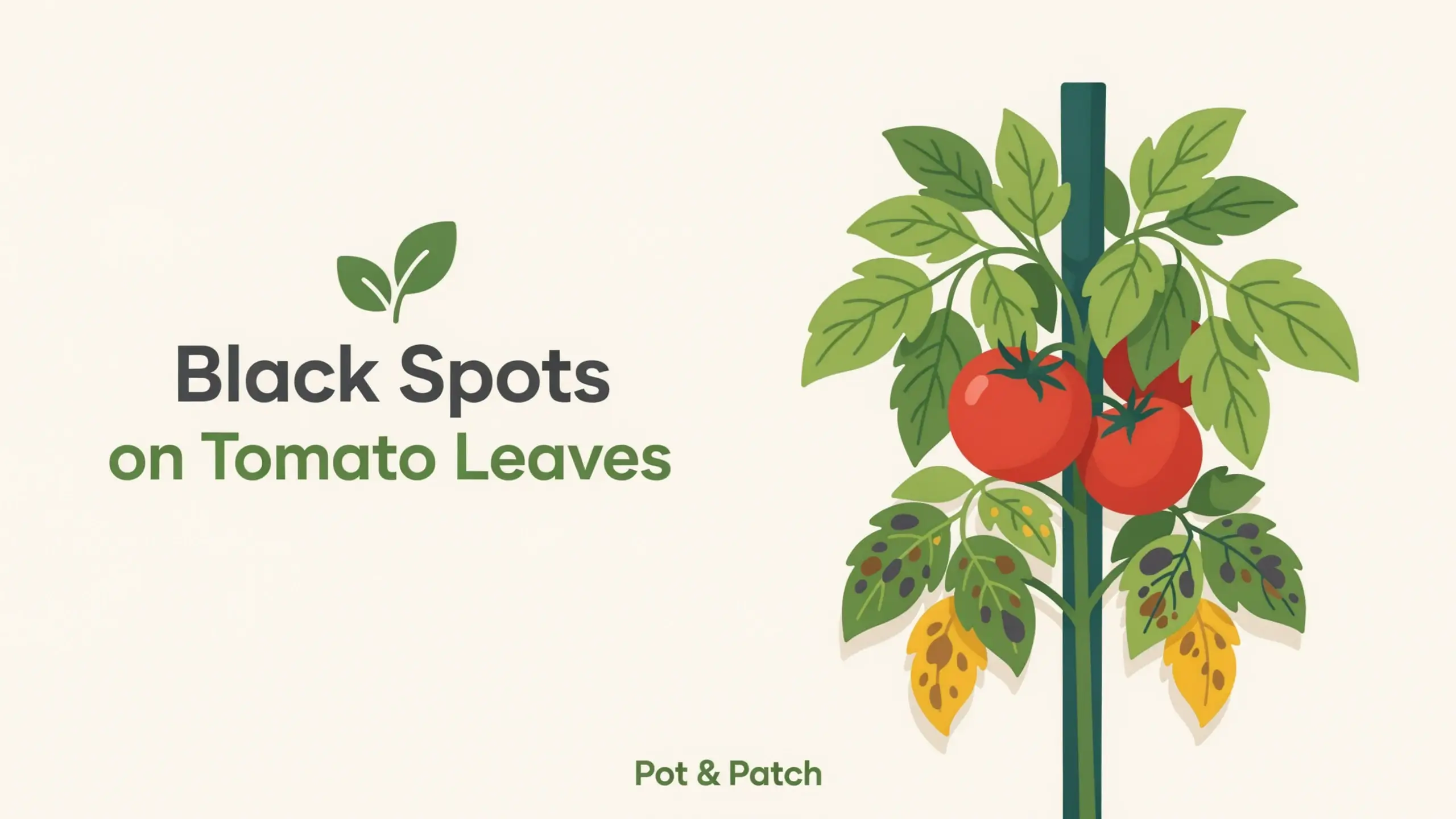
- Early blight and Septoria leaf spot show as yellow areas around dark spots on the lower, older leaves, and spread upward. Remove affected leaves, improve airflow, and avoid wetting the foliage.
- Fusarium and Verticillium wilt often yellow and wilt the plant on one side first. These are soilborne, hard to cure, and best handled by removing the plant and choosing resistant varieties next time.
- Viruses, such as tomato yellow leaf curl virus and mosaic viruses, cause yellowing with curling, mottling, or twisted new growth. There is no cure, so control the whiteflies that spread them and remove infected plants.
Whatever the disease, remove yellowed or spotted leaves with clean hands and dispose of them, then wash up before touching healthy plants to avoid spreading it.
Pests
Sap-feeding pests stress a plant and leave yellowing behind. Aphids, spider mites, and whiteflies are the usual offenders.
Check the undersides of leaves and the stems. Look for tiny insects, fine webbing, a sticky residue, or a stippled, speckled look to the leaves. Catching them early, then rinsing them off or treating them, usually stops the yellowing from spreading.
Other Causes
A few less common culprits are worth knowing:
- Cold, wet soil early in the season can yellow young plants until things warm up.
- Heat and sunscald can bleach and yellow exposed leaves in extreme heat.
- Herbicide drift, especially from products like glyphosate, bleaches the newest growth from the inside of the leaf outward. Keep weedkillers well away from tomatoes.
- Too little light leaves plants pale and weak, so make sure they get six to eight hours of sun.
- Salt buildup in containers can yellow leaves, so flush the pot occasionally with plenty of water.
How to Fix and Prevent Yellowing
Once you know the cause, the fix follows naturally. The general approach:
- Match the fix to the diagnosis rather than guessing. Top-leaf and bottom-leaf problems need different answers.
- Water consistently and make sure everything drains well, since this prevents the most common cause.
- Feed to the plant’s needs, going easy on nitrogen once fruit has set.
- Remove diseased or badly yellowed leaves and keep your tools and hands clean.
One honest note: a leaf that has already yellowed rarely turns green again. The goal of treatment is to protect the leaves that are still healthy, not to revive the ones that have gone.
FAQ
Why are only the bottom leaves on my tomato turning yellow?
Usually normal aging or a nitrogen shortage. The lowest, oldest leaves naturally fade, and mobile nutrients like nitrogen are pulled from old leaves first, so shortages show there too.
How do I tell if yellow leaves are from overwatering or underwatering?
Check the soil. Overwatered plants droop and yellow while the soil is wet and soggy. Underwatered plants wilt with dry, brown leaf edges and dry soil below the surface.
Should I remove yellow leaves from my tomato plant?
Yes, especially if they are diseased or spotted. Remove them with clean hands and dispose of them, then wash up before handling healthy plants.
Does Epsom salt fix yellow tomato leaves?
Only if the cause is a magnesium deficiency. Otherwise it does not help and can unbalance other nutrients, so test your soil before using it.
Will my tomato plant recover from yellow leaves?
Usually, if you catch the cause early. The already-yellowed leaves will not green up again, but the plant and its new growth recover once conditions are corrected.
Final Thoughts
Yellow tomato leaves look alarming, but they are really just the plant asking for something. Read which leaves are affected and in what pattern, and the cause becomes clear: most often watering, feeding, or simply old age.
Fix the watering first, feed to need, and deal with disease or pests early. Do that and your plant will put its energy back into green growth and a healthy crop.