Blossom End Rot on Tomatoes: Causes, Fixes, and Prevention
You have been watching your tomatoes ripen, and then you spot it: a dark, sunken patch spreading across the bottom of the fruit. That is blossom end rot, and it is one of the most common and most misunderstood tomato problems.
The good news is that it is not a disease, it will not spread through your plants, and it is almost always preventable. The bad news is that most of the “cures” people reach for do not actually work.
This guide explains what really causes blossom end rot, how to stop it, and which popular fixes to skip.
What Is Blossom End Rot?
Blossom end rot is a physiological disorder, not a disease. It is not caused by a fungus, bacteria, or pest, and it does not spread from plant to plant or fruit to fruit.
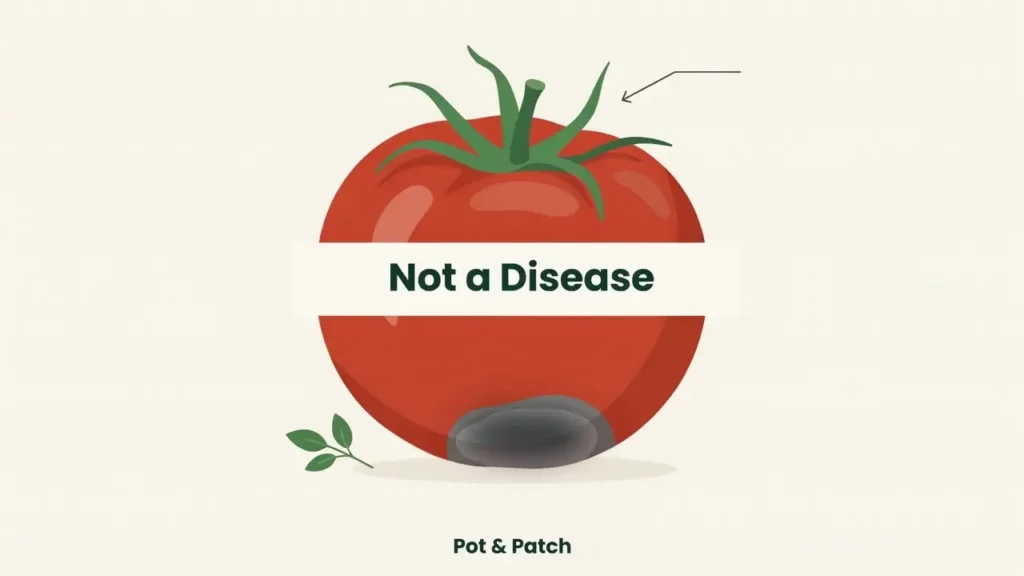
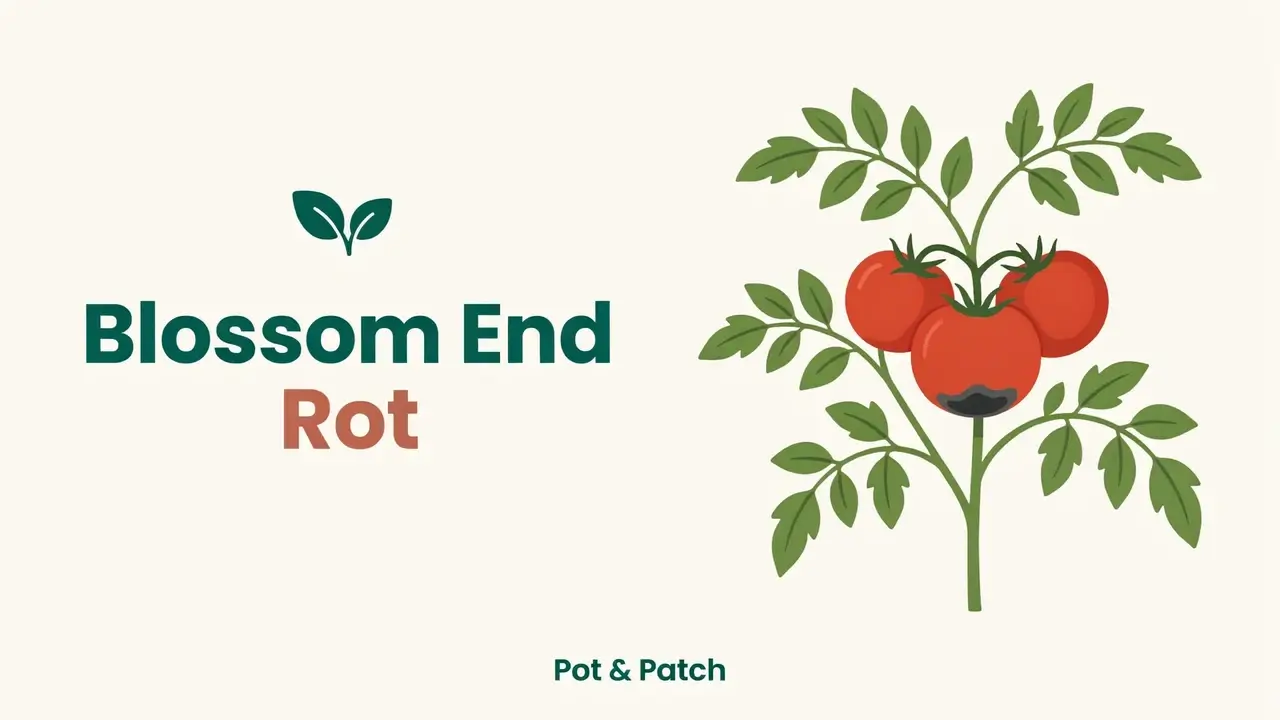
It shows up as a gray to black, leathery, sunken spot at the blossom end of the fruit, which is the bottom, opposite the stem. The spot can start small and brown, then enlarge until it covers a third or half of the tomato. It affects both green and ripening fruit.
Sometimes mould or other microorganisms move into the damaged tissue later, which makes it look like a fungal infection, but the rot itself is not. Tomatoes are the most common victim, though peppers, eggplant, squash, and melons can get it too.
What Causes Blossom End Rot?
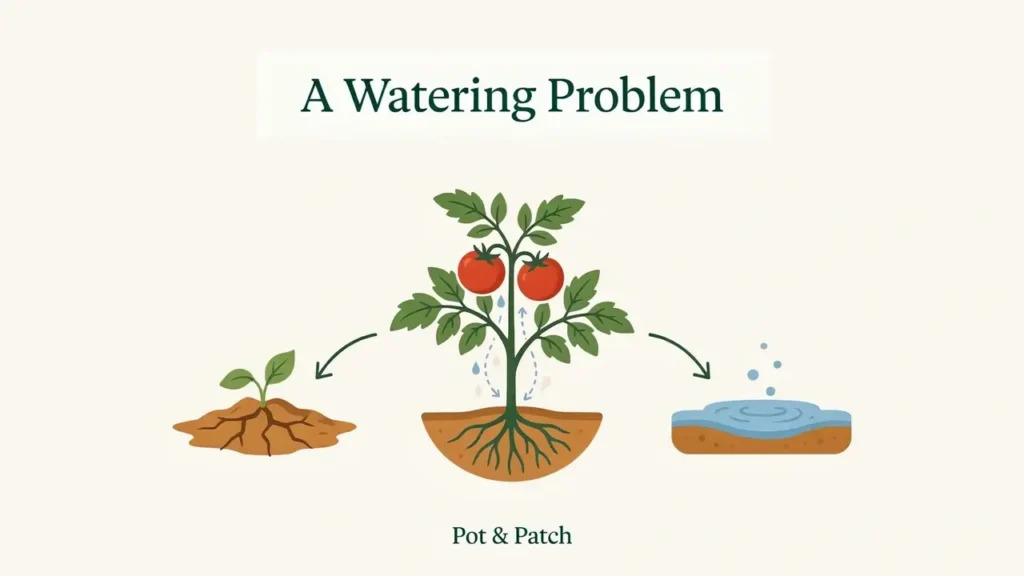
Here is the part most people get wrong. Blossom end rot is caused by a shortage of calcium in the developing fruit, but that is usually not because your soil lacks calcium.
Calcium travels through the plant dissolved in water. When watering is inconsistent, letting the soil swing between bone dry and soaking wet, the plant cannot move enough calcium to the fast-growing fruit in time. The result is dead tissue at the blossom end. In other words, this is far more often a watering problem than a soil problem.
A few other things make it worse:
- Too much nitrogen fertilizer, which pushes lush leafy growth that pulls calcium away from the fruit
- Hot spells and rapid growth, which raise the fruit’s calcium demand
- Root damage from digging or hoeing close to the plant
- Soil pH that is too low, which limits calcium uptake
It almost always strikes the first fruits of the season, when the young plant is under the most stress. Large varieties like beefsteak and paste tomatoes are hit harder than small cherry types, which grow more slowly.
How to Fix Blossom End Rot
The hard truth first: once a tomato has blossom end rot, that fruit will not recover. There is no spray or treatment that heals an affected tomato.
So the fix is really about protecting the rest of the crop:
- Pick off the affected fruit so the plant stops wasting energy on it.
- Correct the watering, which is the real cause in most cases (more on that below).
- Wait. Once conditions steady, later fruit usually comes in clean. Many gardeners see the first tomatoes affected and the rest perfectly fine.
Treat blossom end rot as a signal to adjust your care, not as a reason to give up on the plant.
How to Prevent Blossom End Rot
Prevention is almost entirely about steady moisture and sensible feeding.
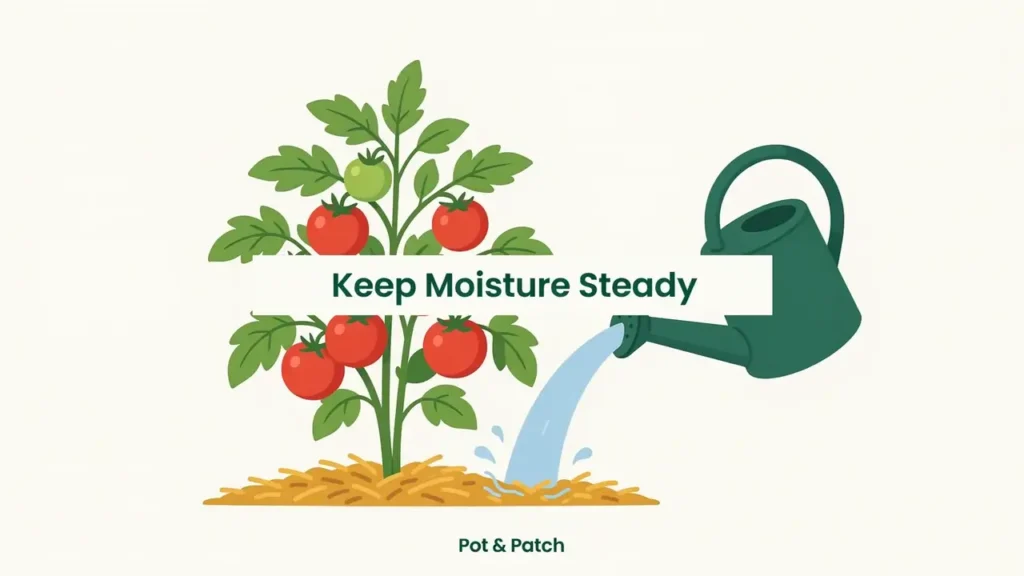
- Water consistently. This is the single most important step. Keep the soil evenly moist, never letting it dry out completely and then flooding it. Aim to wet the whole root zone, then water again before it dries out.
- Mulch the soil. A layer of straw, bark, or similar over the root zone holds moisture steady and takes the swings out of your watering.
- Go easy on nitrogen. Avoid high-nitrogen fertilizers, which drive leafy growth at the fruit’s expense. Our guide to the best fertilizer for tomatoes in containers covers balanced feeding.
- Test your soil if it keeps happening. If blossom end rot is severe year after year, a soil test will tell you whether calcium or pH is genuinely low. Tomatoes prefer a pH around 6.5 to 7.0.
- Use a large enough pot. Bigger containers hold moisture more evenly and swing less between wet and dry. See our guide to the best container size for tomatoes.
Blossom End Rot in Containers
If you grow in pots, pay extra attention, because blossom end rot is the single most common problem for container tomatoes.
The reason is simple: pots dry out fast. A container can go from moist to bone dry in a single hot day, and that exact swing is what triggers the disorder. Potted plants simply cannot buffer moisture the way deep garden soil can.
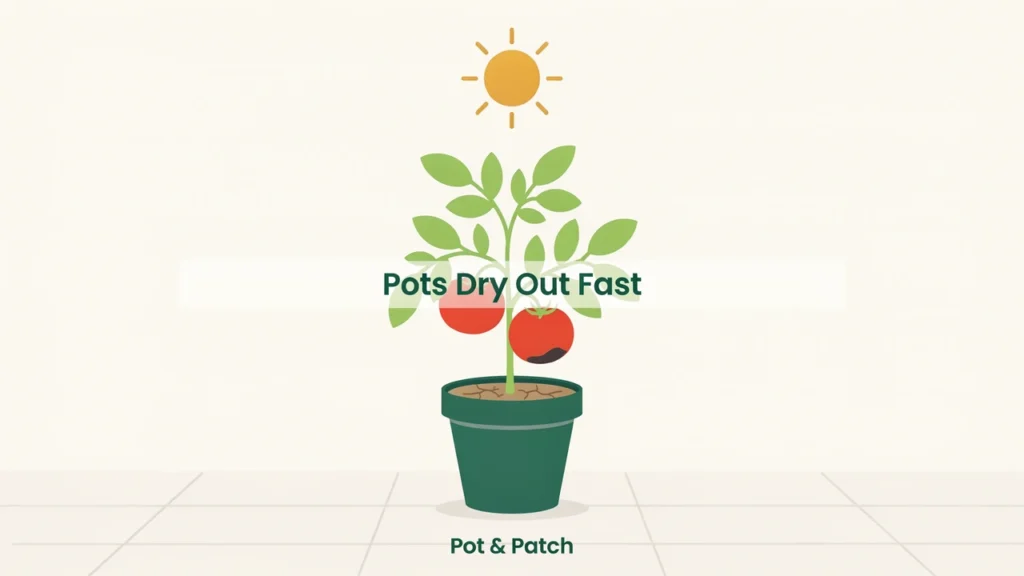
To keep container tomatoes clear of it, check the soil daily in warm weather, water before the pot dries out, and mulch the surface of the pot just as you would a garden bed. Self-watering containers help too, since they keep moisture far steadier. For the full routine, see our guide to growing tomatoes in containers.
What Doesn’t Work: Common Myths
A lot of popular advice for blossom end rot is a waste of time, because it treats a watering problem as a calcium shortage.
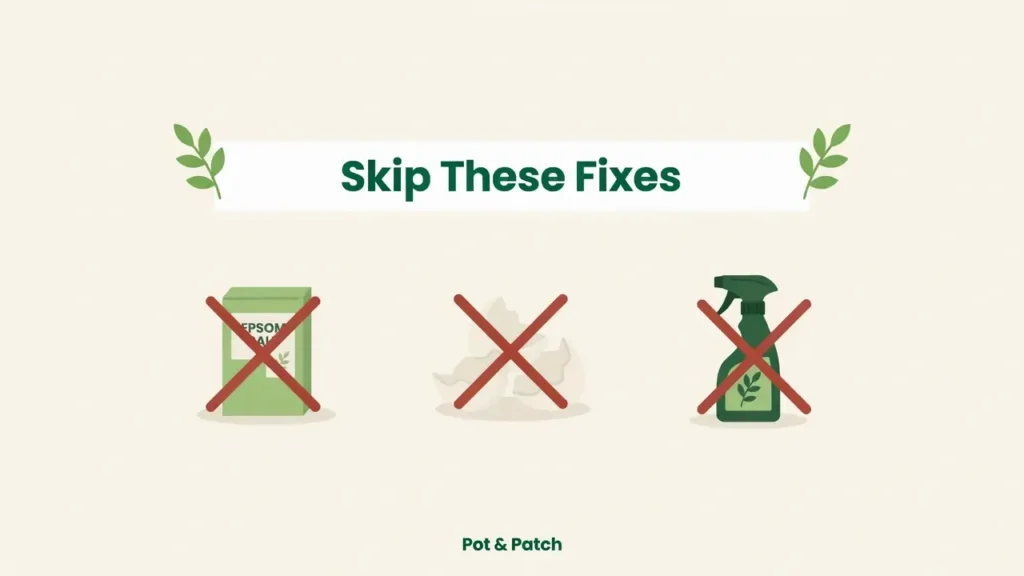
- Epsom salt. This is the big one. Epsom salt is magnesium, not calcium, and it does nothing for blossom end rot. Worse, too much magnesium can actually compete with calcium uptake and make things worse.
- Adding calcium (eggshells, antacid tablets, milk). Since the problem is usually getting calcium to the fruit, not a lack of it in the soil, these rarely help. Eggshells in particular break down far too slowly to matter this season.
- Foliar calcium sprays. Products marketed to stop blossom end rot are at best a weak, short-term measure. Calcium sprayed on leaves does not move well into the fruit, so they often disappoint. Fixing your watering does far more.
The thread running through all of these: reach for your watering can, not a calcium product.
Can You Eat Tomatoes With Blossom End Rot?
Yes. The rot itself is not toxic and does not make the rest of the fruit unsafe.
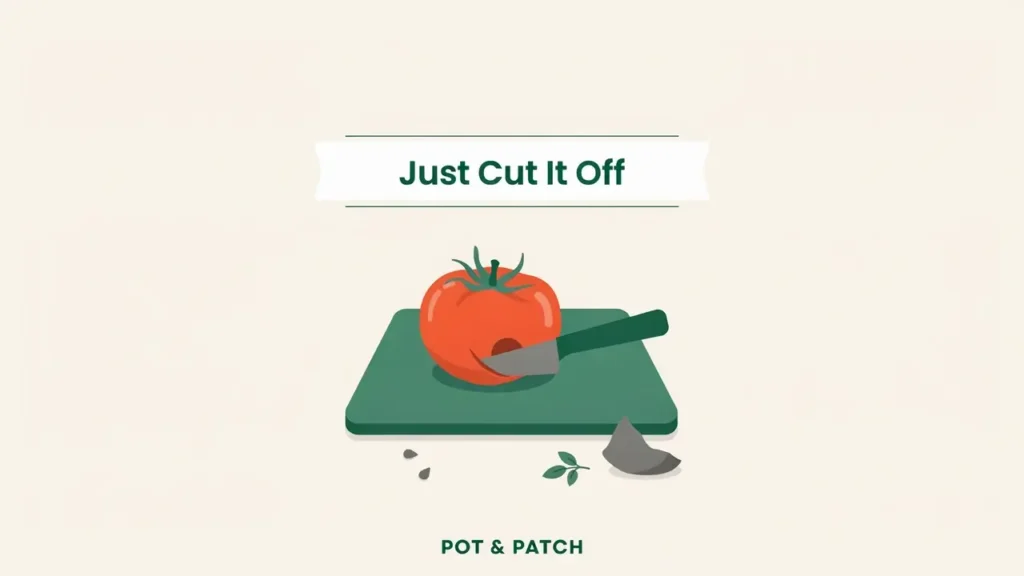
Simply cut away the dark, sunken area at the bottom, and the rest of the tomato is perfectly good to eat. The one exception is if mould or soft rot has set into the damaged spot, in which case it is best to compost that fruit.
FAQ
What is the main cause of blossom end rot?
Inconsistent watering. Calcium moves through the plant in water, so letting soil swing between wet and dry stops enough calcium reaching the fruit, even when the soil has plenty.
Does Epsom salt help blossom end rot?
No. Epsom salt provides magnesium, not calcium, and can even worsen the problem. It is not a fix.
Is blossom end rot a disease?
No. It is a physiological disorder caused by calcium and moisture imbalance. It does not spread between plants and needs no fungicide.
Will my plant recover from blossom end rot?
The affected fruit will not heal, but the plant will. Once you steady the watering, later fruit usually develops normally.
Why do my container tomatoes keep getting it?
Pots dry out quickly, and that moisture swing is the trigger. Water before the pot dries, mulch the surface, and use a larger container.
Final Thoughts
Blossom end rot looks alarming, but it is a care problem with a simple answer. Keep the soil evenly moist, mulch to hold that moisture, and avoid overfeeding with nitrogen, and the disorder largely takes care of itself.
Skip the Epsom salt and calcium gimmicks. Steady watering is the real cure, and once you have it dialled in, your plants will reward you with clean, healthy fruit for the rest of the season.