Holes in Tomato Leaves? How to Identify What’s Eating Them and Stop It
You walk out to your tomato plants and the leaves look like someone took a hole punch to them. Maybe they are peppered with tiny pinholes, or maybe whole sections have been stripped overnight.
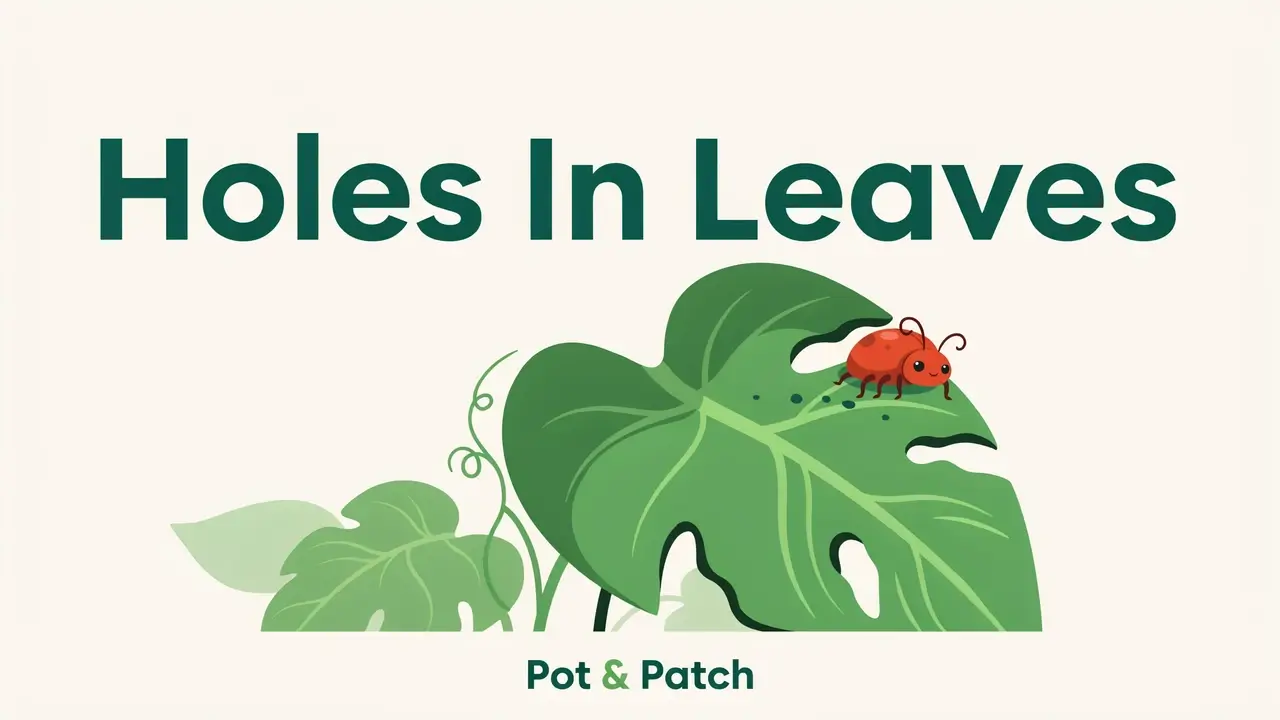
Almost every time, holes in tomato leaves mean one thing: something is chewing on them. Tomato foliage does not develop holes from disease or watering problems. Those cause spots, yellowing, or browning instead. Clean holes point to an insect or a slug.
The good news is that the damage pattern usually tells you the culprit. Tiny holes point to one pest, large ragged ones to another, and chewed seedlings to a third. Once you know who is eating your plants, the fix is usually simple. Here is how to read the damage and stop it.
Quick Diagnosis: Match the Holes to the Pest
Before you reach for a spray, look closely at the holes. Their size, timing, and location narrow things down fast.
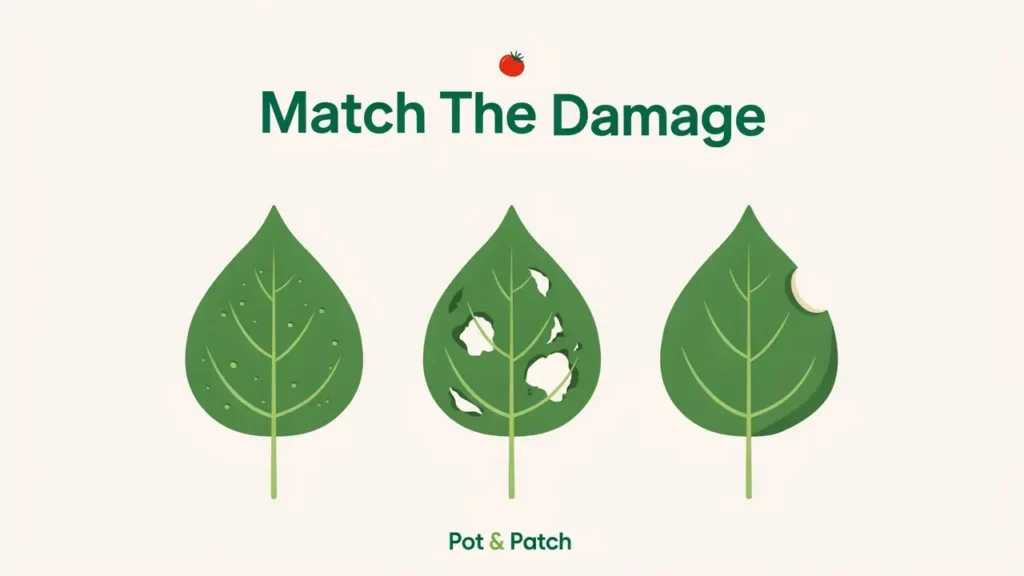
| What you see | Most likely cause | Quick tell |
|---|---|---|
| Lots of tiny round pinholes, like buckshot | Flea beetles | Worst on young plants in spring; tiny beetles jump when disturbed |
| Large, ragged, irregular holes; slime trails nearby | Slugs or snails | Damage appears overnight; no insect visible by day |
| Big holes, whole leaves or branches stripped | Tomato hornworm | Dark droppings on leaves below; green caterpillar on the undersides |
| Holes in leaves plus seedlings cut off at the soil | Cutworms | Seedling stems severed near the base; pests hide in soil by day |
| Chewed foliage with striped beetles or red grubs present | Colorado potato beetle | Beetles and larvae feed in groups and can defoliate quickly |
If you are not sure, the biggest clues are hole size and whether the damage shows up at night. The sections below walk through each pest.
The Most Common Culprits
Flea Beetles (the tiny holes)
If your leaves are covered in small round pinholes that make them look like a sieve, flea beetles are the usual answer. They are tiny, about a sixteenth of an inch, dark, and they hop like fleas when you disturb the plant.
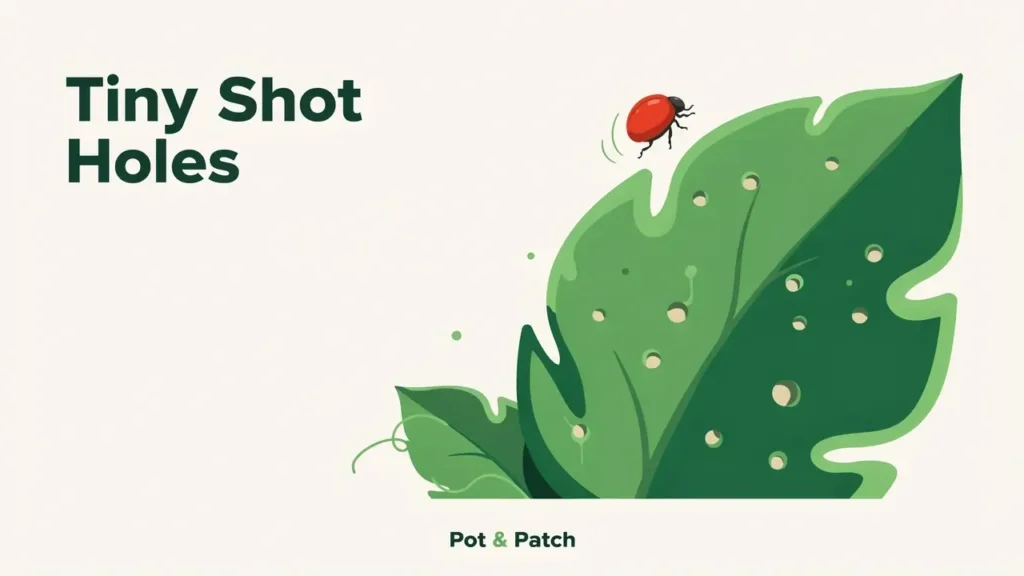
Flea beetles do the most damage in spring and hit young plants and seedlings hardest. A mature tomato can shrug off a lot of their feeding, but a small transplant can be seriously set back.
What to do: Cover young plants with floating row cover until they are established and strong enough to outgrow the damage. Keeping the area free of weeds and old plant debris removes the shelter the beetles overwinter in.
Tomato Hornworms (the big holes)
When large holes appear and whole leaves or even branches vanish, suspect the tomato hornworm. This is a bright green caterpillar that grows up to four or five inches long, nearly as thick as your thumb, with a hornlike spike at the back end.
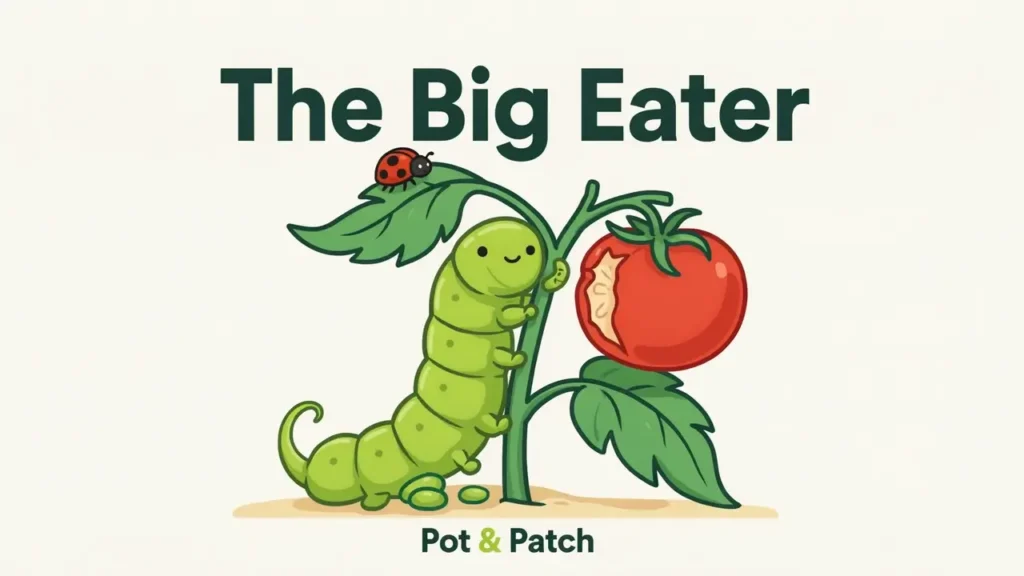
Hornworms are masters of camouflage, so you often see the damage before the caterpillar. Two giveaways help you find them: dark pellet droppings on the leaves below, and heavy feeding concentrated in one area. They also chew holes in the fruit. Late in summer, a full-grown hornworm can eat about a leaf an hour.
What to do: Handpicking is the most effective first step. They are harmless to touch, so drop them in soapy water or move them well away from the garden. For a bad outbreak, Bacillus thuringiensis (Bt), a natural product sold at garden centers, targets caterpillars; follow the label.
Slugs and Snails (ragged holes overnight)
Large, irregular holes with smooth edges that show up overnight, often low on the plant, usually mean slugs or snails. Look for silvery slime trails on the leaves or soil to confirm it. These pests feed after dark and hide during the day, so you rarely catch them in the act.
What to do: Go out after dark with a flashlight and pick them off, or set simple traps such as a shallow dish of beer sunk to soil level. Reduce their daytime hiding spots by clearing boards, dense mulch, and debris, and water in the morning rather than the evening so the surface is dry by nightfall.
Cutworms (holes plus toppled seedlings)
Cutworms chew holes in leaves, but their signature move is cutting young seedlings clean off at the soil line. They are plump grayish or brownish caterpillars that curl up when disturbed and hide in the soil during the day.
What to do: Protect transplants with a collar, a simple cardboard or tin ring pushed an inch into the soil around each stem. Clearing weeds before planting reduces where they lay eggs.
Colorado Potato Beetle
Better known on potatoes, this beetle also feeds on tomato foliage. The adults are rounded with yellow and black stripes, and the soft red larvae feed in clusters. Together they can strip a plant fast.
What to do: Handpick the adults, larvae, and the orange egg clusters you will find on leaf undersides. On small-space plantings, staying on top of them by hand is usually enough.
Other Chewers Worth Knowing
A few less common visitors also leave holes: caterpillars like armyworms, cabbage loopers, and the tomato fruitworm, plus blister beetles, grasshoppers, and earwigs. Most respond to the same approach: identify, handpick what you can, and treat caterpillars with Bt if numbers climb.
Holes at Night vs During the Day
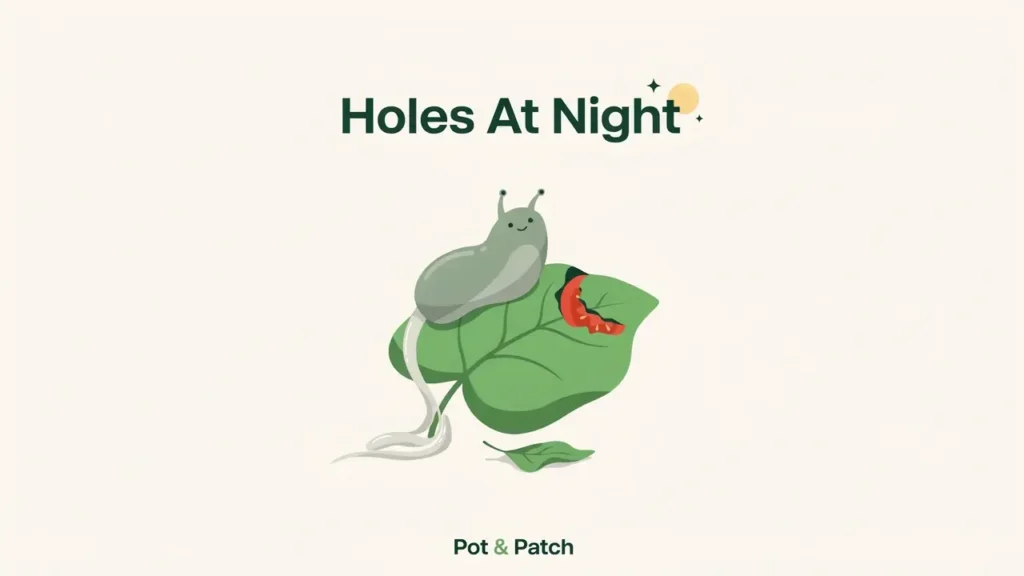
When the damage appears is a strong clue.
- Overnight damage usually points to slugs, snails, cutworms, or earwigs. They feed in the dark and disappear by morning.
- Daytime feeders include flea beetles, Colorado potato beetles, and grasshoppers. Hornworms feed day and night.
If leaves look fine in the evening and chewed by morning, you are almost certainly dealing with a night feeder. A flashlight check an hour or two after dark is the fastest way to catch them and confirm.
Why Seedlings and Young Plants Get Hit Hardest
Small plants have little leaf area to spare, so the same amount of feeding that a big plant ignores can stunt or kill a seedling. Flea beetles and cutworms are the main threats at this stage.
This is where prevention pays off most. A floating row cover over a new bed blocks flea beetles, and stem collars stop cutworms. Once plants are large and vigorous, they tolerate minor chewing without any trouble.
How to Stop Holes in Tomato Leaves
Work through these steps in order. Start with the gentlest option that fits the pest, and only escalate if you need to.
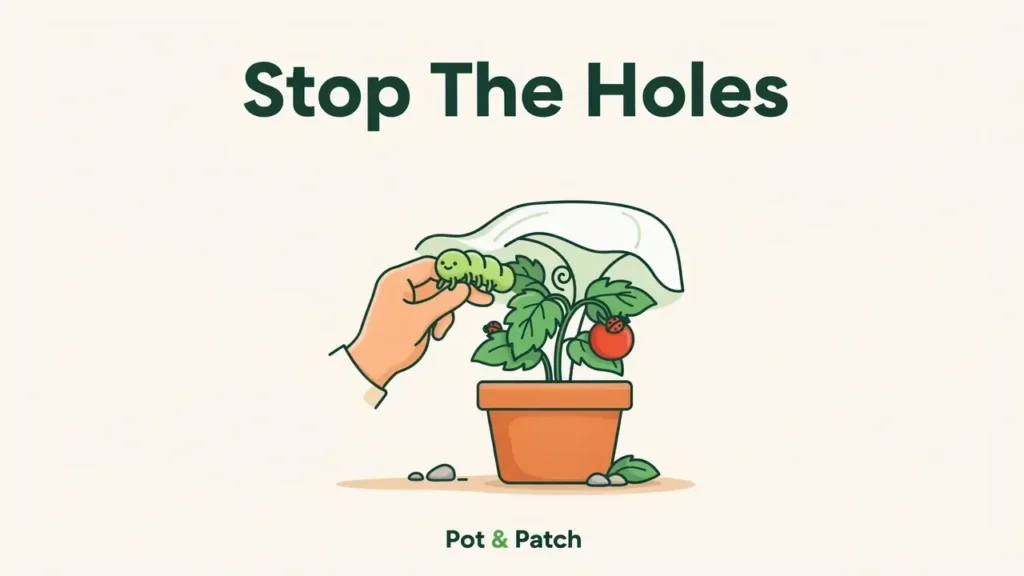
- Identify first. The right fix depends entirely on the culprit, so match the damage before you treat anything.
- Handpick. For hornworms, beetles, and slugs, removing them by hand is fast, free, and often enough in a small garden. Evening checks catch the night feeders.
- Use barriers. Floating row covers keep flea beetles off young plants, stem collars stop cutworms, and traps thin out slugs.
- Keep the area clean. Pull weeds, clear old debris, and avoid heavy damp mulch against stems. You are removing the shelter and breeding grounds pests rely on.
- Treat only if needed. Bt handles caterpillars like hornworms, while insecticidal soap or neem oil helps with soft-bodied pests. Always follow the label, and spray in the evening to protect bees. In containers, check plants often, since a single pest can do a lot of damage to one potted tomato.
- Invite the helpers. Ladybugs, lacewings, and parasitic wasps all prey on these pests. Planting flowers nearby and going easy on broad sprays keeps that free workforce around.
For a clear picture of what leaf damage is not caused by chewing, our guide to black spots on tomato leaves covers the disease side of things.
Can You Still Eat Tomatoes From a Plant With Holey Leaves?
Yes. Holes in the leaves do not make the fruit unsafe. Leaf chewing is a cosmetic and vigor issue, not a contamination one, so a few ragged leaves are nothing to worry about.
Two things are worth checking, though. First, inspect the tomatoes themselves, since hornworms, slugs, and cutworms will chew the fruit too, and damaged fruit should be used quickly or cut around. Second, watch the overall leaf loss. A plant that has been heavily defoliated has less shade for its fruit, which can lead to sunscald, and fewer leaves mean less energy for ripening. Light damage is fine, but a stripped plant needs attention.
If your leaves are discoloring rather than developing holes, that is a different problem. See our guide on tomato leaves turning brown for that.
Frequently Asked Questions
What causes tiny holes in tomato leaves?
Small, round, scattered pinholes are almost always flea beetles. They are tiny dark beetles that jump when disturbed, and they target young plants in spring. Mature plants usually outgrow the damage, but seedlings may need a row cover for protection.
What is eating my tomato leaves at night?
Overnight chewing points to slugs, snails, cutworms, or earwigs. Slugs and snails leave large ragged holes and slime trails. Check with a flashlight after dark to confirm, then handpick or trap them.
Will holes in the leaves kill my tomato plant?
Usually not. A healthy, established plant tolerates a fair amount of leaf damage without any drop in harvest. The risk rises only when a pest, especially a hornworm, defoliates large portions of the plant quickly.
Should I cut off leaves that have holes in them?
There is no need to remove leaves just because they have holes. A chewed leaf still photosynthesizes. Only remove foliage that is diseased or almost entirely eaten.
Can holes in leaves spread to the fruit?
The holes themselves do not spread, but several of these pests eat fruit as well as leaves. If you find leaf damage, check the tomatoes too and deal with the pest so it does not move on to your harvest.
Bottom line: holes in tomato leaves are a chewing-pest problem, and the damage pattern names the culprit. Tiny pinholes are flea beetles, big ragged holes are slugs or hornworms, and cut-off seedlings are cutworms. Identify first, handpick what you can, protect young plants with barriers, and your plants will keep producing. For more help across the season, see our full tomato growing guides.