How to Grow Tomatoes from Seeds: A Step-by-Step Guide for Beginners
Starting tomatoes from seeds is cheaper than buying transplants, and it opens up hundreds of varieties you will never find at a garden centre. It also gives you full control over how your plants are raised.
The process is not hard, but timing and light matter. Get those right and you will raise stronger, stockier seedlings than most shop-bought plants.
This guide walks through the whole journey: when to sow, how deep, how to germinate, seedling care, hardening off, and moving your plants outside.
Why Grow Tomatoes from Seed?
Three reasons make it worth the effort.
Variety is the big one. Nurseries carry a handful of common types, while seed catalogues offer heirlooms, cherries, paste tomatoes, and unusual colours by the hundred.
Cost is the second. A single packet of seeds costs about the same as one transplant and gives you dozens of plants.
Control is the third. You know exactly what mix, water, and light your seedlings had, with no hidden pests or disease brought home from a shop.
When to Start Tomato Seeds
Sow tomato seeds indoors about six weeks before your average last frost date. Some growers go five to eight weeks, but six is a safe middle ground.
Resist the urge to start too early. Seedlings sown too soon sit cramped in their pots, turn tall and weak, and transplant poorly. Later, sturdier plants almost always catch up.
If you are not sure of your last frost date, check your local frost calendar or ask a nearby gardener. Everything else counts backward from that date.
What You Need
One of the myths around seed starting is that you need a shelf of equipment. You do not.
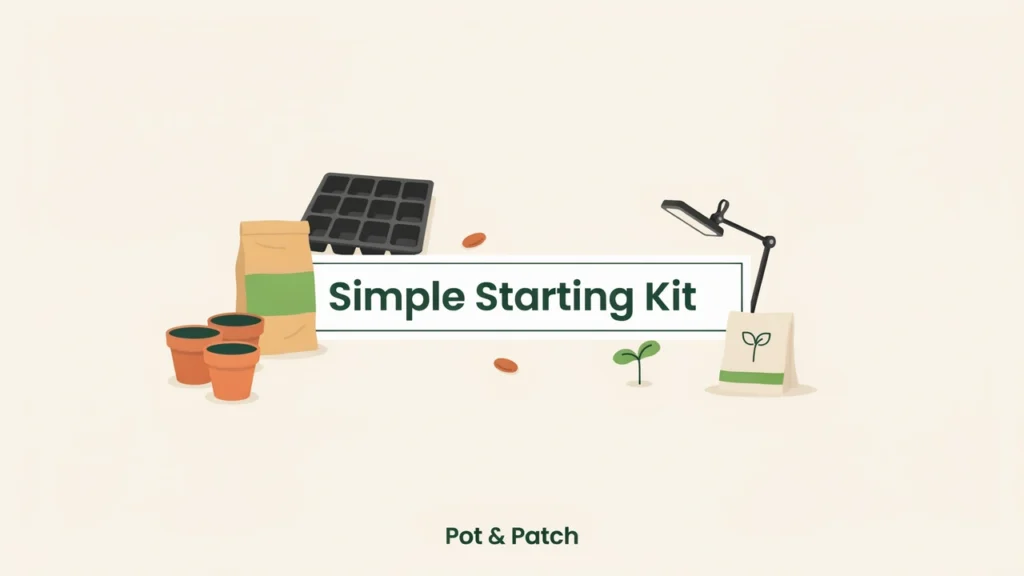
The essentials are simple:
- A sterile, soilless seed-starting mix (never ordinary garden soil)
- Small pots, cells, or a seed tray with drainage
- A warm spot and a light source once seedlings appear
A heat mat and a clear humidity dome help speed germination, but they are optional if your room stays reliably warm. For light, an inexpensive fluorescent shop light works just as well as a dedicated grow light for raising seedlings. Fancy kit is nice, not necessary.
How to Plant Tomato Seeds
Once your mix and containers are ready, sowing takes minutes.
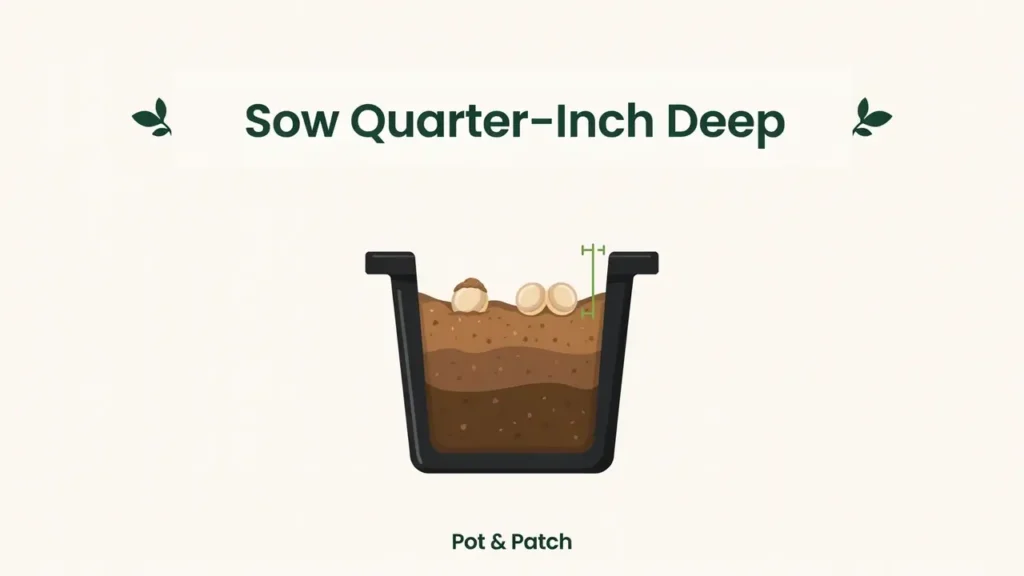
- Moisten the seed-starting mix until it feels like a wrung-out sponge, then fill your cells or pots.
- Make a hole about 1/4 inch (6 mm) deep, roughly three times the size of the seed.
- Drop two seeds into each cell as insurance against ones that fail, then cover lightly and firm the surface.
- Label everything now if you are sowing more than one variety. Seedlings look identical and are impossible to tell apart later.
- Water gently with a mister or from below, and cover loosely with a dome or plastic wrap to hold moisture.
Keep the mix damp but never soggy while you wait.
Germinating Tomato Seeds
Warmth, not light, is what drives germination. Seeds do not need light until they sprout, so a warm cupboard or the top of the fridge works for this stage.
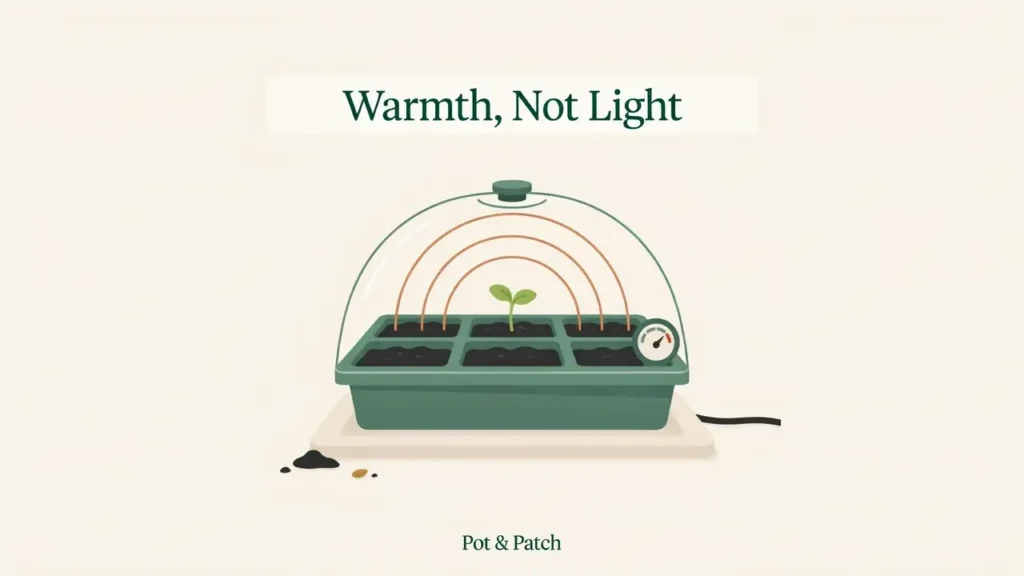
Aim for a soil temperature of 70 to 75°F (21 to 24°C). That range gives the fastest, most reliable sprouting. Above 85°F (29°C) germination rates fall, and below 65°F (18°C) seeds stall and can sit for weeks in cold, wet mix.
How Long Do Tomato Seeds Take to Germinate?
At the right warmth, most tomato seeds sprout in 5 to 10 days. In a cooler room it can stretch to two weeks or more. A heat mat under the tray is the single most effective way to speed things up, and it can roughly halve the wait.
Check daily. The moment green shoots break the surface, the rules change: remove the cover and get them into strong light.
Caring for Your Seedlings
This stage makes or breaks your plants, and it comes down to light.
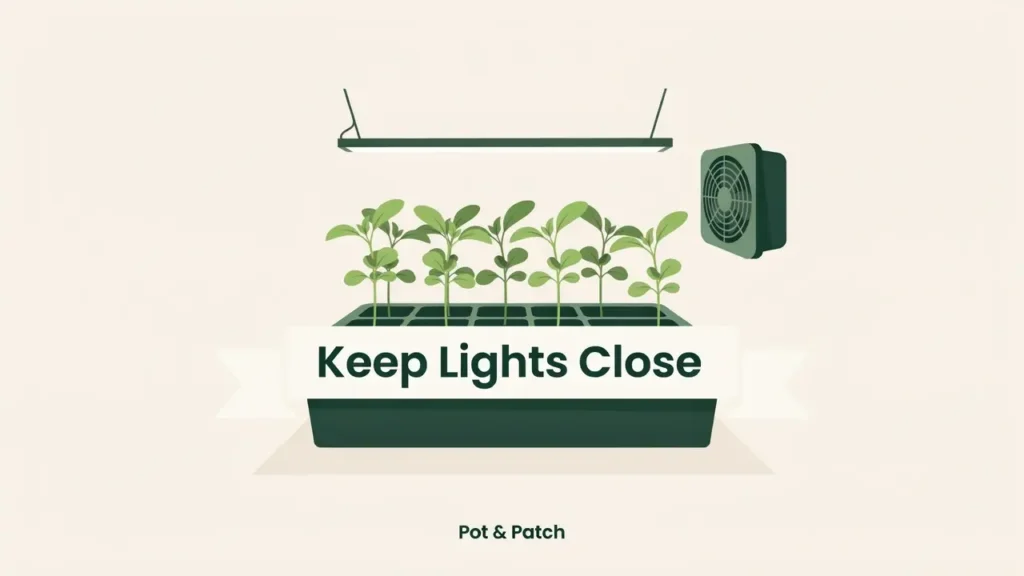
The instant seedlings emerge, put them under a light kept just 2 to 3 inches (5 to 8 cm) above the tops. Run it for 14 to 16 hours a day. Light that is too weak or too far away is the number one cause of leggy, floppy seedlings that stretch toward the source. Raise the light as the plants grow to hold that gap.
A few more habits keep seedlings healthy:
- Water from below. Pour water into the tray and let the mix soak it up. This keeps foliage dry and roots reaching down.
- Thin to one per cell. Once true leaves appear, snip the weaker seedling at soil level so the strongest has room.
- Pot up at the true-leaf stage. Move seedlings into larger pots once they have their first set of true leaves, burying the stem a little deeper each time.
One problem deserves special attention. Damping off is a fungal disease that rots seedlings at the soil line and topples them overnight. The common advice to just keep the soil moist is incomplete, because moist plus cool is exactly the condition these fungi love. The real fix is airflow. Pull the humidity dome the moment seeds sprout, and run a small fan on low nearby. That does more to prevent damping off than anything else.
Hardening Off Your Seedlings
Indoor seedlings are soft. Move them straight outside and the sun, wind, and cool nights will shock them.
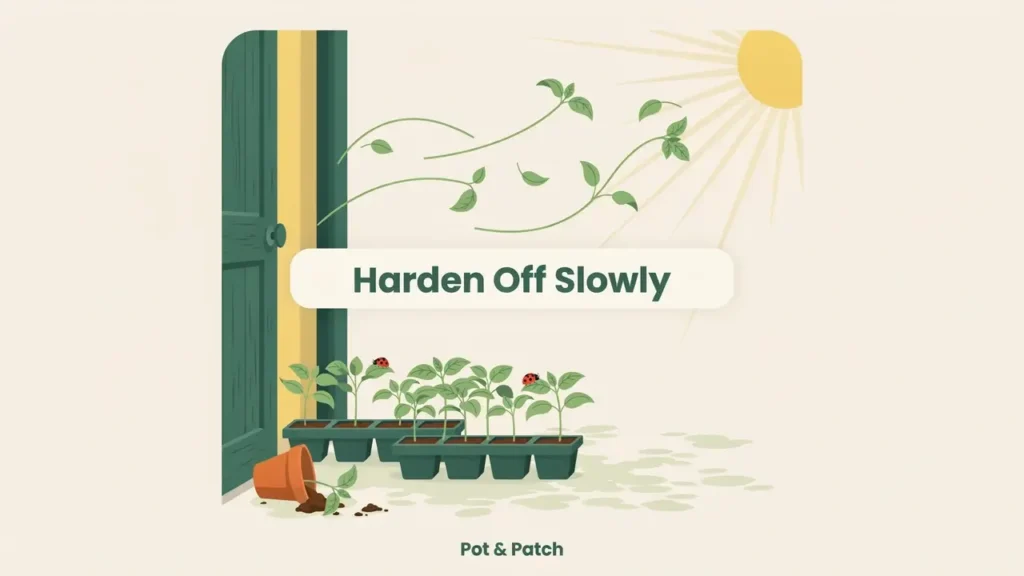
Start hardening off about 7 to 10 days before you plan to transplant, once nights are reliably above 50°F (10°C).
- Days 1 to 2: set plants outside in bright shade for one to three hours, sheltered from wind, then bring them in.
- Days 3 to 4: increase to a few hours and add gentle morning sun.
- Days 5 to 6: leave them out most of the day, then in at night.
- Day 7 onward: they can stay out overnight once frost has passed.
By the end they should have thicker stems and stand 6 to 8 inches (15 to 20 cm) tall, ready for the garden.
Transplanting Outdoors
Wait until all danger of frost has passed and the soil has warmed to at least 60°F (16°C). Cold soil stalls tomatoes and undoes weeks of careful raising.
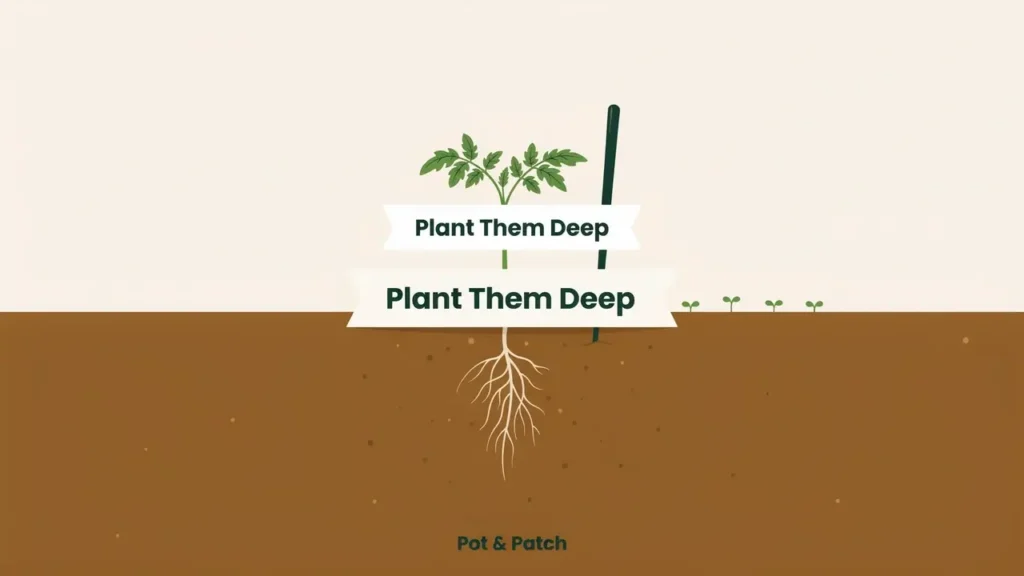
Plant deep. Bury the stem up to the first set of true leaves, because tomatoes grow new roots all along a buried stem, which builds a stronger plant. Space plants 2 to 3 feet (60 to 90 cm) apart so each gets full sun and good airflow.
Set a stake or cage in place at planting time, before the roots spread. Your seedlings are ready for their final home, whether that is the open ground, a raised bed, or a container. For the pot route, see our guide to growing tomatoes in containers, and for beds, our guide to growing tomatoes in raised beds. To pick a variety first, start from our tomatoes hub.
Seed-to-Harvest Timeline
Here is roughly how the season unfolds, from sowing to your first ripe tomato.
| Stage | Timing |
|---|---|
| Sow seeds indoors | About 6 weeks before last frost |
| Germination | 5 to 10 days after sowing |
| Seedling growth indoors | 5 to 7 weeks under lights |
| Harden off | 7 to 10 days before transplant |
| Transplant outdoors | After last frost, soil at 60°F (16°C) |
| First harvest | 50 to 90 days after transplant, by variety |
Cherry types tend to ripen fastest. Large beefsteaks sit at the long end of that range.
Common Seed-Starting Problems
- Tall, thin, floppy seedlings: Not enough light. Lower the light closer and extend the hours.
- Seedlings collapse at the soil line: Damping off. Improve airflow, remove the dome, and ease off watering.
- Poor or no germination: Usually soil that is too cold or too wet. Add warmth and check drainage.
- Growth stalls after sprouting: Often cold, or seedlings ready to pot up into fresh mix.
- Pale, purple, or stunted seedlings: A sign they need feeding once true leaves appear, or warmer roots.
FAQ
How deep should I plant tomato seeds?
About 1/4 inch (6 mm), roughly three times the width of the seed. Deeper than that and they struggle to reach the surface.
How long do tomato seeds take to germinate?
Usually 5 to 10 days at 70 to 75°F (21 to 24°C). Cooler conditions can stretch it to two weeks or longer.
Can I grow tomatoes from seeds inside a store-bought tomato?
Yes, though results vary. Seeds from hybrid supermarket tomatoes will not grow true to the parent, so expect surprises in size and flavour.
Is a sunny window enough, or do I need a grow light?
A very bright window can work, but weak or short winter daylight often produces leggy seedlings. A cheap light kept close is more reliable.
Do I have to grow the plants outdoors after starting from seed?
No. If you want to raise them to harvest inside instead, see our guide on whether you can grow tomatoes indoors.
Final Thoughts
Growing tomatoes from seeds rewards a little patience with far more choice and far less cost than buying plants. The essentials are simple: warmth to sprout, strong light to stay stocky, and a gentle transition outdoors.
Start with a couple of varieties, keep the light close, and treat your first tray as practice. Once you have raised your own tomatoes from seed, buying transplants rarely feels worth it again.