Why Are My Tomato Leaves Turning Brown? Causes and Fixes
Not all brown leaves mean the same thing. On a tomato plant, browning can be the plant quietly aging, a sign it went thirsty, or the first move of a disease that spreads fast. Before you treat anything, it pays to read what the brown is actually telling you.
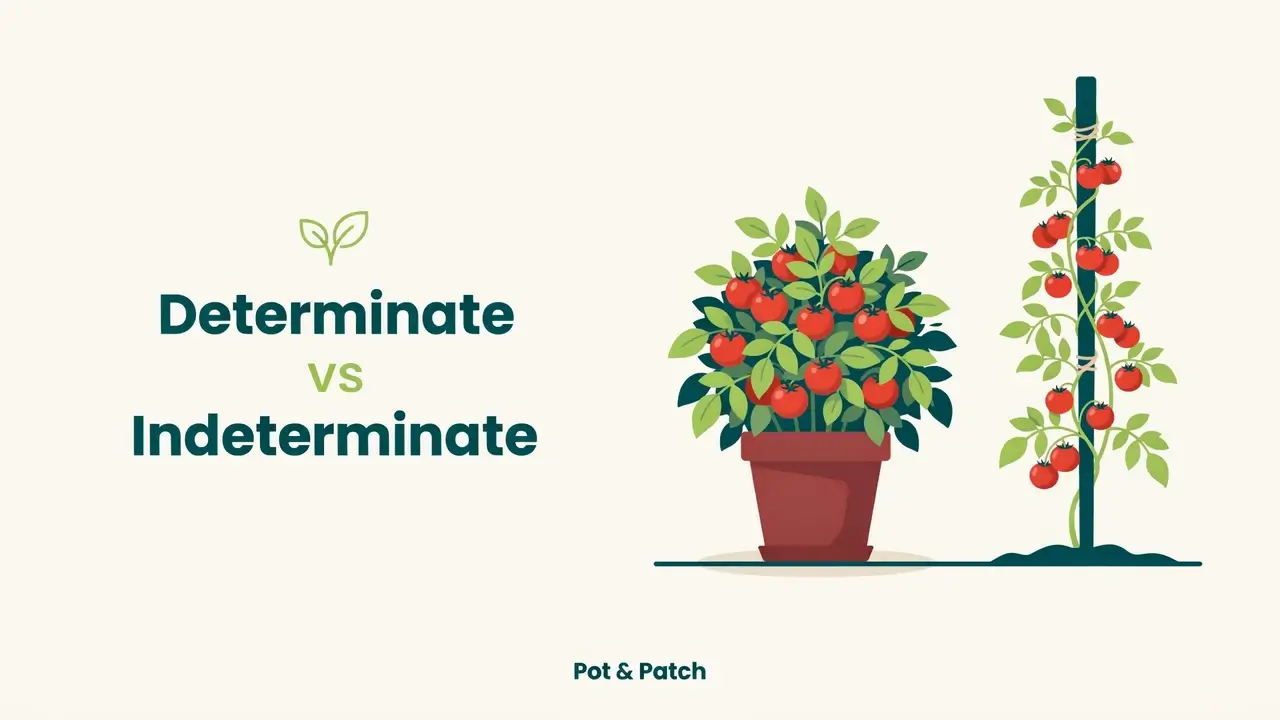
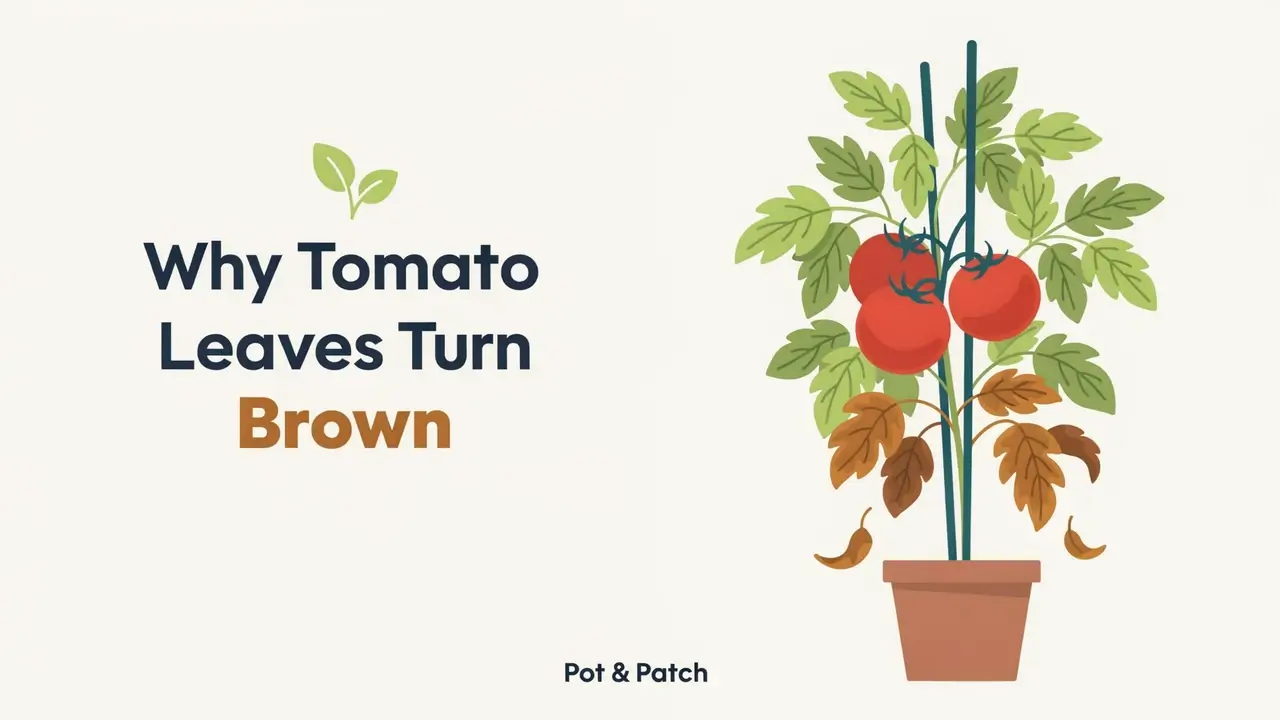
Often the answer is reassuring. Late in the season, the lowest leaves and whole bottom branches naturally fade, brown, and die as the plant pours its last energy into ripening fruit. Bush varieties like Roma do this dramatically once their crop is set. If it is only the oldest leaves at the base, and the top is still green and productive, trim them off and relax.
The browning worth investigating is the kind that climbs the plant, spreads, or hits leaves that should still be healthy.
The Two-Minute Test
You can usually narrow the cause down by touch and location before you ever reach for a treatment.
Feel a browned leaf first. If it is dry, crispy, and browning from the edges inward, you are dealing with a moisture or weather problem: thirst, heat scorch, or cold. These are the common, fixable causes, and they leave no spots or patterns.
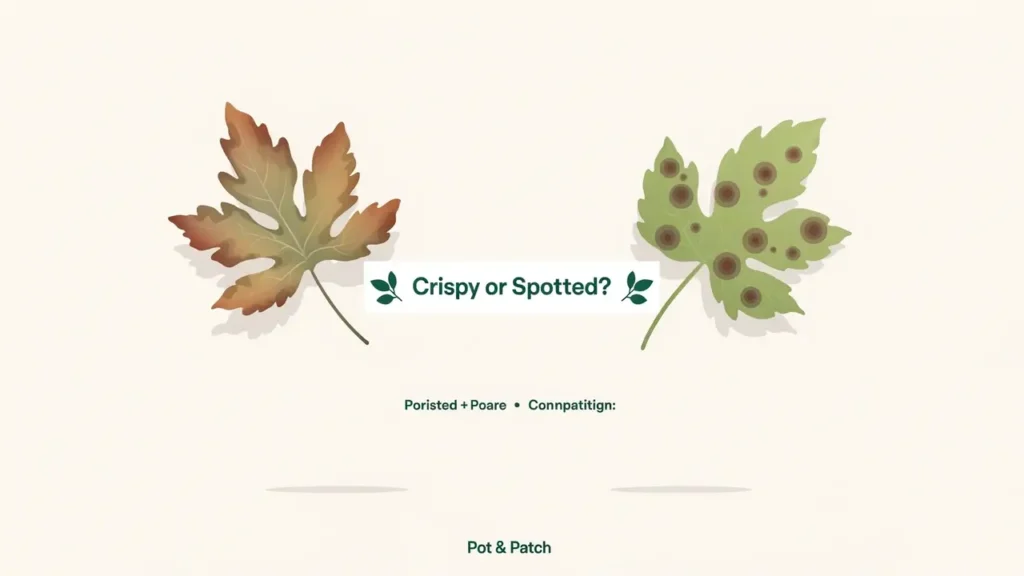
If instead the brown appears as distinct spots, rings, or spreading patches on otherwise soft leaves, you are looking at a disease. Then the next question is where it started. Nearly every fungal problem begins on the lower, oldest leaves and works upward, so low-and-spotted points one way and top-and-crispy points another.
Hold those two clues, texture and location, and the rest of this guide falls into place.
The Everyday Causes: Water, Heat, and Cold
Start here, because these account for most brown tomato leaves and none of them involve disease.
Thirst is the simplest. A tomato left too long without water, especially in summer heat, dries its leaves to a brittle brown that crumbles at a touch. Those leaves will not green up again, so the answer is deeper, steadier watering, never letting the soil bake hard and dry.
Scorch is sunburn, and it mostly strikes seedlings rushed outdoors. Their tender leaves bleach white, then crisp to brown within days. Easing plants into full sun over a week or two prevents it.
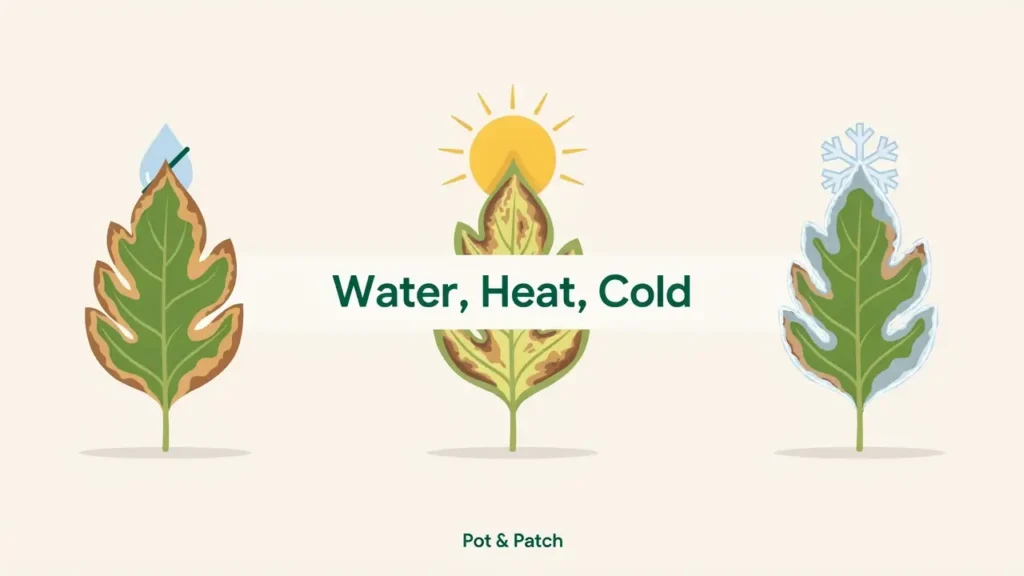
Cold browns leaves two ways. A frost below 32°F (0°C) blackens and browns foliage overnight, starting at the exposed edges and tips. Chilly soil does something quieter: cold roots struggle to take up phosphorus, and the leaves flush a purple-brown along the veins until things warm. Covering plants on frosty nights, or moving pots indoors, heads off both.
When It Is a Disease
If the brown is spotted or patchy rather than crispy, and it is marching up from the bottom of the plant, a fungal or bacterial disease is the likely answer.
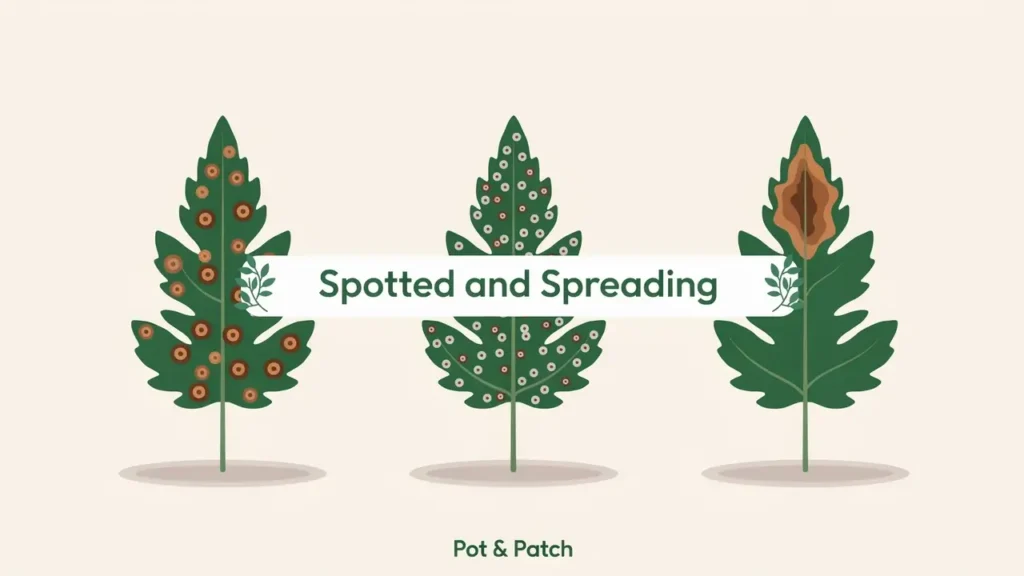
The classic complaint, “my tomato is browning from the bottom up,” usually means early blight or Septoria leaf spot. Early blight prints brown spots ringed like a target; Septoria scatters smaller chocolate-brown spots with pale centers. Bacterial spot makes tiny dark spots with no rings that can punch into holes. The one to act on fast is late blight: large, water-soaked, papery brown patches that race through a plant in cool, wet weather, sometimes fringed with white mold. A plant with late blight should come out of the garden quickly.
Since telling these spotting diseases apart is a job of its own, our guide to black spots on tomato leaves covers identifying and treating each. When the browning is trailing yellowing or whole-plant collapse, the companion guides on yellowing leaves and wilting plants will point you to the right one.
Don’t Overlook Mites
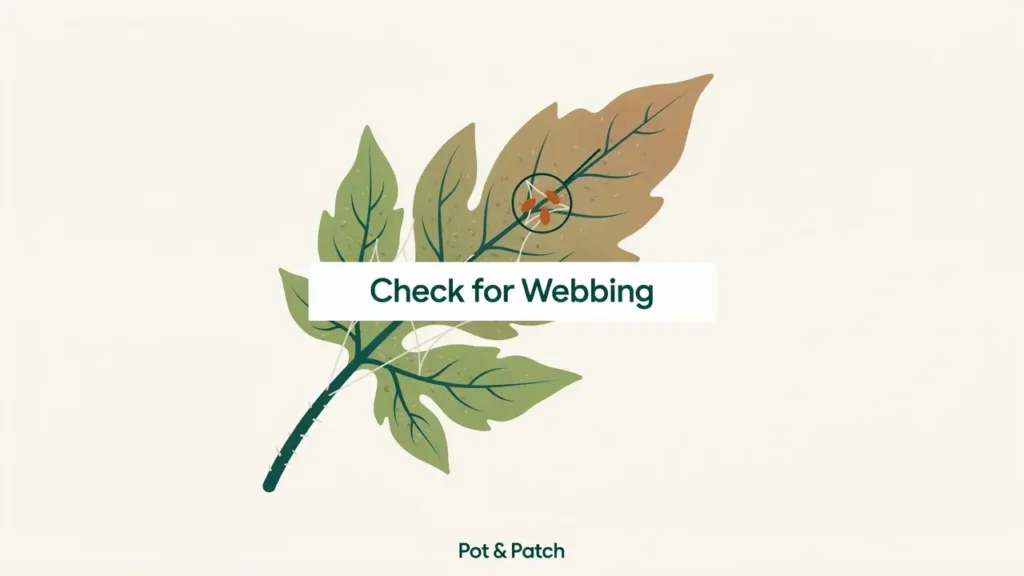
One more culprit browns tomatoes from the bottom and is easy to miss. Spider and russet mites are tiny sap-feeders that thrive in warm, dry spells and work from the undersides of the lower leaves. The signs are a dusty bronze speckling and fine webbing strung between leaves and stems. Keep plants watered so they are not drought-stressed, and rinse or treat the mites early, before the browning climbs.
Why Pots Brown Faster
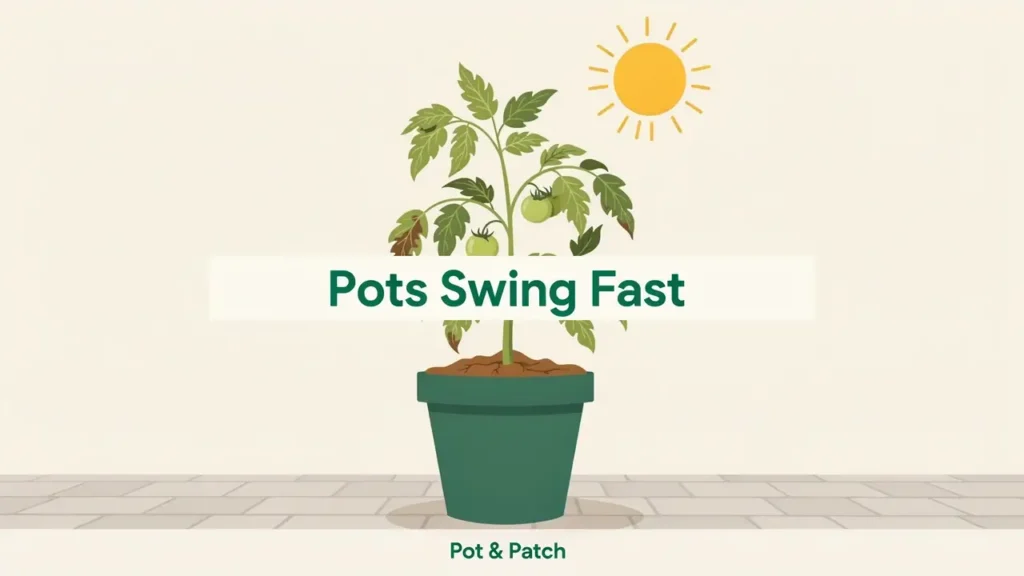
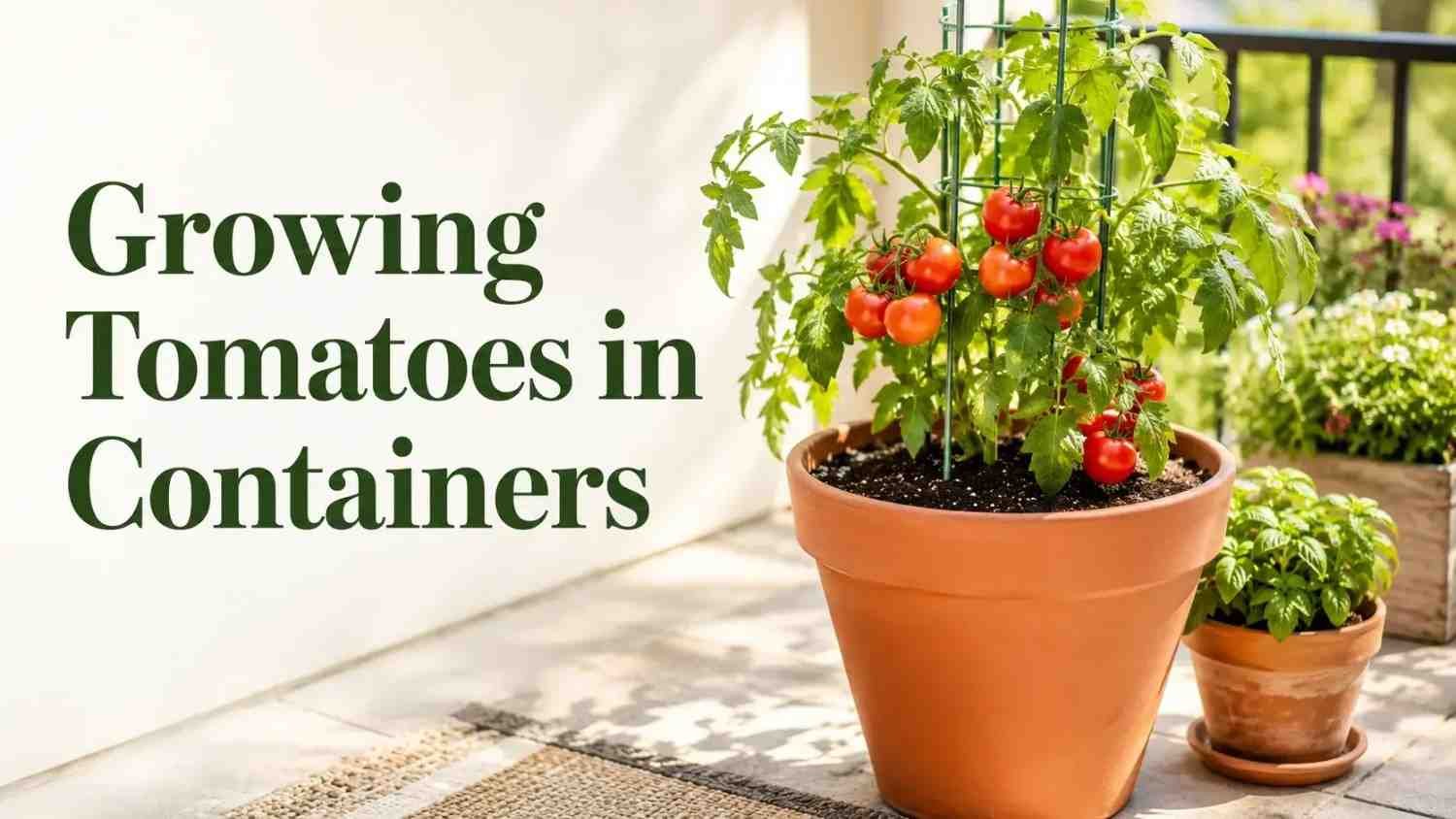
Container tomatoes brown sooner than those in open ground, and watering is nearly always why. A pot holds so little soil that it swings quickly between bone dry on a hot afternoon and waterlogged after a heavy drink, and both ends of that swing scorch the leaves brown. The fix is attention more than anything: check the soil daily in the heat, water before it dries out, make sure the pot drains freely, and mulch the surface to even things out.
Keeping Leaves Green
Most browning traces back to inconsistency, so steady care prevents it. Water deeply and on a rhythm rather than in fits and starts. Mulch to hold that moisture and shield the roots. Water at the base in the morning, not over the foliage, to keep disease at bay.
Harden seedlings off before they face full sun, and cover plants when frost is forecast. Lean on resistant varieties, and clear away spent plants and debris at season’s end so disease has nowhere to overwinter.
A Few Common Questions
My tomato leaves are brown and crispy at the edges. That is thirst or heat scorch, not disease. Water more deeply and consistently, and mulch to hold moisture.
There are brown spots with rings on the lower leaves. The target pattern is early blight. Pull the affected leaves, water at the base, and open up the airflow to slow its climb.
Are browning bottom leaves normal? Late in the season, yes, especially on bush varieties. The plant is winding down and feeding its fruit. Trim the dead leaves and let it finish.
Final Thoughts
Brown leaves are less a verdict than a clue. A crispy brown edge is a plant that needs water or shelter from weather; a spotted, spreading brown is one that needs disease control; a fading lower leaf in late summer is just a plant growing old on schedule.
Match your response to which of those you are seeing, and you will rescue the leaves worth saving while letting the rest go without worry.