How to Transplant Pepper Seedlings Outdoors: Timing, Depth & Care
Your pepper seedlings are tall, green, and ready for the garden. But move them too fast and they stall, wilt, or die from the shock. Learning how to transplant pepper seedlings the right way protects weeks of careful growing.
The process comes down to three things. Wait for warm weather, harden the plants off slowly, then set them out gently. This guide walks through each step with timing, depth, and spacing.
When to Transplant Pepper Seedlings
Peppers love warmth and hate cold soil. Timing the move matters more than any other step.
Wait until 2 to 3 weeks after your last spring frost. By then the weather has usually settled. Harvest to Table recommends soil at 65 degrees or warmer in the morning before you transplant.
Night temperature is the real test. Overnight lows should stay above 60 degrees and never dip below 55. Cold nights stunt peppers even when days feel warm.
For zone-specific dates, see our guide on when to plant peppers. If frost still threatens, wait a week longer.
Are Your Seedlings Ready?
Age and size both signal readiness. Rushing a small seedling rarely pays off.
Peppers are usually started indoors 8 to 10 weeks before transplant day. Good transplants stand 4 to 6 inches tall with several sets of true leaves.
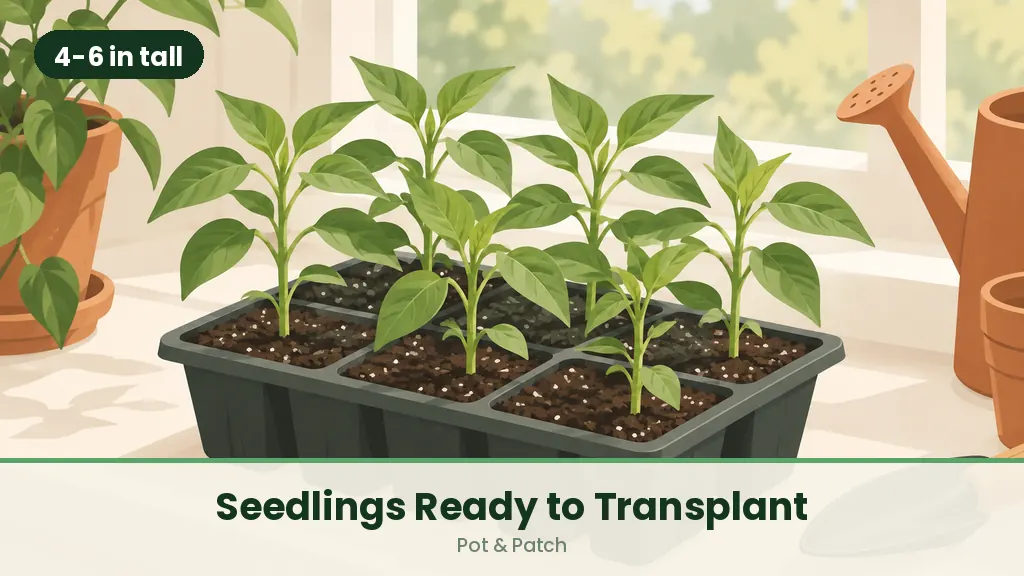
Skip plants that already have flowers or fruit. Very large or stressed transplants suffer more shock and grow slower once planted. If you grew yours from seed, our guide on growing peppers from seed covers the weeks before this stage.
How to Harden Off Pepper Seedlings
Indoor seedlings have never felt real sun or wind. Hardening off slowly toughens them for outdoor life.
Start 7 to 14 days before transplanting. The Old Farmer’s Almanac suggests setting plants in a shaded, protected spot for just a couple of hours on day one.
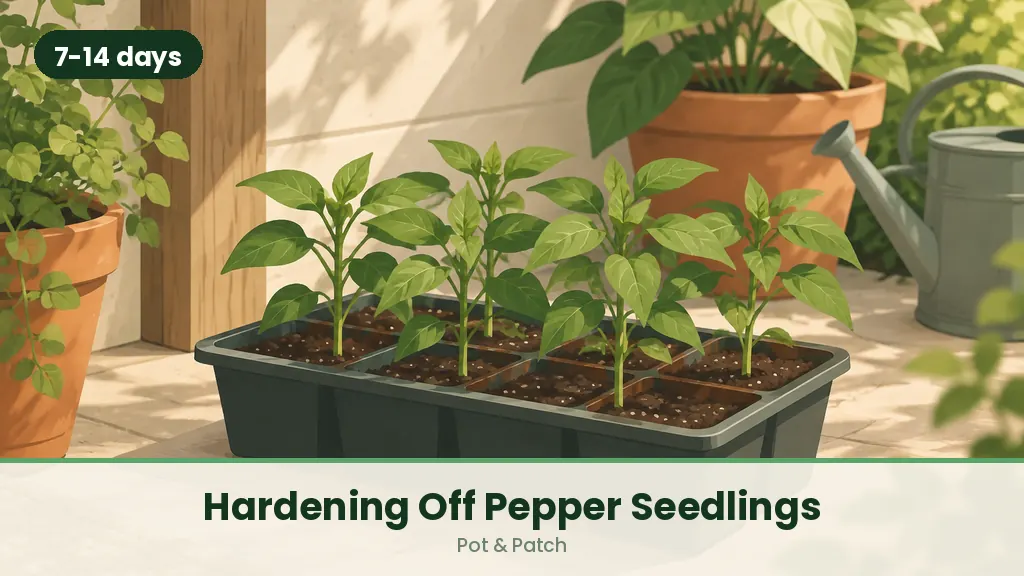
Add time each day. Increase sun and wind exposure gradually until the plants can stay out all day. Let the soil dry slightly between waterings to build tougher growth.
Keep peppers above 55 degrees the whole time. WVU Extension warns that these warm-season crops should not sit in colder temperatures. Bring them in on cold nights.
| Days 1 to 2 | Days 3 to 5 | Days 6 to 10 |
|---|---|---|
| 1 to 2 hours in shade | Half day, some morning sun | Full day outdoors |
| Bring indoors at night | Bring indoors at night | Indoors only if below 55F |
| Shelter from wind | Add gentle wind and sun | Full sun and wind |
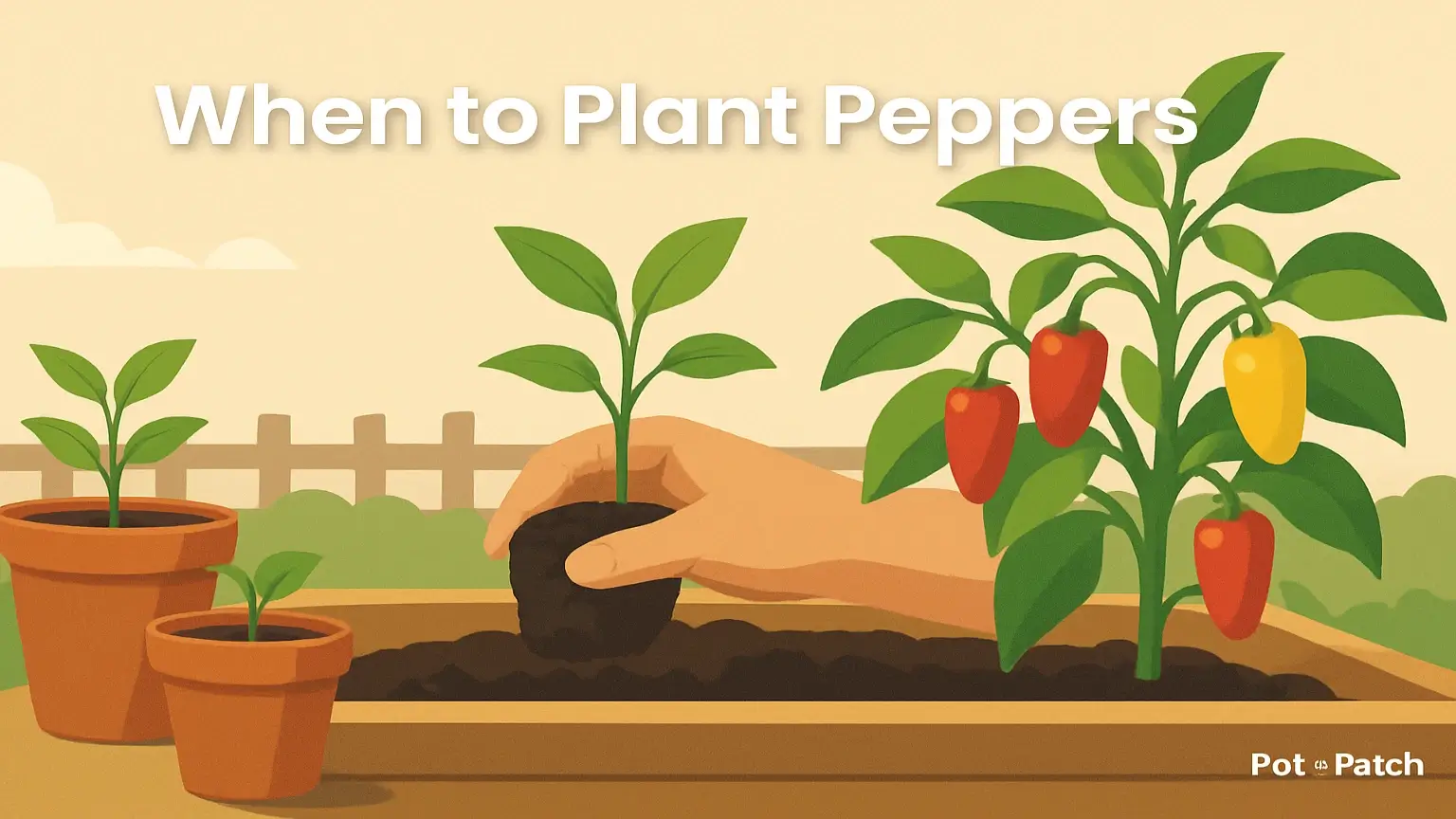
How to Transplant Pepper Seedlings Step by Step
Transplant day should be calm and mild. The goal is to move each plant with minimal root disturbance.
Pick the right time. WVU Extension advises planting in the late afternoon, evening, or on a cloudy day. This lets plants settle before facing hot sun.
Dig and space the holes. Set peppers about 12 to 18 inches apart. For full spacing by setup, see our guide on how far apart to plant peppers.
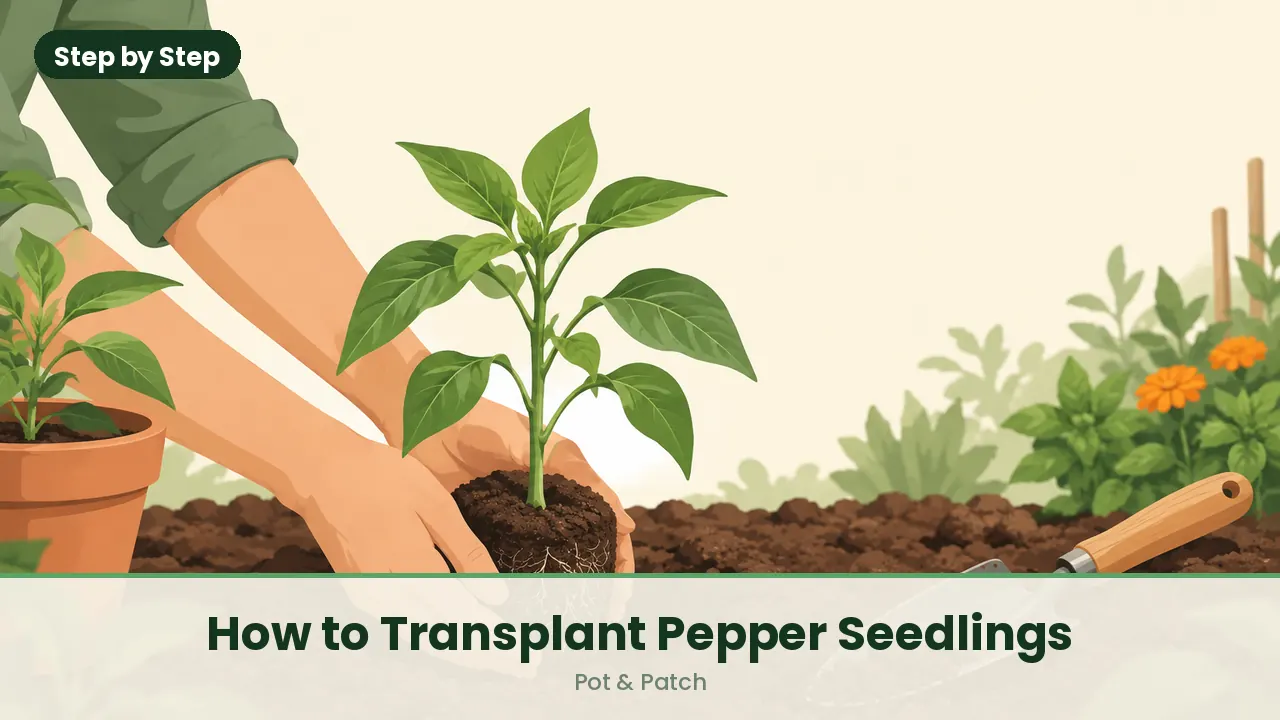
Ease plants out gently. Squeeze the bottom of each cell to release the root ball. Tip plastic pots sideways and tap rather than pulling the stem.
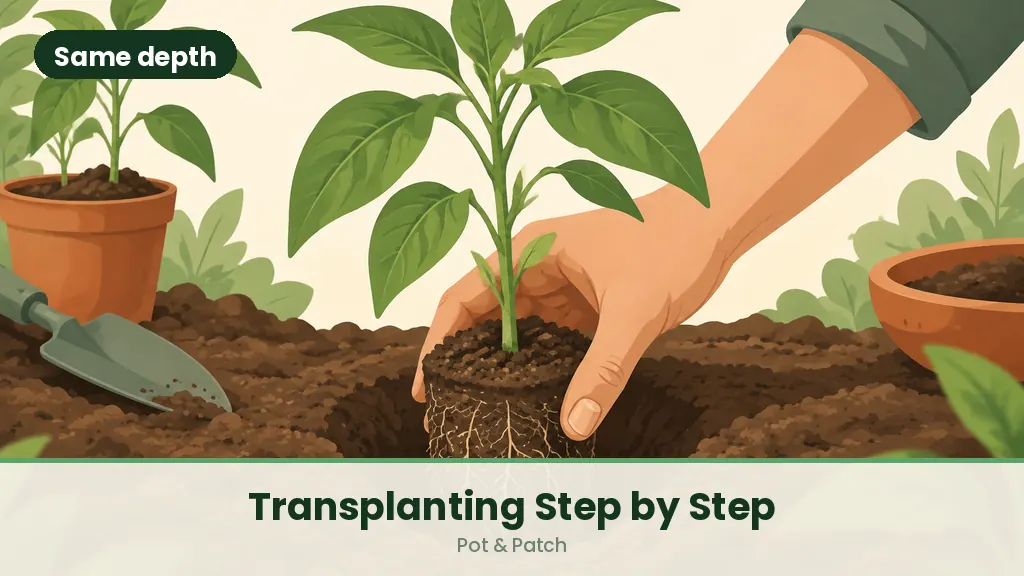
Plant at the same depth. Set the seedling at the depth it grew in its container. Do not bury the stem like you would a tomato, since a buried pepper stem can rot.
Firm and water in. Press soil gently around the roots. Water right away to close air pockets.
Cutworms can sever young transplants at the soil line overnight. A simple collar, like a bottomless paper cup or cardboard ring pushed an inch into the soil, protects each stem.
Should You Plant Peppers Deep Like Tomatoes?
This is the most common transplant mistake. Tomatoes and peppers are not the same here.
Tomatoes grow new roots along a buried stem, so gardeners plant them deep. Peppers do not. A buried pepper stem often rots instead of rooting.
Set peppers at their original soil line every time. Peat or paper pots are the one exception, since the whole pot must sit below the surface to avoid wicking away moisture.
Caring for Peppers After Transplanting
The first two weeks decide how fast peppers recover. A little support goes a long way.
Feed lightly. WVU Extension suggests 1 to 2 cups of starter solution per plant, made from 1 to 2 tablespoons of all-purpose fertilizer in a gallon of water. More is not better and can burn roots.
Keep soil evenly moist. Water when the top inch feels dry. Containers dry faster and may need checking daily.
Protect from surprises. Keep row covers handy for a sudden cold snap. Light shade during a heat wave also eases the transition.
Watch for transplant shock. Some wilting or drooping in the first days is normal. Give steady water and light shade, and most plants bounce back within a week.
How to Transplant Pepper Seedlings: Quick Recap
Wait for warm nights above 55 degrees and soil near 65. Harden plants off over 7 to 14 days before moving them.
Plant on a mild evening, set peppers at their original depth, and space them 12 to 18 inches apart. For more guides, visit our pepper growing hub.
Frequently Asked Questions
How big should pepper seedlings be before transplanting?
Aim for 4 to 6 inches tall with several sets of true leaves. Smaller seedlings are not ready, and very large ones suffer more shock.
Can you transplant pepper seedlings without hardening off?
It is risky. Skipping the gradual sun and wind exposure often causes severe shock, and tender plants can suffer or die.
Should pepper seedlings be planted deeper than they were growing?
No. Plant peppers at their original soil depth. A buried pepper stem tends to rot rather than grow new roots like a tomato does.
What temperature is too cold to transplant peppers?
Keep peppers above 55 degrees. Night lows below that can stunt growth, so wait for settled warm weather before planting out.
How soon can peppers go outside after starting seeds?
Most peppers are started 8 to 10 weeks before transplant day. They move outdoors about 2 to 3 weeks after the last spring frost.