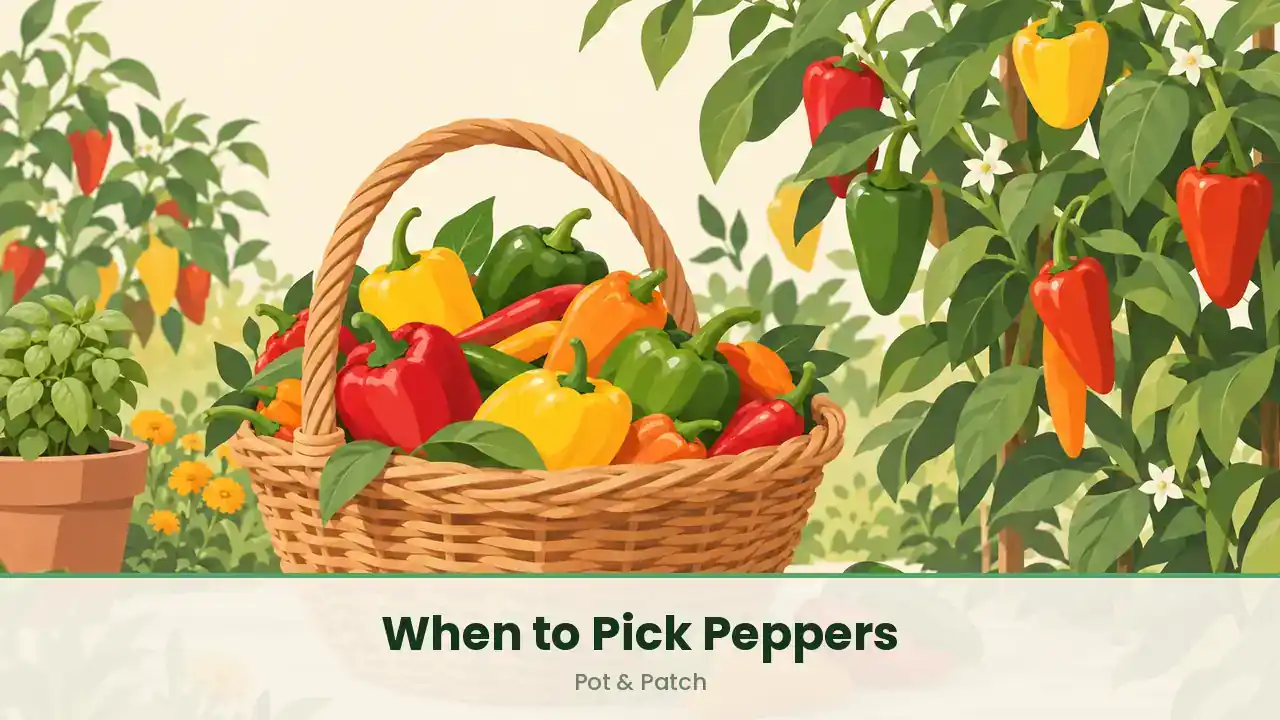
When to Pick Peppers: How to Know They Are Ripe and Ready to Harvest
The trickiest part of growing peppers is often knowing the moment to pick them. Harvest too soon and you miss out on flavor and color. Leave them too long and the plant quietly slows down its production.
The good news is that peppers are forgiving, and a few clear signs tell you when each one is ready. This guide covers how to know when to pick peppers, whether to take them green or wait for color, and the rough timing for the varieties most gardeners grow.
How to Tell a Pepper Is Ready to Pick
Four simple checks will tell you a pepper is ready, whatever the type. You do not need all four, but together they make the call easy.
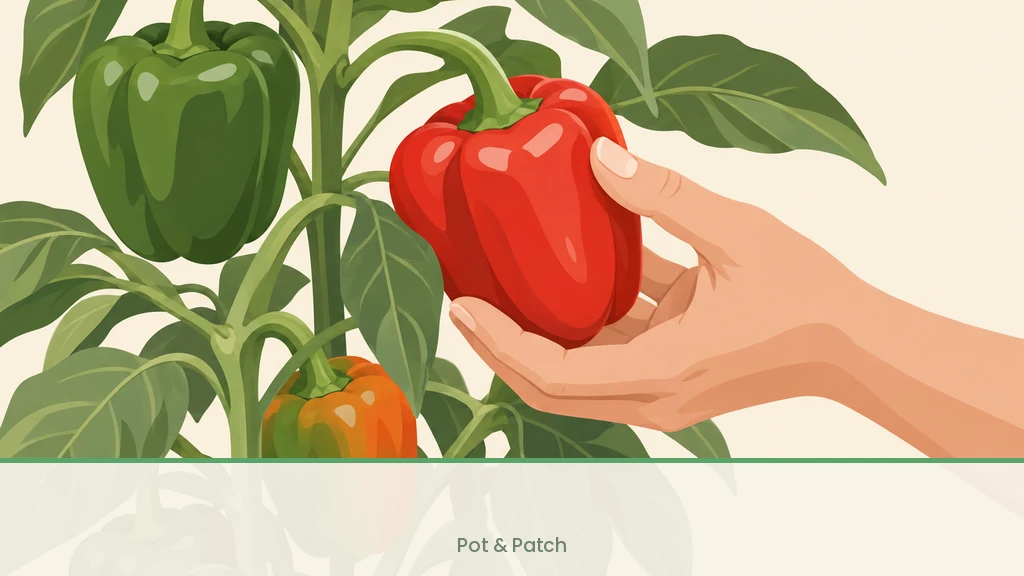
Full size. The pepper has stopped getting bigger and has reached the size listed for its variety. A pepper still swelling is still growing.
Firm and glossy. Ripe peppers feel firm and solid with smooth, taut, shiny skin. A light squeeze should meet resistance, not softness.
The color you want. This is the big one, and it is covered next. A pepper is edible at full green size and sweeter or hotter once it colors up.
Snaps off cleanly. A ready pepper detaches easily when you cut the stem. If you find yourself wrestling with it, give it a few more days.
Green or Fully Colored? It Is Your Choice
Here is the fact that surprises new growers. Nearly every pepper, sweet or hot, starts out green and then ripens to its final color, usually red but also yellow, orange, purple, or brown. A green bell pepper and a red one can be the very same variety at two different stages.
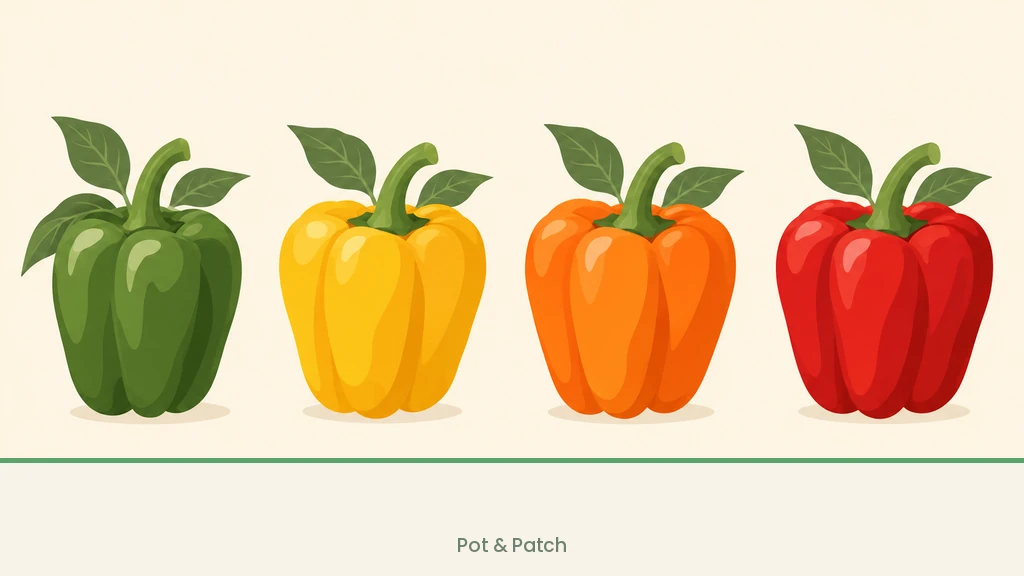
So picking green is not wrong, it is just early. Green peppers are firmer and taste sharper and more bitter, which many cooks prefer for frying and sauces. Left on the plant to color up, they turn noticeably sweeter, and hot types get hotter. Iowa State University Extension notes that fully mature, colored peppers are slightly sweeter and carry more vitamins than green ones.
The trade-off is time and numbers. Waiting for full color ties up the plant for an extra two to three weeks per fruit, so you harvest fewer peppers overall across the season. Pick green for quantity, wait for color for flavor, or do a mix of both.
Do Peppers Keep Ripening After You Pick Them?
This one trips people up, because peppers do not behave like tomatoes. A fully green, immature pepper will mostly stay green once it is off the plant. It will not turn red on the windowsill.
A pepper that has already started to change color is different. Once that first blush of red, yellow, or orange appears, the fruit will keep ripening off the plant and finish its color on the counter over a few days.
When to Pick Peppers by Variety
Days to maturity are counted from transplanting out, not from seed. If you started your own seeds, add roughly eight to ten weeks. Use these as a guide, then let the ripeness signs above make the final call.
| Pepper | Days to maturity | When to pick |
|---|---|---|
| Bell pepper | 60 to 90 | Full-size green, or wait 2 to 3 weeks more for red, yellow, or orange |
| Jalapeno | 70 to 85 | Firm and dark glossy green, or leave to turn red |
| Banana pepper | 60 to 75 | Pale yellow, or let it ripen to orange or red for sweeter fruit |
| Poblano | 65 to 85 | Large and deep green (ripens red, then dried as ancho) |
| Shishito | 60 | Small and green, about 2 to 3 inches long |
| Serrano | 75 to 90 | Deep green, or red for more heat |
| Cayenne | 70 to 80 | Bright red, or green when you want it milder |
| Anaheim | 70 to 80 | Full-size glossy green, or red for sweeter, hotter fruit |
| Hungarian wax | 65 to 70 | Pale waxy yellow, or orange to red as heat builds |
| Cubanelle | 60 to 75 | Pale yellow-green while sweet and mild, or red when riper |
| Thai chili | 85 to 95 | Green for milder heat, or bright red at full fire |
| Habanero | 90 to 120 | Full orange or red, never green |
If you are planning your season around these numbers, our guides on when to plant peppers and growing peppers from seed help you count back to a sowing date.
Banana peppers have a harvest story of their own, from pale yellow to deep red. Our guide on when to harvest banana peppers covers that one in detail.
Jalapenos have their own tells too, including the pale corking lines on ripe pods. See our guide on when to pick jalapenos for the full rundown.
Shishitos are the exception that are best picked small and green. Our guide on when to pick shishito peppers explains the timing.
How to Pick Peppers Without Damaging the Plant
Pepper branches are surprisingly brittle, so how you remove the fruit matters as much as when.

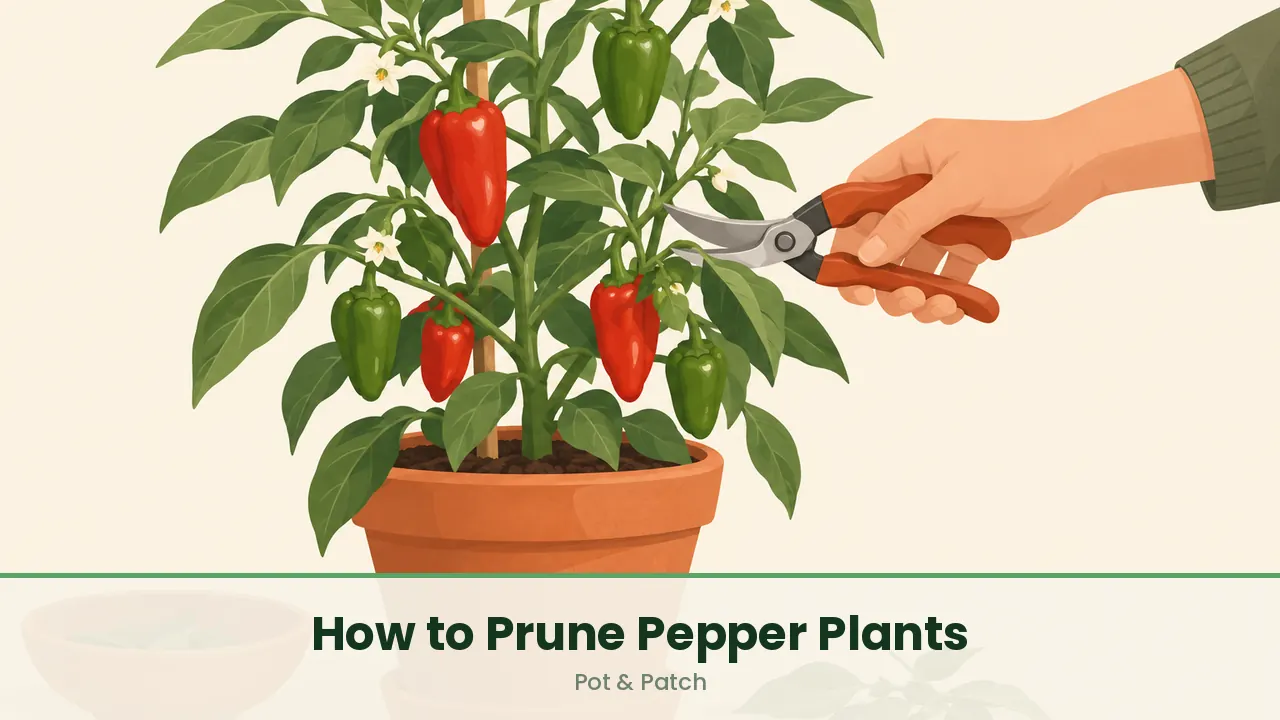
Always cut peppers off rather than pulling them. Use clean, sharp pruners or scissors and snip the stem, leaving a short stub attached to the pepper. Tugging a pepper by hand can snap a whole branch and cost you the fruit still growing on it.
For hot peppers, wear gloves or wash your hands well straight afterward. The capsaicin oil that makes them hot lingers on skin and will sting badly if you then touch your eyes or mouth.
Does Picking Peppers Make More Grow?
In a sense, yes, and it is worth understanding why. A pepper plant’s goal is to produce mature seed, so once ripe fruit is sitting on the plant, it eases off making new flowers, its job nearly done.
Harvest those peppers promptly and you keep the plant in production mode, pushing out fresh blooms and fruit for longer. So pick regularly, and remove any overripe or damaged pods you find. If your plant is flowering heavily but setting little fruit, our guide on pepper plant flowers but no fruit digs into that separate problem.
Harvesting Before Frost and Storing Your Peppers
Peppers are warm-season plants with no frost tolerance, so a hard frost ends the season. Before the first one, pick everything on the plant, or pull the whole plant and hang it upside down somewhere cool and dry to let the colored fruit finish.
Fresh peppers keep in the fridge for one to two weeks, best unwashed in a perforated bag in the crisper. For longer storage, peppers freeze well without blanching, and thin-walled types dry easily for flakes and powder.
The Bottom Line on Picking Peppers
Watch for a full-size, firm, glossy pepper, then decide on color. Snip it green for sharp, plentiful fruit, or wait for it to turn for sweeter, hotter, richer peppers. Either way, cut rather than pull, and keep picking to keep the plant going.
Get the timing right and a few plants will feed you for months. For more on growing a strong crop from start to finish, visit our pepper growing hub.
Frequently Asked Questions
When should you pick peppers?
Pick peppers once they are full size, firm, and glossy, and have reached the color you want. They are edible at the green stage and become sweeter and hotter if left on the plant to ripen to red, yellow, or orange.
Should you pick peppers green or wait until they turn red?
Both work. Green peppers are firmer and more bitter and give you more fruit per season. Colored peppers are sweeter, hotter, and higher in vitamins, but each one ties up the plant for an extra two to three weeks.
Do peppers keep ripening after you pick them?
Only if they have already begun to change color. A pepper showing some red or yellow will finish ripening off the plant, but a fully green, immature pepper will stay green once picked.
How do you pick peppers off the plant?
Cut them with clean, sharp pruners or scissors, leaving a short stem on the fruit. Never pull peppers by hand, as the brittle branches snap easily. Wear gloves when harvesting hot peppers.
Does picking peppers produce more peppers?
Yes. Removing ripe peppers keeps the plant from slowing down, so it sets more flowers and fruit. Harvest regularly and clear away any overripe pods to keep production going all season.