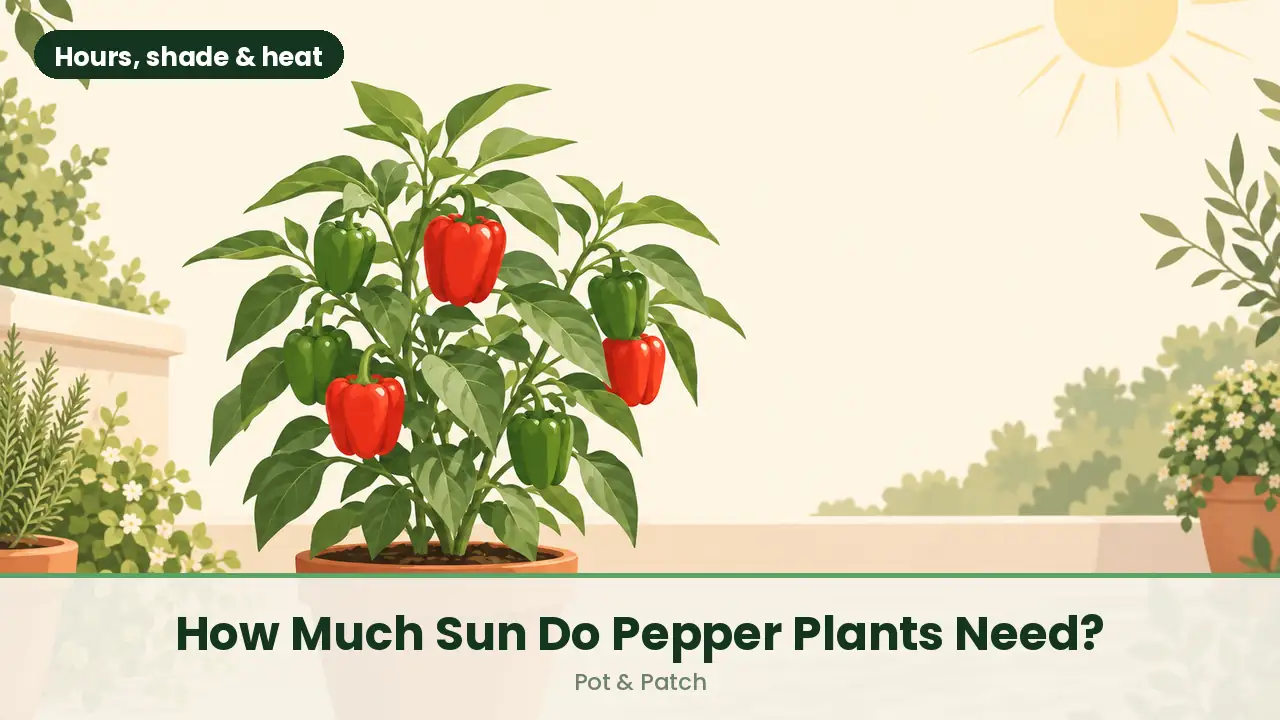
How Much Sun Do Pepper Plants Need? Hours, Shade, and Heat Explained
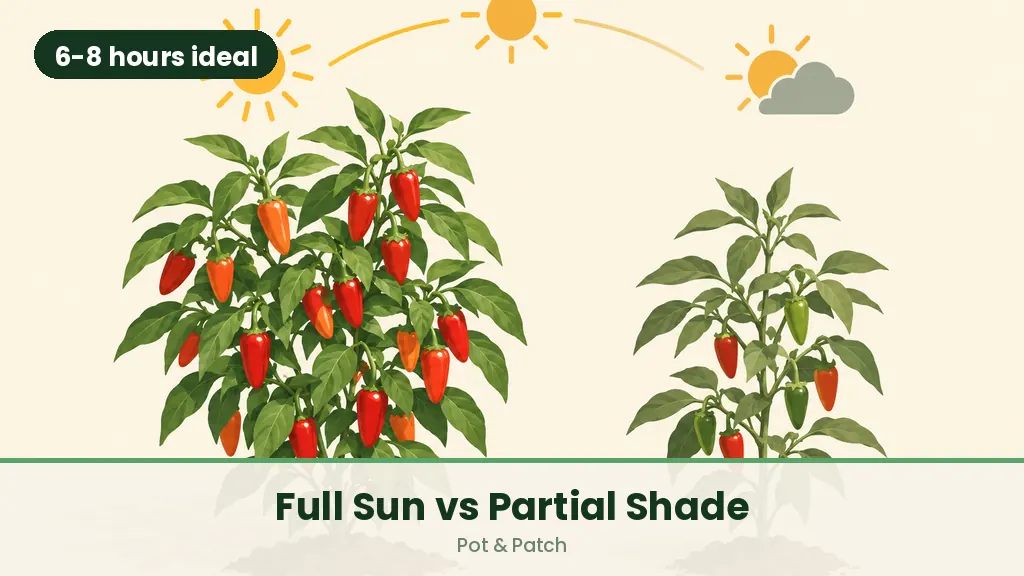
Peppers are sun lovers. Give them a bright, open spot and they grow sturdy, flower freely, and load up with fruit. Tuck them into a shady corner and you get tall, thin plants with barely a pepper to show for it.
Most peppers want 6 to 8 hours of direct sun a day, and they will take more. The catch is that sun and heat are two different things, and knowing the difference is what separates a heavy harvest from a frustrating one.
Peppers Are Full-Sun Plants
Every pepper, from sweet bells to fiery habaneros, is classed as a full-sun crop. In practice that means at least 6 hours of direct, unobstructed sunlight, with 8 or more producing the best results.
Light is fuel. The more a pepper gets, the more energy it has to set flowers and ripen fruit, which is why the sunniest bed or balcony almost always gives the biggest pick.
| Daily direct sun | What you can expect |
|---|---|
| 8 or more hours | Strongest growth and heaviest fruit |
| 6 to 8 hours | Healthy plants and a solid harvest |
| 4 to 6 hours | Smaller plants, fewer peppers |
| Under 4 hours | Leggy growth, little or no fruit |
One detail is easy to miss: not all hours are equal. Soft morning sun is gentler than the fierce light of mid-afternoon, so in hot regions an east-facing spot that catches the early sun is often the sweet spot.
What Too Little Sun Does to a Pepper
Peppers can limp along in partial shade, roughly 3 to 4 hours of sun, but they never really thrive there. Growth slows, far fewer fruit set, and the peppers that do form can taste milder and less spicy.
A light-starved plant gives itself away fast. The stems stretch tall and thin with long gaps between leaves, a look most people first see in windowsill seedlings reaching for the glass. Flowering drops off, the foliage looks pale and sparse, and the whole plant simply lags.
If that sounds like your plant, the fix is usually just a sunnier home. Move containers into more light, or thin out anything nearby that is casting shade.
More Sun Is Good. Extreme Heat Is the Real Enemy
Here is where a lot of advice goes sideways. People blame “too much sun” for scorched fruit and dropped flowers, but peppers rarely suffer from sunlight itself. The culprit is heat, and one specific condition called sunscald.
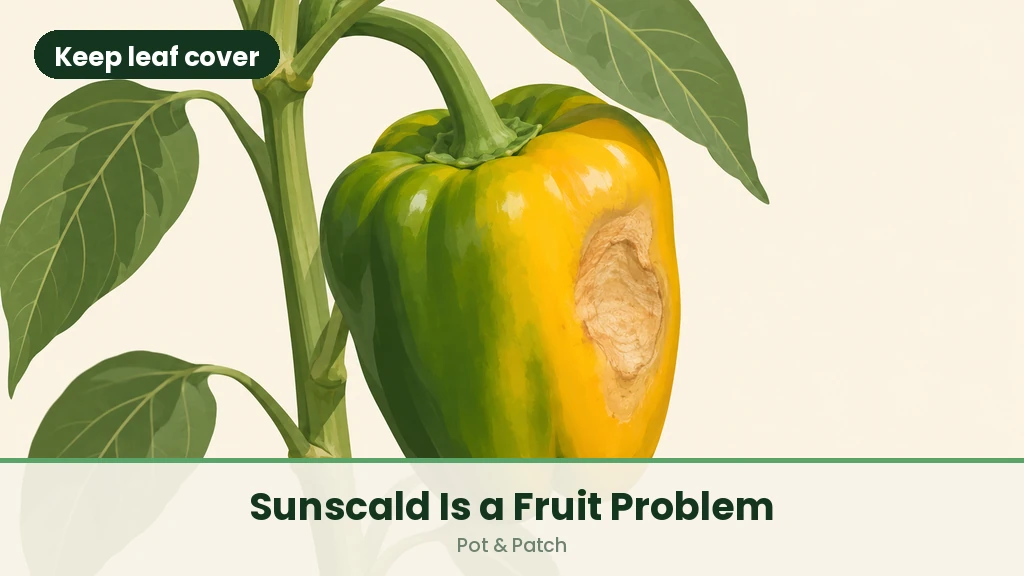
Sunscald is a fruit problem, not a leaf problem. University of Minnesota Extension describes it as flat, tan patches that appear on peppers when there is not enough foliage shading them, especially in hot, dry spells. The answer is more leaf cover, not less sun, so resist the urge to prune heavily and expose the fruit.
Heat causes trouble at the flowering stage too. Once daytime temperatures push past about 90 F, plants often shed their blossoms and set little fruit. Again, the problem is the temperature, not the light, so the fix is not to move peppers out of the sun. A light shade cloth over the hottest afternoon hours, a layer of mulch to cool the roots, and steady watering all help the plant ride out a heat wave. If yours is flowering but refusing to fruit, our guide on pepper plant flowers but no fruit goes deeper on that heat link.
Getting Enough Light in Pots and Indoors
Containers turn sunlight into something you can manage. Because you can move them, you can chase the sun across a patio through the season and pull plants into afternoon shade when a heat wave hits. Set pots where they catch morning and midday sun, such as a south or west-facing patio, and you are most of the way there. Our guide on growing peppers in containers covers pots, soil, and placement together.
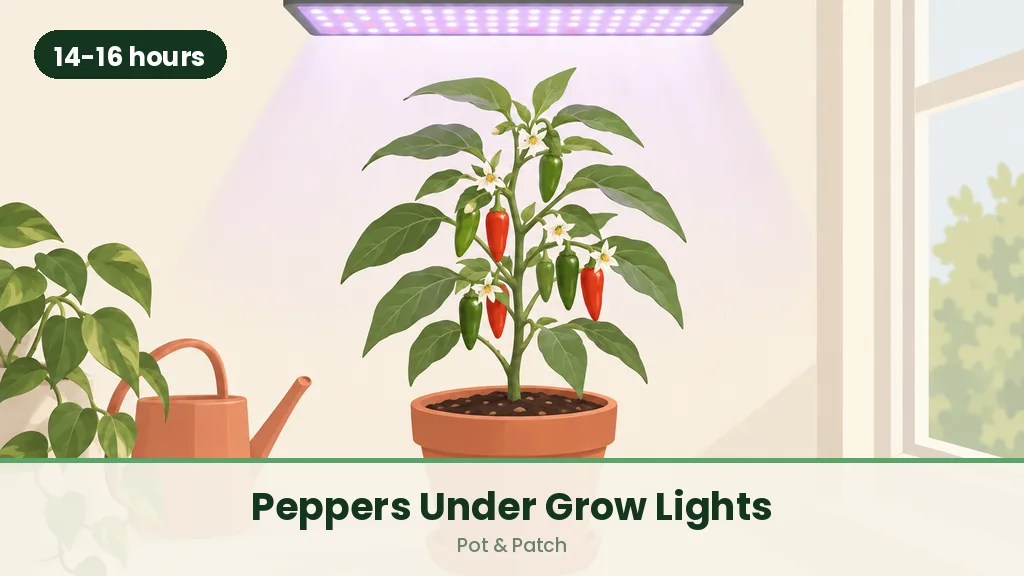
Indoors is a harder sell. A sunny window sounds fine, but glass cuts the light and seedlings quickly turn leggy, so grow lights are usually the honest fix. Run them about 14 to 16 hours a day while plants are growing, easing back to around 12 hours once they flower and fruit. Keep efficient LED panels close, roughly 12 to 15 inches above the leaves, since even a good grow light is far weaker than real sunshine.
Do Hot Peppers Need More Sun Than Sweet Ones?
Not really. Sweet and hot peppers share the same full-sun appetite, and heat lovers like jalapenos and cayenne will happily bask all day long.
The exceptions are a handful of heat-sensitive types, such as rocoto and other highland peppers, which appreciate a break from brutal afternoon sun once temperatures climb into the 90s. For the peppers most gardeners grow, though, the rule holds: the sunnier the spot, the better the harvest.
So when you are deciding where to plant, lead with light. Find the brightest spot you have, make sure the fruit keeps a leafy canopy over it, and step in with shade only when the heat, not the sun, turns extreme. For more on growing peppers well, visit our pepper growing hub, and if leaves start scorching brown in a heat wave, our guide on pepper leaves turning brown can help.
Frequently Asked Questions
Do pepper plants need full sun?
Yes. Peppers are full-sun plants that need at least 6 hours of direct sunlight a day, and 8 or more gives the best harvest. They fruit poorly in shade.
Can pepper plants get too much sun?
Rarely from sun alone. The real risks are extreme heat and sunscald on exposed fruit. Keep good leaf cover and use shade cloth during heat waves.
How much sun do bell peppers need?
Bell peppers need the same as other peppers, 6 to 8 hours of direct sun daily. More light means more and larger fruit, so give them your sunniest spot.
Can peppers grow in partial shade?
They can survive with 3 to 4 hours of sun, but growth slows and fruit set drops sharply. Peppers truly thrive only in full sun.
How many hours of light do peppers need under grow lights?
About 14 to 16 hours a day while growing, and around 12 once fruiting. Artificial light is weaker than sun, so keep LEDs close to the plants.