Growing Peppers in Containers: Beginner Guide from Planting to Harvest
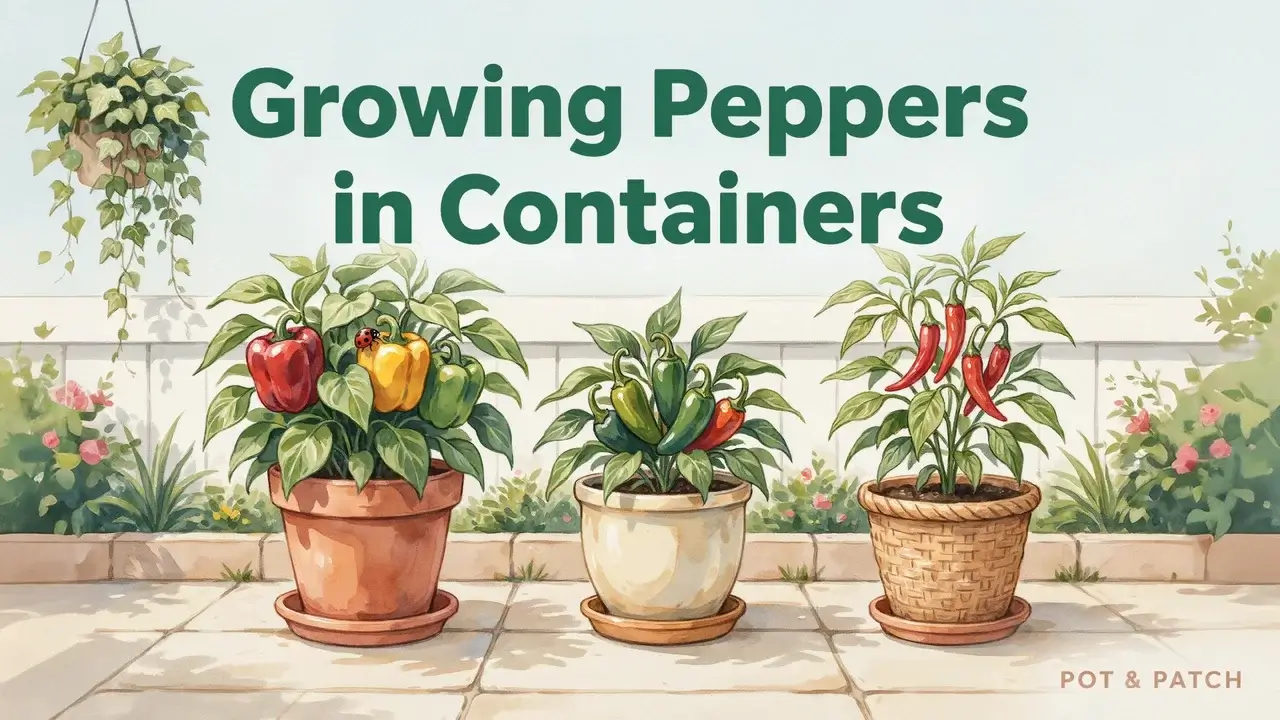
Growing peppers in containers is a practical way to raise bell peppers, jalapeños, sweet peppers, and hot chiles when garden space is limited. A sunny patio, balcony, deck, or small backyard can provide enough room for a healthy pepper plant and a useful harvest.
Peppers need more than a decorative pot and occasional watering. Container size, drainage, potting mix, sunlight, temperature, moisture, feeding, and support all affect plant growth and fruit production.
This guide focuses specifically on growing pepper plants in pots, from choosing the right container to harvesting ripe fruit. If you are new to vegetables in pots, our container gardening guide covers the broader basics.
Growing Peppers in Containers at a Glance
| Growing Requirement | Good Starting Point |
|---|---|
| Container size | About 5 gallons or larger for one standard pepper plant |
| Plants per pot | Usually 1 plant |
| Sunlight | 6 to 8 hours of direct sun |
| Growing medium | Well-draining container potting mix |
| Drainage | Working drainage holes |
| Water | Keep moisture reasonably consistent and check often |
| Fertilizer | Feed according to the potting mix and fertilizer label |
| Support | Stake or cage tall and fruit-heavy plants |
| Best location | Warm, sunny patio, balcony, deck, or yard |
| Harvest | Pick green or allow fruit to develop its mature color |
A container around 5 gallons is a dependable starting point for one standard pepper plant. Larger pots can make watering easier and provide more room for roots.
Can Peppers Grow Well in Containers?
Yes. Peppers can grow very well in containers when their basic needs are met.
Pots give you control over the growing medium and let you place the plant where sunlight is strongest. A container can also be moved when a balcony becomes too hot, strong wind damages foliage, or surrounding plants begin creating shade.
The tradeoff is that a potted pepper depends more heavily on you for water and nutrients. Its roots cannot spread into surrounding garden soil when the container starts drying.
Peppers are especially useful for small gardens because a single plant takes up relatively little floor space while producing upward and outward.
If you are still deciding what to plant in limited space, see our guide to the best container vegetables.
Best Peppers to Grow in Containers
Both sweet and hot peppers can grow successfully in pots. Choose varieties based on mature plant size, fruit weight, available space, and the flavors you actually use.
Bell Peppers
Growing bell peppers in pots works well when the plant has enough root space, strong sunlight, and consistent moisture.
Bell pepper plants can become bushy, and their larger fruits add weight to the branches. A roomy container and simple support can help keep the plant upright as peppers develop.
Compact bell pepper varieties are useful when balcony or patio space is especially tight.
Hot Peppers and Chiles
Many hot pepper types also suit containers well. Common choices include:
- Jalapeño
- Serrano
- Cayenne
- Poblano
- Habanero
- Banana pepper
- Compact chile varieties
You do not need a completely different growing method for every type. Most need warm conditions, good drainage, adequate sunlight, consistent moisture, and appropriate nutrition.
| Pepper Type | Container Suitability | Main Consideration |
|---|---|---|
| Bell pepper | Very good | Give larger plants room and support |
| Jalapeño | Excellent | Manageable size for many patios |
| Serrano | Excellent | Prefers a warm, sunny location |
| Cayenne | Excellent | Long fruits are relatively light |
| Poblano | Good | Provide adequate root volume |
| Banana pepper | Very good | Performs well in sunny containers |
Always check the seed packet or plant label because individual varieties differ in mature size and growth habit.
What Size Pot Do Pepper Plants Need?
For most beginners, a 5-gallon container is a dependable minimum starting point for one standard pepper plant.
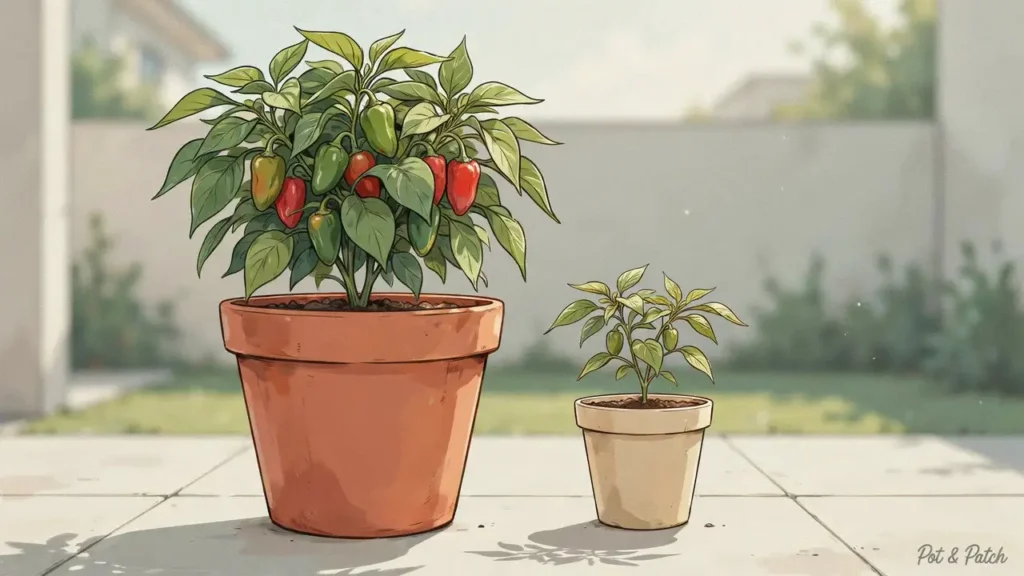
Larger pots can be easier to manage because they:
- provide more root space
- hold more moisture
- dry out more slowly
- give taller plants greater stability
- provide a larger reserve of growing medium
A compact pepper variety may tolerate less root space, while a vigorous bell pepper can benefit from a container larger than five gallons.
For a standard five-gallon pot, keeping one pepper plant per container is the simplest approach.
Which Container Material Is Best?
Pepper plants can grow in several types of containers.
Plastic and glazed pots: These generally hold moisture longer and are relatively easy to move.
Terracotta pots: Porous clay loses moisture faster, so plants may require more frequent watering during hot weather.
Fabric grow bags: These drain freely and allow good air movement, but they can also dry faster than solid containers.
Container material matters less than sufficient size and reliable drainage.
Drainage Holes Matter More Than Pot Style
Do not choose a pepper container based on appearance alone.
Excess water needs a way to leave the root zone. Use a pot with working drainage holes, and make sure those openings are not blocked when the container sits on the ground or a saucer.
There is no need to fill the bottom of the container with a thick layer of rocks or gravel simply to create drainage. The growing medium and working drainage holes are more important.
Best Soil for Growing Peppers in Containers
Growing peppers in containers works best with a lightweight, well-draining potting mix designed for container plants.
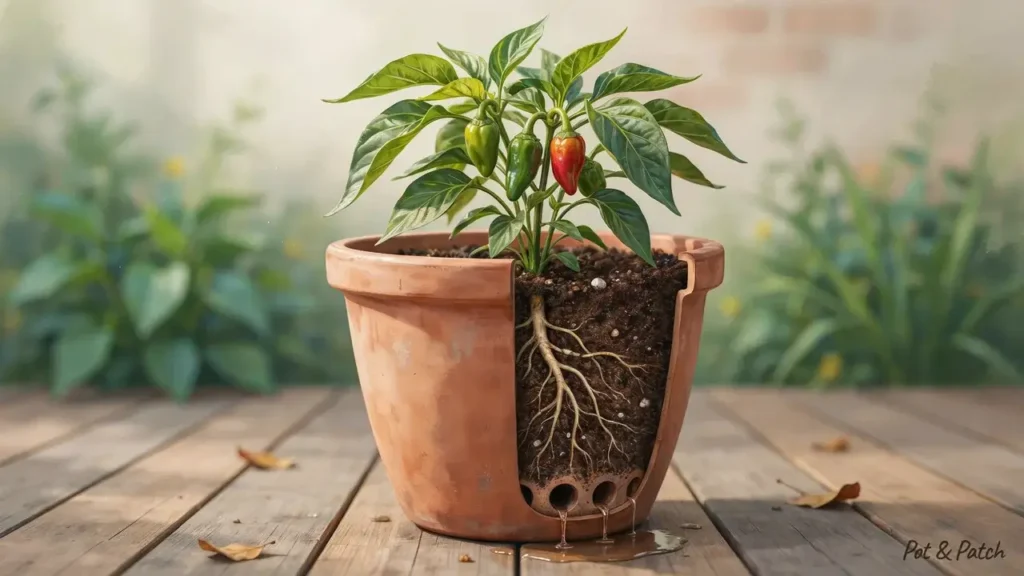
Avoid filling the pot with soil dug directly from the yard. Garden soil can become dense inside a container, limiting drainage and reducing the air available around roots.
A useful container mix should balance two things:
- enough moisture retention to keep roots from drying immediately
- enough drainage and air space to prevent prolonged saturation
Potting mix is different from ordinary topsoil.
If you want a deeper explanation of growing media, amendments, drainage, and soil selection, read our guide to the best soil for container gardening.
Does Soil pH Matter?
Peppers prefer conditions where their roots can access nutrients efficiently, but gardeners using a quality commercial potting mix usually do not need to start changing pH without a reason.
Avoid adding lime, sulfur, calcium products, or homemade amendments simply because a general gardening tip recommends them.
If you suspect a genuine pH or nutrient problem, testing is more useful than guessing.
When to Plant Peppers in Pots
Peppers are warm-season plants and should not be rushed outdoors.
Cold soil and chilly nights can slow early growth. Wait until the danger of frost has passed and outdoor conditions have warmed consistently.
There is no single planting date that works across the United States. A gardener in Florida will have a very different schedule from someone in Minnesota.
Use your local last-frost date, current nighttime temperatures, and local weather conditions rather than relying only on a calendar date.
Seeds or Transplants?
Both methods work, but transplants are often easier for beginners.
Start with transplants if you:
- want the simplest option
- have a shorter growing season
- only need a few plants
- can find suitable varieties locally
Start from seed if you:
- want unusual pepper varieties
- need several plants
- are comfortable raising seedlings indoors
- have enough time before outdoor planting
This guide focuses on pepper plants once they are ready for their final container rather than turning into a separate seed-starting tutorial.
Harden Off Pepper Seedlings First
Seedlings raised indoors should gradually adjust to outdoor conditions before spending full days in direct sun and wind.
Start with shorter periods outside in a protected location, then gradually increase their exposure over several days.
This transition helps reduce transplant stress and leaf damage.
How to Plant Peppers in Containers
Once outdoor conditions are suitable, planting peppers in containers is straightforward.
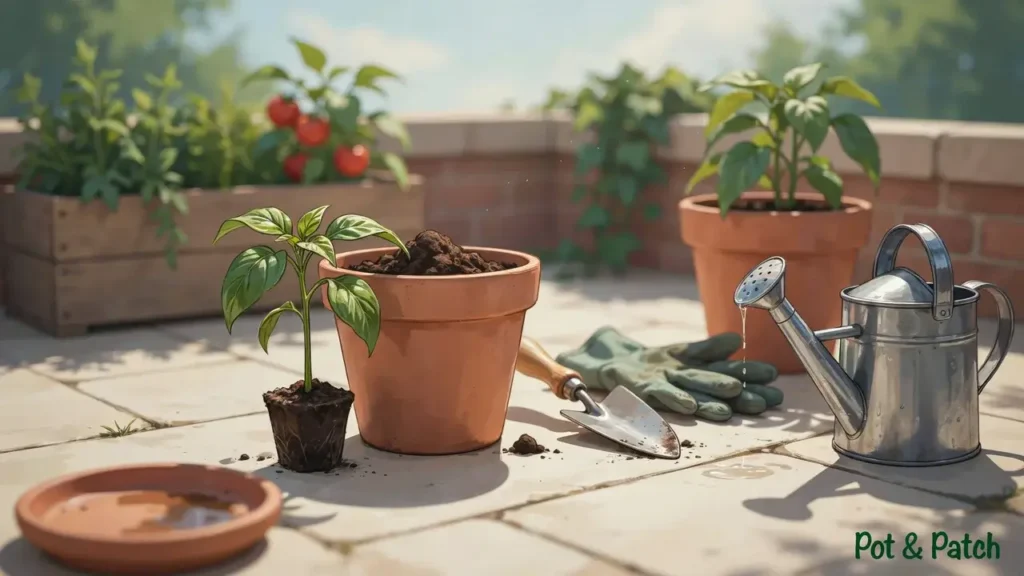
- Choose a healthy transplant. Look for a sturdy plant with healthy foliage and no obvious pest damage.
- Prepare the container. Make sure it is large enough and has working drainage holes.
- Add potting mix. Fill the pot with a quality container growing medium.
- Make the planting hole. It should comfortably hold the root ball.
- Remove the transplant carefully. Handle the root ball instead of pulling the plant by its stem.
- Set the plant in place. Plant it at roughly the same depth it was growing in its nursery pot.
- Firm the mix gently. Do not pack it tightly around the roots.
- Water thoroughly. Allow extra water to drain from the bottom.
- Move the pot into its sunny growing position.
- Add support early if needed. It is easier to stake a young plant than a mature plant loaded with peppers.
The plant can now establish itself in its final growing space.
How Much Sun Do Peppers in Pots Need?
Pepper plants need strong light for healthy growth, flowering, and fruit production. Aim for 6 to 8 hours of direct sunlight each day.
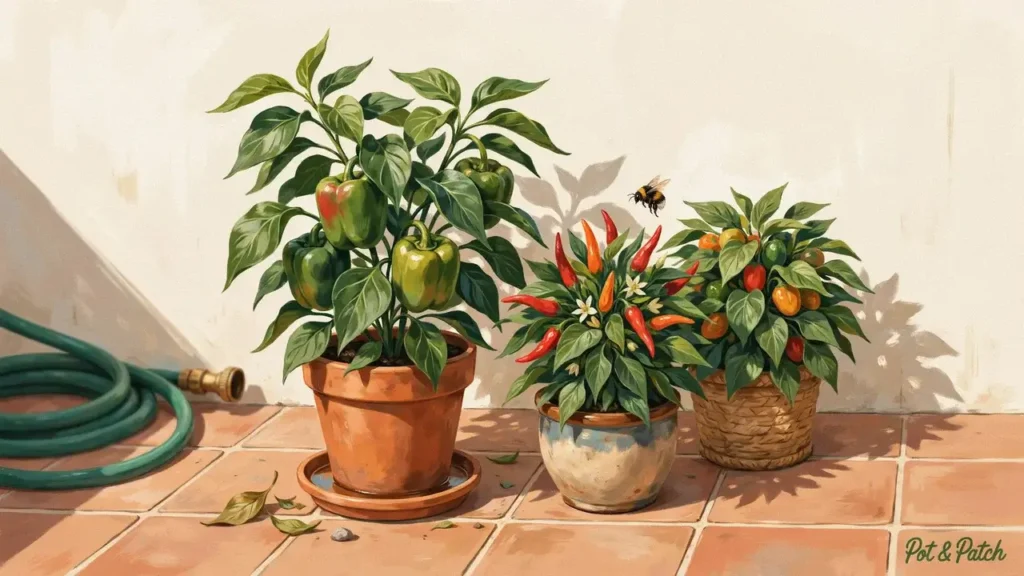
A south-facing or west-facing location often receives strong sun, but every patio and balcony is different. Watch the space throughout the day rather than assuming it qualifies as full sun.
Buildings, railings, awnings, trees, walls, and neighboring structures can create several hours of unexpected shade.
Watch for Extreme Heat Around Containers
Peppers like warmth, but sunny patios and balconies can become much hotter than the surrounding air.
Brick, concrete, stone, metal railings, and walls can absorb and reflect heat toward plants.
During very hot weather:
- check moisture more frequently
- watch leaves for heat stress
- avoid letting small pots become completely dry
- move portable containers if reflected heat becomes excessive
A heat-loving plant can still become stressed by extreme temperatures.
How to Water Peppers Growing in Pots
Do not water pepper plants according to a rigid schedule such as every two or three days.
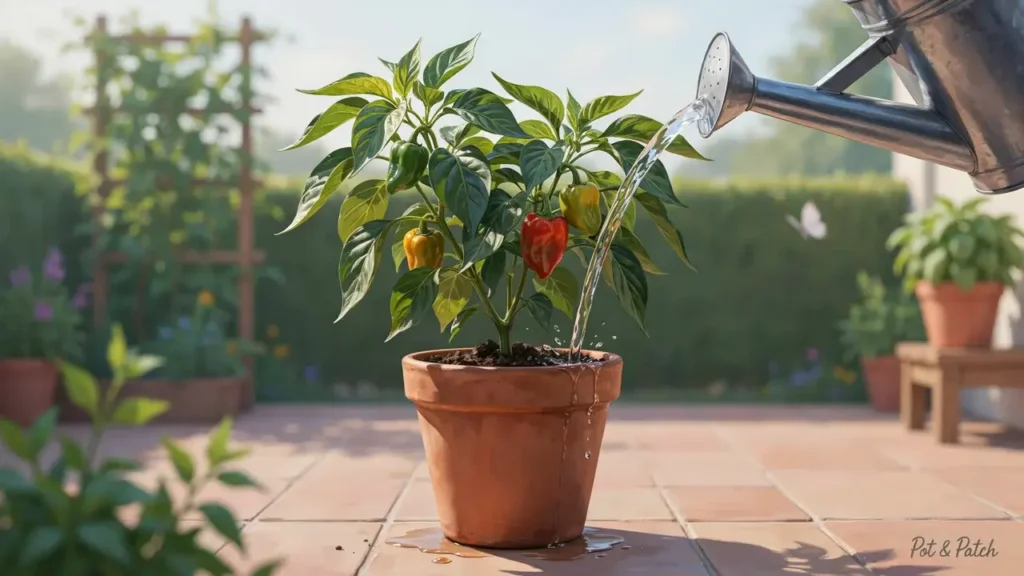
Containers dry at different rates depending on:
- pot size
- container material
- temperature
- wind
- sunlight
- plant size
- growing medium
Check the potting mix regularly. When it begins to dry, water thoroughly enough that excess moisture can leave through the drainage holes.
The goal is reasonably consistent moisture, not permanently wet soil.
During periods of hot weather, potted peppers may need attention every day.
How to Tell When a Pepper May Need Water
Useful clues include:
- the upper potting mix feels dry
- the pot feels noticeably lighter than usual
- leaves begin drooping
- hot or windy weather has increased water use
Do not automatically water simply because foliage droops during the hottest part of the afternoon.
A plant can temporarily wilt during intense heat even while the root zone still contains moisture. Check the mix first.
Too much water can also create problems. Constantly saturated potting mix reduces air around roots and can contribute to root stress.
How to Fertilize Container Pepper Plants
Container peppers have access only to the nutrients available inside their pot.
That does not mean more fertilizer will produce more peppers.
Start by checking the potting mix. Some commercial mixes already contain starter or slow-release fertilizer.
A simple feeding approach is to:
- check whether fertilizer is already present
- choose a product labeled for vegetables or container plants
- follow the manufacturer’s directions
- monitor plant growth
- feed again during the season if the product and plant needs call for it
Repeated watering can gradually wash nutrients from the growing medium, particularly during a long growing season.
Avoid Too Much Nitrogen
Nitrogen helps plants produce foliage, but excessive nitrogen can encourage leafy growth at the expense of a balanced crop.
Do not double fertilizer rates to make peppers grow faster.
If the plant looks healthy, flowers normally, and develops fruit, extra fertilizer may not improve the result.
Do Container Peppers Need Support?
Not every pepper plant needs a cage or stake.
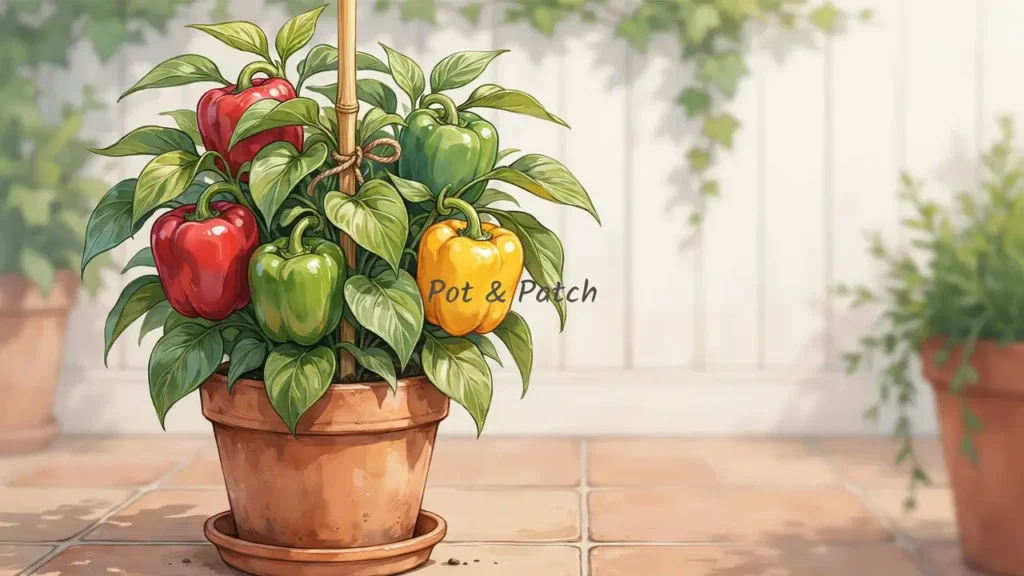
Compact hot pepper plants may stay upright on their own. Taller varieties and plants carrying several large bell peppers can become top-heavy.
Useful support options include:
- one sturdy stake
- a small plant cage
- a compact trellis
Add support before the branches become heavily loaded with fruit.
Installing a stake later can disturb roots or break branches on a mature plant.
Should You Prune Pepper Plants in Pots?
Heavy pruning is not required for successful pepper growing.
For beginners, focus first on the factors that matter most:
- sunlight
- container size
- water
- nutrients
- temperature
- drainage
- plant support
Remove damaged, dead, or diseased growth when necessary.
You may see advice recommending that every young pepper plant be topped to make it bushier. Topping is not a required step for producing peppers in a container, so there is no need to do it automatically.
Common Problems When Growing Peppers in Containers
Growing peppers in containers becomes easier when you diagnose the growing conditions before reaching for fertilizer or pesticide.
Pepper Flowers but No Fruit
A plant may produce flowers but fail to set many peppers.
Possible reasons include:
- unusually high temperatures
- cold weather
- moisture stress
- insufficient sunlight
- recent transplant stress
- general plant stress
Check temperature, moisture, sunlight, and overall plant health before assuming pollination is the only problem.
Yellow Leaves
Yellow foliage is a symptom rather than a diagnosis.
Possible causes include:
- overly wet potting mix
- prolonged dryness
- nutrient problems
- root stress
- pests
- disease
Start by checking moisture and drainage. Then inspect both sides of the leaves and new growth before automatically applying fertilizer.
Blossom End Rot
Blossom end rot appears as a dark, sunken area near the blossom end of developing fruit.
The disorder involves calcium movement into developing fruit, but that does not mean every affected plant needs a calcium supplement.
Irregular moisture can interfere with nutrient movement through the plant.
For container peppers, prevention starts with:
- consistent watering
- good drainage
- adequate container volume
- sensible fertilization
- avoiding severe wet-to-dry swings
Do not automatically add eggshells or calcium products unless there is evidence that the growing medium actually lacks calcium.
Wilting Pepper Plants
Wilting can have several causes.
Check for:
- dry potting mix
- intense afternoon heat
- constantly saturated soil
- transplant stress
- root problems
Always inspect the root-zone moisture before watering again.
Aphids and Other Pests
Check pepper plants regularly, especially:
- tender new growth
- flower buds
- stem junctions
- undersides of leaves
Small pest populations are easier to manage before they spread.
Identify the insect before using a treatment. Not every insect found on a pepper plant is causing meaningful damage.
Sunscald
Pepper fruit can develop damaged, pale, or discolored areas when exposed to intense sunlight.
Healthy foliage provides natural shade for developing peppers.
Avoid unnecessary heavy pruning that suddenly exposes fruit that had previously been protected by leaves.
Growing Bell Peppers in Pots: What Changes?
Bell peppers follow the same basic container-care principles as other peppers, but their large fruits make a few details more important.
Give full-size bell pepper plants generous root space instead of squeezing them into small decorative containers.
Keep moisture reasonably consistent during flowering and fruit development. A container that repeatedly becomes extremely dry can stress the plant.
Support can also become useful once several heavy fruits develop on the same plant.
Bell peppers can be harvested while green or left on the plant to develop their mature color. Depending on the variety, ripe fruits may become red, yellow, orange, purple, brown, or another color.
This allows the same plant to provide peppers at different stages of maturity.
How and When to Harvest Container Peppers
Harvest timing depends on the variety and whether you prefer younger green fruit or fully colored peppers.
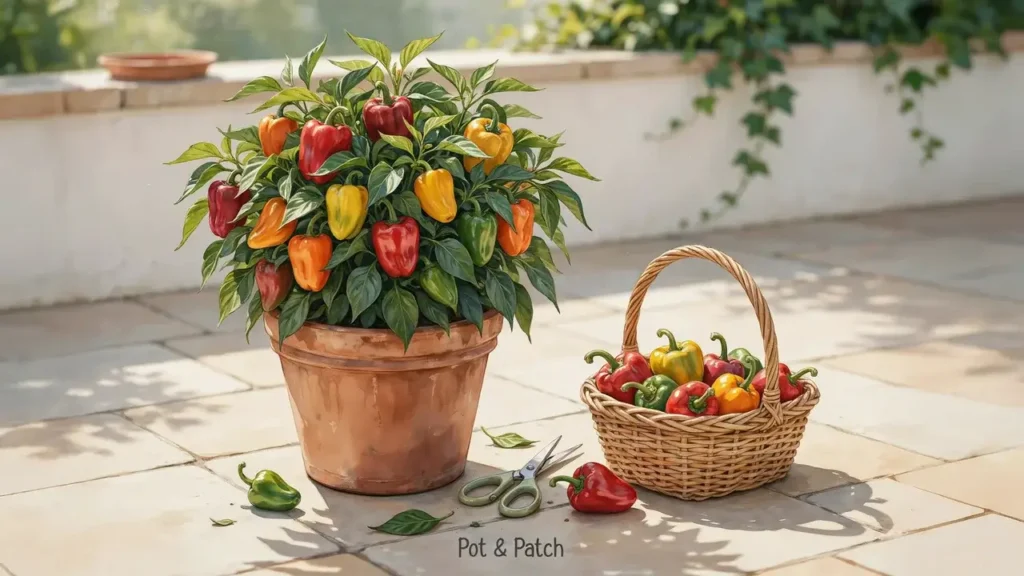
Many peppers are edible while still green. Leaving them on the plant longer allows varieties that change color at maturity to continue ripening.
Look for peppers that:
- have reached a suitable size for the variety
- feel firm
- have developed the color you want
- appear healthy and undamaged
Use clean scissors or pruners to cut the stem instead of pulling hard on the fruit.
Pepper stems and branches can be brittle, and pulling may damage the plant.
When handling hot peppers, wash your hands thoroughly afterward and avoid touching your eyes or face.
7 Common Mistakes When Growing Peppers in Containers
1. Choosing a Pot That Is Too Small
Small containers give roots less room and dry quickly. Start with around five gallons for a standard plant rather than keeping a large pepper in a tiny decorative pot.
2. Using a Pot Without Drainage
Pepper roots need moisture, but they should not sit in stagnant water.
3. Filling the Container With Garden Soil
Dense yard soil behaves differently in a pot. Use a proper container growing medium instead.
4. Moving Peppers Outside Too Early
One warm afternoon does not mean cold nights are finished. Wait until frost danger has passed and conditions suit a warm-season crop.
5. Giving the Plant Too Little Sun
A bright outdoor location is not necessarily a full-sun location. Count the hours of actual direct sunlight.
6. Letting the Pot Repeatedly Dry Out
Large moisture swings can stress plants and affect fruit quality. Check containers more frequently during hot and windy weather.
7. Using Extra Fertilizer for Every Problem
Yellow leaves, wilting, blossom drop, and poor growth do not always indicate a nutrient deficiency.
Check water, drainage, sunlight, temperature, roots, and pests before adding fertilizer.
FAQs
What size container is best for pepper plants?
A container of about 5 gallons or larger is a reliable starting point for one standard pepper plant. Larger or more vigorous varieties can benefit from additional root space.
Can two pepper plants grow in one 5-gallon bucket?
A five-gallon container is better used for one standard pepper plant. Putting two plants in the same pot increases competition for water, nutrients, and root space. Use a substantially larger planter if you want several pepper plants growing together.
How often should I water peppers in pots?
There is no universal watering schedule.
Check the potting mix frequently and water according to moisture level, weather, pot size, container material, and plant growth. During hot weather, pots may need daily attention.
Do peppers grow better in pots or in the ground?
Both methods can produce healthy plants.
In-ground peppers have access to a larger volume of soil and moisture. Containers provide greater control over growing medium and placement but usually require closer attention to water and nutrients.
Can bell peppers grow successfully in containers?
Yes. Bell peppers can grow well in containers when they receive sufficient root space, working drainage, direct sunlight, consistent moisture, appropriate feeding, and support when fruit becomes heavy.
Do pepper plants come back every year?
Peppers are frost-sensitive plants.
In much of the United States, they are grown as warm-season annual crops because freezing weather ends outdoor growth. In frost-free climates or with suitable winter protection, pepper plants can live longer than one growing season.
Growing Peppers in Containers Successfully
Growing peppers in containers does not require a large garden, but the plant still needs enough room for its roots and suitable conditions above the soil.
Start with a roomy container, working drainage holes, and quality potting mix. Place the plant where it receives strong direct sunlight, keep moisture reasonably consistent, feed according to its needs, and support heavy branches before they bend.
With those basics in place, bell peppers, jalapeños, serranos, poblanos, and many other peppers can grow successfully on a patio, balcony, deck, or in a small backyard.