Container Gardening for Beginners: A Practical Guide to Growing Plants in Pots
Container gardening is a way to grow plants in pots, buckets, or boxes instead of in the ground. It works for vegetables, herbs, flowers, and even small water features. Anyone with a patio, balcony, or sunny windowsill can start one, no yard required.
This guide walks through everything from choosing containers to seasonal care, so you can build a garden that actually thrives.
What Container Gardening Really Means
Put simply, this method means growing plants in a container rather than planting them directly into garden soil. You control the soil, the sunlight, and the space, which makes it forgiving for beginners.
A single pot on a windowsill counts. So does a full patio lined with dozens of planters.

Common Types Of Container Gardens People Build
There’s no single “right” setup. People build all kinds of container gardens depending on their space and goals.
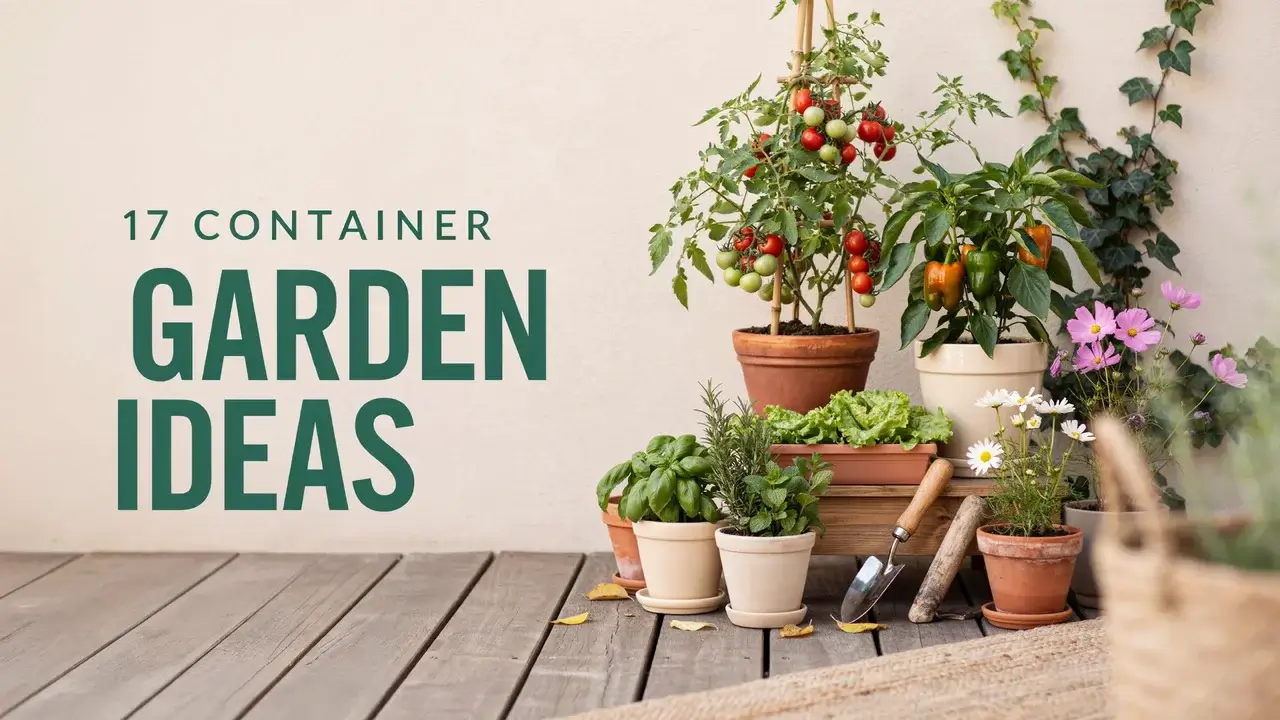
- Vegetable containers for tomatoes, peppers, and leafy greens
- Herb pots for cooking staples like basil and rosemary
- Flower containers for color and curb appeal
- Raised bed and vertical setups for tight spaces
- Small water gardens using watertight containers and aquatic plants
Indoor setups follow slightly different rules than outdoor ones, mostly around light and humidity, which we’ll cover later.
Who This Approach Works Best For
This style of gardening suits a wide range of people.
- Renters who can’t dig into the yard
- Apartment dwellers with only a balcony or fire escape
- Beginners who want to start small before going bigger
- Anyone with limited mobility who needs raised or elevated pots
If any of those describe you, you’re in the right place.
Why Container Gardening Is Worth Trying
There are real reasons this approach has become so popular, beyond just looking nice on Pinterest.
Space Saving Benefits For Small Yards And Balconies
You don’t need a big yard to grow your own food or flowers.
- Balconies, decks, and patios all work as growing space
- Front yards and backyards can host container displays without digging up lawn
- Even driveways, steps, and tiny urban lots can hold a few pots
If you have a sunny corner, you likely have enough room to start.
Control Over Soil, Sunlight, And Growing Conditions
Pots let you sidestep problems that plague in-ground gardens.
Poor native soil, bad drainage, or a yard that floods after rain stop being deal breakers. You fill the container with the mix your plants actually need.
Pots are also mobile. If a plant isn’t getting enough light, you move it. If a storm rolls in, you shift it somewhere sheltered. That flexibility also cuts down on weeds and soil-borne pests that tend to build up in the same ground bed year after year.
Wellness And Lifestyle Benefits Competitors Rarely Mention
Most guides skip this part, but it matters.
Gardening has been linked to lower stress and a general sense of calm. Tending a few pots each morning gives many people a simple, grounding routine.
There’s also the payoff of eating something you grew yourself, even if it’s just a handful of cherry tomatoes or a few basil leaves. For older adults or anyone easing into a gentler hobby, this is a low-impact way to stay active outdoors.
Planning A Container Garden Before You Buy Anything
A little planning up front saves you from buying the wrong pots or plants later.
Questions To Ask Yourself First
Before you head to the store, think through a few basics.
- How much space do you actually have to work with
- How many hours of direct sun does that space get
- What’s your budget for pots, soil, and plants
- Are you growing vegetables, herbs, flowers, or a mix of all three
A rough sketch of your layout, even a quick doodle, helps you avoid overcrowding later.
Mapping Sunlight Across Your Space
Sunlight is the single biggest factor in what will actually grow.
Spend a day watching how light moves across your patio or balcony. Note which spots get full sun, which get a few hours of dappled shade, and which stay shaded most of the day.
- Full sun means six or more hours of direct light
- Part shade means a mix of sun and shade through the day
- Full shade means little to no direct sunlight at all
This mapping decides which plants will actually thrive where you put them, so it’s worth the extra hour.
Setting A Realistic Budget For Containers, Soil, And Plants
Costs add up fast if you’re not careful.
Pots, potting mix, seeds or starter plants, and a few basic tools are the main expenses. Cheap containers, thrift finds, and DIY options can bring startup costs down significantly.
Most people do better starting with a handful of pots and expanding once they’ve gotten the hang of watering and care, rather than filling a whole patio on day one.
Choosing Your Container Garden Style Early
Deciding on a look now saves you from a mismatched collection of pots later.
- Cottage style leans relaxed, layered, and a little wild
- Modern style favors clean lines and a limited color palette
- Casual style mixes whatever works without much fuss
Your container garden style should generally match the rest of your outdoor space, so glance at your patio furniture or front door color before you commit.
Choosing The Right Containers For Your Garden
The container itself matters more than most beginners expect. It affects watering frequency, root health, and how well your plants ultimately grow.
Container Materials Compared Side By Side
Material affects more than looks. It changes how fast soil dries out and how much upkeep a pot actually needs.

| Material | Main Advantage | Main Drawback | Best For |
|---|---|---|---|
| Plastic | Lightweight, holds moisture well | Dark colors can overheat roots | Vegetables, herbs, flowers |
| Terracotta | Breathable, classic look | Dries out quickly | Mediterranean herbs |
| Ceramic | Sturdy, decorative | Heavy, can crack | Flowers, ornamentals |
| Fabric | Great drainage and airflow | Needs frequent watering | Vegetables, root crops |
| Wood | Insulates roots well | Breaks down over time | Large mixed planters |
| Metal | Durable, modern look | Heats up fast in sun | Decorative displays |
Fabric pots deserve a special mention here. They encourage what’s called air pruning, where roots stop circling once they hit air instead of curling against plastic walls. That usually means a healthier, more fibrous root system.
Container Size Guide By Plant Type
Getting the size right from the start saves you a lot of frustration later.
| Plant | Minimum Size | Depth | Light |
|---|---|---|---|
| Tomato | 5 gallons or more | 18–24 inches | Full sun |
| Pepper | 3–5 gallons | 12–18 inches | Full sun |
| Cucumber | 5 gallons or more | 12–18 inches | Full sun |
| Bush beans | 3–5 gallons | 10–12 inches | Full sun |
| Lettuce | 1–2 gallons | 6–8 inches | Part to full sun |
| Radishes | 1–2 gallons | 6–8 inches | Part to full sun |
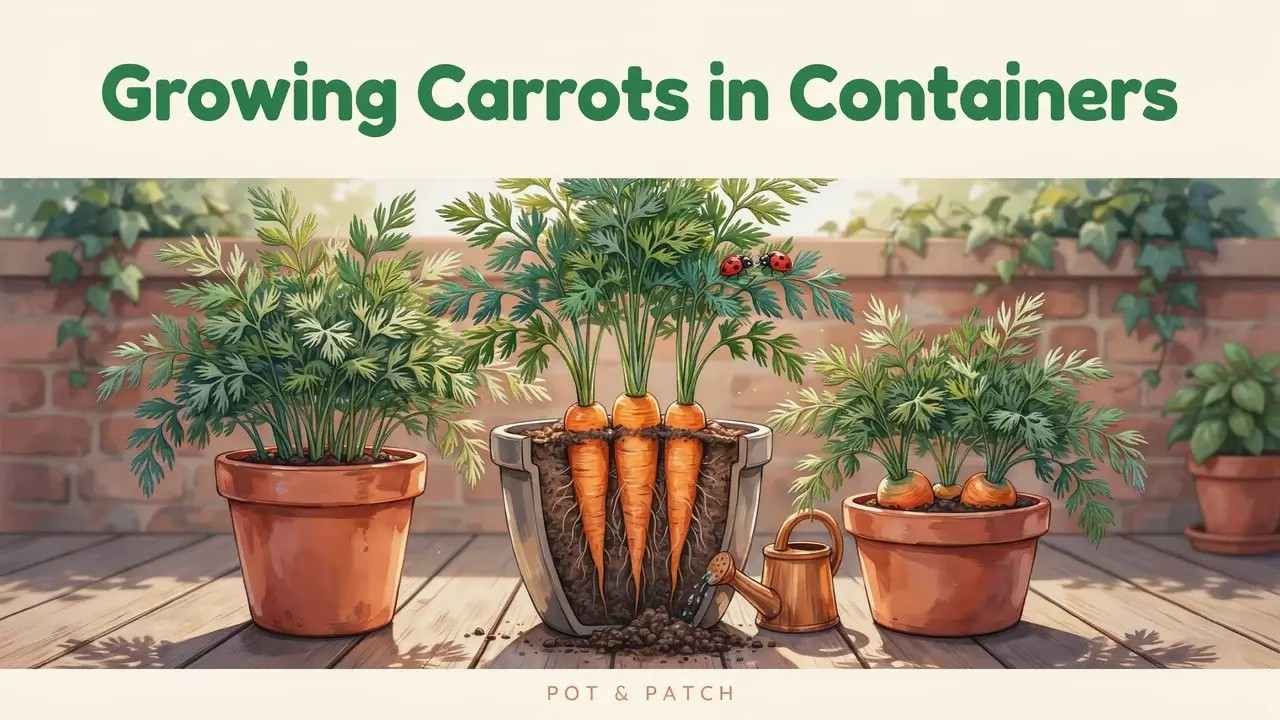
| Carrots | 3 gallons or more | 12 inches or deeper | Full sun |
| Strawberries | 1–2 gallons | 8–10 inches | Full sun |
| Basil | 2 gallons or more | 8–10 inches | Full sun |
| Mint | 2 gallons or more | 8–10 inches | Part to full sun |
These numbers are starting points, not hard rules. Larger fruiting plants almost always do better with extra room, since more soil means more moisture storage and stronger roots.
Why Drainage Holes Matter So Much
Without drainage, water pools at the bottom and roots start to rot.
If your container doesn’t have holes, drill a few yourself before planting anything. Pot feet or small risers underneath also help air circulate and keep excess water moving out.
Budget Friendly And Cheap Container Ideas
You don’t need expensive planters to start growing.
- Thrift store finds and yard sale buckets work just fine
- Plastic storage containers make surprisingly good planters for larger vegetables
- Old crates, tins, and baskets add character for little to no cost
Just make sure whatever you use gets proper drainage holes before it’s filled with soil.
DIY And Repurposed Container Projects
Turning household items into planters is a fun weekend project.
Barrels, wooden crates, and even old furniture drawers can become planting containers with a little drilling. For something more whimsical, teacups, boots, and wagons work well for small displays near an entryway.
Raised Bed Containers And Elevated Options
Raised beds sit higher off the ground than standard pots and offer more growing depth.
Elevated containers go a step further, lifting plants to waist height so gardeners who can’t bend or kneel easily can still tend them comfortably. Above ground options like these are also useful in yards with genuinely poor native soil.


Vertical Containers For Tight Spaces
Vertical setups let you grow more without using extra floor space.
Stacked planters and wall-mounted systems work especially well for herbs, strawberries, and trailing flowers. They’re a smart fit for narrow balconies where floor space is tight but wall space is open.
Container Garden Kits And Ready Made Systems
A kit typically bundles a container, self-watering reservoir, and sometimes soil or fertilizer together.
Self-watering systems are worth considering if you travel often or tend to forget watering schedules. For beginners who want a simpler start, the extra cost of a kit can pay off in fewer dead plants.
Soil And Potting Mix Essentials
Good soil makes or breaks a container garden, more than almost any other factor.

Garden Soil Vs Potting Mix
Regular garden soil is too dense for most pots. It compacts easily, drains poorly, and can carry pests or weed seeds into your containers.
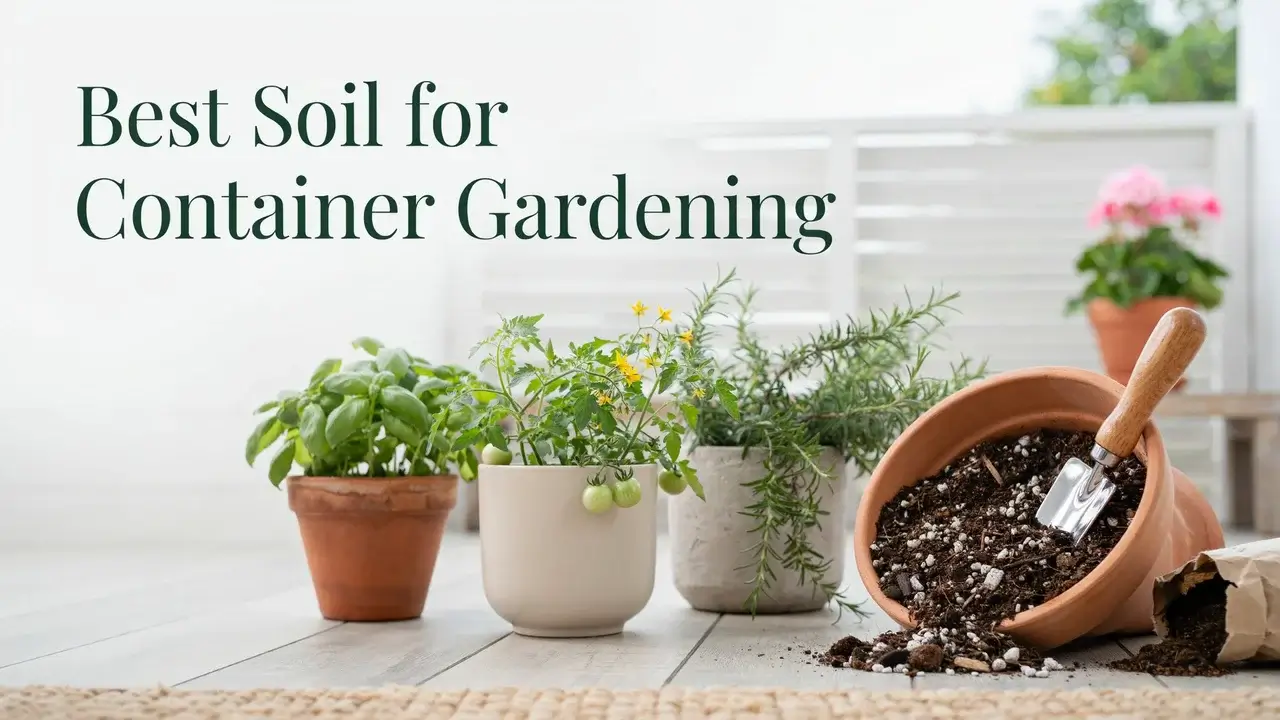
Potting mix is lighter and formulated specifically to hold air and moisture around container roots. It’s the safer default for nearly every container garden project.
Can You Use Garden Soil In Containers
This is one of the most common questions beginners ask, so here’s a straight answer.
You can use a small amount, but it shouldn’t be the main ingredient. Garden soil compacts in a pot in a way it never would in the ground, which suffocates roots over time.
A safer approach is blending a small portion of garden soil into a mix that’s mostly potting soil and compost.
Building Your Own Container Soil Mix Recipe
A simple homemade mix works for most vegetables and flowers.
- One part potting soil as the base
- One part compost for nutrients
- One part perlite or coarse sand for drainage
Adjust slightly for heavier feeders like tomatoes by adding a bit more compost, or for succulents by adding extra drainage material.
Amending Soil For Better Container Performance
Soil in containers wears out faster than soil in the ground, so it needs occasional attention.
- Add compost or worm castings each season to restore nutrients
- Mix in a slow release fertilizer at the start of the growing season
- Refresh the top few inches of soil yearly instead of replacing everything
Full replacement usually isn’t necessary if you keep amending consistently.
Peat Moss, Perlite, And Vermiculite Explained Simply
These three ingredients show up in almost every potting mix, and each does something different.
- Peat moss holds moisture and adds bulk to the mix
- Perlite improves drainage and keeps soil from compacting
- Vermiculite retains water while still allowing decent airflow
If you’d rather skip peat moss for environmental reasons, coconut coir works as a similar, more renewable alternative.
Fertilizer Basics For Container Plants
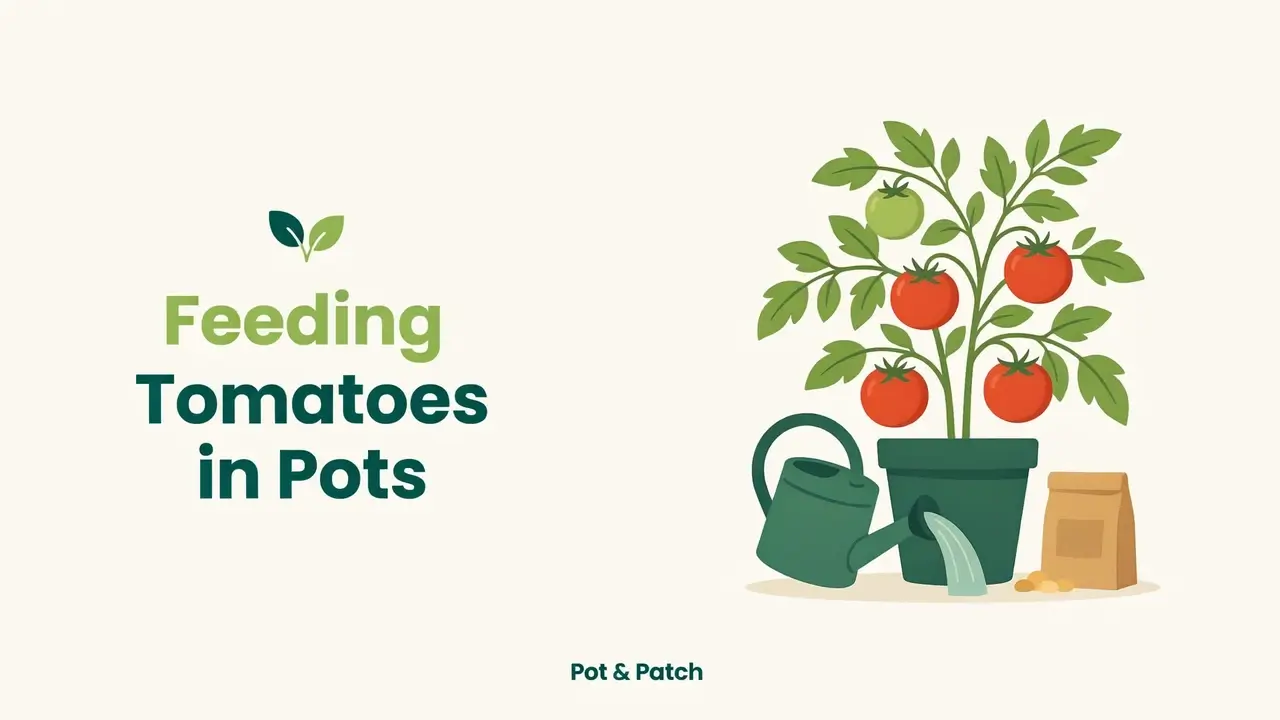
Container plants need more frequent feeding than plants in the ground, since nutrients wash out with each watering.
- Liquid fertilizer acts fast but needs reapplying often
- Granular fertilizer breaks down slowly over a few weeks
- Slow release pellets feed plants steadily over months
Yellowing leaves often signal a plant needs feeding, while stunted, burned looking leaves usually mean it’s had too much.
Watering Your Container Garden The Right Way
Watering trips up more beginners than almost anything else in container gardening.
How Often To Water Different Container Plants
Container size and material both affect how quickly soil dries out.
- Small or unglazed pots dry out faster and may need daily watering in summer
- Larger containers hold moisture longer and can go a day or two between waterings
- Vegetables like tomatoes generally need more water than herbs or succulents
Check the soil with a finger before watering again rather than sticking to a fixed schedule.
Signs Of Overwatering And Underwatering
Both problems can look surprisingly similar at first glance.
- Wilting leaves can mean too little water or, confusingly, too much
- Yellow, mushy leaves usually point to overwatering and poor drainage
- Dry, crispy leaf edges usually point to underwatering
If the soil is soggy and the plant still looks wilted, ease off watering rather than adding more.
Drip Irrigation Systems For Container Gardens
For anyone managing more than a handful of pots, drip irrigation saves real time.
A basic setup uses a timer, tubing, and small emitters placed at each container. Beginner kits are fairly affordable and usually take less than an hour to install on a patio or balcony.
Self Watering Containers And Reservoir Systems
Self-watering pots use a built-in reservoir that wicks moisture up to the roots as needed.
They’re especially useful for busy schedules or frequent travel, since they even out watering gaps automatically. Thirsty plants like tomatoes and leafy greens tend to benefit the most from this consistent moisture supply.
Building A Simple Watering Routine That Actually Works
A loose routine beats guessing every time you walk past your plants.
- Check soil moisture every morning during hot summer stretches
- Water less often during cooler spring and fall weather
- Group pots with similar watering needs together to simplify the routine
Adjust as needed during heat waves or after unexpected rain, since no schedule is truly fixed.
Sunlight, Placement, And Reading Your Space
Where you put a container matters just as much as what’s growing inside it.
Full Sun Container Garden Combinations
Full sun means six or more hours of direct light each day.
- Tomatoes, peppers, and most flowering annuals thrive here
- Herbs like rosemary and thyme also do well in strong sun
- Avoid placing shade-loving plants in these spots, since they’ll scorch quickly
Pairing plants with similar light needs keeps a single pot easier to care for.
Shade Loving Plants For Containers
Not every spot on a patio gets bright light, and that’s fine.
- Ferns, hostas, and impatiens handle partial to full shade well
- Leafy greens like lettuce often prefer some relief from harsh afternoon sun
- Shade containers still need decent airflow, even without direct light
A few hours of gentle morning light is usually enough for most shade tolerant plants.
Indoor Container Gardening Considerations
Indoor setups play by slightly different rules than outdoor ones.
Light indoors is almost always weaker than it looks, so a bright window matters more than it seems. Herbs and small vegetable starts generally need a spot within a few feet of a south or west facing window.
Humidity and airflow also matter more indoors, since stagnant air can encourage mold or weak, leggy growth.
Reading Microclimates Around Your Home
Not all sunny spots behave the same way.
- Walls and fences can reflect heat and intensify sunlight nearby
- Roof lines and awnings create shifting shade patterns through the day
- Wind exposure on balconies can dry out soil faster than expected
Spend a full day watching how light and wind move across your space before settling on a final layout for your container garden.
Growing Vegetables In Containers
Vegetables are one of the most rewarding things to grow in pots, and also where most beginners start.
Choosing Vegetables for Pots
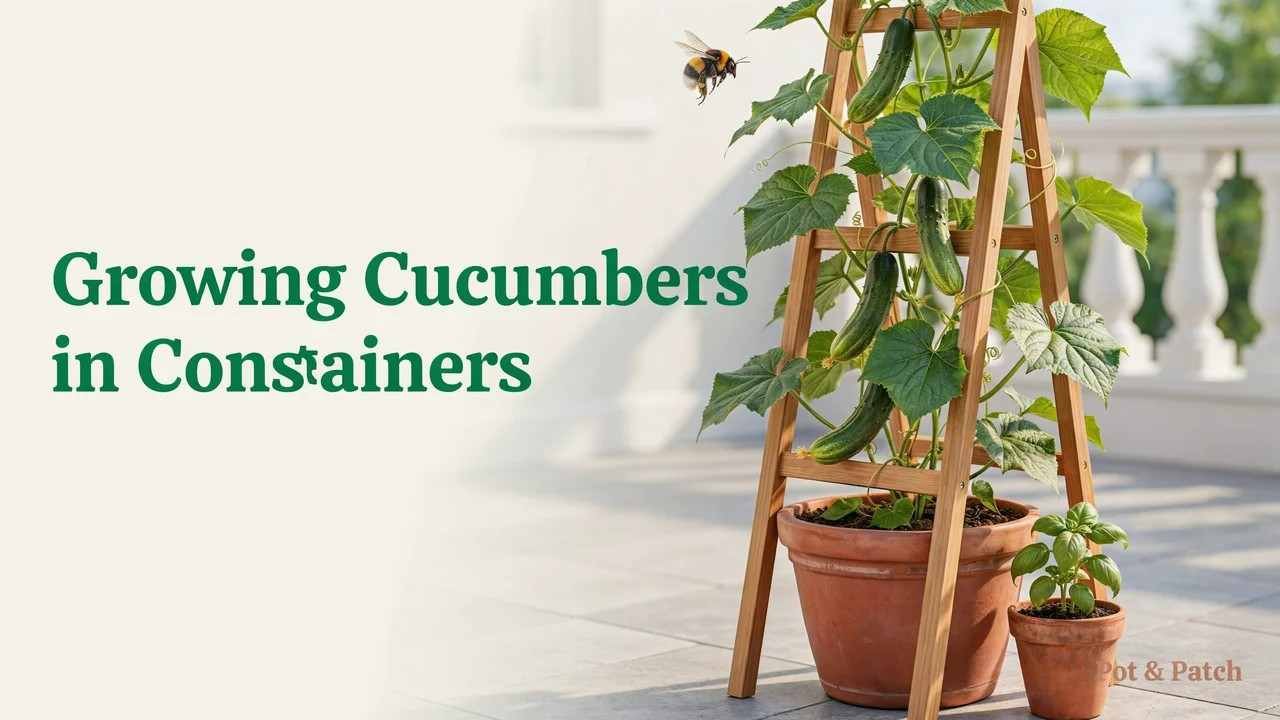
Vegetables are one of the easiest ways to start a container garden. Compact and dwarf varieties do best, since they were bred to stay small and still crop well. Reliable picks include tomatoes, peppers, cucumbers, and quick leafy greens like lettuce and spinach. Sprawling crops such as pumpkins or full-size corn need more room than a pot allows, so skip those at first.
For the full list, with the right pot size, sun needs, and a recommended variety for each crop, see our guide to the best container vegetables.
Container Sizes for Popular Vegetables
Pot size matters more than beginners expect, and undersized containers are one of the fastest ways to limit a crop’s yield. As a rule, larger fruiting vegetables like tomatoes want at least a five-gallon pot, while shallow-rooted greens are happy in six to eight inches of depth.
For the exact minimum pot size, soil depth, and sun need of each crop, see the full table in our guide to the best vegetables to grow in containers.
Growing Tomatoes In Containers
Tomatoes are a container garden favorite, but they do have specific needs.
Compact varieties bred for pots tend to perform better than sprawling heirloom types. Staking or caging early prevents the plant from toppling once it’s loaded with fruit.
Blossom end rot, a common tomato problem, often shows up in containers due to inconsistent watering rather than a soil deficiency alone.
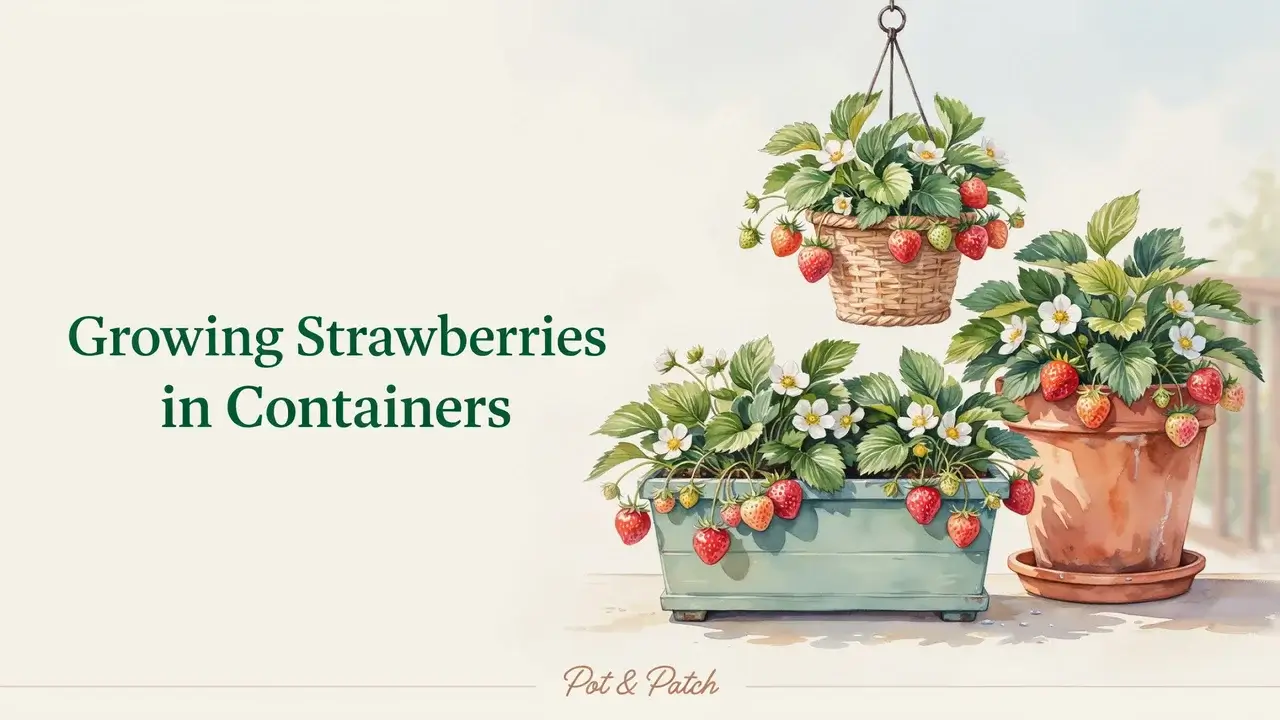
Growing Strawberries In Containers
Strawberries are naturally suited to pots, especially hanging baskets and shallow, wide containers.
Space plants about eight to ten inches apart so runners have room to spread. Full sun and consistent moisture keep strawberries producing steadily through the season rather than in one short burst.
Growing Broccoli, Beans, And Other Vegetables In Pots
A few less obvious vegetables also do surprisingly well in containers.
- Broccoli prefers cooler weather and a container with good depth
- Pole beans need a trellis or stake but save floor space
- Bush beans stay compact and skip the need for support altogether
Succession planting, staggering new plantings every couple of weeks, keeps these containers productive longer instead of producing one big harvest and stopping.
Vegetable Container Layout And Companion Planting
Grouping plants thoughtfully makes maintenance easier and often improves growth.
- Group vegetables with similar water and sunlight needs in the same container
- Pair basil near tomatoes, since they tend to support each other
- Leave enough spacing between plants to avoid overcrowding and poor airflow
A little planning here goes a long way toward avoiding disease and stunted growth.
Beginner Tips For A Thriving Vegetable Container Garden
A short checklist helps first-time vegetable gardeners avoid the most common pitfalls.
- Start with two or three reliable crops rather than a dozen
- Don’t overcrowd containers, even if seedlings look small at first
- Place containers where they’ll get enough consistent sunlight
- Check soil moisture regularly instead of watering on a fixed schedule
Once these basics feel comfortable, expanding to more vegetables gets much easier.
Growing Herbs In Containers
Herbs are often the easiest entry point into growing your own food, and they take up very little space.
Best Herbs For Container Gardening
Some herbs are practically foolproof for beginners.
- Basil, chives, and parsley are forgiving and grow quickly
- Rosemary and thyme tolerate neglect and dry spells well
- Mint should stay in its own pot, since it spreads aggressively and can crowd out neighbors
Culinary herbs suit a kitchen container garden, while ornamental herbs like lavender lean more toward decoration.
Sunlight Requirements For Common Container Herbs
Sunlight needs vary more between herbs than people expect.
- Basil and rosemary want six or more hours of direct sun
- Mint and parsley tolerate partial shade without much trouble
- Indoor herbs generally need a spot close to a bright, south facing window
Matching sunlight to each herb’s actual needs makes a noticeable difference in flavor and growth.
Herb Container Layout Ideas
A little planning turns a few pots into a proper herb garden.
- A tiered stand works well for a compact kitchen herb collection
- Vertical herb walls suit balconies with very limited floor space
- Grouping herbs by growth habit, upright versus trailing, keeps the layout tidy
Keeping herbs near the kitchen door makes it far more likely they’ll actually get used.
Combining Multiple Herbs In One Container
Mixing herbs in a single pot can work well, but not every pairing is a good idea.
Rosemary, thyme, and sage share similar sun and water preferences, making them a solid combination. Mint, on the other hand, is better kept alone, since its spreading roots and different watering needs tend to clash with quieter herbs.
Choosing a larger container gives multiple herb varieties enough room to grow without competing too much for space.
Growing Flowers In Containers
Flowers are where a container garden really gets to show some personality.
Best Flowers For Container Gardens
A handful of reliable bloomers make a strong starting point.
- Petunias and geraniums bloom heavily through most of the growing season
- Marigolds are low maintenance and tend to deter certain pests
- Zinnias and cosmos offer bright color with very little fuss
Most beginners do well starting with two or three of these before branching out.
Annual Versus Perennial Container Plants
Annuals and perennials behave very differently in pots.
- Annuals complete their life cycle in one season and need replanting each year
- Perennials can return for several years with the right care
- Not all perennials survive winter in containers, since pots offer less insulation than the ground
Perennials cost more upfront but often work out cheaper over several seasons if they survive.
Pollinator Friendly Container Garden Combinations
Attracting bees and butterflies benefits more than just the flowers themselves.
- Lavender, salvia, and coneflower are strong pollinator draws
- Native flowering plants tend to attract local pollinators most reliably
- Placing pollinator containers near vegetable gardens can improve fruit and vegetable yields nearby
A single pollinator friendly pot can make a noticeable difference in a small garden.
The Thriller, Filler, Spiller Design Method
This classic formula is one of the simplest ways to arrange a container.
- The thriller is a tall, eye-catching plant placed toward the center or back
- The filler is a bushy, medium-height plant that fills in around it
- The spiller trails over the container’s edge, softening the overall look
A common example pairs a tall ornamental grass as the thriller, petunias as the filler, and trailing ivy as the spiller.
Container Garden Design Ideas By Style And Space
Once you’ve got the basics down, design is where a container garden really starts to feel like your own.
Cottage Style Container Gardens
Cottage style leans relaxed, layered, and a little imperfect on purpose.
- Classic cottage flowers like foxglove, cosmos, and sweet peas fit the mood
- Mismatched containers, like old tins or weathered wood, add authentic charm
- Grouping several different pots together often looks better than one uniform set
This style forgives a bit of chaos, which makes it easy for beginners to pull off.
Modern Container Garden Looks
Modern style is all about restraint.
- Clean lines and neutral colors, think white, black, or concrete tones
- A limited plant palette, often just one or two species repeated
- Structural plants like succulents or ornamental grasses suit this look well
Consistency across containers matters more here than variety.
Front Yard Container Garden Ideas
Containers near an entryway make a strong first impression.
- Symmetrical pairs of pots flanking a front door look polished and intentional
- Seasonal swaps keep front yard displays fresh throughout the year
- Bold, bright colors near the entrance draw the eye naturally
Even two well-placed pots can noticeably boost curb appeal.
Backyard And Patio Container Design Ideas
A patio full of containers can feel like a proper outdoor room.
- Mixing plant heights and textures creates visual interest without much effort
- Grouping containers near seating areas ties the space together
- Odd numbers, like clusters of three or five, tend to look more natural than pairs
Layering pots at different heights also helps hide gaps between plants.
Balcony And Deck Container Setups
Balconies and decks come with their own set of limits.
- Weight limits matter here more than almost anywhere else, so check before filling large pots
- Railing planters and hanging containers make use of vertical space
- Wind resistant plants hold up better on higher balconies exposed to strong gusts
Lightweight materials like plastic or fiberglass are often the smarter choice at height.
Small Space Container Garden Layouts

Tight spaces just need a little creativity.
- Steps, narrow walkways, and small patios can all hold a few well-placed pots
- Stacked or tiered containers add growing space without taking up more floor room
- Multipurpose pots combining herbs, flowers, and small vegetables save space and effort
A few thoughtfully chosen containers often look better than a crowded, cluttered corner.
Large Statement Container Gardens
Oversized containers make a bold impact on their own.
Filling a large pot generously, rather than sparsely, keeps it from looking empty or unfinished. Since large containers get heavy fast, plan their final spot before filling them with soil, since moving them afterward is a real challenge.
A Seasonal Container Gardening Calendar
A container garden changes with the seasons, and a little planning ahead keeps it looking good year round.
Spring Container Garden Planning
Spring is when most container gardens really get going.
- Clean out old soil and scrub containers before replanting
- Refresh soil with compost or a slow release fertilizer
- Cool season plants like pansies and lettuce handle early spring chill well
Harden off seedlings gradually over about a week before moving them outdoors full time.
Summer Container Garden Care
Summer brings faster growth, but also faster water loss.
- Water more frequently as temperatures climb, sometimes daily in peak heat
- Heat tolerant plants like zinnias and peppers thrive in summer containers
- Deadhead spent blooms regularly to keep flowering plants producing new flowers
A consistent feeding schedule also matters more in summer, since heat speeds up how fast plants use nutrients.
Fall And Autumn Container Garden Ideas
As summer blooms fade, fall offers its own set of options.
- Mums, ornamental kale, and asters bring color into early fall
- Vegetable containers can transition to cool weather crops like broccoli or spinach
- Ornamental gourds and grasses add a seasonal, decorative touch
This is also a good time to start thinking about which containers need winter protection.
Winter Container Garden Ideas
Winter containers don’t have to sit empty.
- Evergreens and cold hardy shrubs hold up well through colder months
- Branches, greenery, and berries create a simple decorative winter display
- Move truly cold sensitive containers somewhere sheltered before the first hard freeze
Even a bare patio can look intentional with one or two well-chosen winter containers.
Overwintering Perennials And Tender Plants In Pots
Not every plant needs to be tossed at season’s end.
Hardy perennials can often stay outside through winter, though wrapping the container in burlap or bubble wrap adds helpful insulation. Tender plants, on the other hand, usually need to come indoors or into a garage before temperatures drop too far.
Grouping pots together against a sheltered wall also helps roots stay slightly warmer through the coldest stretches.
Container Water Gardens
This is a container gardening style most guides skip entirely, but it’s worth trying if you want something different.
What A Container Water Garden Actually Is
A container water garden is essentially a small, self-contained pond built inside a watertight pot.
It’s a simple setup, just a container that holds water instead of soil, filled with a few aquatic plants. Even a modest sized container can work well on a patio or balcony that gets decent sunlight.
Best Plants For Container Water Gardens
A handful of easy aquatic and marginal plants keep this style manageable.
- Water lettuce and water hyacinth float freely and need very little care
- Dwarf water lilies add color if the container is large enough
- Marginal plants like dwarf papyrus sit at the water’s edge for texture
A few floating plants also help keep the water naturally balanced by limiting algae growth.
Setting Up A Small Water Garden Container
Getting started takes fewer steps than most people expect.
- Choose a watertight container with no drainage holes
- Fill it with water and let it sit a day or two before adding plants
- Add a few plants, leaving open water visible rather than crowding it completely
To prevent mosquitoes from breeding in standing water, add a small fountain pump or a few mosquito dunks, and check the water level regularly.
Regional And Climate Considerations
Where you live shapes almost every decision in a container garden, from watering frequency to which plants survive at all.
Container Gardening Tips For Florida And Warm Climates
Florida gardens deal with a different set of challenges than most of the country.
- Intense heat and humidity dry out soil faster than expected, even in larger pots
- Afternoon sun can scorch delicate plants, so some midday shade often helps
- Heat tolerant vegetables and flowers hold up better through long, warm summers
Watering twice a day isn’t unusual during the hottest stretches, especially for smaller containers.
Adjusting Container Gardens For Cold Or Dry Climates
Cold and dry regions call for a different approach entirely.
- Windy, dry climates pull moisture from soil quickly, so mulching helps retain it
- Sheltered spots near walls or fences protect containers from harsh winds
- Hardier plant varieties bred for shorter growing seasons perform better in these conditions
Insulating containers becomes especially important once temperatures start dropping regularly.
Container Gardening For Specific Situations
A few situations call for a slightly different approach than the basics already covered.
Container Gardening Tips For Renters
Renting shouldn’t mean giving up on gardening altogether.
- Containers let you garden fully without altering the property in any way
- Portable setups can move with you when a lease ends
- Lightweight materials like plastic make relocating pots far easier than heavy terracotta or concrete
Wheeled plant stands are worth the small investment if you expect to move containers often.
Container Gardening Projects For Kids
Getting kids involved early builds interest that tends to stick.
- Fast growing plants like radishes or sunflowers keep young gardeners engaged
- Kid-sized, lightweight tools reduce frustration and make tasks feel manageable
- Painted pots or themed containers, like a pizza garden with tomatoes and basil, add fun
Short, quick wins matter more for kids than a perfectly maintained garden.
Accessible Container Gardening For Limited Mobility
Container gardening can be adapted for gardeners who can’t kneel or bend easily.
- Raised and elevated containers bring plants up to a comfortable working height
- Lightweight tools with padded, ergonomic grips reduce strain on hands and joints
- Container height can be adjusted specifically for wheelchair users, often around waist level
A well-planned accessible setup makes it possible to keep gardening long term, regardless of mobility.
Maintenance, Pests, And Troubleshooting
Even a well-planned container garden runs into problems occasionally, so knowing what to watch for helps you catch issues early.
Common Pests In Container Gardens
A few pests show up more often than others in potted plants.
- Aphids cluster on new growth and are easy to spot once you know to look
- Spider mites leave fine webbing and tiny yellow speckles on leaves
- Fungus gnats hover near soil that stays too wet between waterings
Insecticidal soap and neem oil handle most of these safely, even on edible plants.
Preventing Root Rot And Other Container Diseases
Root rot is one of the most common ways a container plant dies.
Overwatering combined with poor drainage creates the damp, oxygen-starved conditions roots can’t tolerate for long. Early signs include yellowing leaves, a mushy stem base, or a sour smell coming from the soil.
If caught early, trimming away affected roots and repotting into fresh, well-draining soil can sometimes save the plant.
Repotting Signs Every Container Gardener Should Know
Plants eventually outgrow their containers, and there are clear signs when that happens.
- Roots circling the surface or poking through drainage holes signal it’s time
- Water running straight through without soaking in means the roots have taken over
- Slowed growth despite regular feeding often points to a cramped root system
Most container plants need repotting every one to two years, though fast growers may need it sooner.
Common Mistakes Beginners Make With Container Gardens
A handful of mistakes account for most early container gardening failures.
- Overcrowding pots, even when seedlings look small and harmless at first
- Choosing containers that are too small for what’s being planted
- Watering on a fixed schedule instead of checking actual soil moisture
- Skipping drainage holes entirely on repurposed containers
Avoiding these four issues alone solves a surprising number of common container garden problems.
Tools And Supplies You Actually Need
You don’t need a shed full of equipment to keep a container garden running well.
A Basic Container Gardening Tool Checklist
A short list of essentials covers most of what comes up week to week.
- Gardening gloves to protect hands during soil work and pruning
- A hand trowel for planting, transplanting, and mixing soil
- Pruning shears for deadheading and trimming back overgrown plants
- A watering can or hose attachment sized for smaller container spaces
A simple moisture meter is optional but genuinely useful if you tend to over or underwater.
Helpful Extras Worth The Investment
A few additional items make ongoing care noticeably easier.
- Pot feet or risers to improve drainage and airflow underneath containers
- Saucers to catch runoff water and protect patios or decks
- Mulch to help retain soil moisture between waterings
- Slow release fertilizer to reduce how often you need to feed plants
Plant markers and small trellises also help once your container collection starts to grow, since it’s easy to lose track of what’s planted where.
Storage bins or a small shelf for keeping supplies organized between seasons round out the list, especially once tools and leftover soil start piling up.
Real Container Garden Inspiration
Sometimes the best way to plan a layout is by looking at what other people have already done.
Where To Find Container Garden Photos And Ideas
Visual inspiration makes it much easier to picture your own space before you start buying pots.
- Browse photo galleries organized by style, season, or plant type
- Save favorite layouts and plant combinations somewhere you can find them later
- Photograph your own containers over time to track what actually worked
Looking back at old photos also helps you remember which combinations thrived and which ones didn’t.
Container Gardening Communities Worth Joining
Other gardeners are often the fastest way to solve a tricky, local problem.
- Online forums and social groups let gardeners swap tips, photos, and plant swaps
- Community advice tends to be more climate specific than general guides
- Local gardening groups can point you toward plants that actually thrive in your area
Asking a beginner question in these spaces is usually welcomed, not judged, so it’s worth jumping in.
Recommended Books And Resources
A good book can fill in details a single article never fully covers.
Best Container Gardening Books For Beginners
A few well-regarded titles show up again and again in gardener recommendations.
- Beginner focused guides that walk through soil, containers, and basic plant care
- Design focused books that lean more into layout, color, and style ideas
- Vegetable specific guides for readers focused mainly on growing their own food
Each type of book serves a slightly different purpose, so it helps to know which one you’re actually looking for.
Borrowing from a local library before buying is a low-cost way to figure out which style of book actually fits how you like to learn, before committing to a full collection.
Frequently Asked Questions
A few questions come up again and again from readers just getting started.
What is container gardening, explained simply?
Container gardening means growing plants in pots or other containers instead of directly in the ground. It works for vegetables, herbs, flowers, and even small water features.
How do you start a container garden with very little experience?
Pick a sunny spot, choose a few forgiving plants like herbs or marigolds, and start with two or three pots. Add more once watering and care feel manageable.
Can you use regular garden soil inside a container safely?
A small amount works if it’s blended with potting soil and compost. Using garden soil alone tends to compact and drain poorly in pots.
What is the best soil mix recipe for beginners?
A simple mix of one part potting soil, one part compost, and one part perlite works for most vegetables and flowers.
How often should you water a typical setup?
It depends on container size and material, but checking soil moisture daily during summer is a safe habit.
What are the best vegetables for a beginner setup?
Tomatoes, peppers, lettuce, and other leafy greens tend to perform reliably well in containers for most beginners.
What works best for full sun spaces?
Tomatoes, peppers, and most flowering annuals thrive with six or more hours of direct sunlight each day.
Can containers survive winter without moving them indoors?
Some hardy perennials can stay outside with insulation, while tender plants usually need to come indoors before frost.
What size container do tomatoes need?
Tomatoes generally need at least a five gallon container, with larger sizes producing better results overall.
How do you keep pests away from a small setup?
Regular inspection, insecticidal soap, and neem oil handle most common pests safely, even on edible plants.
Getting Started With Your Own Container Garden
Container gardening comes down to a few core habits: the right size pot, decent soil, consistent watering, and enough sunlight for whatever you’re growing.
You don’t need a big yard or years of experience to get real results. A few pots on a balcony, a sunny windowsill, or a small patio corner is genuinely enough to start.
Begin small. Pick two or three plants that match your space and sunlight, get comfortable with watering and care, and expand from there. Whether it’s a handful of herbs by the kitchen door or a full patio of tomatoes and flowers, container gardening rewards patience more than perfection.