Best Container Vegetables: 14 Crops That Thrive in Pots
You do not need a backyard to grow your own food. A sunny balcony, a patio corner, or a few pots by the door will do. The trick is choosing the right crops. The best container vegetables are compact, quick to harvest, and productive in a small pot. Pick well, and a handful of containers can feed you for months.
This guide covers the vegetables that perform best in pots. For each one you get the pot size it needs, its sun requirement, and a reliable variety to start with. New to growing in pots? Start with our complete container gardening guide first, then come back here to choose your crops.
What Makes a Vegetable Right for Containers
Almost any vegetable will grow in a pot. Some just grow far better than others. The strongest container crops tend to share a few traits.
They stay compact. Look for words like dwarf, bush, determinate, or patio on the seed packet. These varieties were bred to stay small and still crop well.
They do not need deep soil. Shallow-rooted greens are content in six inches. Fruiting crops like tomatoes want more room to anchor and drink.
They mature quickly or crop for weeks. Both traits turn a small space into a real harvest instead of a token one.
Everything below is sorted by those rules. Soil mix and drainage are covered in the main guide, so this page stays focused on the plants themselves.
The Best Container Vegetables at a Glance
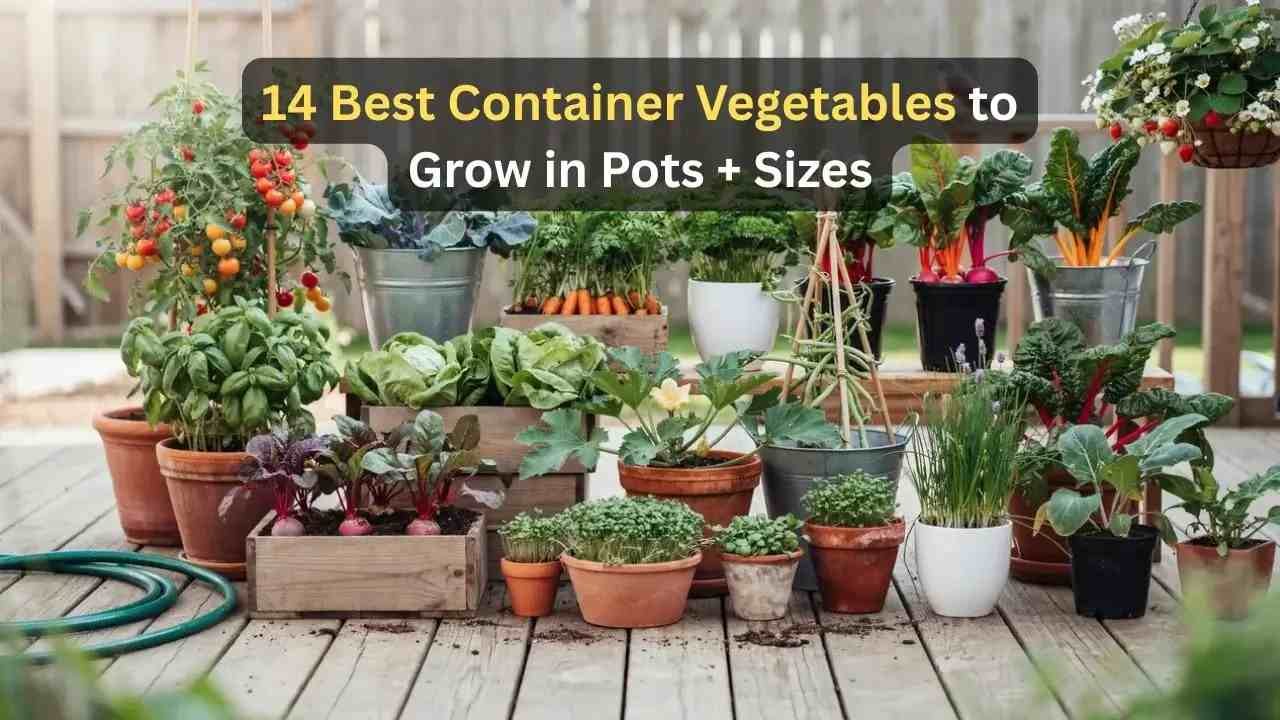
Here are 14 crops worth growing, with the minimum pot size, soil depth, sun need, and a variety that does well in a container. Sizes and sun figures draw on university extension guidance and the Missouri Botanical Garden. Days to harvest are typical ranges, so treat your seed packet as the final word.
| Vegetable | Min. container | Min. depth | Sun | Days to harvest | Variety for pots |
|---|---|---|---|---|---|
| Cherry tomato | 5 gallons | 12 in | Full | 55–70 | ‘Tiny Tim’, ‘Patio’ |
| Pepper | 3–5 gallons | 12–14 in | Full | 60–90 | ‘Yolo Wonder’, ‘Cayenne’ |
| Eggplant | 5 gallons | 10–12 in | Full | 65–80 | ‘Hansel’, ‘Ichiban’ |
| Bush beans | 3 gallons | 8–10 in | Full | 50–60 | ‘Bush Blue Lake’, ‘Contender’ |
| Cucumber | 3–5 gallons | 12 in | Full | 50–70 | ‘Spacemaster’, ‘Patio Pik’ |
| Summer squash | 5 gallons | 10–12 in | Full | 45–60 | ‘Bush Baby’, ‘Raven’ |
| Lettuce | 1–2 gallons | 6–8 in | Part–full | 30–45 | ‘Salad Bowl’, ‘Ruby’ |
| Spinach | 1–2 gallons | 6–8 in | Part–full | 35–45 | ‘Bloomsdale’ |
| Swiss chard | 2–3 gallons | 8–10 in | Part–full | 50–60 | ‘Bright Lights’ |
| Kale | 2–3 gallons | 8–10 in | Part–full | 50–65 | ‘Dwarf Blue Curled’ |
| Radish | 1–2 gallons | 6–8 in | Part–full | 25–35 | ‘Cherry Belle’, ‘French Breakfast’ |
| Beet | 2 gallons | 8–10 in | Part–full | 50–60 | ‘Detroit Dark Red’ |
| Carrot | 2–3 gallons | 12 in | Full | 60–75 | ‘Paris Market’, ‘Danvers Half Long’ |
| Peas | 2–3 gallons | 8–12 in | Part–full | 55–70 | ‘Tom Thumb’, ‘Sugar Ann’ |
Full sun: 6–8 hours direct light Part–full: tolerates 3–5 hours
Sun is the figure to respect most. The University of Maryland Extension recommends 6 to 8 hours of direct sun for warm-season crops like tomatoes, peppers, and squash. Cool-season greens get by on 3 to 5 hours. Place your pots before you plant, and match the crop to the light it will actually get.
Easiest Vegetables to Grow in Pots for Beginners
If this is your first season, start with five forgiving crops. Each one is quick, compact, and hard to fail with.
Radishes are the fastest reward in the garden. Many are ready to pull in under a month. Lettuce is nearly as easy and keeps giving if you pick outer leaves and leave the center. Bush beans crop heavily without any staking or support. Cherry tomatoes deliver more fruit per plant than any full-size type. Swiss chard shrugs off summer heat and produces well into fall.
Grow those five well, then add more once watering feels like second nature. Two or three thriving pots beat a dozen struggling ones.
Best Full-Sun Container Vegetables
These are the warm-season heat lovers. Give them the sunniest spot you have, at least six hours a day, and keep the water consistent.
Tomatoes
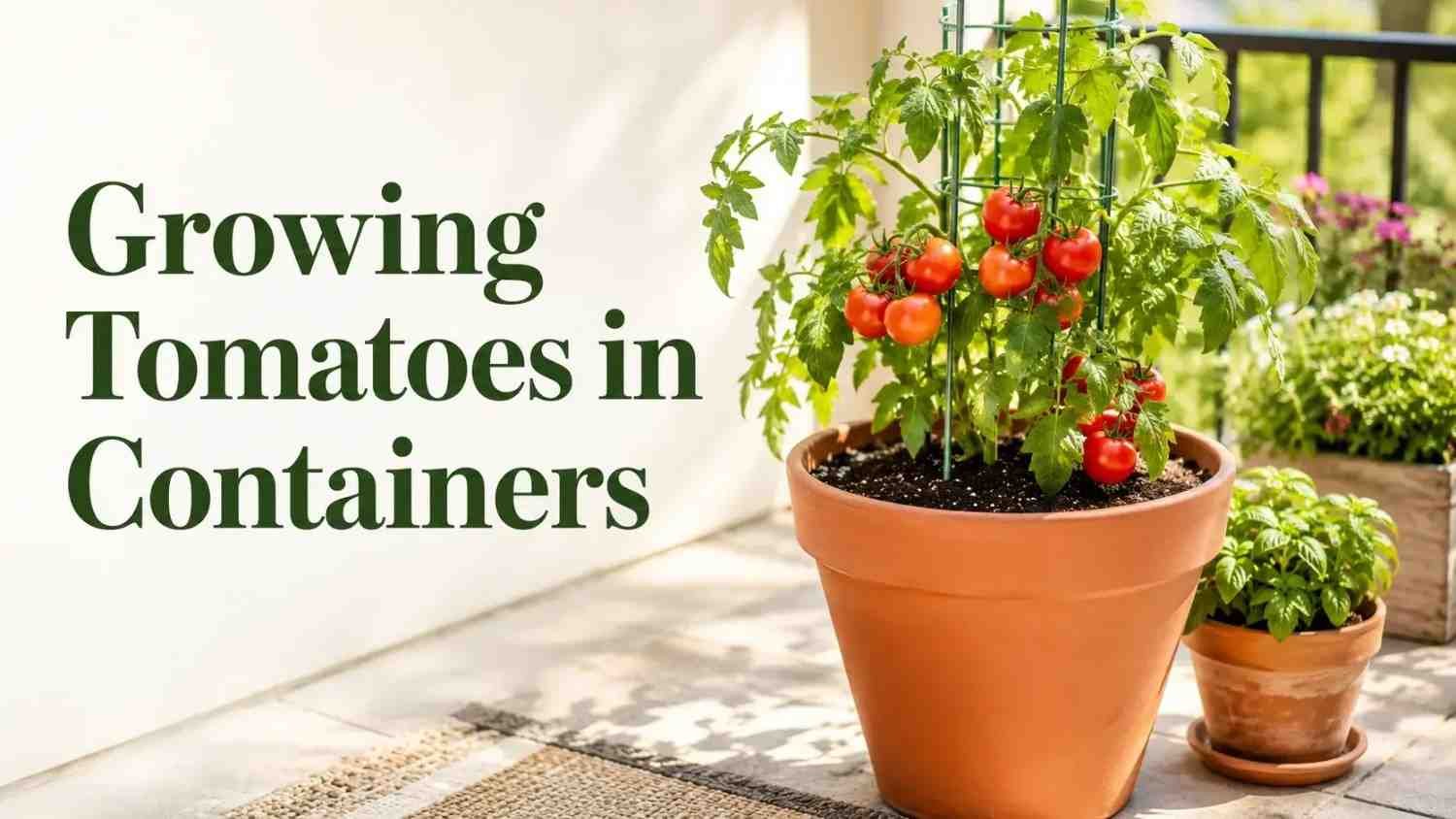
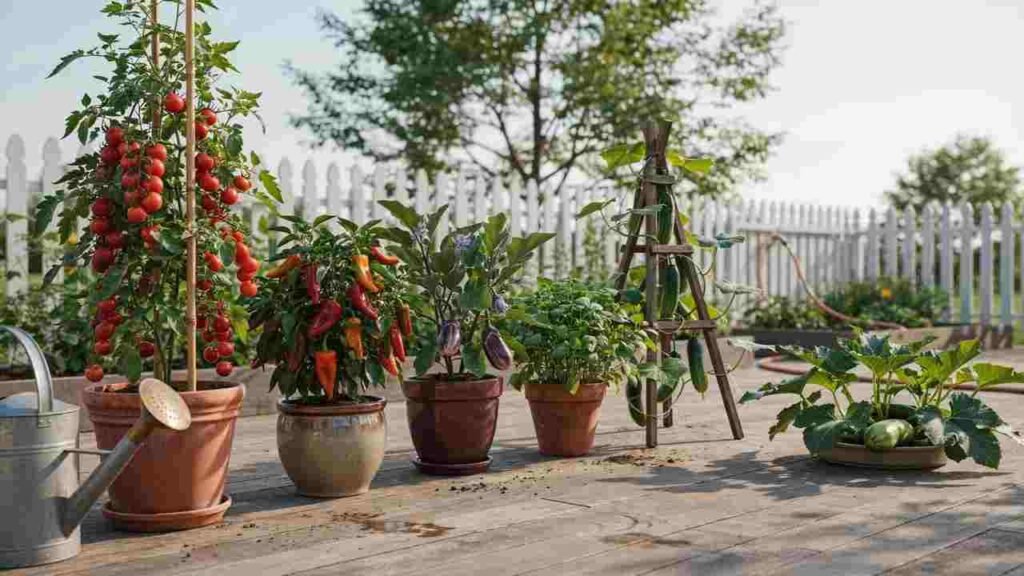
Tomatoes are the classic container crop, and cherry types are the most productive of all. Choose determinate or dwarf varieties bred for pots, since sprawling heirlooms quickly outgrow a container. A single plant needs at least a 5-gallon pot. Stake or cage it early, before the fruit weighs it down. Uneven watering, not poor soil, is the usual cause of blossom end rot.
Peppers
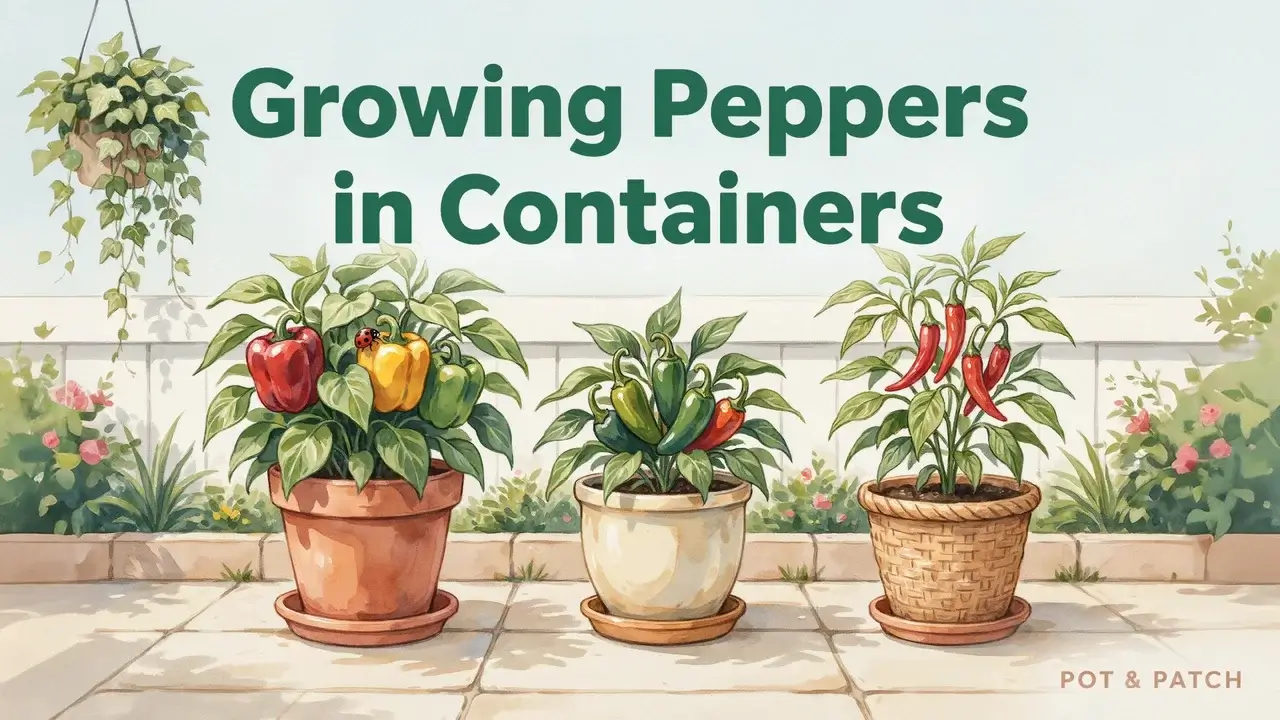
Both sweet and hot peppers thrive in pots and reward the warmth a container traps. A 3 to 5 gallon pot suits most varieties. Peppers need less water than tomatoes, so let the top inch dry before watering again. Compact hot pepper plants also look striking once they are loaded with color.
Eggplant
Eggplant loves heat, which makes it a natural fit for a sun-baked patio. Grow one plant per 5-gallon pot and stake it like a tomato. Compact hybrids such as ‘Hansel’ and ‘Ichiban’ stay productive without taking over. The purple flowers and glossy fruit make this one of the prettiest crops you can pot.
Beans
Bush beans are the low-effort choice, cropping well with no support at all. They grow in a pot as small as eight inches deep and eight inches wide per plant, according to the Missouri Botanical Garden. Pole beans yield more over a longer season but need a trellis or railing to climb.
Cucumbers
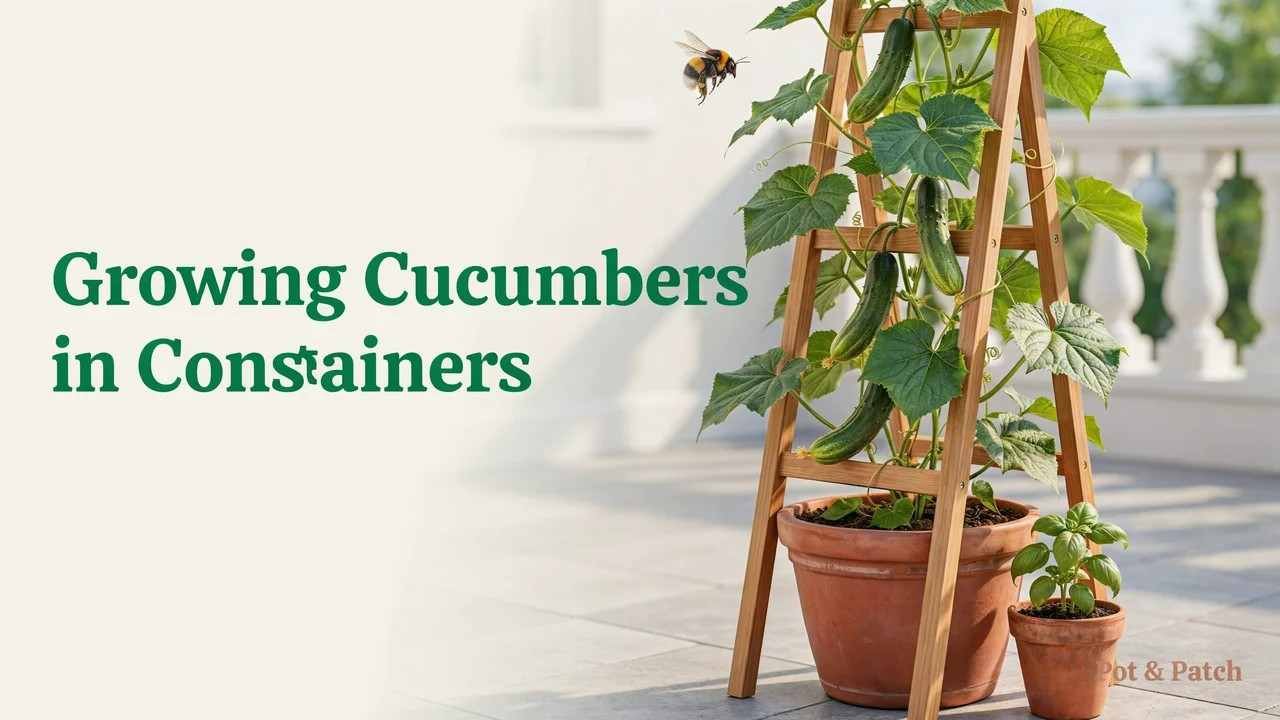
Cucumbers give a big harvest from a small footprint if you pick the right type. Bush and compact varieties like ‘Spacemaster’ were bred for containers. Give each plant a 3 to 5 gallon pot and something to climb. Training vines up a trellis keeps the fruit straight and clean and saves floor space.
Summer Squash
Zucchini and summer squash are famously prolific, even in a pot. They need width more than depth, so choose a wide 5-gallon container. Look for bush varieties that stay compact instead of running. One healthy plant will often supply a household through peak summer.
Best Vegetables for Partial Shade and Cool Seasons
Not every balcony bakes in full sun, and that is fine. These crops prefer cooler conditions and tolerate a few hours of shade. Most also grow best in spring and fall.
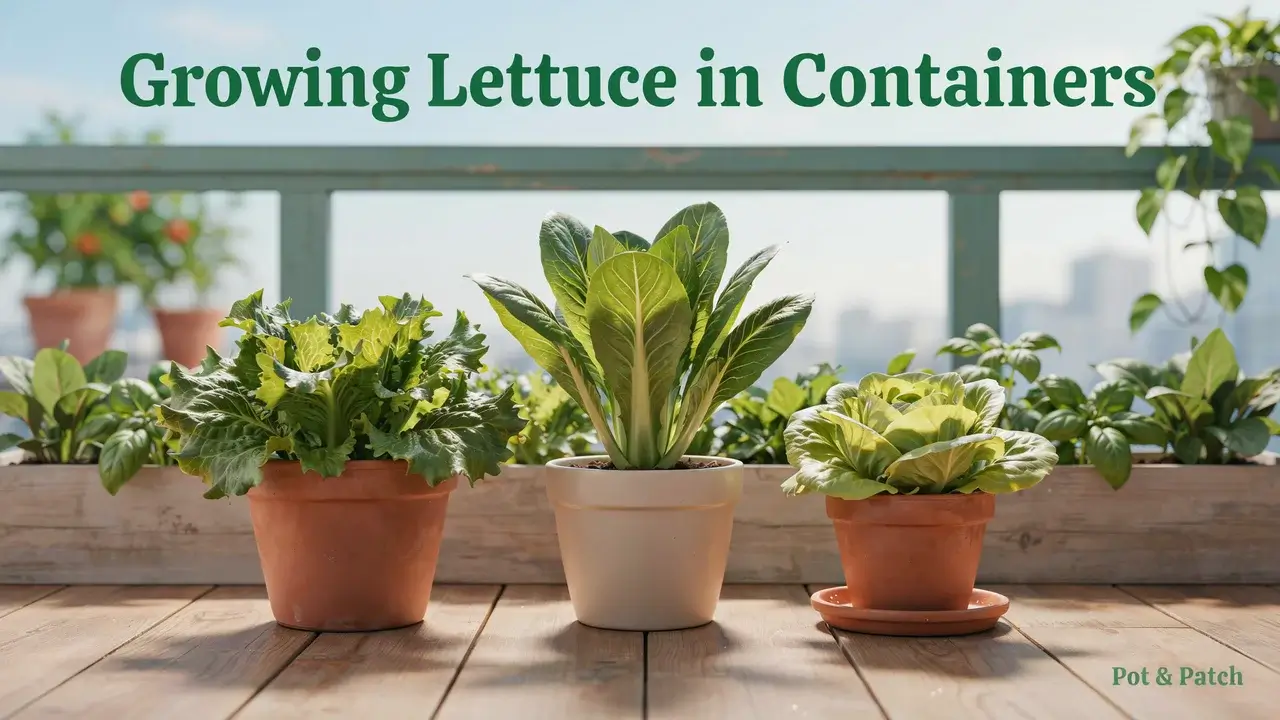
Lettuce and Salad Greens
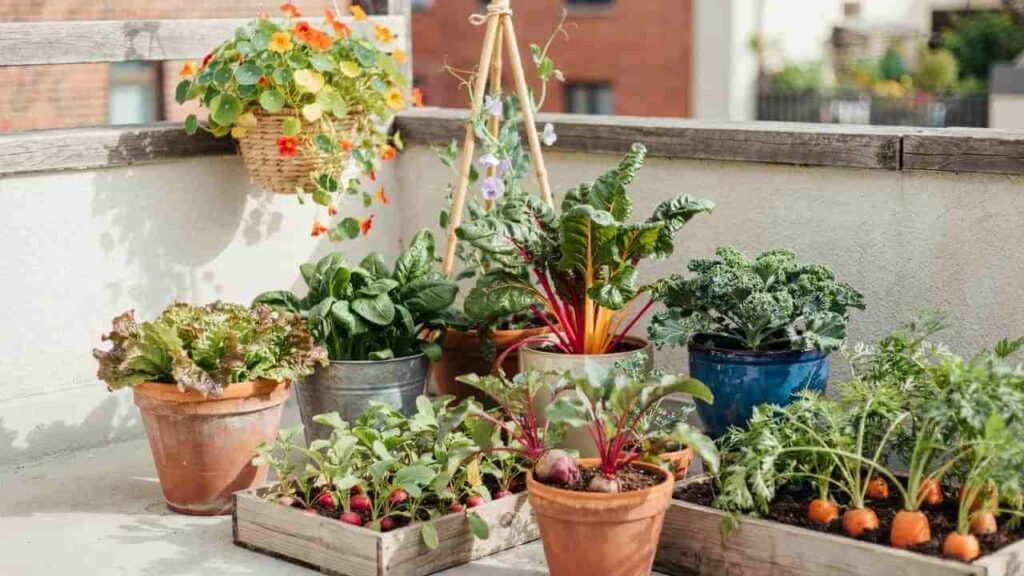
Lettuce is the workhorse of the shady container garden. It grows fast, needs only a shallow pot, and regrows after cutting. Sow a little every couple of weeks for a steady supply. In summer heat it bolts, so move it to afternoon shade.
Spinach
Spinach is quick, nutritious, and happy in cool weather. It thrives in a shallow pot and partial sun. Like lettuce, it bolts once temperatures climb, so treat it as a spring and fall crop. Sow in succession for a longer harvest window.
Swiss Chard
Chard is one of the most useful container crops there is. It keeps producing leaves all summer while lettuce and spinach give up. The colorful stems also make it genuinely ornamental. Pick outer leaves and the plant carries on for months.
Kale
Kale is dense with nutrients and tougher than it looks. It handles cool weather and even improves in flavor after a light frost. A 2 to 3 gallon pot suits a single plant. Dwarf curled types stay tidy and productive in a container.
Radishes
Radishes are the fastest crop you can grow and perfect for impatient gardeners and kids. Many varieties are ready in under a month. Sow them thinly in a shallow pot and harvest before hot weather turns them sharp. ‘French Breakfast’ offers a milder, crunchy bite.
Beets
Beets give you two crops in one, since the roots and the leaves are both edible. Grow them in a pot at least eight inches deep. Sow an early batch in spring and another in midsummer for fall. Thin the seedlings so the roots have room to swell.
Carrots
Carrots grow well in pots if you match the variety to the depth. Short, round types like ‘Paris Market’ suit shallow containers. Longer varieties need a pot at least twelve inches deep. Loose, stone-free potting mix gives you straight, unforked roots.
Peas
Peas are a sweet cool-season treat and a good companion for early spring. Bush types stay compact, while climbing peas need a support to scramble up. Sow as soon as the mix is workable, since they dislike heat. Pick often to keep the pods coming.
Getting the Most From a Small Container Vegetable Garden
The best container vegetables reward a little planning with a lot of food. A few habits stretch a small space much further.
Sow quick crops in succession. A fresh batch of radishes, lettuce, or beans every two weeks keeps pots cropping instead of finishing all at once.
Lead with high-yield plants. Cherry tomatoes, peppers, chard, and bush beans return the most food for the pot space they take.
Group pots by need. Cluster thirsty, sun-loving crops together and keep the shade-tolerant greens in their own spot. Watering and care get simpler.
Have more room than a balcony? A raised bed multiplies what you can grow. See our guide to raised bed vegetable gardening for beginners for the next step up.
Frequently Asked Questions
What is the most productive vegetable to grow in containers?
Cherry tomatoes are hard to beat for sheer output per plant. A single healthy plant in a 5-gallon pot can produce for months. Peppers, bush beans, and Swiss chard are also high-yield picks for their footprint.
How many vegetables can you plant in one container?
It depends on the crop and pot size. One tomato, pepper, or eggplant needs a whole 5-gallon pot to itself. Shallow greens like lettuce and radishes can share a wider container comfortably. Overcrowding is a common cause of weak, disease-prone plants.
Which vegetables should you avoid growing in pots?
Sprawling crops that need deep soil and lots of room are the hardest to pot. Full-size corn, pumpkins, and large winter squash rarely thrive in containers. If you want to try them, use the largest pot you can manage and expect a modest harvest.
Can you grow container vegetables all year?
In much of the country, yes, if you rotate crops by season. Grow warm-season vegetables like tomatoes and peppers through summer. Switch to cool-season greens, radishes, and peas for spring and fall. In cold regions, move tender pots indoors or pause over winter.
What is the minimum container depth for vegetables?
Shallow-rooted greens such as lettuce and spinach grow in six to eight inches. Most other vegetables want at least twelve inches of soil. Larger fruiting crops do best with more, since deeper pots hold moisture longer and steady the plant.
Start With a Few Pots and Build From There
Growing food in pots comes down to one thing: choosing crops that suit your space and light. The best container vegetables are compact, productive, and forgiving, which is exactly what a small garden needs.
You do not need a big yard or years of practice. A few well-chosen pots on a balcony or patio are genuinely enough to start. Pick two or three crops from the list, match them to your sun, and get comfortable with watering. Once that feels easy, add more. For the full setup, from potting mix to seasonal care, the container gardening guide has you covered.