
Why Are My Pepper Leaves Turning Brown? 8 Causes and How to Fix It
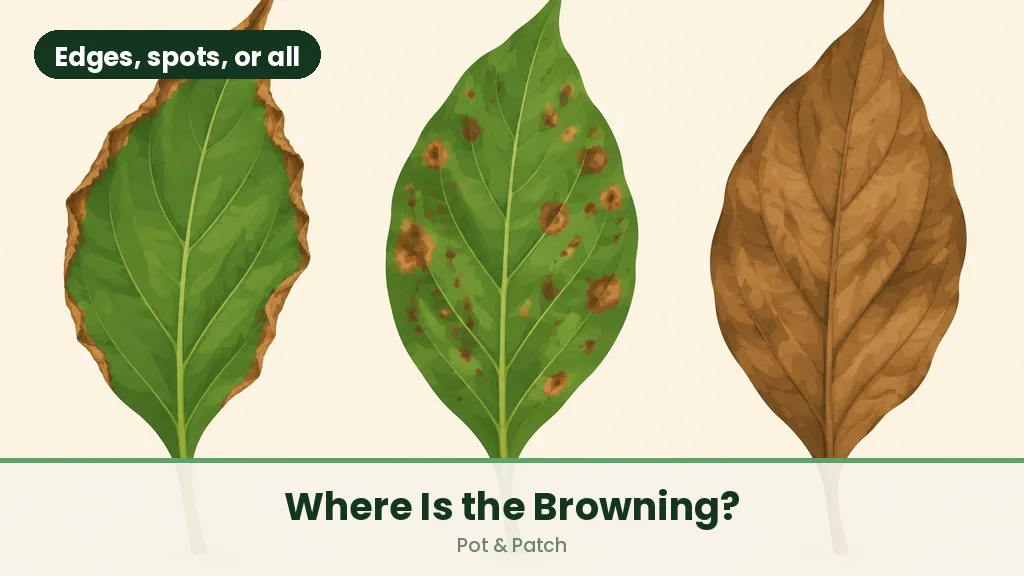
Pepper leaves turning brown can mean very different things, from a simple watering slip to a spreading disease. The brown could be crispy edges, scattered spots, or a whole leaf gone. Each pattern points to a different cause.
The fastest way to diagnose it is to look at where the brown appears. This guide starts with that quick check, then walks through all eight causes and their fixes.
Quick Diagnosis: Where Is the Browning?
The location and shape of the brown tells you most of what you need. Match your plant to the pattern below.
| What you see | Likely cause |
|---|---|
| Dry, crispy brown leaf edges and tips | Underwatering or fertilizer burn |
| Brown scorched margins, lower leaves first | Potassium deficiency |
| Bleached tan or brown patches on sun side | Sunscald |
| Round brown spots with yellow halos | Bacterial leaf spot |
| Brown spots with rings or orange centers | Fungal leaf spot |
| Brown with wilting and soggy soil | Overwatering and root rot |
| Whole leaf brown or black after a cold night | Cold or frost damage |
Once you have a likely cause, jump to its section below for the fix. Often two issues overlap, so check more than one.
1. Underwatering
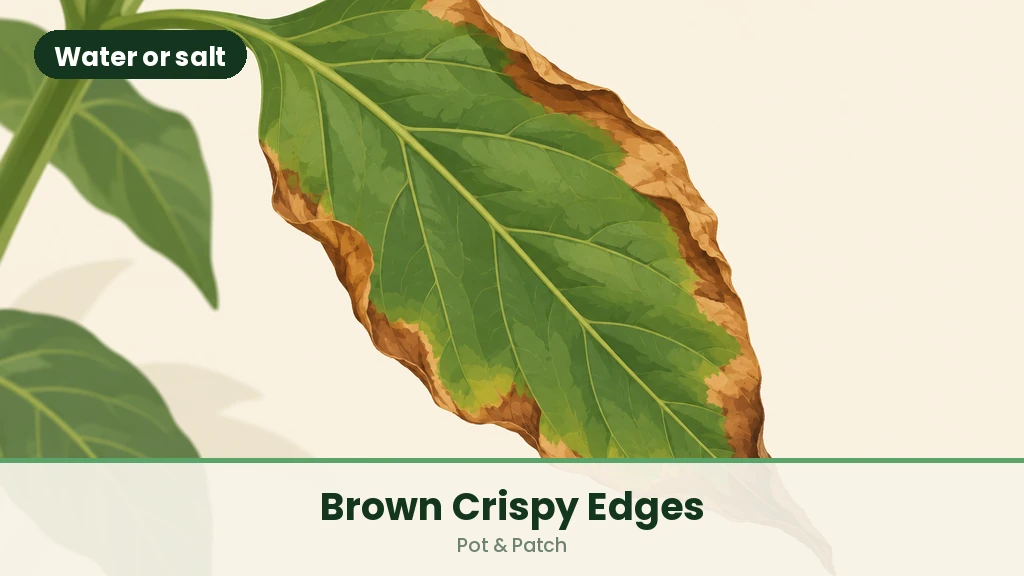
Thirsty peppers dry out from the edges in. The leaf tips and margins turn brown and crispy first, then the whole leaf curls and crumbles.
Container plants are most at risk since they dry fast. In heat, a pot can go bone dry in a single day.
Fix: Water deeply at the base until it drains, then let the top 1 to 2 inches dry before the next soak. Mulch to hold moisture steady.
2. Fertilizer Burn and Salt Buildup
Too much fertilizer scorches leaf edges brown, just like drought. The salts pull water out of the roots and burn the margins.
This is common in containers, where fertilizer salts build up in the soil over time. A white crust on the soil surface is a telltale sign.
Fix: Stop feeding and flush the pot with plenty of plain water to wash out salts. Feed at half strength going forward. Our guide on growing peppers in containers covers feeding and watering.
3. Sunscald
Peppers moved into fierce sun too fast can scorch. Sunscald leaves bleached tan, brown, or papery patches on the most exposed leaves and fruit.
It often follows a rushed move outdoors without hardening off. The damage is on the sunny side, not scattered as spots.
Fix: Shade stressed plants during the hottest hours and harden off new ones slowly. Remove badly scorched leaves and keep the soil evenly moist.
4. Overwatering and Root Rot
Too much water browns leaves in a different way. Waterlogged roots rot and fail, so leaves brown, wilt, and drop even though the soil is wet.
A quick soil check sorts this out. If the soil is soggy and the plant still wilts, overwatering is the likely culprit.
Fix: Stop watering and let the soil dry out, and make sure the pot drains freely. If the plant is also drooping, our guide on pepper plant wilting helps you confirm root rot.
5. Potassium Deficiency
A potassium shortage browns the leaf margins while the center stays green. It shows on the older, lower leaves first.
The edges look scorched and dry, which is easy to mistake for drought. A soil test confirms the shortage.
Fix: Feed with a balanced fertilizer that includes potassium. Correct soil pH toward 6.2 to 6.8 so the plant can take it up.
6. Cold or Frost Damage
Peppers are warm-season plants that hate the cold. A frost or a chilly night can turn whole leaves brown or black.
The damage shows up fast, often across the whole plant at once. New growth may still come if the stems survive.
Fix: Cover plants when nights drop below 50 F. Remove dead leaves and wait to see which stems recover before giving up on the plant.
7. Bacterial and Fungal Leaf Spot
When the brown comes as distinct spots, suspect disease. These spread in warm, wet conditions and cannot be cured, only managed.
The spot pattern helps you name the disease. Use the guide below to tell the common ones apart.
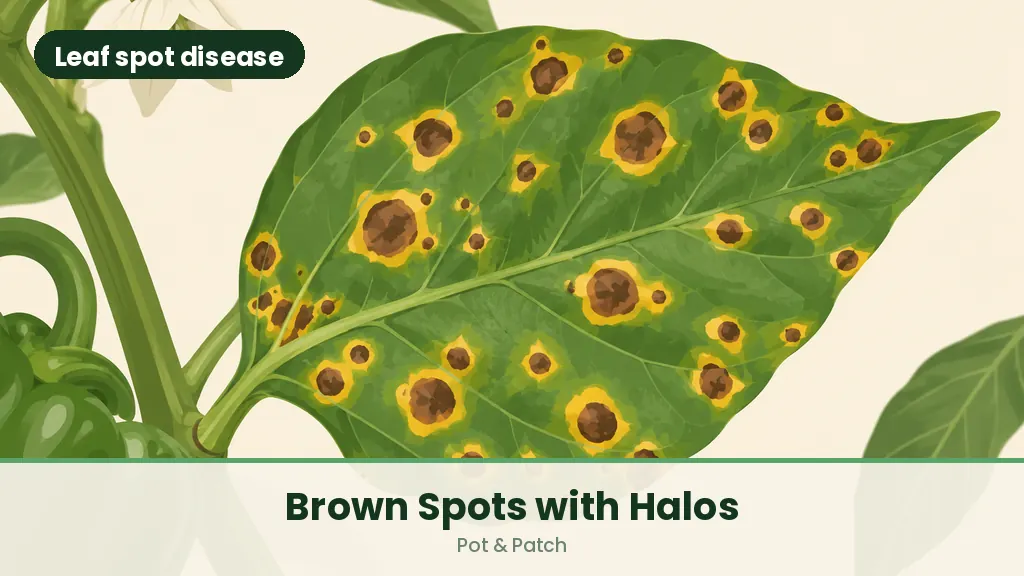
| Spot look | Likely disease |
|---|---|
| Round brown spots with a yellow halo, lower leaves first | Bacterial leaf spot |
| Gray-brown spots with dark edges | Anthracnose |
| Water-soaked tan bleached spots, stem lesions | Phytophthora blight |
| Yellow wedge lesion with a brown center | Verticillium wilt |
Fix: Remove affected leaves, avoid overhead watering, and sanitize tools. Do not replant peppers or tomatoes in that spot for three years, and start clean with certified seed.
8. Transplant Shock and Wind
A rough move or harsh wind can brown leaf edges for a week or two. The roots and leaves are simply stressed.
This passes with gentle care and is rarely serious. Browning right after planting out is usually shock, not disease.
Fix: Shelter new transplants from strong wind and keep them watered. Our guide on how to transplant pepper seedlings shows how to harden off and avoid shock.
Should You Remove Brown Pepper Leaves?
Brown tissue is dead and will not turn green again. Remove leaves that are mostly brown or clearly diseased to tidy the plant and slow disease.
Leave lightly browned leaves if the plant is otherwise healthy, since they still make some energy. Watch the new growth, which tells you if your fix is working.
Why Are My Pepper Leaves Turning Brown: Quick Recap
Brown edges usually mean water or feeding problems, brown spots mean disease, and whole brown leaves point to cold or root rot. Read the pattern, match the cause, then fix that one thing.
Most plants recover once the stress is gone. For more help, visit our pepper growing hub.
Frequently Asked Questions
Why are the edges of my pepper leaves turning brown?
Crispy brown edges usually mean underwatering or fertilizer burn. Water deeply, flush excess salts from the soil, and feed at half strength.
Should I cut off brown pepper leaves?
Remove leaves that are mostly brown or diseased. Lightly browned leaves can stay if the plant is otherwise healthy, since they still feed it.
Can overwatering turn pepper leaves brown?
Yes. Waterlogged roots rot and fail, so leaves brown and wilt even in wet soil. Let the soil dry and improve drainage to fix it.
What do brown spots on pepper leaves mean?
Distinct spots usually mean bacterial or fungal leaf spot. Round brown spots with yellow halos point to bacterial spot, which spreads in warm, wet weather.
Will pepper plants recover from brown leaves?
Often yes, once you fix the cause. Brown leaves will not green up, but healthy new growth is the sign your plant is bouncing back.