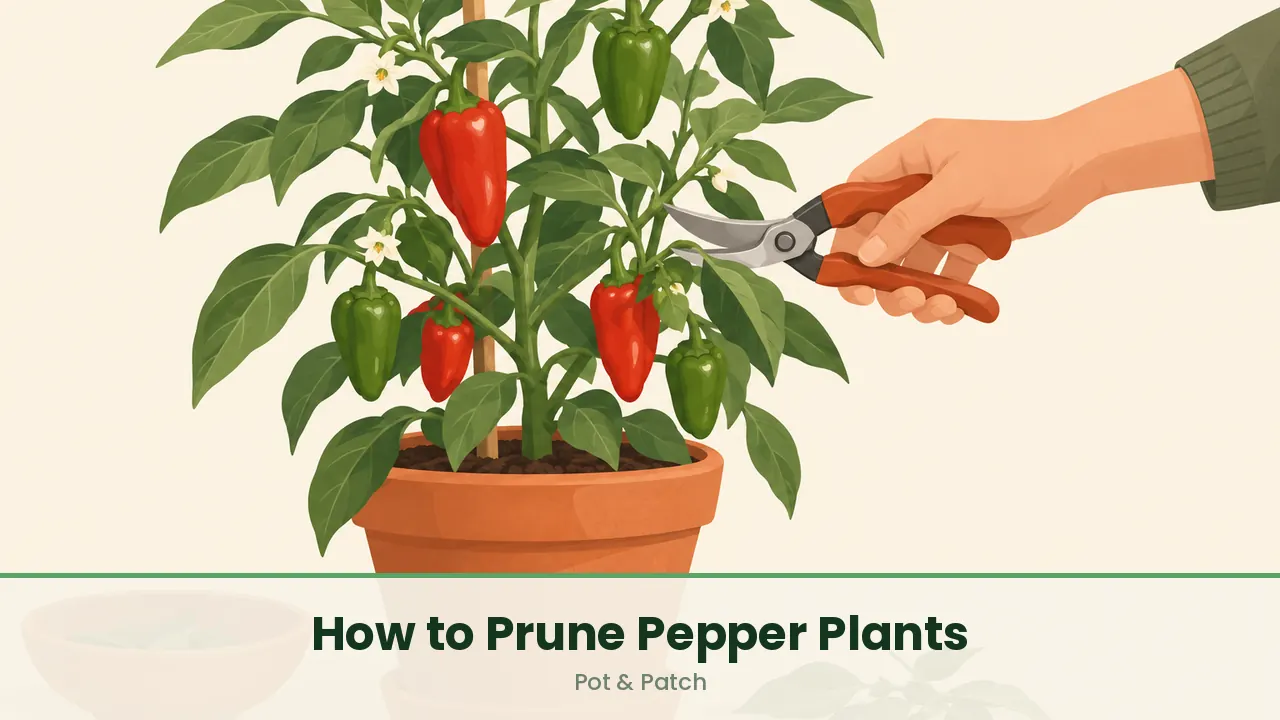
How to Prune Pepper Plants the Right Way: What Helps and What Does Not
Pruning peppers is one of the most over-promised jobs in the garden. Search around and you will find guide after guide swearing that a few snips will double your harvest. The research tells a much more cautious story.
The honest version is this. A few kinds of pruning genuinely help, one popular kind is optional and easy to get wrong, and your peppers will crop perfectly well with no pruning at all. This guide covers how to prune pepper plants with that reality in mind, so you make only the cuts worth making.
Do Pepper Plants Even Need Pruning?
No. Peppers are not like tomatoes, and they will flower, fruit, and ripen just fine if you never touch them with shears. Plenty of excellent harvests come off completely unpruned plants.
So treat pruning as a set of optional tools, not a chore you owe your plants. The useful question is not whether to prune, but which specific cuts actually pay off. The sections below sort them from the clearly worthwhile to the frankly overrated.
The Pruning That Genuinely Helps
Three kinds of pruning have solid reasoning behind them. None is about chasing a bigger yield, and that is exactly why they are worth doing.
Clear the lowest leaves. Once a plant is established and roughly knee-high, strip the leaves and shoots from the bottom few inches of stem. University of Illinois Extension recommends this once plants reach about two feet, removing foliage from the lowest 12 inches. It keeps leaves off the soil, improves airflow at the base, and makes it harder for soil-borne diseases to splash up onto the plant.
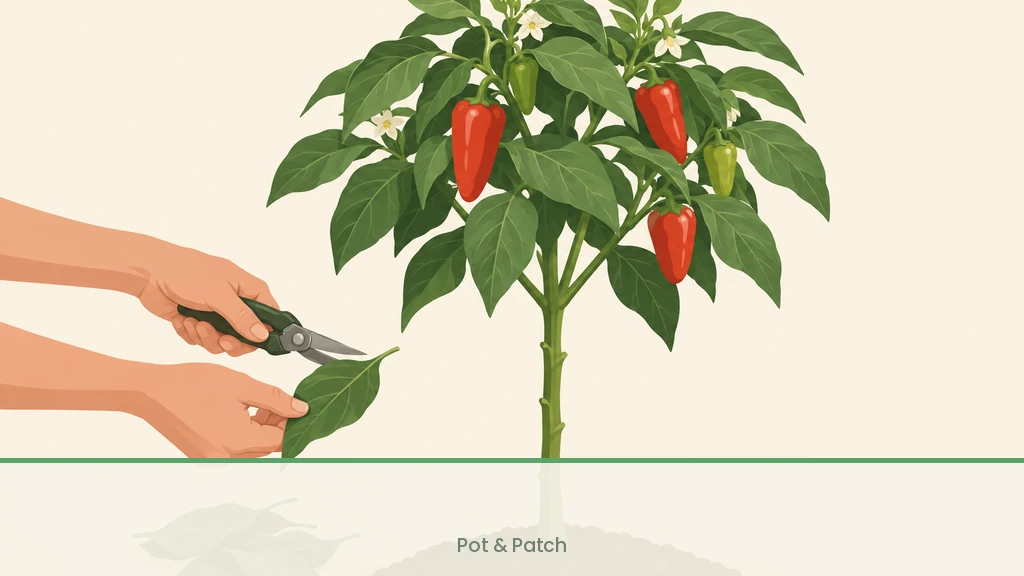
Cut out damaged and diseased growth. This is the one kind of pruning to do all season long. Snip off yellowing, broken, or spotted leaves and any stems that look diseased, cutting back to healthy tissue. Always use clean, sharp shears and wipe them between plants so you are not carrying trouble from one to the next. If leaves are browning or spotting, our guide on pepper leaves turning brown can help you spot the cause first.
Top the plant late in the season to ripen the last fruit. This is the single most reliable cut of all. About three to four weeks before your first expected frost, trim back the leafy tips, and pinch off any flowers and tiny fruit that have no chance of ripening in time. With nothing new to chase, the plant pours its remaining energy into finishing the peppers already on it.
Topping Young Plants: The Overrated One
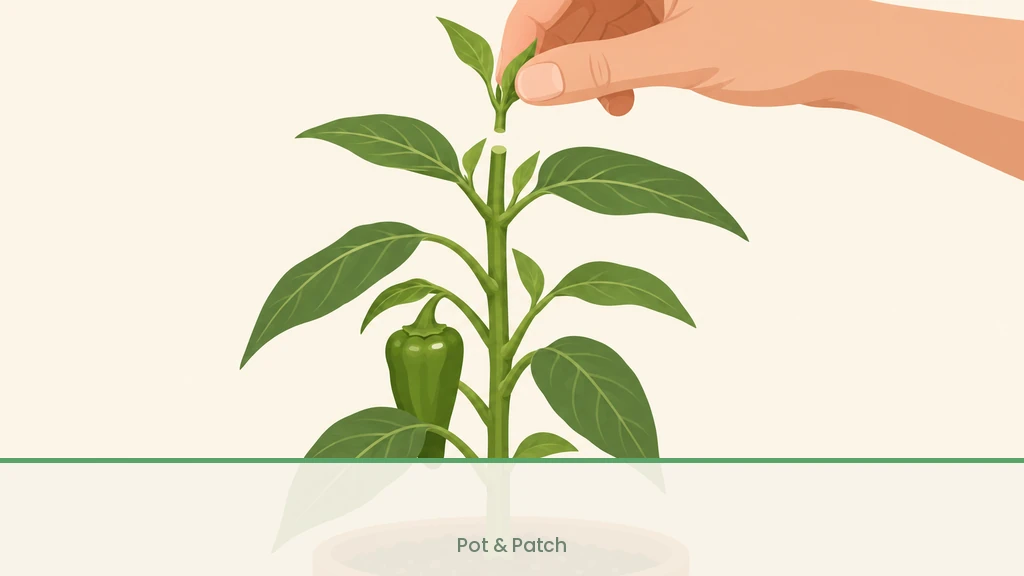
Here is the cut everyone argues about. The popular move is to snip the growing tip off a young plant, around 8 to 12 inches tall, to force it to branch into a bushier shape. The promise is more branches, more flowers, and a bigger harvest.
The evidence does not back that promise up cleanly. Reviews of the research show mixed results that swing with the variety, the season length, and the growing conditions. One glasshouse trial across 14 pepper varieties found that pruning actually reduced the total number of fruit per plant. University of Minnesota Extension goes further, noting it has no record of gardeners topping peppers there and warning that in a shorter season, topping could cost you yield rather than add to it.
That does not make topping useless, but it does make it situational. It can suit a long, warm growing season and tall, leggy varieties that tend to flop. In a short season, you lose precious early fruit while the plant rebuilds, so the trade rarely works in your favor.
| Topping young plants makes sense when | Skip it when |
|---|---|
| You have a long, warm growing season | Your season is short (under 3 months) |
| Plants are tall and leggy or wind-exposed | The variety is naturally compact and bushy |
| You care more about plant shape than early fruit | You want the earliest possible harvest |
If in doubt, leave it. A pepper left alone will branch and fruit on its own schedule, and you keep your early crop.
Pruning to Overwinter Peppers
Peppers are perennials that most of us grow as annuals. If you want to keep a favorite plant going, a hard prune is how you prepare it for a second year.
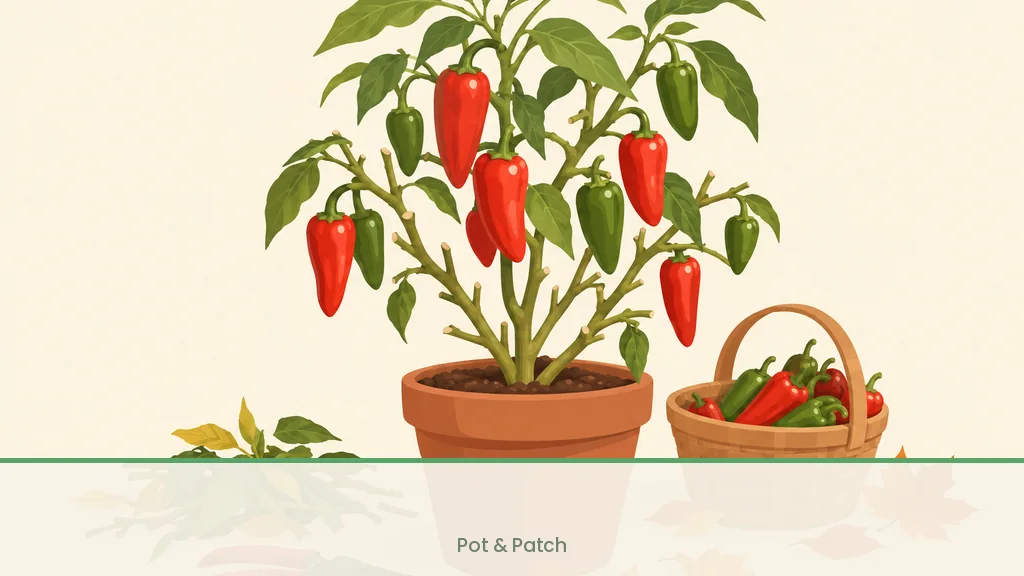
Before the first frost, cut the plant back hard, down to a main framework of a few stems, removing most of the leaves. Then lift it into a pot if it is not already in one and bring it somewhere cool and bright indoors for winter. In mild-winter regions you can leave peppers outdoors and simply cut back dead and weak growth once new shoots appear in spring. Established plants with strong roots take a cut of up to a third of their size comfortably.
How to Prune Without Setting Your Plant Back
Whatever cut you are making, a few rules keep pruning a help rather than a setback.
Never remove more than about a third of the plant at once. Leaves are how a pepper feeds itself, so stripping too many starves it and can stunt growth or cut into late-season production.
Protect the main Y. Where the stem first splits into two is the plant’s backbone. Remove small side branches and shoots below it if you like, but do not damage that central fork.
Go easy on small, bushy, and super-hot types. Compact varieties and slow super-hots like habaneros and ghost peppers need little more than the removal of the lowest leaves for airflow. Container plants are the main exception, where a light trim helps keep a fruit-laden plant from toppling, as our guide on growing peppers in containers covers.
Use clean, sharp tools on a dry day. Sharp shears make clean cuts that heal fast, and dry conditions lower the risk of disease entering the wounds. Leave struggling or pest-covered plants alone until they recover.
The Honest Takeaway on Pruning Peppers
Prune to keep your peppers healthy and to ripen the last of the crop, and you will get real value from the shears. Prune because a video promised you a mountain of extra peppers, and you may be disappointed, or even a little worse off.
So clear the bottom leaves, cut away anything diseased, top the plant as frost approaches, and otherwise let it grow. For more on getting a strong crop from healthy plants, visit our pepper growing hub, and if your plants are flowering heavily, our guide on pepper plant flowers but no fruit explains what to do with all those blooms.
Frequently Asked Questions
Should you prune pepper plants?
You do not have to. Peppers fruit well unpruned. The pruning worth doing is clearing the lowest leaves for airflow, removing diseased growth, and topping late in the season to ripen the last fruit before frost.
Does pruning pepper plants increase yield?
Not reliably. Research is mixed, and some studies found pruning reduced the number of fruit. Topping can help in long seasons with leggy varieties, but in a short season it often costs you early fruit instead.
When should you prune pepper plants?
Remove diseased leaves anytime, and clear the lowest leaves once plants are about two feet tall. Save topping for three to four weeks before your first frost to help the final peppers ripen.
How do you top a pepper plant?
Pinch or snip the growing tip off the main stems, cutting back to a leaf node. Early-season topping forces branching, while late-season topping removes flowers and tips so energy goes into ripening fruit.
Can you prune peppers to keep them over winter?
Yes. Cut the plant back hard to a few main stems before frost, remove most leaves, and move it to a cool, bright indoor spot. In mild climates, leave it outside and trim dead growth in spring.