Blossom End Rot on Peppers: What Really Causes It and How to Fix It
You spot a sunken brown patch on the bottom of a ripening pepper, and your heart sinks. That is blossom end rot, and it is one of the most misunderstood pepper problems. The good news is it is almost always preventable.
Here is the surprise: it is rarely about low calcium in your soil. The real issue is water. This guide explains what blossom end rot on peppers really is, and the fixes that actually work.
What Blossom End Rot Looks Like on Peppers
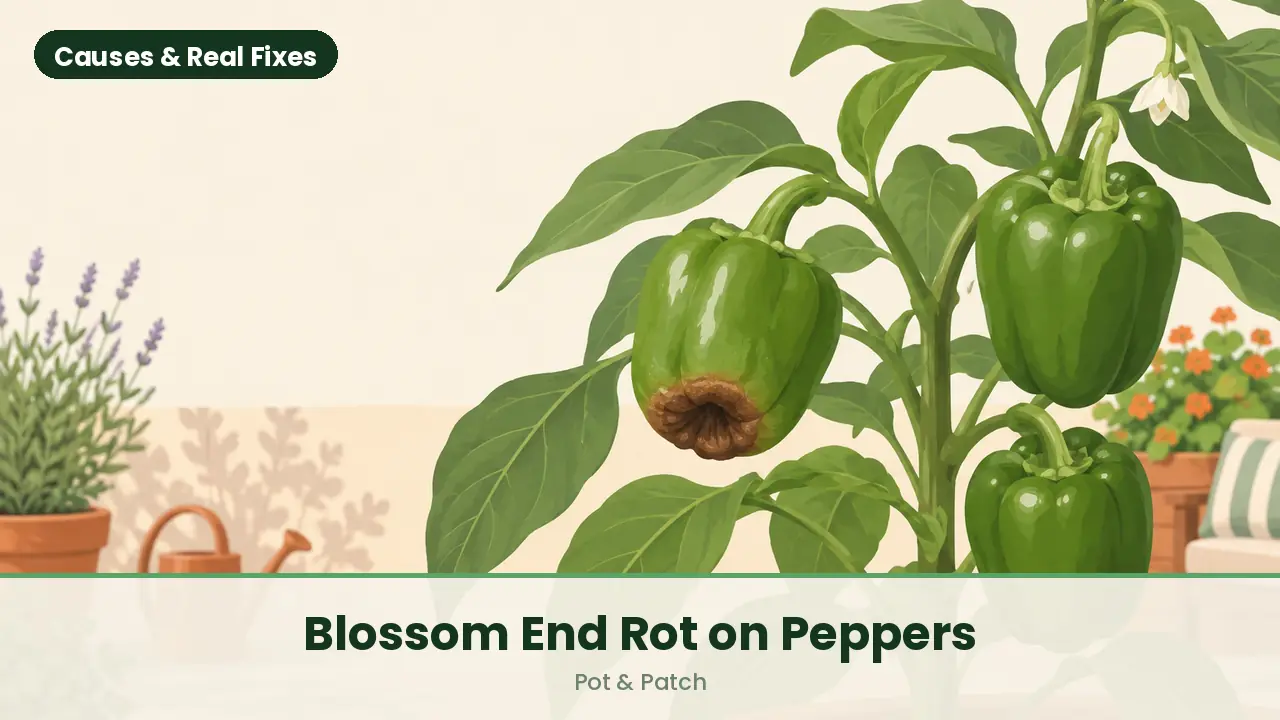
Blossom end rot shows up on the fruit, not the leaves. It appears on the blossom end, which is the bottom of the pepper, opposite the stem.
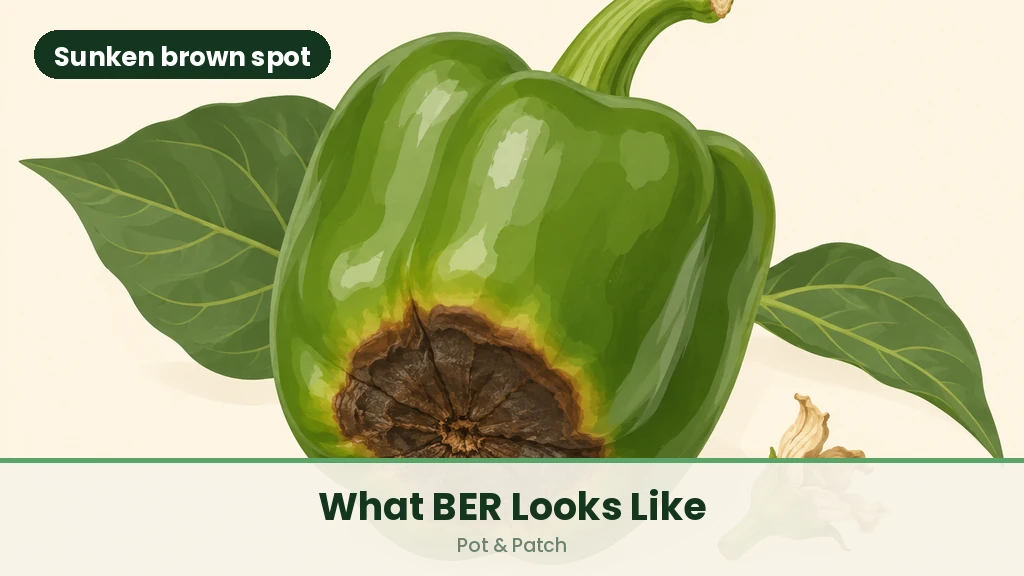
It starts as a small tan, water-soaked spot. The spot grows into a sunken, brown or black, leathery patch. On peppers the damage can even form inside the fruit, hidden until you cut it open.
It is not a disease and does not spread plant to plant. Only the affected fruit is damaged, so the rest of your harvest can be fine.
What Really Causes Blossom End Rot
Blossom end rot is a calcium problem inside the fruit, but not usually a soil problem. Illinois Extension calls it a physiological disorder, and notes most soils already have enough calcium.
Calcium travels through the plant with water. When water uptake stutters, calcium cannot reach the fast-growing fruit, and the tissue at the tip breaks down. So the trigger is almost always uneven water, not empty soil.
Why Your Peppers Got It: Common Triggers
Several stresses interrupt that steady flow of water and calcium. Most trace back to the root zone.
Inconsistent watering. Drought followed by heavy watering is the number one trigger. The swing is worse than being slightly dry all the time.
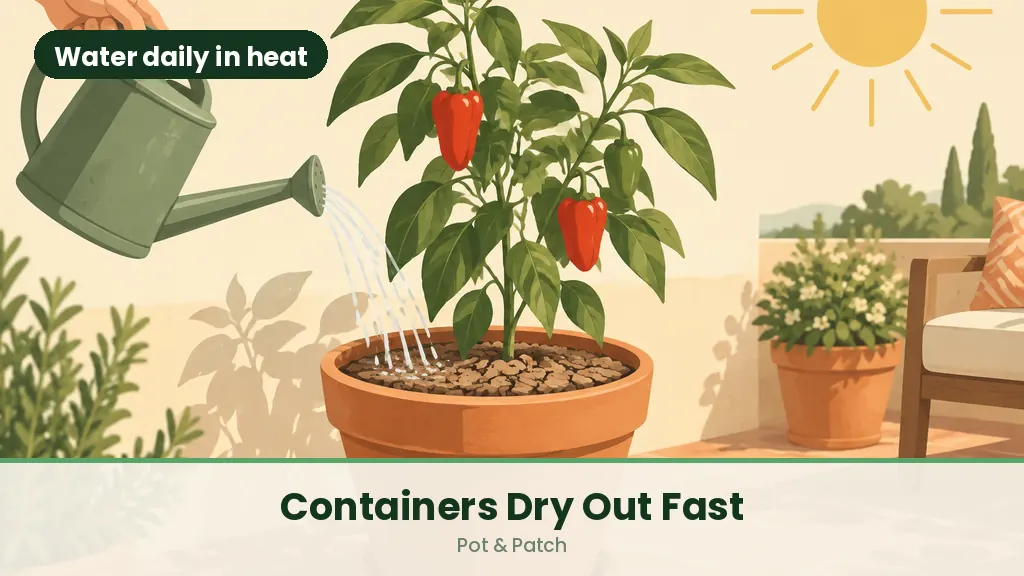
Containers drying out. Illinois Extension notes potted plants dry fast and show more blossom end rot. In heat they may need water daily. Our guide on growing peppers in containers covers watering and soil.
Too much nitrogen. Excess nitrogen, especially ammonium forms, drives rapid leafy growth that pulls calcium away from fruit.
Root damage. Hoeing or digging near the plant cuts the roots that take up water, so avoid disturbing the soil close to the stem.
What Does Not Fix Blossom End Rot
This is where most advice goes wrong. The popular quick fixes do little or nothing, and they waste time while more fruit rots.
Calcium foliar sprays. Clemson Extension is blunt: the fruit skin cannot absorb foliar calcium, and leaf calcium does not move into fruit. Sprays are not effective.
Epsom salt. Epsom salt is magnesium, not calcium. Worse, extra magnesium competes with calcium uptake, so it can make things worse.
Eggshells as a quick fix. Eggshells break down far too slowly to help the fruit rotting right now. They are a slow soil amendment at best, not a cure.
How to Stop Blossom End Rot on Peppers
The real fix is steady moisture. Nail that and the next flush of peppers usually comes out clean.
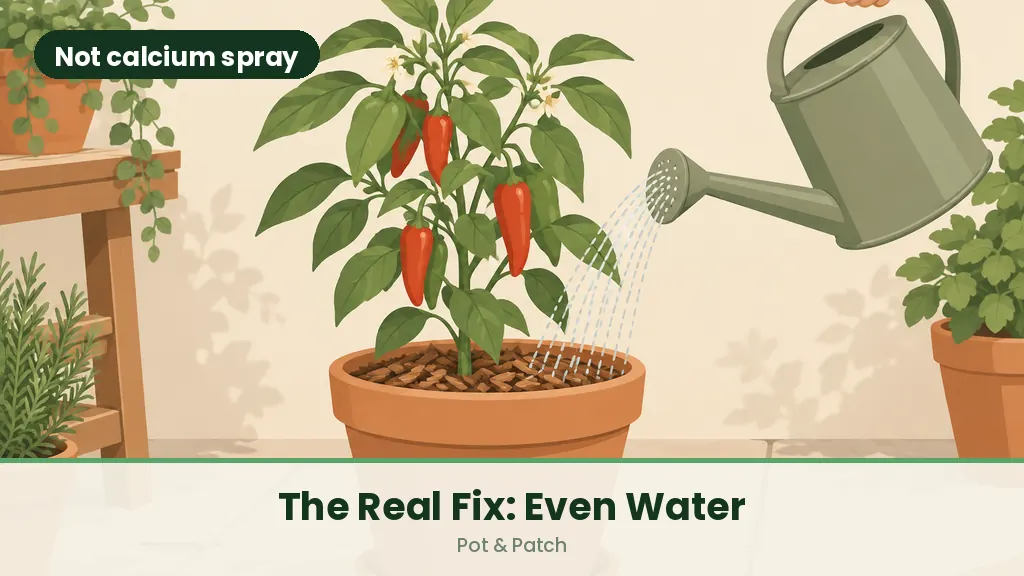
Water consistently. Keep soil evenly moist, aiming for about an inch of water a week from rain or hose. Water deeply rather than a little every day.
Mulch the soil. A 2 to 3 inch layer of mulch holds moisture steady and stops the dry-to-wet swings that trigger the rot.
Feed with care. Avoid heavy nitrogen once peppers are fruiting. Use a balanced fertilizer instead.
Test, do not guess. Before adding lime or calcium, take a soil test. Only amend calcium if the test actually shows a shortage, and correct pH toward 6.2 to 6.8. Good soil prep helps, which our guide on growing peppers in raised beds walks through.
Should You Remove Peppers With Blossom End Rot?
Yes, pick them off. The damage cannot heal, and removing affected fruit lets the plant put energy into healthy peppers.
The rest of the plant is fine to keep growing. Once your watering is steady, new peppers should form without the rot.
Is It Blossom End Rot or Something Else?
A few pepper problems look similar but need different fixes. Check the location and look of the damage.
| What you see | Likely problem |
|---|---|
| Sunken brown leathery patch on the bottom | Blossom end rot |
| Pale, papery, sun-bleached patch on the top or side | Sunscald |
| Dark sunken spots with rings, often after rain | Anthracnose (fungal) |
| Soft, mushy, spreading rot | Bacterial soft rot |
Blossom End Rot on Peppers: Quick Recap
Blossom end rot is a water problem wearing a calcium mask. Keep soil evenly moist, mulch well, go easy on nitrogen, and skip the Epsom salt and sprays.
Remove affected fruit and the next peppers usually set clean. For more help, visit our pepper growing hub.
Frequently Asked Questions
Is blossom end rot on peppers caused by low calcium?
Rarely in the soil. Most soils have enough calcium. The real cause is uneven watering that stops the plant moving calcium into the fruit.
Does Epsom salt fix blossom end rot?
No. Epsom salt is magnesium, not calcium, and extra magnesium can actually block calcium uptake and make the problem worse.
Can you eat peppers with blossom end rot?
If the rot is small, cut it away and eat the healthy part. Discard peppers that are badly rotted or have mold at the damaged end.
Will blossom end rot go away on its own?
Affected fruit will not heal. But once you steady your watering, new peppers usually grow without any rot.
Do calcium sprays work on blossom end rot?
No. The fruit cannot absorb foliar calcium, so sprays are not effective. Consistent soil moisture is the fix that works.