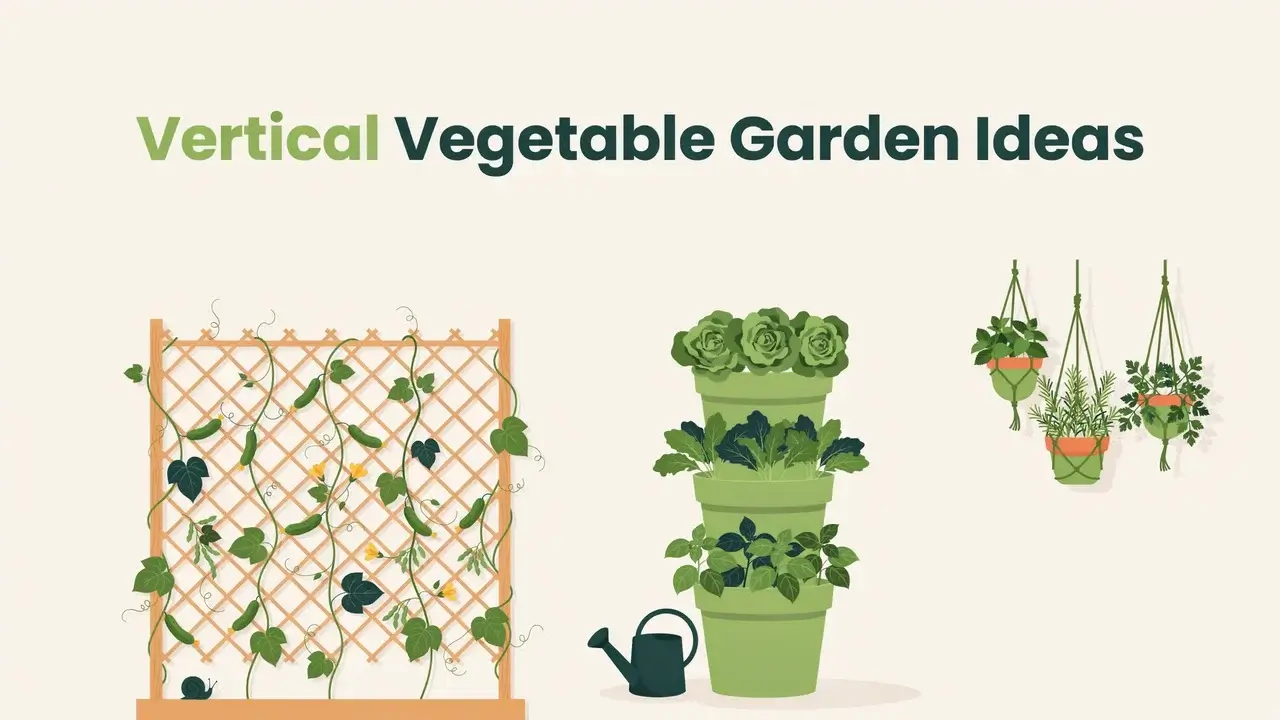
Vertical Vegetable Garden Ideas: How to Grow More Food in Less Space
A small yard, a narrow balcony, or a bare fence does not have to limit how much food you grow. The trick is to stop thinking in square feet of ground and start growing upward.
That is the whole idea behind a vertical vegetable garden. Instead of letting plants sprawl across the soil, you train them up trellises, stack them in towers, or hang them on walls. The footprint stays small while the growing area multiplies.
This guide covers what a vertical vegetable garden actually is, which crops grow best when trained upward, and a full set of ideas to build one in any space. It also shows how to match each structure to the right crop, so nothing outgrows its support.
What Is a Vertical Vegetable Garden?
A vertical vegetable garden is any setup that grows food upward on a support instead of outward across the ground. The support can be a trellis, an arch, a wall planter, a stacked tower, or a simple length of string.
The effect is that you add usable growing space without adding floor space. A single trellis turns one square foot of soil into several feet of vertical room. This works whether you garden in raised beds, containers, or a small backyard plot, which is why vertical gardens suit patios, balconies, and tight urban spaces so well.
Why Grow Vegetables Vertically?
Growing up does more than save room. It changes the conditions around your plants in ways that tend to make them healthier.
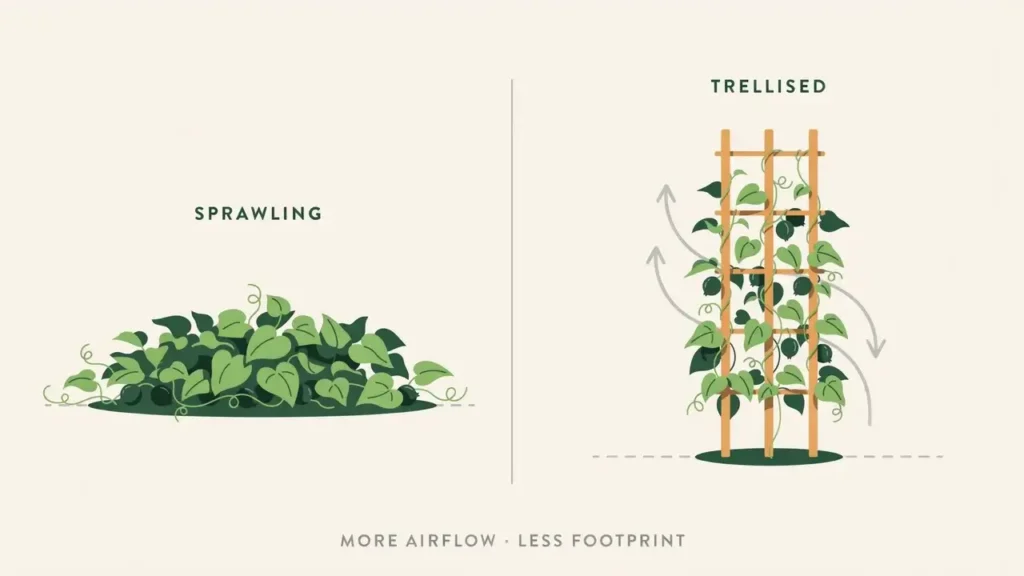
You harvest more from the same footprint. By using vertical space, you fit more plants into a small area, which raises the yield you get per square foot of ground.
Airflow improves and disease drops. When plants climb instead of sprawling, air moves freely around the leaves and they dry faster after rain or watering. Nebraska Extension and Piedmont Master Gardeners both note that this better circulation reduces common fungal problems like powdery mildew and blight, which thrive in damp, crowded foliage.
Pests have a harder time. Lifting crops off the soil keeps them away from ground-dwelling pests. University of Minnesota points out that elevating plants on trellises helps protect them from slugs, which are notorious for chewing ground-level produce.
Harvesting is easier on your body. Fruit and pods sit closer to eye level, so there is far less bending and kneeling. Nebraska Extension also notes that a row of upright plants can act as a small windbreak, sheltering shorter crops nearby.
There is one honest trade-off. Plants grown vertically, especially in wall planters and hanging containers, dry out faster and often need more frequent watering and feeding. Plan for that before you build.
Best Vegetables for Vertical Gardening
Almost any crop can be adapted, but some are naturally suited to growing up. The right choice depends on which structure you plan to use.
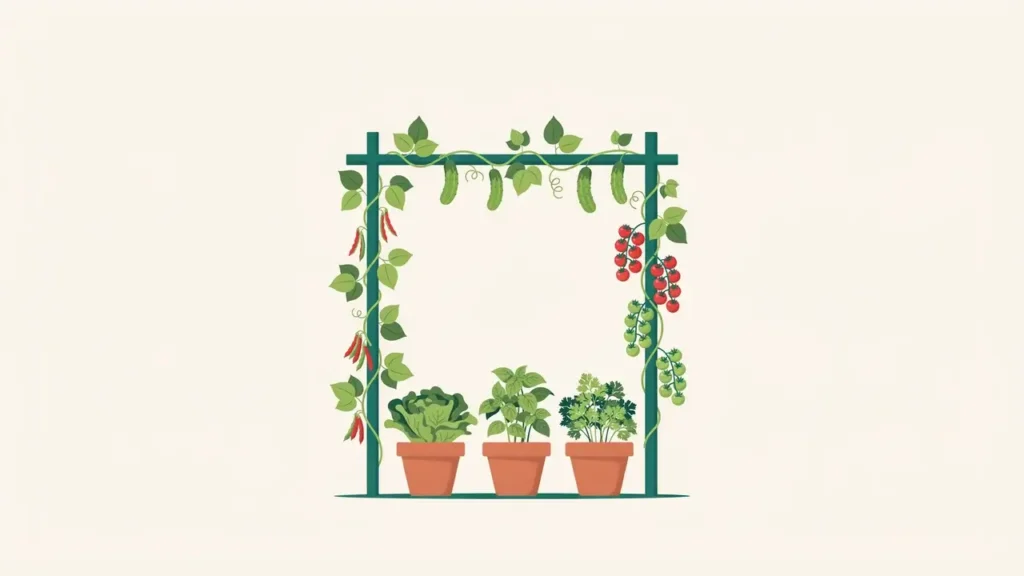
Climbers for trellises and arches. Vining crops are the classic pick because they climb on their own with a little guidance. The best options are pole beans, climbing peas, cucumbers, and vining or cherry tomatoes. Small melons and compact squash varieties can also be trained upward, though their weight needs support.
Small plants for pockets, hanging baskets, and stacked planters. Shallow-rooted, lightweight crops work best in these. Think leafy greens like lettuce and spinach, most herbs, radishes, strawberries, and baby carrot varieties.
Larger crops for towers and deep containers. Potatoes and sweet potatoes grow well in tall tower planters, which pack a big harvest into a small base.
One caution on the heavy fruit. Melons, winter squash, and pumpkins can be grown vertically, but their fruit gets heavy enough to pull off the vine. Support each one in a fabric sling tied to the structure.
Vertical Vegetable Garden Ideas
Here is the core set of ideas, starting with the smallest options and working up to heavy-duty structures. Match one to your space and the crops you want to grow.
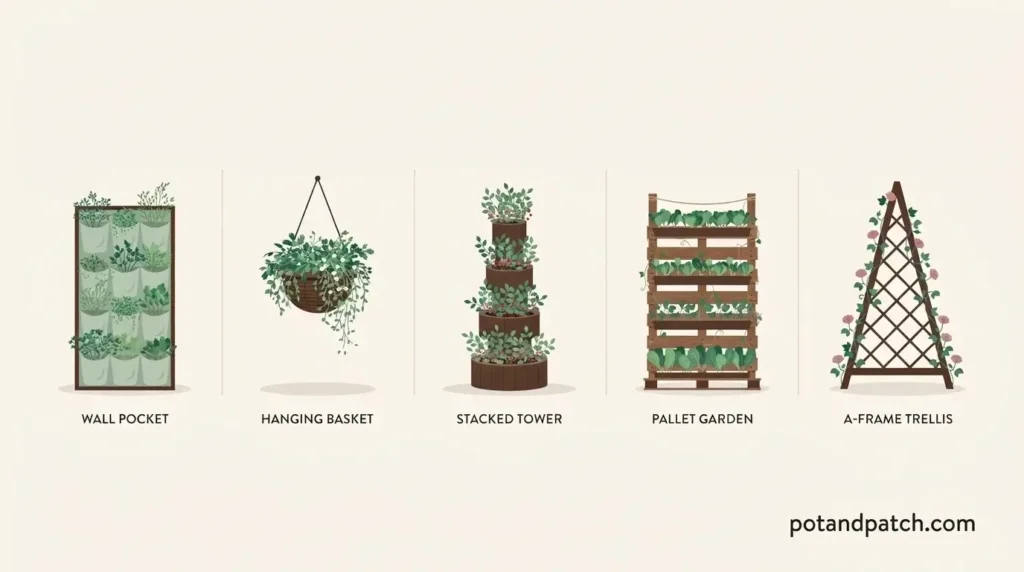
Wall-Mounted and Pocket Planters
Fixing planters to a sunny wall or fence is the simplest way to start. Small pots, recycled containers, or fabric pockets hold herbs and greens against an otherwise unused surface. Just make sure every container has drainage, and check that fabric pockets are deep enough, since very shallow ones dry out and stunt roots quickly.
Hanging Baskets
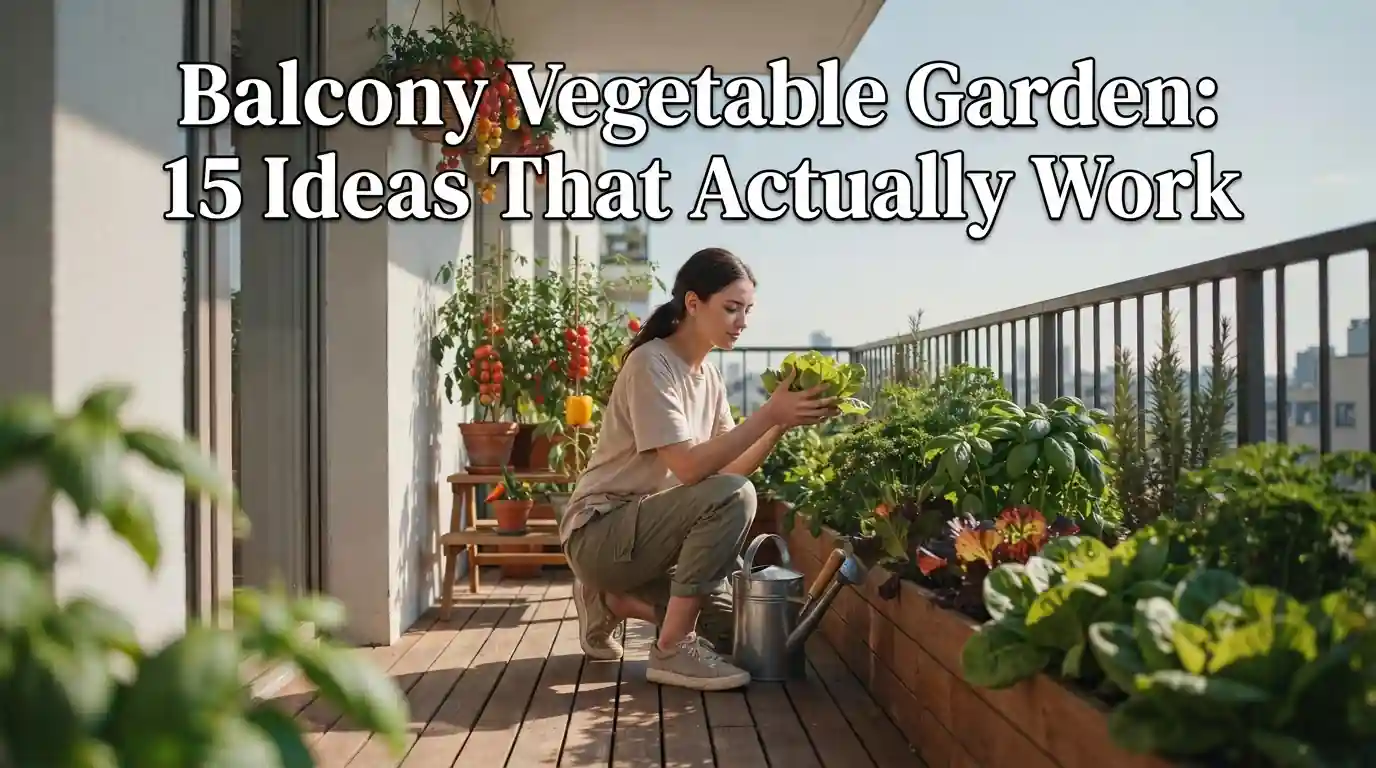
Hanging baskets free up floor space entirely by using the air above a railing or hook. They suit trailing crops, strawberries, and herbs. Baskets dry out fast, so water often and consider a moisture-retaining mix. A railing lined with baskets is one of the easiest ways to add growing space, and it fits neatly into most balcony vegetable garden ideas.
Gutter Gardens (DIY)
A row of rain gutters mounted on a fence or wall makes a shallow, tidy bed for greens and strawberries. Angle each gutter slightly so water drains from one into the next, and drill small holes to prevent pooling. This is a low-cost DIY project that turns a flat vertical surface into several rows of salad.
Stacked and Ladder Planters
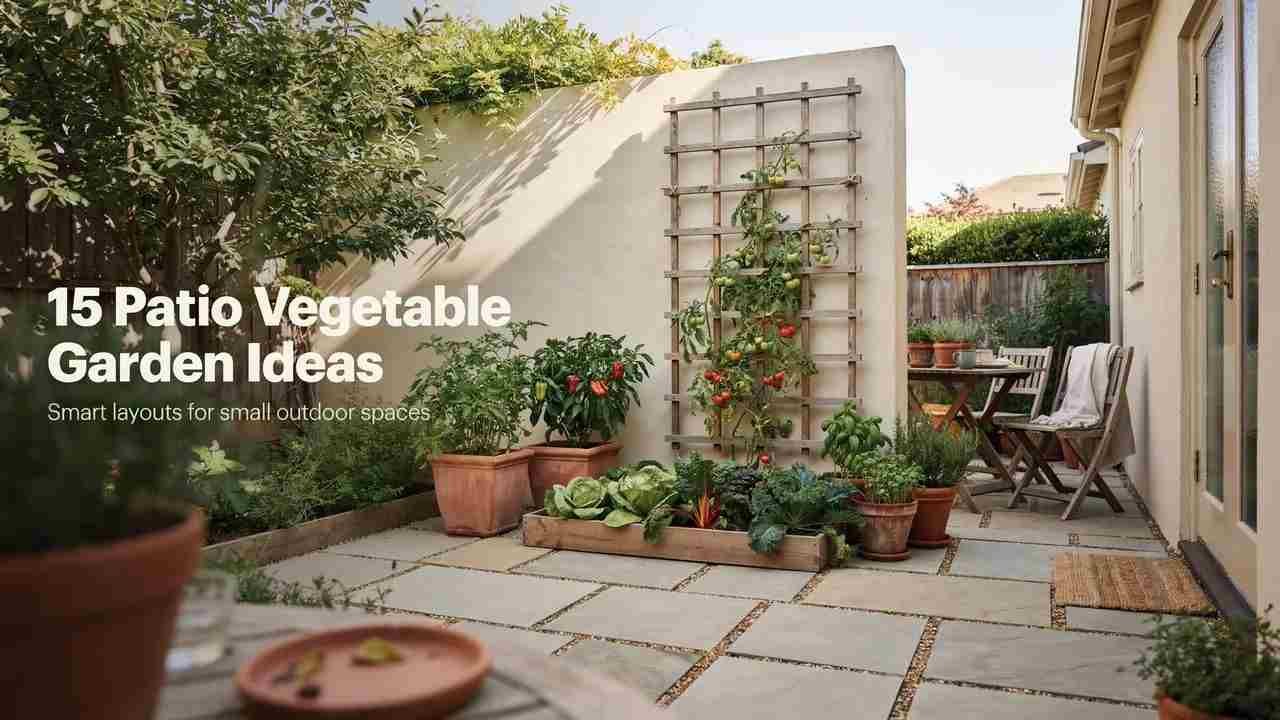
An old ladder with boards across the rungs, or a set of tiered planters, creates several growing levels on a small base. This idea works well on hard surfaces, so it fits naturally into many patio vegetable garden ideas. Bring lightweight stacked planters inside if strong wind is forecast, since they tip easily.
Tower Planters and Potato Towers (DIY)
Freestanding tower planters stack multiple pockets around a central column, ideal for greens and herbs. For a bigger crop, a potato tower uses a wire cage lined with straw and filled with soil to grow a large potato harvest in a tiny footprint.
Pallet Gardens (DIY)
A reclaimed wooden pallet, stood upright and lined at the back, becomes a vertical planter with several rows. Check the stamp to confirm the wood is heat-treated rather than chemically treated, and sand down rough edges. Lay it flat to plant, let the roots establish for a couple of weeks, then stand it up.
Trellises
Trellises are the workhorse of vertical growing. Wooden lattice trellises give good airflow and suit cucumbers. String trellises, made from netting strung between sturdy posts, are perfect for pole beans and tall peas. Wire trellises and cattle panels are strong enough to support heavier crops without sagging.
Arches and Tunnels
A cattle panel bent between two beds forms a walk-through arch. Planted with beans, cucumbers, or squash, it turns everyday vegetables into an attractive feature and makes picking easy, since the fruit hangs down within reach.
Bean Teepees (DIY)
A teepee of bamboo canes or straight branches, tied at the top, is a classic support for any climbing bean. Its wide base makes it stable in wind, and children love the leafy hideout it forms once the vines fill in.
Herb Spirals
An herb spiral is a raised bed built upward in a coil of brick or stone. The height creates different moisture zones, and the thermal mass of the stone holds warmth, which can gently extend the growing season for herbs.
How to Match the Structure to Your Crop
The most common vertical gardening mistake is putting a heavy crop on a flimsy support. The rule is simple: the heavier and more vigorous the plant, the sturdier and better-anchored the structure needs to be.
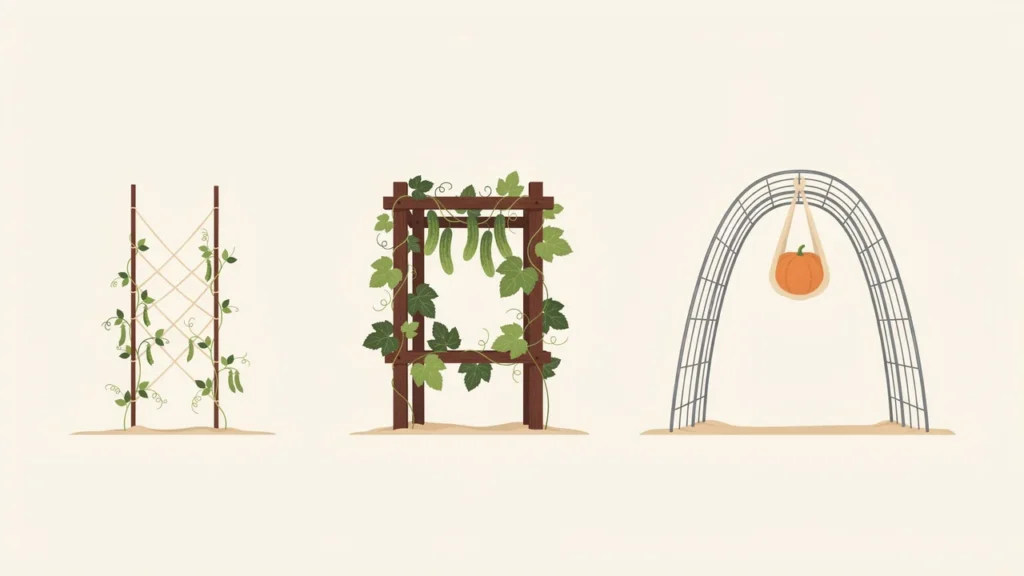
Light greens and herbs are happy in pockets and hanging baskets. Self-clinging climbers like peas need only string or netting. Heavier vining crops like cucumbers and tomatoes want a solid trellis. The bulkiest fruit, such as melons and winter squash, needs the strongest panel plus a sling under each fruit.
| Structure | Best crops | Support and anchoring note |
|---|---|---|
| Wall or pocket planters | Herbs, lettuce, greens | Ensure drainage; keep pockets deep enough |
| Hanging baskets | Strawberries, herbs, trailing greens | Water often; they dry out fast |
| Gutter gardens | Salad greens, strawberries | Angle for drainage; add drip holes |
| Stacked or ladder planters | Greens, herbs, radishes | Move indoors in high wind |
| Tower planters | Greens, herbs, potatoes | Fill and water evenly top to bottom |
| String or netting trellis | Pole beans, peas | Anchor posts firmly; add a top support |
| Wooden or wire trellis | Cucumbers, tomatoes | Use sturdy, self-supporting panels |
| Arch or cattle panel | Beans, cucumbers, small squash | Sink uprights deep; secure the panel |
| Heavy-fruit panels | Melons, winter squash, pumpkins | Add a fabric sling under each fruit |
Tips for a Successful Vertical Vegetable Garden
A few habits make the difference between a productive vertical garden and a struggling one.
Give it enough sun. Most vegetables need six to eight hours of direct sunlight, as the Old Farmer’s Almanac notes. Position the structure to face the midday or afternoon sun, and place shorter plants where taller ones will not shade them.
Water more than you expect. Vertical containers and wall planters dry out faster than ground beds, partly because walls cast a rain shadow. A simple drip line on a timer keeps them evenly moist.
Feed regularly. Packing more plants into a small space raises the demand on the soil. A balanced fertilizer through the season keeps growth steady.
Train and prune early. Start guiding vines onto their support as soon as they are tall enough, using soft ties or clips. Remove crowded foliage to keep air moving and steer energy into fruit.
Anchor before it gets heavy. A structure that feels solid when empty can topple under a mature, fruit-laden crop. Secure posts and panels firmly from the start. If you grow vertically in pots, the same container basics apply as in these container garden ideas for small spaces.
Frequently Asked Questions
What is the best vegetable to grow vertically?
Pole beans and cucumbers are the easiest and most rewarding. Both climb naturally, produce heavily, and only need a simple trellis or string support to thrive.
How do I start a vertical vegetable garden in a small space?
Pick one sunny wall, railing, or corner, then choose a single structure that fits it, such as a trellis, a hanging basket, or a stacked planter. Start with one or two easy crops, and expand once you see how they grow.
What is the cheapest DIY vertical garden idea?
Reusing what you already have is the cheapest route. A reclaimed pallet, a set of old rain gutters, or a bamboo bean teepee costs little or nothing and provides plenty of growing space.
Do vertical gardens need more water?
Usually, yes. Plants in wall planters, hanging baskets, and towers dry out faster than those in the ground, so they need more frequent watering. A drip system makes this easier to manage.
Can you grow a vertical vegetable garden indoors?
Yes. Herbs and salad greens grow well on a bright, sunny windowsill or under a grow light using wall-mounted pots, a freestanding tower, or a small living-wall system.
Final Thoughts
A vertical vegetable garden lets a small space produce far more than its footprint suggests. Choose crops that like to climb, match each one to a structure that can hold it, and give the setup enough sun, water, and feed. Start with a single trellis or a few hanging baskets, then build upward as your confidence grows.