
Herb Gardening for Beginners: How to Start and Grow Fresh Herbs
Herb gardening for beginners is easiest when you start small, choose herbs you actually use, and group plants with similar light and water needs. You do not need a large yard. A sunny bed, raised planter, patio container, or balcony can all work.
Most culinary herbs need plenty of light, good drainage, and moderate care rather than heavy feeding. Some herbs, such as basil and cilantro, are annuals that complete their life cycle in one season. Others, including thyme, oregano, chives, and mint, can return for several years in suitable climates.
This guide covers how to choose herbs, prepare the growing space, plant, water, prune, harvest, and avoid the most common beginner mistakes.
Herb Gardening for Beginners at a Glance
| Growing Requirement | Good Starting Point |
|---|---|
| Sunlight | Around 6 hours of direct sun for most culinary herbs |
| Soil | Well-drained soil or quality potting mix |
| Water | Varies by herb, avoid both severe drying and soggy roots |
| Fertilizer | Light feeding only when needed |
| Best beginner herbs | Basil, chives, parsley, mint, thyme, oregano, cilantro, dill |
| Planting method | Seeds, transplants, cuttings, or divisions depending on herb |
| Best setup | In-ground bed, raised bed, or container |
| Main beginner rule | Group herbs with similar moisture needs |
| Harvest | Pick regularly without stripping the whole plant |
| Common problem | Overwatering and poor drainage |
Most culinary herbs grow best in a sunny location with well-drained soil.
Why Start an Herb Garden?
Herbs are a practical first gardening project because they need relatively little space and can be harvested in small amounts as needed.
A few plants can supply fresh flavor for:
- salads
- soups
- sauces
- marinades
- teas
- garnishes
Herbs can also fit around vegetables, in flower borders, in dedicated beds, or in pots close to the kitchen.
They are especially useful for beginners because many common culinary herbs need only moderate feeding and relatively simple care once established.
Best Herbs for Beginner Gardeners
The easiest herbs are not necessarily the same for every climate, but several are dependable starting choices.
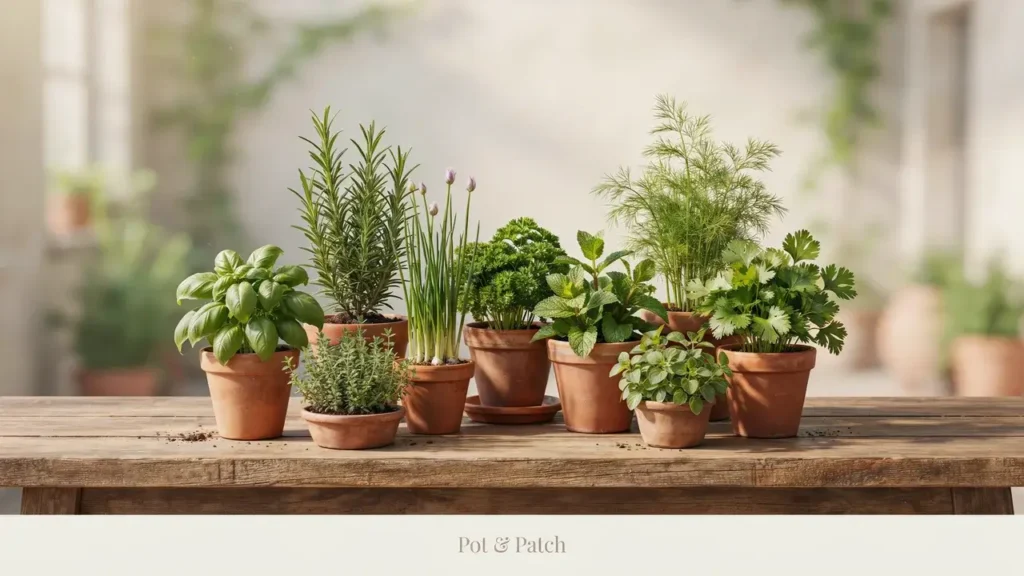
Basil
Basil is one of the best beginner herbs because it grows quickly and is easy to start from seed.
It prefers:
- warm weather
- good sunlight
- consistent moisture
- regular harvesting
Basil is an annual, so it usually completes its life cycle in one growing season.
Chives
Chives are compact, easy to harvest, and useful in both containers and garden beds.
They are perennial in many climates and can return year after year.
Parsley
Parsley is useful in a wide range of dishes and can grow in beds or pots.
Its seeds can germinate more slowly than basil, so beginners should not assume the sowing failed after only a few days.
Parsley is generally treated as a biennial.
Mint
Mint is easy to grow, but it has one major drawback: it spreads aggressively.
For beginners, growing mint in its own container is usually easier than letting it spread through a garden bed.
Thyme
Thyme prefers sunny conditions and well-drained soil.
Once established, it generally tolerates drier conditions better than moisture-loving herbs such as basil.
Oregano
Oregano also performs well in sunny, well-drained locations.
It is a strong choice for gardeners who want a perennial herb that can remain in place for several seasons.
Rosemary
Rosemary prefers excellent drainage and plenty of sun.
It can be less forgiving in cold climates because winter hardiness depends on local conditions.
Cilantro and Dill
Both are easy to start from seed.
Cilantro grows best during cooler conditions and tends to bolt quickly in heat. Dill is also easy from seed and can be harvested for both foliage and seed heads.
| Herb | Life Cycle | Light | Moisture Preference | Beginner Note |
|---|---|---|---|---|
| Basil | Annual | Full sun | Consistent moisture | Fast-growing and easy from seed |
| Chives | Perennial | Sun to partial sun | Moderate | Compact and easy to harvest |
| Parsley | Biennial | Sun to partial shade | Moderate | Germination can be slow |
| Mint | Perennial | Sun to partial shade | Moderate moisture | Best contained in its own pot |
| Thyme | Perennial | Full sun | Drier once established | Needs good drainage |
| Oregano | Perennial | Full sun | Moderate to dry | Good long-term herb |
| Rosemary | Perennial/tender perennial | Full sun | Allow some drying | Sensitive to poor drainage |
| Cilantro | Annual | Sun to partial sun | Consistent moisture | Bolts in heat |
| Dill | Annual | Full sun | Moderate | Easy from seed |
Annual, Biennial, and Perennial Herbs Explained
Understanding herb life cycles helps you know what to expect at the end of the season.
Annual Herbs
Annuals complete their life cycle in one growing season.
Examples include:
- basil
- dill
- cilantro
These are usually replanted each year.
Biennial Herbs
Biennials generally grow leaves during the first season, then flower and set seed during the second.
Parsley is a common example.
Perennial Herbs
Perennials can live for several years when the climate suits them.
Examples include:
- thyme
- oregano
- mint
- chives
- rosemary in suitable climates
Perennial herbs are best placed somewhere they can remain undisturbed for more than one season.
Where Should You Start an Herb Garden?
You can grow herbs in several ways. The right setup depends on your available space and the herbs you want to grow.
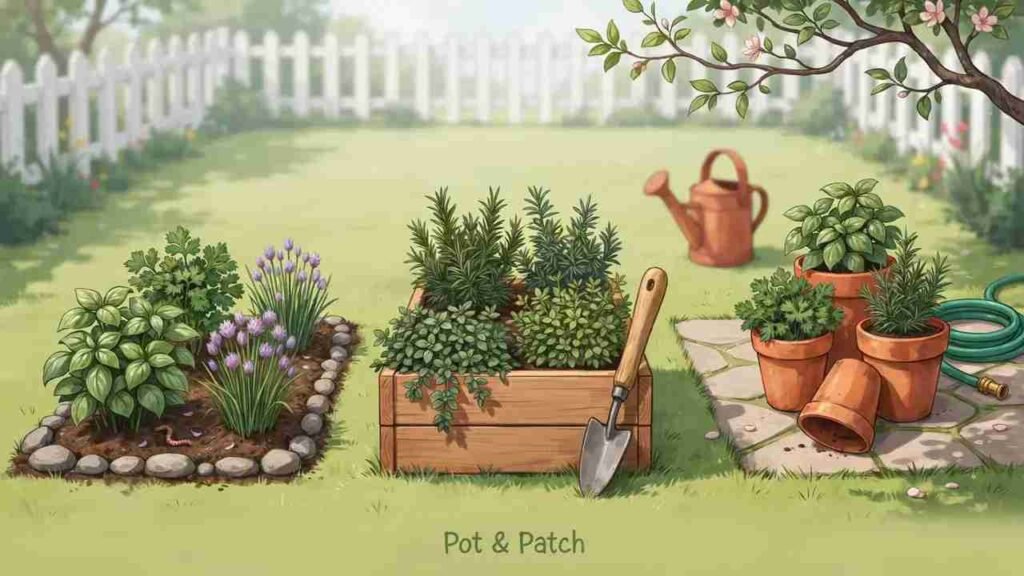
In-Ground Herb Garden
An in-ground bed works well when:
- your soil drains well
- you have permanent outdoor space
- you want perennial herbs to remain in place
Avoid low areas that remain wet after rain.
Raised Bed Herb Garden
Raised beds are useful when native soil drains poorly or you want greater control over the growing medium.
They also make it easier to group herbs according to similar water needs.
Container Herb Garden
Containers work especially well for:
- patios
- balconies
- renters
- small gardens
- aggressive herbs such as mint
- herbs you may want to move indoors later
If you want a broader explanation of choosing pots and setting up container crops, see our container gardening guide.
How Much Sun Do Herbs Need?
Most culinary herbs perform best with plenty of direct light.
A useful general target is around 6 hours of direct sun per day.
That does not mean every herb needs identical light.
Herbs that generally prefer strong sun include:
- rosemary
- thyme
- oregano
- sage
- basil
Herbs that can tolerate some partial shade include:
- mint
- chives
- parsley
- cilantro
- lemon balm
Observe your space through the day rather than assuming a bright location receives full sun.
Best Soil for Herb Gardening for Beginners
Herb gardening for beginners becomes much easier when drainage is right.
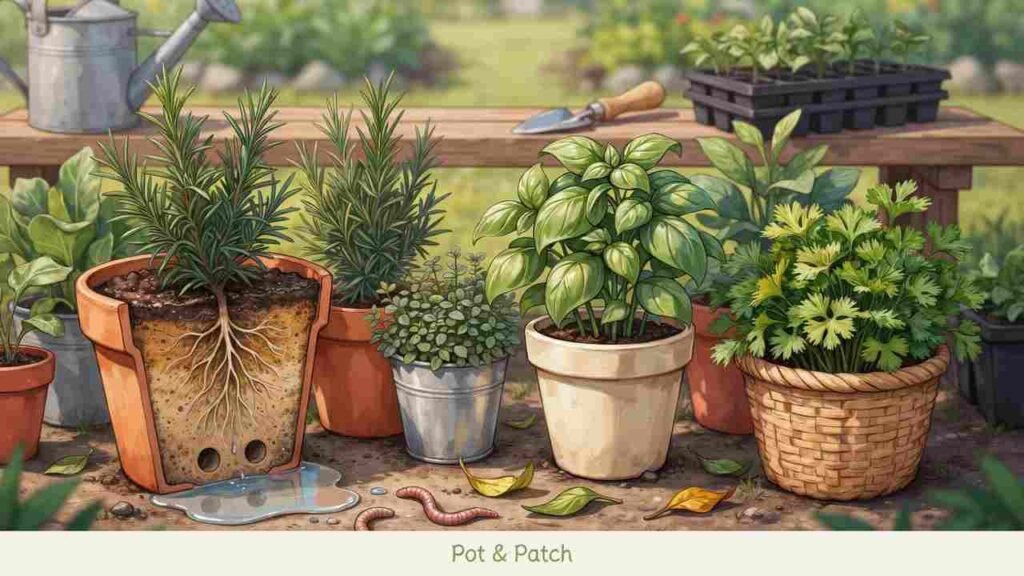
Most herbs dislike sitting in waterlogged soil. They generally do best in well-drained growing conditions, and many culinary herbs do not need excessively rich soil.
For garden beds:
- loosen compacted soil
- improve poor drainage
- avoid low spots that remain wet
For containers:
- use commercial potting mix
- do not fill pots entirely with dense yard soil
- make sure drainage holes remain open
Mediterranean herbs such as rosemary, thyme, sage, and lavender are particularly sensitive to poor drainage.
If you want a deeper explanation of container growing media, see our guide to the best soil for container gardening.
Seeds or Starter Plants: Which Is Easier?
Not every herb is equally easy from seed.
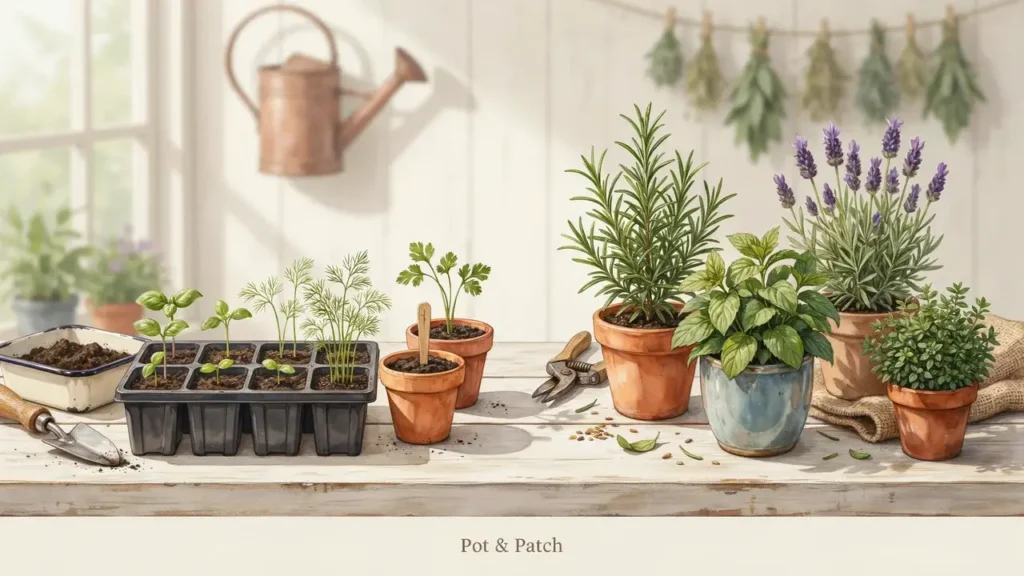
Good Herbs to Start From Seed
Beginners can often direct sow or start these herbs from seed:
- basil
- dill
- cilantro
- parsley
- sage
Herbs Often Easier From Plants, Cuttings, or Divisions
These are often easier to establish from nursery plants or vegetative propagation:
- rosemary
- lavender
- mint
- tarragon
- bay
For a beginner who only wants a few plants, buying healthy starter herbs can save time.
How to Make an Herb Garden Step by Step
Starting a beginner herb garden does not need to be complicated.
1. Choose a Sunny Location
Aim for around six hours of direct light for most culinary herbs.
2. Pick Herbs You Actually Use
Start with three to five herbs rather than buying everything available at the nursery.
For example:
- basil
- parsley
- chives
- thyme
- mint
3. Group Herbs With Similar Needs
Do not automatically put every herb into one container or bed.
Group plants according to:
- sunlight
- moisture
- drainage
- mature size
4. Prepare the Soil or Containers
Use well-drained soil in garden beds or quality potting mix in containers.
5. Plant at the Correct Depth
For seeds, follow the packet directions.
For nursery plants, keep the plant at approximately the same depth it was growing in its original pot.
6. Water After Planting
Water thoroughly enough to settle the soil around roots.
7. Label Similar Herbs
Young herbs can look surprisingly alike.
Simple plant labels prevent confusion.
8. Begin Harvesting Once Plants Are Established
Regular harvesting can help many leafy herbs remain compact and productive.
Which Herbs Grow Well Together?
This is one of the most useful parts of planning an herb garden. The best combinations are based on similar growing conditions, not simply which herbs taste good together.
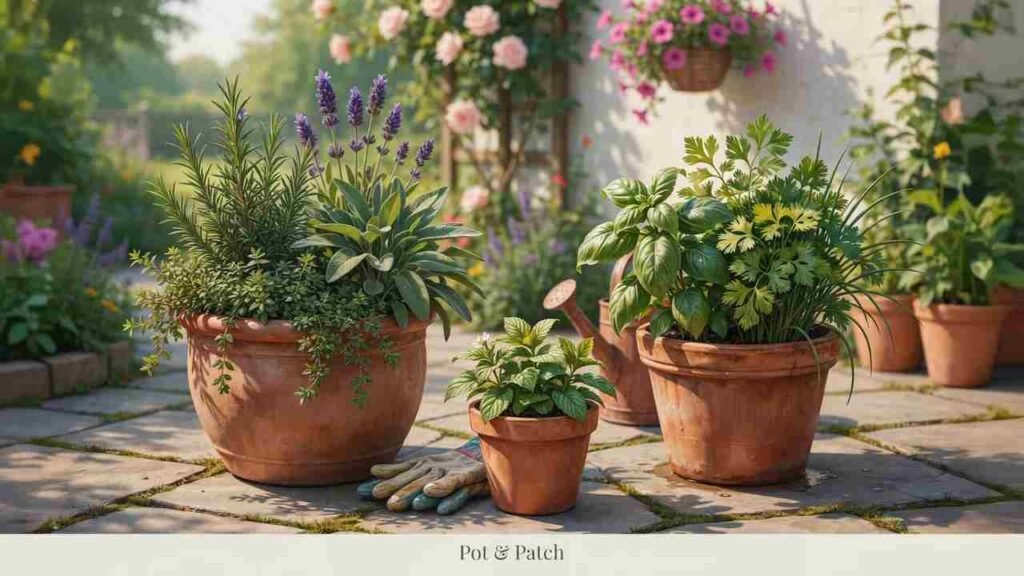
Sunny, Drier Herb Group
These generally prefer strong sun and good drainage:
- rosemary
- thyme
- oregano
- sage
- lavender
Let the soil begin to dry somewhat between waterings once plants are established.
More Moisture-Loving Herb Group
These usually appreciate more consistent moisture:
- basil
- parsley
- cilantro
- chives
They should not be left bone dry for long periods.
Why Mint Is Better in Its Own Pot
Mint spreads aggressively through underground stems. Growing it in a separate container prevents it from taking over neighboring herbs.
A dedicated pot also makes it easier to control watering and move the plant if needed.
How to Water an Herb Garden
There is no useful one-size-fits-all watering schedule for herbs.
Water needs depend on:
- herb type
- soil
- container material
- temperature
- wind
- plant size
Annual Herbs
Annual herbs such as basil generally prefer more regular moisture. Do not wait for severe wilting before watering.
Woody Mediterranean Herbs
Rosemary, thyme, oregano, and sage usually tolerate more drying once established. Their roots should not remain constantly soggy.
Container Herbs
Containers dry faster than garden beds. Check the potting mix with your finger rather than watering according to a fixed calendar.
Do Herbs Need Fertilizer?
Usually, herbs need less fertilizer than heavy-feeding vegetables. Overly fertile soil can encourage excessive soft growth and may reduce flavor or aroma in some herbs.
For garden beds:
- avoid feeding automatically
- use fertilizer only where soil conditions justify it
For containers:
- check whether the potting mix already contains fertilizer
- feed lightly if needed
- follow the product label
More fertilizer does not automatically mean better herbs.
How to Prune and Pinch Herbs
Regular pruning can help many herbs stay compact and productive.
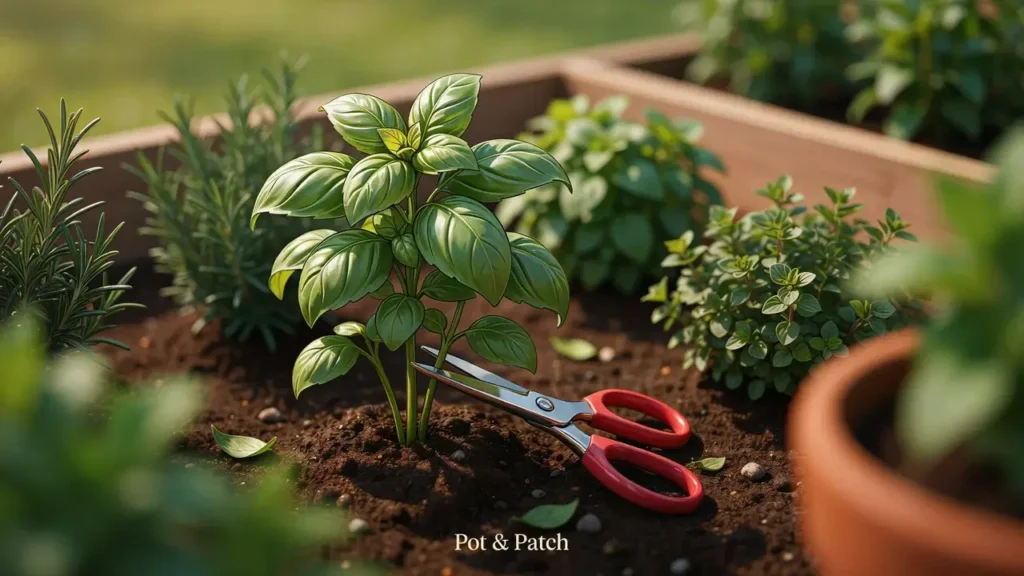
Pinching Basil
Pinch or harvest the tips above a pair of leaves. This encourages branching and delays the plant from becoming tall and sparse.
Pruning Perennial Herbs
Perennial herbs should generally be harvested more conservatively than fast-growing annuals. Avoid stripping large amounts of growth from a small or newly established plant.
Remove Damaged Growth
Cut away:
- broken stems
- diseased leaves
- dead growth
Use clean scissors or pruners.
How to Harvest Herbs Without Damaging the Plant
Harvesting is part of normal herb care.
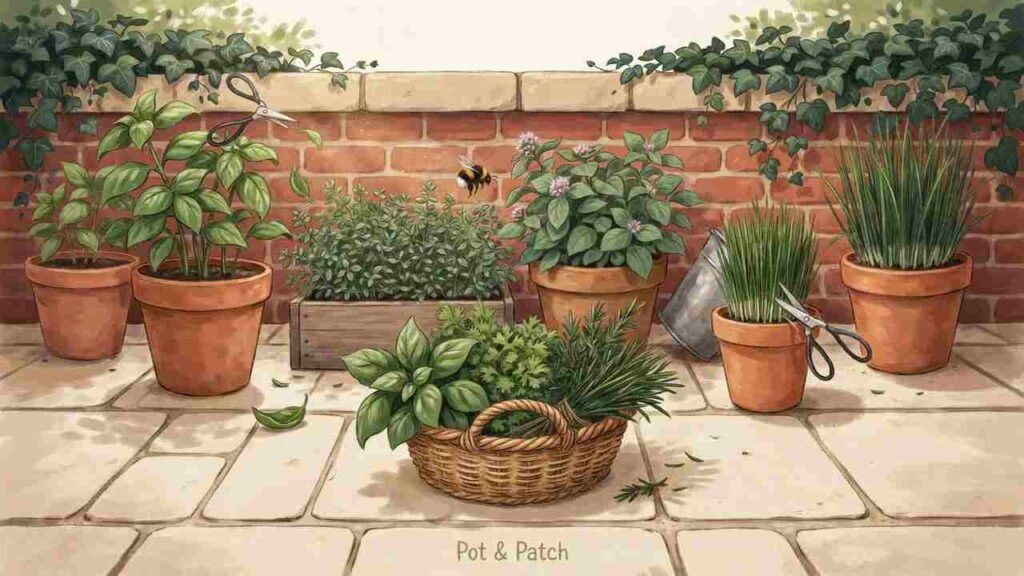
Annual Herbs
For basil and other leafy annuals:
- harvest regularly
- cut just above a leaf pair
- leave enough stems and leaves for regrowth
Perennial Herbs
For thyme, oregano, rosemary, and similar herbs:
- harvest smaller portions
- avoid removing too much of the plant at once
- focus on fresh leafy tips
Harvesting for Leaves vs Seeds
Your goal affects when you harvest.
If you want leaves:
- harvest before heavy flowering for many culinary herbs
If you want seeds:
- allow herbs such as dill or cilantro to flower and mature
Cilantro seeds are coriander, while dill can provide both leaves and seeds.
Can You Grow Herbs Indoors?
Yes, but indoor growing introduces different challenges. Light is usually the biggest limitation.
A bright south- or west-facing window can work for some herbs, while supplemental lighting may be needed during darker months.
Indoor herb growing also requires attention to:
- drainage
- airflow
- dry indoor heat
- lower winter light
- watering frequency
For this beginner guide, indoor growing is best treated as an option rather than the main focus.
Common Problems in Herb Gardening for Beginners
Herb gardening for beginners is usually forgiving, but a few problems appear repeatedly.
Herbs Are Leggy
Tall, weak growth often suggests insufficient light. Move the plant to a brighter location before automatically adding fertilizer.
Leaves Are Turning Yellow
Possible causes include:
- overwatering
- poor drainage
- nutrient problems
- root stress
- normal aging of older leaves
Check the soil moisture first.
Herbs Keep Wilting
Wilting can mean:
- the soil is too dry
- roots are waterlogged
- the plant is experiencing heat stress
Do not assume wilting always means more water is needed.
Roots Are Rotting
Root rot is strongly associated with poor drainage and persistently wet growing media.
Check:
- drainage holes
- potting mix
- watering frequency
- whether the container is sitting in water
Herbs Have Weak Flavor
Low light and excessive fertility can encourage soft, leafy growth with weaker aroma in some herbs.
Provide enough sunlight and avoid overfertilizing.
Common Pests
Possible herb pests include:
- aphids
- spider mites
- whiteflies
Inspect leaf undersides and new growth regularly.
Identify the pest before choosing a treatment.
7 Beginner Herb Gardening Mistakes
1. Planting Herbs With Conflicting Water Needs Together
Rosemary and basil do not necessarily belong in the same pot simply because both are culinary herbs.
2. Giving Herbs Too Little Light
Most herbs need several hours of direct sunlight to grow strongly.
3. Using Poorly Drained Soil
Wet roots are one of the most common causes of herb decline.
4. Overwatering
Let the growing medium guide your watering, not a fixed calendar.
5. Overfertilizing
Excessive fertilizer can create weak, overly lush growth and may reduce flavor.
6. Letting Mint Spread Freely
Mint is much easier to control in its own container.
7. Waiting Too Long to Harvest
Regular harvesting keeps many leafy herbs compact and productive.
Frequently Asked Questions
What are the easiest herbs for beginners?
Basil, chives, parsley, mint, thyme, oregano, cilantro, and dill are all reasonable beginner choices. Start with herbs you actually use in cooking.
How much sun does an herb garden need?
Most culinary herbs perform best with around six hours of direct sunlight, although some can tolerate partial shade.
Can I grow herbs in pots?
Yes. Herbs grow very well in containers when the pots provide adequate drainage and the plants have compatible water and light needs.
Which herbs should not be planted together?
Avoid grouping herbs with very different moisture requirements. For example, rosemary and thyme generally prefer drier conditions than basil or parsley. Mint is also better grown separately because it spreads aggressively.
How often should herbs be watered?
There is no fixed schedule. Check the soil and water according to the herb’s needs, weather, and growing setup.
Is it better to start herbs from seeds or plants?
Both work. Basil, dill, cilantro, and parsley are commonly grown from seed, while rosemary, lavender, mint, and tarragon are often easier from starter plants or divisions.
Do herbs grow back after cutting?
Many do, provided you leave enough healthy growth. Annual leafy herbs can often be harvested repeatedly, while perennial herbs should generally be cut more lightly.
Can herbs grow indoors year-round?
Some can, especially with strong natural light or supplemental grow lights. Indoor conditions vary, so winter light and watering usually need more attention.
Herb Gardening for Beginners: A Simple Start
Herb gardening for beginners works best when you resist the urge to grow everything at once. Start with a few culinary herbs you use regularly, give them enough light, and group plants with similar watering needs.
Good drainage matters more than heavy feeding. Check soil moisture before watering, keep aggressive mint contained, and harvest leafy herbs regularly once they are established.
With a simple setup and sensible plant choices, basil, parsley, chives, thyme, oregano, mint, cilantro, and other herbs can provide a steady supply of fresh flavor from a garden bed, patio, balcony, or small outdoor space.