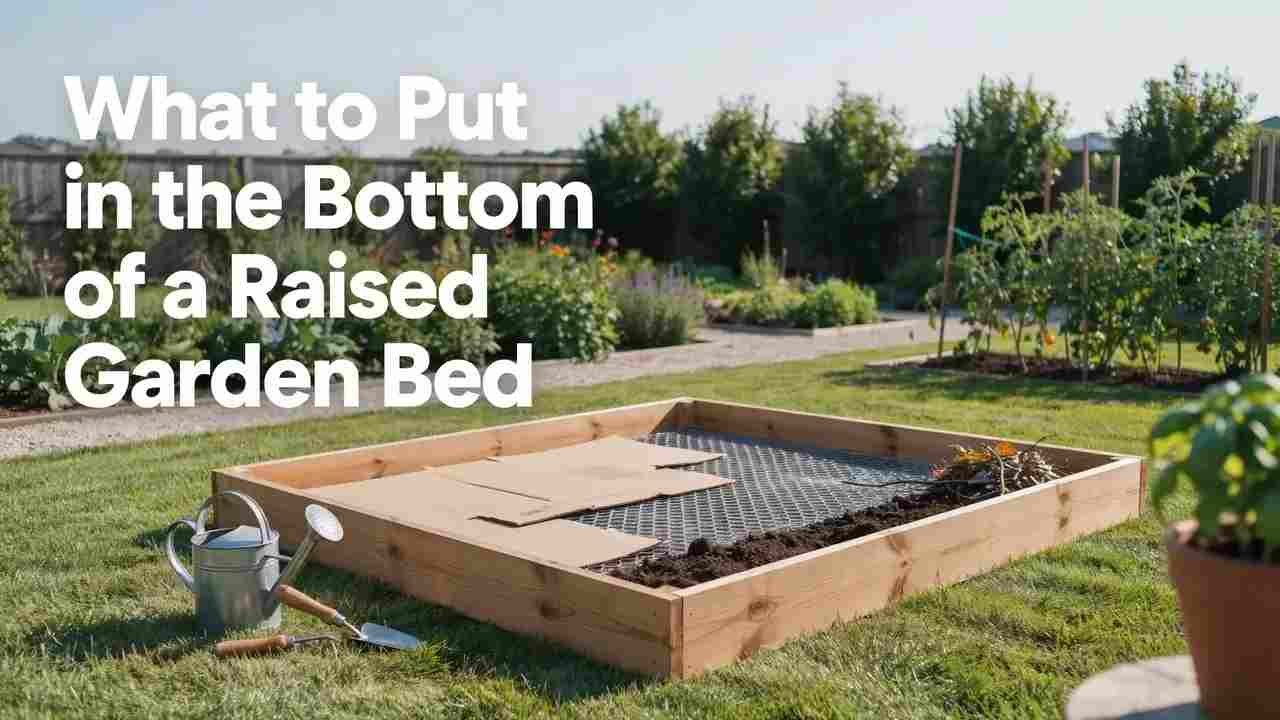
What to Put in the Bottom of a Raised Garden Bed for Best Results
Knowing what to put in the bottom of a raised garden bed can prevent weeds, reduce pest problems, and make filling the bed easier. But not every raised bed needs the same bottom layer.
If your bed sits on healthy garden soil, you may not need anything underneath it. Cardboard works well over grass, while hardware cloth is better when burrowing pests are a concern. Very deep beds can also use bulky organic material to reduce the amount of soil needed.
What to Put in the Bottom of a Raised Garden Bed
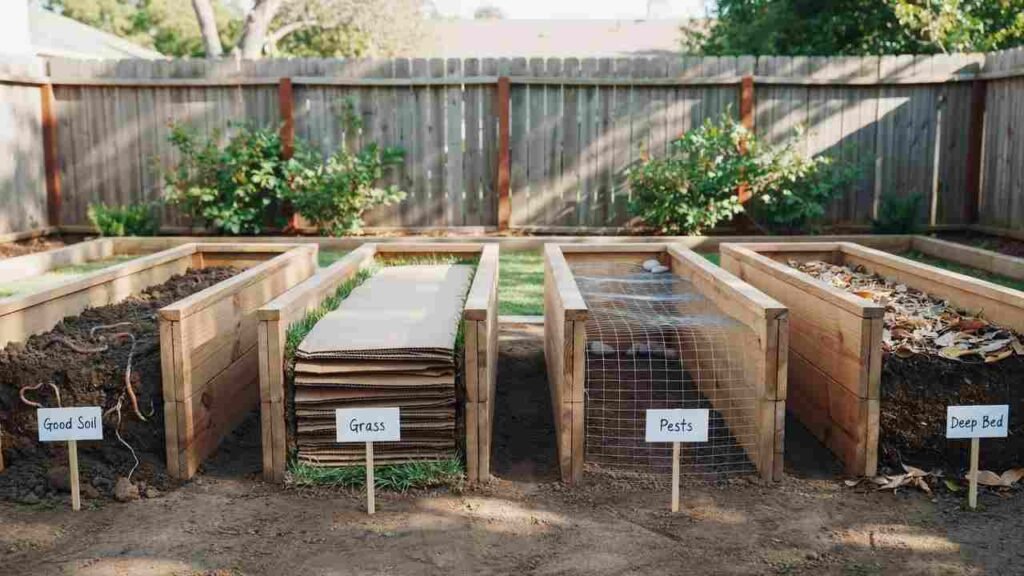
The best option depends on what is underneath the bed and the problem you are trying to solve.
| Situation | Best Bottom Option |
|---|---|
| Healthy native soil | Usually nothing |
| Grass or lawn | Plain, non-waxed cardboard |
| Persistent surface weeds | Cardboard may help suppress growth |
| Gophers or voles | 1/2-inch hardware cloth |
| Grass and burrowing pests | Hardware cloth with cardboard above |
| Very tall raised bed | Optional leaves, sticks, or branches |
| Concrete or pavers | Permeable base with a clear drainage path |
| Elevated planter | Structural bottom with drainage openings |
Before adding a layer, decide whether you need a barrier, a filler, or no extra material at all.
Cardboard is mainly useful for suppressing existing vegetation. Hardware cloth serves a different purpose by creating a physical barrier against burrowing animals.
Leaves, sticks, and other organic materials are not barriers. They are sometimes used as lower filler in unusually deep beds.
If you are still planning the complete setup, our raised bed vegetable gardening for beginners guide covers the wider process from bed preparation to planting.
Do Raised Garden Beds Need a Bottom Layer?
Not every raised bed needs a bottom layer.
A bed placed directly over suitable native soil can usually remain open underneath. This allows plant roots to grow beyond the raised-bed soil when necessary and lets water move into the ground below.
Adding a bottom material makes more sense when you need to address a specific condition, such as:
- existing lawn or grass
- persistent weeds
- gophers, voles, or other burrowing animals
- concrete or paved ground
- an unusually tall bed that would require a large volume of soil
A permanent liner should not be added simply because the garden bed is raised. An unnecessary barrier between the growing mix and native soil can restrict deeper root growth.
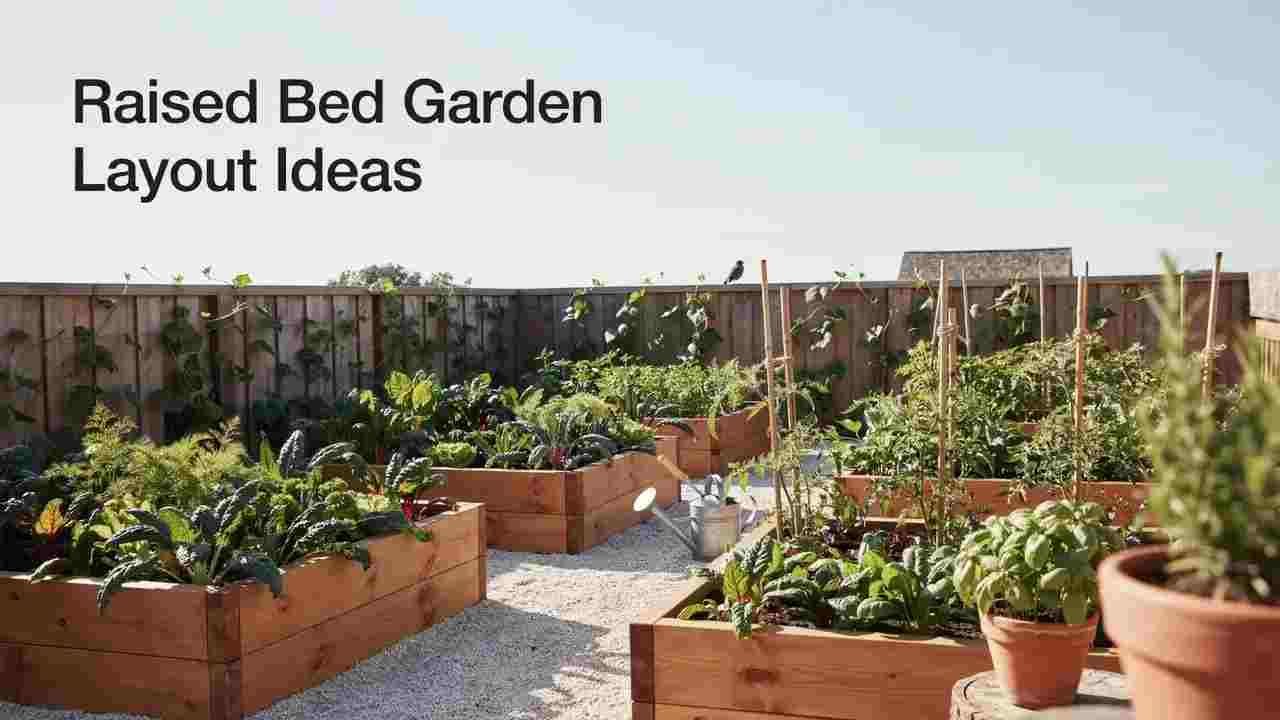
If you are deciding where and how to position several beds, see our raised bed garden layout ideas before filling them.
What to Put Under Raised Garden Beds on Grass
Plain cardboard can be a practical option when placing a raised bed over lawn and you want to suppress the existing grass.
You usually do not need to dig out the entire lawn first. Cut or mow tall vegetation, then lay cardboard across the area inside the bed.
How to Use Cardboard
Use plain, non-waxed corrugated cardboard.
Before laying it down:
- remove plastic tape and labels
- remove other non-paper material
- overlap adjoining sheets by a few inches
- cover the entire grassy area inside the frame
- dampen the cardboard before adding soil
Cardboard blocks light from reaching the grass below. It eventually breaks down, so it does not remain as a permanent barrier between the raised bed and the soil.
It can temporarily reduce water movement while it is still intact, which is one reason to use it only when vegetation suppression is actually needed.case, install hardware cloth first, then place cardboard above it if you also need to suppress grass.
When Cardboard Is Not Necessary
If the soil underneath is already bare, clean, and suitable, cardboard may offer little benefit.
It also should not be treated as protection against rodents. Gophers and voles require a physical barrier such as hardware cloth.
Cardboard is also not a permanent solution for every aggressive perennial weed. Persistent roots and rhizomes may survive below the bed.
So when deciding what to put under raised garden beds on grass, use cardboard for the problem it actually solves: smothering existing vegetation during establishment.
Hardware Cloth Under a Raised Bed for Burrowing Pests
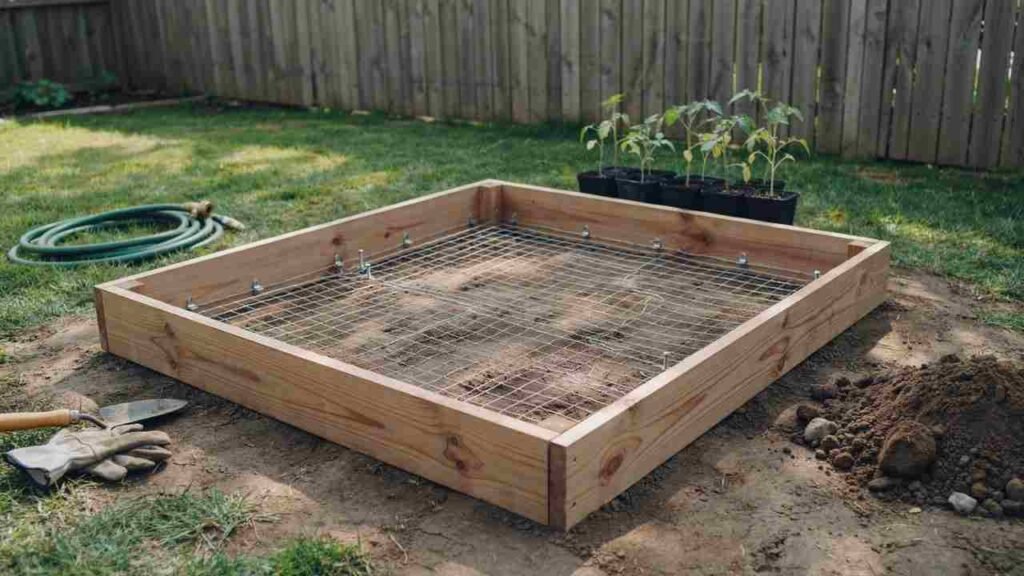
Where gophers, voles, mice, or other burrowing animals are a known problem, hardware cloth can protect the bottom of the bed while still allowing water to pass through.
A 1/2-inch hardware cloth mesh is commonly used for this purpose.
Install it before adding soil.
How to Install Hardware Cloth
- Cut the mesh large enough to cover the entire base.
- Secure it firmly to the lower edges of the frame.
- Check corners and seams for open gaps.
- Add cardboard above it only if grass also needs to be suppressed.
The important distinction is simple:
Cardboard helps suppress vegetation. Hardware cloth helps block burrowing animals.
Use hardware cloth rather than relying on a larger-mesh barrier when smaller burrowing pests are the main concern.
If your garden does not have a known burrowing-pest problem, adding mesh underneath may not be necessary.
Should You Use Landscape Fabric Under a Raised Garden Bed?
Landscape fabric is not automatically needed beneath an open-bottom raised bed.
When a bed sits directly on native soil, placing permanent fabric underneath may create an unnecessary barrier between the raised-bed soil and the ground below.
A permeable liner is more useful in situations where soil needs to stay contained while water must still be able to escape.
That may include:
- beds built on concrete
- raised beds sitting on pavers
- elevated planters with a structural base
- containers where soil could wash through drainage openings
If grass is the concern, cardboard is usually a more temporary option. If burrowing pests are the problem, hardware cloth serves that purpose better.
Choose a liner based on the actual setup rather than using landscape fabric under every bed by default.
Can You Put Leaves, Branches, or Logs in the Bottom?
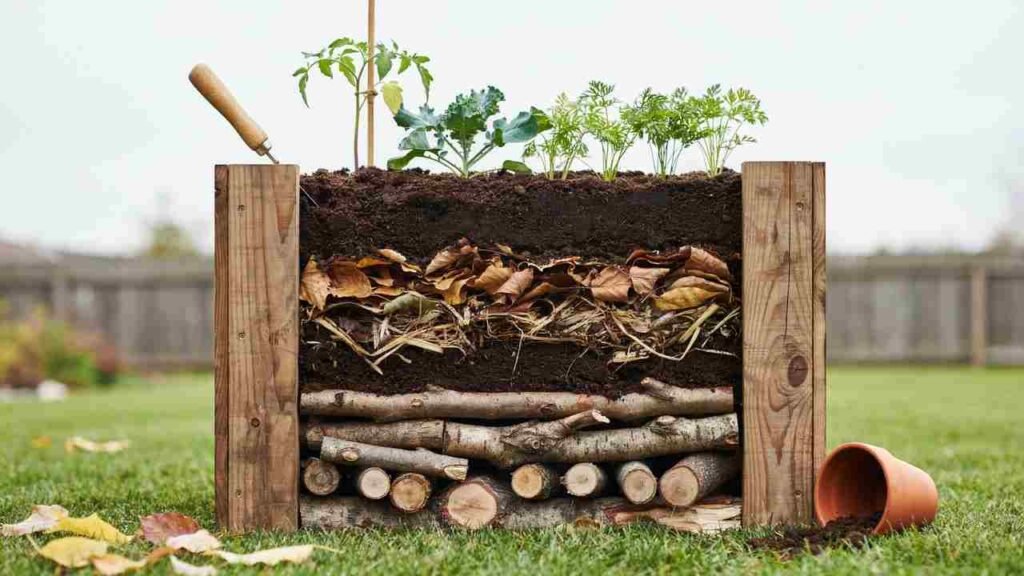
Organic filler can make sense in very tall raised beds, particularly those more than about 2 feet deep.
Filling an unusually deep bed entirely with premium growing soil can be expensive and may provide more soil depth than many crops need. Some gardeners use leaves, sticks, branches, or wood in the lower section to take up part of that space.
Leaves
Dry leaves can add bulk to the bottom portion of a tall bed.
They gradually decompose and may contribute organic matter, but they also settle as they break down. Expect the soil level to drop over time.
Branches and Sticks
Small branches and sticks can also occupy space in the lower section.
Keep a substantial layer of proper growing soil above them so vegetable roots have enough usable soil.
Logs
Larger pieces of untreated wood are sometimes used in very deep beds or Hugelkultur-inspired setups.
Wood decomposes slowly, so this type of bed may settle over several seasons and require additional soil or compost on top.
For ordinary shallow raised beds, bulky wood filler is usually unnecessary. It makes more sense when bed depth creates a genuine need to reduce soil volume.
What to Put Under a Raised Garden Bed on Concrete or Pavers
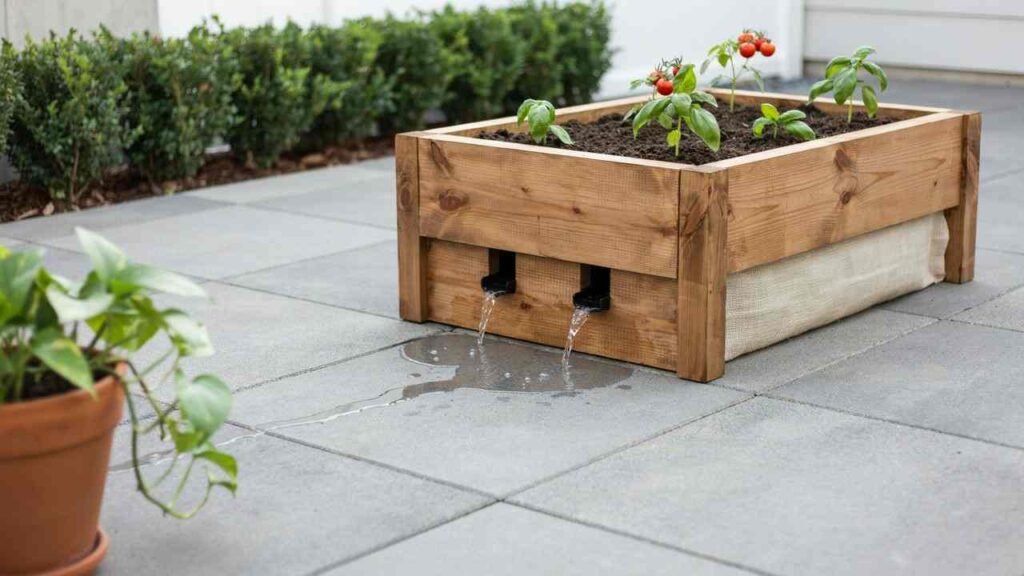
A bed built over concrete or pavers needs more attention to water movement than one sitting directly on soil.
Because water cannot drain into native ground beneath the bed, the setup should provide a clear route for excess moisture to leave.
Useful features may include:
- drainage openings
- a permeable liner
- space for water to move away from the base
- a loose, well-structured growing mix
Avoid lining the entire bottom with solid plastic unless the structure has a deliberate drainage system that allows water to escape.
A thick gravel layer should not be used as a substitute for drainage openings.
Also consider where water will go after it leaves the bed. On a patio, poor placement can cause water to pool against walls, furniture, or the raised-bed frame.
Beds on hard surfaces may also dry faster because plant roots cannot access moisture from native soil below. Check soil moisture regularly during warm weather.
Should You Put Gravel in the Bottom of a Raised Garden Bed?
You generally do not need a gravel or rock layer at the bottom of a raised garden bed simply because you want better drainage.
For an open-bottom bed sitting on soil, drainage depends more on:
- the structure of the growing mix
- avoiding severe soil compaction
- allowing excess water to leave the bed
- choosing a location that does not remain waterlogged
A gravel layer is not a substitute for suitable soil or a clear route for water.
For beds with a solid base, drainage openings are especially important. Water needs somewhere to go after moving through the soil.
Rather than automatically adding several inches of stones, first identify why the bed might drain poorly.
A future dedicated drainage guide can cover waterlogged soil, drainage holes, soil structure, and site-specific fixes in more detail.
What Not to Put in the Bottom of a Raised Garden Bed
Adding more materials does not automatically create a better raised bed.
Avoid using materials that interfere with drainage or introduce unnecessary contamination.
Solid Plastic Without Proper Drainage
Trash bags or solid plastic sheets can trap water when there is no suitable drainage outlet.
If a liner is needed for soil retention, choose a material that allows water to pass through.
Unknown or Contaminated Waste Materials
Avoid scraps, construction debris, or waste materials when you do not know what chemicals or residues they contain.
This matters even more when the bed will be used for vegetables, herbs, or other edible crops.
Waxed Cardboard and Non-Paper Packaging
If you are using cardboard over grass, choose plain corrugated material.
Remove:
- plastic tape
- labels
- staples
- waxed sections
- other non-paper packaging
Unnecessary Gravel Layers
Do not add a thick gravel layer simply because raised beds are supposed to “need drainage.”
Start with the soil, surface, and drainage path instead.
The safest approach is to add a bottom material only when it serves a clear purpose.
How to Prepare the Bottom of a Raised Garden Bed
Once you know what to put in the bottom of a raised garden bed, preparing the base is straightforward.
1. Choose the Location
Place the bed on a stable, reasonably level surface.
Remove large rocks, debris, and anything that prevents the frame from sitting evenly.
For more help with placement and spacing, see our raised bed garden layout ideas.
2. Check the Surface Underneath
Identify whether the bed will sit over:
- native soil
- lawn
- weedy ground
- concrete
- pavers
- another hard surface
This determines whether you need a bottom layer at all.
3. Check for Burrowing Pests
If gophers, voles, or similar pests are common in your garden, install hardware cloth before adding other materials.
Secure it tightly around the edges.
4. Add Cardboard if Grass Needs Suppression
Place overlapping plain cardboard over turf or unwanted surface vegetation.
Skip it when the underlying soil is already clear and there is no vegetation problem.
5. Add Organic Filler Only in Very Tall Beds
Leaves, sticks, and branches may reduce soil volume in deep beds.
Keep enough growing soil above them for the plants you intend to grow.
6. Fill the Growing Zone
Once the base is ready, fill the upper portion with a soil mix suitable for raised-bed vegetables.
What Goes Above the Bottom Layer?
The quality of the growing zone matters more to plant health than adding unnecessary material underneath it.
The upper portion of the bed should provide suitable structure, nutrients, moisture retention, and drainage for plant roots.
A raised-bed growing mix commonly includes materials such as:
- quality topsoil
- finished compost
- organic matter
- components that help maintain good soil structure
Do not use logs, branches, gravel, or other bottom filler as a substitute for quality soil in the main root zone.
For a complete breakdown of soil ingredients and mixtures, read our guide to the best soil for raised beds.
You can also browse more advice in our Raised Beds section.
Frequently Asked Questions
Should I put cardboard in the bottom of a raised garden bed?
Cardboard can be useful when a raised bed is placed over grass or weeds. Use plain, non-waxed cardboard with tape and other non-paper materials removed. If the ground is already clear and suitable, a cardboard layer may not be necessary.
Can I put a raised garden bed directly on grass?
Yes. A raised bed can be installed over grass. Plain overlapping cardboard can help suppress existing turf before you add the growing mix.
Should I put rocks in the bottom of my raised garden bed?
Usually not. An open-bottom bed does not need a standard gravel layer simply for drainage. Suitable soil structure and a clear path for excess water are more important.
Do raised garden beds need a bottom?
Not necessarily. Many raised beds sitting directly on suitable native soil work well with an open bottom. Barriers are more useful when you have grass, pests, or a hard surface to deal with.
Should I use landscape fabric under a raised bed?
Landscape fabric is not necessary under every raised bed. A permeable liner may be useful on hard surfaces or in planters where soil needs to be retained while water is allowed to drain.
How do I keep gophers and voles out of a raised bed?
Install 1/2-inch hardware cloth across the bottom before filling the bed. Secure the mesh firmly around the frame so pests cannot enter through gaps along the edges.
Can I put logs in the bottom of a raised bed?
Logs can be used in the lower section of a very tall raised bed to reduce the amount of soil needed. Keep plenty of growing soil above the wood and expect some settling as organic materials decompose.
What should I put under a raised bed on concrete?
Use a setup that keeps soil contained while giving excess water a clear path out of the bed. A permeable liner and effective drainage openings are generally more useful than a thick gravel layer.
The Best Bottom Layer Depends on Your Raised Bed
There is no single material that belongs under every raised bed.
Healthy native soil may need nothing at all. Cardboard can help suppress grass, while hardware cloth is better where burrowing pests are a known problem. Very tall beds may benefit from some organic filler in the lower section.
Beds on concrete or pavers need a different approach because water cannot drain directly into the soil underneath.
When deciding what to put in the bottom of a raised garden bed, start with the specific problem you need to solve. Then add only the material that serves that purpose.