
Pepper Plant Flowers but No Fruit? 7 Causes and How to Fix It Fast
A pepper plant covered in flowers but no fruit is one of the most common garden frustrations. The blooms open, then drop, leaving bare stems behind. The good news is the cause is usually simple to fix.
Most of the time it comes down to temperature, pollination, or feeding. This guide walks through the seven reasons peppers flower but set no fruit, with the exact conditions peppers need to make peppers.
Ideal Conditions for Pepper Fruit Set
Peppers are fussy about their surroundings when flowering. Hit these ranges and fruit usually follows.
| Factor | Ideal for fruit set |
|---|---|
| Daytime temperature | 70 to 85 F |
| Nighttime temperature | 60 to 70 F |
| Humidity | 35 to 70 percent |
| Pollination | Wind, bees, or hand |
| Nitrogen | Moderate, not excess |
Miss one of these and flowers drop before they can set. The sections below explain each cause and the fix.
1. Temperature Is Too Hot or Too Cold
Temperature is the number one reason peppers flower but fail to fruit. Peppers set fruit in a narrow comfort zone.
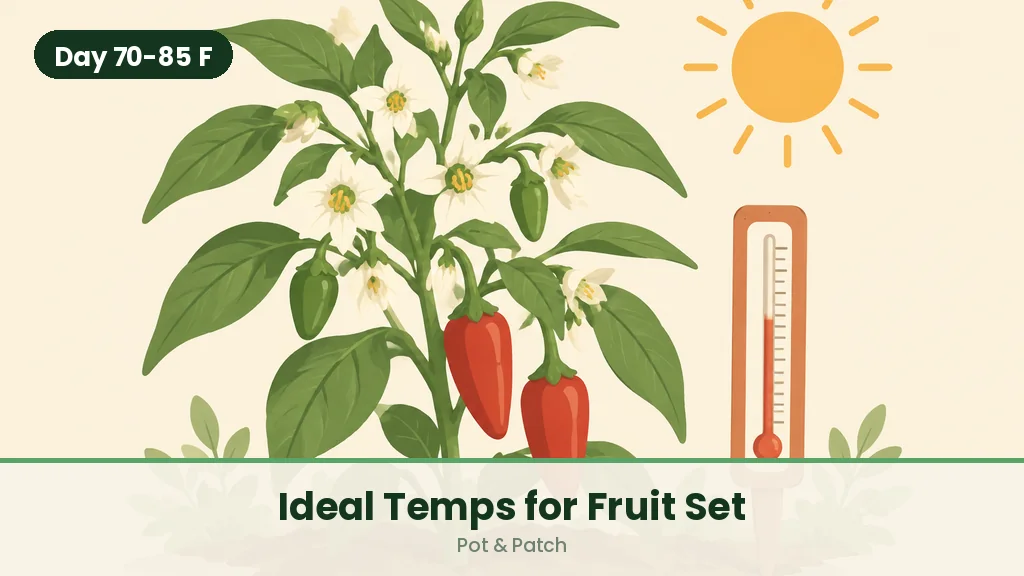
Heat is the usual culprit. University of Illinois Extension cites research showing fruit set drops sharply above 91 F. Hot nights above 75 F make it worse by leaving pollen sterile.
Cold does it too. Night temperatures below 60 F cause blossoms to drop without setting. Early spring cold snaps can stop buds from forming at all.
Fix: During heat waves, use shade cloth that blocks 30 to 40 percent of sun, with morning sun and afternoon shade. In cold spells, cover plants to hold warmth. For timing your planting to dodge extremes, see our guide on when to plant peppers.
2. Poor Pollination
Peppers are self-pollinating, but the pollen still needs a nudge to move inside each flower. Outdoors, wind and bees do that job.
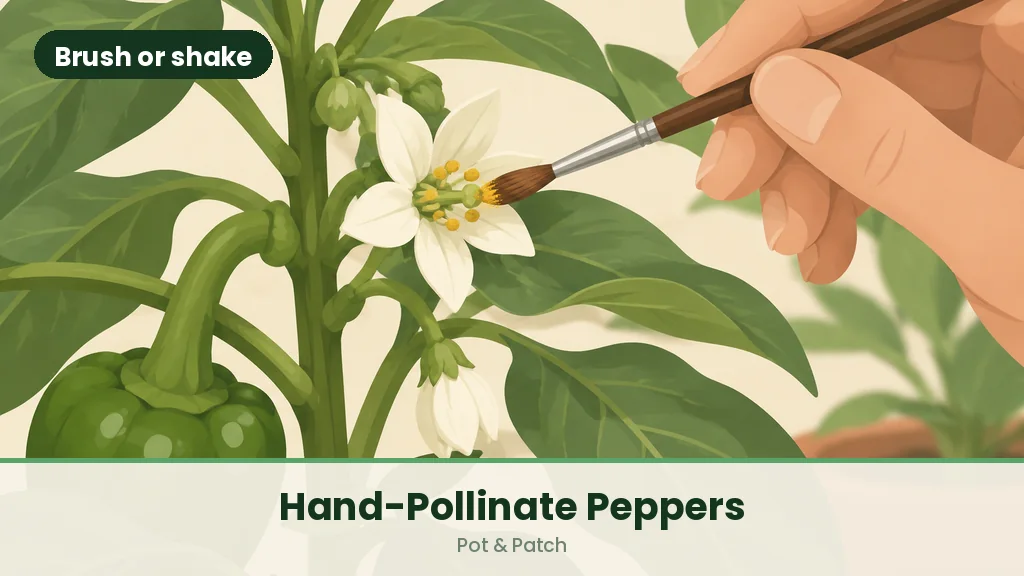
Indoors, on a sheltered balcony, or under cover, that movement is missing. The flowers open, go unpollinated, and fall.
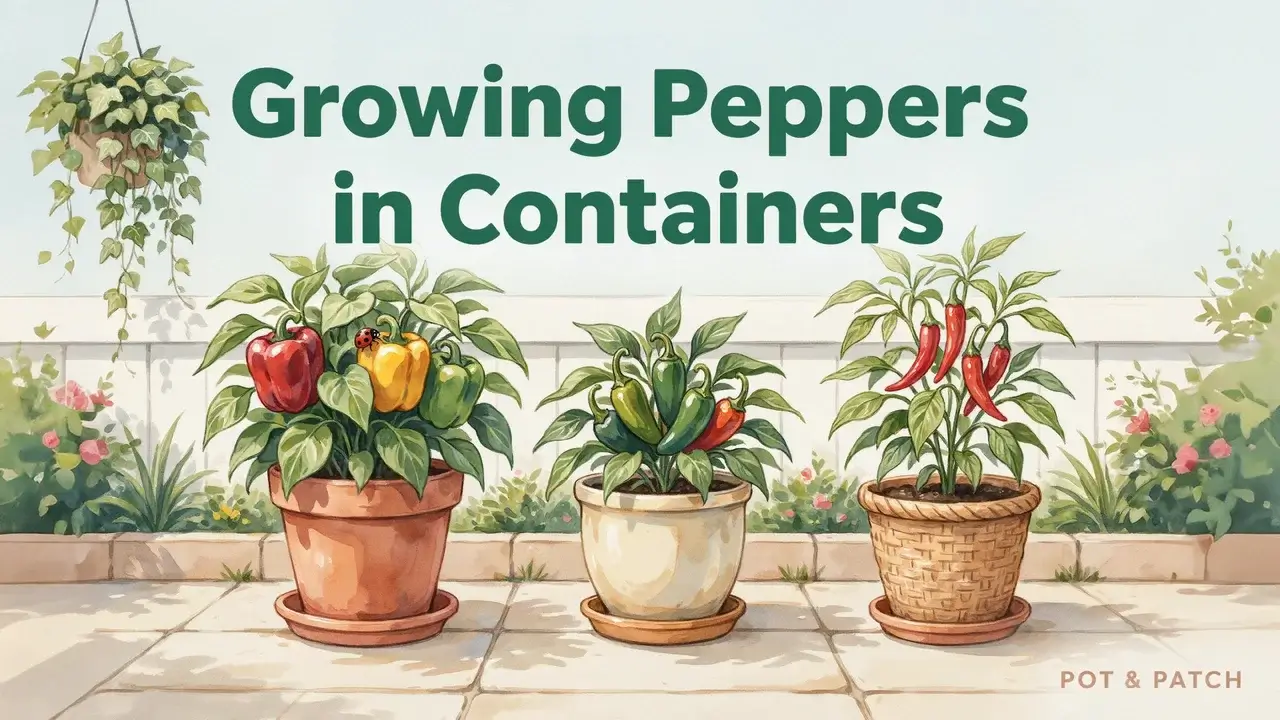
Fix: Gently shake or flick the plant daily to mimic wind. You can also hand-pollinate by swirling a small soft brush or cotton swab inside each flower. Improving airflow helps too, which our guide on growing peppers in containers covers.
3. Humidity Is Too High or Too Low
Pollen is picky about moisture in the air. Peppers set fruit best between about 35 and 70 percent humidity.
When the air is too dry, pollen shrivels and cannot stick. When it is too humid, pollen clumps and will not move. Either way, flowers drop.
Fix: In dry climates, mist plants lightly in the morning and mulch to raise local humidity. In humid climates, space plants out and improve airflow so flowers dry quickly.
4. Too Much Nitrogen
Heavy nitrogen grows a big leafy plant with few flowers or fruit. The plant pours its energy into foliage instead of peppers.
That said, the role of nitrogen is often overblamed. University of Illinois Extension notes research does not strongly support overfertilizing as the main cause of no fruit, so check temperature and pollination first.
Fix: Ease off high-nitrogen feed once plants flower. Switch to a fertilizer higher in phosphorus and potassium to support blooms and fruit.
5. Water Stress
Both extremes of watering trigger flower drop. Drought-stressed and waterlogged plants shed blossoms to survive.
Uneven watering is just as bad as too little or too much. Peppers want steady, even moisture while flowering.
Fix: Water deeply when the top 2 to 3 inches of soil are dry, rather than a little every day. Mulch to keep moisture steady between waterings.
6. Not Enough Light
Flowering takes energy, and that energy comes from sunlight. A shaded plant may bloom weakly but struggle to hold fruit.
Peppers want full sun, about six to eight hours a day. Less than that leaves the plant short on fuel for fruiting.
Fix: Move containers to the sunniest spot you have. Prune nearby plants that cast shade over the peppers.
7. The Plant Is Young or It Is Early Season
Sometimes nothing is wrong at all. Young plants and early-season flowers often drop before the plant is ready to fruit.
Peppers also take time. It can be over 45 days from a pollinated flower to a ripe pepper, so patience matters.
Fix: Pinch the very first flowers off young seedlings so they build roots and leaves first. After that, give the plant a few weeks, and watch for tiny peppers forming behind the blooms.
Will Pepper Flowers Turn Into Peppers?
A pollinated pepper flower leaves behind a tiny fruit as the petals fall. That is your sign fruit set worked.
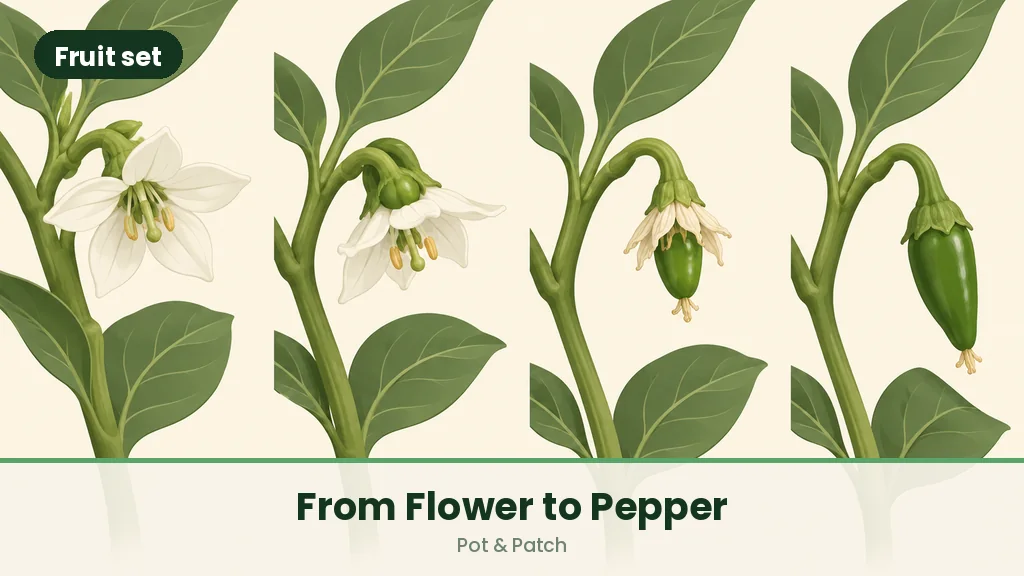
If flowers drop with nothing behind them, pollination or conditions failed. Fix the cause above and the next flush of flowers usually sets fruit.
How to Get Peppers to Fruit: Quick Recap
Keep days between 70 and 85 F, nights above 60, and help pollination along by shaking or hand-pollinating. Ease off nitrogen, water evenly, and give full sun.
Most plants fruit once conditions are right. For more help, visit our pepper growing hub.
Frequently Asked Questions
Why does my pepper plant have flowers but no fruit?
Usually temperature or pollination. Heat above 90 F or nights below 60 F drop flowers, and indoor plants often need hand-pollinating to set fruit.
Do I need to hand-pollinate pepper plants?
Outdoors, wind and bees usually handle it. Indoors or in sheltered spots, shaking the plant or brushing each flower helps fruit set.
Can too much nitrogen stop peppers from fruiting?
It can push leafy growth over flowers, but it is often overblamed. Check temperature and pollination first, then ease off high-nitrogen feed.
Why do my pepper flowers keep falling off?
Blossom drop is usually heat, cold nights, dry or humid air, or water stress. Steady conditions in the ideal ranges stop most drop.
How long after flowering do peppers appear?
A tiny pepper forms within days of a flower being pollinated. It then takes several weeks, often 45 days or more, to reach full size.