Aphids on Tomato Plants: How to Identify, Get Rid of & Prevent Them
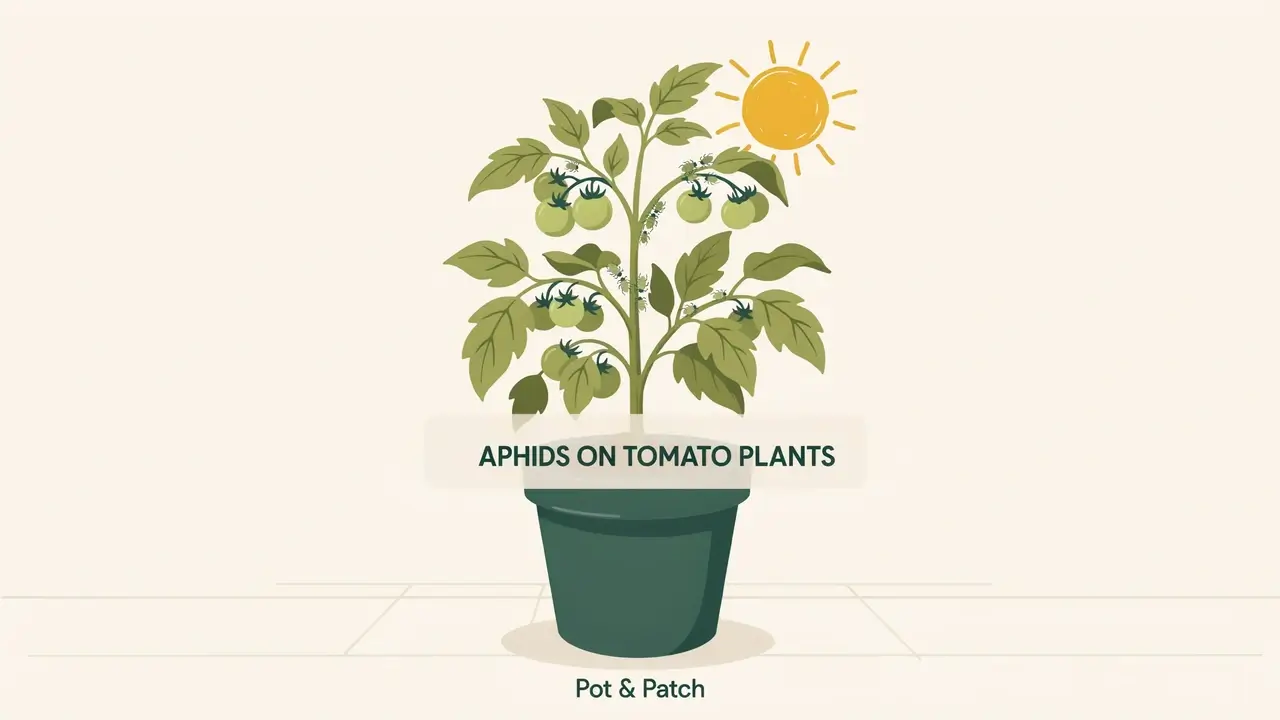
Finding clusters of tiny green bugs under your tomato leaves can be unsettling, especially when the newest growth starts curling or feels sticky. These insects may be aphids, one of the most common sap-feeding pests in vegetable gardens.
Aphids on tomato plants usually gather on tender shoots, young stems, and leaf undersides. A few are rarely a serious threat, but growing colonies can weaken plants, distort leaves, and leave behind sticky honeydew.
Fortunately, most home gardeners can manage aphids without harsh treatments. Start by identifying the insects, checking how much damage they are causing, and washing small colonies away with water. If the problem continues, other targeted control methods can help.
What Are Aphids on Tomato Plants?
Aphids are small, soft-bodied insects that feed by inserting needle-like mouthparts into plant tissue and drawing out sap.
They belong to the insect family Aphididae and can be found on many vegetables, ornamentals, and weeds.
On tomatoes, aphids prefer tender new growth, where they often gather in colonies along stems and beneath leaves. Some species also feed near developing flower buds.
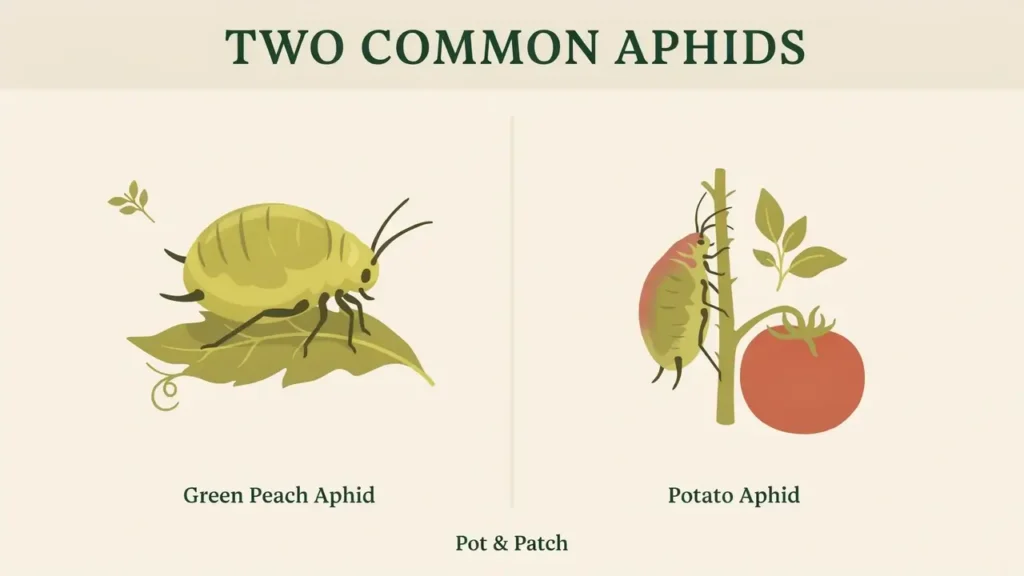
Several aphid species may colonize tomato plants, including the green peach aphid (Myzus persicae) and potato aphid (Macrosiphum euphorbiae).
Although their appearance varies, they cause similar problems through sap feeding and honeydew production.
Aphid populations can increase rapidly because many females reproduce without mating and give birth to live young during the growing season.
This explains why a few insects spotted one week may become a much larger colony shortly afterward.
However, not every infestation requires treatment. Healthy tomato plants can often tolerate small aphid populations, particularly when natural predators are present.
What Do Aphids Look Like on Tomato Plants?
Most aphids are approximately 1/16 to 1/8 inch long, although their exact size depends on the species and growth stage.

They have soft, pear-shaped bodies, long antennae, and six legs. Most individuals in a colony are wingless, but winged adults may appear when populations become crowded or conditions change.
One useful identification feature is a pair of small tube-like structures near the rear of the abdomen, called cornicles.
These structures help distinguish aphids from many other tiny insects found on tomato plants.
Common Aphid Colors and Appearance
Aphids are not always green.
Depending on the species and developmental stage, you may find:
- Green aphids: Common on young tomato shoots and leaf undersides.
- Yellow-green aphids: Often difficult to see against pale new growth.
- Pink aphids: Some potato aphids develop pink or reddish coloration.
- Dark aphids: Some aphid species or forms appear brownish or nearly black.
- Winged aphids: Adults with transparent wings that can move between plants.
Aphid nymphs resemble smaller versions of adults and often occur together with mature insects.
You may also notice pale specks scattered around a colony. These are frequently shed skins rather than living insects.
Green Peach Aphids vs. Potato Aphids
Two important species found on tomatoes in the United States are green peach aphids and potato aphids.
| Feature | Green Peach Aphid | Potato Aphid |
|---|---|---|
| Scientific name | Myzus persicae | Macrosiphum euphorbiae |
| Typical color | Yellow-green, green, or pinkish | Green or pink |
| Relative size | Generally smaller | Generally larger |
| Feeding location | Leaves and tender growth | Young shoots, stems, and leaves |
| Main concerns | Sap feeding and virus transmission | Sap feeding, honeydew, and growth distortion |
Green peach aphids may appear earlier in the growing season, while potato aphids can become more noticeable later.
You do not need to identify the exact species before beginning basic control. Both respond to many of the same management methods.
Aphids vs. White Shed Skins
If you notice tiny white flakes on tomato leaves, look closely before assuming they are another pest.
Aphids shed their outer skins as they grow. The discarded exoskeletons often remain attached to leaves or become stuck in honeydew.
Living aphids have recognizable bodies, legs, and antennae. Shed skins appear pale, empty, and papery.
You might also find swollen tan or brown aphids that no longer move. These may be aphid mummies, indicating that beneficial parasitoid wasps have attacked them.
Signs of Aphid Damage on Tomato Plants
Aphids do not chew large holes in tomato leaves like caterpillars do. Instead, they use piercing-sucking mouthparts to feed on plant sap.

Small populations often cause little visible damage. Larger colonies may interfere with healthy growth, particularly on young plants.
Curled, Yellowing, or Distorted Leaves
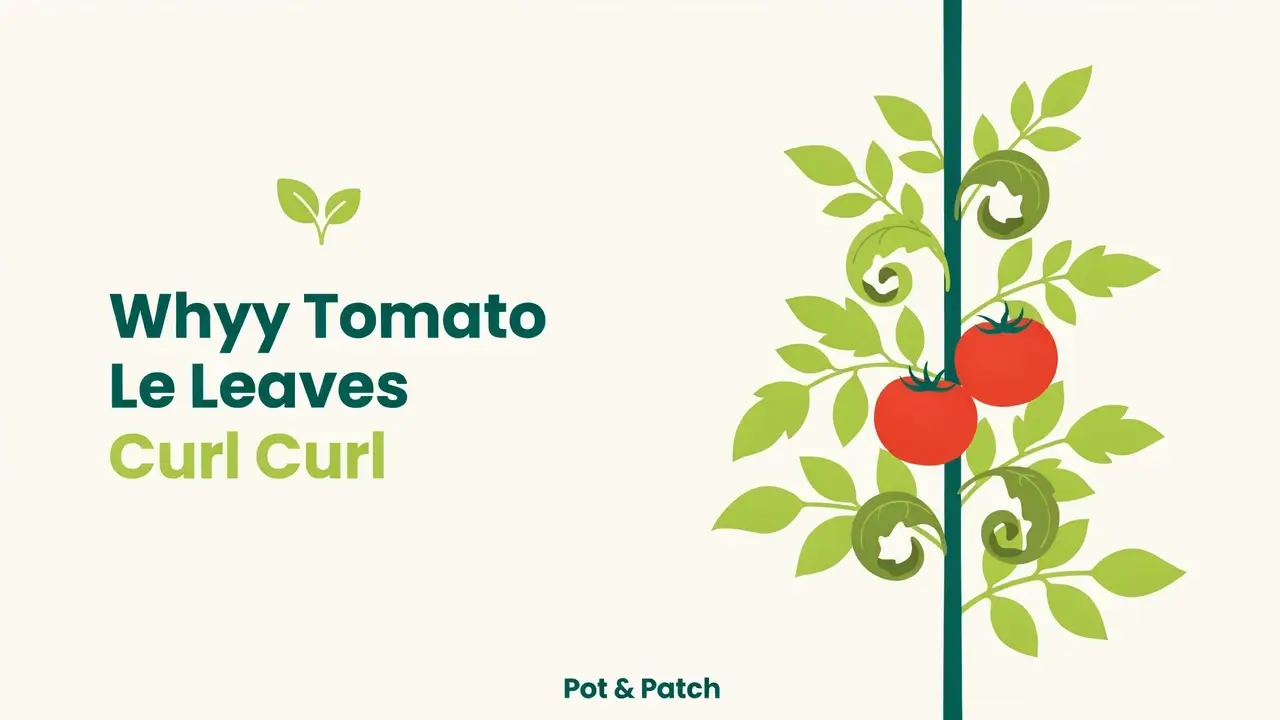
One of the most recognizable symptoms of heavy aphid feeding is distorted new growth.
Affected plants may develop:
- Curled or twisted young leaves.
- Yellowing around heavily infested areas.
- Stunted growing tips.
- Smaller or distorted new shoots.
- Slower growth when infestations are severe.
These symptoms are not exclusive to aphids.
Heat, watering problems, herbicide exposure, nutrient imbalances, and other pests can cause similar changes.
If you notice curled foliage without visible aphids, our guide to tomato leaves curling covers the broader causes.
Sticky Honeydew, Ants, and Sooty Mold
Aphids excrete a sugary liquid called honeydew while feeding.
It may accumulate on leaves, stems, nearby fruit, or surfaces beneath the plant.
Honeydew creates a shiny, sticky coating that attracts ants and other insects.
Some ants protect aphid colonies from predators because they feed on the honeydew. As a result, frequent ant activity along tomato stems can be a clue that aphids are present.
Dark sooty mold fungi may also grow on honeydew deposits.
Unlike a disease infecting the leaf tissue, sooty mold grows primarily on the sugary surface. Heavy deposits can interfere with the light reaching the leaves.
Look for living aphids before treating the plant, since the sticky coating and dark residue can remain after a colony has declined.
Can Aphids Spread Tomato Plant Viruses?
Some aphid species can transmit plant viruses while feeding.
Green peach aphids, for example, can spread several viruses affecting vegetable crops.
Symptoms of virus infection may include mottled leaves, unusual yellowing, distorted growth, or reduced plant vigor.
However, finding aphids does not mean your tomato plant has a virus.
It is also important to understand that some viruses can be transmitted during brief feeding. Killing aphids after they have already fed may not prevent infection.
The best approach is to use healthy transplants, monitor plants regularly, manage weeds where appropriate, and respond promptly to developing pest problems.
Why Do Aphids Appear on Tomato Plants?
Aphids can arrive even in a carefully maintained garden.
Winged adults move between plants and may be carried considerable distances by the wind. Once they land on suitable foliage, they can establish colonies and begin reproducing.
Several conditions may encourage population growth.
Tender new shoots: Soft young growth provides accessible feeding sites.
Excess nitrogen: Heavy nitrogen fertilization may encourage rapid, succulent growth that supports aphid populations.
Limited natural enemies: Newly established colonies may increase before lady beetles, lacewings, and other predators arrive.
Suitable weather: Aphid development and reproduction can accelerate under favorable conditions.
Aphids do not necessarily indicate poor gardening practices or unhealthy soil.
They are common insects, and even vigorous tomato plants may attract them.
The goal is not to create an insect-free garden but to prevent aphid populations from causing significant damage.
Do You Need to Get Rid of Every Aphid?
No. A few aphids on an otherwise healthy tomato plant usually do not justify an insecticide treatment.
Many aphid colonies naturally decline when predators, parasitoids, weather, or plant conditions limit their growth.
Before treating your plant, check whether the population is expanding and whether new damage is appearing.
| What You Find | Best Response |
|---|---|
| A few aphids, healthy new growth | Monitor the plant |
| Small colony on an accessible stem | Gently remove or rinse it |
| Ladybug or lacewing larvae eating aphids | Protect beneficial insects |
| Increasing colonies and distorted young shoots | Use physical removal and reassess |
| Persistent, heavy infestation | Consider an appropriately labeled insecticidal soap or horticultural oil |
| Only empty skins and no live aphids | Check again before treating |
There is no single aphid count that automatically requires spraying every backyard tomato plant.
A small seedling may be more vulnerable than a large established plant. Similarly, aphids covering multiple growing tips deserve closer attention than a few individuals on an older leaf.
Use visible plant health, colony growth, and natural enemy activity to guide your decision.
How to Get Rid of Aphids on Tomato Plants
The best way to get rid of aphids on tomato plants is to start with simple physical removal and move to targeted treatments only when necessary.
For a small patio garden or a few container-grown tomatoes, you may be able to control the infestation in minutes.
1. Wash Aphids Off With Water
A firm spray of water is one of the simplest ways to remove aphids.
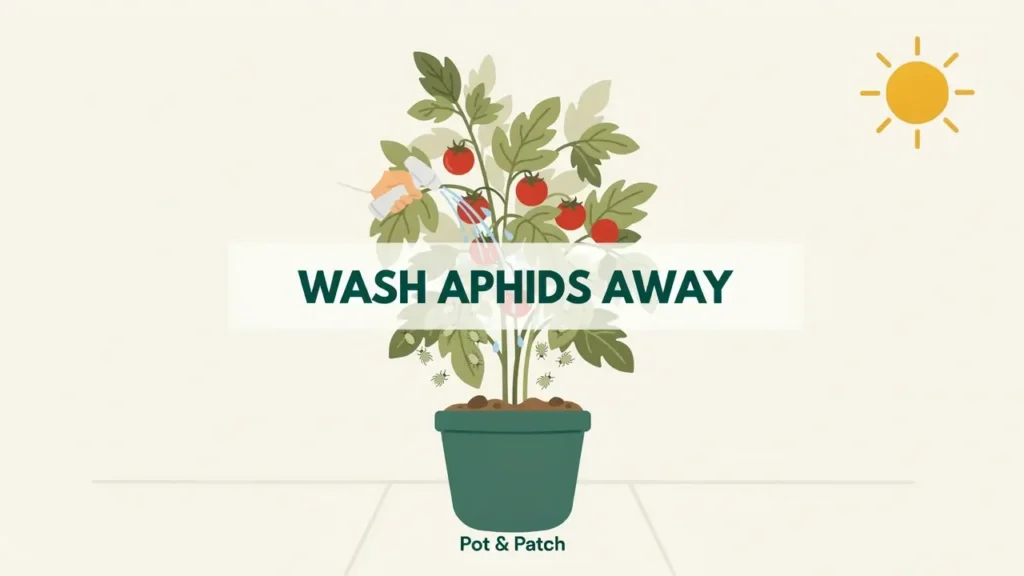
These insects are relatively fragile and can be dislodged from plants without using pesticides.
Follow these steps:
- Inspect stems, growing tips, and both sides of the leaves.
- Support tender branches with one hand if necessary.
- Direct a controlled stream of water at visible colonies.
- Pay special attention to the undersides of leaves.
- Allow the foliage to dry and check for surviving aphids.
- Repeat when new colonies appear, without damaging the plant.
Avoid using so much pressure that stems break or leaves tear.
A gentle handheld sprayer is often sufficient for seedlings or delicate growth, while established plants can tolerate a somewhat firmer stream.
For container-grown tomatoes, you can carefully move smaller pots to a convenient location before spraying.
Water will not permanently prevent new winged aphids from arriving, so continued inspection is important.
2. Remove Heavily Infested Shoots
If aphids are concentrated on one or two badly affected tips, removing those sections may reduce the infestation.
Use clean pruning shears and remove only the necessary growth.
Dispose of the infested material away from your tomato plants.
Avoid cutting off large amounts of healthy foliage, especially when the plant is already stressed.
For most minor infestations, water removal is preferable to pruning.
3. Use Insecticidal Soap When Necessary
Insecticidal soap can help control persistent aphid colonies when physical removal is insufficient.
Commercial insecticidal soaps typically contain potassium salts of fatty acids and work through direct contact with susceptible insects.
They have limited residual activity, which means thorough coverage is important.
When using a product:
- Confirm that its label permits use on tomatoes.
- Follow the exact mixing and application instructions.
- Treat aphid colonies, including the undersides of leaves.
- Observe the listed temperature and plant-stress precautions.
- Repeat applications only as directed.
- Follow any harvest restrictions on the label.
Do not assume ordinary household dish detergent is the same as insecticidal soap.
Dishwashing products contain different ingredients and may damage the waxy protective coating on tomato leaves.
Even commercial insecticidal soap can cause foliage injury if applied improperly, particularly to stressed plants or under unsuitable weather conditions.
4. Consider Horticultural Oil or Labeled Neem Products
Horticultural oils are another option for controlling aphids through direct contact.
These products can interfere with insect respiration and other essential functions when applied correctly.
Some neem-based products also have aphid-control uses, but their effects depend on the formulation.
Neem oil and azadirachtin are not interchangeable terms. Products containing neem oil may act primarily through contact, while azadirachtin-containing products can interfere with feeding and insect development.
Before applying either:
- Check that the product is labeled for tomatoes and the intended pest.
- Follow dilution, coverage, and application instructions.
- Avoid spraying heat-stressed or drought-stressed plants.
- Observe pollinator and harvest precautions.
- Do not combine products unless their labels permit it.
More spray is not necessarily more effective.
For a small colony that can be removed with water, an oil treatment may provide little additional benefit.
5. Recheck Your Plants After Treatment
Controlling the visible aphids is only part of the process.
Inspect the same shoots and leaf undersides over the following days.
Watch for fresh colonies, new honeydew, and distorted growth.
New winged aphids may arrive from surrounding vegetation, and some individuals may survive an initial treatment.
If the population is declining and healthy growth has resumed, additional spraying may be unnecessary.
Water vs. Insecticidal Soap vs. Horticultural Oil
Different control methods have different advantages.
| Method | Best For | Main Limitation |
|---|---|---|
| Water spray | Small, accessible colonies | Aphids may return; pressure can damage tender growth |
| Insecticidal soap | Persistent exposed colonies | Requires contact and can injure foliage |
| Horticultural oil | Infestations where the product label permits treatment | Temperature and plant-stress restrictions |
| Neem-based products | Certain labeled aphid-control situations | Results and precautions vary by formulation |
For most small gardens, begin with water and monitoring.
Use pesticides only when the aphid population and plant condition justify treatment. Even products marketed as natural or organic can affect beneficial organisms or damage plants when used incorrectly.
Beneficial Insects That Control Tomato Aphids
Some of the most effective aphid control happens naturally.
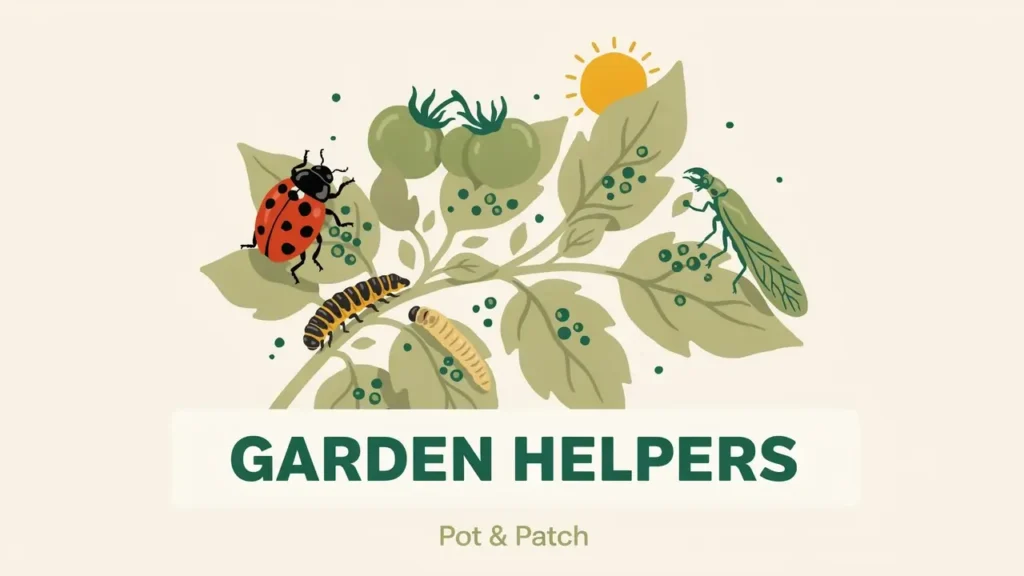
A healthy garden can support predators and parasitoids that reduce aphid numbers without requiring repeated pesticide applications.
Ladybugs, Lacewings, and Hoverflies
Several beneficial insects feed on aphids.
Lady beetles: Both adults and larvae consume aphids. Their larvae look quite different from familiar round adult ladybugs, so learn to recognize them before removing insects from your plants.
Green lacewings: Lacewing larvae are active aphid predators, using specialized mouthparts to capture small insects.
Hoverflies: Their larvae feed on aphids, while the adults often visit flowers for nectar and pollen.
Beneficial insect populations may take time to increase after an aphid colony appears.
Avoid broad-spectrum insecticides that could eliminate these natural enemies before they have a chance to help.
Parasitic Wasps and Aphid Mummies
Tiny parasitoid wasps provide another form of natural aphid control.
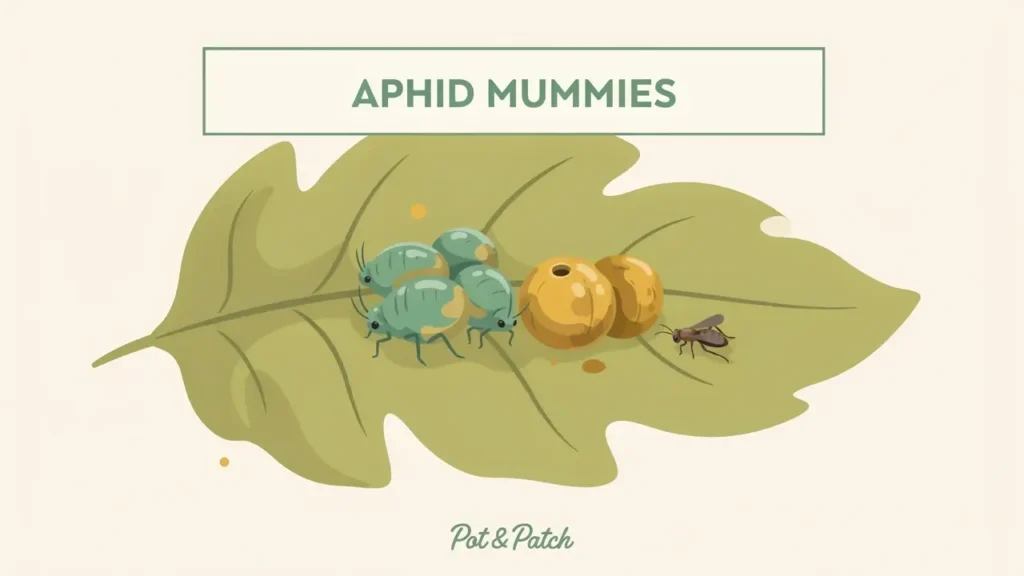
A female wasp lays an egg in or on an aphid, depending on the parasitoid species.
The developing larva eventually kills its host.
A parasitized aphid may become swollen, tan, golden, or brown. This distinctive remains is called an aphid mummy.
A small circular opening may appear when the adult wasp emerges.
Finding aphid mummies among a colony suggests that natural biological control is already taking place.
Leave these mummies undisturbed whenever possible so the beneficial wasps can complete their development.
How to Prevent Aphids on Tomato Plants
Preventing serious aphid damage is mainly about early detection, balanced plant care, and protecting beneficial insects.
No method guarantees that aphids will never visit your garden, but the following habits can reduce the likelihood of an uncontrolled infestation.
Inspect Leaves and Growing Tips Regularly
Check tomato plants throughout the growing season, especially when tender new growth develops.
Look beneath leaves, around flower clusters, and along young stems.
A small colony is easier to manage than one covering several branches.
If you recently treated aphids, inspect the affected areas more frequently until you are confident the population is declining.
Avoid Excess Nitrogen Fertilizer
Tomatoes need nutrients to grow and produce fruit, but more fertilizer does not always mean better results.
Excessive nitrogen can encourage lush, tender foliage that is attractive to sap-feeding pests.
Use fertilizer according to soil conditions, plant needs, and product directions.
Avoid increasing nitrogen simply because a plant looks stressed after aphid feeding.
Protect Natural Enemies
Lady beetles, lacewings, hoverflies, and parasitoid wasps can help keep aphids in check.
Provide a variety of flowering plants where space allows, and avoid unnecessary broad-spectrum pesticide use.
Small flowering herbs and other suitable garden flowers may supply nectar or pollen for beneficial insects.
However, companion planting should not be treated as a guaranteed aphid repellent.
Check Tomato Transplants Before Planting
Aphids can arrive on purchased or shared seedlings.
Before bringing a new tomato plant into your garden, inspect its leaf undersides, stems, and growing tips.
Look for live insects, white shed skins, sticky residue, and distorted growth.
If you discover aphids, address the colony before placing the new plant beside other tomatoes.
This is especially useful on balconies and patios where several containers are grouped closely together.
Manage Ant Activity When It Protects Aphids
Ants do not create aphids, but some ant species protect aphid colonies in exchange for sugary honeydew.
If ants frequently travel between an aphid colony and their nest, their activity may interfere with natural predators.
Focus first on reducing the aphid population and removing honeydew.
Where ants are actively defending colonies, appropriate ant management may also help natural enemies reach the aphids.
Avoid broad insecticide treatments simply because ants are present. Not every ant visiting a tomato plant is protecting aphids.
Can Tomato Plants Recover From Aphid Damage?
Yes. Most tomato plants can recover from mild or moderate aphid feeding once the infestation is controlled.
A healthy plant may continue producing new leaves and shoots even when some older foliage remains curled or yellow.
Recovery depends on the plant’s age, overall health, severity of feeding, and whether another problem is present.
To help the plant recover:
- Remove or control active aphid colonies.
- Keep soil moisture reasonably consistent.
- Continue balanced fertilization without overfeeding.
- Avoid unnecessary removal of healthy foliage.
- Monitor newly emerging leaves for improvement.
Previously curled leaves may not return to their original shape. New growth is often a better indicator of recovery.
If yellowing tomato leaves continue developing after aphids are controlled, investigate other possible causes.
Plants affected by a virus may not recover simply because the aphids have disappeared.
Frequently Asked Questions
Are aphids harmful to tomato plants?
A few aphids usually cause little damage to established, healthy tomatoes. Large populations can distort growing tips, yellow leaves, reduce plant vigor, and produce sticky honeydew. Some aphid species can also transmit plant viruses.
Can you eat tomatoes from a plant with aphids?
Yes, tomatoes from an aphid-infested plant can generally be eaten if the fruit is otherwise sound. Wash harvested tomatoes thoroughly under running water. If you used a pesticide, follow its label for harvest timing and food-safety precautions.
Do aphids cause tomato leaves to curl?
Heavy aphid feeding can cause tender tomato leaves to curl or become distorted. However, leaf curling also occurs for several unrelated reasons. Confirm the presence of aphids before assuming they caused the symptom.
Will spraying water remove aphids permanently?
No. Water can dislodge existing aphids, but new winged adults may arrive and surviving individuals may reproduce. Regular inspection helps you catch new colonies before they become large.
Does neem oil work on aphids on tomatoes?
Certain neem-based products are labeled to manage aphids on edible crops. Effectiveness depends on the formulation, coverage, and application conditions. Always check that the specific product is approved for tomatoes and follow its label.
Do ants cause aphids on tomato plants?
Ants do not produce aphids. However, some ants protect colonies because they feed on the sugary honeydew aphids release. This protection can sometimes make natural biological control less effective.
Why do aphids keep coming back?
Aphids reproduce rapidly, and winged adults can repeatedly arrive from nearby plants. Colonies may also survive incomplete removal. Continued monitoring, balanced fertilizer use, and conservation of beneficial insects can help limit repeated outbreaks.
Final Thoughts
Aphids on tomato plants are common, but they rarely require an aggressive response. Identify the insects, assess the damage, and start with water or gentle physical removal when control is needed.
For persistent infestations, properly labeled insecticidal soap or horticultural oil can help. Protect natural predators and check new growth regularly to catch returning colonies early.
For more practical growing advice, visit our tomato gardening guides, covering plant care, common problems, and productive small-space gardens.