Whiteflies on Tomato Plants: How to Identify, Remove & Prevent Them
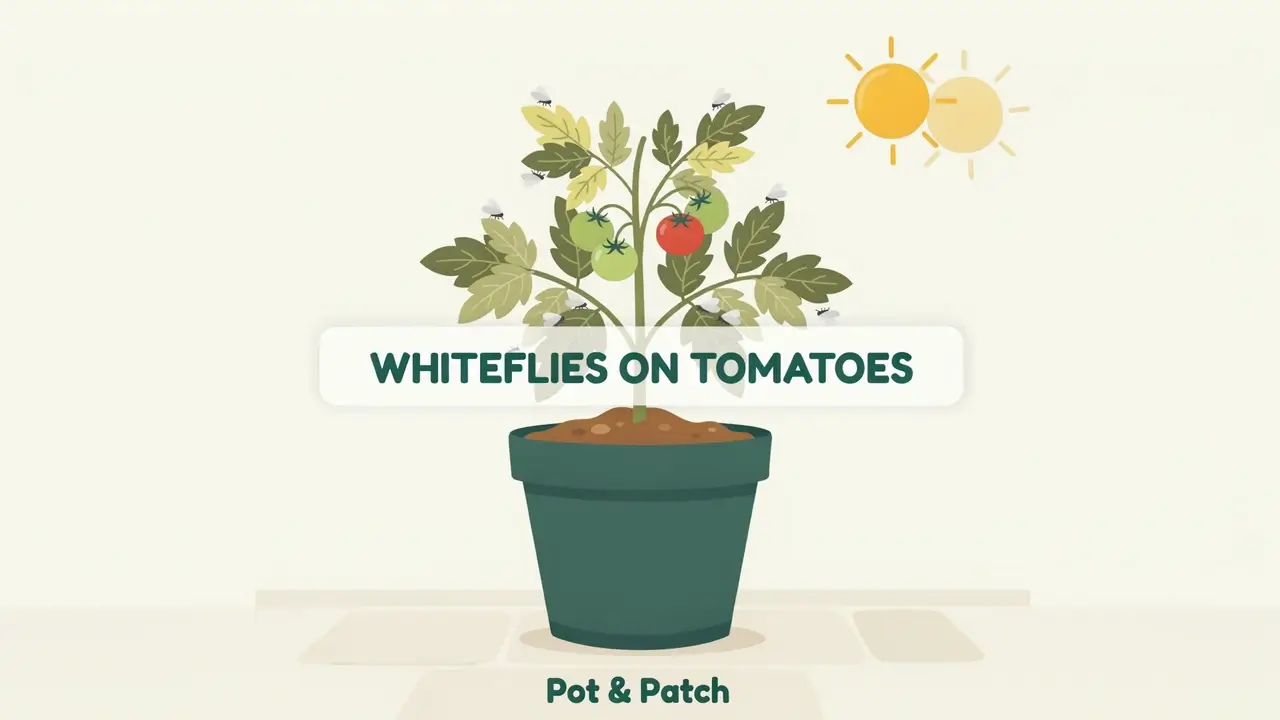
Tiny white bugs flying around your tomato plants can be an early sign of a whitefly infestation. These small, moth-like insects often hide beneath leaves, making them easy to miss until you disturb the foliage and a cloud of white insects suddenly appears.
Whiteflies on tomato plants feed on plant sap, causing yellowing leaves, sticky residue, and weakened growth when populations become large. Some species can also spread serious tomato viruses.
Fortunately, a few whiteflies do not always require treatment. Start by checking the undersides of leaves for adults, eggs, and young insects. Small infestations may be managed through careful removal and monitoring, while persistent colonies sometimes need targeted treatments.
What Are Whiteflies on Tomato Plants?
Whiteflies are tiny sap-feeding insects belonging to the family Aleyrodidae. Despite their name, they are not true flies. They are more closely related to aphids, scale insects, and mealybugs.
Adult whiteflies have pale yellow bodies and white, powdery wings. They usually gather on the undersides of leaves, where they feed and lay eggs.
Both adults and immature whiteflies use piercing-sucking mouthparts to feed on plant tissue. Large populations can weaken tomato plants and leave behind sugary waste called honeydew.
Whiteflies reproduce quickly in favorable conditions, especially in warm climates and protected growing environments.
Several species attack tomatoes, with sweetpotato whiteflies and greenhouse whiteflies among the most important.
Although these pests are common in greenhouses and commercial tomato fields, they also appear in backyard gardens, patio containers, and raised beds.
What Are the Tiny White Bugs on My Tomato Plants?
If small white insects fly up when you touch or shake a tomato plant, whiteflies are a likely explanation.

However, not every white insect or white speck on tomato foliage is a whitefly. Aphids, mealybugs, and shed insect skins can sometimes create similar-looking problems.
How to Identify Adult Whiteflies
Adult whiteflies are typically around 1/16 inch long, although size varies among species.
Look for these characteristics:
- Tiny white wings: Adults appear dusted with a fine, powdery white coating.
- Pale yellow bodies: Their bodies may be visible beneath the wings.
- Moth-like appearance: At rest, the wings lie flat or rooflike over the body, depending on the species.
- Sudden flight: Adults flutter away when an infested leaf is disturbed.
- Leaf-underside colonies: Eggs, young whiteflies, and adults commonly occur beneath foliage.
One simple identification method is to gently lift a branch and inspect the lower leaf surfaces.
If several tiny white insects flutter into the air and quickly settle again, examine the leaf undersides more closely.
A magnifying glass can help you see their body shape and distinguish adults from other insects.
Whiteflies vs. White Aphids and Mealybugs
Some gardeners describe whiteflies as white aphids, but the insects are different.

| Feature | Whiteflies | Aphids | Mealybugs |
|---|---|---|---|
| Appearance | Tiny, moth-like white adults | Pear-shaped, soft-bodied insects | Oval insects with cottony white wax |
| Typical color | White wings, yellowish body | Green, pink, yellow, brown, or dark | Mostly white or grayish |
| Movement | Adults fly readily when disturbed | Most colony members are wingless | Usually slow-moving |
| Common location | Leaf undersides | Tender shoots and leaf undersides | Stems, leaf joints, sheltered areas |
| Main feeding method | Piercing and sucking plant fluids | Piercing and sucking sap | Piercing and sucking sap |
White specks may also be empty aphid skins left behind after molting.
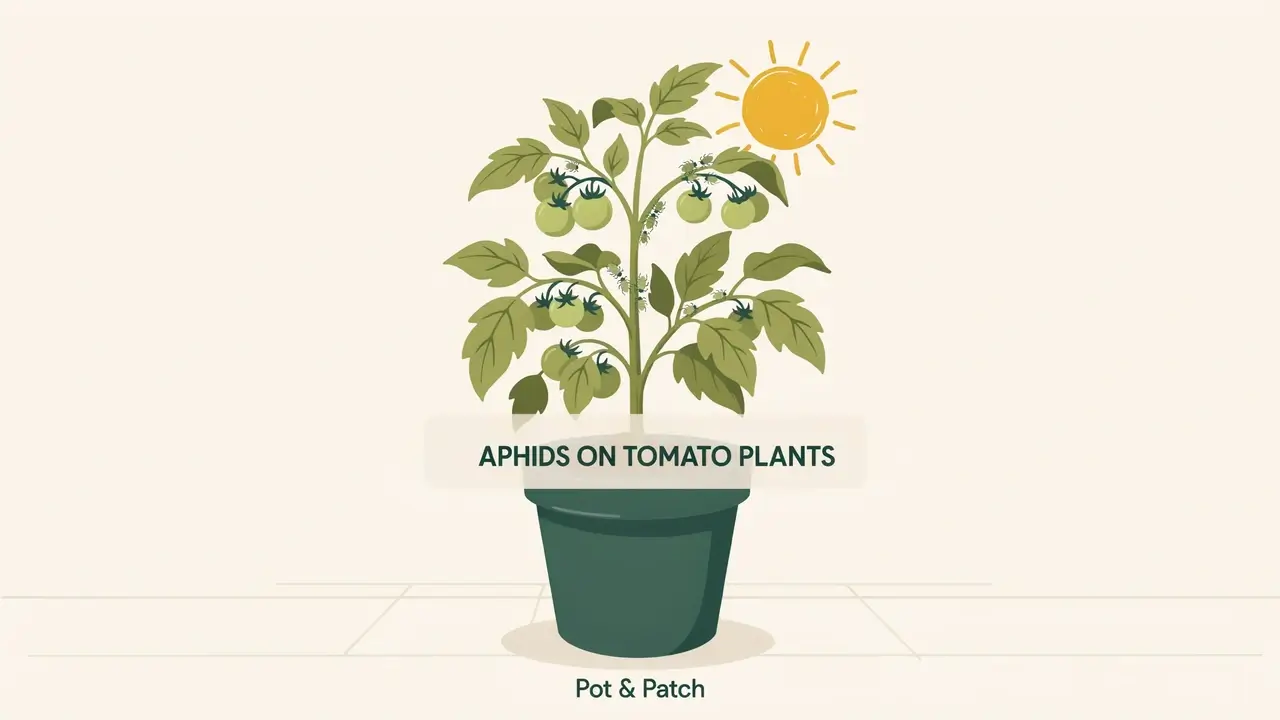
If the insects have pear-shaped bodies rather than white moth-like wings, read our guide to aphids on tomato plants for more specific identification and control advice.
Correct identification matters because different pests may require different management approaches.
Types of Whiteflies That Attack Tomatoes
Several whitefly species can live on tomato plants, but two are especially important for American gardeners.
Sweetpotato or Silverleaf Whitefly
The sweetpotato whitefly, Bemisia tabaci, is a major tomato pest in warm regions.
Some members of this species complex are also called silverleaf whiteflies.
Adults hold their wings at an angle over the body, leaving a narrow gap along the back.
They commonly inhabit the undersides of leaves, where females lay eggs and immature stages develop.
Sweetpotato whiteflies are particularly important because certain populations transmit tomato yellow leaf curl virus.
They can also interfere with normal tomato ripening, sometimes producing unevenly colored fruit.
Greenhouse Whitefly
The greenhouse whitefly, Trialeurodes vaporariorum, is another common species affecting tomatoes.
Its adults resemble sweetpotato whiteflies but generally hold their wings flatter and closer together over the back.
Greenhouse whiteflies are especially associated with protected growing spaces, although they may also occur outdoors.
Their older nymphs have distinctive waxy filaments around their margins, which can help with identification under magnification.
Both species produce honeydew and can damage tomato foliage through feeding.
A less common type, the bandedwinged whitefly, has darker markings across its wings.
Home gardeners rarely need to identify the exact species to begin basic management, but distinguishing them can be important when virus transmission is suspected.
Whitefly Eggs and Nymphs on Tomato Leaves

The adult insects you see flying around are only one part of the infestation. Whiteflies develop through several stages, and most immature stages remain attached to leaves.
This is why catching flying adults alone may not stop the population from rebuilding.
What Do Whitefly Eggs Look Like?
Female whiteflies usually lay tiny oval eggs on the undersides of tomato leaves.
The eggs are attached to the leaf surface by short stalks.
Depending on the species, eggs may be laid individually, in groups, or in curved patterns.
Fresh eggs are often pale yellow, greenish-white, or cream-colored. Some darken as development progresses.
They are extremely small, so a hand lens may be necessary to find them.
Check younger leaves when searching for eggs, since adults often select fresh growth for egg laying.
What Do Whitefly Nymphs Look Like?
After hatching, a tiny mobile stage called a crawler moves a short distance to find a suitable feeding location.
Once settled, it attaches to the leaf and begins feeding.
Later nymph stages remain largely stationary and resemble tiny flattened, pale oval discs.
They may be translucent, yellowish, greenish, or covered with waxy material.
The late fourth-instar stage is sometimes called a pupa, although whiteflies do not undergo complete metamorphosis like butterflies.
Development from egg to adult varies with species and temperature. In warm conditions, some whiteflies can complete development in only a few weeks.
Because nymphs remain beneath leaves, repeatedly removing adults without checking the immature stages may allow the infestation to continue.
Signs of Whitefly Damage on Tomato Plants
Whiteflies damage tomato plants mainly through feeding and the production of sticky honeydew.

Small populations may cause little noticeable harm. Large infestations can interfere with healthy foliage and reduce overall plant vigor.
Yellowing Leaves and Weak Growth
Whitefly adults and nymphs feed by removing fluids from plant tissue.
Heavy feeding may cause:
- Pale or yellowing leaves.
- Fine discolored spots on foliage.
- Drying or premature leaf drop.
- Distorted or weakened growth.
- Reduced plant vigor.
- Poor development under severe infestation.
Damage is often more noticeable on older leaves where immature whiteflies have been feeding.
However, yellow leaves do not automatically indicate whiteflies.
Watering problems, nutrient deficiencies, temperature stress, and diseases can produce similar symptoms.
If you cannot find whitefly adults or nymphs, consult our guide to yellowing tomato leaves before treating for insects.
Sticky Honeydew and Black Sooty Mold
Whiteflies release a sugary substance called honeydew while feeding.
This sticky liquid can accumulate on leaves, stems, and developing tomatoes.
You may notice shiny foliage, sticky surfaces, or ants moving around affected branches.
Over time, dark sooty mold fungi can grow on honeydew deposits.
Sooty mold forms a black coating on the plant’s surface. Heavy growth can reduce the amount of light reaching the leaves and interfere with photosynthesis.
The mold is not the same as a leaf-spot disease developing inside plant tissue.
Reducing the whitefly population helps stop additional honeydew production.
Existing deposits and mold may remain temporarily even after the insects are controlled.
Tomato Yellow Leaf Curl Virus
One of the most serious concerns associated with certain whiteflies is tomato yellow leaf curl virus, commonly abbreviated TYLCV.
The virus is transmitted by members of the Bemisia tabaci whitefly complex.
Affected tomato plants may show:
- Upward curling of young leaves.
- Yellowing near leaf margins or between veins.
- Small, thickened, or distorted new leaves.
- Shortened spaces between stem nodes.
- Severe stunting.
- Flower drop and reduced fruit production.
Plants infected early in development may produce very little fruit.
However, finding whiteflies does not mean your tomato plant has TYLCV.
Not every whitefly species transmits this virus, and its importance varies by region.
TYLCV is a significant concern in parts of the southern United States, including Florida.
Similar symptoms can also result from unrelated growing problems.
If you suspect a virus, contact your local Cooperative Extension office for identification guidance rather than assuming that leaf curling confirms infection.
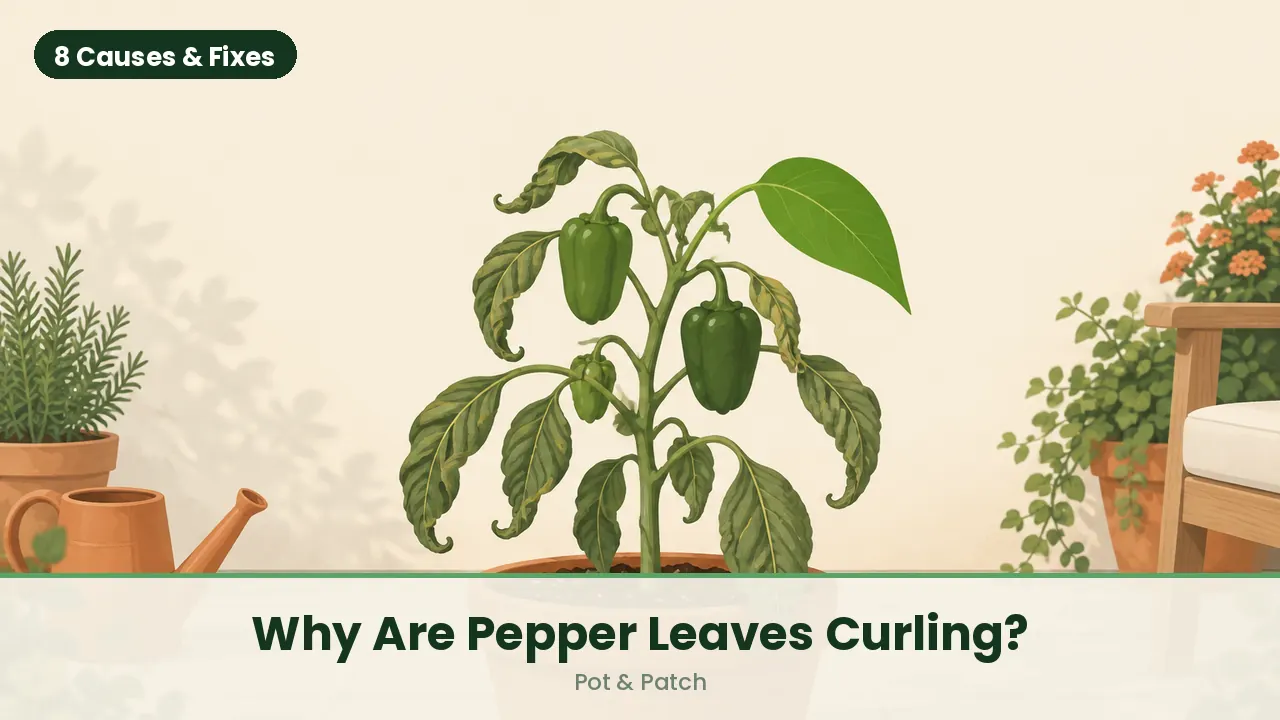
Our separate guide to tomato leaves curling explains other possible causes of that symptom.
Do You Need to Treat Every Whitefly Infestation?
Not necessarily.
A few whiteflies on a vigorous tomato plant may not justify spraying, especially when natural enemies are present and the population is not increasing.
The appropriate response depends on infestation severity, plant age, continued feeding damage, and local virus risk.
| What You Notice | Recommended First Step |
|---|---|
| A few flying adults, healthy foliage | Inspect leaf undersides and monitor |
| Small numbers of eggs and nymphs | Remove accessible colonies and recheck |
| Sticky leaves and increasing whitefly numbers | Consider targeted management |
| Natural predators actively feeding | Protect beneficial insects and monitor |
| Heavy infestation with weakening growth | Evaluate appropriately labeled treatments |
| Severe stunting with virus-like symptoms | Seek local Extension diagnosis promptly |
Young tomato seedlings and newly transplanted plants can be more vulnerable than established plants.
In locations where whitefly-transmitted viruses are common, even relatively small populations deserve careful monitoring.
There is no universal insect count that determines when every home gardener must apply pesticides.
The goal is to prevent damaging infestations while avoiding unnecessary treatment.
How to Get Rid of Whiteflies on Tomato Plants
Managing whiteflies requires attention to both flying adults and immature insects attached beneath leaves.

For small home gardens, begin with low-impact approaches and use additional treatments only when necessary.
1. Remove Heavily Infested Leaves When Appropriate
If immature whiteflies are concentrated on one or two leaves, carefully removing those leaves may reduce the population.
Inspect the plant first to determine how much foliage is affected.
Use clean pruning shears to remove a limited number of heavily infested leaves, then contain the material for disposal so adults are less likely to spread.
Avoid removing large amounts of healthy foliage.
Tomato plants need their leaves for photosynthesis and fruit development, so extensive pruning can cause more harm than a minor infestation.
For widely distributed colonies, other control methods may be more practical.
2. Wash Whiteflies Off Tomato Leaves
A controlled spray of water can dislodge some adults and exposed immature insects.
This method is especially convenient for potted tomatoes and other plants that are easy to reach.
Follow these steps:
- Inspect the undersides of affected leaves.
- Support tender stems to prevent breakage.
- Direct a moderate stream of water toward visible insects.
- Avoid excessive pressure that could tear foliage.
- Reinspect the plant after the leaves dry.
- Repeat physical removal when appropriate if insects remain.
Washing may reduce an infestation, but it does not reliably remove every egg or settled nymph.
Continue checking the plant rather than assuming the problem is solved after one rinse.
3. Use Yellow Sticky Traps to Monitor Adults
Yellow sticky traps attract and capture flying whiteflies.
They can help you determine whether adult whiteflies are present and whether their activity is increasing.
Place an appropriate trap near the affected tomato plant, following the manufacturer’s instructions.
Check it regularly for captured adults.
Sticky traps have important limitations:
- They mainly capture flying adults.
- They do not directly remove eggs attached to leaves.
- They do not control the stationary immature stages.
- They may also trap beneficial insects.
For this reason, yellow sticky traps work best as a monitoring tool rather than the only control method.
Use the information from the traps together with leaf inspections to decide whether further action is necessary.
4. Apply Insecticidal Soap When Needed
Insecticidal soap can help manage whiteflies when physical methods are insufficient.
These products usually contain potassium salts of fatty acids and work through direct contact with susceptible insects.
Coverage is particularly important because whiteflies often remain beneath foliage.
When using insecticidal soap:
- Choose a product labeled for tomatoes and whiteflies.
- Follow the manufacturer’s mixing instructions.
- Direct the application toward infested leaf undersides.
- Avoid treating drought-stressed or otherwise severely stressed plants.
- Observe temperature-related precautions.
- Follow all harvest and reapplication instructions on the label.
Insecticidal soap has limited residual effect, so it does not provide permanent protection against new adults.
Do not substitute ordinary dishwashing liquid for a properly formulated insecticidal soap.
Household detergents vary in composition and may injure tomato foliage.
5. Consider Horticultural Oil or Neem Products
Horticultural oils are another treatment option for certain whitefly infestations.
When applied according to the label, they can affect susceptible insects through direct contact.
Some neem-based products are also labeled for whitefly control.
However, neem oil and azadirachtin are not identical formulations, and their effects may differ.
Always select a product specifically labeled for the intended use on edible tomato plants.
Avoid applying oils during weather conditions that increase the risk of leaf injury, particularly when plants are heat-stressed or water-stressed.
Do not use concentrated homemade oil mixtures or combine pesticide products without label authorization.
A light infestation that can be handled through monitoring and physical removal rarely needs an immediate oil treatment.
6. Reinspect After Treatment
Whiteflies can return because eggs and immature insects may survive earlier removal attempts.
Adult whiteflies may also fly in from neighboring vegetation.
Inspect the plant again after treatment, focusing on the undersides of leaves and newly developing growth.
Look for living nymphs, new eggs, fresh honeydew, and continued adult activity.
If you use an insecticide, follow its labeled reapplication interval rather than an arbitrary spraying schedule.
A declining population and healthy new foliage may indicate that additional treatment is unnecessary.
Beneficial Insects That Help Control Whiteflies
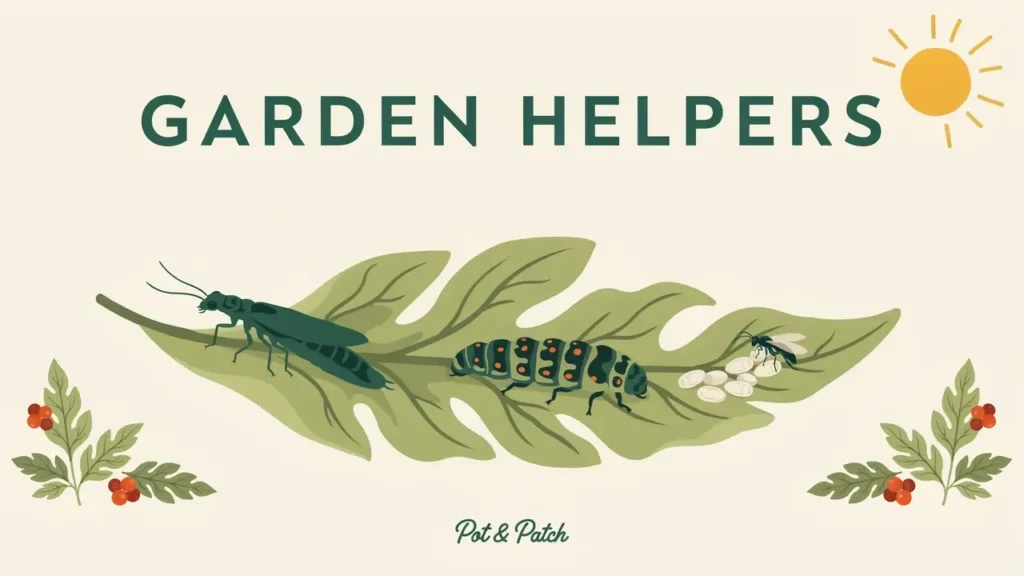
Whiteflies have several natural enemies that can help reduce their numbers. Protecting these organisms is an important part of integrated pest management.
Predatory Insects
Some beneficial insects feed directly on whitefly eggs, nymphs, or adults.
Examples include:
- Lacewing larvae: Predators of several soft-bodied garden insects.
- Lady beetle larvae: Some species consume whiteflies and other sap-feeding pests.
- Bigeyed bugs: General predators that feed on small insects and their eggs.
Natural predators are especially valuable when whitefly populations remain low enough for biological control to be effective.
Avoid using broad-spectrum insecticides unnecessarily because they may kill predators along with pests.
Parasitic Wasps
Tiny parasitoid wasps also attack whiteflies.
Two important groups are Encarsia and Eretmocerus.
These wasps develop in association with whitefly immature stages, eventually killing the host.
Some parasitized whitefly nymphs become darker or otherwise change appearance as the parasitoid develops.
Encarsia formosa has been used successfully in greenhouse biological-control programs.
However, releasing purchased parasitoids into an open patio garden does not guarantee that they will establish or eliminate an infestation.
For most home gardeners, preserving naturally occurring beneficial insects is a practical starting point.
How to Prevent Whiteflies on Tomato Plants
Preventing whiteflies completely may not be possible, but early inspection and good gardening practices can reduce serious infestations.
Inspect Transplants Before Bringing Them Home
Whiteflies sometimes arrive on infested seedlings purchased from nurseries or garden centers.
Before buying a tomato plant, gently disturb its foliage and watch for small white insects taking flight.
Also inspect the undersides of leaves for eggs and flattened nymphs.
Avoid introducing visibly infested plants into your growing area.
This is especially important when several tomatoes are grown close together in patio containers.
Check Leaf Undersides Regularly
Routine monitoring is one of the simplest ways to prevent a small whitefly colony from becoming a larger problem.
Check young leaves for adults and eggs, and examine somewhat older leaves for settled nymphs.
Pay closer attention during warm weather and after finding insects on nearby plants.
Early detection makes physical removal more practical and can help limit damage before extensive honeydew develops.
Avoid Excess Nitrogen and Severe Plant Stress
Healthy tomato plants are better able to tolerate moderate pest pressure.
Follow balanced fertilization practices rather than applying large amounts of nitrogen to force rapid leafy growth.
Maintain suitable soil moisture and avoid prolonged drought stress.
These practices support plant growth and help reduce the likelihood of additional stress during an infestation.
They do not, however, guarantee that whiteflies will stay away.
Remove Old Infested Plants and Manage Host Weeds
Whiteflies can move between tomatoes and various other vegetables or weeds.
Remove heavily infested crop debris after harvest and manage unwanted host weeds around the garden.
Avoid placing young tomato seedlings immediately beside severely infested older plants when practical.
Cleaning up old planting material can reduce sites where whiteflies continue developing.
For small raised beds and containers, regular plant inspections and timely removal of finished crops are often straightforward.
Consider Reflective Mulch for Young Tomato Plants
Silver or aluminum-colored reflective mulch can discourage certain whiteflies from settling on young crops.
Research-based integrated pest management guidance supports reflective mulch as a way to delay early whitefly colonization in some growing situations.
The reflective surface is most useful before the tomato canopy becomes large enough to cover it.
As foliage spreads over the mulch, its effectiveness declines.
Reflective mulch is an optional preventive measure, not a replacement for monitoring or control during an established infestation.
Can Tomato Plants Recover From Whitefly Damage?
Tomato plants can often recover from mild to moderate whitefly feeding once the infestation is reduced.
Healthy plants may develop new leaves and continue flowering and fruiting.
Recovery depends on how much foliage was damaged, the plant’s growing conditions, and whether a virus is involved.
To encourage recovery:
- Reduce active whitefly populations.
- Maintain consistent watering.
- Continue balanced plant nutrition.
- Avoid unnecessary pruning.
- Monitor healthy new growth rather than expecting old damaged leaves to return to normal.
A tomato plant infected with TYLCV may remain stunted even after the whiteflies are controlled.
Controlling insects does not cure an established plant-virus infection.
Frequently Asked Questions
What are the tiny white flying bugs on my tomato plants?
They are often adult whiteflies, especially if they flutter into the air when you disturb the leaves. Check beneath the foliage for eggs and flat, oval nymphs to help confirm the identification.
Are whiteflies the same as white aphids?
No. Whiteflies are a different group of sap-feeding insects. Adult whiteflies have powdery white wings and readily fly when disturbed. Aphids are pear-shaped, and most individuals in a colony are wingless.
Can whiteflies kill a tomato plant?
Heavy whitefly infestations can severely weaken tomatoes, especially young plants. Certain species also transmit viruses that may cause major crop losses. However, a few whiteflies on a healthy plant do not automatically pose a serious threat.
Will yellow sticky traps get rid of whiteflies?
Yellow sticky traps catch flying adults and help monitor their activity, but they do not remove eggs and immobile nymphs beneath leaves. Additional monitoring and appropriate control methods may be needed.
Does neem oil work on tomato whiteflies?
Certain neem-based products are labeled for whitefly control on tomatoes. Effectiveness depends on the formulation, coverage, pest stage, and application conditions. Always follow the specific product label.
Are whitefly eggs found on tomato leaves?
Yes. Female whiteflies commonly lay tiny oval eggs on leaf undersides, often favoring younger foliage. Their small size means a hand lens may be necessary to see them.
Can you eat tomatoes from a plant with whiteflies?
Tomatoes from a whitefly-infested plant are generally edible if the fruit is otherwise sound. Wash harvested tomatoes under running water. If pesticides were applied, follow the label’s harvest interval and food-safety directions.
Why do whiteflies keep coming back?
New adults may arrive from nearby plants, while eggs and settled nymphs can survive incomplete control efforts. Regularly inspecting leaf undersides and following up on active colonies helps limit repeated outbreaks.
Final Thoughts
Whiteflies on tomato plants are easiest to manage when you identify them early and inspect the undersides of leaves for eggs and nymphs.
Use physical removal and monitoring for minor infestations, protect beneficial insects, and consider labeled treatments when whitefly populations become damaging.
In regions where whitefly-transmitted viruses are a concern, pay particular attention to young tomato plants and suspicious growth symptoms.
For more advice on keeping tomatoes healthy, visit our tomato gardening guides, covering growing methods, pest problems, and small-space garden care.