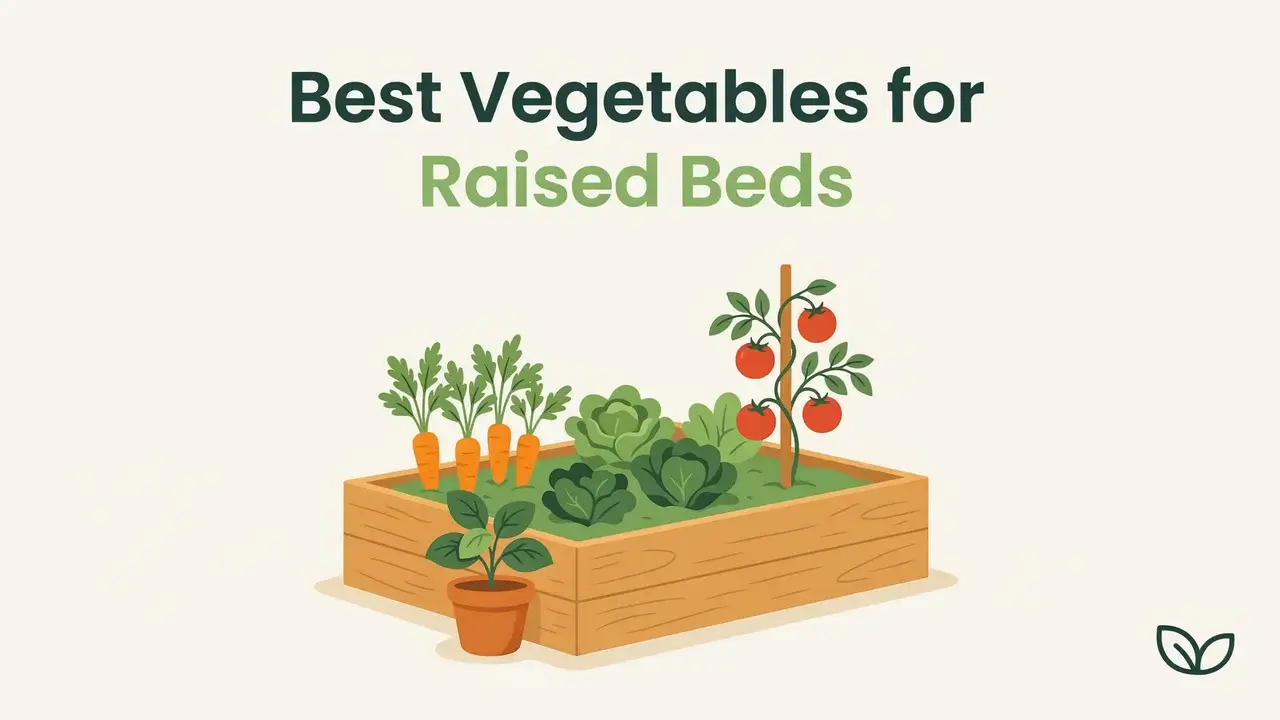
Best Vegetables for Raised Beds: What to Plant for the Biggest Harvest
Almost any vegetable will grow in a raised bed. But some crops do more than just grow. They perform noticeably better than they would in the ground, because the raised bed environment plays to their strengths.
That environment is different in three ways that matter to plants: the soil warms faster in spring, it drains more freely, and it stays loose because no one walks on it. Those conditions favor certain vegetables and hold others back.
This guide covers the best vegetables for raised beds, why each one thrives there, and how deep and how far apart to plant them. It also covers the handful of crops that usually do better with in-ground space, so you do not waste a prime bed on the wrong plant.
Why Some Vegetables Thrive in Raised Beds
Before the plant list, it helps to understand what a raised bed actually changes. Four advantages explain most of the picks below.
The soil warms up earlier in spring. Elevated soil heats faster than ground-level soil because air circulates around the bed. University of Maryland Extension notes this earlier warm-up as a core benefit of raised beds. For warm-season crops that sulk in cold soil, that head start is the difference between an early harvest and a late, rushed one.
Drainage is better. The looser texture and raised grade let water move through instead of pooling. That reduces the risk of waterlogging and root rot, which matters for crops that hate wet feet.
The soil stays loose. Because you never step inside a well-designed bed, the soil does not compact the way a walked-on row does. Loose, uncompacted soil is exactly what root crops need to size up straight and clean.
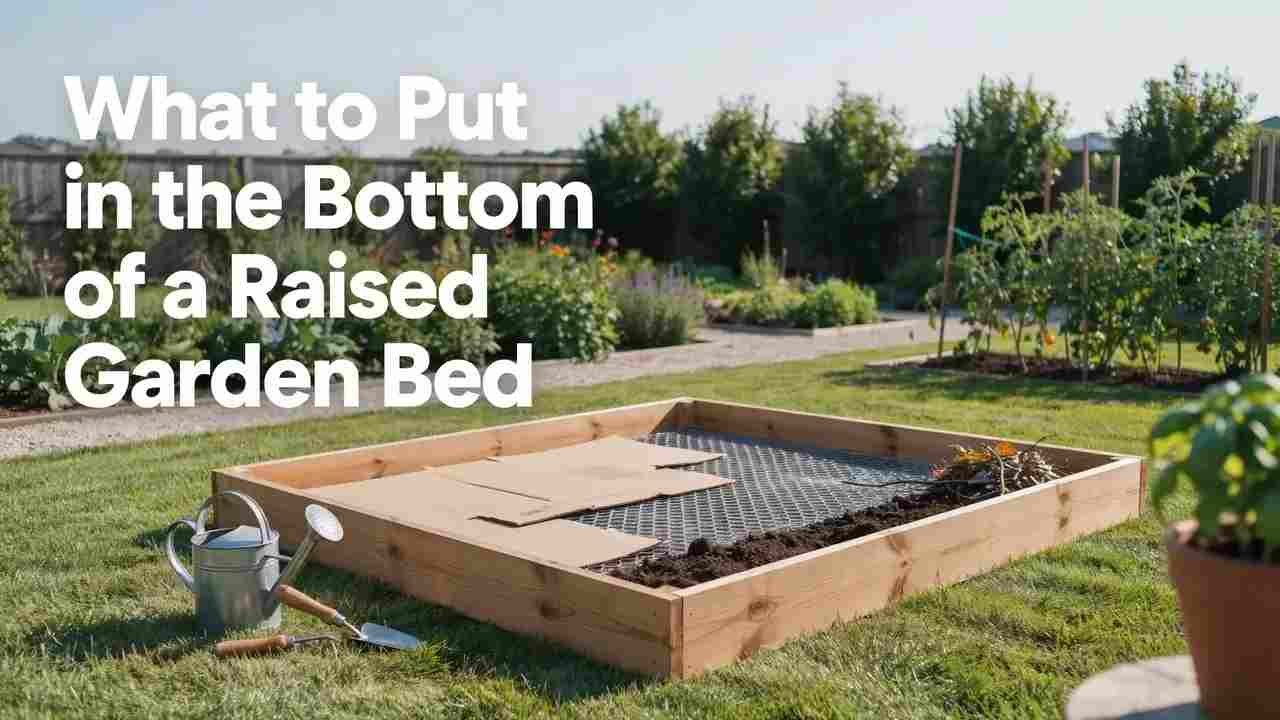
You control the root zone. You fill the bed, so you decide the depth and the quality of the soil. Deep-rooted crops get the room they need, and rocky native ground stops being a problem.
Keep these four traits in mind as you read. Every strong pick below lines up with at least one of them.
The Best Vegetables to Grow in Raised Beds
The easiest way to choose is by crop type, because plants in the same group tend to benefit from raised beds for the same reasons.
Root Crops
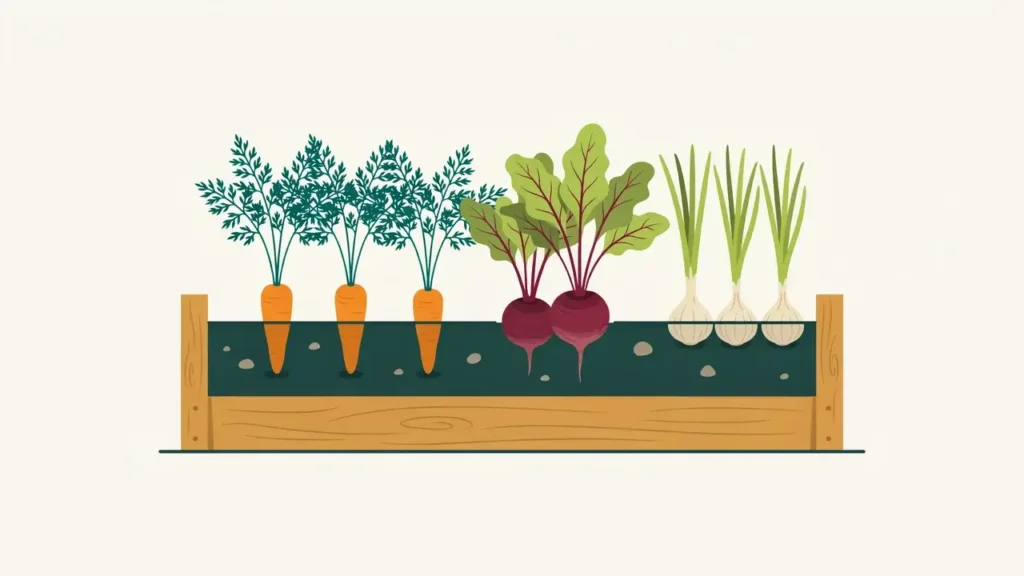
Root vegetables are the clearest winners. They grow best in loose, stone-free soil, and that is the one thing a raised bed guarantees.
Carrots are the headline crop here. In rocky or heavy ground, carrot roots fork and stunt when they hit an obstacle. In a raised bed filled with loose soil, they grow long and straight. Full-size carrots want a bed at least 12 inches deep. If your bed is shallower, grow shorter types like Chantenay, Danvers, or the round Parisian variety. Getting the fill right matters as much as the depth, so it is worth reviewing the best soil for raised beds before you sow.
Beets, radishes, and turnips follow the same logic. They size up quickly in loose soil and tolerate shallower beds, since their roots stay compact. Radishes are especially fast and make a good crop for filling gaps between slower plants.
Onions and garlic dislike compacted soil. The free-draining, loose medium in a raised bed encourages healthy bulbs, and the early spring warm-up suits onions, which need a long season to bulb well.
Potatoes grow well in the deeper, loose soil of a raised bed. A bed around 12 inches deep gives the tubers room to form without hitting hardpan.
Leafy Greens
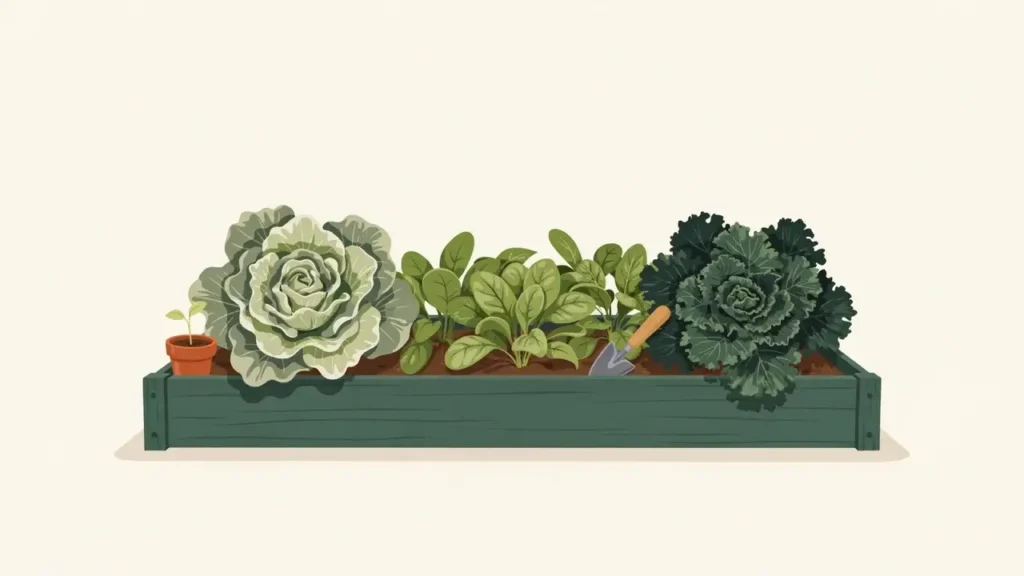
Greens love the early, workable soil of a raised bed. You can sow them as soon as the ground thaws, weeks before an in-ground garden is ready.
Lettuce, spinach, and arugula are shallow-rooted and quick. A 6-inch depth is plenty. They also slot neatly along the edges of a bed or between larger plants, so they use space you would otherwise waste.
Kale and Swiss chard are cut-and-come-again crops that produce for months. Kale tolerates close spacing, which makes it efficient in a compact bed.
Greens also benefit from rich soil, and a raised bed makes it easy to top up compost exactly where you need it before planting.
Warm-Season Fruiting Crops
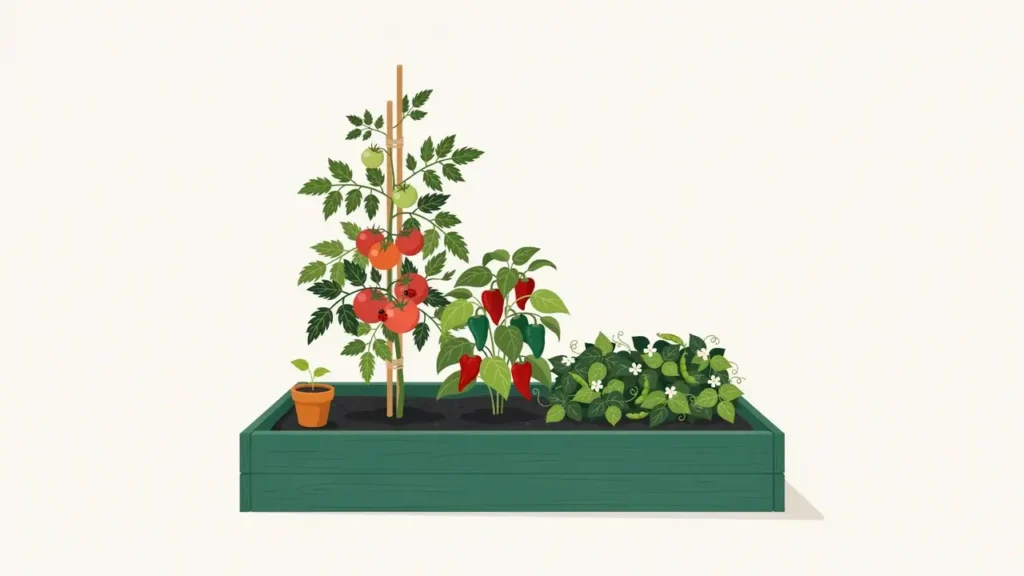
This group gains the most from the faster spring warm-up. These crops stall or rot in cold, wet soil, so the earlier, drier conditions in a raised bed give them a real edge.
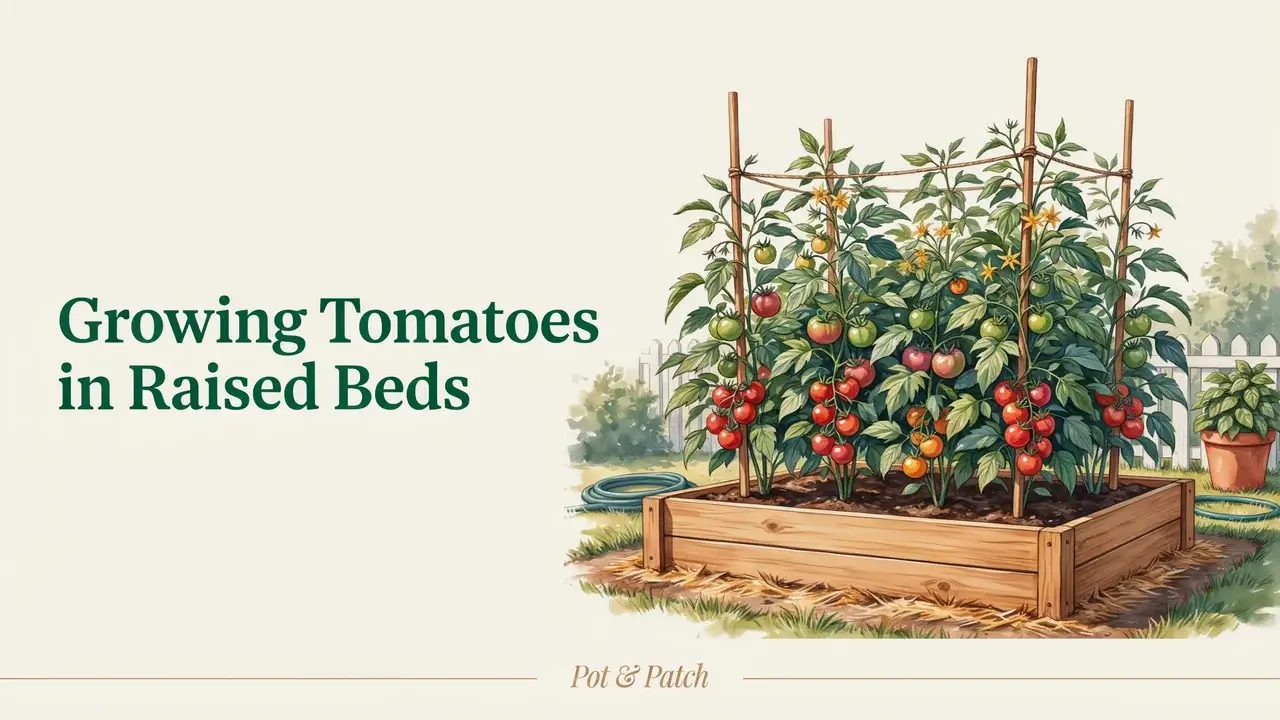
Tomatoes love warm soil, and a raised bed lets you transplant earlier in cool regions. The deep, loose fill also lets you plant seedlings deeply, which encourages roots to form along the buried stem for a stronger plant. Determinate (bush) types are easier to manage in a bed, while tall indeterminate types need sturdy stakes or cages.
Peppers and eggplant are heat lovers that struggle in cold, saturated soil. Both respond well to the warm, well-draining conditions a raised bed provides, growing faster after transplanting.
Bush beans are quick, compact, and easy. They crop in roughly 50 to 55 days, but they will not germinate in cold, wet soil, so the raised bed warm-up helps them start cleanly. Sow a fresh batch every few weeks for a steady supply.
Cucumbers and zucchini thrive in warm, well-drained soil. Both can sprawl, so train cucumbers up a trellis to save space, and give zucchini room at the corner of a bed where its large leaves will not crowd neighbors.
Quick-Reference: Depth and Spacing for Raised Bed Vegetables
Use this table to match each crop to your bed depth and to space plants for an intensive, high-yield layout.
| Vegetable | Why it suits a raised bed | Minimum soil depth | Spacing |
|---|---|---|---|
| Carrots | Loose, stone-free soil grows straight roots | 12 in (18 in for long types) | 2 to 3 in |
| Radishes | Fast, shallow-rooted gap filler | 6 in | 2 to 3 in |
| Beets | Sizes up well in loose soil | 8 to 10 in | 3 to 4 in |
| Onions and garlic | Avoids the compacted soil they dislike | 8 to 12 in | 3 to 6 in |
| Potatoes | Deep, loose fill for tuber growth | 12 in | 10 to 12 in |
| Lettuce and spinach | Early sowing, edges and gaps | 6 in | 4 to 6 in |
| Kale and Swiss chard | Long harvest, tolerates close spacing | 8 to 10 in | 8 to 12 in |
| Bush beans | Warm soil aids clean germination | 8 to 10 in | 4 to 6 in |
| Tomatoes | Warm soil and deep planting | 12 in | 18 to 24 in |
| Peppers and eggplant | Heat lovers, better after warm start | 12 in | 12 to 18 in |
| Cucumbers (trellised) | Warm, well-drained soil; grows vertical | 12 in | 4 to 6 in |
| Zucchini | Warm soil, strong producer | 12 in | 18 to 24 in |
Depth figures reflect the general extension guidance that most vegetables need 6 to 12 inches of loose, well-draining soil, while deep-rooted crops such as carrots and parsnips do better with more.
What Not to Grow in Raised Beds
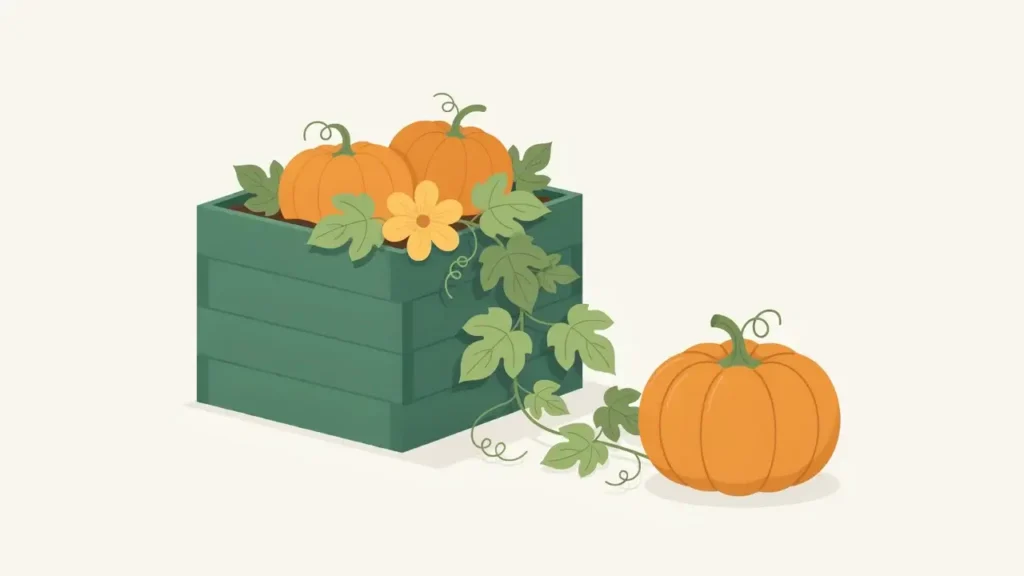
A few crops technically grow in raised beds but usually perform better with in-ground space. University of Florida IFAS Extension points to the same short list, and space is the common thread.
Sweet corn is a poor fit. It is wind-pollinated and needs to be planted in blocks to pollinate well, which is hard to fit in a bed. It also grows tall and is difficult to anchor firmly in raised soil, as Ramsey County Master Gardeners note.
Pumpkins and winter squash send out long, sprawling vines and deep roots. A single plant can swallow an entire bed and still crowd its neighbors. They repay the ground space they need.
Watermelon and other large melons sprawl the same way. You can grow them in a bed if you trellis the vines and support the fruit, but given a choice, they usually do better with dedicated in-ground room.
None of these are impossible in a bed. The point is that they use a lot of premium space for a modest return, so reserve your beds for crops that make the most of them.
Tips to Get the Most From Your Raised Bed Vegetables
A few habits turn a good bed into a productive one.
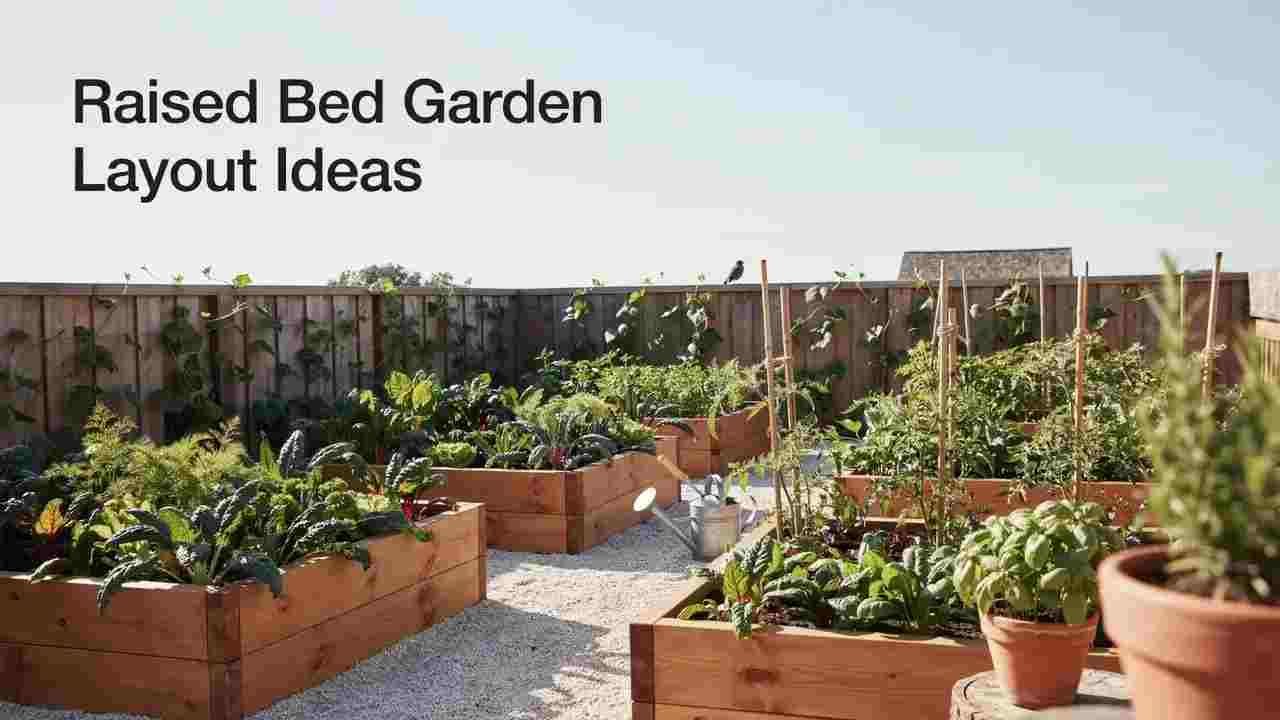
Match the crop to the depth. Put shallow greens and radishes in shallow beds, and save your deepest beds for carrots, tomatoes, and potatoes. Planning this before you plant avoids stunted roots later. A simple sketch helps, and it pairs well with a workable raised bed garden layout.
Grow vertical where you can. Trellis cucumbers, pole beans, and vining tomatoes. Going up instead of out frees the soil below for another crop and improves airflow, which cuts disease.
Plant intensively and in succession. Beds are made for close spacing. Tuck fast greens between slow-growing tomatoes, then replant harvested spots right away to keep the bed working all season.
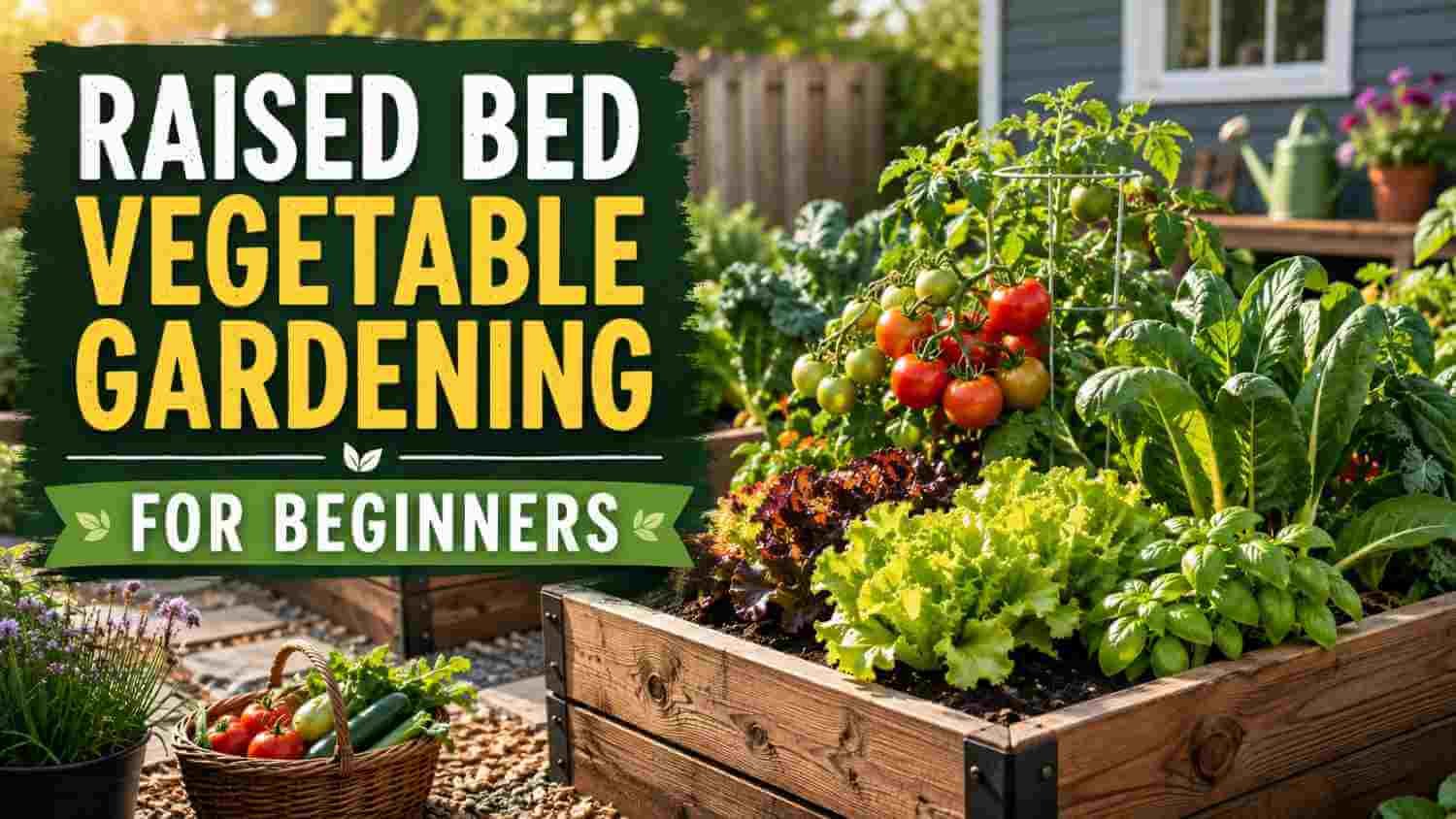
If you are new to this style of growing, it is worth starting with the fundamentals in this guide to raised bed vegetable gardening for beginners before you plan a full season.
Frequently Asked Questions
What vegetables should I plant in a 4×8 raised bed?
A 4×8 bed fits a productive mix. A common approach is a few tomatoes or peppers at the back, a block of bush beans or greens in the middle, and a row of carrots, radishes, or onions along the front. Keep taller crops on the north side so they do not shade the shorter ones.
What is the best thing to plant in a raised garden bed?
Root crops and leafy greens are the safest, highest-reward choices, because they gain the most from loose soil and early planting. Carrots, lettuce, spinach, onions, and bush beans are reliable starting points for almost any bed.
How deep does a raised bed need to be for vegetables?
Most vegetables grow well in 6 to 12 inches of loose soil. Shallow greens and radishes are fine at 6 inches. Tomatoes, peppers, and potatoes prefer around 12 inches. Full-size carrots and parsnips do best with 18 inches or more.
Can you grow root vegetables in a shallow raised bed?
Yes, if you choose the right varieties. Radishes, beets, and short carrot types like Chantenay or Parisian grow well in beds around 6 to 10 inches deep. Save long carrots and parsnips for deeper beds.
What should you not plant in a raised bed?
Sprawling, space-hungry crops such as sweet corn, pumpkins, winter squash, and large melons are usually better in the ground. They take up a lot of bed space for a limited harvest.
Final Thoughts
The best vegetables for raised beds are the ones that reward what a bed does well: loose soil, good drainage, and an early, warm start. Root crops, leafy greens, and warm-season fruiting plants all fit that description, which is why they belong at the top of your planting list. Match each crop to the right depth and spacing, skip the sprawlers that prefer open ground, and a single bed can produce far more than its footprint suggests.