Bell Pepper Colors: The Difference Between Green, Yellow, Orange & Red
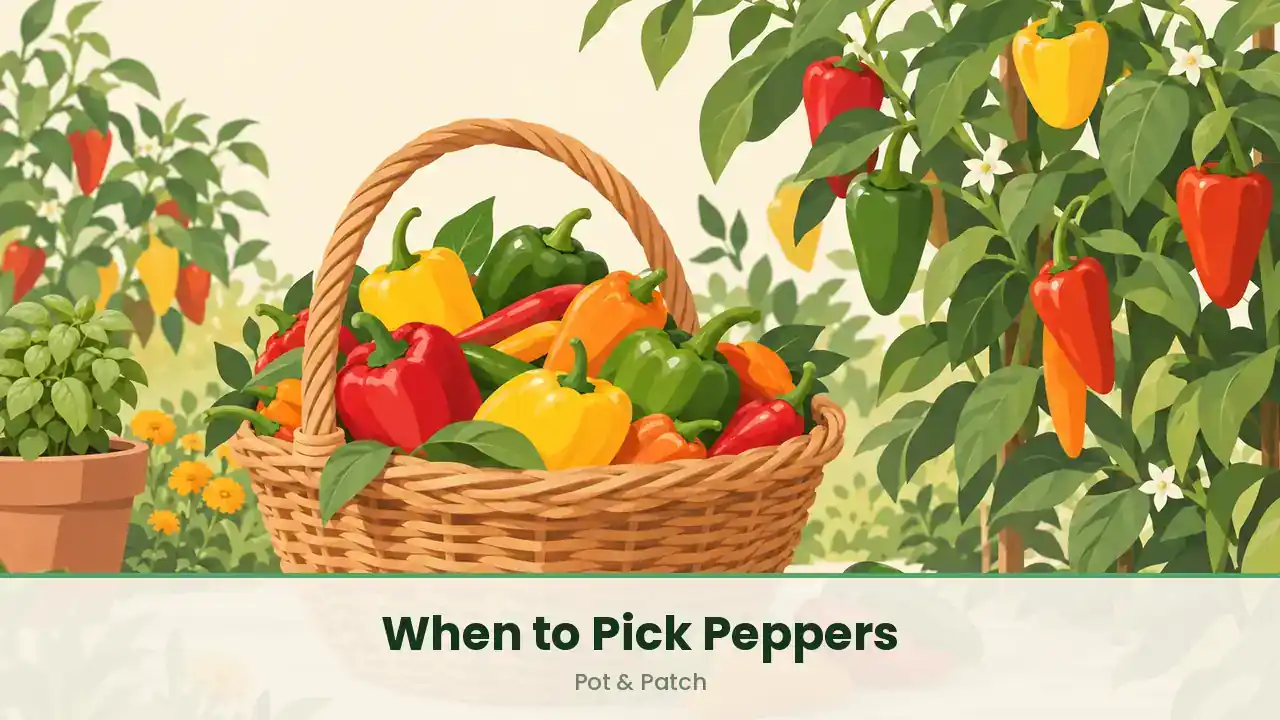
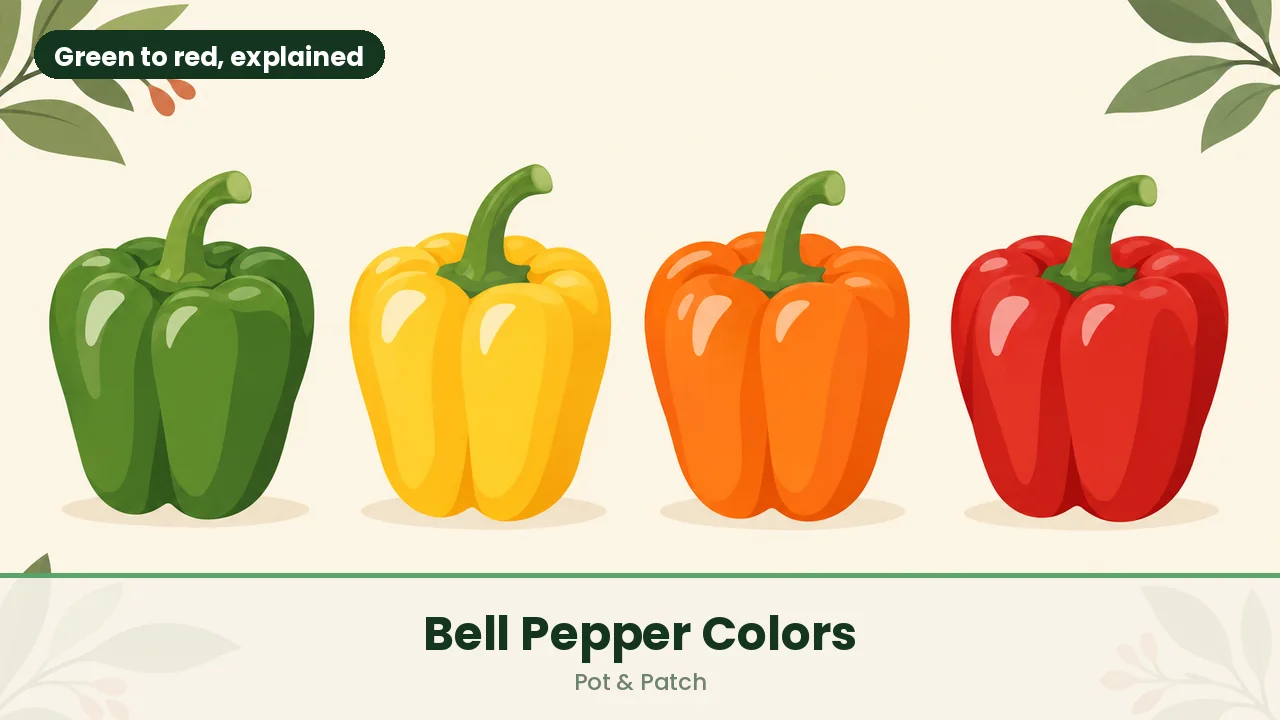
Walk past the pepper bin and you will see the same vegetable in green, yellow, orange, and red, often at four different prices. It raises an obvious question: are these four separate vegetables, or the same pepper caught at different moments?
The answer is a bit of both, and it matters for how each one tastes, what it costs, and which you should reach for. Here is what actually separates the colors, cleared of the myth that trips up most explanations.
Do All Bell Peppers Start Out Green?
Yes. Nearly every bell pepper begins life green, then changes color as it ripens on the plant. The longer a pepper stays on the vine, the further along that color shift travels.
They are all the same species, Capsicum annuum, but a single plant does not hand you a rainbow. The final color a pepper reaches is set by its variety, so a plant bred to ripen red gives you red peppers, and one bred to ripen yellow gives you yellow. Where the pepper ends up is decided long before it leaves green.
The Myth: Are Yellow and Orange Just Unripe Red Peppers?
This is the part most articles get wrong. It is tempting to picture one ripening ladder, green climbing to yellow, then orange, then red, with each color just a snapshot on the way up. That is not how it works.
A red-ripening variety does go green, then darkens, then turns red. But a yellow bell pepper comes from a variety that ripens straight from green to yellow and stops there. An orange one ripens green to orange. They are fully mature at their own color, not reds that someone picked too soon.
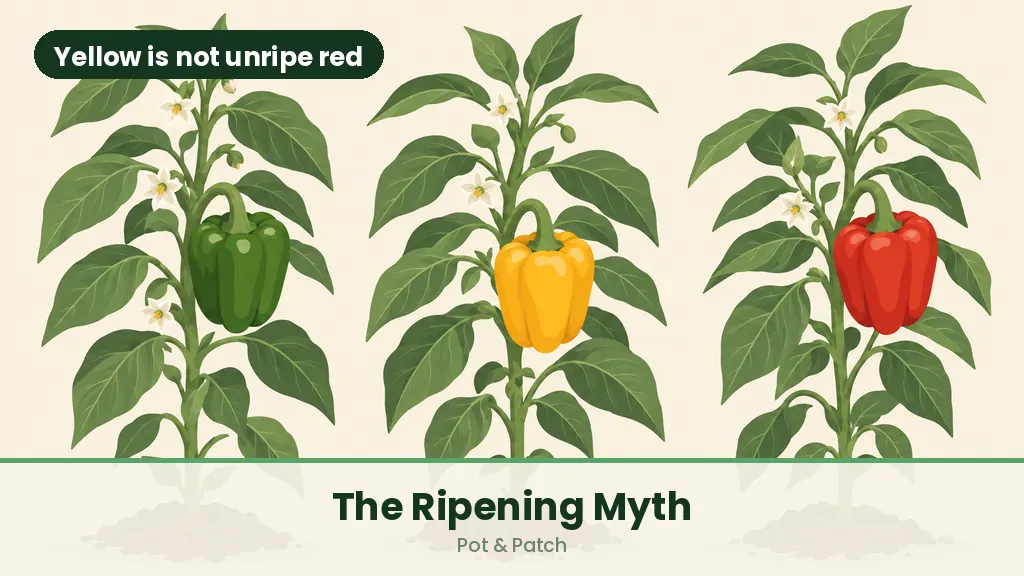
Green is the real exception. A green pepper on the shelf is often a red, yellow, or orange variety harvested early, before its color developed, though some varieties genuinely stay green when ripe. So green is frequently an unripe pepper, but yellow and orange almost never are.
| Color | How it gets there | Its own variety? |
|---|---|---|
| Green | Picked early, before color develops | Usually an unripe pepper |
| Yellow | Ripens green then straight to yellow | Yes, a distinct variety |
| Orange | Ripens green then straight to orange | Yes, a distinct variety |
| Red | Ripens green, darkens, then red | Yes, a distinct variety |
How the Four Colors Taste
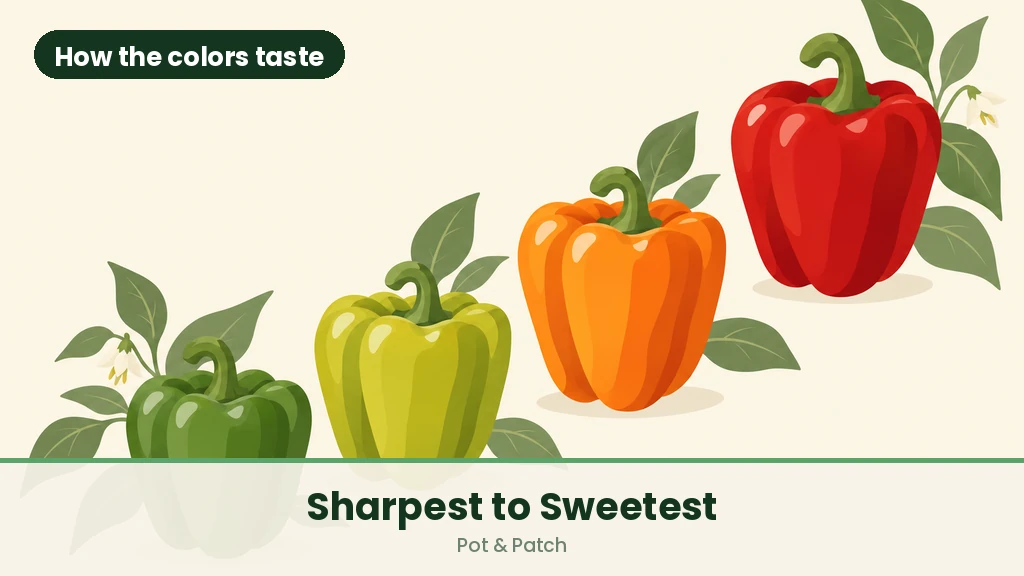
Ripeness is really a sweetness dial, and the color tells you where the dial is set. As a pepper ripens, its sugars build and its sharp edges soften.
Green is the least sweet, with a grassy, faintly bitter bite that some people love in savory cooking and others find too sharp. Yellow is mild and gently sweet. Orange leans fruity and a touch sweeter still. Red sits at the top, the sweetest of the four, though all that ripening costs it a little crunch, so a red pepper is softer than a snappy green one.
| Color | Flavor | Texture | Sweetness |
|---|---|---|---|
| Green | Grassy, slightly bitter | Firm, very crisp | Least sweet |
| Yellow | Mild, clean | Crisp | Lightly sweet |
| Orange | Fruity, bright | Crisp | Sweeter |
| Red | Rich, candy-sweet | Softer | Sweetest |
Which Bell Pepper Is the Sweetest?
Red, without much competition. Because a red pepper ripens fully on the plant and hangs on the longest, it develops the most sugar, which is exactly why it reads as the sweetest and why kids who push away green peppers often happily eat red ones.
If you line the colors up from sharpest to sweetest, it runs green, then yellow, then orange, then red. Reach for red or orange when you want natural sweetness, and green when you want that sharper, more vegetal note to stand up to bold flavors.
Does the Color Change the Nutrition?
It does, modestly. Ripening does not just build sugar, it builds nutrients too, so a red pepper is generally the most nutrient dense of the four. A mature red pepper carries noticeably more vitamin C than a green one, and more vitamin A as well.
Each color also makes its own mix of plant pigments. Green peppers hold lutein and zeaxanthin, orange tends to be richest in beta carotene, and red carries capsanthin and some lycopene. The honest headline is that every color is a genuinely healthy, vitamin C rich vegetable, and the differences between them are real but small. Eat the colors you enjoy, and lean on red when you want the biggest nutritional return.
Which Color Should You Cook With?
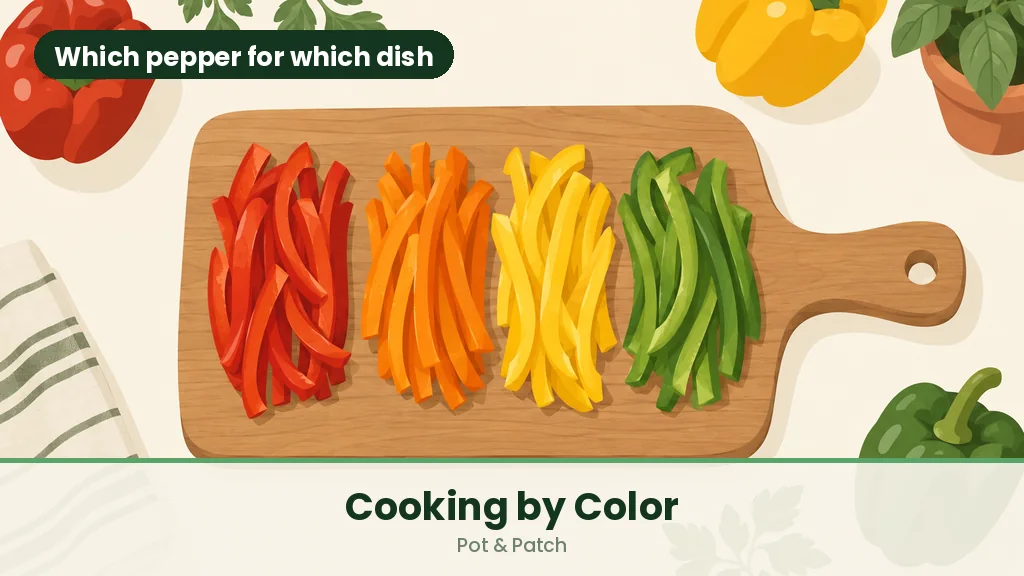
For most dishes the colors are interchangeable, so you can swap one for another without wrecking a recipe. The choice matters most when the pepper is a lead player rather than background.
Green holds up well in savory, assertive cooking, where its slight bitterness balances rich or spicy flavors, think fajitas, stir fries, and classic stuffed peppers. Red, orange, and yellow bring sweetness that shines raw in salads and on a snack plate, and turns almost jammy when roasted. If you are feeding kids or want a mellower result, the sweeter colors are the easier sell. When a recipe just says bell pepper and leaves the color open, a red is the safe, crowd pleasing pick.
Why Do Red Peppers Cost More?
Price tracks patience. A green pepper gets picked early, so the grower turns the crop around fast and sells it cheap. A red pepper has to stay on the plant for weeks longer to finish ripening, which ties up the plant, raises the chance of spoilage, and lowers the yield per plant.
All of that extra time and risk lands on the price tag, which is why red usually costs the most, green the least, and yellow and orange fall in between.
Growing Your Own Colored Peppers
If you grow bell peppers at home, the colors are yours for the taking, and it comes down to two things: variety and patience. Pick a variety bred for the color you want, since a green-harvested plant will not magically turn out yellow, then simply leave the fruit on the plant longer to let it ripen past green.
For the full ripening timeline and what each stage looks like on the plant, see our guide to the bell pepper plant stages, and for growing them start to finish, our walkthrough on how to grow bell peppers covers the rest.
Bell Pepper Colors: The Quick Version
All bell peppers start green and sweeten as they ripen, but yellow, orange, and red are their own varieties rather than steps on a single ladder. Red is the sweetest and most nutritious, green the sharpest and cheapest, with yellow and orange sitting comfortably in the middle. None is spicy, and for most recipes you can use them interchangeably, so buy the color that fits your taste, your dish, and your budget.
Want to grow a rainbow of your own? Start at our pepper growing hub for guides on every stage from seed to harvest.
Frequently Asked Questions
Are green, yellow, orange, and red bell peppers the same plant?
They are the same species but not the same plant. Each color comes from a variety bred to ripen to that color, so one plant does not produce all four. They all start green and change color as they ripen on the vine.
Is a green pepper just an unripe red pepper?
Sometimes. A green pepper is often a red, yellow, or orange variety picked early before its color developed, and some varieties stay green even when ripe. But a yellow or orange pepper is a mature variety in its own right, not an unripe red.
Which bell pepper color is the sweetest?
Red is the sweetest. It ripens fully on the plant and stays on the longest, so it builds the most sugar. From sharpest to sweetest, the order runs green, yellow, orange, then red.
Which bell pepper color is the healthiest?
Red is generally the most nutrient dense, with more vitamin C and vitamin A than a green pepper, because it ripens the longest. That said, every color is a healthy, vitamin C rich vegetable, and the differences are modest.
Why are red bell peppers more expensive than green ones?
Red peppers must stay on the plant for weeks longer to finish ripening, which lowers yield and raises the risk of spoilage. Green peppers are harvested early and turned around quickly, so they cost less. Yellow and orange usually fall in between.
Are any bell peppers spicy?
No. All bell peppers measure zero on the Scoville heat scale regardless of color. Changing color changes the sweetness and nutrition, not the heat, so even a deep red bell pepper has no spice.