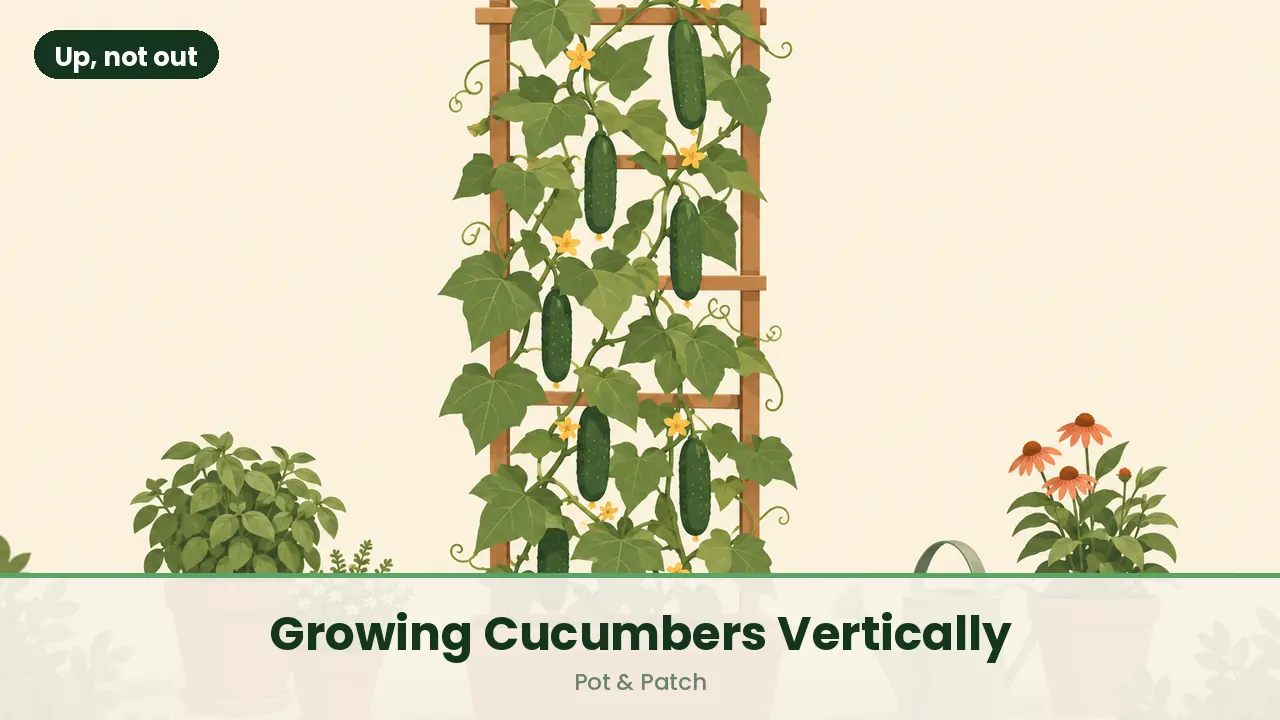
Growing Cucumbers Vertically: Supports, Training and Care Made Easy
Left to themselves, cucumbers sprawl. A single vine will crawl several feet across the ground and swallow a surprising amount of a small garden. Growing them vertically flips that problem into an advantage, sending the plant up instead of out, and it is one of the best moves you can make in a container, a raised bed, or a tight backyard.
This guide walks through why vertical growing works so well, how to set it up, and how to coax the vines up your support and keep them happy once they are climbing.
Why Grow Cucumbers Vertically?
Going vertical is not just about saving floor space, though it does that beautifully. Lifting the plant off the ground changes how it grows for the better.
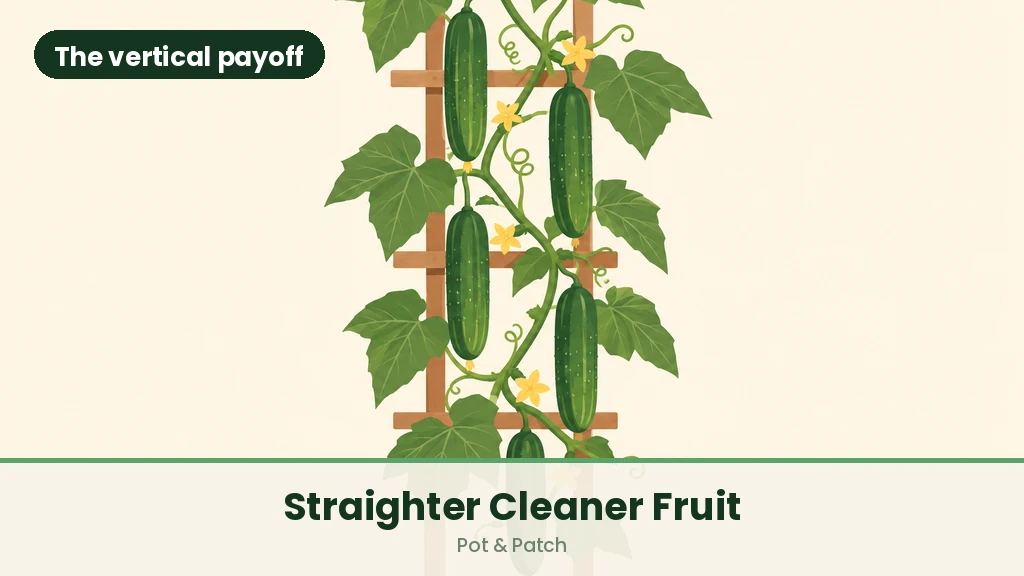
Airflow improves the moment the leaves are up in the open, and drier foliage means far less of the fungal disease and rot that plague cucumbers sitting in damp soil. The leaves also catch more sun, which tends to lift your overall yield. The fruit hangs free rather than resting on the dirt, so it grows straighter and cleaner, with fewer of the pale, misshapen cucumbers you get on the ground. And harvesting becomes a pleasure: the cucumbers dangle at eye level where you can spot them, instead of hiding under a tangle of leaves.
Do Cucumbers Climb on Their Own?
Mostly, yes. Cucumber vines send out thin, curling tendrils that grab onto whatever they touch, so once a plant finds your support it will largely climb itself. The catch is the beginning. Young vines often want to run sideways along the ground, and they need a little guidance to get started up the structure.
Your job early on is simply to point them in the right direction. After that, the tendrils take over and the plant does the climbing for you.
Start With a Vining Variety
This step decides everything, because not every cucumber wants to climb. Cucumbers come in two growth habits, and only one suits a trellis.
Vining cucumbers are the climbers. They produce long, trailing stems and plenty of tendrils, and they are exactly what you want growing upward. Bush cucumbers stay compact and short-vined, which makes them lovely for a small pot but a poor match for a tall support, since they will not reach or grip the way a vining type does. Reliable vining varieties for a trellis include Marketmore 76, Diva, Suyo Long, and Lemon. Check your seed packet: if it says bush or compact, it is not your vertical pick.
Choosing a Support
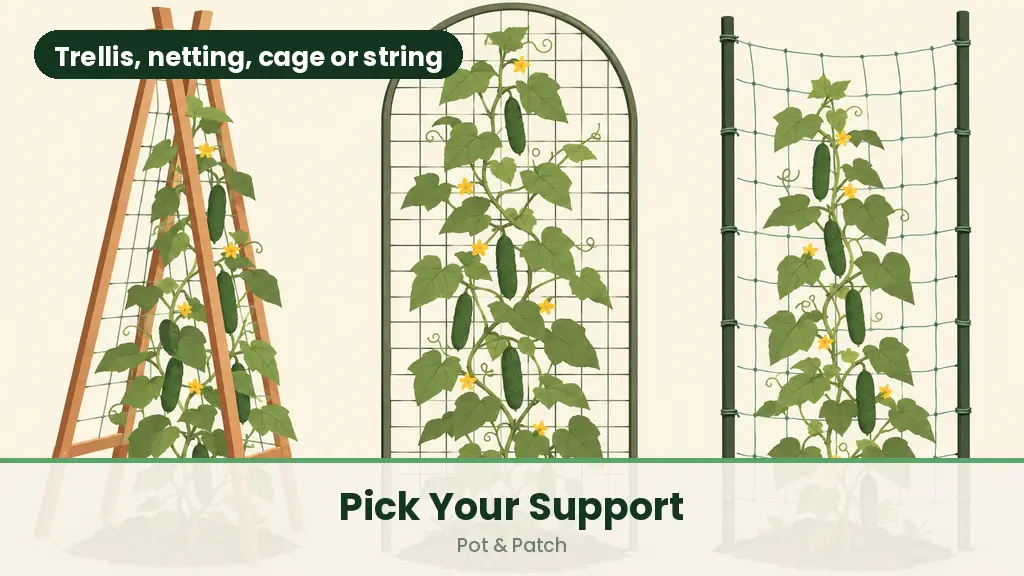
Almost anything sturdy and tall will work, and the best choice depends on your space and budget more than on the cucumbers themselves. Here are the supports gardeners rely on most.
| Support | Good to know |
|---|---|
| A-frame | Very sturdy and easy to harvest from; takes a bit more room |
| Cattle panel arch | Strong and long-lasting; bends into an arch or tunnel, great over a bed |
| Netting or mesh | Cheap and space-saving; pick holes big enough to reach a hand through |
| String or twine | Simple and tidy; use strong jute so it will not snap under heavy fruit |
| Wire or tomato cage | Easy and reusable; may need stacking for height on vigorous vines |
| Obelisk or trellis panel | Looks good on a patio; fix it against a fence to save space |
Whatever you pick, think tall and think strong. Vining cucumbers commonly reach four to six feet and can stretch higher, so aim for a support at least five to six feet tall and solid enough to carry rapidly growing vines loaded with fruit. A flimsy structure that topples mid-season is the most common support mistake there is. One more tip: if you use mesh or netting, choose a wide weave, or small fruit will grow through the holes and become a nuisance to free.
How to Train Cucumbers Up a Trellis
Training vertical cucumbers is easy once you know the rhythm. A handful of small habits over the first few weeks sets the plant up to climb on its own.
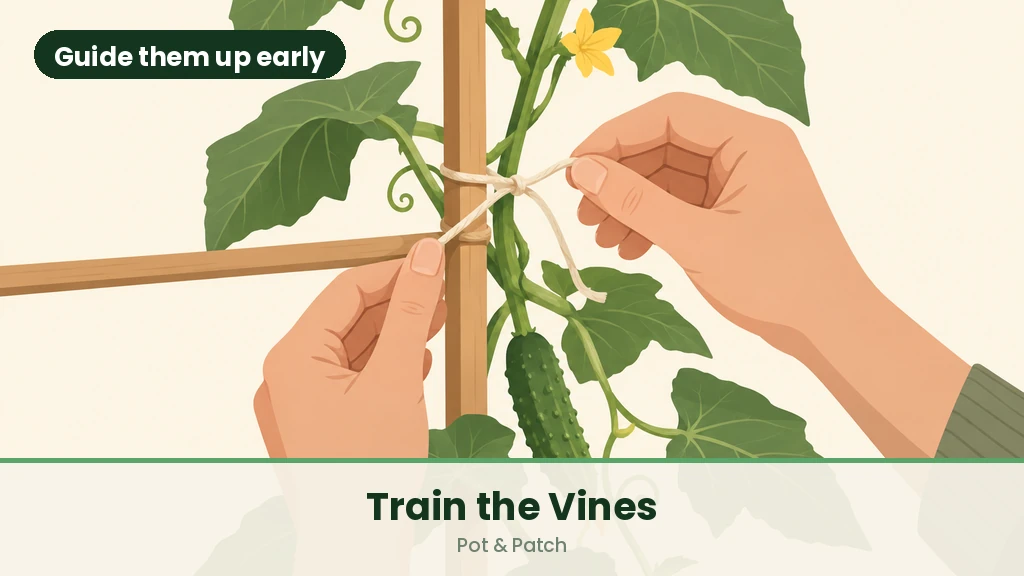
Set the support up first. Install your trellis before you plant or transplant, so you are not driving stakes through established roots later.
Plant at the base. Sow or set plants right along the bottom of the support, roughly a foot apart, so every vine has its own stretch to climb.
Start guiding as the vines run. Once the stems begin to lengthen and reach out, gently weave them into the trellis or loosely tie them in place. Use something soft like twine or a strip of fabric, and tie just below a leaf joint so the knot has something to rest against.
Keep ties loose. Stems thicken fast. A tie that fit last week can choke the vine this week, so check your ties and loosen or move any that are biting in.
Then let go. Once the tendrils are gripping the support reliably, your work is mostly done. The plant will carry itself upward from there, and you only need to redirect the occasional wayward vine.
Should You Prune Vertical Cucumbers?
Pruning is optional, but a light touch can make a vertical plant tidier and more productive. The idea is to keep the lower plant open and push energy up the main stem.
Many growers clear the growth from the bottom five to seven leaf joints, which improves airflow near the soil and encourages the plant to climb rather than bush out low down. You can also trim back some of the side shoots, cutting them close to the main stem, to steer the plant’s energy into upward growth and fruit. Use bypass pruners rather than the anvil type, which can crush a stem. If pruning feels fussy, skip it: plenty of people grow fine vertical cucumbers without ever picking up the shears.
Watering and Care Once They Are Climbing
Vertical cucumbers want the same steady care as any cucumber, with a couple of small adjustments for life off the ground.
Water at the base and keep it off the leaves. Wet foliage is an open invitation to disease, and the whole point of going vertical was drier leaves, so do not undo that with overhead watering. A layer of mulch at the base holds moisture and keeps weeds down. Containers in particular dry out quickly, so check them often in hot weather. If you grow a large-fruited variety, you can cradle heavy cucumbers in a small fabric sling tied to the support, leaving room for them to keep growing, though most standard cucumbers hang quite happily on their own.
Common Mistakes to Avoid
Most vertical cucumber troubles come down to a few avoidable slips.
The big one is an undersized or wobbly support that cannot handle a mature, fruit-laden vine. Starting the training too late is another, since vines that have already sprawled across the ground are harder to lift and redirect. Using fine mesh lets small fruit grow through and get stuck, and placing a trellis flush against a wall or fence can trap cucumbers in the gap behind it. Give the structure a little breathing room, start early, and build it stronger than you think you need.
Growing Cucumbers Vertically: The Quick Version
Choose a vining variety, set up a tall, sturdy support before planting, and guide the young vines onto it until the tendrils take hold. Water at the base, keep the leaves dry, and let the plant climb. You will trade a sprawling ground patch for a neat green wall that gives you cleaner fruit, a bigger harvest, and far easier picking.
Growing in pots? Pair this with our full guide to growing cucumbers in containers, or head to our cucumber growing hub for more.
Frequently Asked Questions
Do cucumbers climb a trellis by themselves?
Largely, yes. Cucumber vines produce tendrils that grab onto supports and pull the plant up. Young vines often need a little early guidance to find the trellis, but once the tendrils grip, the plant climbs on its own.
How tall should a cucumber support be?
Aim for at least five to six feet. Vining cucumbers commonly reach four to six feet and can grow taller, so the support needs the height to match and the strength to hold heavy, fruit-laden vines without leaning or toppling.
Can bush cucumbers be grown vertically?
Not really. Bush varieties have short vines and few tendrils, so they do not climb well. They are better suited to small pots or the open ground. For vertical growing, choose a vining type such as Marketmore 76, Diva, or Suyo Long.
How do you train cucumber vines up a trellis?
Install the support before planting, grow the vines at its base, and gently weave or loosely tie the stems onto it as they lengthen. Use soft ties below a leaf joint and keep them loose. Once the tendrils grip, the plant climbs itself.
What is the best support for vertical cucumbers?
There is no single best one. A-frames, cattle panel arches, netting, string trellises, and sturdy cages all work well. The right choice depends on your space and budget. Whatever you use, make it at least five to six feet tall and strong enough for heavy vines.
Do vertical cucumbers produce more?
They often do. Lifting the vines gives the leaves more sun and better airflow, which supports healthier plants and can raise yields, while also giving you straighter, cleaner fruit that is far easier to find and pick.