15 Patio Vegetable Garden Ideas for Small Outdoor Spaces
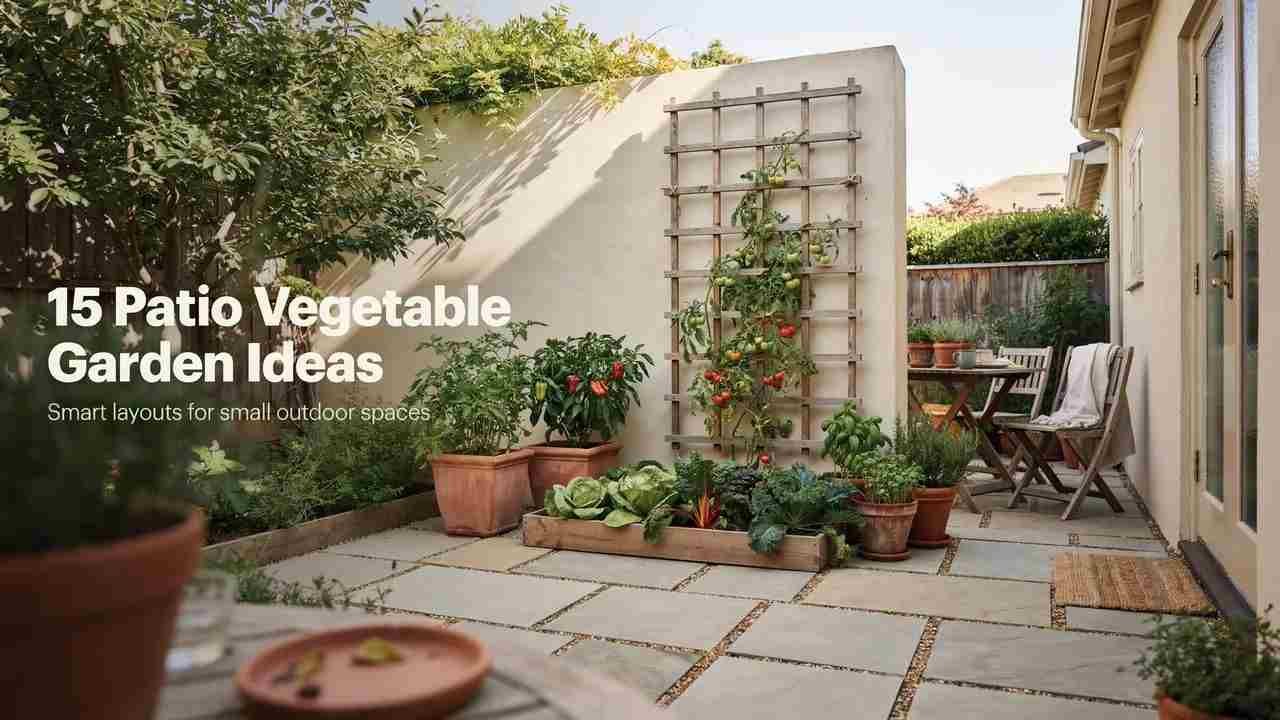
You do not need a large backyard to grow fresh vegetables. The best patio vegetable garden ideas make use of walls, corners, edges, and sunny spots without turning the whole patio into a maze of pots.
The goal is to keep the space productive and comfortable at the same time. A good layout should leave room to walk, water plants, open doors, and use your seating area.
Before choosing a setup, check how much sunlight your patio receives and which areas you actually use each day. Then build the garden around those conditions.
Before You Start a Patio Vegetable Garden
A little planning can prevent most small-space problems later.
Check the Sunniest Areas
Watch your patio for a full day before placing containers.
Tomatoes and peppers generally need at least six hours of sun each day, while crops such as lettuce and kale can handle some shade better.
Put sun-loving crops in the brightest part of the patio. Save less sunny corners for plants that tolerate lower light.
Keep a Clear Walking Route
Avoid filling every open spot with a pot.
Leave enough room to:
- open doors fully
- move chairs
- reach every plant
- carry a watering can
- harvest without stepping around containers
The garden should fit the patio, not take it over.
Plan Around Water Access
Containers can dry quickly during warm weather. In hot conditions, some patio vegetables may need frequent watering.
Place plants where you can reach them easily with a hose or watering can.
Make Sure Containers Can Drain
Every standard vegetable container should have drainage openings. Pots sitting on a paved patio also need a clear way for excess water to escape.
For a complete setup guide, read our container gardening guide.
Patio Vegetable Garden Ideas
The following setups focus on the whole patio rather than individual pots. Choose one based on your available light, patio shape, furniture, and growing goals.
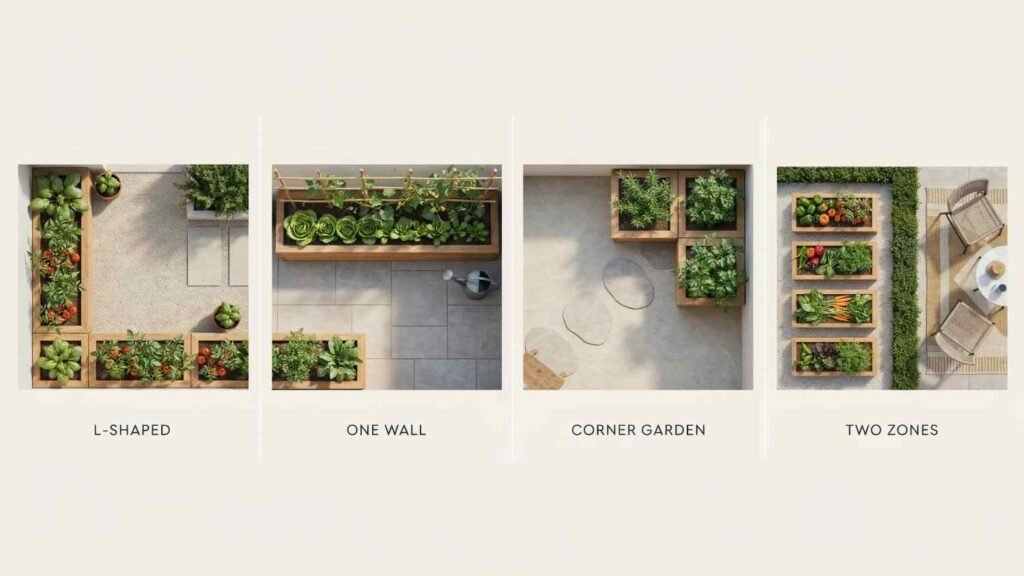
1. Create an L-Shaped Garden Along Two Patio Edges
An L-shaped arrangement works well on square and rectangular patios.
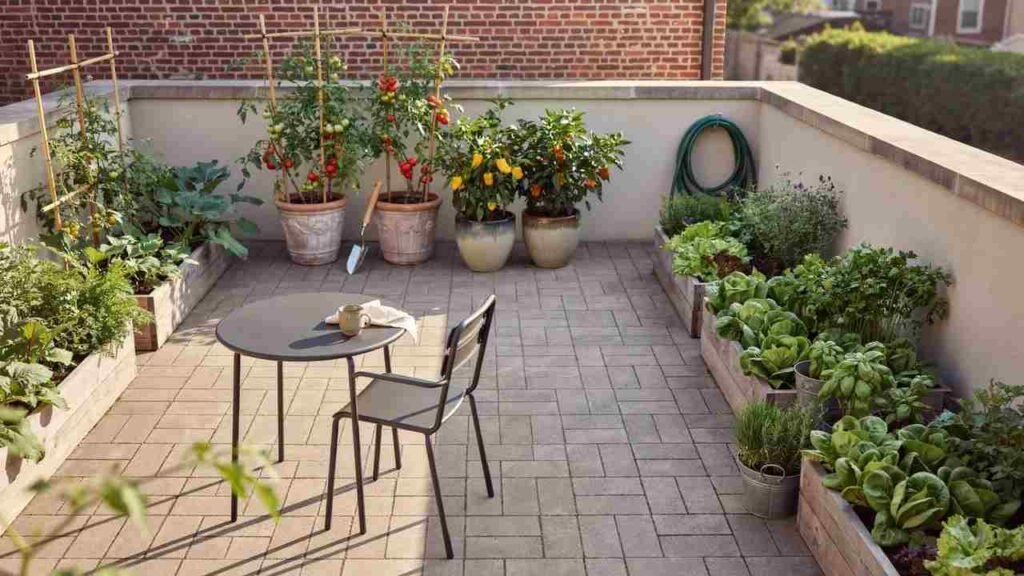
Place containers along two connected outside edges and keep the center open. Larger plants can sit toward the back, while shorter vegetables and herbs stay closer to the front.
You might combine a tomato or pepper container with lettuce, herbs, and compact vegetables along the second side.
This layout creates a defined growing zone without scattering pots everywhere. It also leaves the middle of the patio available for chairs, a small table, or a clear walking path.
Use the sunniest edge for fruiting crops whenever possible.
2. Turn One Sunny Wall Into the Growing Zone
If most of your patio receives shade but one wall gets strong sunlight, concentrate the garden there.
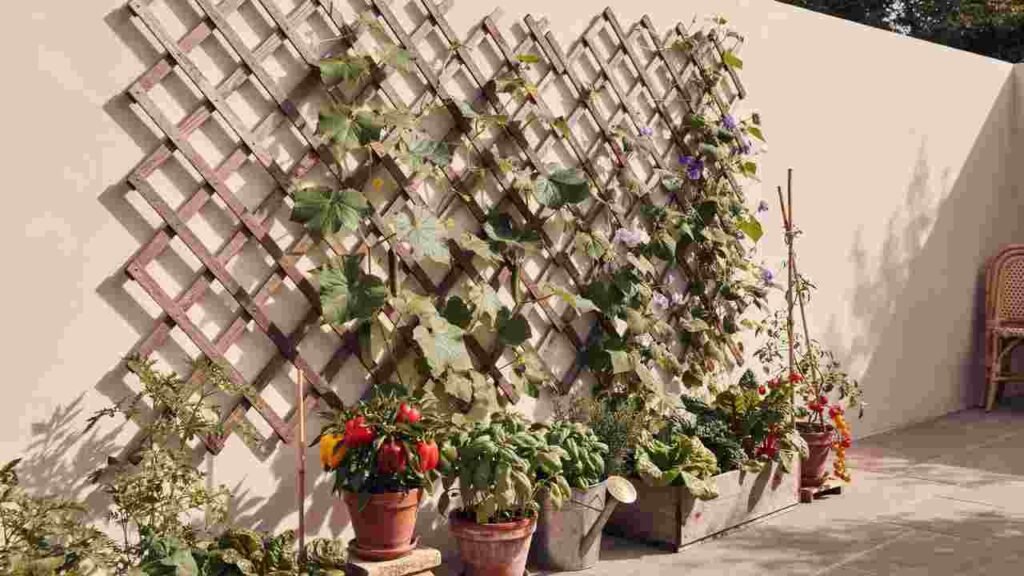
Place a trellis or vertical support against the wall. Cucumbers, pole beans, or other climbing vegetables can grow upward while peppers, herbs, or compact plants occupy the lower level.
Keep enough space between the plants and wall for maintenance and airflow. This setup works particularly well when you want to preserve most of the patio floor for furniture.
3. Turn One Corner Into a Patio Kitchen Garden
An unused patio corner can hold a surprising amount of food.
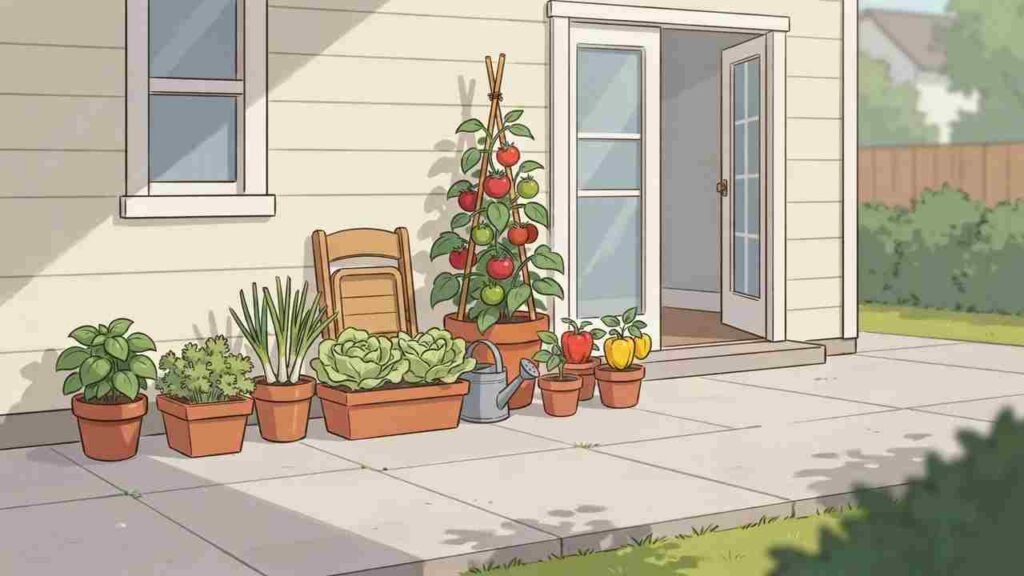
Start with one larger vegetable container and place smaller pots around it. A simple combination could include a compact tomato, basil, parsley, lettuce, or peppers.
Keep the taller plant toward the back so it does not block access to smaller crops.
The biggest advantage is convenience. When vegetables and herbs are grouped near the kitchen door, harvesting them for meals takes very little effort.
Avoid squeezing too many plants into the corner. Every container still needs enough light and space for the mature plant.
4. Place a Raised Planter Behind a Bench
If a bench already sits along one side of your patio, the narrow area behind it can become useful growing space.
A long raised or elevated planter can create a neat vegetable strip without occupying the main walking area.
Use it for:
- lettuce
- leafy greens
- herbs
- peppers
- compact vegetable varieties
Keep tall or spreading crops out of areas where they will lean over the seating.
This arrangement works because the garden becomes part of the patio layout rather than an extra collection of pots.
5. Grow Vegetables Around a Patio Dining Area
You can keep a table and chairs while still growing vegetables.
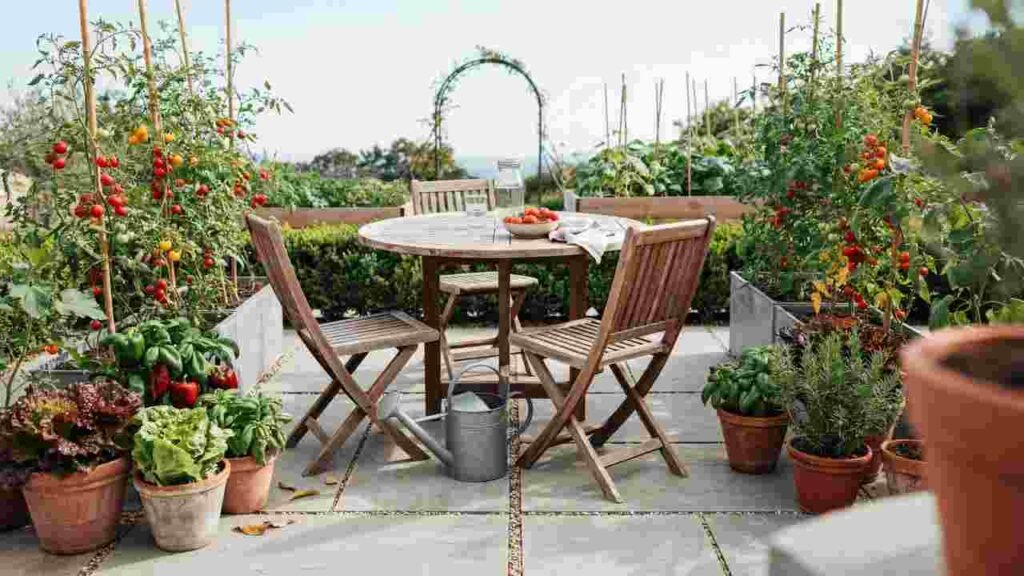
Leave the dining area open and arrange planters around the outside perimeter. Keep frequently harvested herbs close to the table or kitchen entrance, while larger vegetable containers can sit farther toward the edges.
Cherry tomatoes, peppers, lettuce, and herbs can all work well in containers when their size and light requirements are met.
Avoid placing pots directly behind chairs where people need to pull them out.
This setup works best when the garden frames the dining area rather than competing with it.
6. Build a Narrow Vegetable Strip Along One Side
Long, narrow patios benefit from keeping plants on one side.
Use rectangular planters, grow boxes, or a narrow elevated planter in a straight line. This creates one organized growing strip while leaving the opposite side clear for movement.
Good choices can include:
- leafy greens
- herbs
- bush beans
- compact peppers
- radishes
Bush and dwarf vegetable varieties can be particularly useful when space is limited.
Try to avoid using many different tiny containers. A smaller number of properly sized planters usually creates a cleaner layout and gives roots more room.
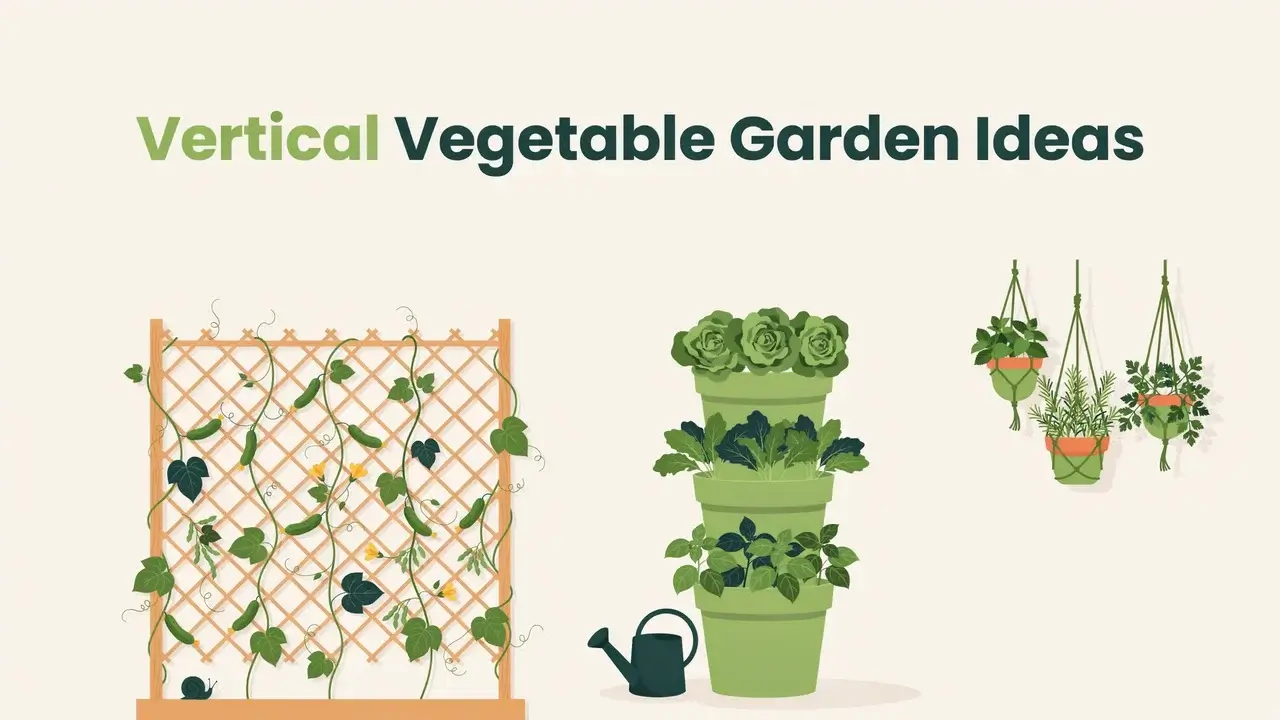
7. Use Vertical Space Without Losing Patio Floor Area
Vertical growing is useful when floor space is the main limitation.
Instead of adding more pots across the patio, use a trellis or support along a wall or boundary. Climbing vegetables can then use the space above an existing container.
Pole beans and cucumbers are common examples of crops that can use vertical support.
Place the support where mature vines will not cover a door, block a walkway, or shade crops that need stronger light.
Vertical growing works best when it frees up usable floor space rather than simply adding more plants.
8. Make a Small Patio Salad Garden
A dedicated salad garden is one of the simplest setups for a small patio.
Use a few containers to grow crops such as:
- leaf lettuce
- spinach
- radishes
- Swiss chard
- green onions
- herbs
Group them together near the kitchen or another easy-to-reach area.
A salad-focused setup also makes it easier to manage plants with similar harvesting habits. You can pick small amounts regularly without walking around the entire patio.
This is a good option when you prefer frequent harvests over a few large crops.
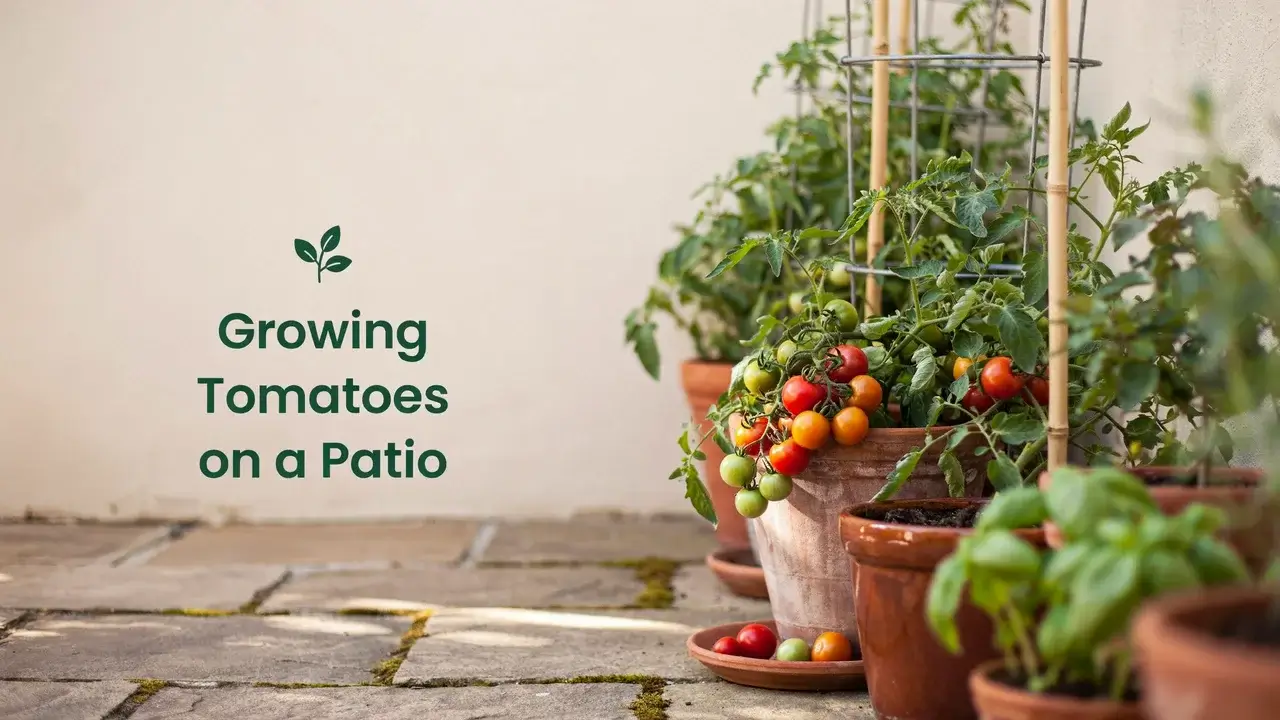
9. Build a Tomato and Herb Corner
A tomato can become the main plant in one sunny patio corner.
Place it in a properly sized container with suitable support, then use nearby pots for herbs such as basil, parsley, or chives.
Standard tomatoes usually need larger containers than small herbs.
For more detailed sizing guidance, see our guide to the best container size for tomatoes.
Keep the arrangement simple enough that you can still reach the tomato for watering, tying, and harvesting.
10. Put Fruiting Crops in the Sunniest Patio Zone
Instead of arranging plants only by appearance, arrange them by light.
Use the brightest section for crops such as tomatoes and peppers. Place leafy vegetables in areas that receive less direct sun where appropriate.
This creates a simple patio plan:
Sunny zone: fruiting vegetables
Less sunny zone: suitable greens and herbs
This approach is particularly useful on patios where nearby walls, fences, or buildings create changing shade during the day.
11. Run a Raised Bed Along the Patio Boundary
If you have enough room along one outside edge, a narrow raised bed can create a permanent vegetable zone.
Place it against a boundary where it will not reduce the main walking area.
A raised bed can hold several vegetables together and may look more organized than a collection of separate containers.
Keep access in mind. You should be able to reach the planting area without stepping into the bed or squeezing behind furniture.
If you are new to this growing method, our raised bed vegetable gardening for beginners guide covers the wider setup and planting process.
12. Use a U-Shaped Layout for More Growing Space
A U-shaped arrangement uses three patio edges while keeping the center accessible.
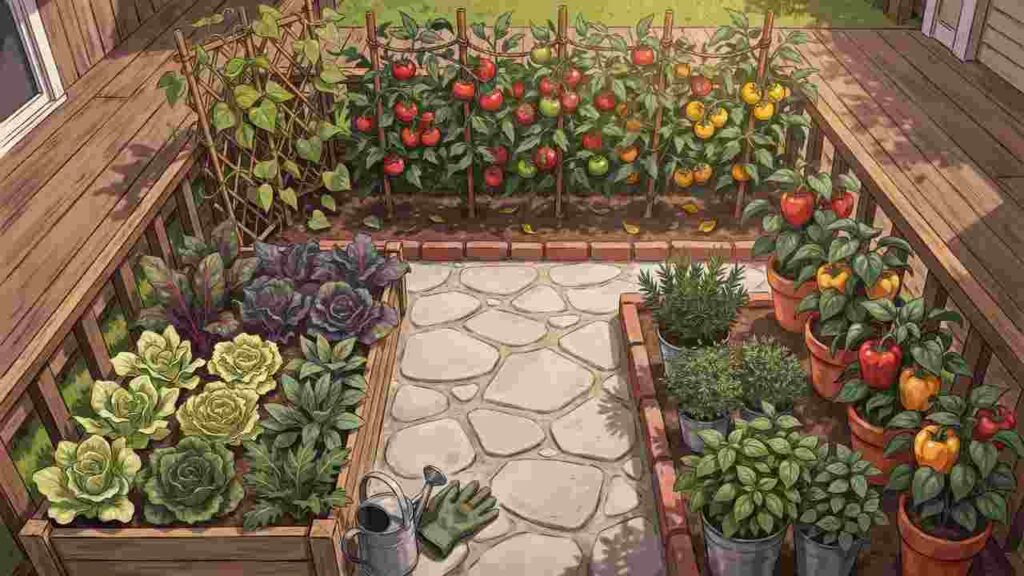
It works best where the patio is large enough to leave a comfortable open area between the planters.
Put tall crops along the side where they are least likely to shade shorter plants. Use the remaining edges for herbs, greens, peppers, or other compact vegetables.
Avoid making the gap in the middle too narrow. You still need enough space to turn around, water plants, and carry supplies.
This is one of the better patio vegetable garden ideas when you want more growing capacity without completely giving up the center of the patio.
13. Divide the Patio Into a Garden Zone and Seating Zone
Sometimes the cleanest solution is to divide the patio in two.
Use one section for growing vegetables and keep the other dedicated to seating or outdoor living.
A row of planters can visually separate the two zones without building a permanent wall.
This works especially well on medium-sized patios where mixing containers among furniture would otherwise feel crowded.
Keep plants that need frequent care on the accessible side of the garden zone. Tall supports should sit along the outside edge rather than directly between the garden and seating.
14. Create a Flexible Mobile Patio Garden
A patio does not have to keep the same layout all year.
Use a few properly sized containers that can be repositioned when necessary. This can help when seasonal sunlight changes or when you need more open space for guests.
The key is flexibility, not moving plants constantly.
Consider the mature weight of large containers before planning to relocate them. Soil and water can make even a medium pot difficult to move.
Keep the heaviest containers in their main growing position and use mobility only where it genuinely helps.
15. Keep a Patio Kitchen Garden Near the Back Door
If the patio connects directly to the kitchen, make that location work for you.
Place frequently harvested crops closest to the door.
Possible choices include:
- basil
- parsley
- green onions
- lettuce
- peppers
- cherry tomatoes
Use the containers that need less frequent attention farther away.
This arrangement makes harvesting convenient and keeps the most useful plants visible.
A back-door kitchen garden can stay quite small. The goal is easy access to crops you actually use.
Which Patio Layout Fits Your Space?
Different patio shapes need different solutions.
| Your Patio Situation | Layout to Consider |
|---|---|
| Long and narrow | One-side vegetable strip |
| Only one sunny wall | One-wall growing zone |
| One unused corner | Patio kitchen garden |
| Need a dining table | Perimeter garden |
| Want more growing space | U-shaped layout |
| Need flexible floor space | Mobile garden |
| Want crops near the kitchen | Back-door kitchen garden |
| Need vegetables and seating | Two-zone layout |
Do not choose a layout only because it looks attractive in a photo.
The best option is one that matches your sunlight, available floor area, and daily use of the patio.
A patio used for dining, for example, benefits from edge planting. A narrow patio may work better with one continuous growing strip.
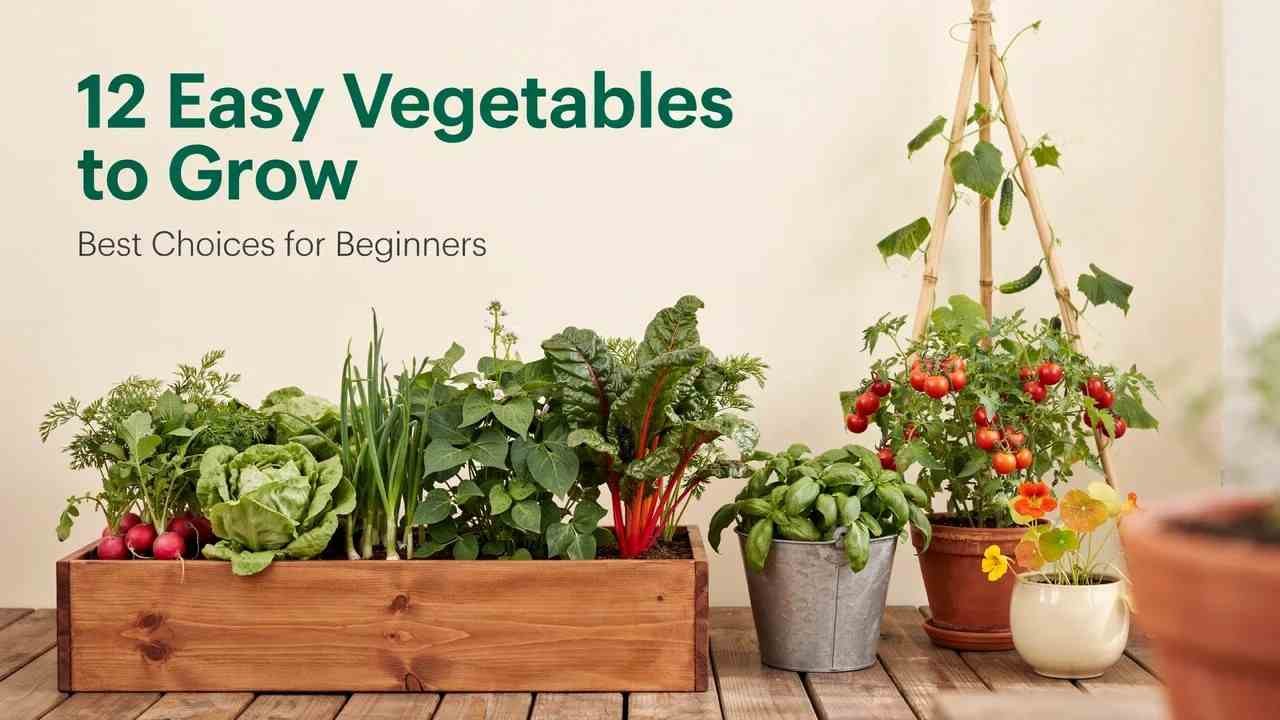
What Vegetables Work Well on a Small Patio?
Many vegetables can grow successfully on patios when their containers, sunlight, and support needs are met.
Good possibilities include:
- tomatoes
- peppers
- lettuce
- radishes
- bush beans
- Swiss chard
- cucumbers
- herbs
Compact, bush, and dwarf varieties can be especially useful in small spaces.
Cucumbers and some beans can also grow vertically when provided with suitable support.
Avoid choosing crops only because the seedlings look small. Think about the mature plant.
Container size also matters. A standard tomato or pepper needs considerably more root space than lettuce or radishes.
For a more complete crop list, see our guide to the best container vegetables.
How to Keep a Small Patio Vegetable Garden From Feeling Crowded
Good small patio vegetable garden ideas leave some empty space.
Trying to grow the maximum possible number of plants often makes watering, harvesting, and everyday patio use more difficult.
Keep the Center Open
Use walls, corners, and edges first.
An open center gives you room to walk and makes a small patio feel less cramped.
Put Taller Plants Toward the Back
Tomatoes, trellised cucumbers, and other tall crops can block smaller plants if they are placed carelessly.
Think about the direction of the sun before positioning them.
Use Fewer, Properly Sized Containers
Too many small pots can quickly make a patio feel cluttered.
Give larger vegetables enough root space instead of squeezing them into undersized containers.
Use Vertical Supports Selectively
A trellis can save floor space, but covering every wall with plants may make the patio harder to maintain.
Use vertical growing where it solves an actual space problem.
Keep Every Plant Reachable
Do not create a layout where you need to step over containers to harvest or water the plants behind them.
For more arrangement inspiration, see our container garden ideas for small spaces.
Common Small Patio Vegetable Garden Mistakes
A small patio leaves less room for layout mistakes.
Avoid these common problems:
- Blocking the main walkway: Keep doors and regular walking routes clear.
- Ignoring sunlight: Place vegetables according to their light requirements rather than appearance alone.
- Using containers that are too small: Larger crops need enough soil volume for their roots.
- Forgetting drainage: Standard containers need drainage openings so excess water can escape.
- Making plants difficult to reach: Leave enough room for watering, pruning, and harvesting.
- Putting tall plants in the wrong place: Mature plants can shade shorter vegetables.
- Using heavy garden soil in pots: Container vegetables usually perform better in a suitable potting mix.
Our guide to the best soil for container gardening covers the soil topic in more detail.
Frequently Asked Questions
Can I grow vegetables on a small patio?
Yes. Many vegetables can grow in containers on patios, including tomatoes, peppers, lettuce, beans, radishes, cucumbers, and herbs. Choose containers and varieties that fit your available sunlight and space.
What vegetables are easiest to grow on a patio?
Lettuce, radishes, herbs, peppers, bush beans, and compact tomato varieties are practical options for many patio gardens. The easiest choice still depends on sunlight, climate, container size, and how often you can water.
How much sun does a patio vegetable garden need?
Light requirements depend on the crop. Fruiting vegetables such as tomatoes and peppers usually need more direct sun than leafy vegetables such as lettuce and kale.
How should I arrange vegetable pots on a patio?
Start with the edges and corners. Keep taller plants where they will not shade shorter crops, preserve a clear walkway, and keep frequently watered or harvested plants easy to reach.
Can I put a raised garden bed on a patio?
Yes, if the patio can accommodate the bed and you plan for drainage, access, and the mature weight of the filled structure. Keep water movement in mind on paved surfaces.
What can I grow on a partially shaded patio?
Leafy vegetables such as lettuce and kale generally tolerate less sun better than fruiting vegetables such as tomatoes and peppers. Match crops to the actual light conditions on your patio.
How do I make a small patio vegetable garden look organized?
Create a defined growing zone instead of scattering pots randomly. Use edges, group compatible containers, keep walkways open, and use vertical supports only where they help conserve floor space.
Make Your Patio Work as Both a Garden and Outdoor Space
The most useful patio vegetable garden ideas do more than fit plants into a small area. They make vegetables part of a patio that still works for everyday life.
Start with sunlight and the space you need to keep open. Then use walls, corners, boundaries, and vertical supports where they make sense.
Choose crops that fit your containers rather than trying to fit every vegetable onto the patio. A few healthy, accessible plants are usually more useful than dozens of crowded pots.
With a clear layout, even a small patio can provide room for vegetables while remaining comfortable for walking, sitting, and harvesting.