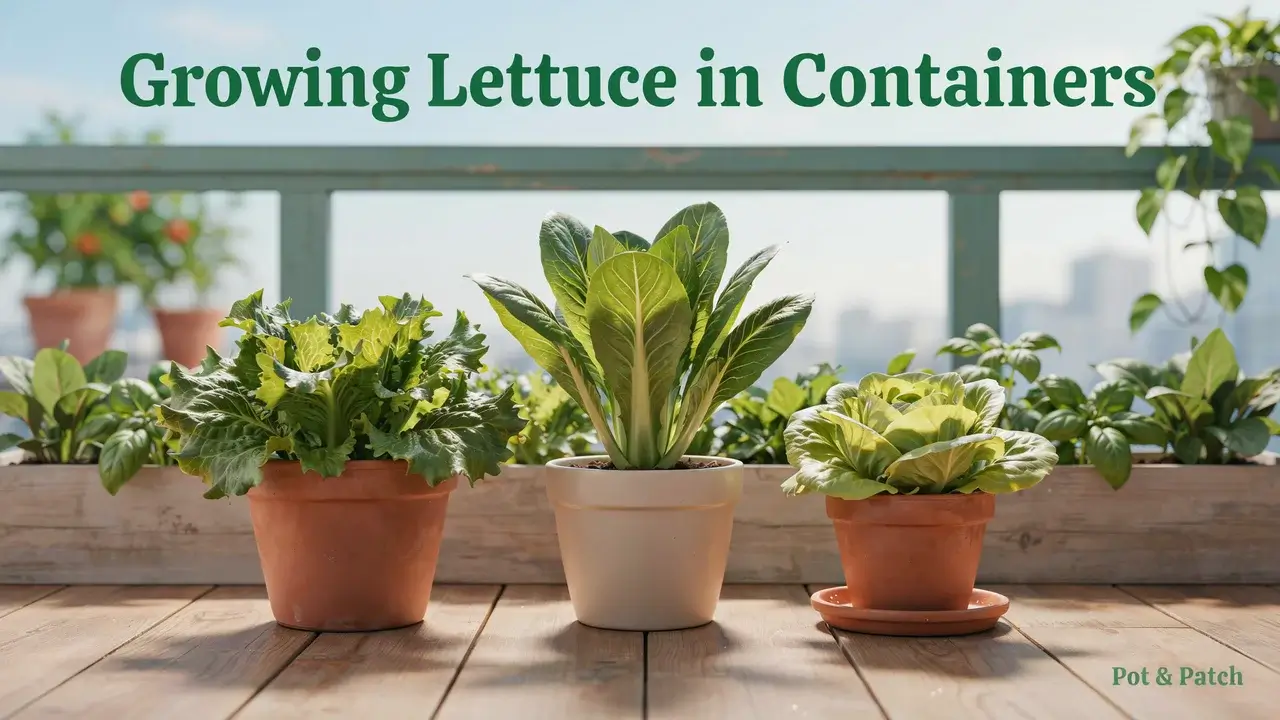
Growing Lettuce in Containers: Beginner Guide from Seed to Harvest
Growing lettuce in containers is one of the easiest ways to raise fresh salad greens when garden space is limited. Lettuce has a relatively shallow root system, grows quickly, and fits well in window boxes, wide planters, patio pots, and balcony gardens.
The main challenge is not finding a huge container. Lettuce performs best when it has suitable spacing, consistent moisture, enough light, and cool enough conditions to delay bolting. You can also harvest many loose-leaf varieties more than once or sow new batches every few weeks for a steadier supply.
This guide covers the process from choosing lettuce and sowing seeds to watering, preventing bolting, and harvesting.
Growing Lettuce in Containers at a Glance
| Growing Requirement | Good Starting Point |
|---|---|
| Container depth | About 6 inches can work for leaf lettuce, deeper for large heads |
| Container shape | Wide planters make efficient use of space |
| Light | Partial to full sun depending on season and temperature |
| Best season | Cool spring and fall conditions |
| Growing medium | Lightweight, well-draining potting mix |
| Water | Keep the shallow root zone consistently moist |
| Spacing | Depends on baby leaves, loose-leaf plants, or full heads |
| Fertilizer | Feed according to the potting mix and product label |
| Harvest | Baby leaves, outer leaves, cut-and-come-again, or whole heads |
| Main challenge | Heat and bolting |
Lettuce is particularly suited to containers because it does not require the deep root volume needed by crops such as tomatoes or peppers. Illinois Extension lists four to six leaf-lettuce plants as suitable for a one-gallon container, illustrating how efficiently leaf lettuce can use limited growing space.
Can Lettuce Grow Well in Containers?
Yes. Lettuce is an excellent container crop.
Its smaller root system means you can use planters that would be too shallow for many fruiting vegetables. Containers also let you reposition plants as temperatures and sunlight change through the season.
That mobility is particularly useful with lettuce. A pot can sit in a sunnier location during cool spring weather and move into afternoon shade when temperatures rise.
Container-grown lettuce still needs close attention to moisture. The roots that absorb much of the plant’s water and nutrients remain near the soil surface, so dry potting mix can quickly affect growth and leaf quality.
If you are completely new to growing crops in pots, our container gardening guide covers general container setup. This guide stays focused specifically on lettuce.
Best Types of Lettuce for Containers
Most common lettuce types can grow in pots, but they do not all use space in the same way.
Loose-Leaf Lettuce
Loose-leaf lettuce is usually the easiest choice for beginners.
Instead of forming a tight head, it produces individual leaves that can be picked as needed.
Loose-leaf lettuce works especially well for:
- repeated outer-leaf harvests
- baby greens
- cut-and-come-again growing
- succession sowing
- shallow, wide containers
This is usually the most efficient type when the goal is regular salads from a small planter.
Butterhead Lettuce
Butterhead lettuce includes Bibb and Boston types.
It forms a softer, looser head than crisphead lettuce and can fit well into containers when each plant receives sufficient spacing.
Butterhead is also suitable for succession planting, where several smaller batches are sown at different times rather than planting the entire container at once.
Romaine Lettuce
Romaine, also called cos lettuce, develops upright leaves and a taller head.
Its vertical shape can be useful where horizontal space is limited, although plants grown to full size require more individual spacing than densely sown baby greens.
Crisphead and Iceberg Lettuce
Crisphead lettuce can be grown in containers, but it is less forgiving.
It needs more space to form a proper head and a sufficiently long period of cool weather. Warm conditions can push the plant toward bolting before a good head develops.
For a first container crop, loose-leaf, butterhead, or romaine is usually simpler.
| Lettuce Type | Container Suitability | Best Use |
|---|---|---|
| Loose-leaf | Excellent | Repeated leaf harvests |
| Butterhead | Excellent | Compact loose heads |
| Romaine | Very good | Upright heads |
| Crisphead | Moderate | Full heads during cool weather |
| Baby leaf mixes | Excellent | Dense sowing and quick harvests |
What Size Container Does Lettuce Need?
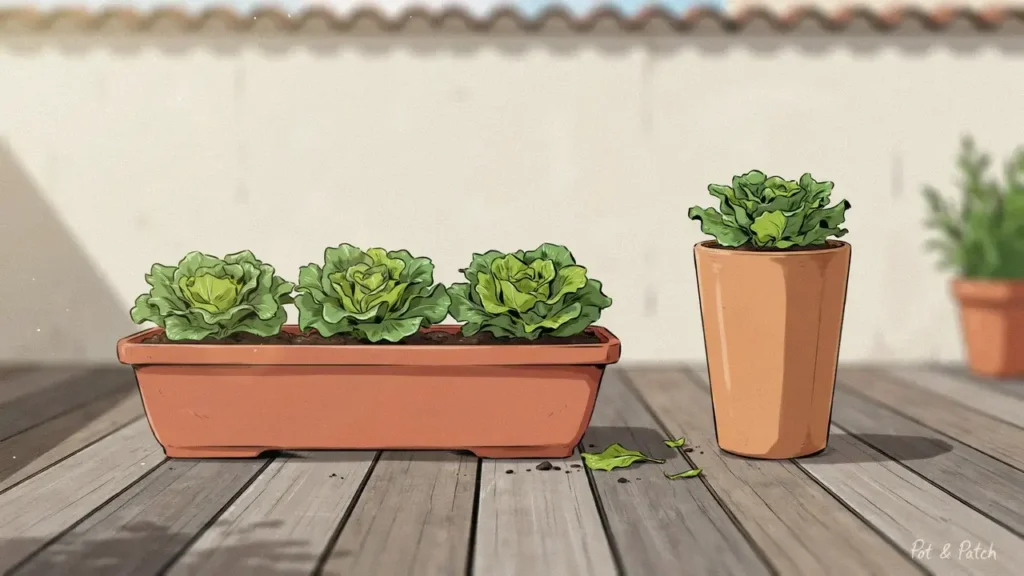
Lettuce does not require an extremely deep pot. For loose-leaf lettuce, a container around 6 inches deep can be enough when it provides adequate width, drainage, and potting mix. Larger head-forming varieties benefit from more space.
The important point is that surface area can be more useful than unnecessary depth.
A wide rectangular planter may hold several lettuce plants while using less potting mix than a very deep round container.
Why Wide Containers Work Well for Lettuce
Lettuce develops many of its actively absorbing roots relatively close to the surface.
That makes containers such as these particularly useful:
- window boxes
- rectangular planters
- wide bowls
- salad boxes
- shallow grow boxes
- trough-style containers
Wide planters also make succession sowing easier because you can divide the available surface into several planting sections.
How Many Lettuce Plants Can Fit in a Container?
That depends on how you plan to harvest them. Baby lettuce can be grown relatively densely, while plants expected to form mature heads need more individual space.
As a practical rule, avoid judging spacing only by how tiny the seedlings look. Mature lettuce leaves need space for light and airflow.
We will cover spacing by harvest style in the planting section below.
Drainage Still Matters
Shallow pots do not eliminate the need for drainage.
Use containers with working drainage holes so excess water can leave the root zone. Lettuce likes consistent moisture, but permanently saturated potting mix can create unhealthy root conditions.
Best Soil for Growing Lettuce in Containers
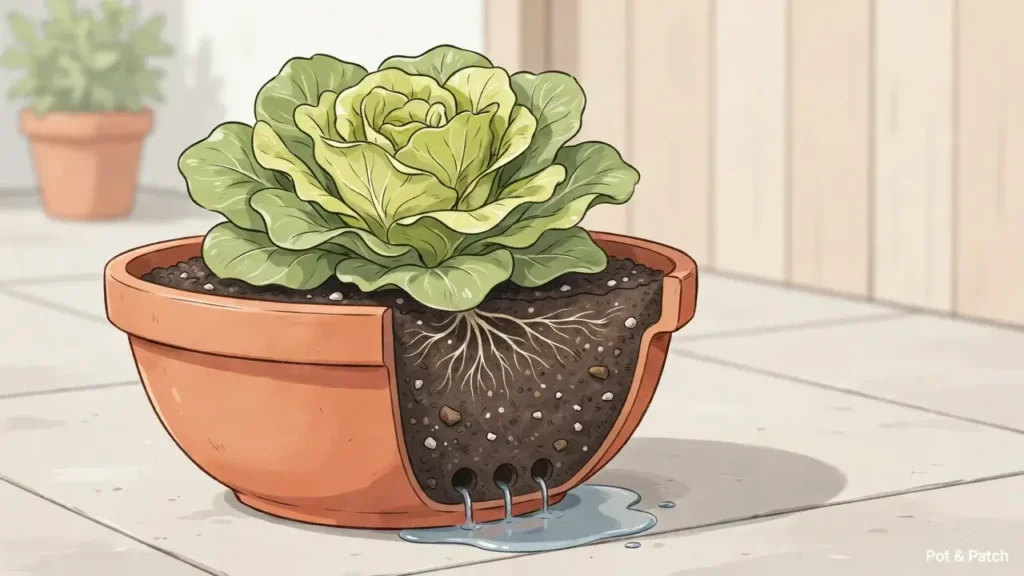
Growing lettuce in containers works best in a lightweight potting mix that holds useful moisture without remaining waterlogged.
Avoid filling a lettuce planter entirely with ordinary garden soil. Inside a pot, dense soil can compact and drain poorly.
A useful growing medium should provide:
- good moisture retention
- reliable drainage
- air around the root zone
- enough structure to support seedlings
- nutrients appropriate for vegetable growth
Because lettuce has shallow roots, the upper portion of the mix should not repeatedly become extremely dry.
You do not need to recreate a full soil formula specifically for lettuce. Our guide to the best soil for container gardening covers potting mixes and amendments in more detail.
When Is the Best Time to Grow Lettuce in Pots?
Lettuce is a cool-season crop.
For many parts of the United States, spring and fall are easier than midsummer.
Your exact planting period depends on:
- local frost dates
- daytime temperatures
- nighttime temperatures
- lettuce variety
- whether the container can be moved or shaded
There is no single nationwide planting date.
Growing Lettuce in Spring
Spring is one of the easiest times to grow lettuce.
Cool temperatures support leafy growth, and lettuce can use more direct sunlight than it usually needs during hot summer weather.
Start early enough that plants can produce before sustained heat arrives.
Growing Lettuce in Fall
Fall is another excellent lettuce season.
Sow early enough for plants to establish before very cold weather arrives, while taking advantage of the cooler conditions that lettuce prefers.
Can You Grow Lettuce in Summer?
Sometimes, but summer can be challenging. Heat and long days encourage lettuce to bolt. The plant starts directing energy toward reproduction rather than tender leaf growth.
Containers offer one advantage because you can move them into a cooler location with afternoon shade.
During warm weather:
- choose slow-bolting varieties
- provide afternoon shade
- keep moisture consistent
- harvest promptly
- sow smaller batches rather than expecting one planting to last all summer
How to Grow Lettuce From Seed in Containers
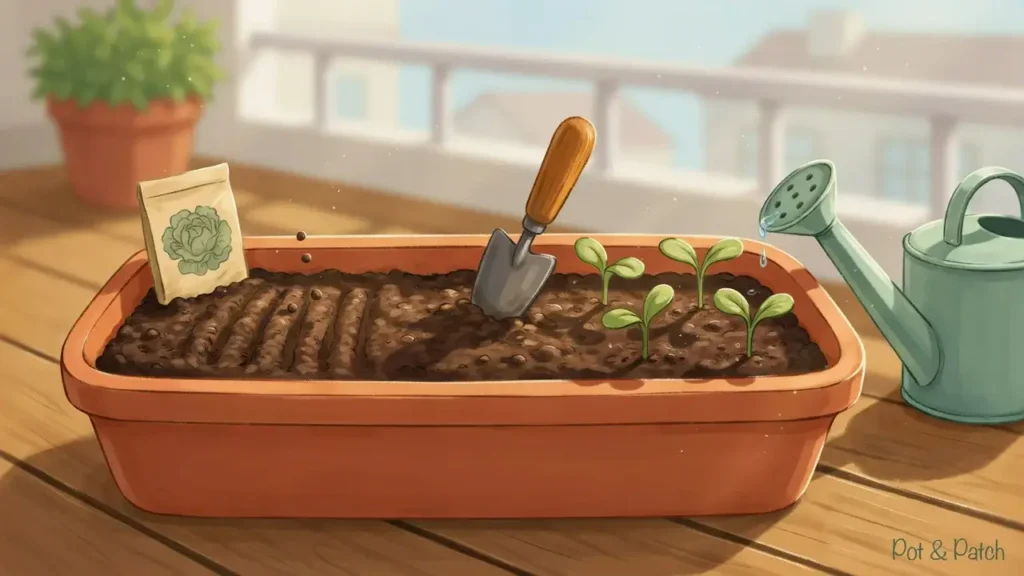
Direct sowing is one of the simplest ways to grow lettuce in pots. Lettuce seeds are small, so they should be planted shallowly. Follow the seed packet for the exact sowing depth and spacing recommended for the variety you are growing.
A simple process is:
- Fill the container with moist potting mix.
- Level the surface gently.
- Sow seeds according to the packet directions.
- Cover them lightly.
- Water gently so the seeds are not washed away.
- Keep the surface consistently moist during germination.
- Thin seedlings once they become established.
Do not sow the entire seed packet simply because the seeds are small.
Overcrowding becomes obvious only after the leaves expand.
How to Thin Lettuce Seedlings
Thinning gives the remaining plants space to develop. Rather than pulling crowded seedlings and disturbing nearby roots, unwanted plants can be clipped near the soil surface with small scissors.
Lettuce Spacing by Harvest Style
Spacing depends more on the final harvest stage than on the container itself.
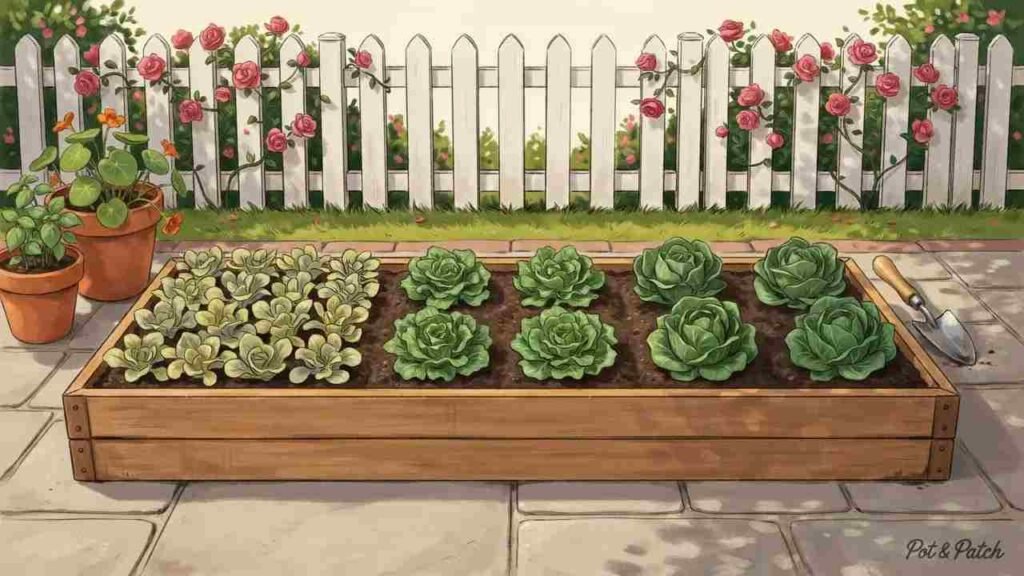
| Harvest Style | Practical Spacing |
|---|---|
| Baby greens | Sow relatively densely, then thin as needed |
| Loose-leaf plants | About 4 to 8 inches |
| Mini heads | About 6 to 8 inches |
| Full-size heads | Around 10 to 12 inches, depending on variety |
Always compare those general ranges with the seed packet because mature size differs among cultivars.
How Much Sun Does Container Lettuce Need?
Lettuce does not need the same intense sun exposure as tomatoes, peppers, or cucumbers. It can tolerate partial shade, especially when temperatures rise.
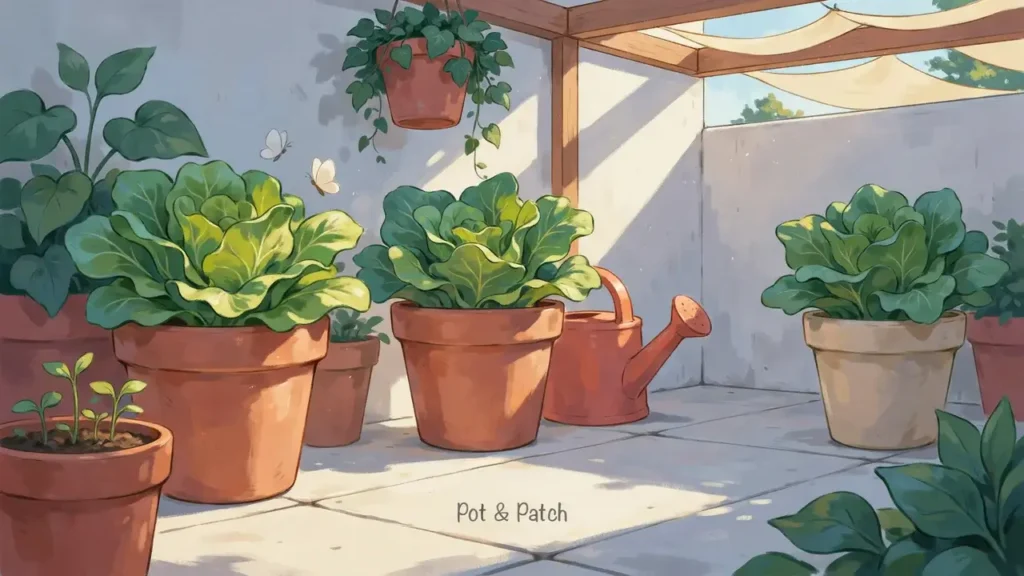
During Cool Weather
A sunny position is usually useful. The lower temperatures reduce heat stress, so spring and fall lettuce can tolerate more direct sun.
During Hot Weather
Afternoon shade becomes valuable. This is one reason lettuce works so well in portable pots.
If a balcony or patio becomes intensely hot in summer, move the planter to:
- morning sun and afternoon shade
- filtered light
- a cooler side of the patio
- temporary shade during the hottest hours
Lettuce is also one of the crops that can tolerate less sun than many fruiting vegetables. For broader crop ideas, see our guide to vegetables that grow in shade.
How to Water Lettuce Growing in Pots
Lettuce has a shallow root system, so moisture near the surface matters.
Do not let the planter repeatedly become completely dry and then saturate it with water.
Instead, check the growing medium frequently and aim for reasonably even moisture.
Signs Lettuce May Need Water
Look for:
- dry potting mix near the surface
- limp or soft leaves
- a noticeably lighter container
- rapid drying during warm or windy weather
Do not rely on a rigid schedule such as “water every two days.”
A shallow terracotta planter in warm wind will dry at a different rate from a larger plastic box in partial shade.
Avoid Soggy Potting Mix
Consistent moisture does not mean permanently wet soil.
Make sure drainage holes remain open, and avoid leaving the root zone sitting in water.
The goal is moist growing media with enough air for healthy roots.
Does Container Lettuce Need Fertilizer?
Lettuce grows quickly, so it needs adequate nutrition, but that does not mean it requires heavy feeding.
First check the potting mix. Many commercial mixes already contain fertilizer.
If additional feeding is needed:
- use a fertilizer suitable for edible vegetables
- follow the product label
- avoid exceeding the recommended rate
- watch plant growth before adding more
Because lettuce is grown mainly for leaves, healthy vegetative growth matters, but excessive feeding is still unnecessary.
How to Keep Lettuce From Bolting
Bolting occurs when lettuce begins producing a flowering stalk.
Once this process starts, leaf quality declines and the plant usually develops a stronger bitter flavor.
The main triggers include:
- increasing temperatures
- long days
- intense light
- plant stress
- crop maturity
You cannot make lettuce immune to seasonal heat, but you can delay bolting.
Grow During Cooler Weather
Spring and fall usually offer better conditions than midsummer.
Choose Slow-Bolting Varieties
Check seed descriptions for cultivars bred for improved heat tolerance or slower bolting.
Give Afternoon Shade
Moving pots away from intense afternoon sun can reduce heat stress.
Keep Moisture Consistent
A dry root zone adds another source of stress.
Harvest Promptly
Do not leave mature lettuce indefinitely while waiting for it to become larger.
Replace Bolting Plants
Once a lettuce plant is clearly producing a seed stalk and its leaves have become bitter, replacing it with a younger planting is usually more useful than trying to force it back into leafy growth.
How to Grow Lettuce With Succession Planting
One of the best ways to keep lettuce available is to avoid planting everything on the same day.
Instead, sow smaller batches at intervals.
A simple container schedule might look like this:
Week 1: Sow the first section.
Week 2 or 3: Sow the second section.
Week 4: Sow another section.
Later: Harvest the oldest planting while the younger sections continue growing.
This avoids having an entire planter become ready at the same time.
It also lets you remove older plants that begin bolting while younger lettuce takes their place.
How to Harvest Lettuce From Containers
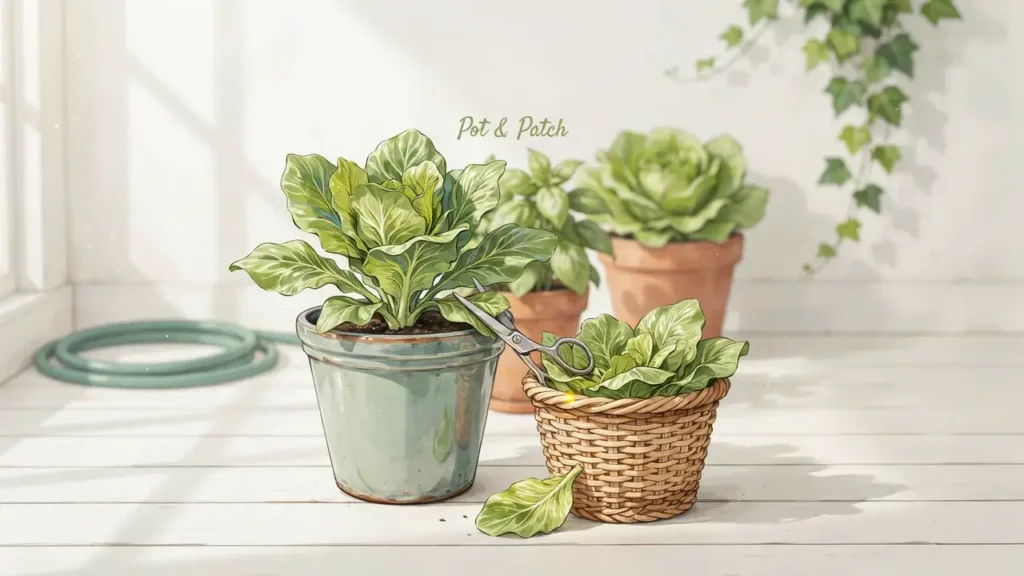
Lettuce gives you more harvesting options than many vegetables.
You can harvest:
- baby leaves
- individual outer leaves
- repeated cut-and-come-again crops
- whole heads
The method you choose affects how long the planting remains productive.
Harvesting Outer Leaves
For loose-leaf lettuce, pick the largest outside leaves first. Leave the smaller center leaves and growing point intact so the plant can continue producing.
Cut-and-Come-Again Lettuce
Cut-and-come-again works particularly well with baby greens and loose-leaf types. Cut leaves above the growing point rather than cutting the plant flush with the potting mix.
Keep the container watered afterward and allow new foliage to develop.
Harvesting Whole Heads
Butterhead, romaine, and crisphead varieties can be harvested as complete heads. Cut the mature plant near the base once it reaches the size expected for the variety.
If hot weather is approaching, harvesting a slightly smaller but tender head can be better than waiting until the plant bolts.
Common Problems When Growing Lettuce in Containers
Growing lettuce in containers is relatively straightforward, but heat, water stress, and pests can quickly affect tender leaves.
Lettuce Tastes Bitter
Bitterness commonly increases when lettuce is exposed to hot conditions or begins bolting.
If bitterness develops:
- check whether the plant is beginning to bolt
- harvest promptly
- move younger plants into afternoon shade
- maintain more consistent moisture
- replace old plants with a fresh succession sowing
Lettuce Is Wilting
Wilting may mean the shallow root zone is drying, but intense heat can also cause leaves to droop temporarily.
Check the potting mix before automatically watering.
If it is wet, adding more water may not solve the problem.
Brown Leaf Edges or Tipburn
Brown or damaged leaf margins can occur when plants experience rapid changes in growth or water availability.
Do not automatically assume every case requires calcium fertilizer.
First review:
- watering consistency
- heat
- drainage
- fertilizer use
- plant crowding
Lettuce Is Bolting
A tall central stalk, increasingly upright growth, and bitter leaves are signs that the plant is shifting toward flowering.
Once bolting is well underway, harvest whatever usable leaves remain and replace the plant.
Holes in Lettuce Leaves
Leaf holes can indicate chewing pests.
Inspect:
- leaf undersides
- the potting surface
- around the container rim
- young seedlings
Common culprits can include slugs, snails, flea beetles, and other chewing pests.
Identify the pest before deciding how to manage it.
7 Common Mistakes When Growing Lettuce in Containers
1. Using a Container Without Drainage
Lettuce needs regular moisture, but the roots should not remain in stagnant water.
2. Crowding Full-Size Lettuce Heads
Seedlings look tiny at first. Give mature plants the spacing they actually need.
3. Letting Shallow Pots Dry Out
A shallow root zone can lose usable moisture quickly, especially in warm or windy weather.
4. Leaving Lettuce in Intense Summer Sun
Lettuce prefers cooler conditions than fruiting crops. Afternoon shade can become valuable when temperatures rise.
5. Planting Every Seed at Once
Staggering sowings gives you a longer harvest rather than one large crop followed by nothing.
6. Waiting Too Long to Harvest
Tender leaves do not keep improving indefinitely. Heat and maturity eventually reduce quality.
7. Trying to Reverse Severe Bolting
Once a mature seed stalk develops and leaves become strongly bitter, replacing the plant is usually more productive.
Frequently Asked Questions
How deep should a container be for lettuce?
A container around 6 inches deep can work well for loose-leaf lettuce and baby greens. Large head-forming varieties benefit from additional root space and wider spacing.
Can lettuce grow in a 6-inch-deep pot?
Yes. Loose-leaf lettuce is well suited to shallow containers as long as the planter provides adequate potting mix, drainage, moisture, and surface area.
How many lettuce plants can grow in one pot?
It depends on pot width and harvest stage. Baby greens can grow more densely, while full-size lettuce needs considerably more space.
Does lettuce need full sun?
Not necessarily. Lettuce tolerates partial shade, and additional shade can be beneficial during hot summer conditions.
How often should lettuce in pots be watered?
There is no fixed schedule. Check the shallow root zone frequently and water when the growing medium starts losing moisture. Weather, container size, material, and sunlight all affect drying speed.
Can you grow lettuce all summer?
It depends on climate. Very hot weather can trigger bolting and bitter leaves. Slow-bolting varieties, afternoon shade, consistent moisture, and repeated sowings can extend the season, but some climates are simply too hot for good outdoor lettuce during midsummer.
Does lettuce grow back after cutting?
Loose-leaf lettuce and baby greens can produce another harvest if they are cut above the growing point and the plant remains healthy.
Growing Lettuce in Containers Successfully
Growing lettuce in containers does not require a deep planter or a large garden. A wide container with drainage, quality potting mix, sensible spacing, and consistent moisture can provide plenty of room for fresh greens.
Pay particular attention to temperature. Lettuce prefers cooler growing conditions, so use more sun in spring and fall and provide afternoon shade when weather becomes hot. Succession sowing and timely harvesting can keep new leaves coming instead of relying on one planting for the entire season.
With those basics in place, loose-leaf lettuce, butterhead, romaine, and baby greens can all fit comfortably into a small patio or balcony garden.