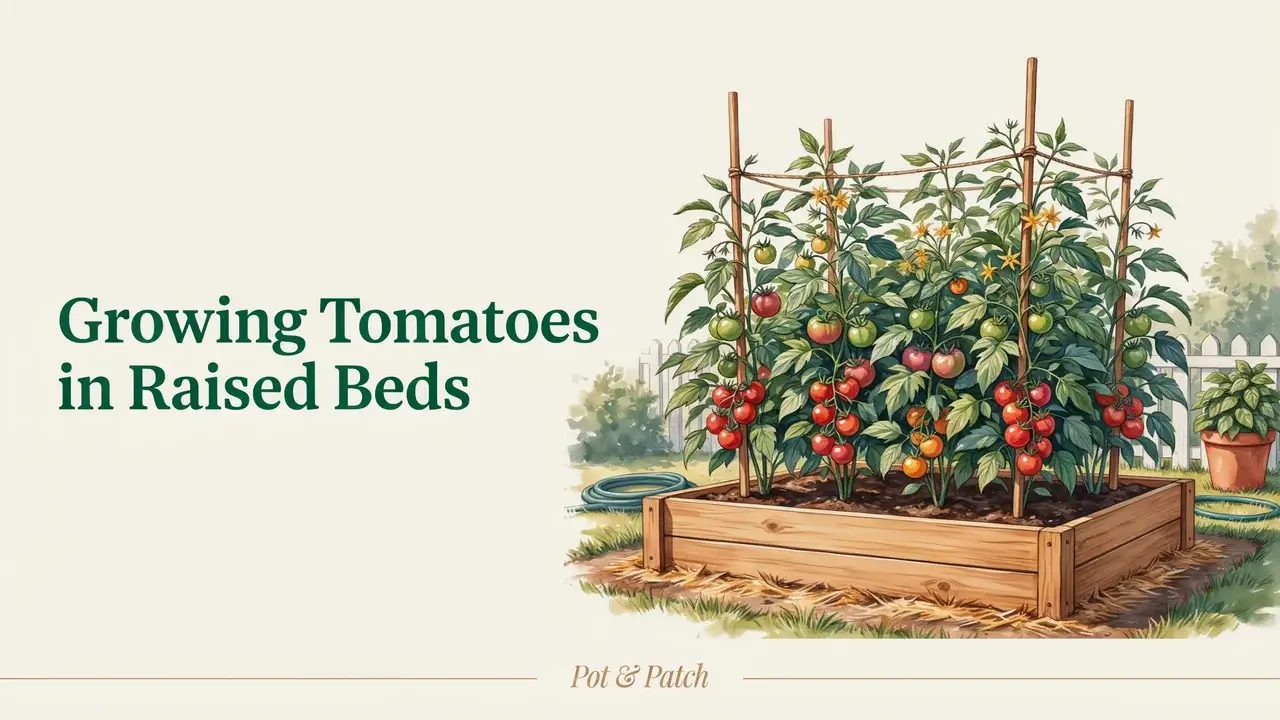
Growing Tomatoes in Raised Beds: A Beginner’s Guide to Better Harvests
Growing tomatoes in raised beds gives you greater control over soil conditions, drainage, plant spacing, and support. Whether you have a single 4×8 garden bed or several smaller planters, a well-planned raised bed can provide the root space and growing conditions tomatoes need.
The key is treating tomatoes as large, productive plants rather than squeezing as many seedlings as possible into the available space. Bed depth, mature plant size, sunlight, consistent watering, and sturdy support all affect growth and fruit production.
This guide covers how to choose tomato varieties, prepare a raised bed, plant seedlings at the correct depth, manage spacing, and care for your plants through harvest.
Growing Tomatoes in Raised Beds at a Glance
| Growing Requirement | Good Starting Point |
|---|---|
| Sunlight | At least 6–8 hours of direct sunlight |
| Bed depth | Around 12–18 inches of suitable soil is a useful planning target |
| Plant spacing | Approximately 18–36 inches, depending on variety and training |
| Planting time | After frost danger passes and the soil warms |
| Soil | Fertile, well-draining soil with organic matter |
| Support | Sturdy cages, stakes, or trellises |
| Water | Deep, consistent watering based on soil moisture |
| Fertilizer | Based on soil fertility and product directions |
| Mulch | Apply after the soil has warmed |
| Main challenges | Overcrowding, irregular watering, and foliar diseases |
| Harvest | According to cultivar, fruit color, and maturity |
These are starting recommendations rather than universal rules. A compact determinate tomato and a vigorous indeterminate tomato can have very different spacing and support requirements.
Why Grow Tomatoes in Raised Beds?
Raised beds provide several practical advantages for tomato growing.
Their main benefit is the ability to manage the root zone more easily, especially where native garden soil is compacted, heavy, or poorly drained.
Better Control Over Soil
A raised bed allows you to improve the growing medium in a defined area.
This is useful when the surrounding soil contains heavy clay, construction debris, or other conditions that make root growth difficult.
Improved Drainage
Tomatoes need moisture, but their roots should not remain in saturated soil.
Raised beds can improve drainage in locations where water collects after rainfall.
However, drainage depends on the soil mixture, bed construction, and ground beneath the bed. Simply raising the soil does not guarantee perfect drainage.
Easier Plant Maintenance
A properly planned raised bed makes it easier to:
- Install tomato cages and stakes.
- Water around the base of plants.
- Remove diseased lower leaves.
- Inspect fruit and foliage.
- Harvest without stepping around sprawling vines.
Raised beds can also warm earlier in spring, although warm soil does not protect tomato plants from freezing air temperatures.
For general bed preparation and growing other crops, see our raised bed vegetable gardening for beginners guide.
Best Tomato Varieties for Raised Beds
Most tomato varieties can grow in raised beds when given enough space and support. The more important decision is whether you want determinate or indeterminate plants.
Determinate Tomatoes
Determinate tomatoes have a more limited growth habit.
They typically reach a certain height and produce much of their crop during a relatively concentrated period.
They can be useful in smaller raised beds because their mature growth is generally more predictable than that of vigorous indeterminate varieties.
However, determinate does not automatically mean small.
Some bush tomatoes develop substantial foliage and still need strong cages.
Indeterminate Tomatoes
Indeterminate tomatoes continue producing new stems, flowers, and fruit while growing conditions remain favorable.
They can become tall and vigorous, making vertical support particularly important.
These plants work well in raised beds when you have room for:
- Tall cages.
- Strong stakes.
- Vertical trellises.
- Regular tying and training.
- Adequate spacing between vines.
If your raised bed is near a fence or wall, make sure the location still provides enough sunlight and airflow.
Cherry, Slicing, and Paste Tomatoes
Fruit size does not necessarily determine plant size.
A cherry tomato can develop into a large indeterminate vine, while some larger-fruited cultivars have a more compact growth habit.
| Tomato Type | Main Growing Consideration |
|---|---|
| Cherry tomatoes | Check growth habit; some develop vigorous vines |
| Slicing tomatoes | Allow sufficient support for heavy fruit |
| Paste tomatoes | Useful for sauces; growth habit varies |
| Dwarf tomatoes | Suitable where vertical space is limited |
| Determinate bush tomatoes | Often practical for smaller beds |
| Indeterminate varieties | Benefit from sturdy vertical support |
Choose a cultivar suited to your local growing season, especially if you live somewhere with a short frost-free period or extremely hot summers.
What Size and Depth Raised Bed Is Best for Tomatoes?
Tomatoes develop substantial root systems, so the available root zone matters more than the height of the raised-bed frame alone.
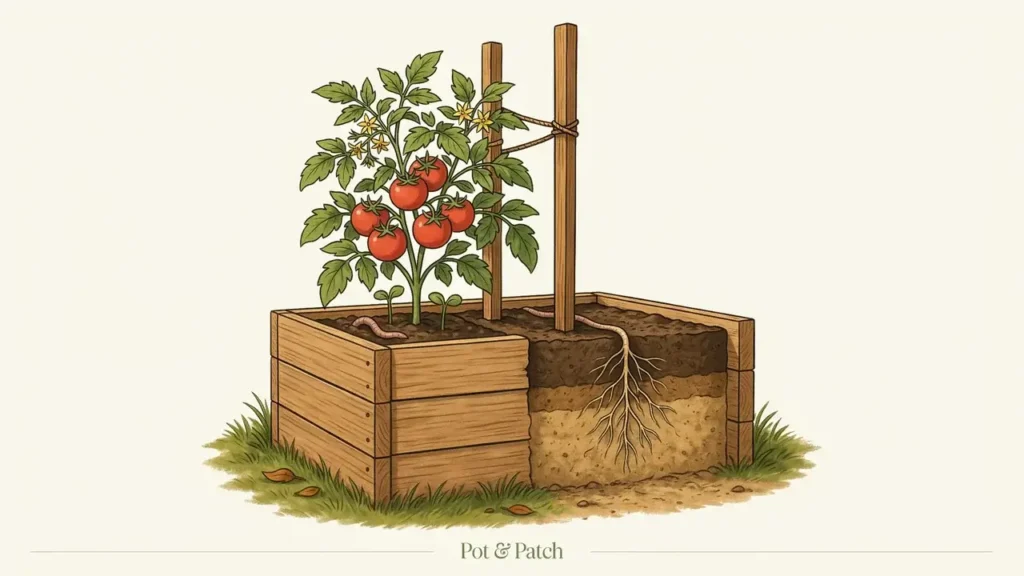
A raised bed containing around 12–18 inches of suitable soil is a useful planning target for a new tomato-growing setup, particularly when the soil underneath is difficult for roots to enter.
However, that does not mean every raised bed must be 18 inches tall.
How Deep Should a Raised Bed Be for Tomatoes?
The answer depends on what is beneath the bed.
Open-bottom raised beds
An open-bottom bed placed over suitable native soil allows tomato roots to continue growing below the raised portion.
A shorter raised bed can therefore provide more effective rooting depth than its frame height suggests.
Raised beds over concrete
If the bed sits on concrete or another impermeable surface, roots cannot extend into the ground beneath it.
In that situation, the contained growing medium must provide adequate root space and drainage.
A deeper planter-style raised bed is more appropriate.
Raised beds over compacted ground
A shallow bed over hard, compacted soil may restrict root development.
Improving the underlying soil or adding more suitable growing medium can help provide a better root zone.
The practical rule is simple: consider the total usable soil depth, not just the height of the raised-bed sides.
How Wide Should a Tomato Raised Bed Be?
A width of around 3–4 feet is practical when you can access the bed from both sides.
The goal is to reach the plants without stepping into the growing area and compacting the soil.
For a bed against a wall or fence, consider whether you can comfortably reach the back row.
How Many Tomato Plants Fit in a 4×8 Raised Bed?
A 4×8 bed provides 32 square feet of growing area, but plant count depends on variety, spacing, and support.
For example, four reasonably spaced tomato plants may fit in a simple two-row arrangement, with approximately two plants per row.
However, this is not a universal formula.
Large unpruned indeterminate plants may require more room, while carefully trained plants may use a different arrangement.
The best approach is to plan according to mature plant size rather than the appearance of small nursery seedlings.
For broader vegetable arrangement ideas, see our raised bed garden layout ideas.
Best Soil for Growing Tomatoes in Raised Beds
Growing tomatoes in raised beds works best when the soil supports healthy roots while holding enough moisture and nutrients for a productive fruiting crop.
Tomatoes generally prefer fertile, well-drained soil with adequate organic matter.
The growing medium should:
- Allow excess water to drain.
- Hold useful moisture between waterings.
- Provide air around the roots.
- Contain adequate nutrients.
- Avoid severe compaction.
Do not assume that adding large quantities of compost or fertilizer automatically produces better soil.
Should You Add Compost Before Planting Tomatoes?
Mature compost can improve soil structure and contribute organic matter.
However, existing raised-bed soil may already contain substantial organic material.
If the soil is dark, loose, and productive, adding more compost every season may not be necessary.
A soil test can help determine whether additional nutrients or pH adjustments are needed.
Does Soil pH Matter for Tomatoes?
Tomatoes generally prefer slightly acidic soil, commonly around pH 6.0–6.8.
However, adding lime or sulfur without testing is not a reliable approach.
If plants repeatedly struggle despite suitable watering and sunlight, testing the soil may help identify a problem.
Should You Replace Raised-Bed Soil Every Year?
Usually, no.
Raised-bed soil does not need complete replacement simply because you grew tomatoes there.
Instead, evaluate its condition before the next planting season.
Check:
- Soil structure.
- Drainage.
- Organic matter.
- Nutrient levels.
- Previous disease problems.
Our best soil for raised beds guide covers general soil preparation in more detail.
When to Plant Tomatoes in Raised Beds
Tomatoes are warm-season plants that are sensitive to frost.
Transplant them outdoors after the danger of frost has passed and the soil has warmed sufficiently.
Your planting date depends on local climate rather than a single national calendar.
For example, gardeners in northern states may need to wait considerably longer than gardeners in mild southern regions.
Harden Off Tomato Seedlings First
Seedlings started indoors need time to adjust to outdoor conditions.
Gradually introduce them to:
- Direct sunlight.
- Outdoor temperatures.
- Wind.
- Longer periods outside.
Avoid immediately moving tender indoor-grown plants into intense afternoon sunlight.
Don’t Plant Too Early Just Because the Bed Is Warm
Raised-bed soil may warm earlier than surrounding garden soil.
However, a warm afternoon does not eliminate the possibility of a damaging nighttime frost.
Check local conditions before transplanting.
How to Plant Tomatoes in a Raised Bed Step by Step
Planting tomatoes in raised beds requires careful attention to spacing, planting depth, and support.
Unlike many vegetables, ordinary ungrafted tomato plants can produce additional roots along buried portions of their stems.
This allows gardeners to plant them deeper than they were growing in nursery containers.
Step 1: Choose Healthy Tomato Transplants
Look for plants with:
- Sturdy stems.
- Healthy green foliage.
- Well-developed roots.
- No obvious pest damage.
- No unusual leaf distortion or disease symptoms.
A short, stocky transplant is generally preferable to a tall, weak plant.
Step 2: Mark the Planting Positions
Before digging, decide where each mature tomato plant will grow.
Account for:
- Final plant size.
- Cage or trellis width.
- Access for watering.
- Airflow.
- Harvesting space.
Avoid placing young tomatoes close together simply because the bed looks empty.
Step 3: Position the Support System
Set up or plan the main support structure before the plants become large.
Large cages and sturdy stakes are easier to install without damaging established roots.
For tall indeterminate varieties, make sure the support can handle mature vines and fruit.
Step 4: Dig a Deep Planting Hole
For ordinary ungrafted tomato transplants, remove the lower leaves that would otherwise be buried. Dig a hole deep enough to cover part of the lower stem while leaving the healthy upper foliage above the soil.
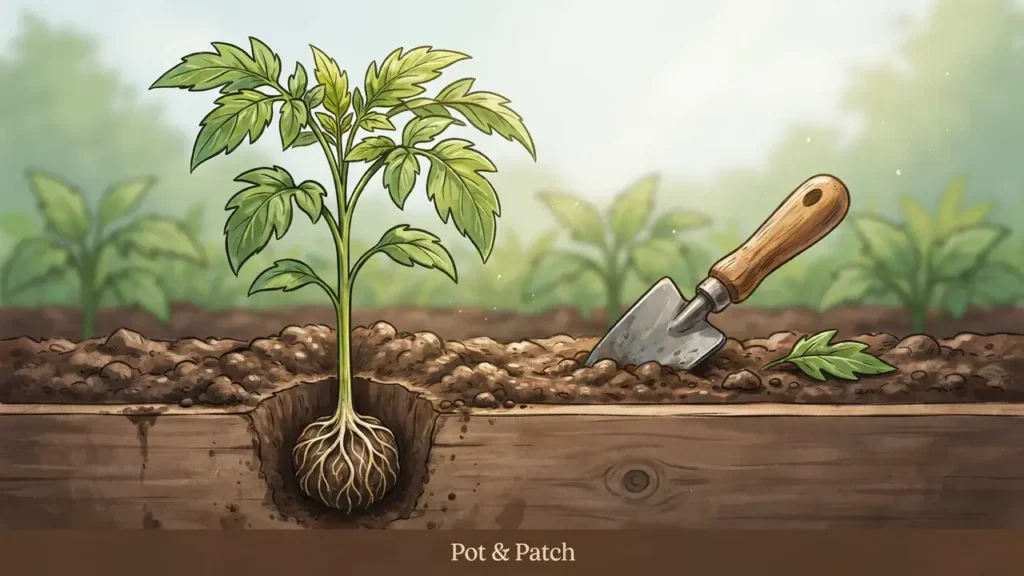
Roots can develop along the buried stem.
If a transplant is very tall and leggy, it can also be planted in a shallow trench with part of its lower stem positioned horizontally.
Important: Grafted tomatoes are different. Keep the graft union above the soil to preserve the intended rootstock benefits.
Step 5: Backfill the Hole
Return the growing medium around the root ball and buried stem.
Gently firm the soil so it makes good contact with the roots, but avoid excessive compaction.
Step 6: Water After Planting
Water thoroughly to settle the soil and help the plant establish.
New transplants need particular attention until their roots begin growing into the surrounding raised-bed soil.
Step 7: Add Mulch After the Soil Warms
Once soil temperatures are suitable, add an organic mulch layer around the tomato plants.
Keep mulch away from direct contact with the stems.
Mulch can help conserve moisture, suppress weeds, and reduce soil splashing onto lower leaves.
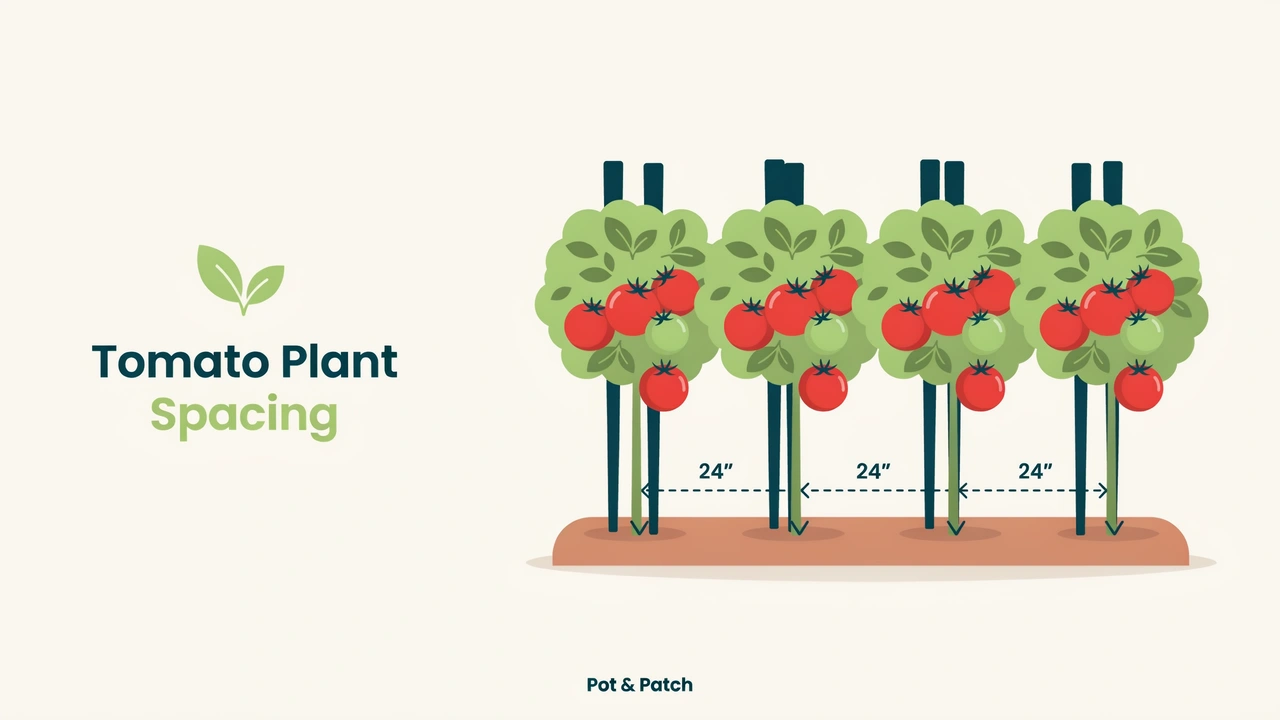
How Far Apart Should Tomatoes Be in Raised Beds?
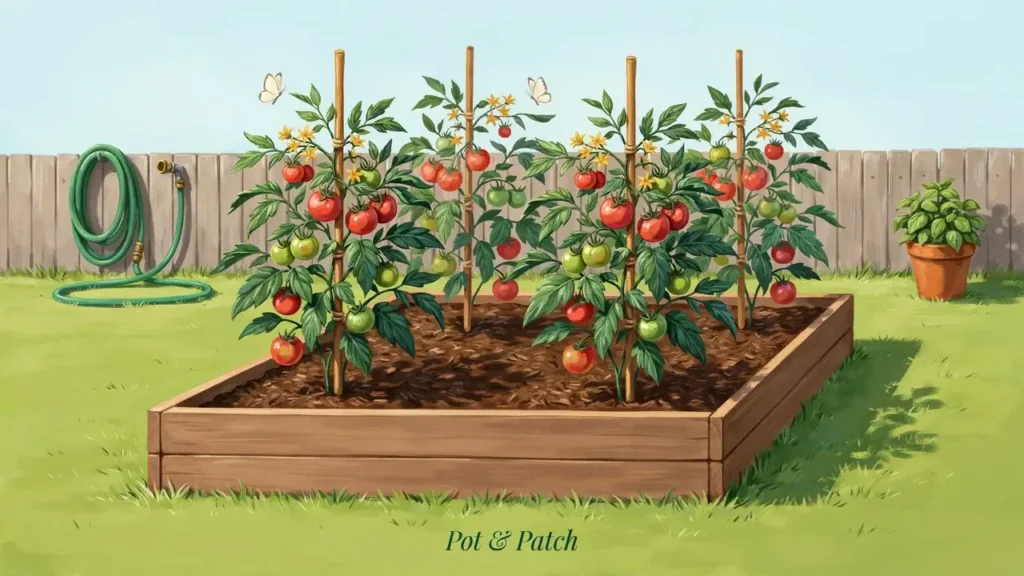
Tomato spacing depends on growth habit and support. The goal is to give each plant enough room to develop while maintaining access for care and harvesting.
Determinate Tomato Spacing
Around 18–24 inches may be suitable for some supported determinate varieties.
Vigorous bush plants may need additional room.
Always check the expected mature size.
Indeterminate Tomato Spacing
Around 24–36 inches is a useful starting range for many supported indeterminate plants.
More closely spaced systems are possible with specific pruning and training methods, but these require regular maintenance.
Why Crowding Causes Problems
When tomato plants grow too close together, their leaves and stems form a dense canopy.
This can create:
- Reduced airflow.
- Higher humidity around foliage.
- Greater difficulty inspecting for pests.
- Competition for light.
- More difficult harvesting.
- Conditions favorable to certain foliar diseases.
More plants do not automatically mean a better harvest.
A smaller number of healthy, accessible plants may be easier to manage in a compact raised bed.
Best Supports for Raised-Bed Tomato Plants
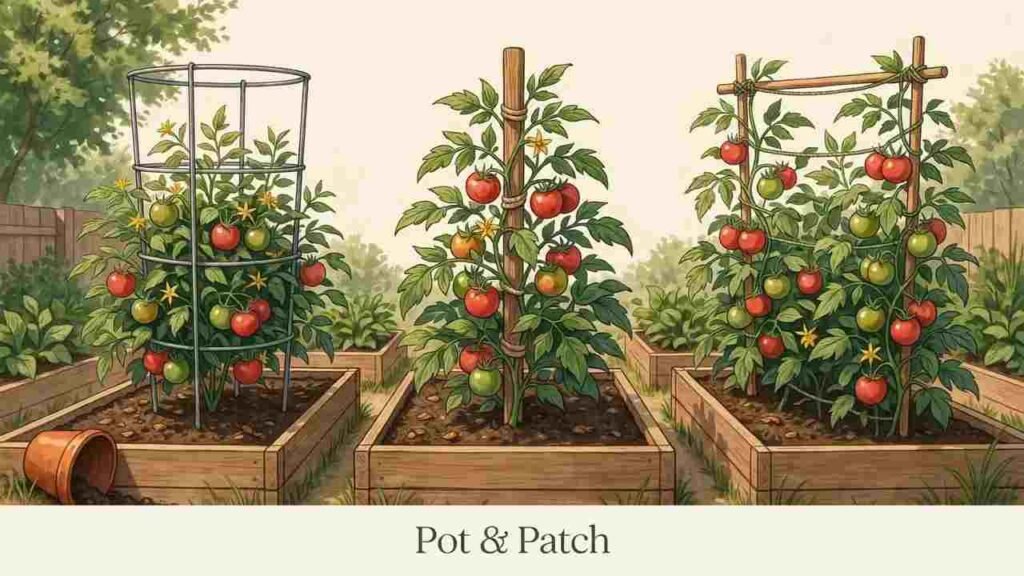
Most tomato plants benefit from support. The correct structure depends on whether you are growing a bush-type tomato, a vigorous vine, or a plant trained to one or more stems.
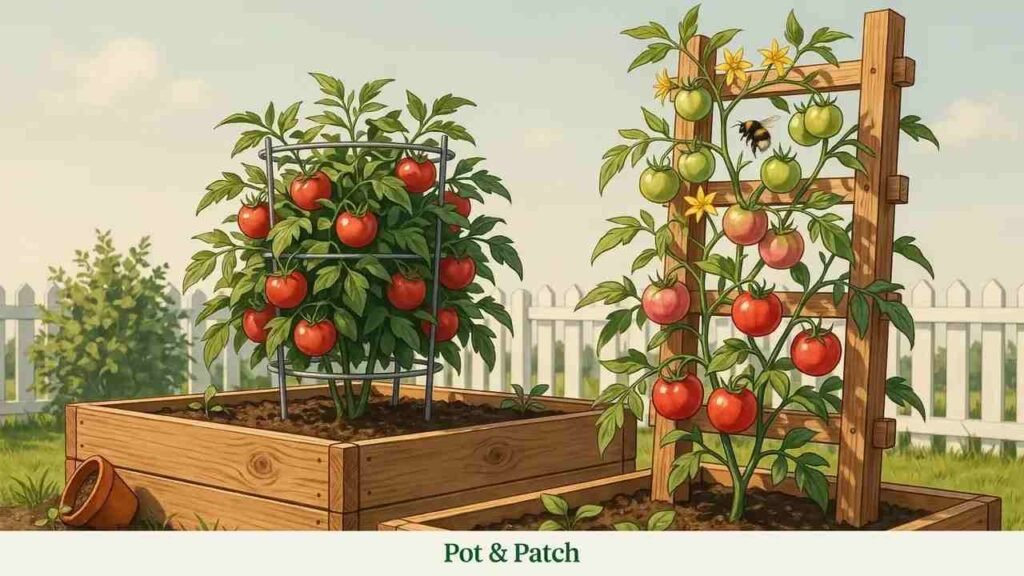
Tomato Cages
Cages are practical for many determinate varieties and some indeterminate plants.
Choose a cage strong enough to hold mature foliage and fruit.
Thin decorative cages may bend under the weight of large plants.
Tomato Stakes
Stakes can support individual tomato plants.
As stems grow, attach them with soft garden ties that do not cut into the plant.
Check ties regularly because stems thicken during the season.
Vertical Trellises
Vertical trellises work particularly well for indeterminate tomatoes.
They allow vines to grow upward instead of spreading across the bed.
A secure structure can help gardeners manage plant spacing and harvest from a smaller footprint.
Secure Supports Properly
Do not assume the raised-bed frame alone can hold the weight of a mature tomato trellis.
A tall structure may need independent ground anchors or a properly engineered frame.
Install strong supports early rather than waiting until plants become heavy.
How to Water Tomatoes in Raised Beds
Consistent moisture is particularly important once tomato plants begin flowering and producing fruit.
Raised beds can dry faster than surrounding garden soil, depending on their depth, growing medium, exposure, and drainage.
However, there is no fixed watering schedule that works for every raised bed.
How Much Water Do Raised-Bed Tomatoes Need?
Around 1–2 inches of water per week, including rainfall, can serve as a general starting reference during active growth.
Actual needs may be higher during extreme heat or fruiting, and lower during cool or rainy weather.
Rather than watering according to a rigid calendar, check the soil beneath the surface.
If the root zone is drying, water deeply enough to replenish moisture.
Drip Irrigation vs Hand Watering
Drip irrigation
Delivers water close to the root zone and can provide more consistent moisture when properly managed.
Hand watering
Works well for a few plants when water is applied slowly around the base rather than sprayed over the entire plant.
Both methods can work.
The main goal is to maintain useful moisture without repeatedly saturating or severely drying the bed.
Why Consistent Moisture Matters During Fruiting
Large fluctuations in soil moisture can contribute to several tomato problems.
After a dry period, sudden heavy watering or rainfall may increase the risk of fruit cracking.
Inconsistent moisture can also contribute to blossom-end rot by interfering with calcium delivery to developing fruit.
Mulch and regular moisture checks can help reduce these fluctuations.
How to Fertilize Raised-Bed Tomatoes
Tomatoes need adequate nutrients throughout vegetative growth, flowering, and fruit production.
However, a raised bed filled with fertile soil and compost may already contain significant nutrients.
Start by checking soil conditions rather than automatically applying large amounts of fertilizer.
Avoid Excessive Nitrogen
Nitrogen supports leafy growth, but excessive nitrogen can encourage large plants with relatively poor fruit production.
More green foliage is not always evidence of better tomato performance.
Use Soil Test Results When Possible
A soil test can identify nutrient levels and pH.
This is particularly useful when a raised bed has received repeated compost and fertilizer applications over several seasons.
Follow Fertilizer Directions
If additional feeding is needed, use a product suitable for vegetable crops.
Follow the label and avoid combining several fertilizers without accounting for their total nutrient contribution.
There is no universal NPK ratio that is ideal for every raised-bed tomato plant.
How to Prune and Mulch Tomato Plants
Pruning can help manage tomato growth, but the correct method depends on the variety.
Should You Remove Tomato Suckers?
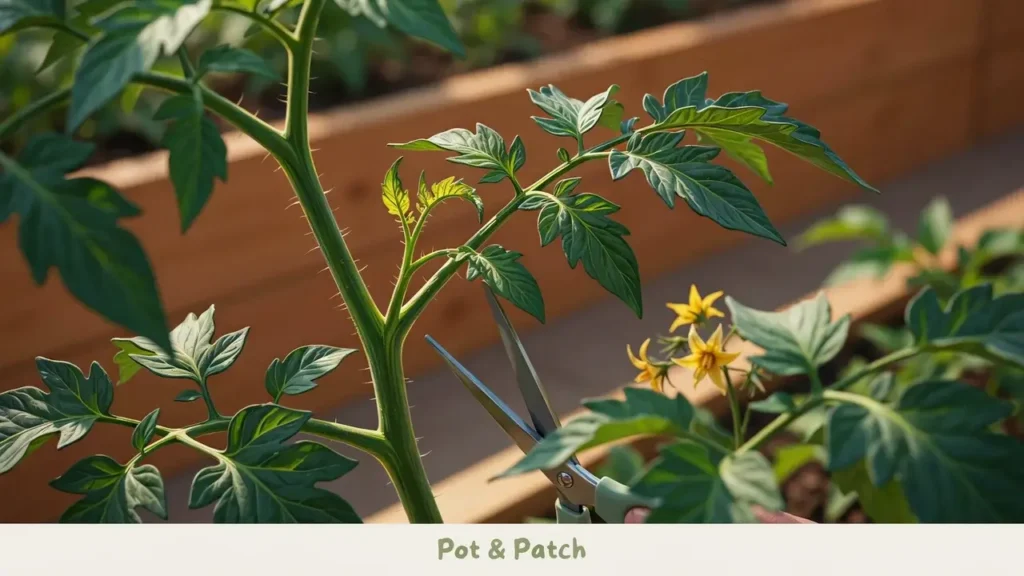
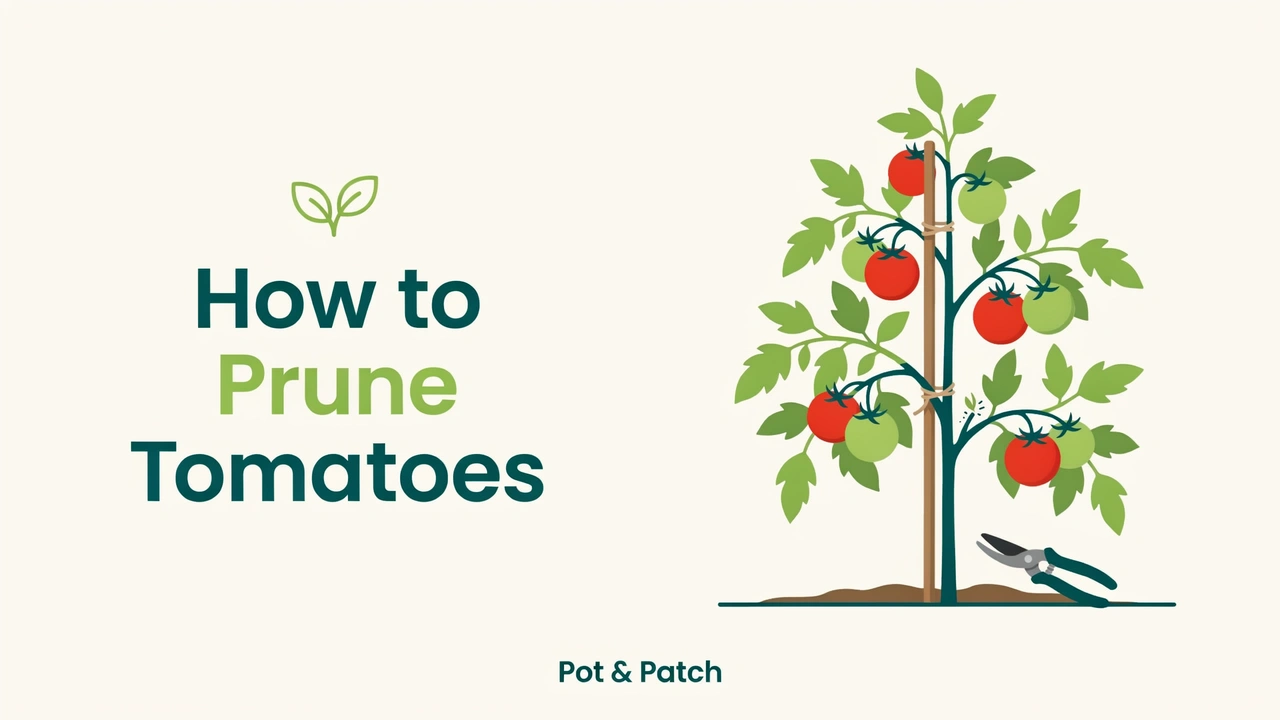
Tomato suckers are shoots that develop between the main stem and a leaf branch. Indeterminate tomatoes trained vertically may benefit from selective sucker removal.
However, removing every sucker from every tomato plant is not necessary.
Determinate tomatoes usually need less pruning because their growth and fruiting pattern is more limited.
Aggressive pruning can remove productive stems and reduce the amount of foliage protecting fruit.
Remove Lower Leaves When Necessary
Leaves touching the soil are more exposed to soil splash and certain disease organisms.
Remove damaged or diseased lower foliage when appropriate.
Use clean tools and avoid stripping large amounts of healthy growth unnecessarily.
Mulch Around Tomato Plants
Organic mulch helps maintain more even moisture and reduces weed competition.
Materials may include:
- Clean straw.
- Shredded leaves.
- Other suitable organic garden mulch.
Apply mulch after the soil has warmed and avoid piling it directly against the stems.
Common Problems When Growing Tomatoes in Raised Beds
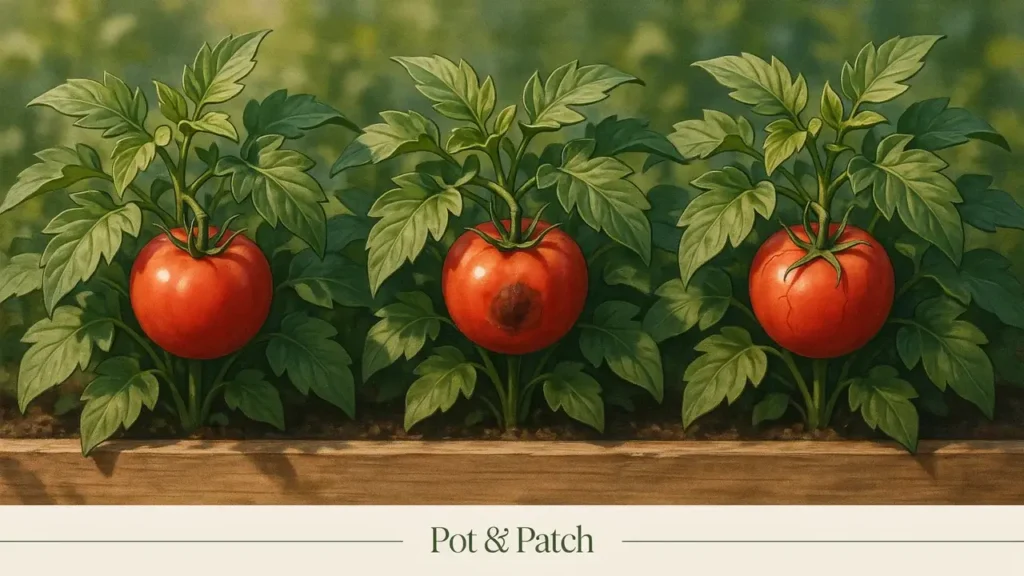
Growing tomatoes in raised beds can improve control over growing conditions, but it does not make tomato plants immune to disease, pests, or environmental stress.
The key is identifying the likely cause before applying a treatment.
Blossom-End Rot
Blossom-end rot appears as a dark, sunken, leathery patch at the blossom end of developing fruit.
It is associated with inadequate calcium delivery to the fruit, frequently influenced by moisture fluctuations and root stress.
Helpful management practices include:
- Maintaining consistent soil moisture.
- Avoiding excessive nitrogen.
- Mulching the root zone.
- Improving drainage where necessary.
- Testing soil before applying calcium amendments.
Adding crushed eggshells or calcium products is not a reliable immediate cure when inconsistent moisture is the underlying problem.
Cracked Tomatoes
Cracking can occur when fruit takes up water rapidly after a dry period.
Variety susceptibility and weather conditions also matter.
Avoid repeated severe drying, especially as fruit approaches maturity.
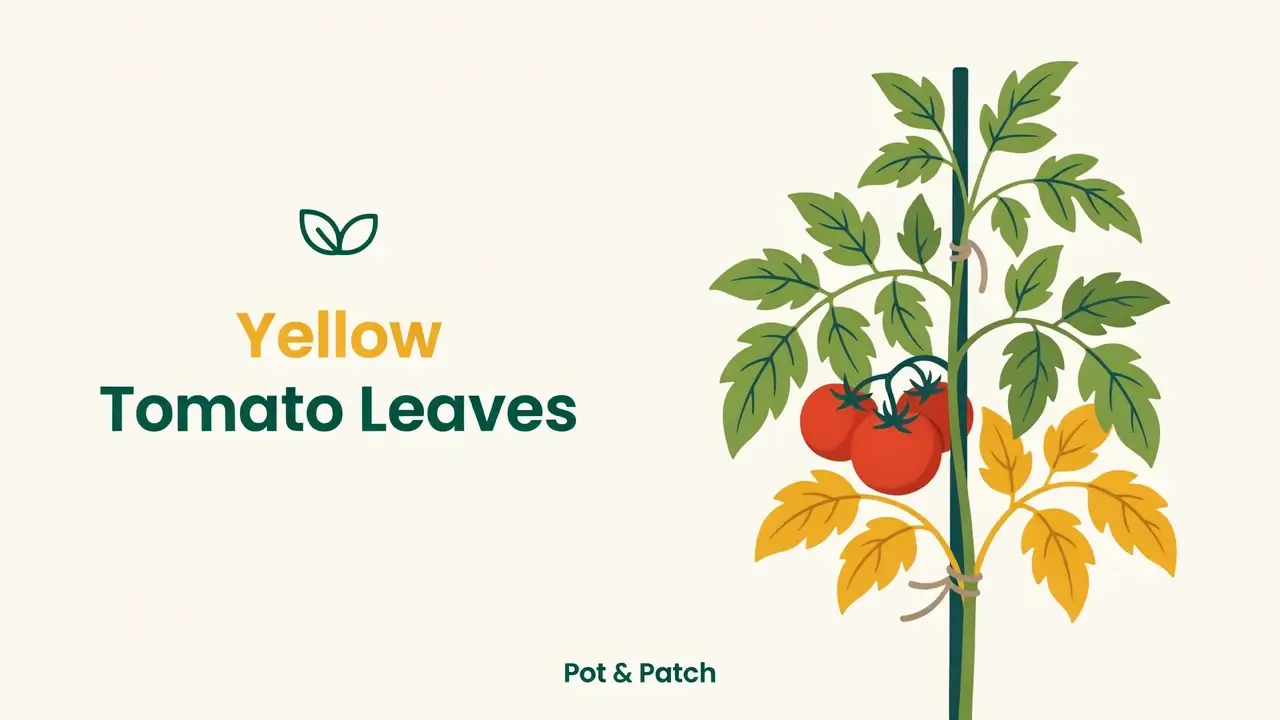
Yellow Tomato Leaves
Yellow leaves can result from several conditions:
- Natural aging of older foliage.
- Water stress.
- Nutrient problems.
- Poor drainage.
- Root damage.
- Disease.
Inspect where the yellowing begins and check soil moisture before adding fertilizer.
Tomatoes Have Flowers but No Fruit
Tomato flowers can fail to set fruit during unfavorable temperatures.
Very hot days or unsuitable nighttime temperatures may interfere with pollination and fruit development.
If plants are otherwise healthy, check growing conditions before assuming a nutrient deficiency.
Early Blight and Leaf Spot
Some fungal leaf diseases begin on older lower foliage.
Good plant spacing, support, sanitation, and watering at soil level can help reduce favorable conditions for disease.
Remove clearly diseased plant material when appropriate, and avoid handling wet plants unnecessarily.
Wilting Tomato Plants
Wilting does not always mean the plant needs more water.
Possible causes include:
- Dry soil.
- Extreme heat.
- Waterlogged roots.
- Root damage.
- Vascular wilt diseases.
Check soil moisture and look for other symptoms before taking action.
Tomato Hornworms and Other Pests
Hornworms can remove large amounts of tomato foliage.
Inspect plants regularly, especially where leaves show chewing damage.
Identify the pest before choosing a management method.
How and When to Harvest Tomatoes From Raised Beds
Harvest timing depends on the variety and local growing conditions. Check the seed packet or plant label for the expected maturity period.
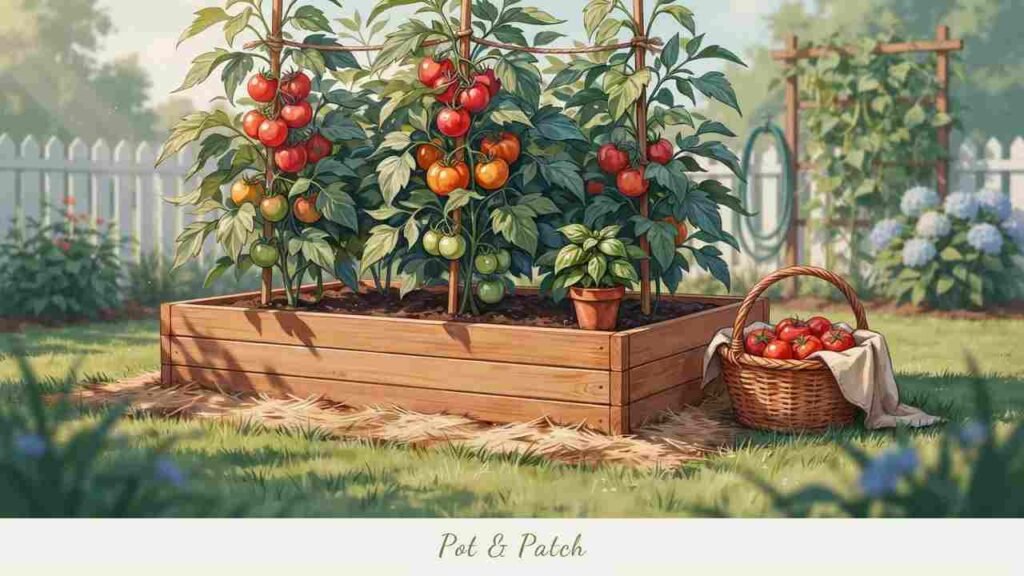
A tomato approaching harvest usually develops its characteristic mature color and suitable firmness.
Harvesting Fully Ripe Tomatoes
For immediate eating, allow fruit to develop its mature color and harvest before it becomes excessively soft or damaged.
Handle fruit gently to avoid breaking branches.
Harvesting Before Full Ripeness
Tomatoes that have reached the mature-green stage and begun changing color can continue ripening after harvest.
This can be useful when severe weather or pest damage threatens fruit remaining on the vine.
Keep Checking Productive Plants
Indeterminate varieties may continue producing fruit over an extended period.
Regular harvesting makes it easier to identify damaged fruit, inspect plant health, and keep the growing area accessible.
7 Common Mistakes When Planting Tomatoes in Raised Beds
1. Planting Before Frost Danger Has Passed
Warm raised-bed soil does not protect tender tomato foliage from freezing air.
Wait for suitable outdoor conditions.
2. Crowding Too Many Tomato Plants Into One Bed
Small transplants quickly become large plants.
Plan spacing according to mature size.
3. Ignoring the Soil Beneath a Shallow Raised Bed
A shallow open-bottom bed over healthy ground is different from a shallow bed over compacted soil or concrete.
Consider the full rooting area.
4. Installing Weak Supports Too Late
Large vines become difficult to support without disturbing stems or roots.
Prepare cages, stakes, or trellises early.
5. Allowing Repeated Severe Moisture Fluctuations
Irregular watering can stress plants and contribute to fruit cracking and blossom-end rot.
Check the root zone regularly.
6. Overfertilizing With Nitrogen
Excessive nitrogen may encourage lush foliage without proportional fruit production.
Use fertilizer according to actual growing conditions.
7. Ignoring Lower-Leaf Disease and Airflow
Dense, unsupported foliage makes inspection and maintenance difficult.
Maintain suitable spacing, remove diseased material, and keep plants supported.
Frequently Asked Questions
Can You Grow Tomatoes in a 12-Inch-Deep Raised Bed?
Yes, particularly when an open-bottom bed sits over suitable soil that roots can grow into.
A 12-inch-deep bed over concrete has different rooting limitations and may require a deeper growing area.
How Many Tomato Plants Fit in a 4×8 Raised Bed?
Approximately four reasonably spaced plants can fit in a simple arrangement, but the appropriate number depends on mature variety size, support, and training.
Vigorous unpruned plants may need more space.
What Is the Best Soil for Tomatoes in Raised Beds?
Tomatoes grow well in fertile, well-drained soil containing adequate organic matter.
The mix should retain useful moisture without becoming waterlogged.
For general raised-bed soil preparation, see our best soil for raised beds guide.
Can You Grow Tomatoes and Peppers Together in a Raised Bed?
Yes. Both are warm-season crops with broadly compatible sunlight and growing requirements.
However, give each plant adequate spacing and remember that tomatoes and peppers can share certain pests and diseases.
Do Raised-Bed Tomatoes Need Cages?
Most tomato plants benefit from support.
Cages, stakes, and trellises are all possible options depending on the cultivar and growing method.
Should You Prune Tomato Plants in Raised Beds?
Selective pruning may help manage indeterminate tomatoes trained vertically.
Determinate plants usually require less pruning.
Avoid removing large amounts of healthy foliage without a clear reason.
Do Tomatoes Grow Better in Raised Beds or Containers?
Both methods can work well.
Raised beds generally provide more connected root space, while individual containers allow plants to be moved and managed separately.
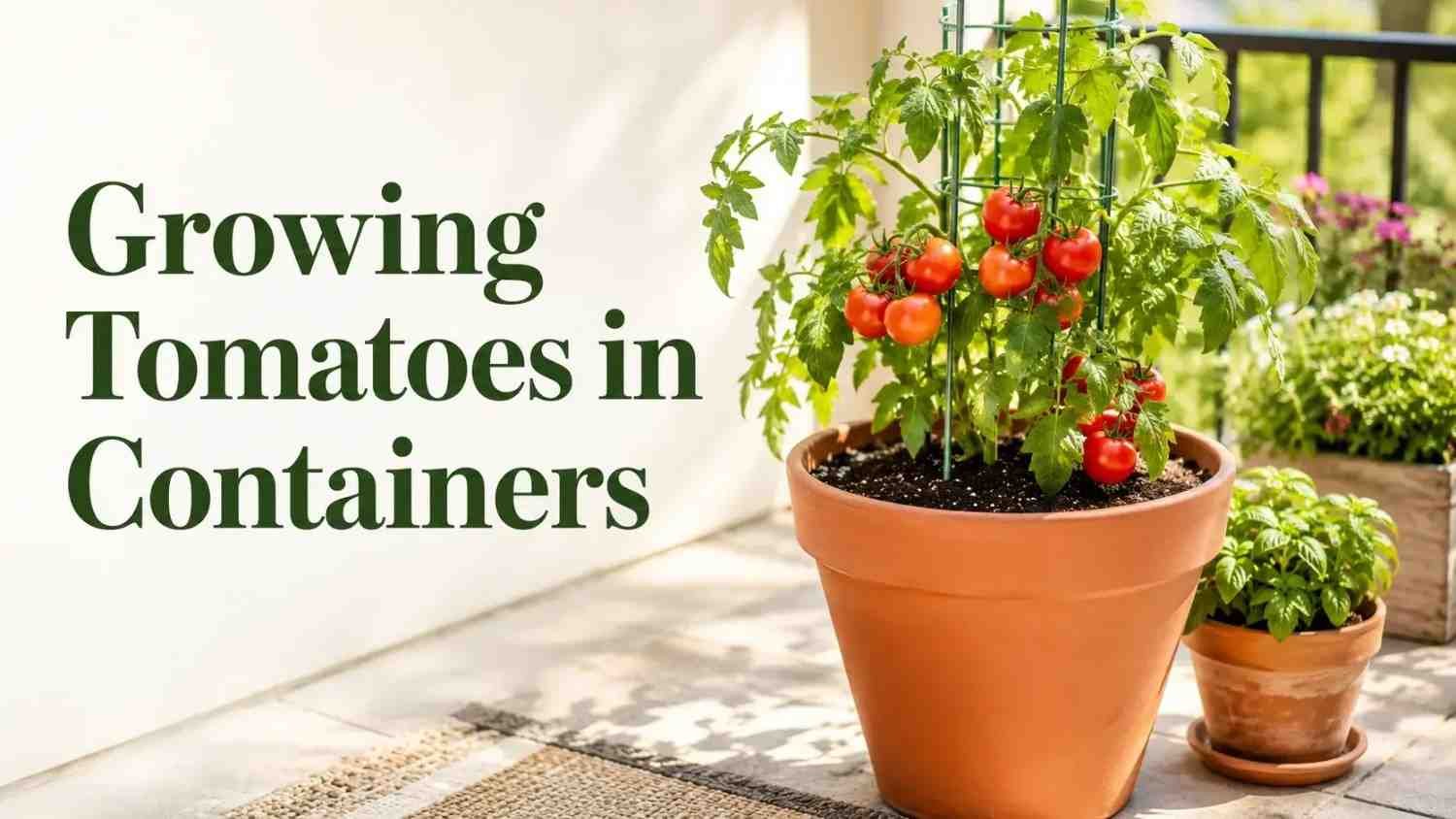
If you are deciding between methods, our growing tomatoes in containers guide covers the pot-growing approach.
Growing Tomatoes in Raised Beds Successfully
Growing tomatoes in raised beds starts with giving the plants enough room above and below the soil.
Choose a suitable tomato variety, consider the available root depth, and space plants according to their mature growth habit. Install sturdy supports early, plant ordinary ungrafted seedlings deeply, and maintain consistent moisture as plants flower and develop fruit.
A fertile, well-drained root zone, balanced feeding, and regular inspection can help prevent many common growing problems.
With thoughtful spacing and steady care, even a modest raised bed can provide a productive tomato-growing space throughout the local growing season.