How to Grow Tomatoes on a Patio and Keep Them Fruiting All Summer
A patio can grow tomatoes as well as any open bed. The trick is treating it as its own kind of space. Paved surfaces store heat, nearby walls change the light and airflow, and containers dry out faster than open ground.
Get those few things right and a sunny patio turns into a productive little tomato plot. Get them wrong and you end up with leafy plants that flower but never fruit.
This guide covers what actually matters for patio tomatoes: sun, heat, containers, water, wind, and keeping your paving clean along the way.
Why a Patio Grows Tomatoes Differently
The biggest difference is heat. Concrete, brick, pavers, and stone soak up sun all day and release it slowly. Walls bounce both light and warmth back onto your plants. On a hot afternoon, a walled patio can run several degrees hotter than open ground a few feet away.
That extra warmth is a gift in cool climates and a problem in hot ones. It can push an exposed patio past the point where tomatoes set fruit reliably.
Airflow changes too. Some patios sit in still, sheltered pockets. Others funnel wind between buildings. Both affect how you support and water your plants. If you are planning the whole space, not just the tomatoes, our patio vegetable garden ideas walk through layouts for mixed crops.
Map the Sun on Your Patio First
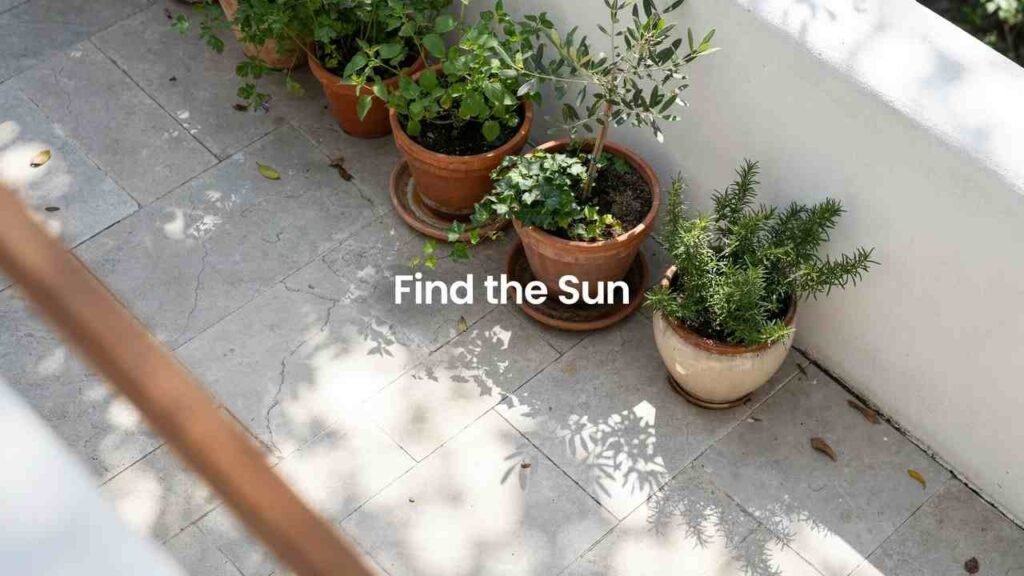
Tomatoes want six to eight hours of direct sun a day. In open ground that is easy. On a patio, walls, fences, railings, and roof overhangs all cast shade that moves through the day.
Before you buy a single plant, watch the space. Note where the sun lands at mid-morning, noon, and late afternoon. A quick phone photo every couple of hours makes the pattern obvious.
Two things quietly ruin patio tomatoes:
- A roof, pergola, or balcony above that blocks midday sun
- A spot that only gets an hour or two before a wall shades it out
If your sunniest corner still falls short, lean toward cherry types, which cope with less-than-ideal light better than large slicers. For a genuinely shaded patio, tomatoes are the wrong crop, and vegetables that grow in shade are a better bet.
Manage Heat and Reflected Warmth
This is where patios catch people out. Tomato flowers are far more sensitive to heat than the leaves.
Horticultural guidance is consistent here. When daytime highs stay above about 32°C (90°F) and nights stay above roughly 21°C to 22°C (70°F to 72°F), pollen turns sticky and nonviable, so blossoms dry and drop instead of setting fruit. Sustained temperatures over 38°C (100°F) make it worse. On a patio, radiant heat off paving and walls can push you into that range even when the forecast looks milder.
A few moves keep heat in check:
- Use larger, lighter-coloured containers. They heat up and dry out more slowly than small dark ones.
- Group containers together so they shade each other’s roots and raise humidity around the plants.
- Give plants afternoon relief in a heat wave. A 30% shade cloth helps, or simply move containers out of the worst reflected glare.
- Pull containers away from a hot sun-facing wall during peak summer, then move them back as the season cools.
The ability to move containers is the quiet advantage of patio growing. Casters or a plant trolley let you chase sun in spring and dodge heat in midsummer.
Choose Patio-Friendly Varieties
Two traits matter most on a patio: a manageable size and tolerance for heat.
Compact, bush, dwarf, and varieties actually labelled “patio” stay small and need less staking. For hanging baskets and edges, trailing types such as Tumbling Tom work well.
For hot, bright patios, cherry tomatoes are the reliable pick. Types like Sungold and Gardener’s Delight keep producing when larger tomatoes stall, partly because cherry varieties set fruit across a wider temperature range than big slicing types.
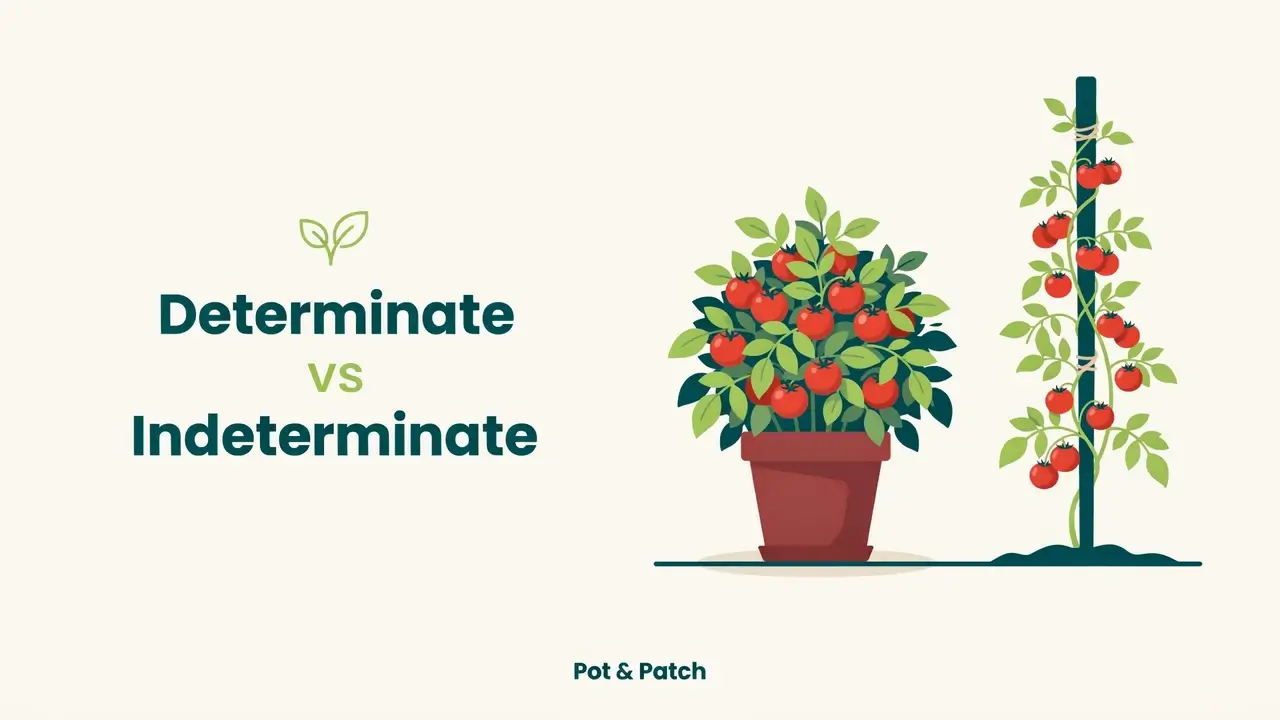
You can grow full-size cordon (indeterminate) tomatoes on a patio too. They just need a large container and a sturdy support set up at planting time. For the full lineup of pot-friendly types, start from our tomatoes hub.
Containers and Soil for a Patio Setup
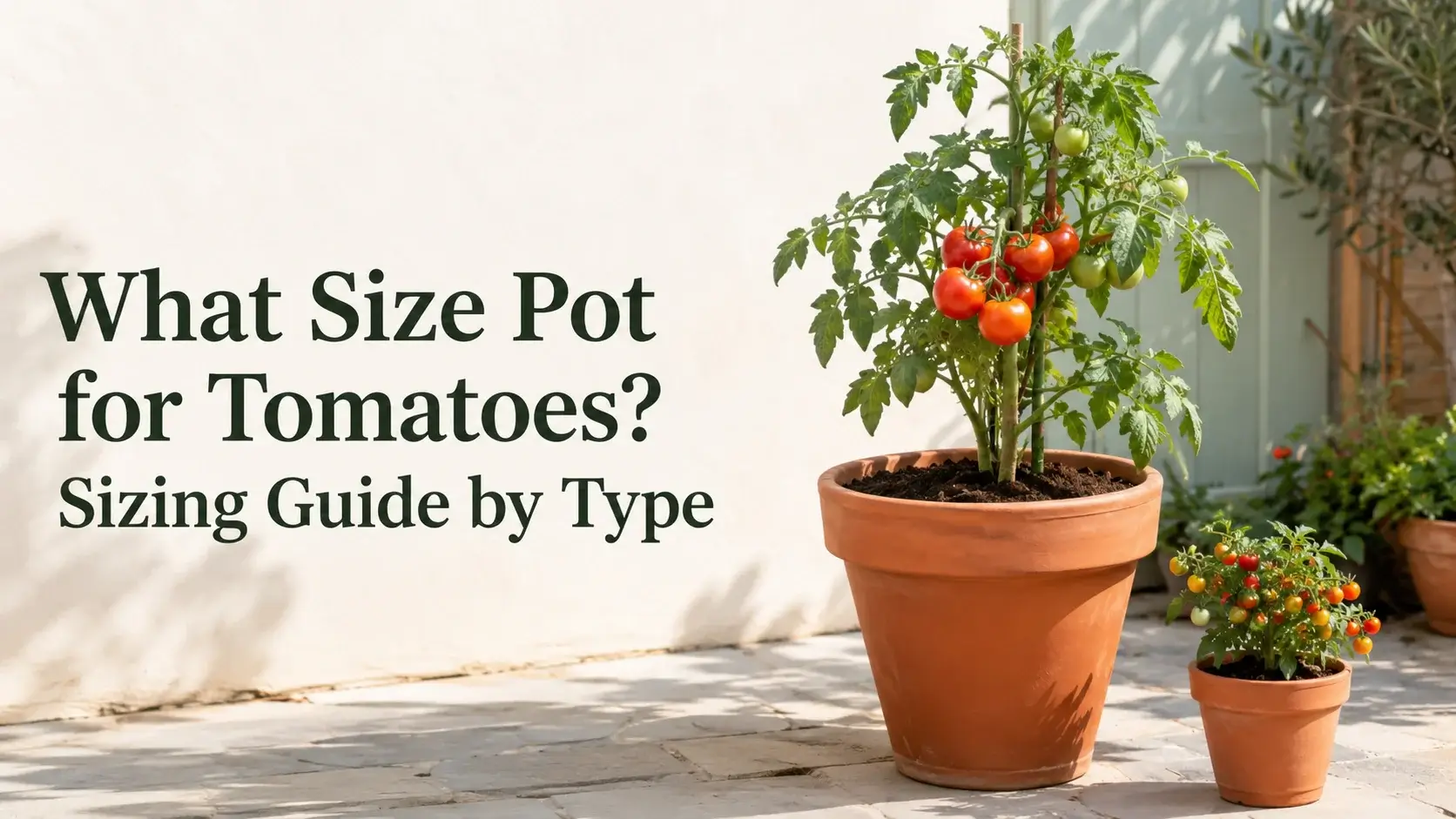
Container size is the single most common mistake, so err large. As a floor, cherry tomatoes want at least an 8 litre (2 gallon) container and standard tomatoes at least a 15 litre (4 gallon) one, with 38 litres (10 gallons) or more producing noticeably better results. On a hot patio, bigger containers also buy you a buffer against fast drying.
Keep it simple:
- One tomato plant per container, always
- Drainage holes in the base, no exceptions
- A quality potting mix (often sold as multipurpose compost), never ordinary garden soil, which compacts and drains poorly
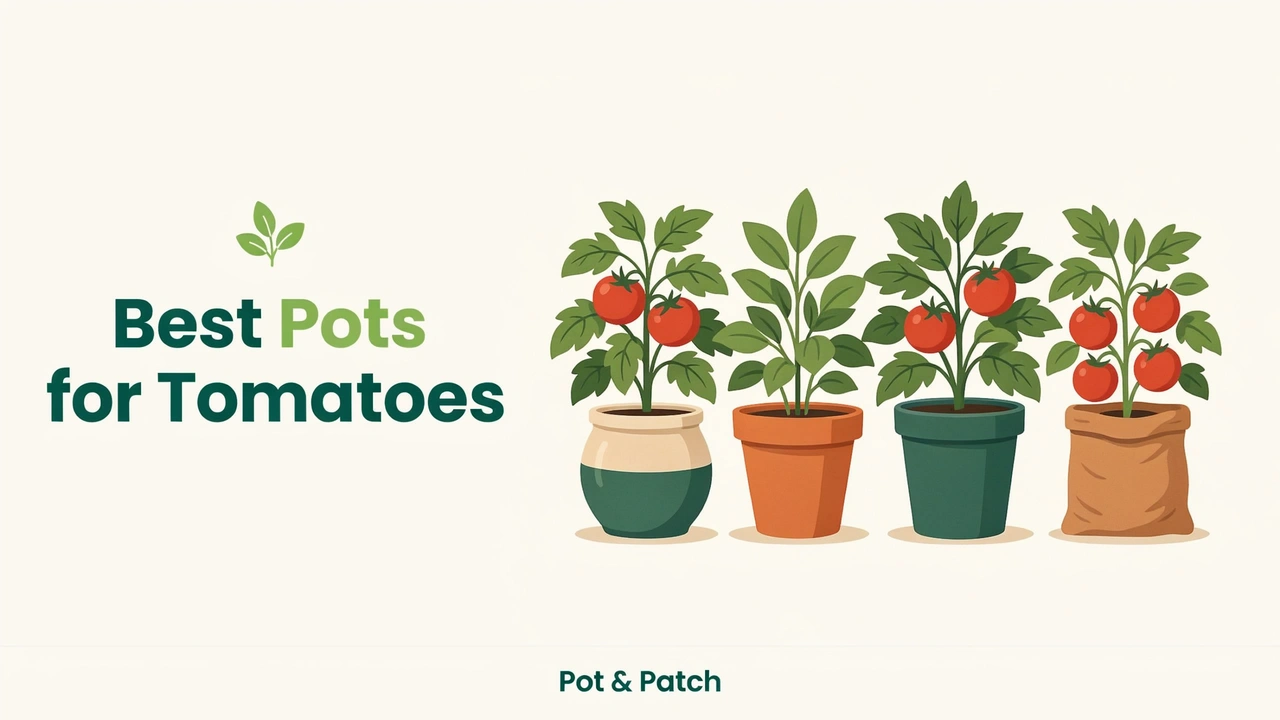
Plastic and glazed containers hold moisture longer, which helps on a scorching patio. Fabric pots breathe and keep roots cooler but dry out faster, so plan to water more often. For the full sizing breakdown, see our guide on the best container size for tomatoes, and for mixes, the best soil for container gardening.
One patio-specific note: a large container full of wet soil is heavy. On a balcony or raised timber deck, check the load the surface can safely carry before lining up several big containers.
Protect the Patio Surface
Growing on hard flooring means thinking about the floor itself.
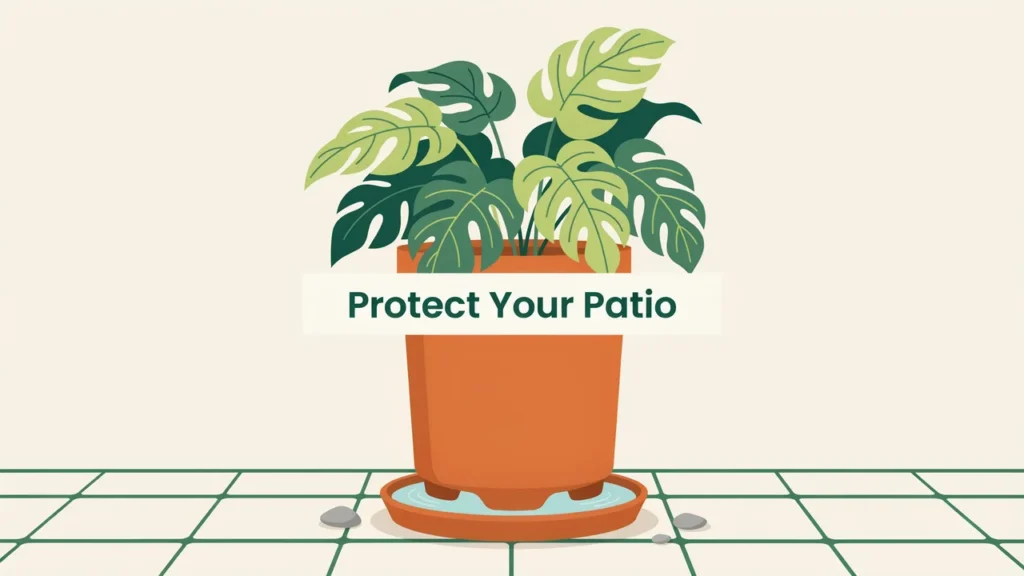
Set containers on feet or risers so water drains freely off the non-porous surface. Standing water underneath breeds mosquitoes and rots roots. Saucers catch runoff and protect the paving, but empty them after watering rather than leaving containers sitting in water.
Watch for staining. Terracotta, tannins in potting mix, and feed runoff can all mark stone and concrete. A saucer or a small tray under each container prevents most of it.
If you plan to rearrange the space, put larger containers on casters from the start. Moving a full 57 litre (15 gallon) container by hand across a patio is a good way to hurt your back.
Watering on Hot Hardscape
Containers on sun-baked paving dry out faster than almost anywhere else. This is the part of patio growing that needs daily attention.
Water deeply until it runs from the drainage holes. In summer, that usually means once a day, and on the hottest days a mature plant may need it twice. The goal is soil that stays consistently moist, never bone dry and never waterlogged.
Letting a container dry out completely does real damage. It triggers flower and fruit drop, and uneven watering is the main cause of blossom end rot and split fruit.
Two habits make this easier:
- Mulch the top of each container with straw, bark, or similar to slow evaporation
- Consider self-watering containers or grouping pots together if you travel or forget
Wind and Support on an Exposed Patio
Open patios and balconies often get more wind than a sheltered garden, and gaps between walls can funnel gusts. Wind dries plants quickly and can topple tall, top-heavy containers.
Set up a stake, cage, or trellis at planting time, not once the plant is already leaning. Choose heavier or wider-based containers for exposed spots. Placing taller plants against a wall gives them a natural windbreak while catching stored warmth.
A Simple Patio Layout That Works
A little arrangement goes a long way.
Group your containers rather than scattering them. Clustered pots shade each other’s roots, hold humidity, and are far quicker to water. Put the tallest plants at the back or against a wall, and leave a little space between them so air moves through and leaves dry off. Damp, crowded foliage invites disease.
Keep the whole setup within easy reach of a tap or door. You will visit these plants every single day in summer, and convenience is what keeps a patio garden alive.
Common Patio Tomato Problems
- Flowers drop, no fruit: Almost always heat. Cool the containers, add afternoon shade, and wait for temperatures to ease.
- Dark sunken patch on the fruit base: Blossom end rot, driven by uneven watering. Keep moisture steady.
- Split or cracked fruit: Irregular watering again, often a dry spell followed by a heavy soak.
- Tall, leafy, fruitless plants: Usually too little sun. Recheck your sun map.
- Wilting by midday: The container is too small or too hot. Size up or move it out of reflected glare.
FAQ
How many hours of sun do patio tomatoes need?
Aim for six to eight hours of direct sun. Less than that and plants grow leggy and fruit poorly.
What is the best tomato variety for a small patio?
Compact bush, dwarf, or “patio” types, plus cherry varieties. They stay manageable and, in the case of cherries, keep fruiting through heat.
How often should I water tomatoes on a patio?
Usually once a day in summer, and twice on very hot days. Containers on paving dry out fast, so check daily.
Why are my patio tomato flowers falling off?
Heat. When days stay above about 32°C (90°F) and nights above 21°C (70°F), pollen fails and blossoms drop. Reflected warmth on a patio makes this more likely.
Can I grow tomatoes on a covered or shady patio?
A roofed or heavily shaded patio will not give enough light. If you only get partial sun, cherry types will do better than large tomatoes, though yields drop.
Final Thoughts
A patio gives you something a garden bed cannot: plants you can move. Use that. Chase the sun in spring, pull containers out of the worst heat in summer, and keep them close enough that daily watering never feels like a chore.
Nail the sun, the container size, and steady moisture, and the rest is easy. Everything else on this page is just fine-tuning around those three.