Best Fertilizer for Tomatoes in Containers: What to Use and When
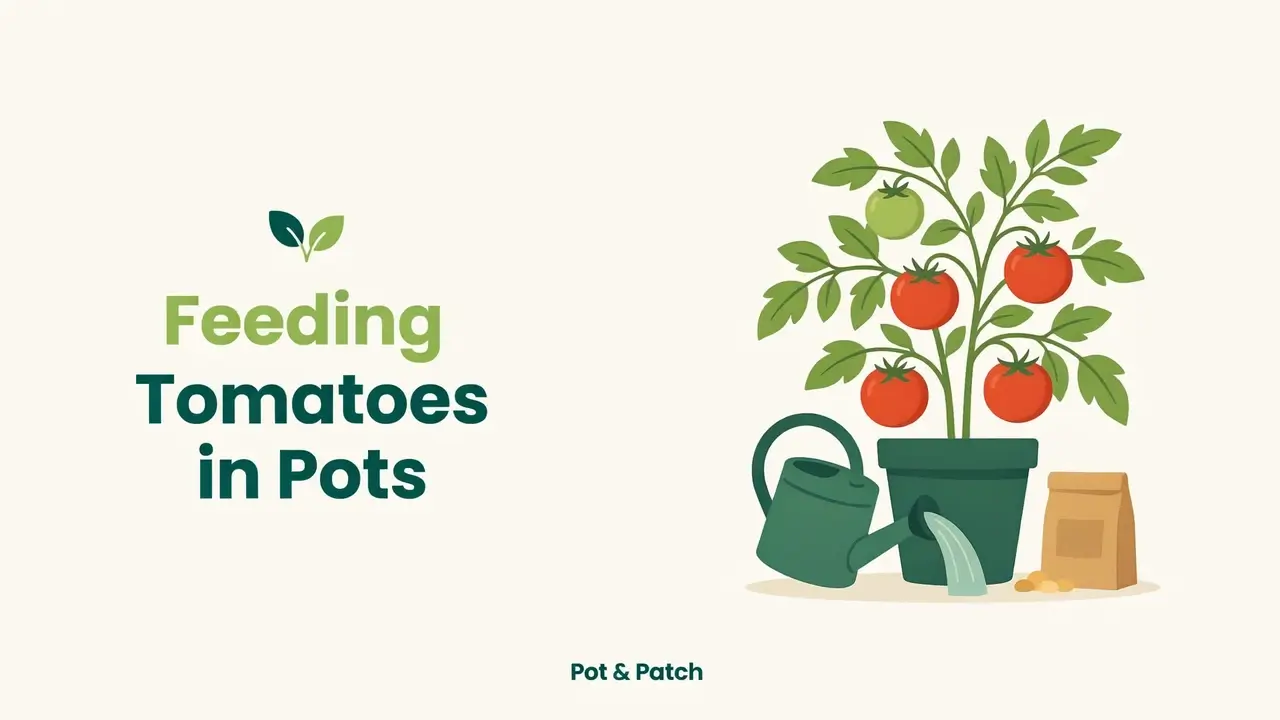
Tomatoes in pots are hungry plants, and they need feeding differently than those in the ground. Every time you water a container, nutrients wash out through the drainage holes, so a potted tomato runs out of food far faster than one in a garden bed.
Get the feeding right and you get steady growth, strong flowering, and a heavy crop. Get it wrong, usually by using too much of the wrong nutrient, and you get a big leafy plant with hardly any fruit.
This guide covers what to look for in a tomato fertilizer, the best types for containers, and a simple feeding schedule you can follow all season.
Why Container Tomatoes Need Feeding Differently
A pot holds a small, fixed amount of soil, and that soil cannot hold many nutrients. Each watering carries dissolved food out the bottom of the container, which means the supply drops quickly.
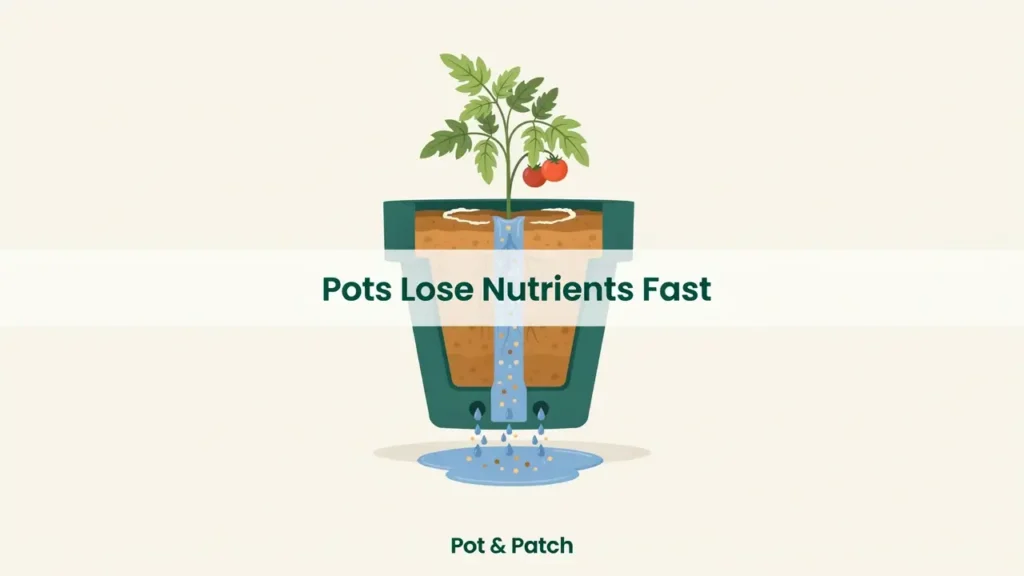
Because of this, container tomatoes need feeding more often than in-ground plants, but at a weaker strength. Frequent, light feeding keeps nutrients steady without building up to harmful levels.
One side effect of regular feeding in pots is salt buildup, which can show as a white crust on the soil or pot rim. Every few weeks, flush the container by watering heavily until plenty drains out, which washes the excess salts away. For the full container setup, see our guide to growing tomatoes in containers.
Understanding NPK for Tomatoes
Every fertilizer label shows three numbers, the NPK ratio. They stand for nitrogen (N), phosphorus (P), and potassium (K), the three nutrients plants use most.
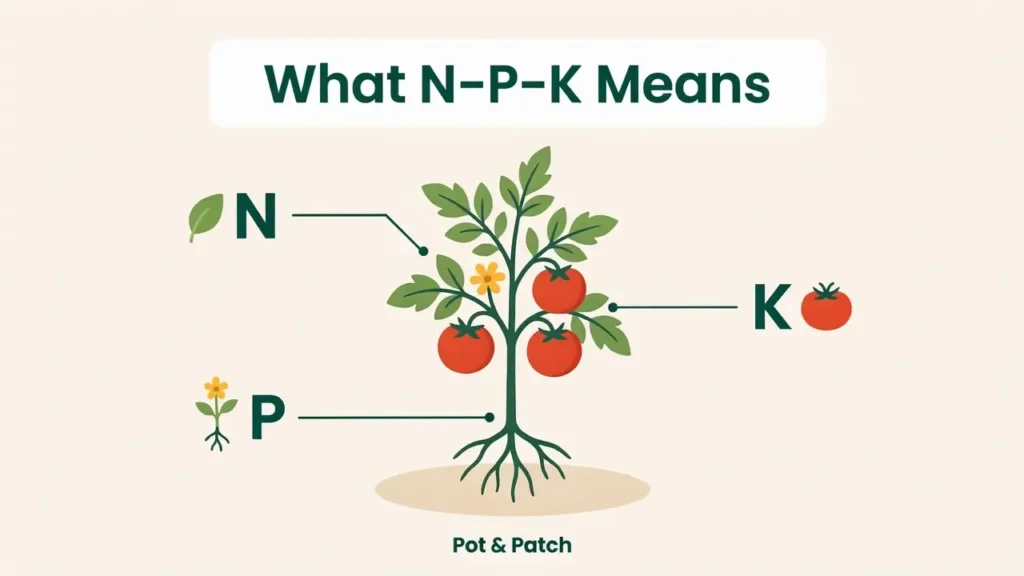
Here is what each does for a tomato:
- Nitrogen (N) drives leafy, green growth.
- Phosphorus (P) supports roots, flowers, and fruit development.
- Potassium (K) helps overall health, fruit quality, and disease resistance.
The single most common feeding mistake is using too much nitrogen. It produces a tall, lush, green plant that flowers poorly and sets little fruit. Early on, a young plant appreciates balanced feeding, but once flowers appear, you want to ease off nitrogen and lean on phosphorus and potassium.
In practice, that means a balanced fertilizer such as 10-10-10 or 20-20-20 during early growth, then a tomato-type blend with a lower first number and higher last two (for example 5-10-10 or similar) once the plant starts flowering and fruiting. You do not need to obsess over exact ratios. Feeding regularly and avoiding excess nitrogen matter far more than chasing a perfect number.
Liquid vs Slow-Release vs Organic
There are three main kinds of fertilizer, and many gardeners use a combination.
| Type | How it works | Best for |
|---|---|---|
| Liquid (water-soluble) | Mixed into water and fed often; acts fast | Containers, since nutrients are available immediately |
| Slow-release (granular) | Pellets release food gradually over weeks | Convenience and a steady baseline |
| Organic | Natural sources like fish, kelp, and compost | Feeding soil life and gentle, low-burn feeding |
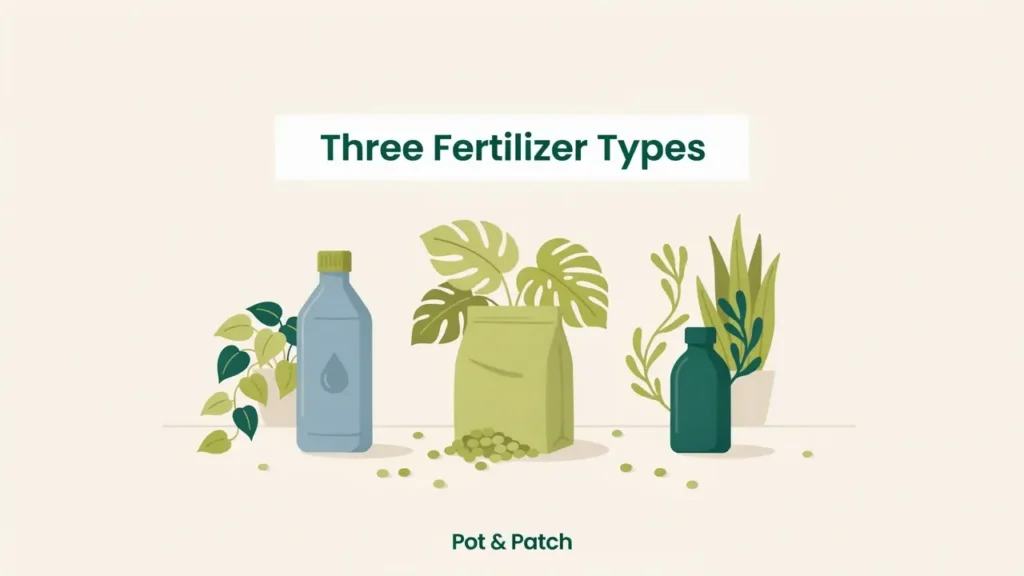
Liquid feeds suit container tomatoes especially well, because they deliver nutrients right when the plant needs them and are easy to dilute. Slow-release granules are convenient for a hands-off baseline. Many growers combine the two: mix a slow-release granular into the potting mix at planting, then top up with a diluted liquid feed through the season.
A Simple Container Tomato Feeding Schedule
This schedule follows the plant through the season. Treat the frequencies as a starting point and adjust to how your plant looks.
| Stage | Goal | Fertilizer type | Frequency |
|---|---|---|---|
| At planting | Steady baseline | Slow-release granular mixed into the mix | Once, per label |
| Early growth (first 2 to 4 weeks) | Establish roots and leaves | Balanced liquid (e.g. 10-10-10), half strength | Every 1 to 2 weeks |
| First flowers | Shift toward fruiting | Tomato blend, lower N, higher P and K | Every 1 to 2 weeks |
| Fruiting through harvest | Support fruit and quality | Tomato blend liquid, plus top up slow-release | Liquid every 1 to 2 weeks; granular every 4 to 8 weeks |
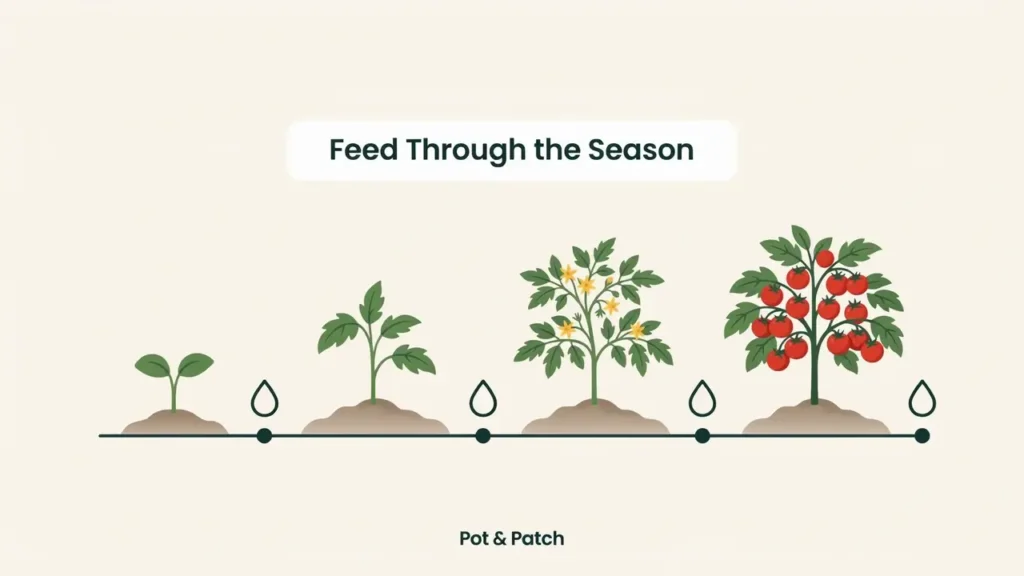
Always water the plant before feeding, never feed bone-dry soil, as concentrated fertilizer on dry roots can burn them.
How Often to Fertilize Tomatoes in Pots
Container tomatoes generally need feeding every one to two weeks with a diluted liquid fertilizer, which is more often than the every three to four weeks typical for garden plants.
If you prefer granular slow-release fertilizer, apply it every four to eight weeks according to the label, since each application feeds the plant steadily in between. Whichever route you choose, use liquid feeds at about half the label strength for pots. Little and often beats a heavy dose, which stresses the plant and leaches away before it can be used.
Organic Fertilizer Options
If you prefer to feed organically, several options work well for container tomatoes and can be combined.
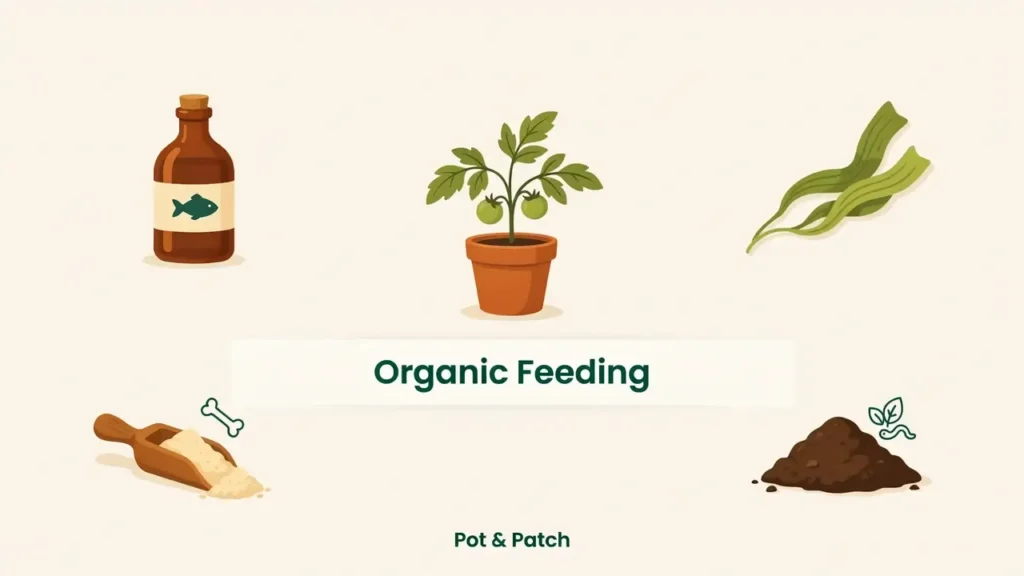
- Fish emulsion is a fast, nitrogen-rich liquid, good for early growth. It has a strong smell, so use it with care on a balcony.
- Kelp or seaweed adds potassium and trace nutrients, and there is research support for using it alongside a regular feeding program.
- Bone meal is a slow source of phosphorus, useful worked in before flowering.
- Compost mixed into the potting soil adds gentle, slow nutrition and improves the mix.
Ready-made organic granular blends made for tomatoes and vegetables, often with ratios around 2-5-3, are a simple all-in-one choice and are usually applied every four to six weeks.
Signs of Over- and Under-Feeding
Your plant will tell you when the feeding is off.
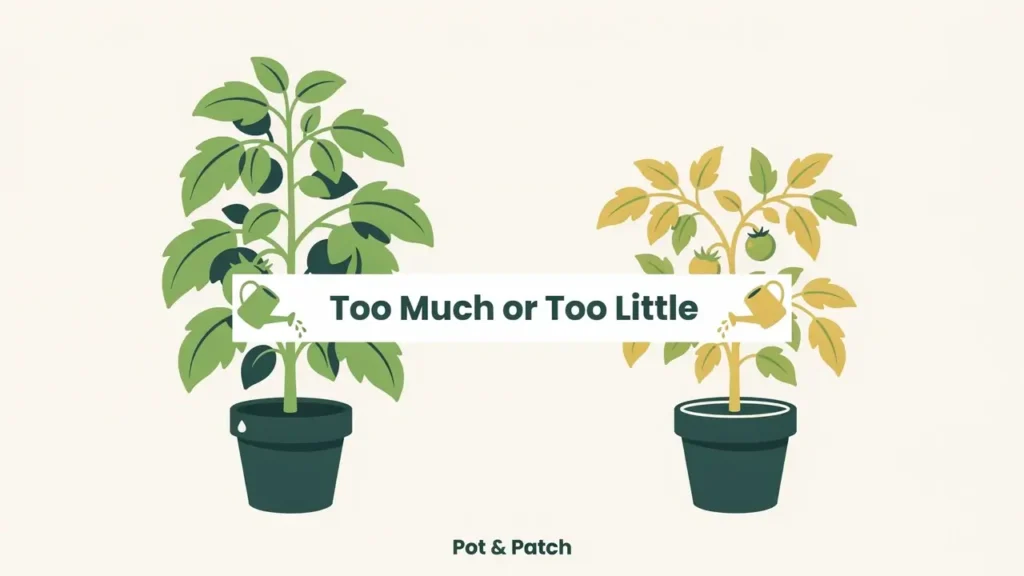
- Lush, leafy plant with few flowers or fruit: too much nitrogen. Switch to a lower-nitrogen tomato blend and ease off.
- Pale, yellowing lower leaves and slow growth: underfed. Begin a regular feeding routine.
- White crust on the soil or pot: salt buildup from feeding. Flush the pot with plenty of water.
- Scorched or browning leaf edges: fertilizer burn, usually from feeding too strong or on dry soil. Dilute more and water first.
Note that a dark patch on the bottom of the fruit is blossom end rot, which is a calcium and watering issue rather than a fertilizer shortage, and is best fixed with steady watering.
Common Feeding Mistakes
- Too much nitrogen. The top mistake, giving you leaves instead of tomatoes.
- Feeding too strong. Full-strength liquid in a pot can burn roots. Dilute it.
- Feeding dry soil. Always water first.
- Forgetting to feed at all. Potted tomatoes run out of food fast, so skipping weeks stunts them.
- Never flushing the pot. Salts build up over a season; an occasional heavy watering clears them.
FAQ
What is the best NPK ratio for tomatoes in containers?
Use a balanced ratio such as 10-10-10 during early growth, then switch to a tomato blend with lower nitrogen and higher phosphorus and potassium, like 5-10-10, once flowering begins.
How often should I fertilize tomatoes in pots?
Every one to two weeks with a diluted liquid fertilizer, or every four to eight weeks with a slow-release granular. Use liquids at about half strength.
Should I use liquid or granular fertilizer for container tomatoes?
Both work. Liquid feeds act fast and suit pots well, while granular slow-release is convenient. Many gardeners use granular at planting and liquid through the season.
Can you over-fertilize tomatoes?
Yes. Too much fertilizer, especially nitrogen, causes leafy growth with little fruit, and can burn roots or build up salts. Feed lightly and regularly.
Is Epsom salt good for tomatoes?
Only if your plant is short of magnesium. It is not a general fertilizer and will not boost a healthy plant, so it is not a substitute for a balanced feeding routine.
Final Thoughts
Feeding container tomatoes comes down to a simple rhythm: little and often, with less nitrogen once the flowers arrive. Start with a slow-release granular at planting, follow up with a diluted liquid every week or two, and flush the pot now and then to keep salts in check.
Do that, watch your plant for signs it needs more or less, and a single potted tomato will reward you with a steady harvest all season.