Why Are My Tomato Leaves Curling? Causes and Fixes
Curling tomato leaves look alarming, but most of the time they are not a sign of anything serious. The majority of leaf curl comes from simple stress, like heat or watering, and the plant keeps fruiting right through it.
The key is working out which of three things is happening: harmless stress, a virus, or herbicide damage. You can tell them apart by looking at which leaves are curling, which direction they roll, and how they feel.
This guide walks you through that quick diagnosis and the fix for each cause.
First, the Good News
By far the most common reason tomato leaves curl is physiological leaf roll, which is just the plant reacting to stress. It has very little effect on your harvest or the plant’s health.
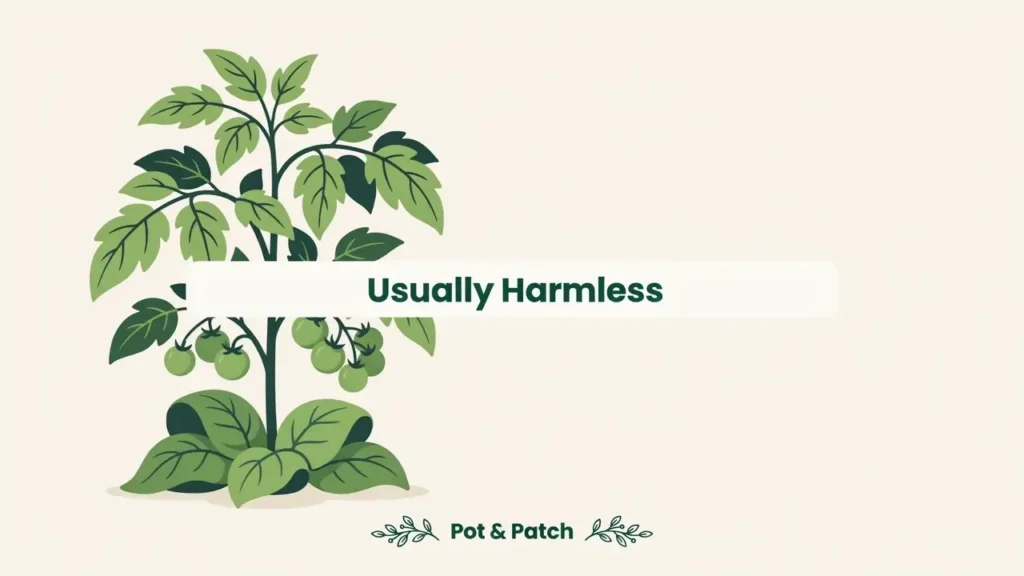
With this type, the lower, older leaves usually roll first. The leaflets cup upward, then roll inward toward the central vein, and the affected leaves feel thick and leathery while staying a normal, healthy green. If stress continues, more leaves may follow.
Vining (indeterminate) varieties show it more than bush (determinate) types, and it often appears as spring shifts into summer. If this matches what you see, there is little to worry about. Just ease the stress and the plant carries on.
Diagnose It: Direction, Leaves, and Texture
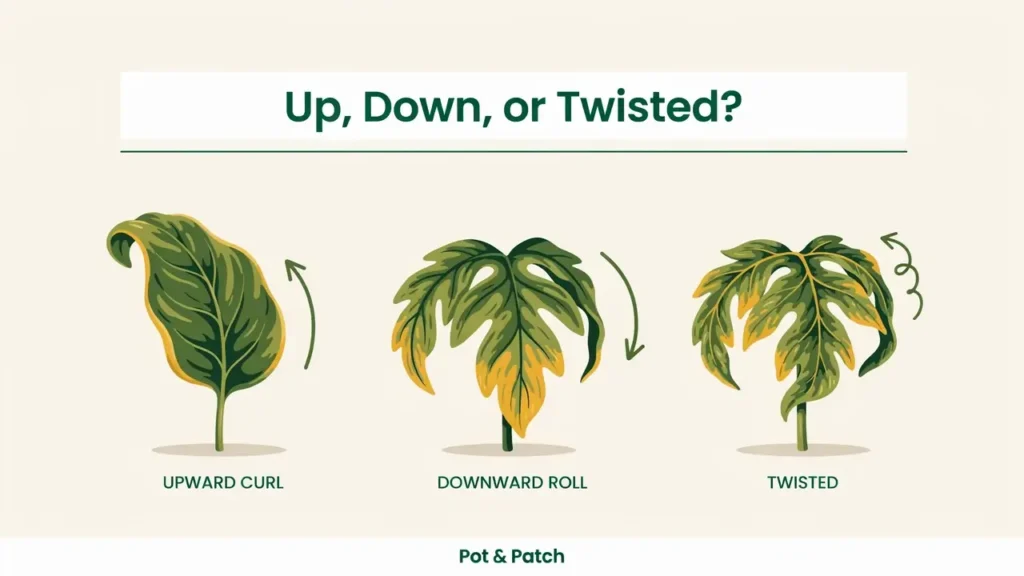
Before treating anything, look closely and ask three questions: which leaves are affected, which way do they roll, and what else is going on with the plant?
| What you see | Likely cause |
|---|---|
| Lower leaves, curl upward, thick and leathery, normal green | Physiological stress (harmless) |
| New top leaves cupped, pale green or yellow, stunted growth | Virus |
| Leaves roll downward, twisted or distorted new growth | Herbicide damage |
| Curling with tiny insects on leaf undersides | Pests |
That single look narrows it down fast. Upward and leathery points to stress, pale and twisted new growth points to a virus, and downward and distorted points to herbicide.
Physiological Leaf Roll (Stress)
This is the harmless, common type, and it is caused by the plant being under some kind of stress. Common triggers include:
- High heat and intense sun
- Drought or underwatering
- Overwatering and soggy soil
- Too much nitrogen fertilizer, or too little phosphorus
- Heavy pruning
- Root damage from hoeing or digging, or recent transplanting
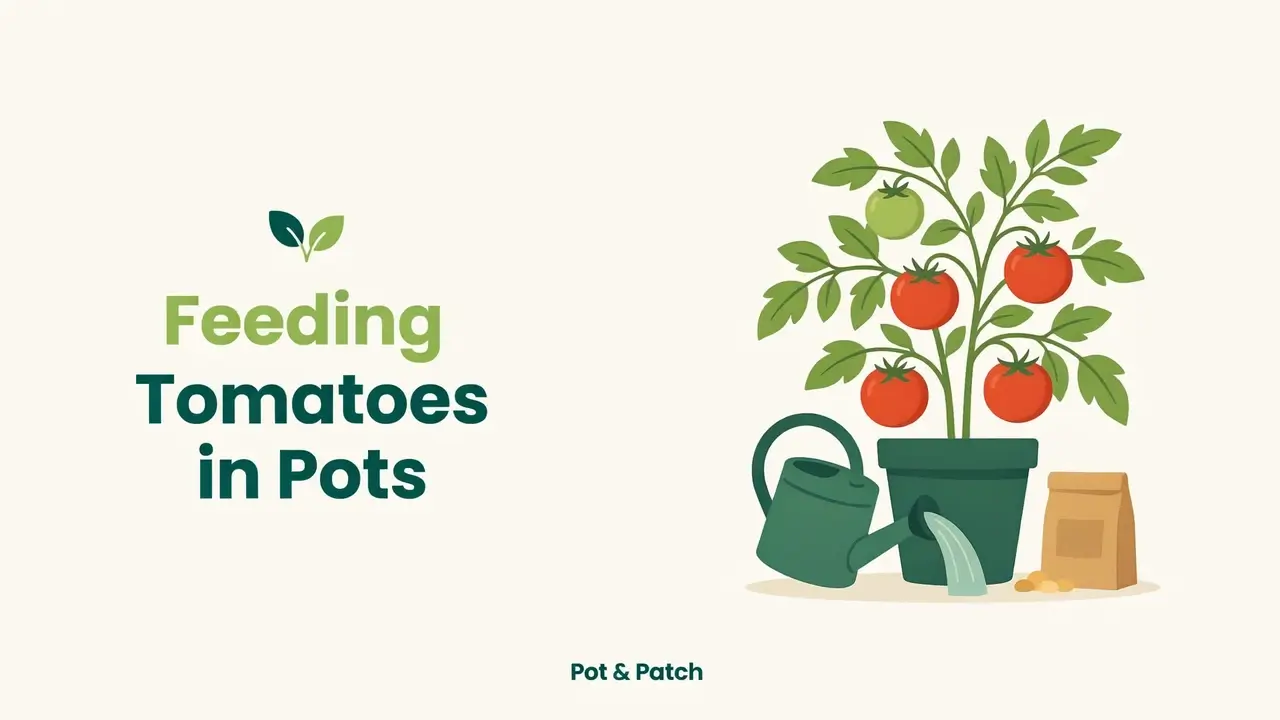
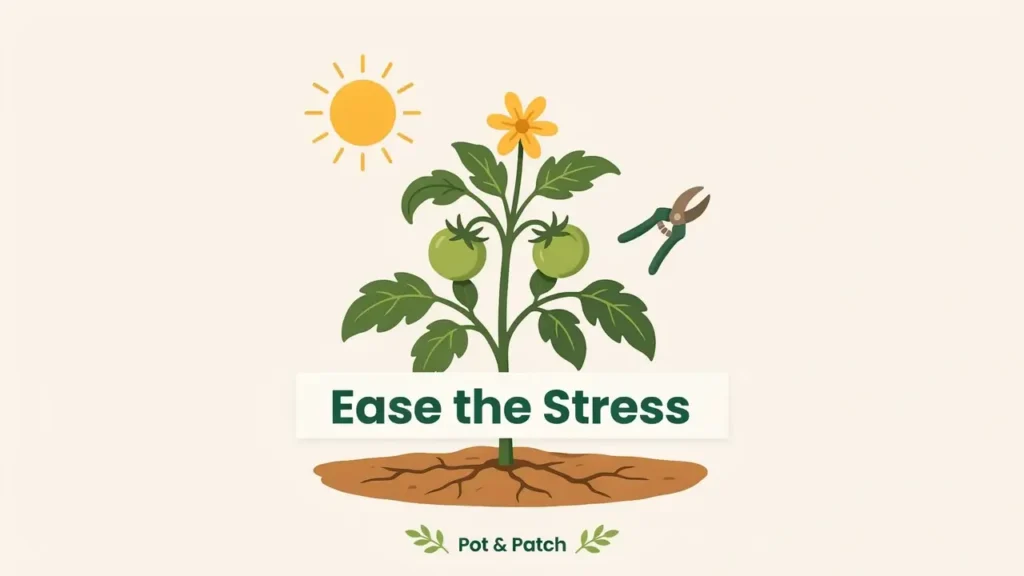
The fix is to find and ease the stress. Water consistently and mulch the soil to keep moisture steady, avoid overfeeding with nitrogen, and go easy on pruning. In extreme heat, a spot with some late-afternoon shade helps. Our guides on how to prune tomato plants and the best fertilizer for tomatoes in containers cover getting those two right.
Because this type does little harm, you do not need to remove the curled leaves. Once conditions steady, new growth comes in normally.
Curling in Containers
Potted tomatoes curl more easily than those in the ground, because they get hit twice in hot weather: by hot air above and hot soil around the roots. Pots also dry out fast, which adds drought stress.
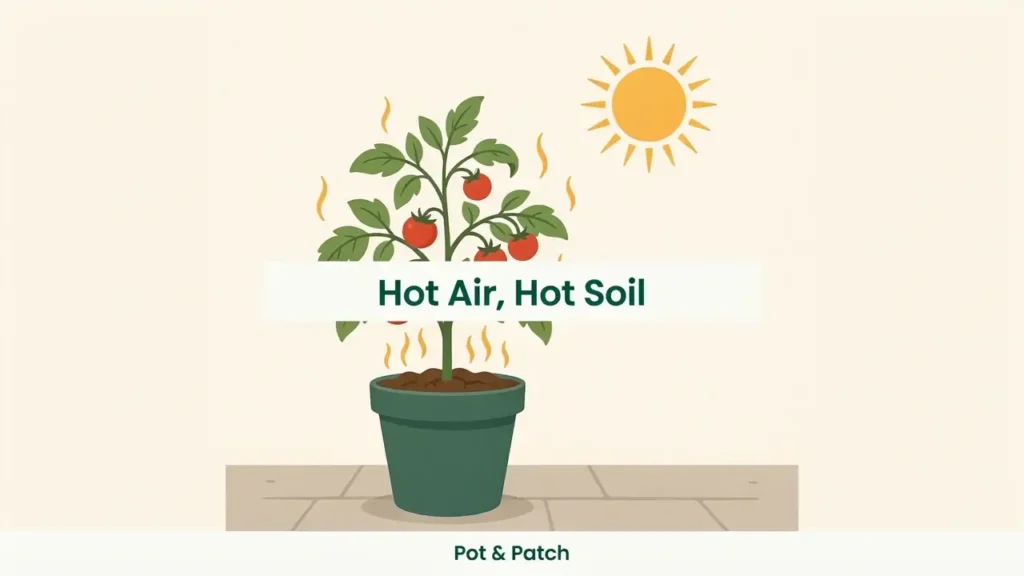
If your container plants curl in summer, check the soil moisture daily, water before the pot dries out, and move or shade the pot during the hottest part of the day. A larger pot holds moisture more evenly and swings less between wet and dry.
Viral Leaf Curl
Some viruses cause curling, and these are more serious because there is no cure.
Tomato yellow leaf curl virus, spread by whiteflies, makes the new leaves cup and turn pale green, with yellow leaf edges, purple-tinged veins underneath, stunted growth, and poor fruit set. Tomato mosaic virus causes rolling along with mottled coloring, small leaflets, and internal browning of the fruit. Both show on new growth and look twisted or discolored, unlike the even, leathery roll of stress.
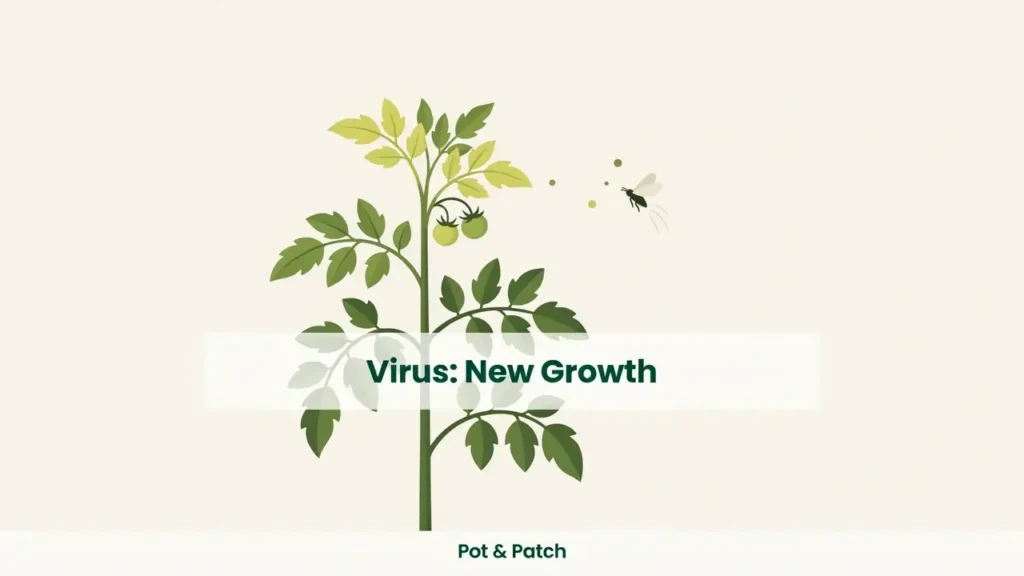
There is no treatment for an infected plant. Remove and destroy it so it cannot spread, control the whiteflies and weeds that carry these viruses, and disinfect any tools used on the plant. If curling comes with yellowing, our guide on why tomato leaves turn yellow helps you separate a virus from a simple nutrient issue.
Herbicide Damage
Tomatoes are extremely sensitive to weedkillers, and even a small amount causes trouble. Damage shows as leaves rolling downward with twisted, distorted new growth, and sometimes white, split stems and deformed fruit.
It reaches tomatoes two ways. The first is spray drift from weedkillers used nearby, which can carry much further than expected. The second, and increasingly common, is contaminated compost, manure, straw, or hay, where a persistent herbicide survives and damages plants later.
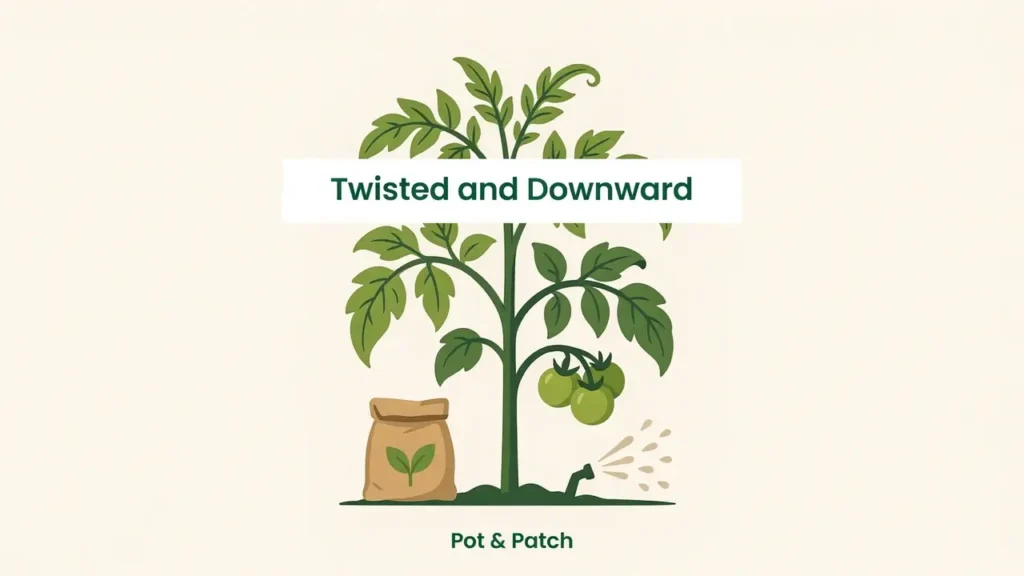
Here is the useful diagnostic: remove the damaged leaves and watch the new growth. If fresh growth keeps coming in curled and twisted, the cause is herbicide still in the soil or compost, not drift. Damage cannot be reversed, but if the dose was mild, the plant may outgrow it and later growth can be normal.
Pests
Sap-feeding insects can curl leaves too. Aphids and whiteflies are the usual suspects, along with tiny mites.
Check the undersides of the leaves and the stems for small insects, webbing, or a sticky residue. Treating an infestation early, by rinsing the pests off or using an appropriate control, usually stops the curling from spreading. Whiteflies matter doubly here, since they also spread the leaf curl virus.
How to Tell Them Apart
When you are unsure, run through this quick check:
- Are the curled leaves thick, leathery, and still green, mostly lower down? That is harmless stress. Ease the watering, heat, or feeding.
- Is the new growth pale, yellow, and twisted, with a stunted plant? Suspect a virus. Remove the plant.
- Are leaves rolling downward with distorted new growth? Suspect herbicide. Check your compost and nearby spraying.
- Any insects under the leaves? Treat the pests.
FAQ
My tomato leaves are curling up. Is that bad?
Usually not. Upward curling with thick, leathery, green leaves is physiological stress, which is harmless. Steady the watering and shade the plant in extreme heat.
What does it mean when tomato leaves curl down?
Downward rolling, especially with twisted new growth, often points to herbicide damage. It can also come from overwatering. Check for weedkiller drift or contaminated compost.
My tomato leaves are curling and turning yellow. What is it?
Curling plus yellowing on new growth can signal a virus, while yellowing lower leaves is more often a nutrient or watering issue. Look at which leaves are affected to tell them apart.
Will my tomato plant recover from curling leaves?
If it is stress, yes, easily, once you fix the cause. Herbicide damage may grow out if mild. A virus will not recover, so the plant should be removed.
Why are my tomato seedlings’ leaves curling?
Usually transplant shock, cool conditions, or too much light if grown under grow lights. Harden seedlings off before planting and give them stable conditions.
Final Thoughts
Curling leaves are usually the plant telling you it is stressed, not that it is dying. Read the direction and feel of the leaves first: upward and leathery is almost always harmless, while downward, twisted, or pale new growth is worth a closer look.
Fix the watering and heat stress first, since that solves most cases. Save your real concern for twisted new growth or clear virus symptoms, which are the rare times curling signals something serious.