Black Spots on Tomato Leaves: Causes and How to Fix Them
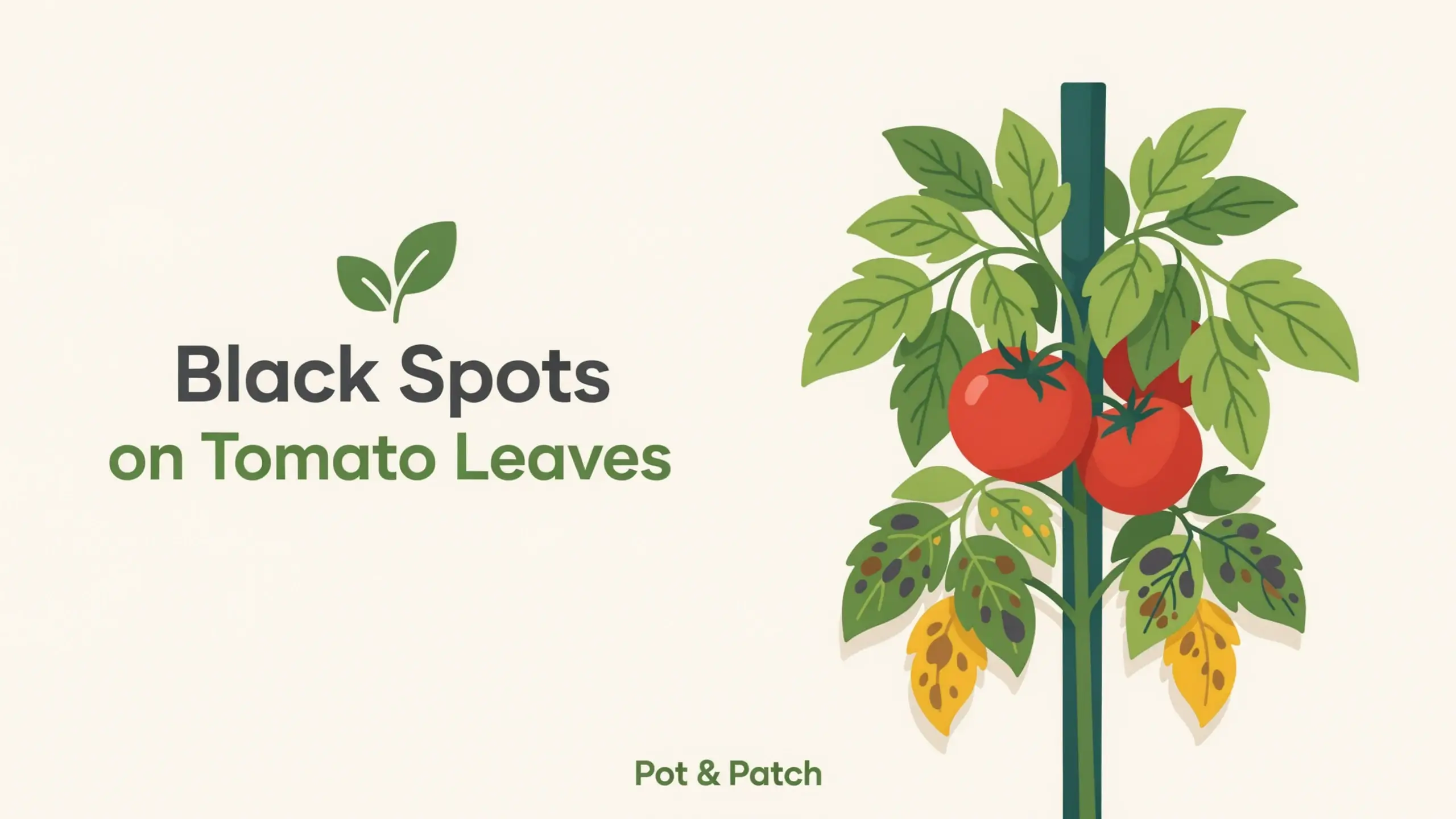
Black spots on tomato leaves almost always mean one thing: a disease has taken hold. The spots are usually caused by a fungus or bacteria that spreads in warm, wet weather, and left alone they can spread, drop your leaves, and cut your harvest.
The good news is that most cases are manageable if you catch them early and act. The first step is working out exactly which disease you have, because the spots each leave a telltale signature.
This guide helps you identify the cause from the look of the spots, then treat and prevent it.
What Causes Black Spots on Tomato Leaves?
Black or dark spots on the leaves are nearly always a leaf disease. A few fungal and bacterial infections are responsible for the vast majority of cases.
These pathogens thrive in the same conditions: warm temperatures, high humidity, and leaves that stay wet. They spread through splashing water, wind, insects, and even your hands and tools, and most of them survive the winter in old plant debris and soil, ready to infect next year’s crop.
That is why poor airflow, overhead watering, crowded plants, and leftover debris all make the problem worse. Knowing this shapes both the cure and the prevention.
Identify It: Which Disease Do You Have?
Each disease leaves a different signature. Look closely at the size of the spots, whether they have rings, and where on the plant they appear.
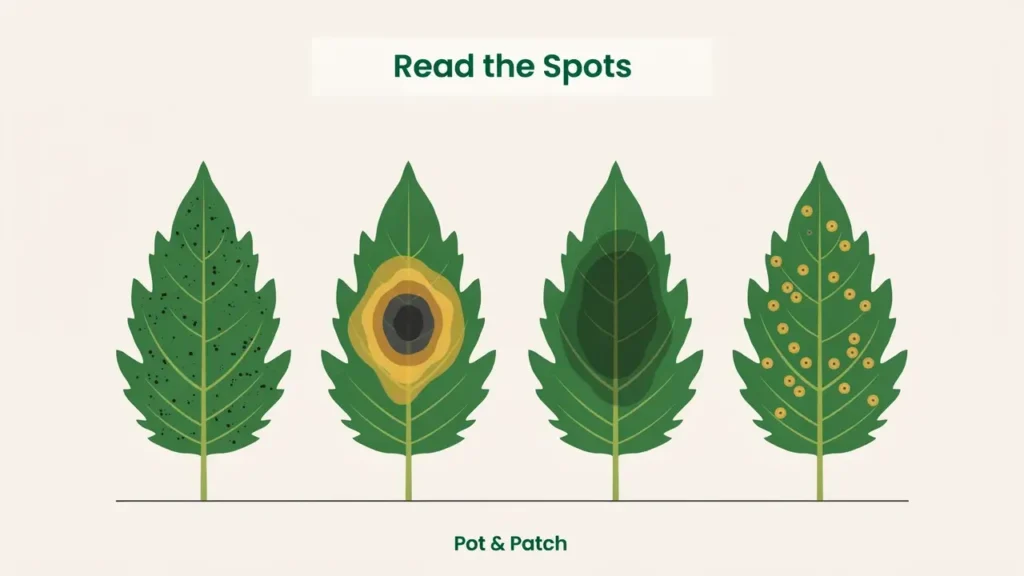
| What the spots look like | Likely cause |
|---|---|
| Many small spots, gray or tan centers with dark edges, tiny black dots in the center like flecks of pepper | Septoria leaf spot |
| Larger brown-black spots with concentric rings, a “bull’s-eye” look, and a yellow halo | Early blight |
| Large, irregular, olive-green to black greasy or oily blotches, white mold underneath in damp weather | Late blight |
| Tiny dark specks with yellow halos, also small raised specks on green fruit | Bacterial spot or speck |
The quickest tell: tiny black pepper-like dots in the spot point to Septoria, while clear target rings point to early blight. Large greasy blotches that spread fast are the one to worry about, late blight.
Septoria Leaf Spot (The Most Common)
Septoria leaf spot, caused by the fungus Septoria lycopersici, is the most common reason for black spots on tomato leaves.
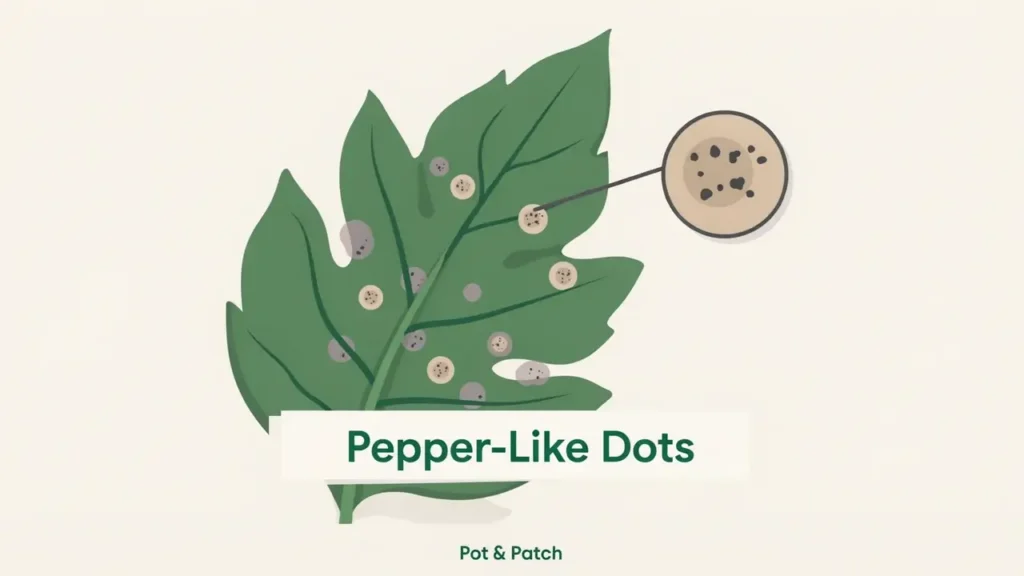
It starts on the lower, older leaves, usually once the first fruits set. You will see many small spots, about 1/16 to 1/8 inch (2 to 3 mm) across, with gray or tan centers and dark brown margins. The giveaway is the cluster of tiny dark specks in each spot’s center, which look like ground black pepper. These are the fungal fruiting bodies.
Heavily spotted leaves yellow, dry, and drop, and splashing water carries the infection upward. The fungus rarely touches the fruit, which stays edible, though it can spot stems. Caught early, it is very treatable.
Early Blight
Early blight, caused by an Alternaria fungus, is just as common and often appears alongside Septoria.
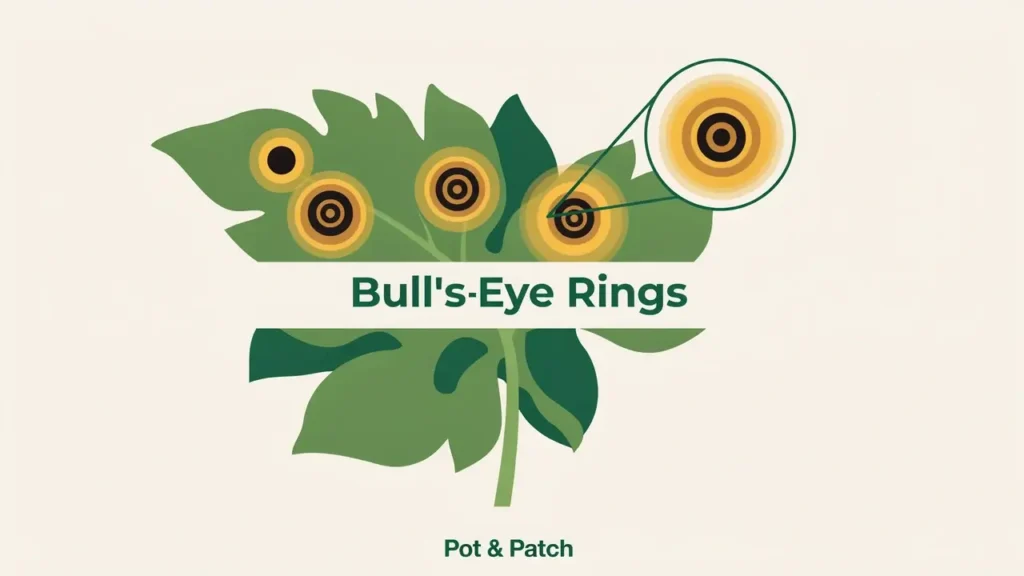
Its signature is the concentric ring or “bull’s-eye” pattern inside each lesion, usually ringed by a yellow halo. Spots are larger and darker than Septoria’s and also start on the lower leaves before moving up. Unlike Septoria, early blight does attack the stems and fruit, leaving dark, leathery, sunken patches with the same target pattern near the stem end.
Late Blight (Act Fast)
Late blight is less common but by far the most serious, since it can destroy a plant in days and spreads through an entire garden or neighborhood.
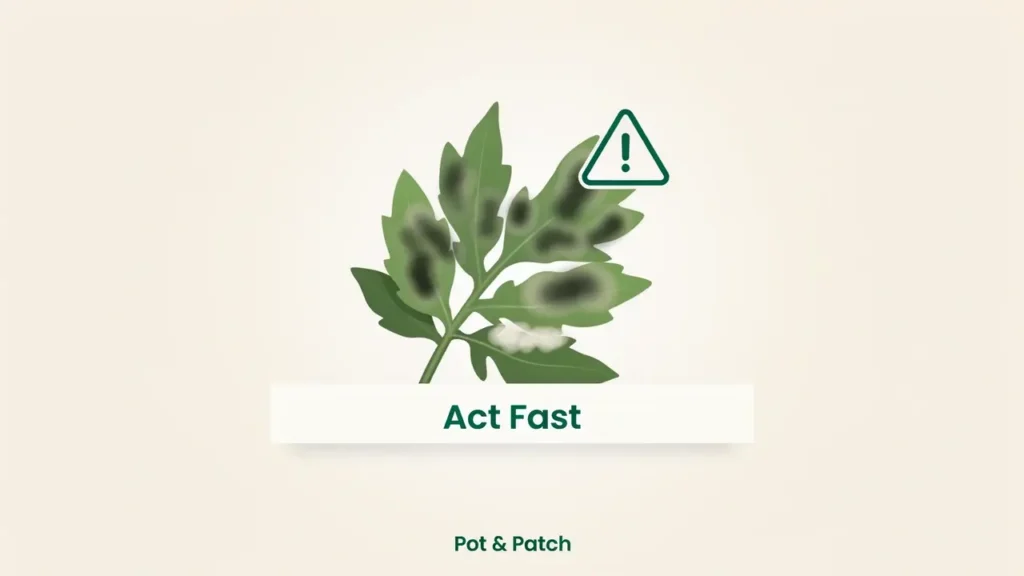
Caused by a water mold, Phytophthora infestans, it shows as large, irregular, olive-green to brown-black greasy blotches on leaves, often with a fuzzy white growth on the undersides in humid weather. It moves fast in cool, wet conditions and causes big dark lesions on the fruit too.
If you suspect late blight, act immediately. Remove and destroy affected plants rather than composting them, since it spreads so readily to other gardens.
Bacterial Spot and Speck
These two bacterial diseases cause many tiny dark spots rather than large lesions. Bacterial spot leaves slightly larger, raised dark spots, while bacterial speck makes smaller flecks, and both often have yellow halos. They also mark green fruit with tiny raised specks.
Bacteria spread in splashing water and on tools, and they are seed-borne, so they cannot be cured once present. Prevention, through clean tools, drip watering, and resistant seed, is the only real control.
How to Treat Black Spots
For the fungal and bacterial leaf spots, the approach is the same, and it leans on good practice rather than reaching straight for a spray.
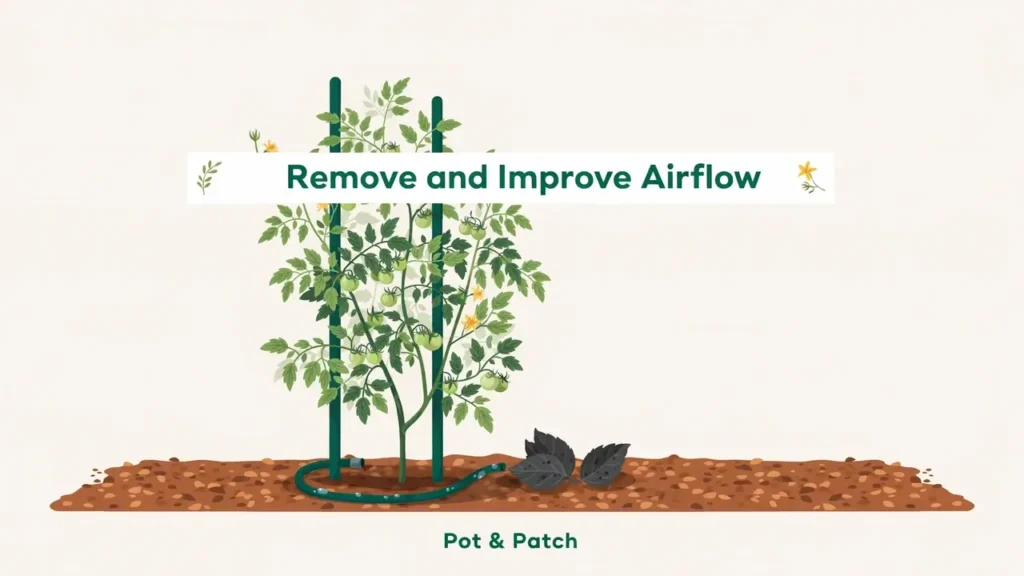
- Remove affected leaves immediately. Pick off spotted lower leaves and throw them away or burn them. Never compost them, as that spreads the spores.
- Improve airflow. Stake plants, and prune the lowest leaves so the canopy dries quickly after rain. Our guides on how to prune tomato plants and tomato plant spacing cover doing this well.
- Water at the base, in the morning. Keep water off the leaves by using a soaker hose or watering the soil directly, early enough that any splashed leaves dry fast.
- Mulch the soil. A layer of mulch stops spores in the soil from splashing up onto the lower leaves.
- Use a fungicide only if needed. If the disease is spreading despite the steps above, a copper-based or broad-spectrum fungicide can slow it. It will not cure spotted leaves, only protect healthy ones, so start at the first sign and follow the label.
How to Prevent Them
Prevention is far easier than treatment, and the same habits guard against all of these diseases:
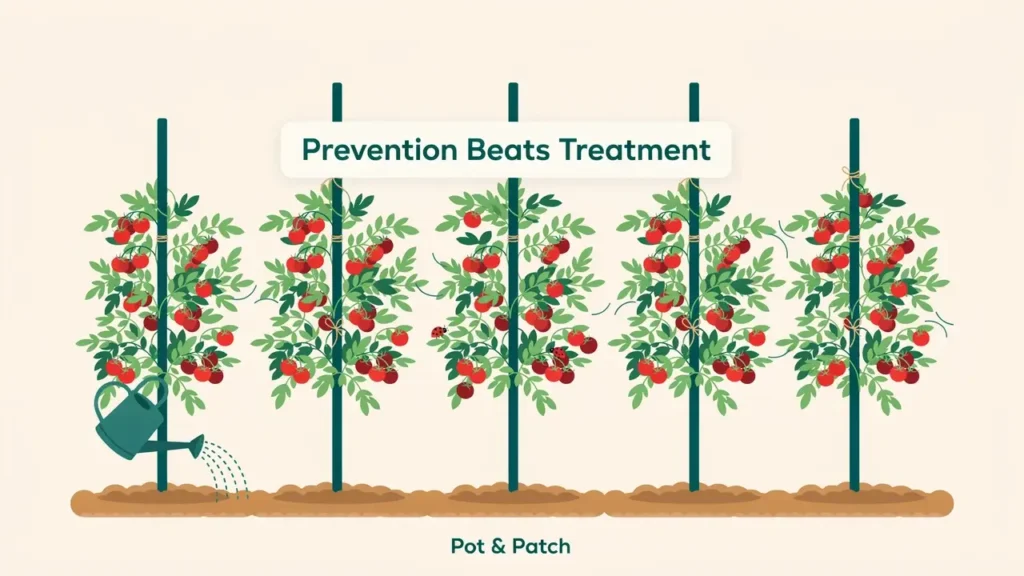
- Space plants well and stake them for strong airflow.
- Water at the soil, never overhead, and water in the morning.
- Mulch around the base of every plant.
- Clear away all plant debris at the end of the season, and disinfect stakes and cages.
- Rotate where you grow tomatoes, waiting two to three years before returning to the same spot.
- Choose disease-resistant varieties when you can.
Can You Eat Tomatoes From an Affected Plant?
In most cases, yes. Septoria rarely infects the fruit, and early blight on the fruit can simply be cut away, leaving the rest edible.
The exception is late blight, where affected fruit should be discarded. As a general rule, if a tomato itself is firm and unmarked, it is fine to eat even if the plant’s leaves are spotted. Cut into any spotted fruit first, and compost it if the damage runs deep or shows mold.
FAQ
What is the difference between black dots and black spots on tomato leaves?
They usually describe the same diseases. The tiny black dots people notice inside the spots are often the fruiting bodies of Septoria leaf spot, the most common cause.
How do I tell early blight from Septoria leaf spot?
Early blight has concentric “bull’s-eye” rings inside each spot. Septoria lacks the rings but has tiny black pepper-like dots in the center. They often appear together.
Will my tomato plant survive black spots?
Usually, if you act early. Removing affected leaves and improving airflow and watering stops most cases. Late blight is the exception and often means removing the plant.
Do I need a fungicide for black spots?
Not always. Good airflow, base watering, mulch, and removing affected leaves control most cases. Use a copper or broad-spectrum fungicide only if the disease keeps spreading.
Do black spots spread to other plants?
Yes. These diseases spread by splashing water, wind, and tools, and some infect related plants like potatoes and peppers. Prompt removal and clean tools limit the spread.
Final Thoughts
Black spots on tomato leaves look worse than they usually are. Identify the pattern first: pepper-like dots mean Septoria, target rings mean early blight, and large greasy blotches mean late blight, the one that needs fast action.
For almost all of them, the fix is the same steady routine: remove the affected leaves, keep water off the foliage, improve airflow, and mulch. Do that early and your plants will keep producing a healthy crop.