Why Do Tomatoes Split on the Vine? Causes, Prevention, and Whether They’re Safe to Eat
You check your plants after a summer storm and find a tomato with its skin broken open. It looked perfect yesterday. Now there’s a crack running down the side or a ring of lines circling the top.
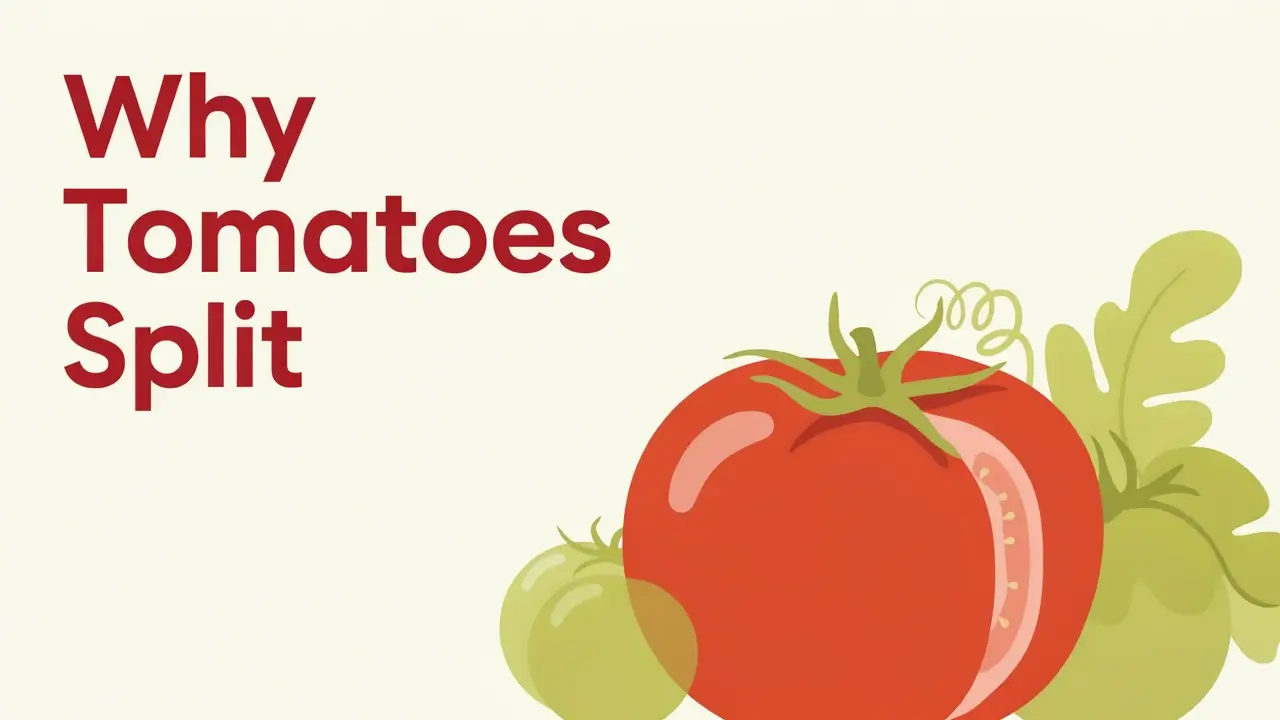
This is one of the most common tomato problems, and it almost never means you did something wrong. Splitting is a physiological issue, not a disease or a pest. The fruit inside simply grew faster than its skin could stretch.
The good news is that split tomatoes are usually still usable, and the causes are easy to understand once you know what to look for. Here’s what makes tomatoes split, how to prevent it, and how to tell whether a cracked tomato is safe to eat.
What Causes Tomatoes to Split?
A tomato splits when the flesh inside expands faster than the skin can grow to contain it. The skin reaches its limit, the pressure builds, and it tears open.
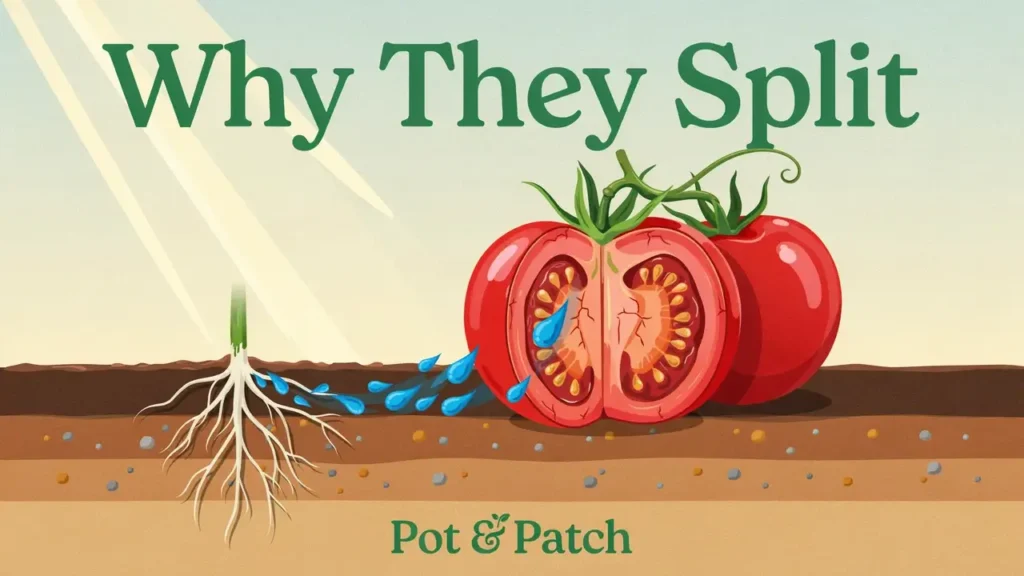
The single biggest trigger is a swing in soil moisture. When a plant has been dry and then gets a sudden flood of water, from a heavy rain or a deep watering after a dry spell, the roots pull up water fast. That water rushes into the ripening fruit, which swells quickly. The skin cannot keep pace, so it splits.
This is why cracked tomatoes often show up right after a storm that follows a hot, dry stretch. It is also why the problem tends to cluster: several fruits on the same plant split at once because they all took up that burst of water together.
A few other factors make splitting more likely.
- Ripeness. Nearly ripe and fully ripe fruit split more easily. As a tomato colors up, its skin becomes less elastic, so it has less give when water floods in. Fruit left on the vine too long is especially prone.
- Heat and sun exposure. Tomatoes sitting in direct sun absorb more heat during the day than shaded fruit. That extra stress makes them more likely to crack.
- Over-watering. Too much water, not just uneven water, can push fruit to split. This matters in containers, where it is easy to overdo it, and in gardens with heavy soil that holds water.
- Variety. Large beefsteak types and many heirlooms crack most readily. Thin-skinned cherry tomatoes split easily too. All tomato types can crack, though, when dry soil is suddenly followed by lots of moisture.
- Nutrition. Heavy nitrogen feeding drives fast, soft growth that cracks more easily. Low potassium, calcium, or boron can also weaken the skin, since those nutrients help build strong cell walls.
Even with all of that, moisture swings remain the main driver. If you fix your watering, you fix most of the problem.
The Two Main Types of Cracks
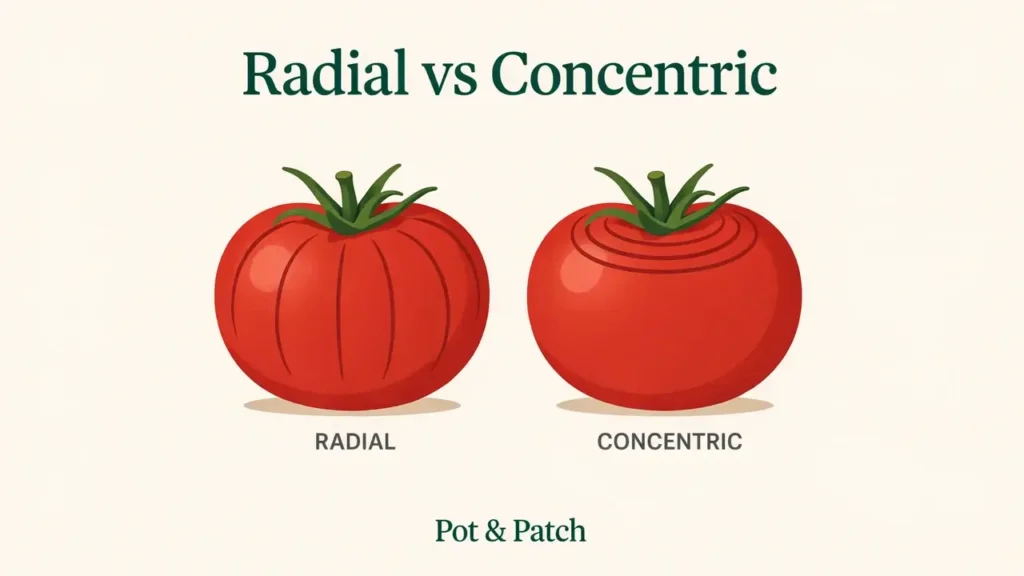
Not all cracks look the same, and the pattern tells you a bit about severity. You may also see these called “growth cracks” or “rain check.” They describe the same disorder.
| Type | What it looks like | Severity |
|---|---|---|
| Radial cracks | Lines that run vertically, out from the stem and down the sides of the fruit | Usually deeper and more serious; can open the fruit up |
| Concentric cracks | Rings that circle the stem end, like a target or bullseye around the shoulder | Often shallow; frequently callus over and heal |
Radial cracks are the more common and more damaging of the two. Concentric cracks tend to stay on the surface and often seal themselves, which is why they are usually less of a worry.
Is It Really Splitting, or Something Else?
A few other tomato problems get mistaken for splitting. Telling them apart helps you treat the right thing.
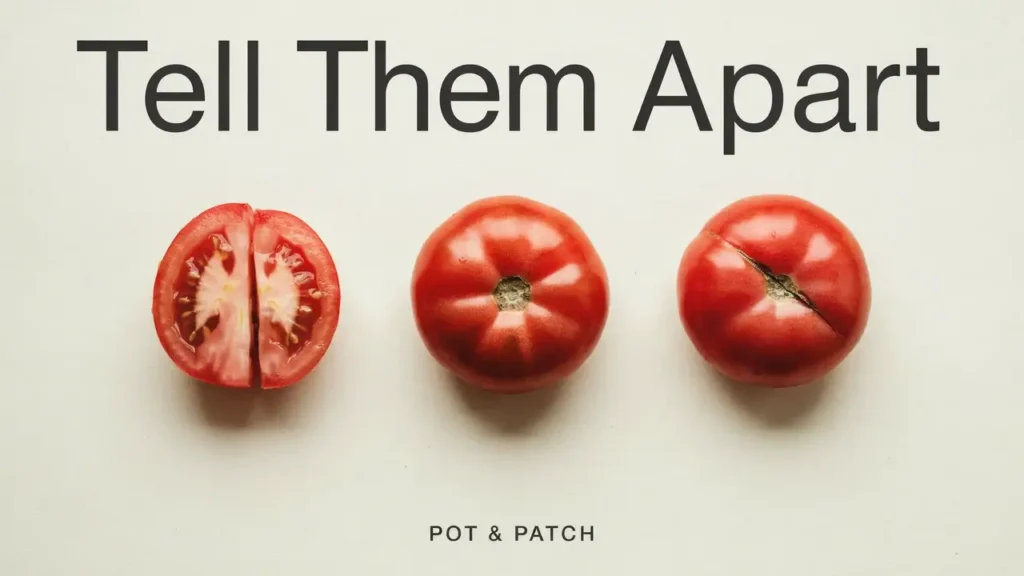
Blossom end rot shows up as a dark, sunken, leathery patch on the bottom of the fruit, not as a clean skin tear. It is a calcium and watering issue rather than a growth crack, so the fix is different. We cover it fully in our guide to blossom end rot on tomatoes.
Zippering is a thin brown scar that runs from the stem end toward the blossom end, sometimes with small crosswise marks like the teeth of a zipper. It happens when a flower part sticks to the young fruit during cool, humid weather at fruit set. It is purely cosmetic and the fruit is safe to eat.
Catfacing is puckered scarring and holes at the blossom end, caused by cold weather while the fruit was forming. It is not the same as a moisture crack.
If you see a clean split with no discoloration around it, you are almost certainly looking at ordinary cracking.
How to Keep Tomatoes From Splitting
You cannot repair a crack once it forms, so prevention is the whole game. Nearly every fix comes back to steady moisture.
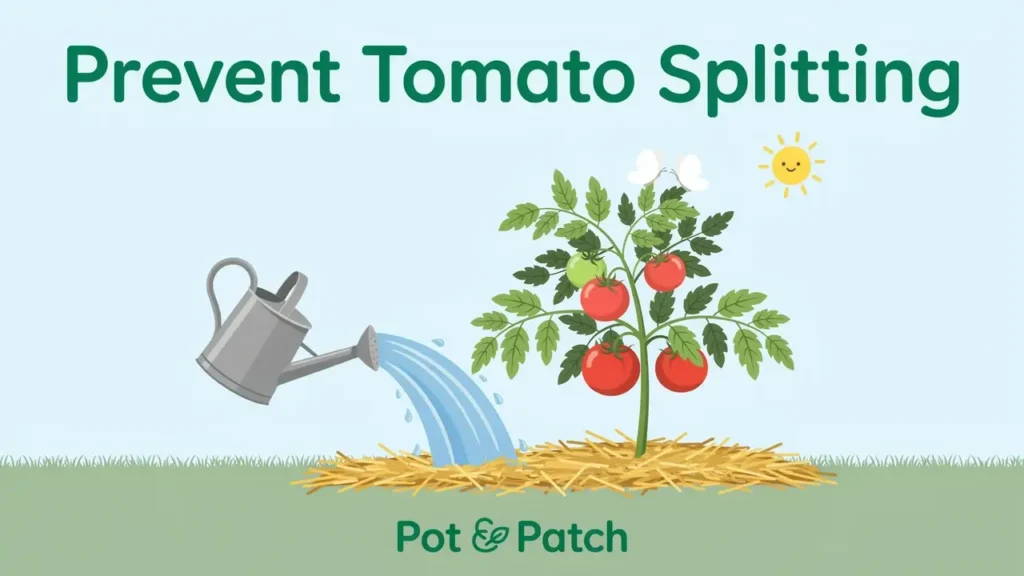
- Water consistently. This is the most important step. Keep the soil evenly moist instead of letting it dry out and then soaking it. During dry weather, a deep soak once every several days usually beats frequent light sprinkles, because it keeps moisture levels stable down where the roots are.
- Mulch around your plants. A two to three inch layer of straw, shredded leaves, or dried grass clippings slows evaporation and buffers the soil against sudden swings. Mulch is one of the easiest ways to even out moisture through a hot summer.
- Mind your containers. Pots dry out fast and then get flooded at the next watering, which is a recipe for splitting. Check container moisture daily in summer and make sure every pot drains freely. Our guide to growing tomatoes in containers covers watering rhythm in more detail.
- Give some afternoon shade in a heat wave. During extreme heat, light shade cloth over the plants reduces heat stress on the fruit and lowers the odds of cracking.
- Go easy on fertilizer. Avoid pushing plants with too much nitrogen, which fuels the fast, soft growth that splits. A balanced feed that includes potassium supports firmer skin.
- Prune with care. Heavy pruning exposes fruit to more direct sun, which adds heat stress. Keeping enough leaf cover to shade the tomatoes helps. See our notes on how to prune tomato plants for where to stop.
- Harvest at first blush. You do not have to wait for a tomato to turn fully red on the vine. Picking at the “breaker” stage, when it just starts to color, and ripening it indoors sidesteps the storm that would have split it. The flavor finishes beautifully on the counter.
- Choose crack-resistant varieties. If splitting is a yearly battle, plant cultivars bred to resist it. Varieties noted for good crack resistance include Jetstar, Mountain Spring, and Mountain Fresh. Interestingly, the trait comes from skin pliability more than skin thickness: a more flexible skin stretches instead of tearing.
What to Do With Tomatoes That Have Already Split
If you spot a crack, act quickly. An open tomato is an open door for bacteria, mold, and fruit flies, and it goes downhill faster on the vine.
Pick the split fruit as soon as you notice it. If it is close to ripe, bring it indoors to finish ripening on the counter, out of the sun. A tomato does not need the vine to ripen once it has started to color.
The sooner you get a cracked tomato off the plant, the better your odds of using it before it spoils.
Can You Eat Split Tomatoes?
In most cases, yes. A fresh, clean split does not make a tomato dangerous. The crack is a cosmetic wound, and extension food safety experts treat it like any other blemish: wash the fruit, cut away the damaged area around the crack, and use the rest.
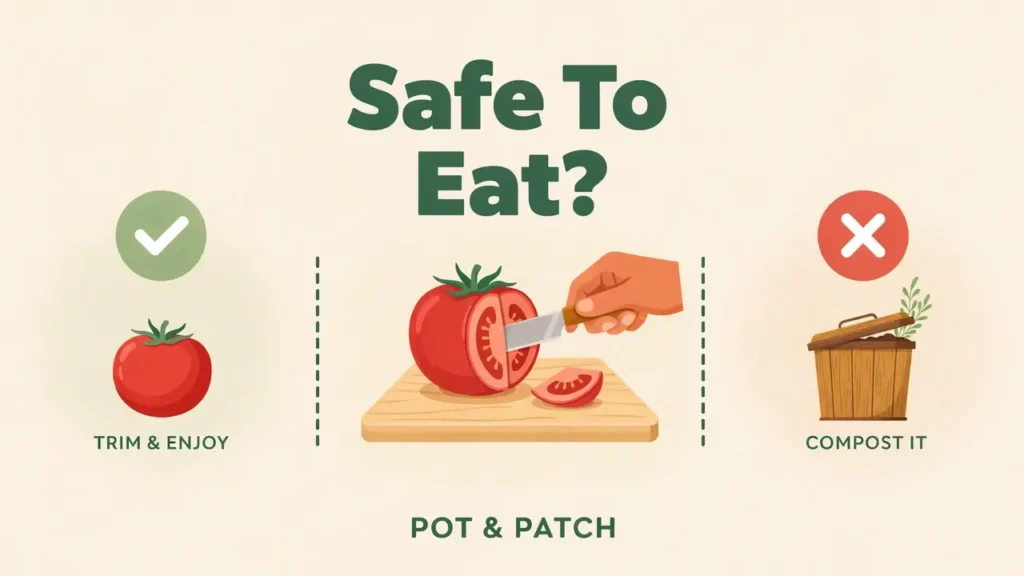
Here is how to judge a cracked tomato.
Safe to eat when:
- The fruit is still firm and smells fresh.
- The split is recent, shallow, or a shallow concentric ring.
- There is no discoloration, slime, or softness around the crack.
Throw it out when:
- You see mold, fuzz, or rot.
- It smells sour, fermented, or off.
- It is oozing, slimy, or mushy to the touch.
- Insects have gotten into the opening.
A couple of extra points worth knowing. Green or unripe tomatoes that split are riskier than ripe ones, because they sit exposed for longer before they are ready to use, giving bacteria more time to move in. And you should not can split tomatoes: a crack can introduce contamination that home canning will not reliably make safe. For fresh eating or cooking, though, a sound split tomato is fine, and cooking it adds an extra margin of safety.
When in doubt, trust your senses. If a split tomato looks and smells clean, it is almost always good. If anything seems off, compost it rather than risk it.
For more on keeping your plants productive and problem-free all season, see our main tomato growing guides.
Frequently Asked Questions
Why are my cherry tomatoes splitting?
Cherry tomatoes have thin skins, so they crack easily when moisture spikes. Some varieties are especially prone; Sungold is a well-known splitter. Keep watering steady, and pick cherry tomatoes promptly as they ripen, since they will crack if left on the vine through a rainy spell.
Tomato fruit cracking is due to a deficiency of what?
The common textbook answer is boron, and low boron, potassium, or calcium can all weaken the fruit skin and raise the risk of cracking. In a home garden, though, the main cause is almost always inconsistent soil moisture rather than a nutrient shortage. Fix your watering first, and only chase a deficiency if a soil test points to one.
How do I stop tomatoes from splitting after heavy rain?
You cannot stop a crack once it has formed, so the move after a downpour is to harvest. Pick any ripe or nearly ripe fruit right before or just after a big rain and ripen it indoors. Going forward, mulch and consistent watering reduce how violently the plant reacts to that sudden water.
Will a split tomato keep ripening?
Yes. A tomato that has started to color will continue to ripen off the vine, even with a crack. Bring split fruit indoors and keep it at room temperature, out of direct sun, and use it within a day or two.
Does splitting mean I’m overwatering?
Not necessarily. Splitting usually points to uneven watering rather than too much, although constant over-watering can cause it too. The goal is steady moisture: not bone dry one week and soaked the next.
Takeaway:
tomatoes split when a burst of water makes the flesh outgrow the skin. Steady moisture, a good mulch layer, timely harvesting, and crack-resistant varieties prevent most of it, and a fresh split tomato is usually perfectly fine to eat once you trim the damaged part.