Raised Bed Vegetable Gardening for Beginners: The Complete Guide
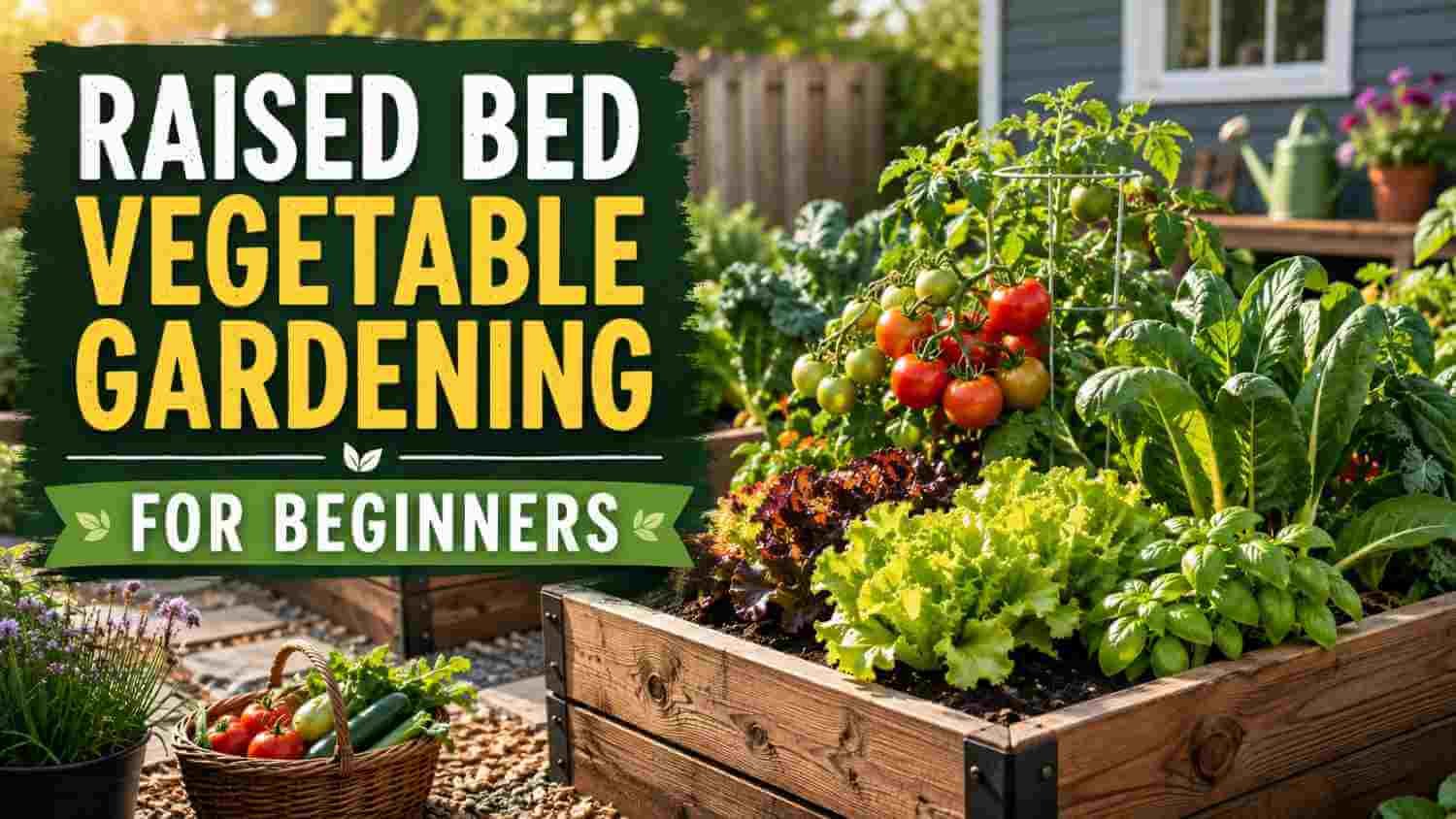
Raised bed vegetable gardening starts with one simple idea. You build a container above the ground, fill it with soil, and grow your food there instead of digging into your yard. It works for anyone with a patio, a small backyard, or even poor native soil that never grows much of anything. You don’t need years of experience or a huge space to get real results.
This method solves a lot of problems that trip up new gardeners. Weeds struggle to reach the surface, drainage improves almost instantly, and you control exactly what goes into your soil from day one. Beginners often see stronger harvests in their first raised bed than they ever did trying to fix a patch of backyard dirt.
This guide walks through everything you need, from choosing a size to filling your first bed correctly. You’ll also find planting tips, seasonal care, and fixes for the mistakes most beginners make early on. By the end, you’ll know exactly how to start your own raised bed vegetable garden with confidence.
What A Raised Bed Garden Actually Is
Put simply, this method means growing plants inside a container built above the ground and filled with soil. Most beds have no bottom, just four walls holding soil in place.
A small bed near your back door counts. So does a row of them lining a fence.
Raised Bed Versus In Ground Garden
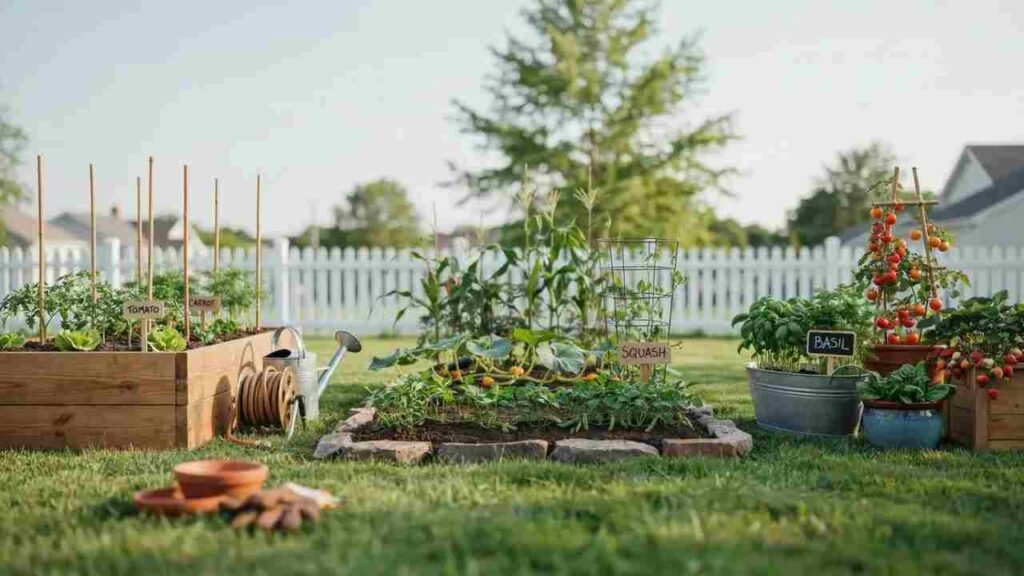
Growing directly in your yard means working with whatever soil you already have. A raised container gives you more control over quality from the very start.
In ground gardens still make sense for very large spaces where building multiple beds gets expensive fast.
Raised Bed Versus Container Garden
Raised beds differ from pots and other containers mainly in size and depth. They usually hold more soil, which means more room for roots.
Containers suit balconies and small patios well. A raised bed suits a backyard with more open space.
Raised Bed, In Ground, And Container Compared
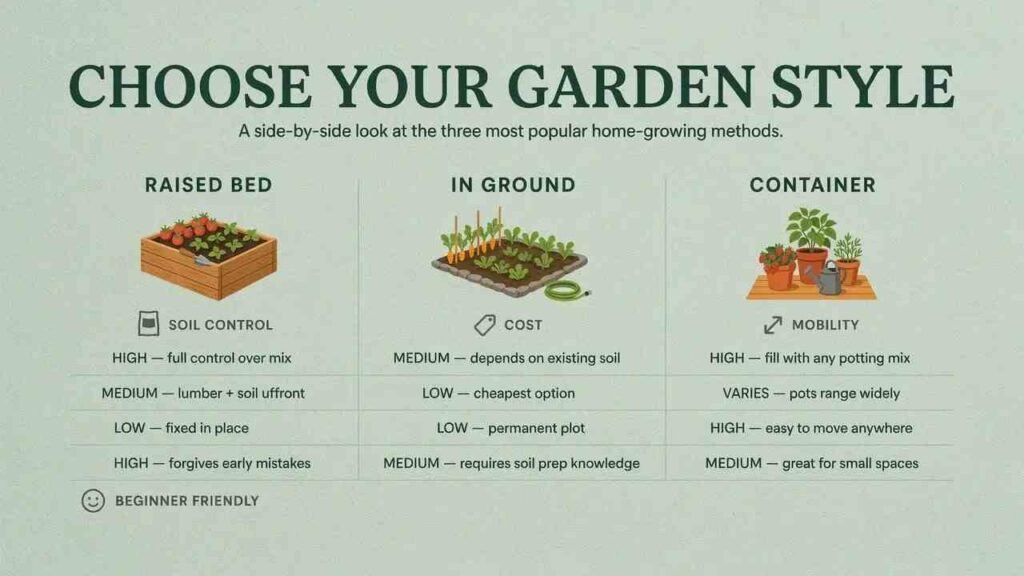
Here’s a simple side by side look at all three approaches:
- Soil control: raised beds and containers both win, in ground depends on what you already have
- Cost: in ground is cheapest, raised beds cost more upfront, containers vary widely
- Mobility: containers are easiest to move, raised beds are the least portable
- Beginner friendliness: raised beds tend to forgive early mistakes better than either option
This comparison helps you choose the right style before buying any materials.
Why Raised Bed Gardening Works So Well For Beginners
There are real reasons this approach has become so popular with new gardeners.
Better Control Over Soil Quality
Instead of fighting clay, sand, or rocky ground, you build the soil yourself from the start. This matters most for gardeners dealing with genuinely poor native soil.
Soil in a raised container also warms up faster once spring arrives.
Fewer Weeds And Less Maintenance
A raised container naturally blocks many weeds from reaching the surface. Adding a cardboard or mulch layer underneath cuts weed pressure even further.
- Fewer weeds pushing up through the soil surface
- Less tilling required compared to in ground gardens
- Easier to spot and pull the few weeds that do appear
Easier Physical Access For Every Body
Bending and kneeling become optional once a bed is built to a comfortable height. Elevated designs let wheelchair users garden without straining to reach.
Bed height can be customized entirely around comfort, not just tradition.
A Longer Growing Season
Because raised soil warms and drains faster than ground soil, you can often plant a little earlier in spring. Simple covers extend that advantage further into fall.
This small head start adds up to real extra harvest time each year.
Flexibility With Placement And Design
A raised bed works on driveways, patios, decks, and awkward yard corners alike. If your plans change later, beds can be rebuilt or relocated.
Beyond function, a well placed bed adds real visual structure to a backyard layout.
Planning A Raised Bed Garden Before You Build Anything
A little planning up front saves you from sizing, placement, and budget mistakes later.
Questions To Answer Before You Start
Before buying lumber or soil, think through a few basics first.
- How much space do you actually have available to work with
- How many hours of direct sunlight does that spot get daily
- What’s your realistic budget for materials, soil, and tools
- Are you growing vegetables, herbs, flowers, or a mix of everything
A rough sketch, even a simple doodle, helps you avoid costly surprises later.
Finding The Right Spot For Sunlight
Spend a full day watching how sunlight moves across your yard. Note which spots stay bright and which fall into shade by afternoon.
- Most vegetables need six to eight hours of direct sunlight
- Leafy greens tolerate a bit more shade than fruiting crops
- Tomatoes and peppers perform best in the sunniest spot available
This mapping decides which crops will actually thrive in your chosen location.
Checking Drainage And Ground Level
A raised bed needs a level, well draining spot to perform properly. Low areas where rainwater tends to pool should be avoided entirely.
An uneven frame creates gaps at the bottom, letting soil quietly leak out over time.
What Size Should Your First Raised Bed Be
A beginner friendly starting size is around four feet wide by eight feet long. Width matters more than length here, since it controls how easily you can reach the middle.
Most beginners do better starting with one or two beds and expanding once they’ve gotten comfortable with care.
Setting A Realistic Budget For Materials And Soil
Lumber, soil, compost, and basic tools make up most of your starting costs. Cheap and repurposed materials can bring that total down significantly.
Starting small and expanding gradually beats overspending on a garden you’re not yet sure you’ll maintain.
Choosing The Right Size For Your Raised Bed
Getting the dimensions right from the start saves real frustration later on.
Ideal Width For Comfortable Reach
Three to four feet wide tends to be the sweet spot for most beginners. Anything wider makes it hard to reach the center without stepping into the soil.
Beds placed against a wall or fence should stay narrower, since you can only reach from one side.
Ideal Length For Your Space
Length matters far less than width when it comes to plant health. Keeping beds under eight feet long helps prevent the sides from bowing outward.
Longer beds can work well, but they usually need added structural support to stay square.
Ideal Height And Depth For What You Grow
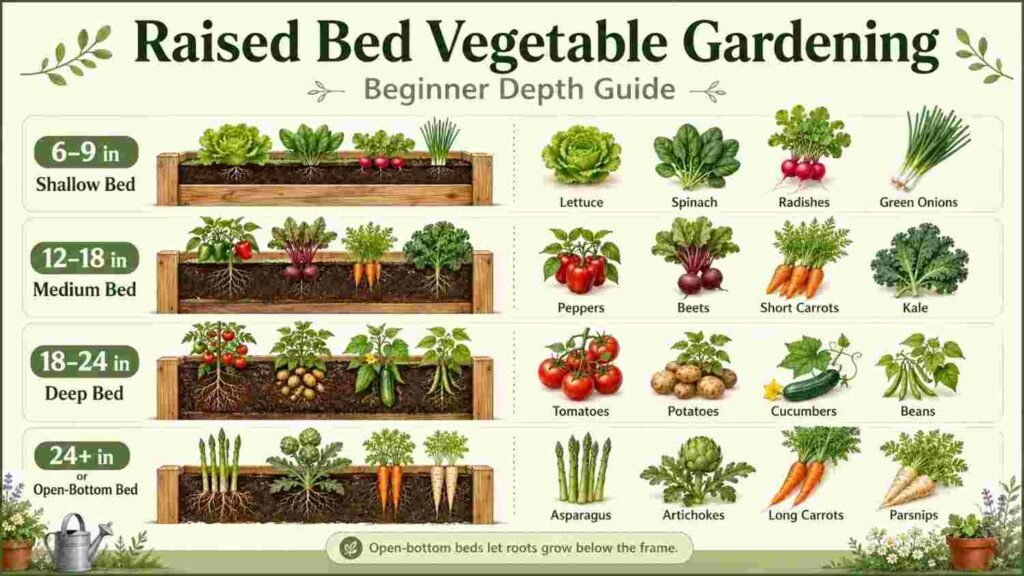
Bed height comes down to comfort and mobility more than any fixed rule. A shallow bed suits lettuce and herbs just fine, while carrots and other root crops need real depth.
Beds placed on concrete or hard surfaces need extra depth, since roots can’t reach anything below.
How Much A Raised Bed Can Actually Yield
It helps to know roughly what one bed can realistically produce before you start building.
| Total Garden Size | People Supported | Yield Level |
|---|---|---|
| 40 sq ft (one 4×10 bed) | Partial supply for 1 person | Salads, greens, and tomatoes for a season |
| 200 sq ft (about five 4×10 beds, or six 4×8 beds) | 1 person | Basic vegetable supply, roughly 300 lbs over a 4 to 6 month season |
| 400 to 600 sq ft | 1 person | Significant self-sufficiency, including produce for canning |
| 800 to 1,000 sq ft | 1 person | Complete self-sufficiency, including storage crops |
Sources: UMass Extension, “Raised Beds” fact sheet. UC Cooperative Extension, Publication 8059, “Vegetable Yields for Home Gardens.”
These numbers come from real university extension data, not guesswork. A single 4×10 foot bed can supply salads, greens, and tomatoes for one person through a season. Scale that up to around 200 square feet, and you’re looking at a genuine basic vegetable supply.
Intensive planting and succession planting both push yield beyond these baseline figures. Sunlight, soil quality, and consistent watering still matter just as much as total square footage.
Knowing this upfront helps you decide how many beds you’ll actually need.
Materials For Building A Raised Bed
The material you choose affects cost, lifespan, and how the bed looks over time.
Wood Options Compared Side By Side
Cedar, pine, and recycled lumber are the three most common choices for raised bed frames.
- Cedar naturally resists rot and lasts the longest of the three
- Pine costs less upfront but breaks down faster outdoors
- Recycled or reclaimed wood works well for gardeners on a tight budget
Scrap wood from other projects is often free and perfectly functional for a first bed.
Is Treated Lumber Safe For Vegetable Beds
Older treated lumber, made before 2003, contained arsenic based preservatives. Modern treated lumber uses copper compounds instead, which is considered far less concerning.
Opinions still vary among experienced gardeners on this topic.
- Some gardeners avoid treated lumber entirely and stick with cedar or untreated wood
- Others use treated lumber confidently, citing the shift away from arsenic decades ago
- Either choice is reasonable, so pick based on your own comfort level
Metal, Stone, And Other Long Lasting Materials
Galvanized steel and corrugated metal have become popular for their durability and clean look. Corten steel develops a rust like finish that many gardeners find attractive.
Stone and brick raised beds offer a permanent, decorative option for a backyard. Metal beds do tend to heat up faster in direct summer sun, which is worth keeping in mind.
Budget And Repurposed Material Ideas
You don’t need expensive materials to build a functional raised bed.
- Tin roofing scraps make sturdy, inexpensive raised bed walls
- Old stock tanks work well once checked for cracks or rust
- Cinder blocks stack easily and need no cutting or drilling at all
Always inspect repurposed materials for chemical residue before filling them with soil.
Choosing A Kit Versus Building Your Own
Pre made raised bed kits save time and usually arrive ready to assemble. Building your own frame from scratch tends to cost less overall.
DIY beds also let you customize sizing for awkward or tight yard spaces, something kits rarely accommodate well.
How To Build A Raised Bed Garden Step By Step
With a size and material chosen, actually building the frame comes next.
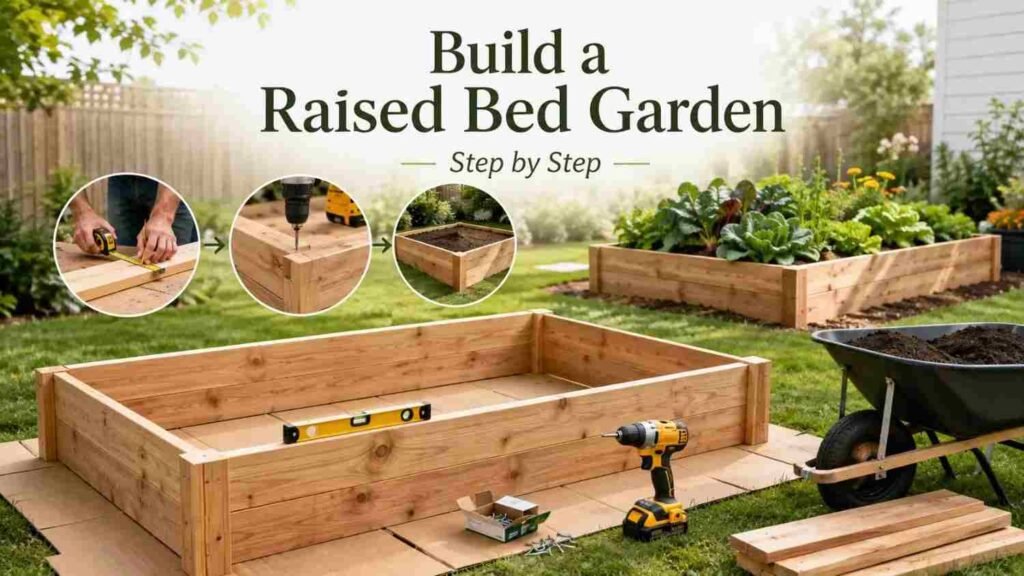
Tools And Supplies You Will Need
A basic build doesn’t require a fully stocked workshop.
- A saw, drill, screws, and a level for the frame itself
- Cardboard or landscape fabric for the base layer underneath
- A wheelbarrow to help move soil once the frame is ready
Most beginner builds only need a handful of these simple tools.
Measuring And Cutting Your Boards
Measure and mark your boards according to the bed size you planned earlier. Cut the shorter boards first, since this helps keep the whole frame square.
Double check every measurement before making a single cut, since mistakes here are hard to fix later.
Assembling The Frame Correctly
Attach the corner boards together to form the rectangular shape of your bed. Check each side with a level before driving in the final screws.
Gently tapping the corners with a hammer helps align the frame evenly once it’s mostly assembled.
Preparing The Ground Underneath The Bed
Clear away debris and level the site before setting the frame in place. Laying cardboard or landscape fabric underneath helps block weeds from below.
Grass and existing weeds should be fully smothered, not just left exposed under the frame.
Placing And Leveling The Bed On Site
Before filling anything, confirm the bed sits flat and stable on the ground. Gaps underneath the frame can let soil quietly escape once it’s filled.
Raised beds are extremely difficult to move once they’re loaded with soil, so get placement right the first time.
Filling Your Raised Bed With Soil
This step determines how well everything you plant will actually grow.
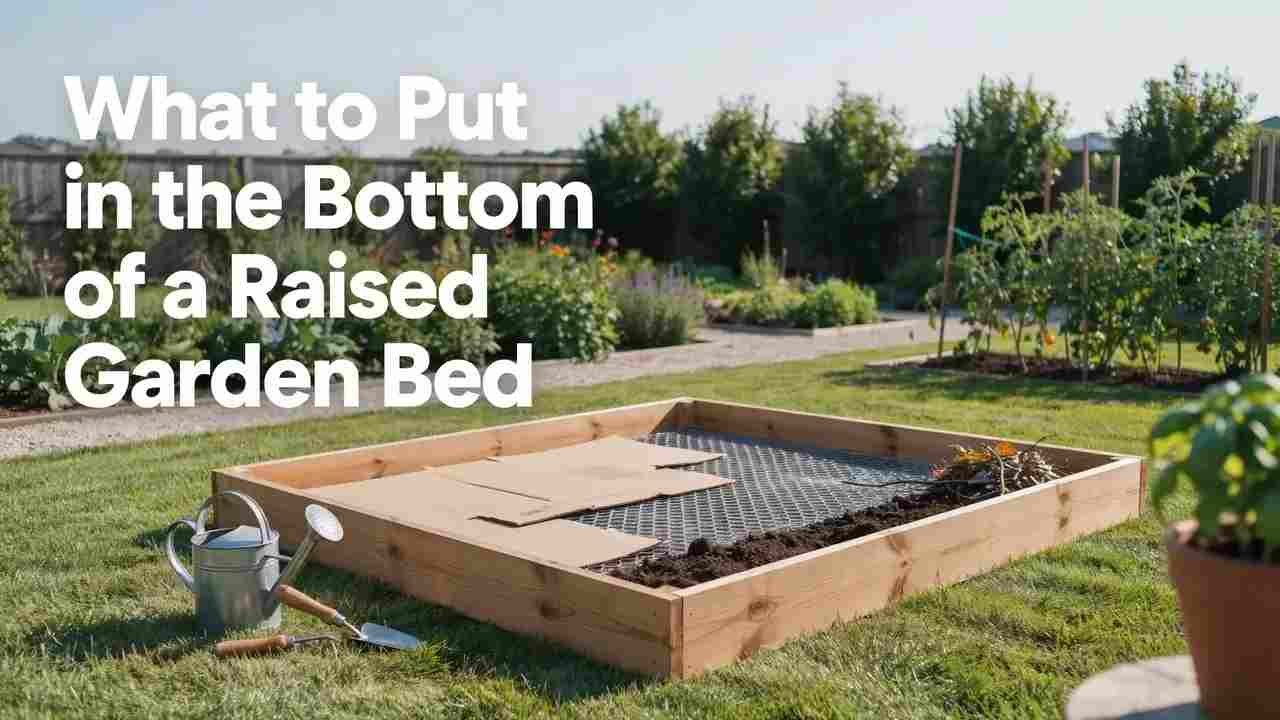
What To Put On The Bottom Of A Raised Bed
Gardeners disagree on whether to line the bottom of a bed at all. Most experienced gardeners actually skip a solid liner entirely.
Cardboard or a loose layer of sticks works well as a natural, breathable base.
The Lasagna Method For Deep Raised Beds
For very deep beds, layering materials saves money compared to filling with soil alone.
- Start with a bottom layer of branches or thick sticks
- Add a layer of cardboard, leaves, or wood chip mulch next
- Top everything with a mix of compost and topsoil
This method also enriches the soil naturally as the layers slowly break down.
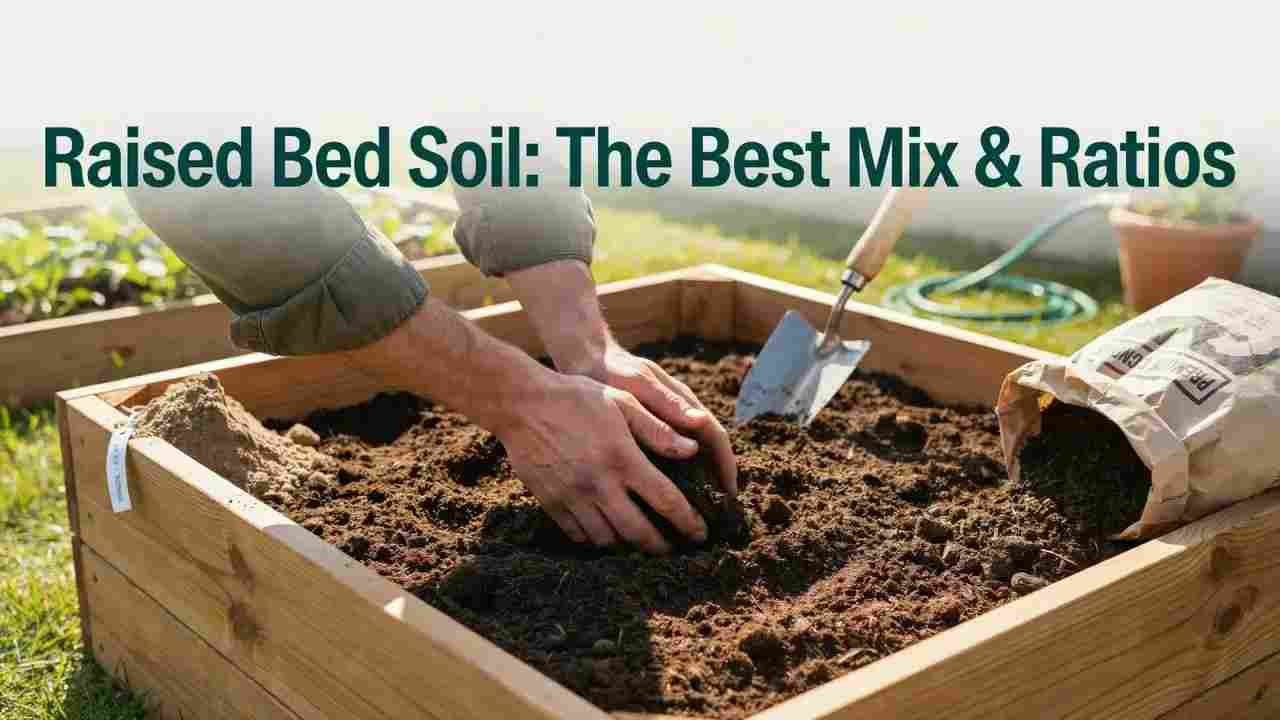
The Best Soil Mix Recipe For Raised Beds
A simple, reliable ratio works well for most vegetables.
- Fifty to sixty percent quality topsoil
- Forty to fifty percent finished compost
- A smaller portion of organic matter mixed throughout
Heavy feeding crops like tomatoes benefit from a slightly higher compost ratio.
Compost, Vermiculite, And Other Soil Additions
Compost adds nutrients, while vermiculite and perlite both improve drainage and airflow. Worm castings give new beds a gentle, natural nutrient boost.
Too much compost, surprisingly, can actually stress young seedlings rather than help them.
Filling The Bed All The Way To The Top
Never underfill a brand new raised bed, even if it looks like plenty at first. Soil settles significantly within just the first few weeks after filling.
Topping off with fresh compost each season keeps soil levels steady for years to come.
Preparing A Raised Bed Garden For Planting
A little prep work here makes everything that follows go more smoothly.
Testing And Amending Your Soil
A simple soil test gives you real information before your first planting. Results guide exactly what nutrients or pH adjustments your soil actually needs.
Healthy, well balanced soil is genuinely the foundation of an easy raised bed garden.
Mixing And Loosening The Soil Before Planting
Gently turn the soil to blend layers together before anything gets planted. Avoid packing it down too tightly while you work.
Loose, fluffy soil gives roots the room they need to spread and grow strong.
Mapping Out Where Each Plant Will Go
Sketch a rough plan before putting a single seed or transplant in the ground.
- Group plants with similar sunlight needs in the same section
- Keep thirsty plants near each other for easier watering
- Leave realistic spacing based on each plant’s mature size
A simple garden map prevents the overcrowding that trips up so many beginners.
Planting In A Raised Bed Garden
With soil ready and a rough map in hand, it’s time for the actual planting.
Square Foot Gardening For Beginners
This method divides the bed into simple one foot sections for easy spacing. Each square gets planted with one type of crop, based on its size.
String or small wood markers make it easy to lay out the grid before planting.
Seeds Versus Transplants
Seeds cost less and offer far more variety than store bought transplants. Root crops like carrots generally grow better sown directly from seed.
Transplants give beginners a faster head start, especially for slower growing crops like tomatoes.
How To Plant Vegetables In A Raised Bed
Dig each hole to match the depth the plant was growing in its container. Firm the soil gently around the roots once it’s placed.
Spacing guides printed on seed packets still apply loosely inside a raised bed.
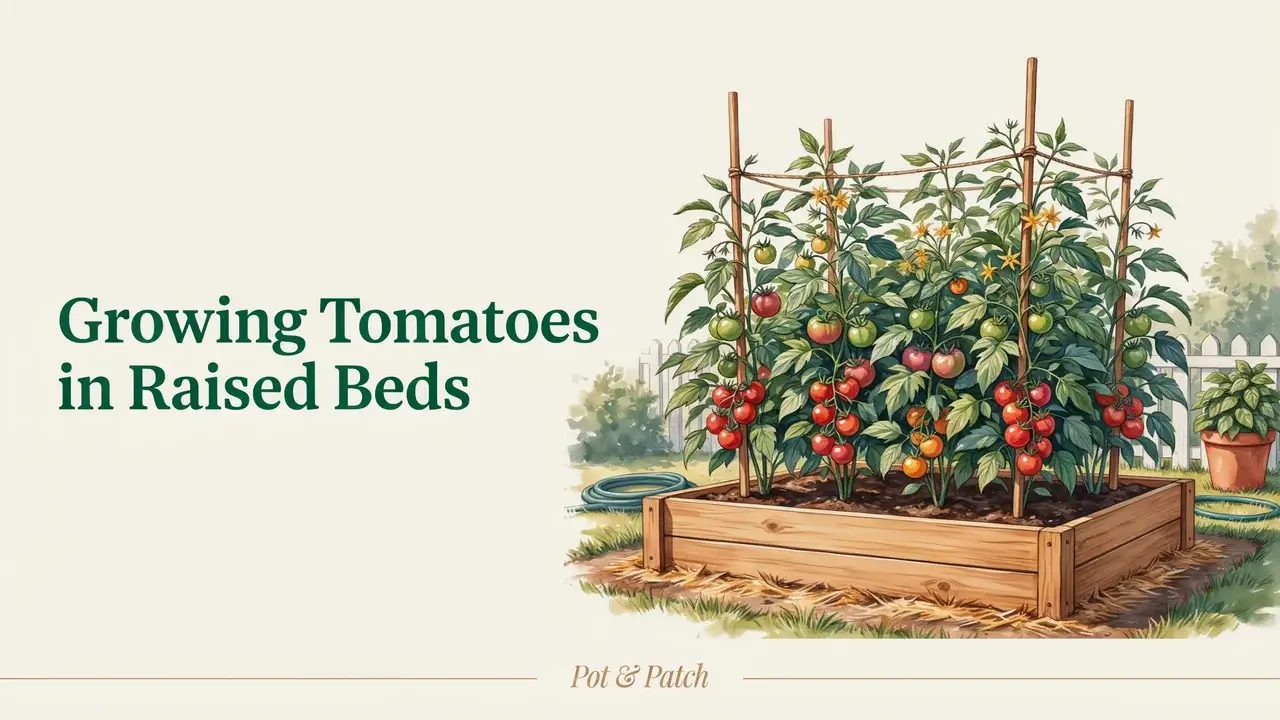
How To Plant Tomatoes In A Raised Bed
Space tomato transplants generously, since they’ll grow much larger than they look at first.
- Add a stake or cage early, before the plant gets too tall to handle
- Plant slightly deeper than other vegetables, since tomatoes root along their stems
- Choose the sunniest spot in the bed, with six or more hours of direct light
Early support prevents heavy, fruit loaded branches from snapping later in the season.
How To Plant Root Vegetables Like Carrots And Potatoes
Root crops need loose, deep soil that’s free of rocks and heavy clumps. Carrots especially struggle in compacted or shallow raised beds.
Space carrots and potatoes generously, since both need real room to develop underground.
How To Plant An Herb Garden In A Raised Bed
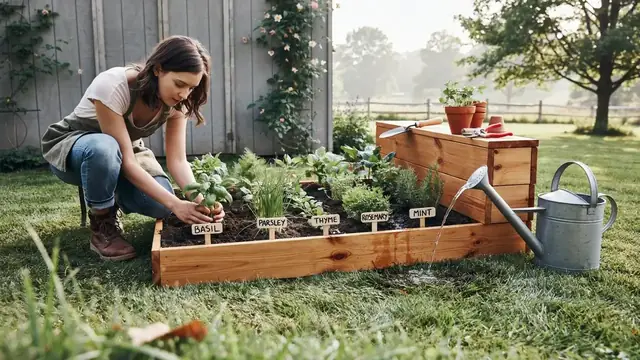
Group herbs together based on similar water and sunlight preferences. Rosemary and thyme, for example, both prefer drier conditions than basil.
Mint should stay in its own separate space, since it spreads aggressively and crowds neighboring plants.
How To Plant Flowers Alongside Vegetables
Marigolds and other flowers add color while also helping deter certain garden pests. Pair flowers with vegetables that share similar sunlight and watering needs.
Flowering plants also attract pollinating insects, which benefits fruiting vegetables nearby.
Raised Bed Soil Care And Feeding
Once plants are in the ground, ongoing care determines how well they perform.
How Often To Water A Raised Bed
Raised beds tend to dry out faster than soil planted directly in the ground. Check moisture with a finger before deciding to water again.
Watering deeply and less often encourages roots to grow stronger and deeper over time.
Drip Irrigation And Other Watering Systems
For larger raised bed setups, drip irrigation saves real time and effort. An olla, an old fashioned buried clay pot, waters roots slowly and steadily.
Hand watering works perfectly fine for gardeners managing just one or two beds.
Fertilizing A Raised Bed Through The Season
Raised beds often need more frequent feeding than in ground gardens do. Slow release fertilizer suits long season crops like tomatoes particularly well.
- Watch for yellowing leaves, a common sign of nutrient shortage
- Avoid overfeeding, which can reduce flowering and fruit production
- Feed heavy producers again partway through a long growing season
Mulching To Retain Moisture And Block Weeds
A layer of mulch keeps raised bed soil from drying out too quickly.
- Straw works well and breaks down slowly over the season
- Shredded leaves are often free and readily available in fall
- Grass clippings add nutrients as they decompose into the soil
Mulch also keeps developing fruit and vegetables off bare, damp soil.
Companion Planting And Layout Strategies
Thoughtful placement can make a raised bed noticeably more productive.
What Companion Planting Means For Raised Beds
Certain plants genuinely help each other when placed close together. Basil near tomatoes is a classic, beginner friendly pairing worth trying first.
Some combinations even help repel common pests without any extra effort.
Crop Rotation In A Small Raised Bed Space
Rotating plant families each year helps prevent pests and diseases from building up. Keeping a simple garden journal makes tracking past plantings much easier.
Rotation still matters even in a garden with just a couple of beds.
Growing Vertically To Save Space
Trellises, cages, and stakes let plants grow upward instead of sprawling outward.
- Cucumbers climb well and free up valuable floor space
- Pole beans use vertical structures more efficiently than bush varieties
- Peas take to trellising naturally and rarely need extra support
Vertical growing also improves airflow, which lowers the risk of fungal disease.
Succession Planting For A Longer Harvest
Replant a section as soon as one crop finishes producing. Staggering plantings every couple of weeks keeps harvests steady rather than all at once.
Quick growing greens like lettuce and radishes work especially well for succession planting.
Seasonal Raised Bed Gardening Calendar
A raised bed changes with the seasons, and planning ahead keeps it productive year round.
Spring Tasks For A New Or Existing Bed
Spring is when most raised beds really get going for the year.
- Refresh soil with fresh compost before your first planting
- Check drainage holes and edges for any winter damage
- Harden off seedlings gradually before moving them outdoors full time
Cool season crops like lettuce and peas can often go in earlier than beginners expect.
Summer Care During Peak Growing Season
Summer brings faster growth, but also faster moisture loss from the soil.
- Water more frequently as temperatures climb through the season
- Harvest regularly to keep plants producing rather than slowing down
- Watch closely for pests, which tend to multiply quickly in the heat
Mulch becomes especially valuable during long, hot summer stretches.
Fall Planting And Extending The Season
As summer crops wind down, fall offers a solid second planting window.
- Cool season crops like spinach, kale, and radishes suit fall well
- Row covers protect tender plants from an early, unexpected frost
- Fall is also a practical time to build any new beds
Building beds now means they’re ready and settled before spring planting begins.
Winter Protection For Raised Beds
Covering or insulating beds before the coldest months helps protect soil and any remaining plants.
- Cold hardy crops like kale can often survive with minimal protection
- Mulch helps insulate soil even in beds left empty for winter
- Grouping beds together can offer each other some wind protection
A little winter care sets the whole garden up for an easier spring.
Raised Bed Gardening By Region And Climate
Climate shapes almost every decision, from watering frequency to which crops will actually survive.
Hot Climate Adjustments Like Central Texas
Extreme summer heat calls for a different approach than milder regions.
- Choose heat tolerant vegetables like okra, eggplant, and peppers
- Add shade cloth during the most intense afternoon sun
- Mulch heavily to protect roots from soil temperatures that spike fast
Watering timing matters more here, since morning watering reduces evaporation significantly.
Cold Climate Adjustments For Short Seasons
Raised beds genuinely help gardeners working with short, cold growing seasons. Soil warms faster in spring, buying valuable extra growing days.
- Use covers or cold frames to warm soil earlier than usual
- Choose quick maturing varieties suited to a compressed growing window
- Extend the season into fall with row covers over cold hardy crops
Cold climate gardeners often rely on succession planting to make the most of limited time.
Adjusting For Humid Or Rainy Regions
Excess moisture changes how raised beds need to drain and breathe.
- Choose disease resistant varieties suited to humid, damp conditions
- Space plants generously to improve airflow and reduce fungal risk
- Raised beds actually help here, since they drain better than ground level soil
Humid climates benefit from raised beds more than almost any other growing condition.
Raised Bed Gardening For Specific Needs
A few situations call for a slightly different approach than the basics already covered.
Accessible Raised Beds For Limited Mobility
Elevated beds remove the need to bend or kneel while gardening. Height and width can both be adjusted for comfortable, seated access.
Wheelchair friendly designs typically sit around waist height, with a workable reach across the bed.
Accessible design lets far more people garden comfortably, for far longer.
Raised Bed Gardening For Renters And Small Yards
A raised bed can sit directly on top of existing soil without disturbing it. This makes raised bed vegetable gardening genuinely renter friendly, since nothing permanent gets altered.
- Smaller or portable beds suit renters who may eventually relocate
- Lightweight materials make future moves considerably easier
- Even one modest bed can produce a genuinely useful harvest
Raised Bed Gardening Projects For Kids
Fast growing crops like radishes and beans keep young gardeners engaged early on. A dedicated small section within a shared bed gives kids real ownership.
Hands on planting experiences tend to build lasting interest in gardening over time.
Common Raised Bed Gardening Mistakes To Avoid
A handful of mistakes account for most early struggles with a new bed.
Building The Wrong Size Or Shape
Overly wide or long beds create real, ongoing access problems. Beds built without enough support often bow outward once filled with soil.
Fixing sizing mistakes after a bed is built and filled is far harder than planning ahead.
Using The Wrong Soil Or Filling Incorrectly
Filling a bed only with heavy garden soil leads to compaction and poor drainage. Underfilling a new bed is another common early mistake beginners make.
Compacted soil limits root growth badly, no matter how well everything else is planned.
Overcrowding Or Underspacing Plants
Overcrowded beds force plants to compete for light, water, and nutrients. Crowded conditions also make plants noticeably more prone to disease and stress.
- Give each plant its full recommended spacing, even when seedlings look tiny
- Thin crowded seedlings early rather than letting them fight for space
- Remember that proper spacing actually increases total garden yield over time
Ignoring Sunlight And Drainage From The Start
A shaded or poorly draining spot limits nearly every crop you try to grow. Walls, fences, and nearby trees can block more sun than expected at first glance.
Fixing placement problems after a bed is built and filled is genuinely difficult and costly.
Skipping Watering And Feeding Routines
Raised beds dry out faster than most beginners initially expect. Forgetting to feed heavy producing crops partway through the season limits their output.
A simple, consistent routine prevents most of the common problems covered in this section.
Troubleshooting A Raised Bed Garden
Even a well planned bed runs into problems occasionally, so knowing what to check helps.
Weeds Growing Up Through The Bed
Weeds sneak in from below when a proper base layer wasn’t used underneath. Pulling weeds early, before roots establish deeply, makes removal much easier.
Thin, cheap landscape fabric often tears within a season and stops working effectively.
Soil Drying Out Too Fast
Heat and smaller bed size both speed up how quickly soil loses moisture.
- Add a thicker layer of mulch to slow evaporation
- Water more deeply rather than more frequently
- Group thirsty plants together for more efficient watering
Darker materials like metal can make this problem noticeably worse during summer.
Poor Plant Growth Or Yellowing Leaves
Yellowing leaves usually point to poor drainage or a genuine nutrient shortage. Check soil moisture and your feeding schedule before assuming disease is the cause.
Changing one factor at a time makes it far easier to identify what’s actually wrong.
Frame Bowing Or Warping Over Time
Long, unsupported beds bow outward once fully loaded with soil. Adding center stakes or braces reinforces longer frames before they start to warp.
Shorter, well built frames rarely develop this problem at all.
Tools And Supplies Worth Having
You don’t need a fully stocked shed to keep a raised bed running well.
A Basic Raised Bed Tool Checklist
A short list of essentials covers most weekly gardening tasks.
- A trowel for planting, transplanting, and mixing soil
- A hand fork for loosening soil around established plants
- Pruning shears for trimming and harvesting throughout the season
- Garden gloves to protect hands during regular soil work
A watering can or hose attachment sized for raised beds rounds out the basics.
A soil thermometer is optional but genuinely useful for timing early spring planting.
Helpful Extras That Make Gardening Easier
A few additional items make ongoing care noticeably simpler.
- Row covers to protect young plants from pests and early frost
- Plant markers to keep track of what’s growing where
- A simple garden journal for recording planting dates and results
Trellises, stakes, and cages support climbing plants as the season progresses. A wheelbarrow makes moving soil and compost far easier than carrying it by hand.
Raised Bed Garden Inspiration
Sometimes the best way to plan a layout is by looking at what others have already built.
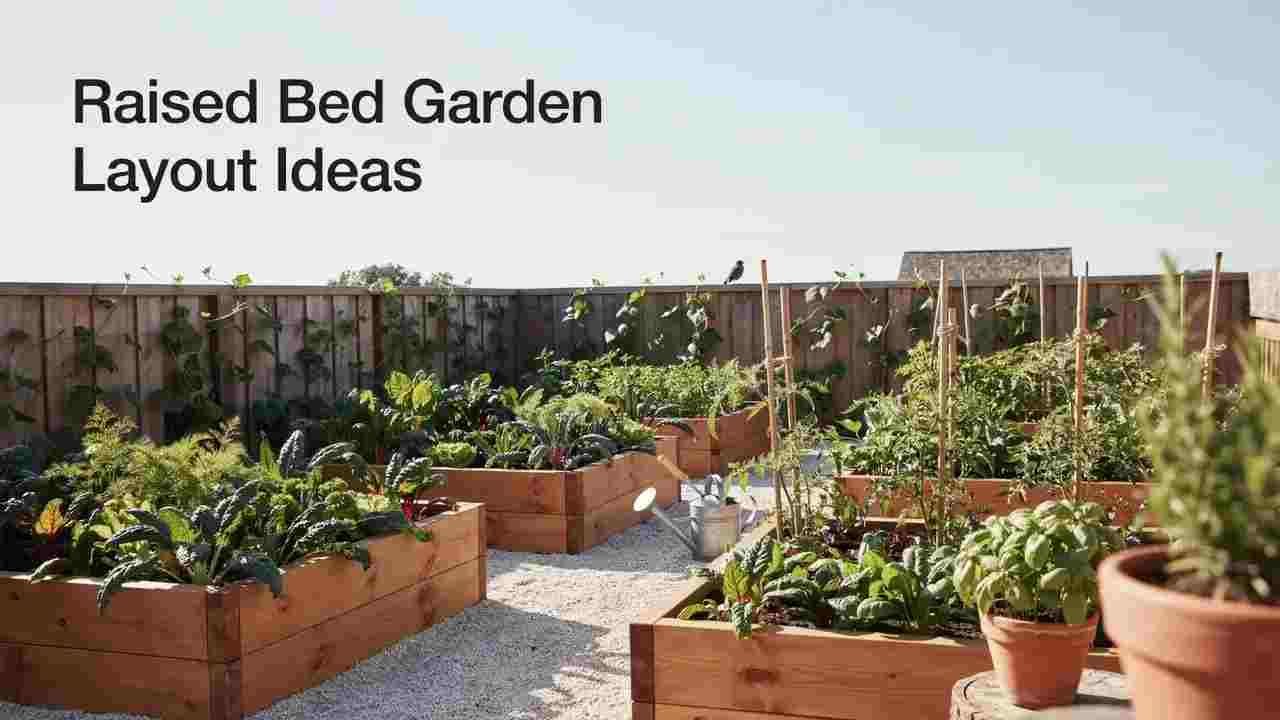
Design Ideas Worth Exploring
Visual inspiration makes it easier to picture your own bed before you start building.
- Cottage style layouts using mismatched, natural materials like weathered wood
- Modern raised beds featuring clean lines and metal or composite finishes
- Mixed material designs combining stone edging with wood or metal frames
Browsing photos and layout examples helps beginners plan with real confidence.
Communities And Resources For Beginners
Other gardeners are often the fastest way to solve a tricky, local problem.
- Online communities let raised bed gardeners swap tips, photos, and results
- Local advice tends to be more climate specific than general guides
- Beginner questions are almost always welcomed rather than judged
Joining even one gardening community can shortcut months of trial and error.
Frequently Asked Questions
What is a raised garden bed, explained simply?
A raised garden bed is a container built above ground level and filled with soil. It gives you more control over drainage, soil quality, and plant spacing.
How do you start a raised bed garden with no experience?
Pick a sunny spot, build or buy one bed sized around four by eight feet, and fill it with a good soil mix. Start with a few forgiving crops before expanding further.
What size should a raised bed be for a first garden?
Four feet wide by eight feet long works well for most beginners. Width matters most, since it controls how easily you can reach the center.
Do raised garden beds need a bottom or liner underneath?
Most gardeners skip a solid bottom entirely. A layer of cardboard or sticks works well as a natural, breathable base instead.
Can you use regular garden soil inside a raised bed?
A small amount works fine when blended with compost and topsoil. Garden soil alone tends to compact and drain poorly inside a raised container.
How often should you water a raised bed vegetable garden?
It depends on climate and bed size, but checking soil moisture daily during summer is a safe habit. Deep, less frequent watering builds stronger roots over time.
What vegetables grow best for beginners in raised beds?
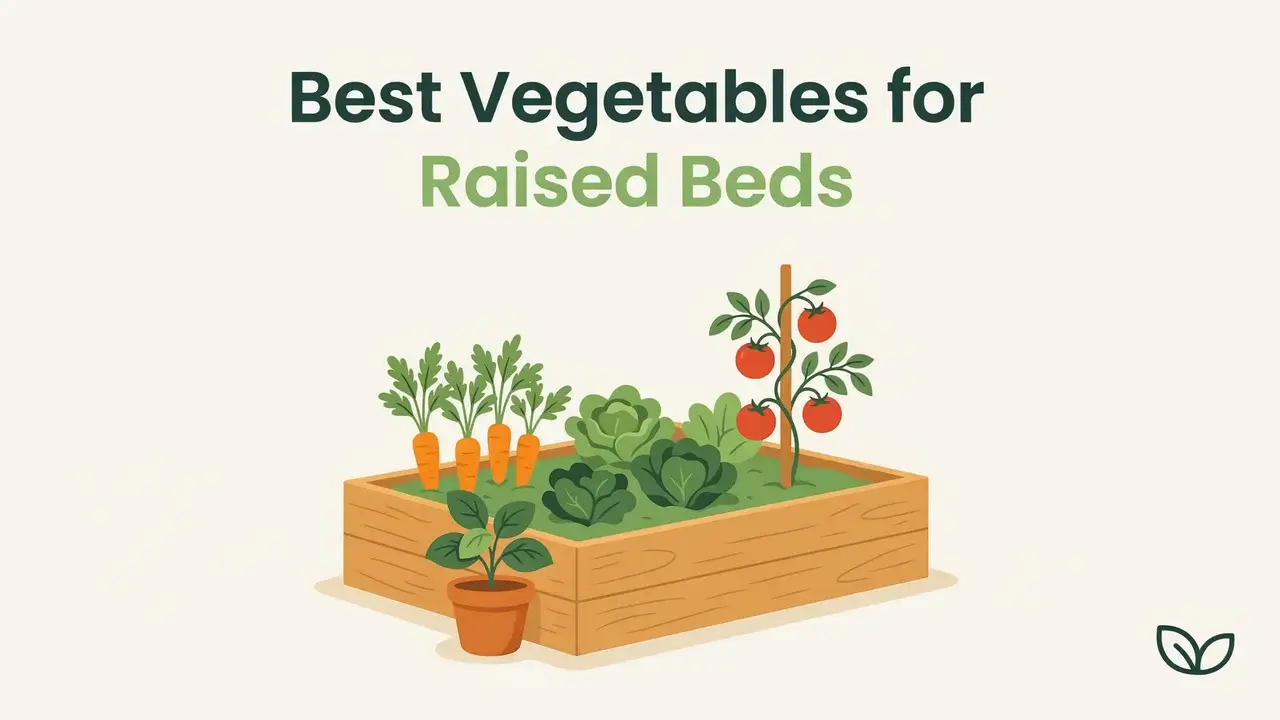
Tomatoes, peppers, lettuce, and bush beans all perform reliably well for most first time gardeners. Herbs like basil and rosemary are equally forgiving choices.
Is treated lumber safe to use for a vegetable garden bed?
Modern treated lumber uses copper instead of the arsenic found in older products. Many gardeners consider it safe, though some still prefer cedar or untreated wood.
How much food can one raised bed actually produce?
A four by eight raised bed can supply a solid portion of produce for one or two people. Intensive and succession planting both increase that yield further.
What is the difference between raised beds and in ground gardens?
Raised beds give you full control over soil quality from the very start. In ground gardens work with whatever native soil your yard already has.
Getting Started With Your Own Raised Bed Garden
Raised bed vegetable gardening comes down to a few core habits: the right size, good soil, consistent watering, and enough sunlight for whatever you’re growing.
You don’t need a huge yard or years of experience to get real results. One well built bed, filled with a solid soil mix, is genuinely enough to start producing food.
Begin small. Pick a sunny spot, build a single bed around four by eight feet, and choose two or three forgiving crops to start. Get comfortable with watering and feeding, then expand from there. Whether it’s a handful of herbs and tomatoes or a full row of beds down one side of your yard, raised bed gardening rewards patience over perfection.