17 Container Garden Ideas for Small Spaces, Patios, and Balconies
A tiny patio, narrow deck, front porch, or compact backyard can still become a productive garden. The right container garden ideas help you use corners, walls, railings, and vertical space without making the area feel crowded.
You also do not need dozens of pots. A few containers placed with purpose can give you room for vegetables, herbs, flowers, and even a comfortable place to sit.
Below are practical setups you can adapt to the space you already have.
Container Garden Ideas That Save Floor Space
1. Build a Tiered Container Garden
A tiered plant stand lets you fit several pots into the footprint of one small corner. Instead of spreading containers across the floor, you stack the growing space upward.
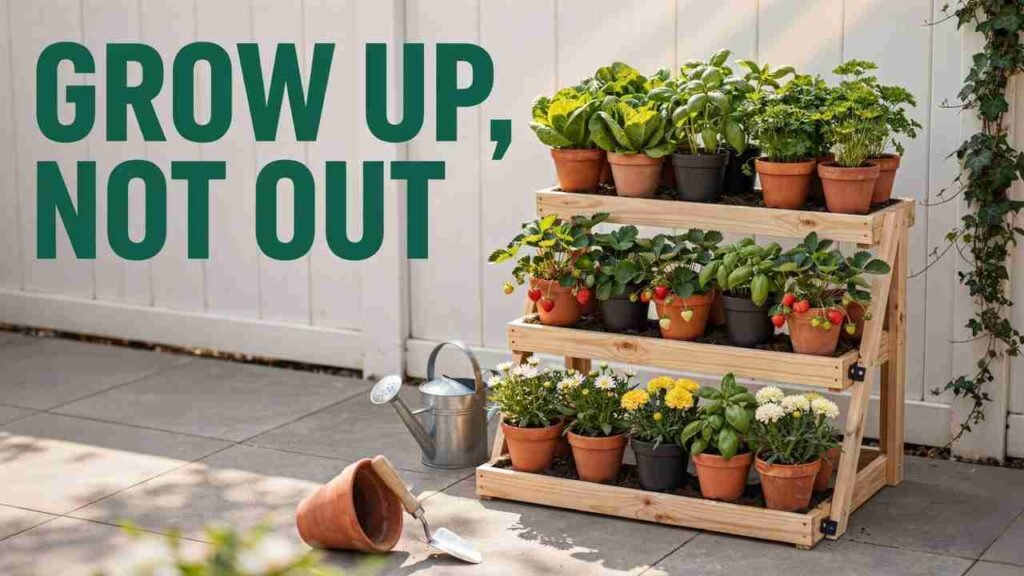
This works especially well for compact plants such as:
- lettuce
- parsley
- basil
- strawberries
- thyme
- small flowers
Put taller or more sun-loving plants where they will not shade everything below. Keep frequently harvested herbs within easy reach.
University of Minnesota Extension also recommends shelves, trellises, and hanging baskets as practical ways to use vertical space in small container gardens.
Best for: balconies, patios, porches
Space needed: one narrow wall or corner
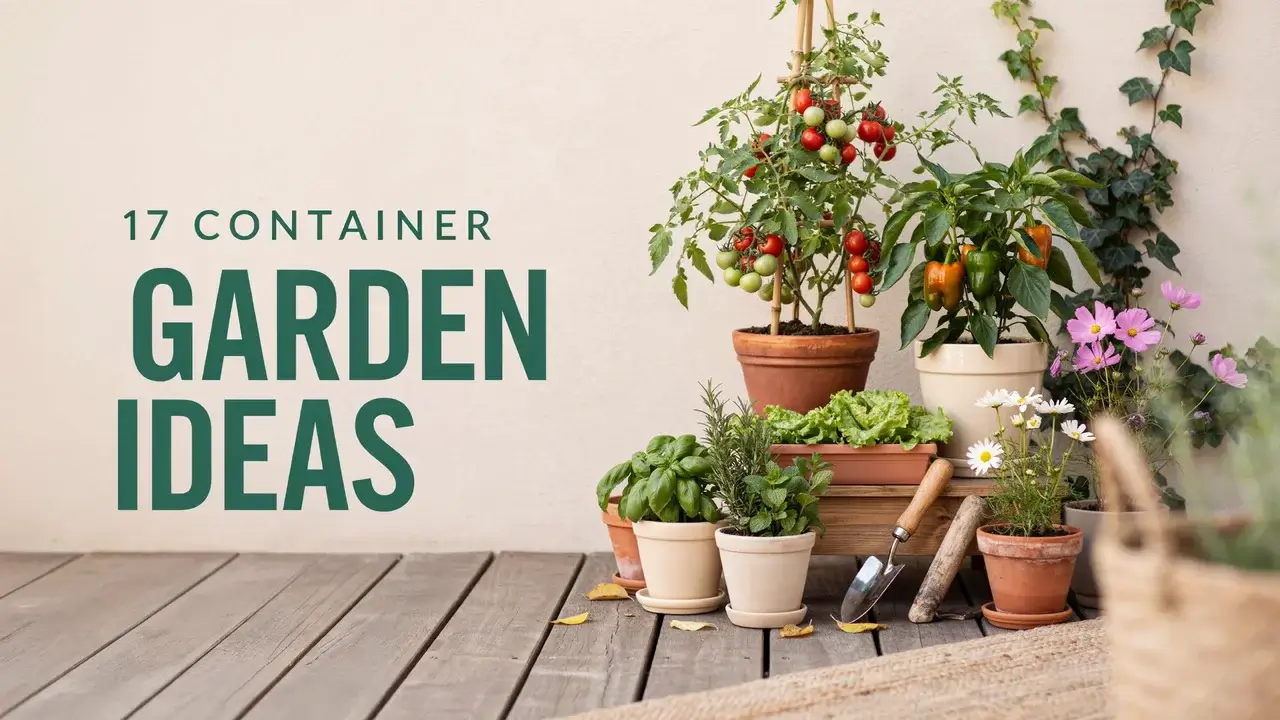
2. Turn an Empty Corner Into a Pot Cluster
An unused patio corner can hold more than one lonely planter.
Start with one larger pot at the back. Add a medium container beside it and a smaller pot toward the front. The different heights make the arrangement look intentional while keeping most of the floor open.
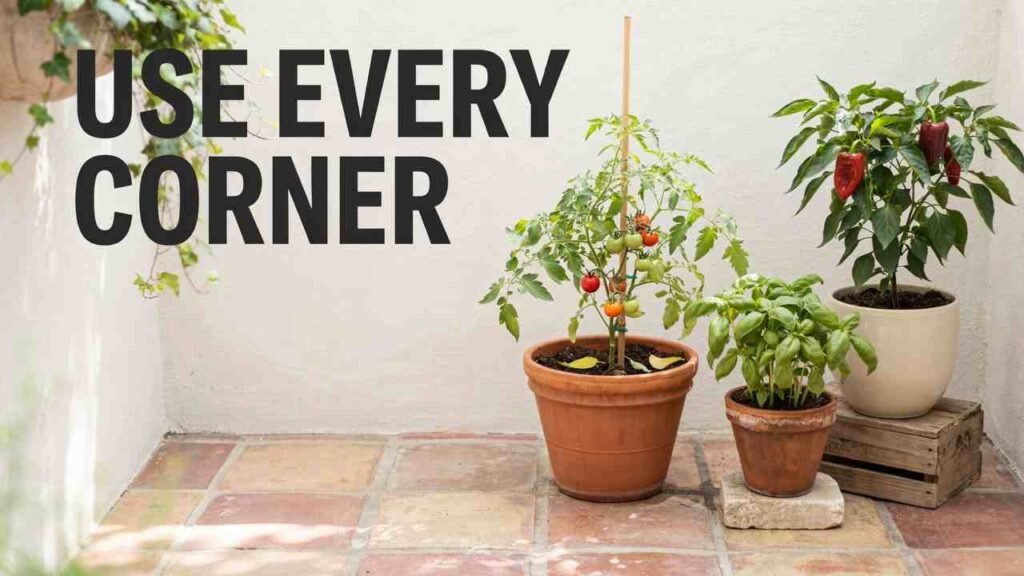
For an edible setup, you might use:
- one supported tomato plant
- one pepper plant
- one pot of basil
Keep each plant in a container large enough for its mature root system. Larger plants generally need more root volume, while undersized containers can also require more frequent watering.
Best for: patios, porches, small yards
Containers: 3 to 4
3. Grow Up a Trellis Instead of Out
A trellis turns the unused space above a pot into growing room.
Place a sturdy support inside or directly behind a suitable container. Climbing plants can then grow upward rather than trailing across a walkway or taking over nearby pots.
This setup works particularly well along:
- sunny walls
- deck edges
- patio boundaries
- narrow side spaces
Make sure the container is stable enough to support the mature plant. Wind can make tall, top-heavy containers easier to tip, especially on exposed balconies and decks.
Best for: narrow spaces
Main benefit: adds growing area without adding much floor space
4. Hang Planters Above Floor Level
When the ground is full, use the space above it.
Hanging baskets can hold herbs, strawberries, trailing flowers, and other plants suited to smaller containers. They work particularly well on porches and covered patios where secure hanging points already exist.
Position them where you can comfortably reach the soil for watering. Containers tend to dry faster than plants growing in the ground, and smaller or exposed pots may need closer attention during hot weather.
Best for: porches, balconies, covered patios
Main benefit: keeps valuable floor space clear
5. Line a Narrow Wall With Containers
Instead of placing pots throughout a narrow patio, keep them along one side.
A simple row against a wall leaves a clear walking path while still creating plenty of growing room. Mix container heights so every plant is not competing at the same level.
One practical arrangement could include:
Back: trellised container
Middle: pepper or compact vegetable pots
Front: shallow herbs or leafy greens
Keep enough space between the wall and plants for airflow and easy maintenance.
Best for: decks, narrow patios, side yards
Layout: garden on one side, open path on the other
6. Use Railing Planters Without Losing Floor Space
A sturdy railing can become useful growing space without taking up any room underfoot.
Railing planters work well for smaller crops and herbs that do not need deep containers. They are especially useful when your balcony or deck has very little open floor area.
Try them for:
- lettuce
- parsley
- chives
- thyme
- compact flowers
Choose planters made for your railing type and secure them properly. Remember that a container becomes much heavier after adding moist potting mix and plants.
If you are gardening specifically on an apartment balcony, see our Balcony Vegetable Garden Ideas guide for more layouts designed around railings and limited outdoor space.
Best for: balconies and raised decks
Main benefit: creates growing space without using the floor
7. Put a Large Container on a Rolling Caddy
Large containers are useful for bigger plants, but they become difficult to move once filled.
A sturdy rolling plant caddy can make a patio setup more flexible. You can move the container temporarily when cleaning the area, rearranging furniture, or reaching plants behind it.
This works especially well for:
- tomato containers
- large mixed planters
- dwarf fruiting plants suited to pots
- heavier decorative containers
Choose a caddy rated for the combined weight of the pot, wet growing mix, plant, and support structure.
Movement should be a convenience rather than a substitute for choosing the right growing location. Place the plant where its light needs can normally be met.
Best for: patios and decks
Main benefit: makes heavy containers easier to manage
8. Create a Compact Vertical Herb Station
Instead of spreading herb pots across several surfaces, group them vertically.
A narrow plant shelf can hold several individual containers while using very little floor space. Keeping herbs in separate pots also makes it easier to manage plants with different growth habits.
A simple herb station could include:
- basil
- parsley
- chives
- thyme
- rosemary
- mint in its own container
Place taller herbs where they will not shade smaller plants unnecessarily.
This setup works particularly well near a kitchen door because frequently used herbs remain easy to reach.
Best for: patios, balconies, porches
Space needed: one narrow shelf or stand
9. Start With a Three-Pot Vegetable Garden
One of the simplest container garden ideas is to start with only three productive pots.
This keeps watering, feeding, and plant care manageable while still giving you several crops to harvest.
A beginner setup might include:
| Container | Plant idea |
|---|---|
| Large pot | Tomato |
| Medium pot | Pepper |
| Shallow planter | Lettuce or herbs |
Treat this as a starting layout rather than a fixed planting formula. The right container size depends on the mature plant and variety.
If you are still deciding what to grow, our Best Container Vegetables guide covers crops that are well suited to pots and planters.
Best for: beginners and small patios
Containers needed: 3
10. Build a Five-Pot Food Garden
If you have a little more room, expand the three-pot setup into five containers.
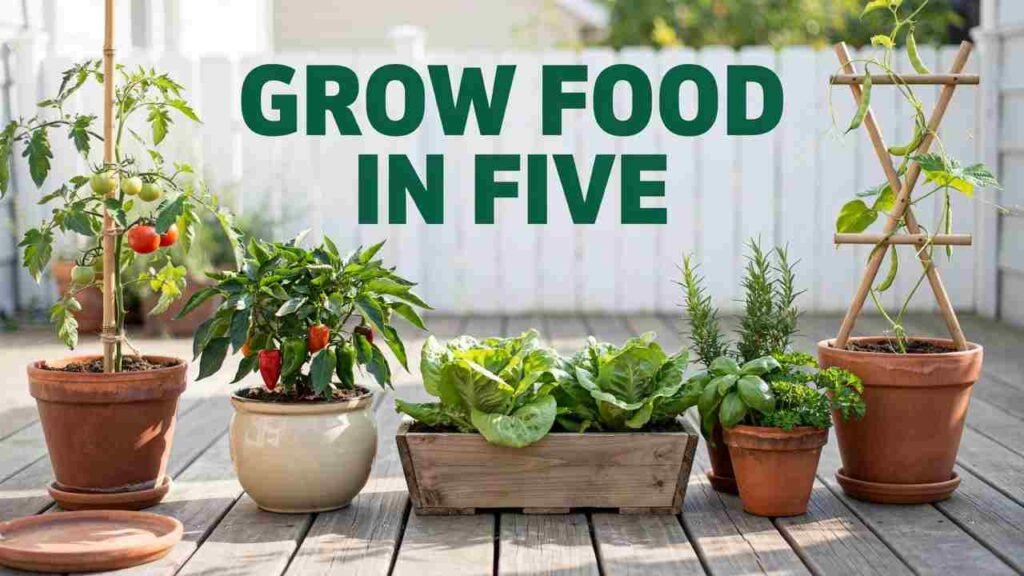
The goal is not to fill every available corner. Use a small collection of productive pots that still leaves room to walk, water, and harvest comfortably.
One possible arrangement is:
- one large tomato container
- one large trellised crop
- one medium pepper pot
- one shallow container for leafy greens
- one small herb pot
Arrange the taller plants toward the back or side where they are less likely to shade shorter crops.
Containers should have adequate drainage and enough root volume for the plants they hold. Penn State Extension notes that successful container vegetable growing depends partly on appropriate container size and a well-drained growing medium.
Best for: patios, decks, compact backyards
Containers needed: 5
11. Mix Herbs and Vegetables in One Large Container
One large planter can do the work of several smaller pots when the plants have compatible needs.
A simple combination could pair one main vegetable with smaller herbs around the edge. This keeps the arrangement compact while making the container look fuller.
Before combining plants, compare:
- sunlight needs
- watering requirements
- mature plant size
- root space
Avoid filling every gap just because young plants look small. Give each plant enough room to develop.
Best for: patios and porches
Main benefit: fewer containers with more variety
12. Grow Greens and Herbs in Window Boxes
Window boxes are useful when floor space is almost nonexistent.
Their long shape works well for smaller crops such as leafy greens and herbs. They can fit beneath windows, along railings, or on narrow ledges where regular pots may not work.
Good options include:
- leaf lettuce
- parsley
- chives
- thyme
- compact herbs
Keep the planter somewhere you can safely reach for watering and harvesting.
Best for: balconies, windows, railings
Main benefit: turns unused edges into growing space
13. Raise Pots on Plant Stands
Plant stands help small gardens use height without adding more containers.
Place one or two pots on raised stands, then keep lower containers around them. This creates layers and makes the garden feel fuller without covering the entire floor.
For example:
Tall level: upright herb or compact vegetable
Middle level: medium planter
Ground level: lettuce, herbs, or trailing plants
Choose stands that can safely support a fully watered container.
Best for: patios, decks, porches
Main benefit: adds height and improves the layout
14. Use One Large Statement Container
More pots do not always make a better small garden.
A single large planter can become the focal point of a patio, front step, or entrance. It also keeps the area visually cleaner than a collection of tiny mismatched pots.
You could use it for:
- a tomato plant
- a compact edible crop
- a mixed herb planting
- flowers suited to containers
If you plan to grow tomatoes, choose the pot based on the plant’s mature size rather than the size of the seedling. Our Tomato Container Size guide covers that decision in more detail.
Best for: front steps, patios, entrances
Main benefit: strong visual impact with less clutter
15. Arrange Containers Around the Patio Edge
A small patio still needs room for people.
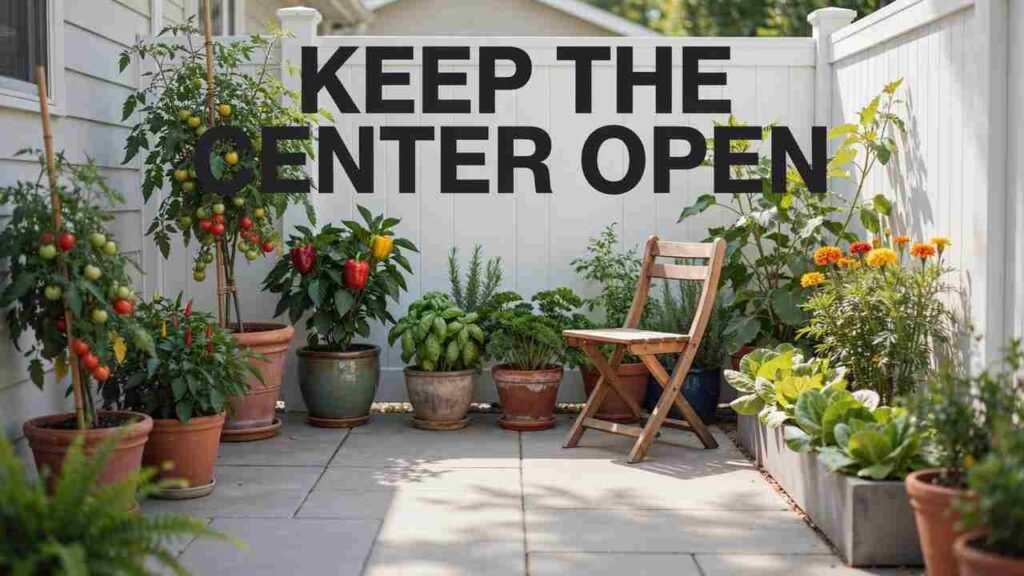
Instead of filling the center, place containers along one or two edges. This creates a defined garden zone while leaving space for chairs, a small table, or a clear walkway.
Put taller containers near a back corner. Use medium pots beside them and smaller planters toward the front.
This layout works best when every container remains easy to reach.
Best for: patios that double as seating areas
Main benefit: keeps the center open and usable
16. Use Self-Watering Containers in Sunny Spots
A sunny patio can be productive, but pots may dry quickly during warm weather.
Self-watering containers can help maintain more consistent moisture by holding water in a reservoir below the growing mix. They are especially useful when several containers sit in the same bright location.
They still need regular checking. Plant choice, drainage, and correct setup remain important.
Use them where easier moisture management would make the garden simpler to maintain.
Best for: sunny patios and decks
Main benefit: helps reduce frequent watering stress
17. Create Privacy With Tall Container Plants
Containers can also help define a small outdoor space.
Place a few taller pots along one edge of a patio or deck. Upright plants or climbers on trellises can create a soft green screen while leaving the rest of the space open.
Keep the arrangement light enough that it does not block useful sunlight from shorter crops.
On balconies or exposed decks, make sure tall pots and supports are stable and secure.
Best for: patios, decks, seating areas
Main benefit: combines growing space with privacy
Which Container Garden Setup Fits Your Space?
The best layout depends more on your available space than the number of containers you own. Start by looking at where you have usable sunlight, walking room, and easy access for watering.
Use this quick guide to narrow down the right setup.
| Your space | Best setup | Good starting point |
|---|---|---|
| Tiny balcony | Railing planters + vertical shelf | 3 to 5 small containers |
| Narrow deck | Trellis pots along one edge | 2 to 4 containers |
| Small patio | Grouped pots in one corner | 3 to 5 containers |
| Front porch | One large pot + smaller accents | 2 to 3 containers |
| Small backyard | Mixed container cluster | 4 to 6 containers |
| Sunny wall | Trellis + narrow row of pots | 3 to 5 containers |
| Near kitchen door | Compact herb station | 4 to 6 herb pots |
A tiny balcony usually benefits most from vertical growing because floor space is limited. Patios can handle wider pot clusters, while narrow decks often work better with containers kept along one edge.
Do not feel pressured to fill the entire space. Leaving room around the containers makes watering, harvesting, and general plant care easier.
How to Make a Small Container Garden Look More Organized
Good container gardening ideas are not only about what you grow. The way pots are arranged can make a small garden feel calmer and more intentional.
Use Different Heights
Place taller plants or containers toward the back. Medium pots can sit beside them, while lower containers fill the front.
This creates layers without requiring more floor space.
You can create height with:
- trellises
- plant stands
- tiered shelves
- tall containers
- hanging planters
Avoid placing every container at exactly the same level.
Repeat a Few Container Styles
A small area can quickly look cluttered when every pot has a different shape, finish, and size.
You do not need matching containers, but repeating two or three similar materials can make the garden feel more connected.
For example, combine:
- terracotta pots
- simple neutral planters
- one or two grow bags for productive crops
Function should still come first. Choose container size and drainage based on the plant rather than appearance alone.
Keep Walking Space Clear
Before filling an empty area with another pot, check whether you can still move comfortably through the garden.
Leave enough room to:
- carry a watering can
- reach plants at the back
- harvest vegetables
- adjust stakes or trellises
- open nearby doors
- use patio furniture
A garden that looks attractive but becomes difficult to maintain will quickly feel overcrowded.
Group Plants Where Their Needs Make Sense
Plants that require similar light conditions are easier to manage when placed in the same area.
For example, keep sun-loving vegetable containers together in the brightest part of the patio instead of spreading them into shaded corners just to balance the layout.
The design should support plant growth rather than work against it.
Before You Set Up Your Containers
A good layout can still fail if the growing conditions are wrong. Before arranging pots, check a few practical details that affect plant health and daily maintenance.
Check How Much Sun the Space Gets
Watch the area at different times of day before deciding where to place your containers.
Many fruiting vegetables perform best with strong sunlight, while some herbs and leafy greens can handle less. Match the plant to the available light instead of choosing a layout first and forcing plants into it.
Pay particular attention to shadows from:
- walls
- railings
- fences
- nearby buildings
- taller container plants
Make Sure Every Container Can Drain
Most container plants need excess water to escape freely.
Check that drainage holes are open before filling the pot. Avoid placing containers where water will collect around the base after irrigation.
Good drainage helps keep the growing mix from staying saturated for long periods.
If you need help choosing the growing medium, see our Best Soil for Container Gardening guide.
Match the Pot to the Mature Plant
Choose containers for the plant you expect to have later in the season, not the small transplant you bring home.
A pot that looks generous around a young seedling can become restrictive once roots and foliage develop.
Larger crops generally need more soil volume than compact herbs or leafy greens.
Tomatoes are a good example. If they are part of your setup, use our Tomato Container Size guide before choosing the pot.
Think About Watering Access
Place containers where you can reach them easily.
This matters even more when you have:
- hanging baskets
- railing planters
- shelves
- containers behind furniture
- tall plant stands
If watering a pot is awkward, it is easier to neglect.
Keep the arrangement practical enough that you can check soil moisture without moving half the garden.
Check Weight Before Using Balconies or Raised Decks
Containers become much heavier after adding potting mix and water.
Large planters deserve extra attention on balconies and elevated structures. Avoid placing many heavy pots in one small area without considering the surface and support underneath.
Secure tall containers and trellises where wind is also a concern.
How to Choose the Best Idea for Your Space
You do not need to use all 17 ideas.
Start with the main limitation in your garden and choose the setup that solves it.
If floor space is almost gone:
Try railing planters, hanging baskets, shelves, or trellises.
If you only have one sunny corner:
Create a three-pot or five-pot cluster instead of spreading containers into poor light.
If you want to grow vegetables:
Use a few larger containers and choose crops that perform well in pots.
If the patio feels cluttered:
Replace several small containers with fewer, larger planters.
If you need flexibility:
Use a rolling caddy for the heaviest pot.
If you want herbs close to the kitchen:
Build a compact vertical herb station near the door.
The best container garden ideas are the ones that fit your sunlight, available space, plant choices, and the amount of maintenance you can realistically manage.
Common Mistakes That Make Small Container Gardens Feel Crowded
Even a small collection of pots can become difficult to manage when the layout is not planned well.
Using Too Many Tiny Pots
Small containers look easy to place, but a large number of them can quickly make a patio feel cluttered.
They also hold less growing mix and may dry out faster than larger pots.
Instead of filling every empty spot, use fewer containers with a clear purpose.
Blocking the Walking Path
A container should not make it difficult to move through the garden.
Leave enough space around doors, chairs, steps, and pathways. This also makes watering and harvesting easier.
Putting Tall Plants in Front
Tall plants can shade shorter crops when every container is placed at the same depth.
Keep the tallest plants toward the back or along an edge where they will not block useful light.
Choosing Looks Before Plant Needs
A decorative pot may look perfect in a corner, but it still needs to suit the plant.
Check:
- container size
- drainage
- sunlight
- stability
- watering access
A good layout should look attractive and support healthy growth.
Ignoring Mature Plant Size
Young plants can make a container garden look spacious.
That can change quickly once tomatoes, peppers, herbs, and climbing plants begin to fill out.
Plan for the size plants will reach later in the season, not how small they look at planting time.
FAQs About Container Garden Ideas
How many containers do I need for a small garden?
You can start with as few as three containers. A large pot, one medium container, and one smaller planter can provide enough variety without making the space difficult to manage. Add more only when you have enough sunlight, room, and time to care for them.
How do I arrange pots in a small space?
Start with taller plants or pots at the back, medium containers in the middle, and shorter ones toward the front. Use corners, walls, railings, and vertical stands to keep the center open.
What can I grow in a small container garden?
Herbs, leafy greens, peppers, tomatoes, strawberries, and many other crops can grow in containers when they have enough root space, sunlight, water, and suitable potting mix. For more crop-specific choices, see our Best Container Vegetables guide.
Should all my containers match?
No. Matching every pot is not necessary. Using a few repeated materials, shapes, or colors can make the garden feel more organized, but plant needs should always come first.
Are larger containers better for small spaces?
Sometimes.
One larger planter can look cleaner than several small pots and may provide more root space for bigger plants. However, the best size depends on what you plan to grow and how much weight the space can support.
Make the Most of the Space You Already Have
The best container garden ideas do not depend on having a large patio or backyard. They make better use of the space that is already available.
Start with one sunny corner, wall, railing, or patio edge. Choose a setup that leaves enough room to move, water, and harvest comfortably.
Once that first arrangement works well, you can expand it gradually without turning your small garden into a crowded collection of pots.