Vegetables That Grow in Shade: 20+ Crops for Low-Light Gardens
A shady yard feels like a dealbreaker for growing your own food. Fences, tall neighbors, and mature trees all steal light, and most garden advice assumes you have sun to spare.
The good news is that plenty of vegetables that grow in shade will still give you a real harvest. The trick is to match the crop to the light you actually have, and to lean on the plants that prefer cooler, lower-light spots in the first place.
This guide covers which vegetables tolerate shade, how much sun each group really needs, the crops to skip, and how to get the most from a low-light plot.
Can You Grow Vegetables in the Shade?
Yes, you can, as long as your garden gets at least a few hours of light a day. Most vegetables do best with six or more hours of direct sun, according to Iowa State University Extension. But that is the ideal, not the cutoff.
Leafy greens, root crops, and cool-season vegetables all produce on far less light. The honest trade-off is that shade-grown plants tend to grow more slowly and yield a bit less than the same crop in full sun. With the right choices, that is a small price for fresh food from a spot you thought was unusable.
Understanding Shade: How Much Sun Do Vegetables Need?
Not all shade is equal, and knowing which type you have decides what will grow. Sources vary a little on the exact hours, so treat these as working ranges rather than hard lines.
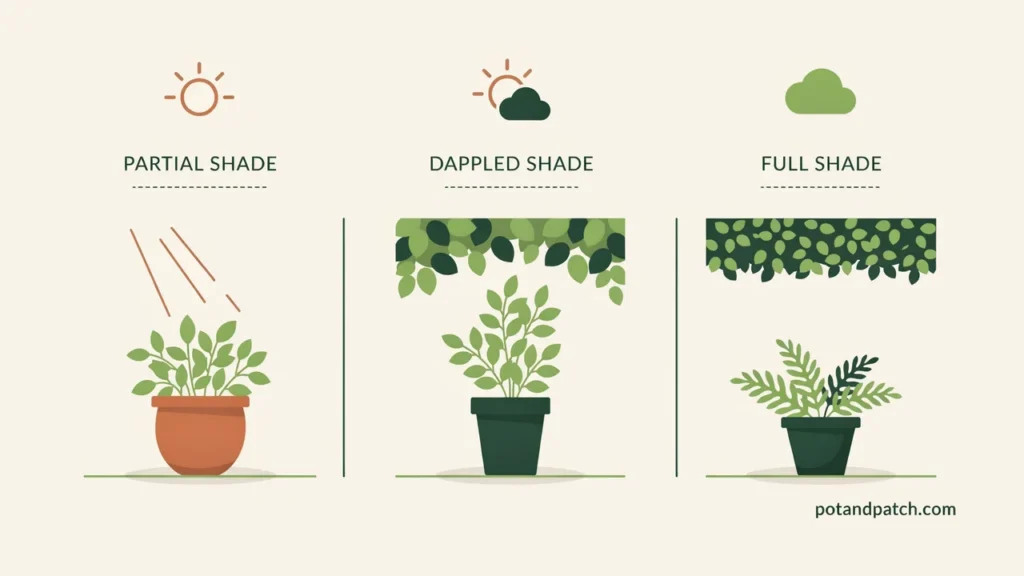
| Shade type | Hours of sun per day | What it can grow |
|---|---|---|
| Partial shade (partial sun) | About 3 to 6 hours of direct sun | Leafy greens and smaller root crops |
| Dappled shade | 3 to 6 hours of filtered light through a canopy | The widest range, including some reduced fruiting crops |
| Full shade | Little to no direct sun | Very limited, mainly mint and a few shade-loving herbs |
Partial shade is the sweet spot for edibles. A spot that gets morning or afternoon sun, then falls into shade for the rest of the day, will support a surprising amount of food. Full shade, with almost no direct light, is the one situation where growing most vegetables becomes very hard.
Best Vegetables That Grow in Shade
The safest picks fall into three groups. Choose by how much light your space gets, and remember that a little less sun usually means slightly smaller plants, not failure.
Leafy Greens (Most Shade Tolerant, 3 to 4 Hours)
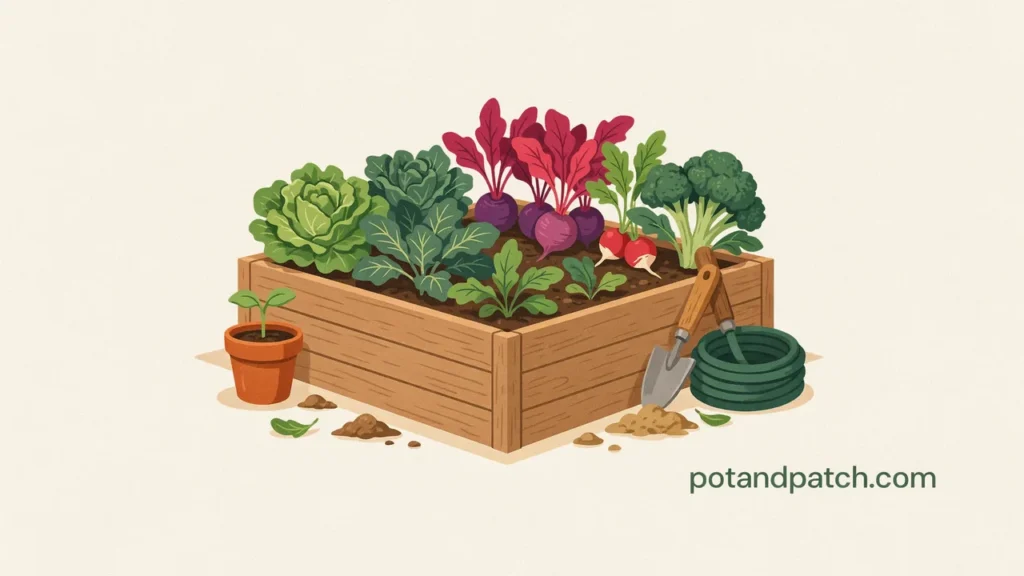
Greens are the clear winners. Iowa State Extension notes that leafy vegetables like leaf lettuce, spinach, chard, and kale grow well on just three to four hours of sun.
Lettuce is the standout, especially loose-leaf types, which handle low light better than dense head varieties. Spinach, Swiss chard, kale, and arugula are all reliable. Asian greens such as mizuna, tatsoi, and bok choy also thrive, and they regrow after cutting for a long harvest.
Root Crops (4 to 5 Hours, Smaller Roots)
Root vegetables tolerate partial shade, but with a catch. The roots size down in low light, so you get smaller beets, carrots, radishes, and turnips than you would in full sun.
That is not a loss if you plan for it. Beet and turnip greens are edible and often better with less light, and baby roots tend to be sweeter and more tender. Radishes are the fastest and most forgiving of the group.
Cool-Season Brassicas and Alliums (4 to 6 Hours)
This group manages moderate shade, though it grows more slowly. Broccoli, cauliflower, cabbage, and kohlrabi all crop in partial shade, and the cooler conditions can actually improve their flavor.
Alliums are worth a spot too. Leeks, garlic, and scallions grow acceptably in dappled or partial shade, making good use of light your fruiting crops could never turn into a harvest.
A Few Shade-Tolerant Perennials
If part of your shade is permanent, consider perennials that come back each year. Rhubarb and asparagus both tolerate some shade once established, giving you a low-effort harvest from a difficult corner.
Herbs That Tolerate Shade
Many herbs do well with only a few hours of sun, though they stay smaller. Parsley, cilantro, chives, lemon balm, and mint all handle partial to light shade.
Mint deserves a note. It spreads aggressively, so it is usually best grown in a container to keep it in bounds. Mitsuba, sometimes called Japanese parsley, is one of the few herbs that genuinely prefers shade and will fill a low-light nook happily.
Vegetables That Need Full Sun (Skip These in Shade)
Some crops simply will not perform without strong light, and planting them in shade wastes the space. Fruiting vegetables are the main group to avoid: tomatoes, peppers, eggplant, squash, and cucumbers all need long hours of sun to set and ripen fruit.
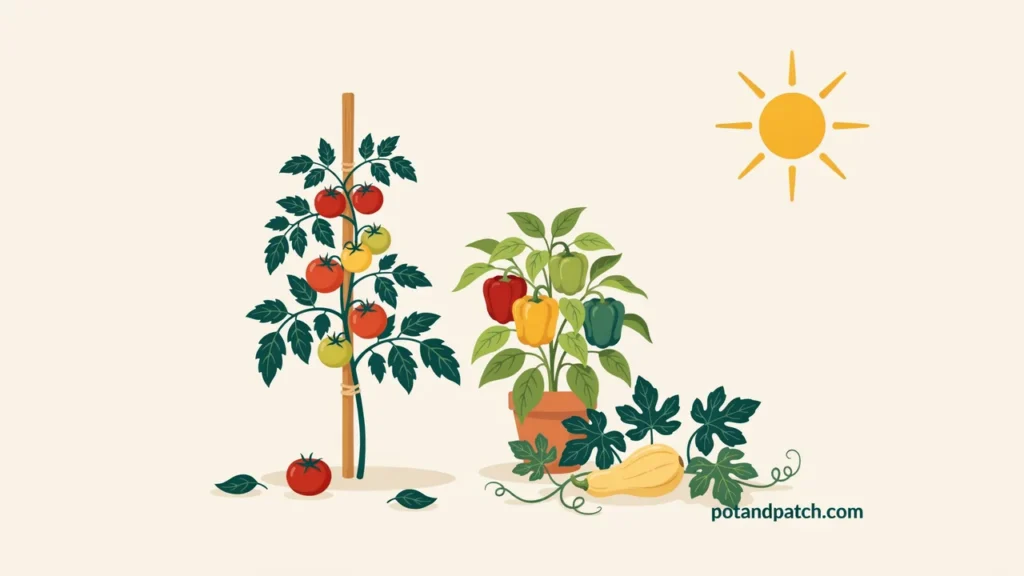
There are two honest exceptions worth knowing. Bush beans, which stay compact, will give a modest crop on four to five hours of sun. And certain cool-climate determinate tomato varieties, bred for short seasons, can produce with as little as five to six hours. Beyond those, keep the sun-lovers in your brightest spots.
The Upside of a Shady Vegetable Garden
Shade is not only a limitation. For the right crops, it is an advantage.
Cool-season greens bolt quickly in heat, turning bitter as they rush to flower. A little afternoon shade slows that down, keeping lettuce and spinach sweet and tender for weeks longer. Shade also protects delicate leaves from scorching in summer sun.
There is a seasonal bonus too. A spot shaded by a deciduous tree in summer opens up to more light once the leaves fall, which suits a fall crop of cool-weather vegetables perfectly. Used well, a shady bed extends your harvest at both ends of the season.
Tips for Growing Vegetables in Shade
A few adjustments make a low-light garden far more productive.
Bounce more light in. Plant near white or light-colored walls, or hang a light sheet on a fence. Reflected light meaningfully brightens a dim bed.
Grow in movable containers. Pots let you chase the sun, shifting plants to the brightest spot as it moves through the day and the season. Many of the best container vegetables are the same greens and roots that tolerate shade, so the two strategies pair naturally.
Water carefully and watch for slugs. Shady beds dry out more slowly, so they need less frequent watering. The catch is that slugs and snails love damp, shaded conditions, and University of Minnesota notes that raising crops off the ground helps keep them out of reach. Water at the roots rather than over the leaves to keep foliage dry.
Feed the soil. Do not let low-light plants struggle with poor soil on top of less sun. Work in a couple of inches of compost before planting each season.
Start seeds indoors. Germinating seeds in bright conditions, then transplanting sturdy seedlings into the shade, gives crops a stronger start than direct sowing into dim beds.
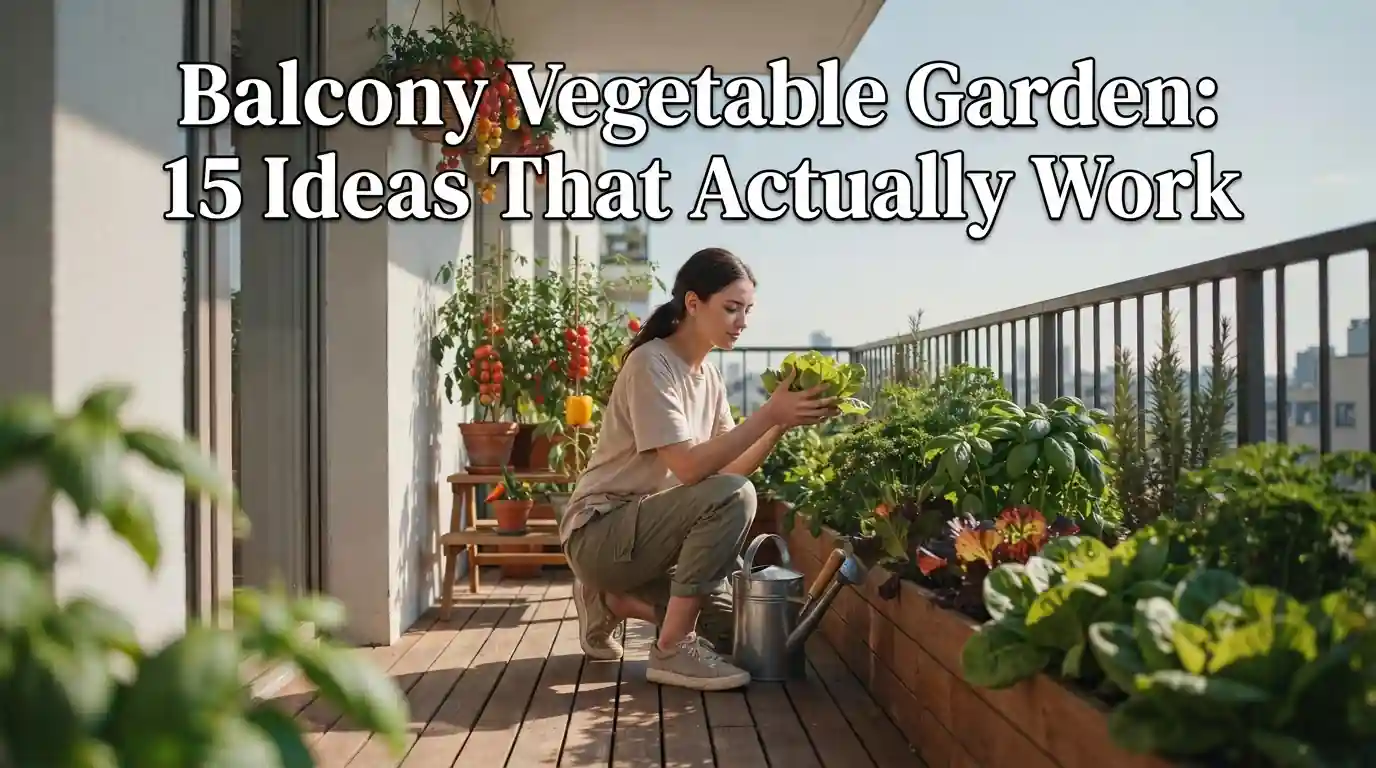
Even a shady balcony can produce food with these adjustments, and the same thinking runs through most good balcony vegetable garden ideas. If you are planning a plot from scratch, matching crops to your light is one of the first steps in how to start a small vegetable garden.
Frequently Asked Questions
What vegetable grows with the least sun?
Loose-leaf lettuce and other salad greens are the most shade tolerant, producing on as little as two to three hours of sun. Mint and mitsuba will grow in even deeper shade.
Can vegetables grow in full shade?
Very few. A spot with almost no direct sun is too dark for most edibles. Your best options are mint and a handful of shade-loving herbs rather than true vegetables.
Can you grow a vegetable garden in shade in pots?
Yes, and containers are ideal for it. Pots let you move plants to catch the sun as it shifts, which is a real advantage when light is limited. Stick to greens, herbs, and small root crops.
Does shade slow vegetable growth?
It does. Plants in shade generally grow more slowly and produce smaller yields than the same crop in full sun. Choosing naturally shade-tolerant crops keeps that difference small.
What is the easiest shade vegetable for beginners?
Leaf lettuce is the easiest. It is fast, forgiving, tolerates low light well, and can be harvested leaf by leaf over a long period.
Final Thoughts
A shady garden is not a lost cause. Match your crops to the light you have, lean on leafy greens and root vegetables, and skip the sun-loving fruiters that will only disappoint. Add a little compost, bounce in extra light where you can, and even a dim corner can keep your kitchen supplied with fresh, homegrown food.