Growing Carrots in Containers: Beginner Guide from Seed to Harvest
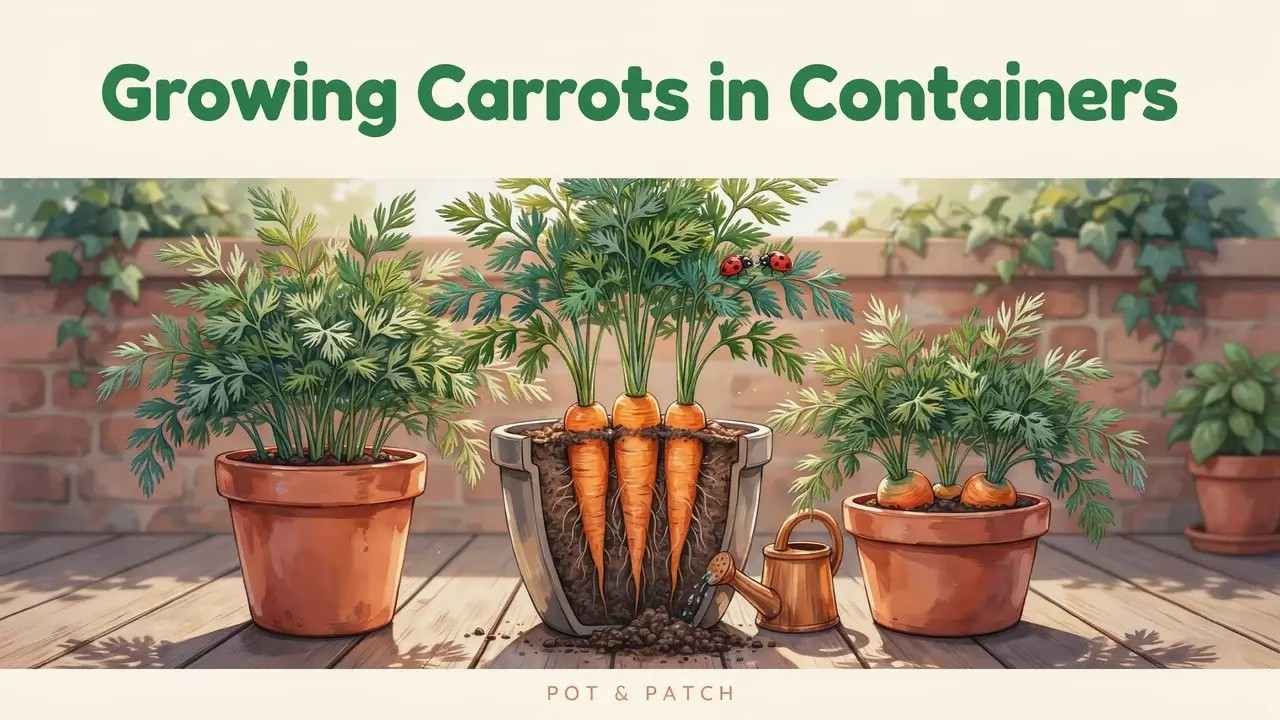
Growing carrots in containers works well when the pot is deep enough for the variety you choose and the growing medium stays loose enough for roots to develop. Shorter carrot types are usually the easiest fit for patios, balconies, decks, and other small spaces.
Carrots are different from many container vegetables because the edible part grows underground as a taproot. That makes container depth, direct sowing, thinning, and soil texture especially important. A shallow pot, compacted mix, or disturbed young root can leave carrots short, forked, or misshapen.
This guide covers the full process from choosing a container and sowing seeds to watering, thinning, troubleshooting, and harvesting.
Growing Carrots in Containers at a Glance
| Growing Requirement | Good Starting Point |
|---|---|
| Container depth | At least 12 inches for shorter varieties |
| Best carrot types | Short, round, or medium-rooted varieties |
| Planting method | Direct sow into the final container |
| Seed depth | About 1/4 to 1/2 inch |
| Spacing | Thin to roughly 2 inches apart or follow packet guidance |
| Sunlight | At least 6 hours of direct sun |
| Soil | Loose, well-draining, obstruction-free potting mix |
| Water | Keep the surface moist during germination, then water consistently |
| Fertilizer | Use only as needed and follow the label |
| Main challenge | Root distortion from crowding, compaction, or shallow pots |
| Harvest | Follow variety maturity and expected root size |
Oregon State Extension specifically recommends shorter carrot types such as Chantenay, Nantes, or Thumbelina for containers and a pot at least 12 inches deep.
Can You Grow Carrots in a Pot?
Yes. Carrots can grow successfully in pots when the container is deep enough for the variety and the roots have loose growing medium to move through.
Containers can actually be useful when garden soil is:
- rocky
- compacted
- heavy
- difficult to work deeply
A pot lets you create a controlled root zone without stones or dense soil blocking the developing carrot.
There is one important limitation: not every carrot is equally suited to a typical patio container.
The practical takeaway is simple:
Choose the carrot first, then choose a pot deep enough for it.
Best Carrot Varieties for Containers
Short and medium-rooted carrots are generally easier to match with container depth than very long varieties.
Short and Round Carrots
Compact types are useful where container depth is limited.
Examples include:
- Thumbelina
- Parisian-style round carrots
- Parmex
Their shorter root shape makes them easier to grow in deep patio pots without requiring an extremely tall container.
Nantes and Chantenay Carrots
Nantes and Chantenay types are especially practical for containers.
Chantenay carrots develop relatively short, broad roots, while Nantes types have a more cylindrical shape and moderate root length.
Can You Grow Long Carrots in Pots?
Yes, but long carrots need substantially more uninterrupted depth.
A long-rooted type planted in a shallow pot may reach the bottom before the root develops normally.
That does not mean the plant will always fail, but it makes misshapen or undersized roots more likely.
| Carrot Type | Container Suitability | Main Pot Consideration |
|---|---|---|
| Thumbelina | Excellent | Compact roots |
| Parisian / round | Excellent | Works in shorter deep pots |
| Chantenay | Excellent | Shorter, broad roots |
| Nantes | Very good | Needs moderate depth |
| Long Imperator types | Possible | Requires a much deeper container |
What Size Container Do Carrots Need?
For shorter container-friendly carrots, a pot at least 12 inches deep is a dependable starting point. Longer varieties need additional depth.
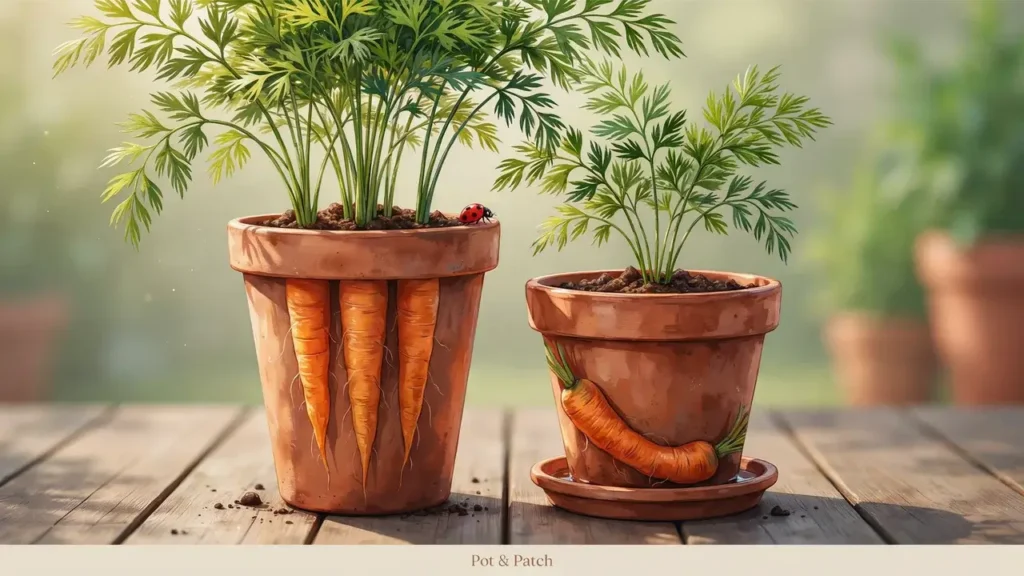
Container width matters too, but in a different way:
- Depth determines how much vertical space the taproot has.
- Width determines how many carrots can be spaced properly.
A wide but shallow pot may hold many seedlings but still be a poor choice for long carrots.
Match Pot Depth to Carrot Length
This is the easiest rule to remember:
Choose the carrot first, then choose the container.
Check the seed packet for the mature root shape and size.
If the variety produces a short root, a standard deep patio planter may work well.
If it produces a long tapered root, give it considerably more depth.
Best Container Types
Several container styles can work:
- deep plastic pots
- grow bags
- buckets with drainage holes
- deep rectangular planters
- trough-style containers
The container does not need to be decorative. It needs to be deep enough, stable, and able to drain.
How Many Carrots Can Fit in One Pot?
There is no useful universal answer such as “20 carrots per pot.”
The number depends on:
- container width
- carrot variety
- mature root diameter
- final spacing
Use about 2 inches as a practical starting point for many smaller carrots, then follow the seed packet if the cultivar needs more room.
Drainage Requirements
Deep containers still need working drainage holes.
Carrots need steady moisture, but constantly saturated potting mix can create unhealthy root conditions.
Make sure excess water can leave the bottom of the container.
Best Soil for Growing Carrots in Containers
Growing carrots in containers works best in a loose, well-draining potting mix without stones, large woody pieces, or dense clumps.
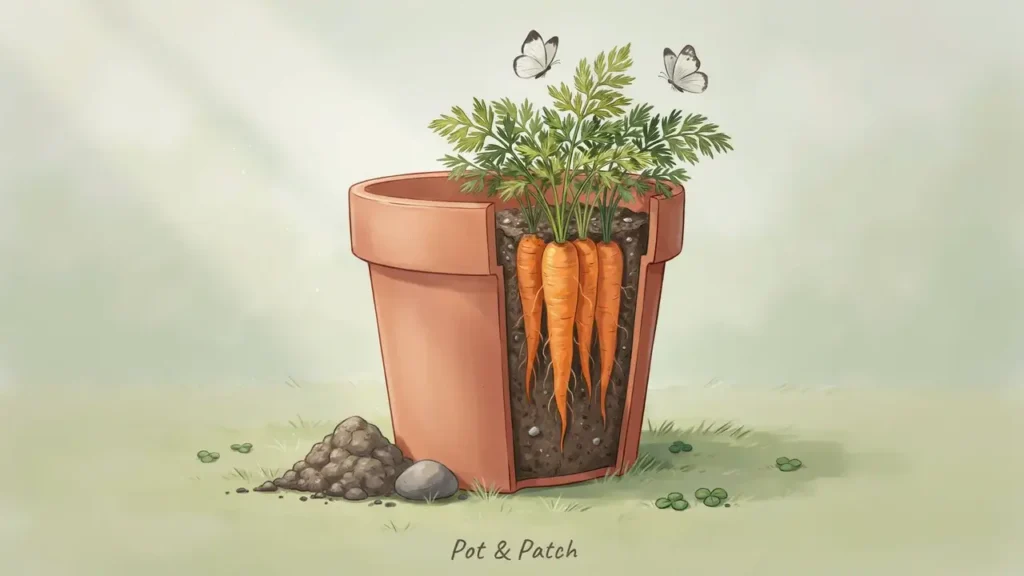
This matters more for carrots than for many container crops because the edible taproot has to grow physically through the medium.
Avoid filling the container with compact garden soil.
A good carrot growing medium should:
- drain excess water
- hold enough moisture for germination
- stay loose rather than crusting heavily
- allow air around roots
- contain few physical obstructions
Do not press the mix down firmly after filling the pot.
If you want a broader explanation of container growing media, our best soil for container gardening guide covers that topic in more detail.
When to Plant Carrots in Pots
Carrots are a cool-season crop and tolerate cooler conditions better than peppers, cucumbers, and other warm-season vegetables.
The exact sowing window varies across the United States.
Rather than using one national planting month, consider:
- local frost dates
- soil temperature
- summer heat
- expected days to maturity
- whether you want a spring or fall harvest
In hot climates, fall and winter may offer better growing conditions than midsummer.
How to Grow Carrots From Seed in Containers
The best way to grow carrots in containers is to direct sow the seeds into their final pot.
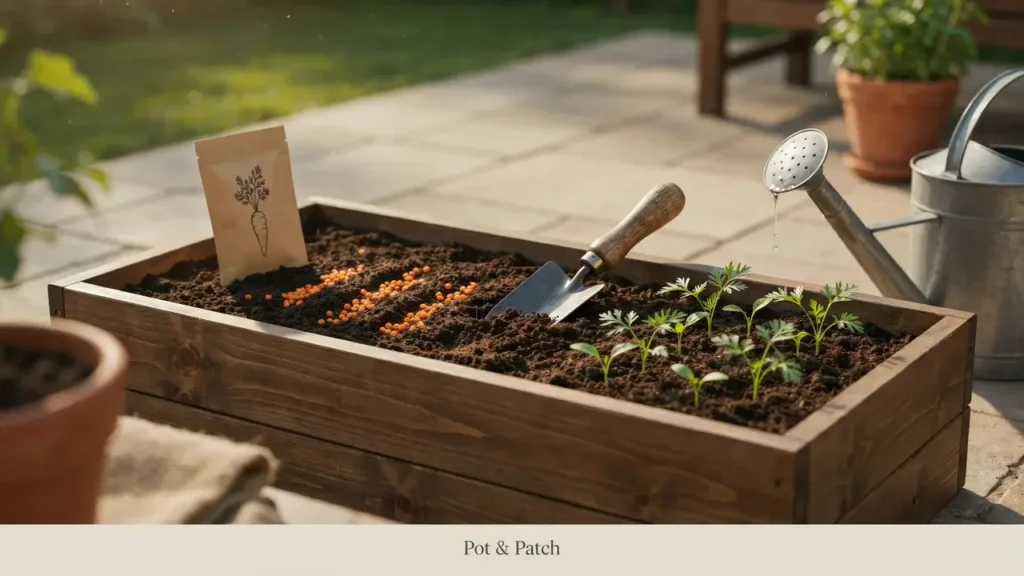
Carrots develop a taproot very early, so moving seedlings later can disturb the root.
A simple method is:
- Fill the container with loose potting mix.
- Level the surface gently.
- Moisten the mix before sowing.
- Sow carrot seeds shallowly.
- Cover them lightly.
- Water with a gentle spray.
- Keep the surface moist while seeds germinate.
- Thin crowded seedlings after emergence.
How Deep to Sow Carrot Seeds
Sow carrot seeds about 1/4 to 1/2 inch deep.
Because seed sizes and packet instructions can vary slightly, use the seed packet as the final guide.
How Long Do Carrot Seeds Take to Germinate?
Carrot seeds can be slow.
Seedlings may take up to around three weeks to emerge, especially when conditions are cool.
Do not assume the seeds have failed after only several days.
One of the biggest mistakes during this period is letting the top layer of potting mix dry out.
Keep the Surface Moist During Germination
Carrot seeds are planted shallowly, so the surface can lose moisture quickly.
Use a gentle spray or watering rose so you do not wash seeds out of place.
The goal is consistent moisture, not waterlogged soil.
How to Thin Carrot Seedlings Properly
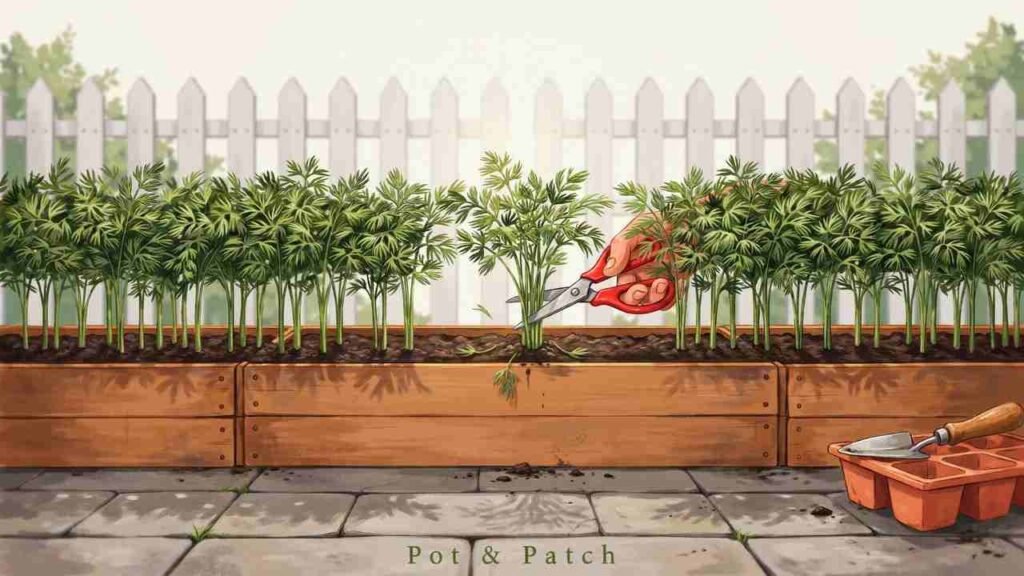
Thinning is essential because carrot seeds are tiny and easy to sow too densely. If every seedling remains, the developing roots compete for limited underground space.
Why Thinning Matters
Crowded carrots may:
- stay small
- develop unevenly
- compete for water
- compete for nutrients
- press against neighboring roots
Thin carrots to around 2 inches apart as a practical baseline, then follow the seed packet if the variety needs more room.
Snip Rather Than Pull
One practical method is to cut unwanted seedlings at the soil surface instead of pulling them.
Pulling young plants can disturb nearby roots.
Use small scissors and leave the strongest seedlings in place.
How Much Sun Do Container Carrots Need?
Aim for at least 6 hours of direct sunlight per day.
A sunny patio, balcony, or deck can work well.
Some partial shade is not necessarily a problem, but insufficient light can reduce overall growth and root development.
Watch how the space changes during the season because nearby walls, trees, and railings can shift the amount of direct light the container receives.
How to Water Carrots Growing in Pots
Container carrots need regular moisture, but their watering requirements change as the crop develops.
Watering Before Germination
Before seedlings emerge, focus on the upper layer of the potting mix.
Keep it consistently moist because shallowly planted seeds can dry quickly.
Use gentle watering so the soil surface does not crust or seeds do not move.
Watering Established Carrots
Once seedlings are established, water deeply enough to moisten the root zone.
Do not follow a rigid schedule such as “every two days.”
Container moisture changes with:
- temperature
- pot size
- pot material
- wind
- plant size
- sunlight
Check the growing medium instead.
The goal is consistent moisture without keeping the container permanently soggy.
Do Container Carrots Need Fertilizer?
Carrots need adequate nutrients, but there is no reason to follow an aggressive feeding program.
First check whether your potting mix already contains fertilizer.
If additional feeding is needed:
- use a fertilizer suitable for vegetables or containers
- follow the product label
- avoid exceeding the recommended rate
- watch plant growth before applying more
Do not assume that lots of foliage means you should add more fertilizer, and do not rely on an arbitrary “perfect carrot NPK” formula.
Why Are My Container Carrots Forked or Misshapen?
Carrots develop underground, so problems in the root zone may not become obvious until harvest. Several growing conditions can affect root shape.
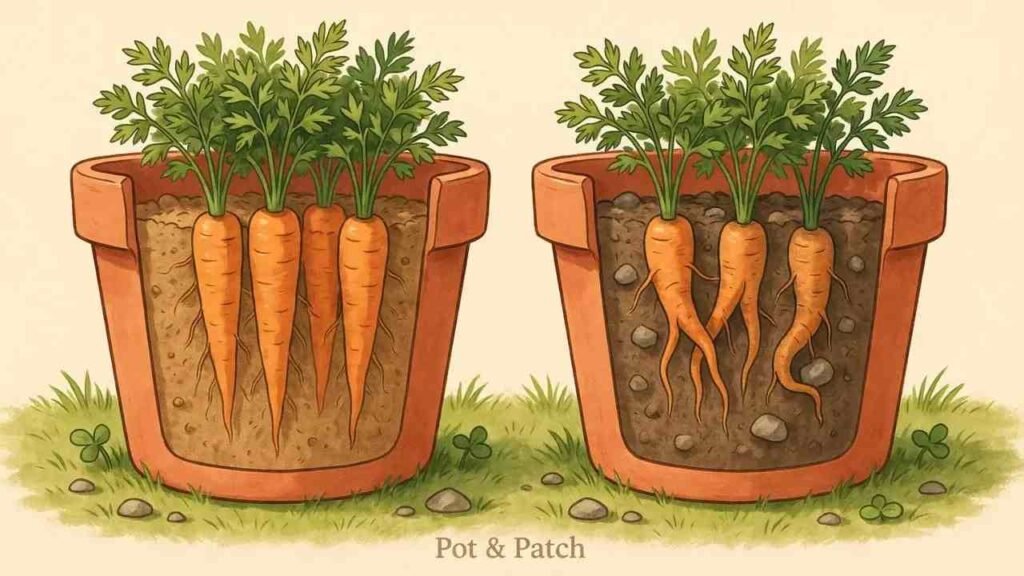
Compacted Growing Medium
A dense mix can restrict the taproot as it grows downward.
Use loose potting mix and avoid compressing it heavily when filling the container.
Stones or Large Debris
Physical obstructions can redirect a developing root.
This is one reason containers filled with clean potting mix can be useful when garden soil is rocky.
Root Disturbance
Carrot taproots begin developing early.
Transplanting or disturbing young roots can alter their growth, which is why direct sowing is preferred.
Overcrowding
Roots need space from neighboring carrots.
Thin seedlings instead of allowing them to remain packed together.
Container Too Shallow
A long carrot variety may reach the bottom of the container before it reaches its normal root length.
Match the pot depth to the cultivar.
Other Common Problems When Growing Carrots in Containers
Growing carrots in containers gives you better control over the root zone, but problems can still develop.
Carrot Seeds Are Not Germinating
Possible causes include:
- the surface dried out
- seeds were planted too deeply
- cool conditions slowed germination
- seeds are old
- not enough time has passed
Remember that carrot seeds can take a few weeks to emerge.
Carrots Are Small or Skinny
Possible factors include:
- overcrowding
- inadequate container depth
- limited sunlight
- inconsistent water
- harvesting before maturity
- variety genetics
Do not automatically treat small roots as a fertilizer problem.
Carrot Shoulders Turn Green
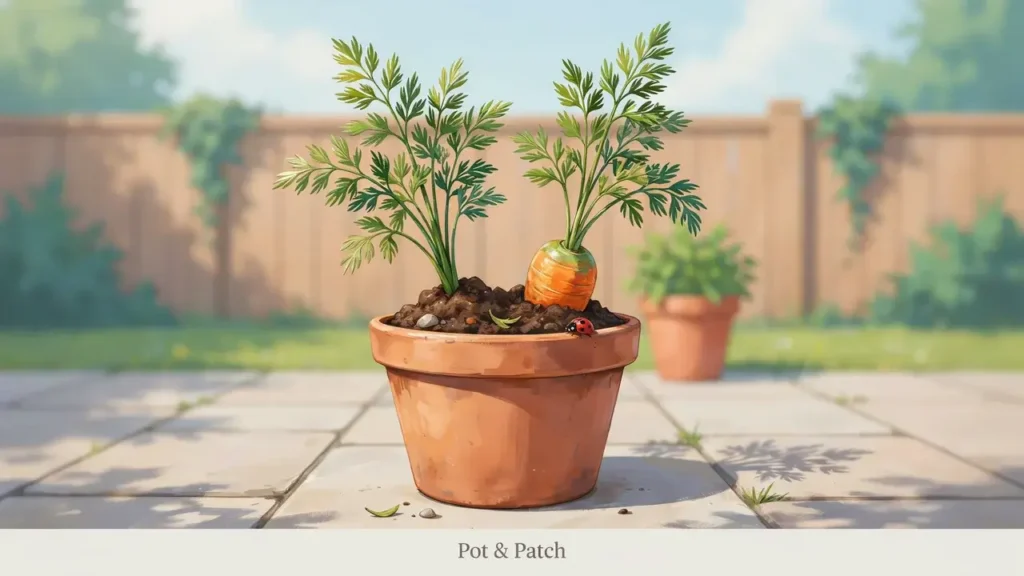
Some carrot varieties push the upper part of the root above the soil surface. If the top of the root becomes exposed, gently add a little potting mix around the shoulder to keep it covered.
Lots of Leaves but Small Roots
Several conditions can contribute:
- the carrots are still immature
- seedlings were not thinned enough
- the container is too shallow
- the plants receive too little sun
- growing conditions favor foliage more than root development
Check the seed packet’s maturity time before assuming something is wrong.
Pest or Disease Damage
Carrots can still suffer from pests and root problems even in containers.
Inspect foliage regularly and investigate damaged roots rather than applying treatment without identifying the cause.
Container growing may reduce exposure to some soil problems, but it does not make carrots immune to pests or disease.
How and When to Harvest Carrots From Containers
Harvest timing depends on the variety.
Use the seed packet’s days to maturity and expected root size rather than relying on one universal number.
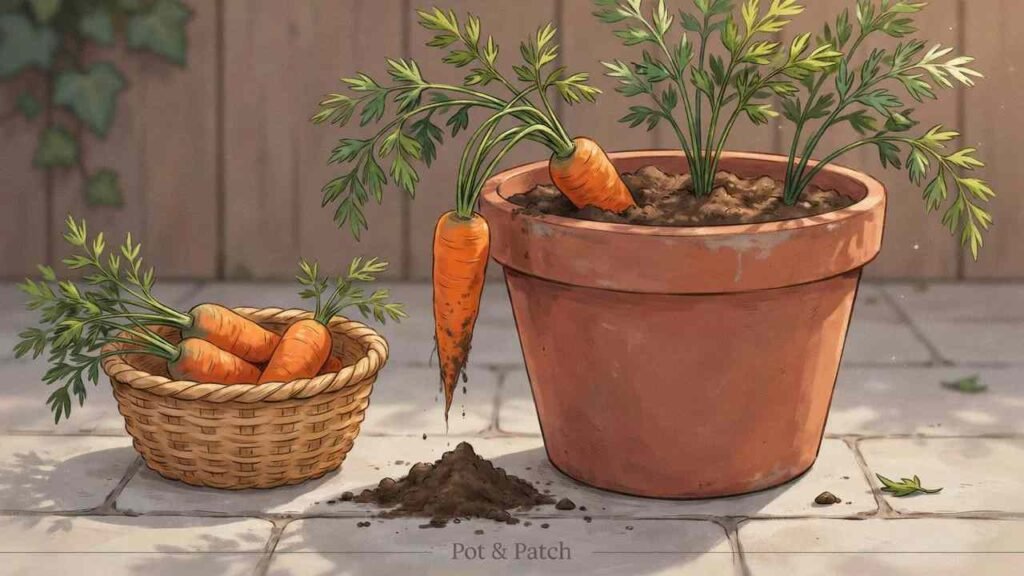
You can also check the exposed shoulder of the root to judge whether it has reached a useful size.
Not every carrot needs to become supermarket-sized before harvesting.
How to Pull Carrots Without Breaking Them
If the growing mix is very dry, water lightly before harvest.
Then:
- Loosen the potting mix around the carrot.
- Hold the foliage close to the top of the root.
- Pull upward gently.
- Avoid forcing long roots through compacted mix.
For the final harvest from a smaller planter, you can also carefully tip the growing medium out and separate the roots.
How to Grow More Carrots With Succession Sowing
Succession sowing lets you spread the harvest over a longer period.
Instead of planting every carrot on the same day, make several smaller sowings when local growing conditions allow.
For containers, a simple method is:
- Container 1: first sowing
- Container 2: sow 2 to 3 weeks later
- Container 3: make another later sowing
Separate containers are especially useful because you do not have to disturb established taproots to make room for new seeds.
7 Common Mistakes When Growing Carrots in Containers
1. Choosing a Pot That Is Too Shallow
A short container can limit long-rooted varieties before they reach normal size.
2. Growing the Wrong Variety for the Container
Shorter carrots are easier in standard patio pots. Long varieties need more depth.
3. Using Dense or Rocky Garden Soil
Carrot roots need loose growing medium without physical obstructions.
4. Transplanting Carrot Seedlings
Carrots develop taproots early, and transplanting can disturb their growth.
5. Letting the Surface Dry During Germination
Shallowly planted carrot seeds need consistent moisture while they emerge.
6. Skipping Thinning
Crowded seedlings compete for root space and may remain small.
7. Harvesting Without Checking Variety Maturity
Not every carrot reaches the same size or matures on the same schedule. Use the seed packet as your main reference.
Frequently Asked Questions
How deep should a container be for carrots?
For shorter carrot varieties, a container at least 12 inches deep is a reliable starting point. Long-rooted carrots need a deeper pot.
Can carrots grow in a 5-gallon bucket?
Yes, provided the bucket has drainage holes and enough depth for the variety you are growing. Shorter and medium-rooted carrots are generally easier to match with a standard bucket.
How many carrots can I grow in one pot?
That depends on the container’s width and the final spacing of the carrot variety. A practical starting point is around 2 inches between many smaller carrots, with more space for larger cultivars.
Can I transplant carrot seedlings?
Direct sowing is better. Carrot taproots begin developing early, and transplanting can damage or redirect root growth.
Why are my carrots short and fat?
The shape may simply be normal for the variety. Other possibilities include shallow growing medium, compaction, crowding, or root obstruction.
How long do carrots take to grow in containers?
It varies by cultivar. Some types mature faster than others, so use the days-to-maturity information on the seed packet rather than relying on one fixed number.
Can carrots grow in partial shade?
Carrots can tolerate some shade, but aim for about 6 hours of direct sun for stronger growth when possible.
Growing Carrots in Containers Successfully
Growing carrots in containers is mostly about giving the developing root enough uninterrupted space.
Choose a carrot variety that matches your available pot depth, use loose and well-draining growing medium, and direct sow the seeds rather than transplanting them. Keep the surface moist during germination, thin seedlings so the roots have room, and provide steady moisture as they mature.
With the right variety and a container deep enough for its taproot, carrots can make productive use of a patio, balcony, deck, or other small garden space.