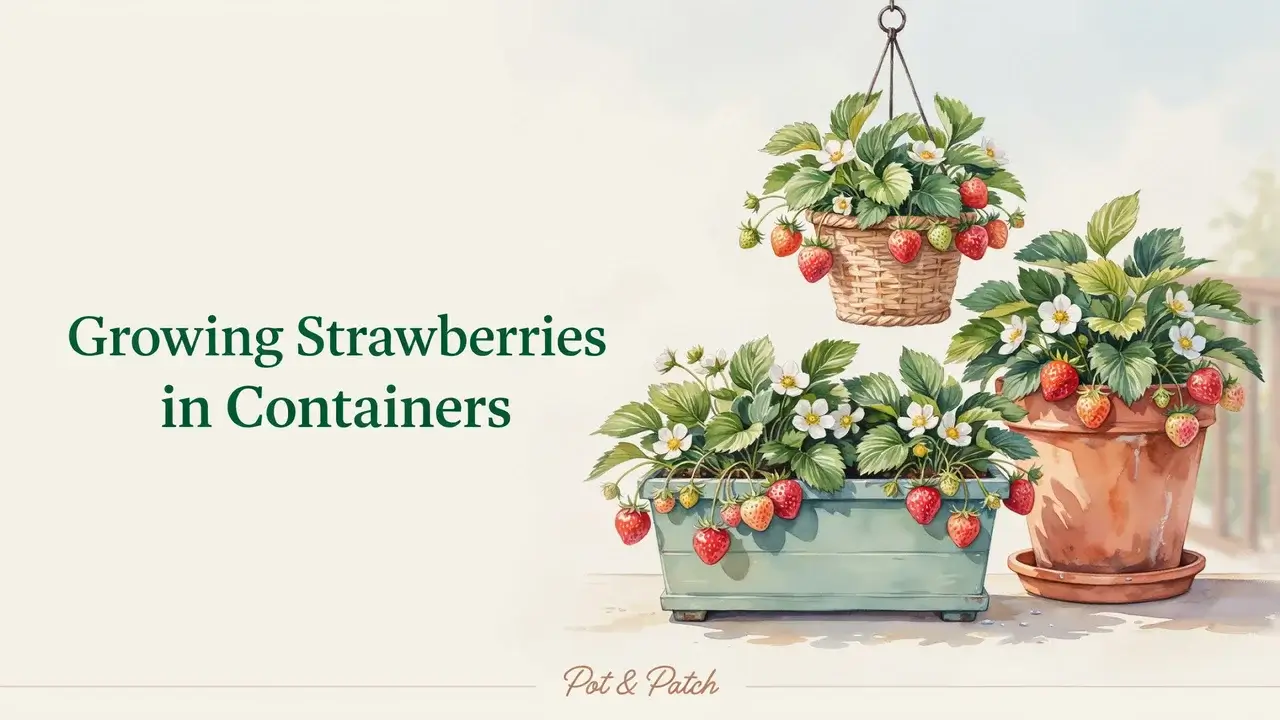
Growing Strawberries in Containers: Beginner Guide to Fresh Berries
Growing strawberries in containers is a practical way to enjoy fresh, homegrown berries without needing a traditional garden bed. A sunny patio, balcony, deck, or small backyard can provide enough space for several productive strawberry plants.
Strawberries have relatively shallow roots, making them suitable for pots, window boxes, and hanging baskets. However, successful container growing depends on more than choosing an attractive planter. The strawberry type, container size, crown position, sunlight, watering, and runner management all affect how well the plants grow and produce fruit.
This guide covers everything from choosing strawberry plants and preparing containers to managing flowers, harvesting ripe berries, and deciding whether to keep your plants for another season.
Growing Strawberries in Containers at a Glance
| Growing Requirement | Good Starting Point |
|---|---|
| Container size | At least 12 inches wide and 8 inches deep |
| Plants per pot | Around 3–4 in a suitably sized 12-inch container |
| Best strawberry types | Day-neutral and everbearing |
| Sunlight | At least 6 hours of direct sun |
| Growing medium | Quality, well-draining potting mix |
| Drainage | Working drainage holes |
| Water | Keep moisture consistent and check frequently |
| Fertilizer | Feed according to the potting mix and product label |
| Planting depth | Keep the crown at the soil surface |
| Runners | Remove excess runners when growing primarily for fruit |
| Harvest | Pick fully red berries with the cap attached |
| Winter care | Depends on climate, container size, and protection |
Strawberry plants are perennial, but many gardeners grow container strawberries as annuals because roots in exposed pots are vulnerable to winter damage. Starting with healthy plants and a suitable container makes the growing season easier to manage.
Can You Grow Strawberries in a Pot?
Yes. Strawberries can grow successfully in pots when they receive enough sunlight, root space, moisture, and nutrients.
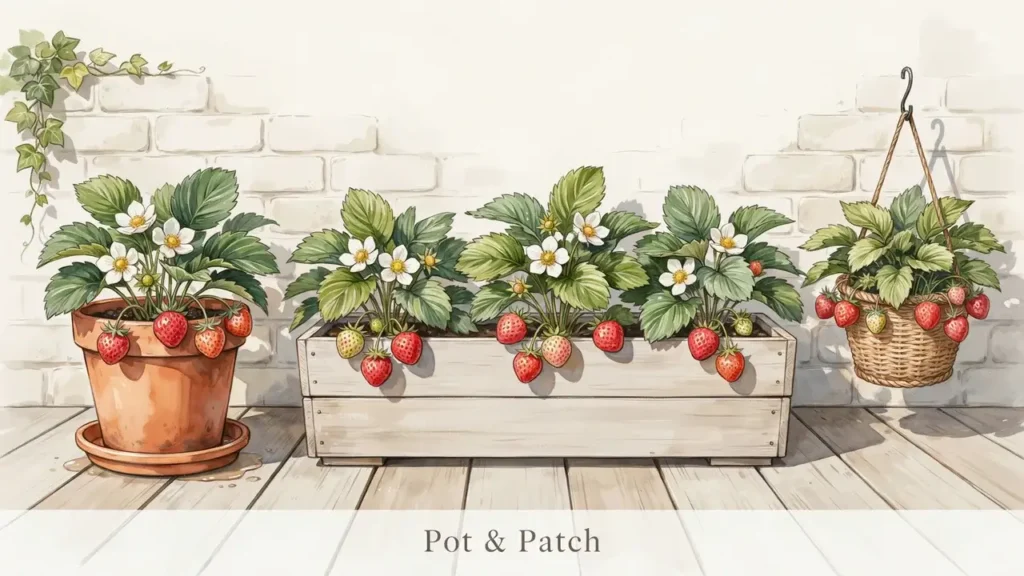
Their shallow, fibrous root system makes them easier to accommodate in containers than many deep-rooted fruiting crops. You can grow them in traditional flowerpots, rectangular planters, strawberry jars, window boxes, and hanging baskets.
Containers also offer a few practical advantages:
- Berries can hang over the edge instead of resting on garden soil.
- Pots can be moved to better growing locations.
- Plants can fit into patios and balconies with limited floor space.
- You can control the growing medium and drainage.
- Strawberry runners are easier to manage.
The main tradeoff is moisture. Container-grown strawberries cannot extend their roots into surrounding soil when the pot becomes dry.
A larger planter with good drainage is usually easier to manage than several tiny decorative pots.
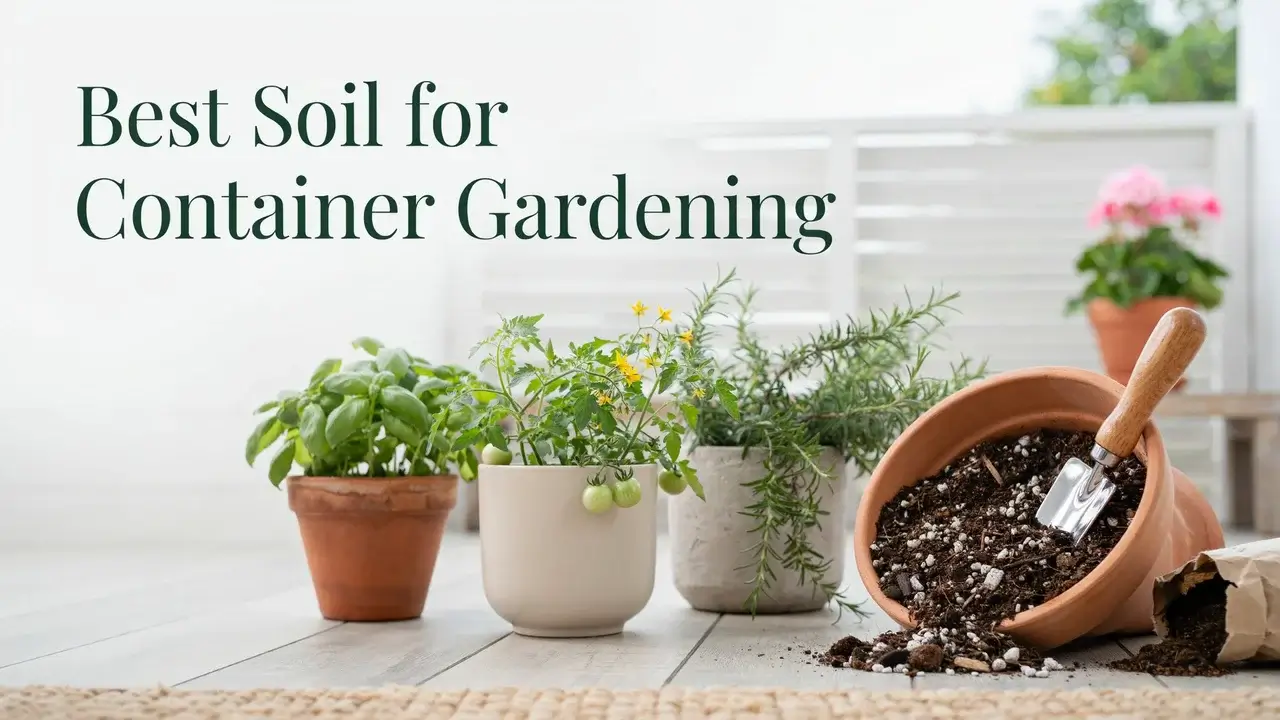
If you are new to growing edible plants in pots, our container gardening guide covers the general setup in more detail.
Best Strawberry Types for Containers
Choosing the right strawberry type is one of the most important decisions.
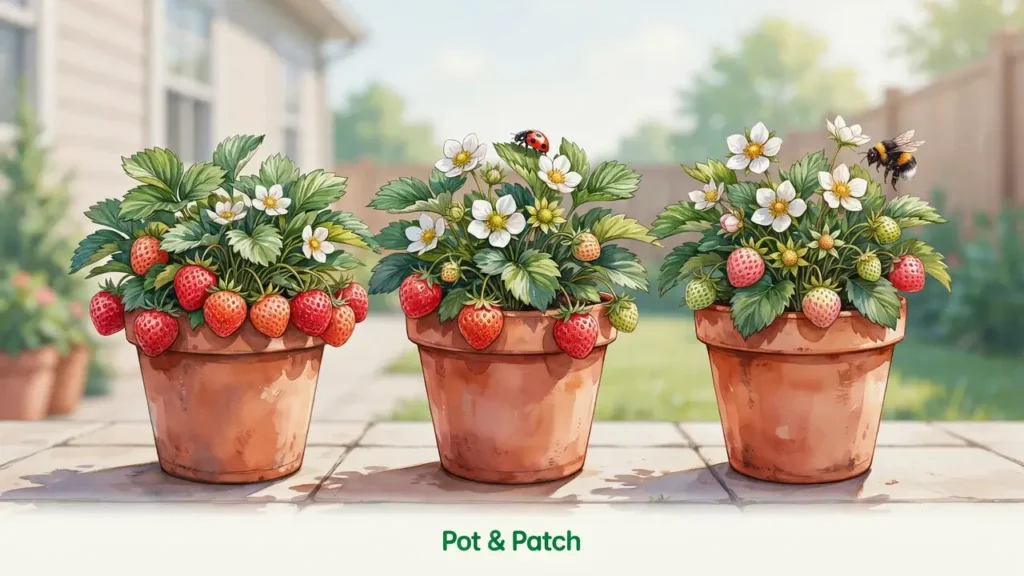
Strawberries are commonly grouped into three categories based on their fruiting patterns: day-neutral, everbearing, and June-bearing.
All three can grow in containers, but they do not produce berries in the same way.
Day-Neutral Strawberries
Day-neutral strawberries can produce flowers and fruit repeatedly when temperatures and growing conditions are suitable.
They are particularly useful for small-space gardeners who want several harvests during the season rather than one large crop.
Common cultivars include:
- Albion
- Seascape
- Cabrillo
Day-neutral varieties generally produce fewer runners than June-bearing types, making them easier to maintain in smaller containers.
However, continuous production is not guaranteed during extreme heat. Fruiting may slow or stop when temperatures become too high and resume as conditions improve.
Everbearing Strawberries
Everbearing strawberries typically produce two main crops during the growing season, often one in early summer and another as temperatures cool.
Ozark Beauty is a familiar example.
Everbearing varieties can be a practical choice for gardeners who want more than one harvest without managing vigorous spreading plants.
June-Bearing Strawberries
June-bearing varieties produce one concentrated crop during their normal fruiting season.
Despite the name, harvest timing varies by region and cultivar.
These plants often produce more runners than day-neutral varieties. They can grow in containers, but gardeners must decide whether to remove runners or use them to propagate new plants.
| Strawberry Type | Fruiting Pattern | Container Consideration |
|---|---|---|
| Day-neutral | Repeated crops in suitable weather | Useful for first-season fruit |
| Everbearing | Usually two main harvest periods | Suitable for seasonal harvests |
| June-bearing | One concentrated crop | More runner management |
For a first container strawberry garden, day-neutral or everbearing plants are a sensible starting point.
What Size Container Do Strawberry Plants Need?
A container at least 12 inches wide and 8 inches deep is a useful minimum starting point.
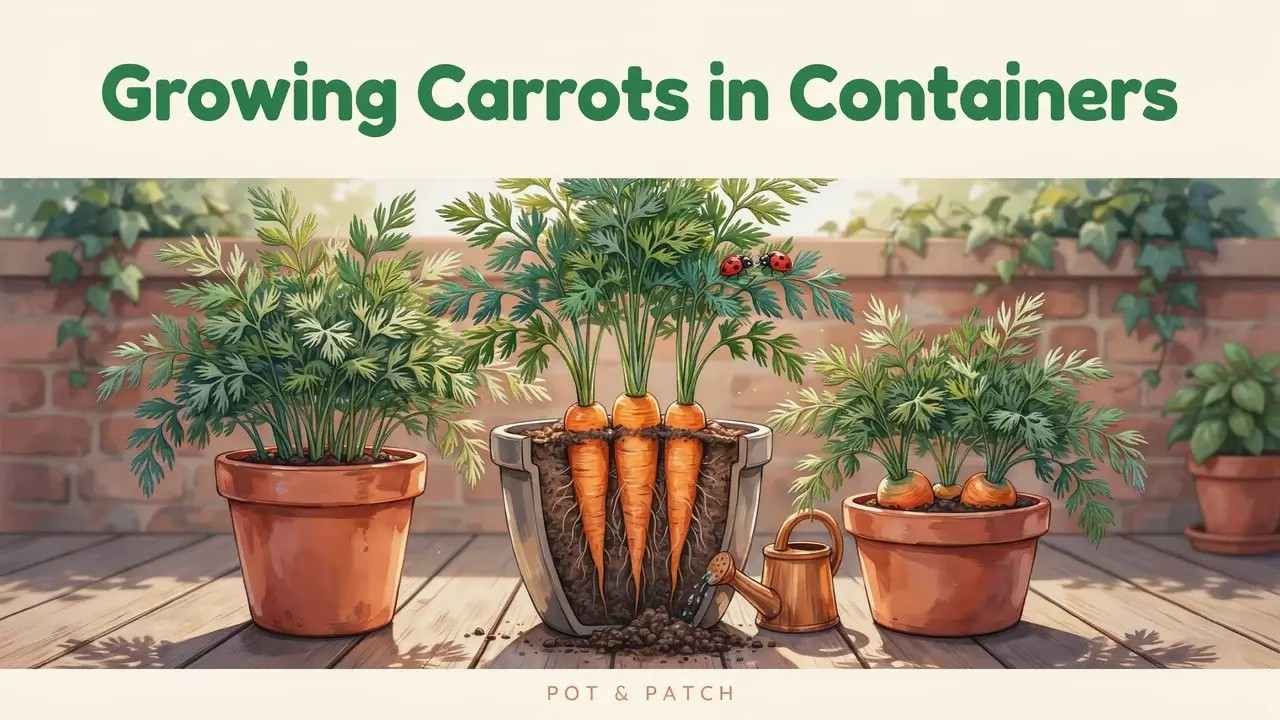
Strawberries do not need the deep containers required by carrots, but they still need sufficient growing-medium volume for healthy roots and steady moisture.
A larger planter can:
- hold more moisture
- provide additional root space
- accommodate several plants
- reduce rapid drying
- make seasonal maintenance easier
University Extension guidance commonly recommends containers around 12 inches in diameter or larger.
How Many Strawberry Plants Per Pot?
A suitably sized 12-inch container can accommodate approximately three or four strawberry plants, although the available growing-medium volume and cultivar size matter.
A practical spacing target is around 8 inches between plants.
Do not assume that every decorative 12-inch pot can comfortably support four plants. A very shallow container holds less growing medium than a deeper planter of the same diameter.
For a small beginner setup, one or two plants in a roomy pot may be easier to manage.
For several plants, a broad rectangular planter provides more usable surface area.
Best Container Materials
Strawberries can grow in different container materials.
Plastic pots: Lightweight and generally retain moisture longer.
Terracotta pots: Attractive and porous, but may dry faster during hot weather.
Fabric grow bags: Drain freely but need closer moisture monitoring.
Glazed containers: Can retain moisture well when drainage holes are present.
Wooden planters: Useful for growing several strawberry plants together.
The material matters less than adequate size, reliable drainage, and manageable watering.
Growing Strawberries in Hanging Baskets and Strawberry Pots
Hanging baskets and specialty strawberry planters can make excellent use of limited garden space.
However, they are not automatically easier than traditional containers.
Hanging Baskets
Hanging baskets allow berries and runners to trail over the sides.
They work well for balconies, porches, and patios where floor space is limited.
Their main challenge is rapid drying.
A hanging basket is exposed to air on several sides, and its relatively small growing-medium volume may heat up quickly.
During hot weather, check moisture frequently. Some baskets may need watering more than once a day.
Strawberry Jars
Strawberry jars have several planting pockets along their sides.
They can accommodate multiple plants in a relatively compact footprint, but maintaining even moisture can be difficult.
The upper pockets may dry faster than plants growing lower down.
When watering, check the condition of plants in different pockets rather than assuming moisture is evenly distributed.
Window Boxes and Rectangular Planters
Window boxes and long planters are useful when you want several strawberry plants growing side by side.
They provide more room for spacing and can be easier to water consistently than small hanging baskets.
You do not need a specialty strawberry pot to grow strawberries successfully.
A regular planter with enough room and working drainage holes can perform very well.
Best Soil for Growing Strawberries in Containers
Growing strawberries in containers works best with a quality potting mix that balances moisture retention and drainage.
Strawberries have shallow roots and dislike both severe drying and prolonged waterlogging.
Avoid filling containers entirely with dense garden soil.
A suitable growing medium should:
- retain useful moisture
- drain excess water
- provide air around roots
- support healthy root growth
- contain adequate nutrients
Strawberries generally prefer slightly acidic growing conditions, but beginners using a suitable commercial potting mix usually do not need to modify pH without testing.
Do not add lime, sulfur, or other amendments simply because a generic gardening tip recommends them.
For a broader explanation of potting mixes and amendments, see our guide to the best soil for container gardening.
When to Plant Strawberries in Pots
The best planting time depends on your climate and the type of strawberry plant you purchase.
In many cooler regions of the United States, spring is a common planting period.
In milder climates, fall planting may also be suitable, allowing plants to establish before their main growing season.
Avoid treating one regional planting date as a nationwide rule.
Consider:
- local frost dates
- expected summer heat
- the strawberry cultivar
- whether plants are dormant or actively growing
- whether containers can be protected during cold weather
Newly planted strawberries may need protection from freezing conditions, especially when their roots are exposed inside small pots.
Should You Grow Strawberries From Seeds or Plants?
Strawberries can be grown from seed, but established plants are usually the simpler choice for beginners.
There are four common starting options.
| Starting Method | What to Expect |
|---|---|
| Nursery plant | Already growing and ready for transplanting |
| Bare-root plant | Dormant crown and roots that need careful planting |
| Seed | Requires germination and a longer establishment period |
| Runner | A daughter plant produced by an existing strawberry |
Nursery Plants
Healthy nursery transplants provide an easy start.
Look for sturdy crowns, healthy foliage, and no obvious signs of pests or disease.
Bare-Root Strawberry Plants
Bare-root plants are often available during the planting season.
They may arrive dormant, without a full set of leaves.
Follow the supplier’s instructions for storage and planting, and avoid allowing exposed roots to dry out.
Growing Strawberries From Seed
Seeds are useful for particular cultivars, but they require more patience.
Some strawberry seeds need special germination preparation, and plants grown from saved hybrid seed may not match the parent.
If your main goal is harvesting berries from a patio this season, nursery plants are usually more straightforward.
How to Plant Strawberries in Containers Step by Step
Once you have your strawberry plants and containers ready, planting is relatively simple.
Step 1: Prepare the Container
Choose a pot with sufficient space and working drainage holes.
Make sure excess water can leave the bottom.
Step 2: Add Potting Mix
Fill the container with quality potting mix, leaving enough space for watering.
Moisten dry growing medium before planting if necessary.
Step 3: Remove the Strawberry Plant
Carefully remove a nursery plant from its original container.
Avoid pulling it by the leaves.
For bare-root plants, spread the roots gently into the planting hole without bending them sharply upward.
Step 4: Position the Crown Correctly
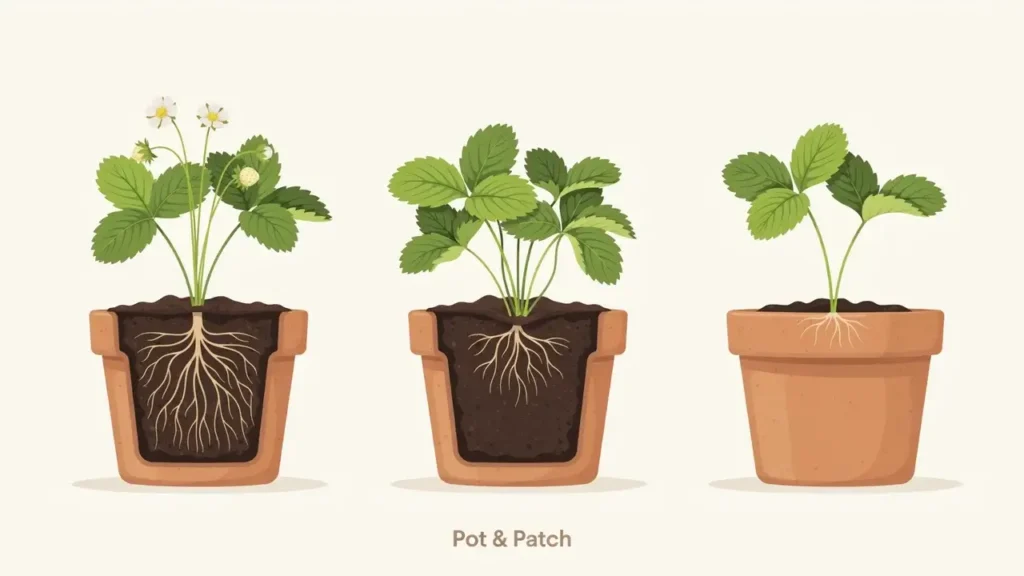
This is the most important planting detail. The strawberry crown is the short central part of the plant where the roots and leaves meet.
Keep the crown at approximately the soil surface. If planted too deeply, the growing point may become buried and the crown can rot.
If planted too shallowly, exposed roots may dry out.
The crown should remain visible while the roots stay covered.
Step 5: Space the Plants
Allow approximately 8 inches between plants as a useful starting point.
Adjust according to the cultivar and available planter space.
Step 6: Water Thoroughly
Water around the roots after planting.
Allow excess water to drain rather than leaving the container sitting in a pool of water.
Step 7: Move the Container Into Sunlight
Place the pot where the plants receive sufficient direct sun.
Check the newly planted strawberries regularly while their roots establish.
How Much Sun Do Potted Strawberries Need?
Aim for at least 6 hours of direct sunlight daily.
A sunny patio, balcony, deck, or small backyard can provide suitable growing conditions.
Full sun generally supports stronger growth, flowering, and fruit production.
However, a hot patio may expose plants to more heat than the surrounding air temperature suggests.
Concrete, brick walls, metal railings, and dark containers can increase heat around the root zone.
During extreme summer conditions:
- check moisture more frequently
- watch for wilting and heat stress
- avoid allowing small pots to become completely dry
- consider temporary protection from excessive reflected afternoon heat
Day-neutral strawberry plants may slow fruit production during prolonged hot weather.
Do not automatically add more fertilizer when flowering pauses during extreme heat.
How Often to Water Strawberries in Pots
Consistent watering is one of the most important parts of successful strawberry care.
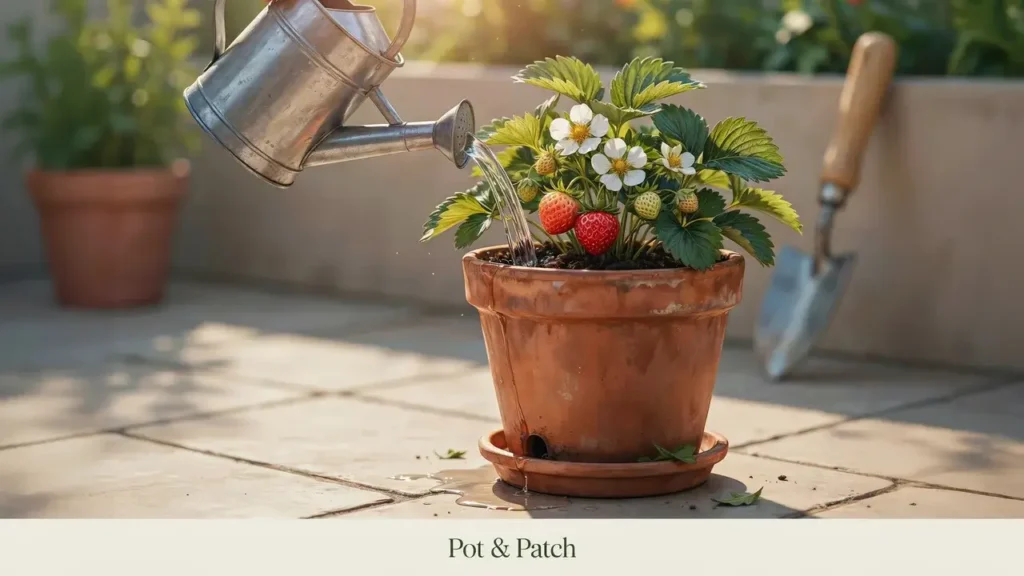
Strawberries have shallow roots and cannot tolerate prolonged drying as well as many established woody herbs.
However, permanently wet growing medium is also harmful. There is no universal watering schedule that works for every container.
Water use depends on:
- container size
- pot material
- temperature
- wind
- sunlight
- plant maturity
- fruit production
- growing medium
How to Check Whether Strawberries Need Water
Check the growing medium near the surface.
When the upper layer begins drying, inspect moisture slightly deeper in the pot.
Water thoroughly when the plant needs moisture, allowing excess water to drain.
Small pots and hanging baskets may require daily attention during warm weather.
During extreme heat, some containers may need watering more than once a day.
Water the Growing Medium, Not the Fruit
Direct water toward the root zone.
Avoid repeatedly soaking ripe berries or leaving the crown surrounded by wet, stagnant growing medium.
Prolonged moisture around fruit and foliage can encourage certain fungal diseases.
Signs of Water Stress
Possible signs include:
- drooping leaves
- rapidly drying potting mix
- unusually light containers
- poor fruit development
- general plant stress
Do not assume wilting always means the plant is dry.
Constantly saturated roots can also cause foliage to droop.
Check the growing medium before watering again.
How to Fertilize Container Strawberry Plants
Strawberries need nutrients for healthy foliage, flowering, and fruit development.
Because containers hold a limited amount of growing medium, nutrients may gradually become depleted or wash out through drainage holes.
Start by checking the potting mix.
Some commercial mixes already contain starter or slow-release fertilizer.
If additional feeding is necessary:
- choose fertilizer suitable for edible fruit crops or container plants
- follow the manufacturer’s instructions
- consider whether the mix already contains nutrients
- monitor plant growth during fruiting
- avoid applying more than the recommended amount
Excessive fertilizer is not a shortcut to a larger harvest.
Too much nitrogen can encourage foliage at the expense of balanced fruit production.
The exact feeding frequency depends on the fertilizer product, strawberry type, and growing conditions.
Should You Remove Strawberry Runners?
Strawberry plants produce runners, also called stolons. A runner is a thin stem that extends from the parent plant and can develop a new daughter plant.
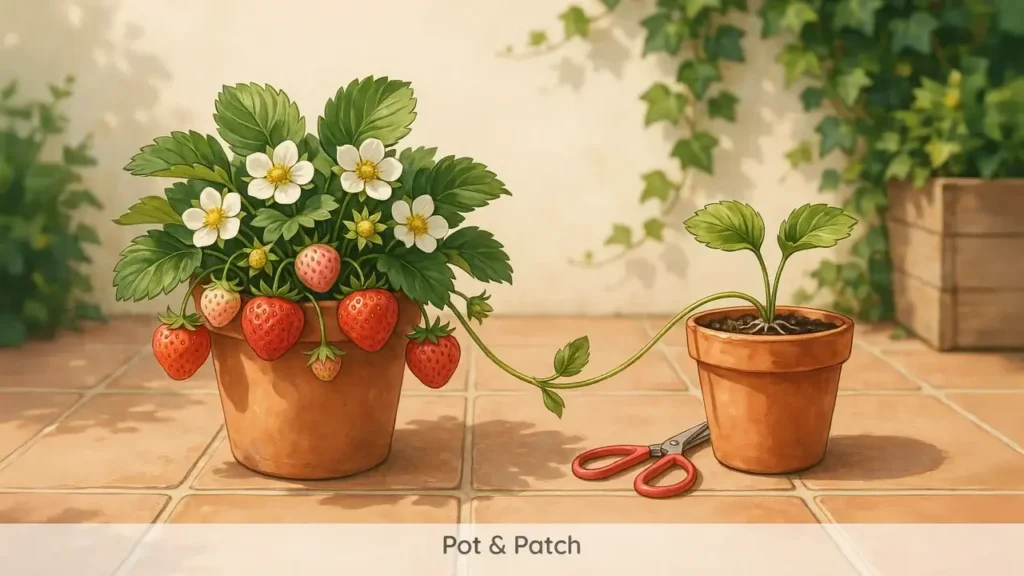
Runners are useful for propagation, but they also require resources from the mother plant.
If Your Main Goal Is Fruit
Remove excess runners so the established plant can direct more resources toward growth and berry production.
This is particularly useful in small containers where new daughter plants cannot root properly.
If You Want More Strawberry Plants
Allow selected runners to develop.
Position a daughter plant over a small pot of suitable growing medium while it remains connected to the parent.
Once it develops its own roots, it can be separated and grown independently.
Avoid allowing numerous runners to crowd the original container.
A few healthy plants with sufficient growing space are easier to maintain than one overcrowded pot.
Should You Remove Flowers From New Strawberry Plants?
The answer depends on the strawberry type and how long you intend to keep it.
Removing early flowers allows a newly planted strawberry to direct more energy toward root and crown establishment.
However, removing every flower for an entire season is not appropriate for every container-growing system.
Day-Neutral and Everbearing Strawberries
Removing the first flowers for several weeks after planting can help plants establish before fruit production begins.
After the establishment period, allow flowers to develop into berries.
June-Bearing Strawberries
For June-bearing strawberries intended to remain productive for several years, gardeners are often advised to remove first-year flowers.
This supports establishment and future production.
However, if you intend to grow a June-bearing strawberry as a one-season container crop, removing every flower would mean missing that season’s harvest.
The important question is whether you are establishing a multi-year plant or growing strawberries primarily for fruit during the current season.
Common Problems When Growing Strawberries in Containers
Growing strawberries in containers gives you greater control over the growing medium and plant location, but it does not eliminate pests, diseases, or environmental stress.
Strawberry Plants Have Flowers but No Berries
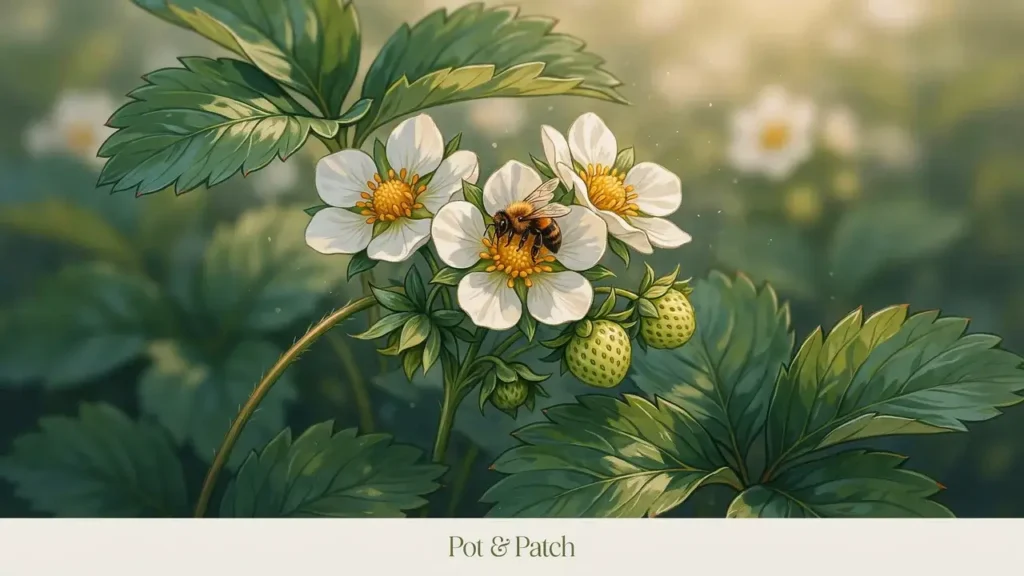
Possible causes include:
- insufficient pollination
- unfavorable temperatures
- moisture stress
- young plants still establishing
- general plant stress
Many strawberry flowers are self-fertile, but bees and other pollinators help improve complete pollination and fruit development.
Avoid assuming that every flower without fruit indicates a fertilizer deficiency.
Strawberries Are Small or Misshapen
Strawberry fruit develops from a flower containing many individual reproductive structures.
Incomplete pollination can result in irregular fruit development.
Other possible factors include:
- heat stress
- insufficient moisture
- overcrowded plants
- poor overall plant health
Check growing conditions before applying extra fertilizer.
Strawberry Leaves Are Turning Yellow
Yellow leaves can have several causes:
- overwatering
- poor drainage
- nutrient problems
- root stress
- disease
- natural aging
Start by checking moisture and drainage.
Inspect new growth and older leaves separately rather than diagnosing every yellow leaf the same way.
Strawberries Are Rotting Before Harvest
Gray mold can affect ripening strawberries, especially when conditions remain humid and fruit stays wet.
To reduce problems:
- avoid overcrowding
- remove visibly diseased fruit
- maintain airflow
- water at soil level when practical
- harvest ripe berries promptly
Do not leave rotting berries in the container.
Birds and Slugs Are Eating the Fruit
Birds may peck ripe berries, while slugs and snails can damage fruit close to the potting mix.
Possible solutions include:
- suitable protective netting
- keeping fruit away from constantly wet surfaces
- checking containers regularly
- removing damaged or rotting berries
Make sure protective netting cannot trap birds or other wildlife.
Strawberry Plants Stop Producing in Summer
Day-neutral strawberries may temporarily stop flowering and fruiting during extreme heat.
Check moisture and temperature before assuming the plant needs fertilizer.
Production may resume when growing conditions become more favorable.
How and When to Harvest Container Strawberries
Strawberries are ready when they have developed their mature color, usually an even red across the fruit for common red-fruited varieties.
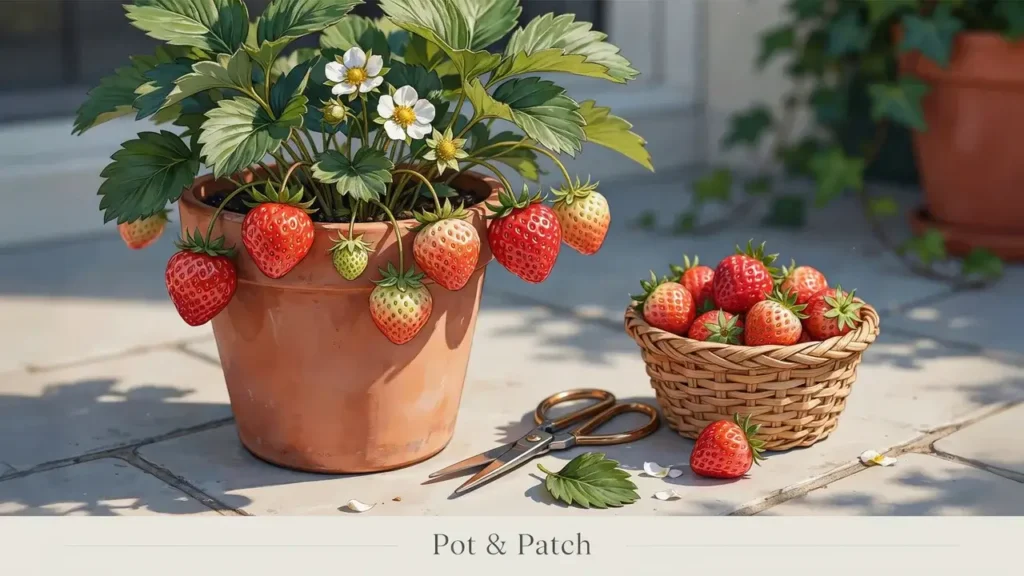
Do not rely on berry size alone.
A large strawberry may still be immature, while a smaller berry may be fully ripe.
Unlike some fruits, strawberries do not become significantly sweeter after picking.
How to Pick Strawberries Properly
Harvest gently to avoid bruising the fruit.
A simple method is to:
- Choose a fully colored berry.
- Hold the stem just above the fruit.
- Cut or pinch the stem rather than pulling hard on the berry.
- Leave the green cap attached.
- Place harvested berries gently into a shallow container.
Check productive plants frequently because ripe strawberries can deteriorate quickly in warm weather.
What to Do After Harvesting
Remove damaged fruit and inspect the plant for pests or disease.
Continue watering according to the plant’s needs.
For repeat-fruiting varieties, maintain appropriate nutrition and remove excess runners during the remaining growing season.
Can Strawberry Plants Survive Winter in Pots?
Strawberries are perennial plants, but growing them in pots creates an additional winter challenge.
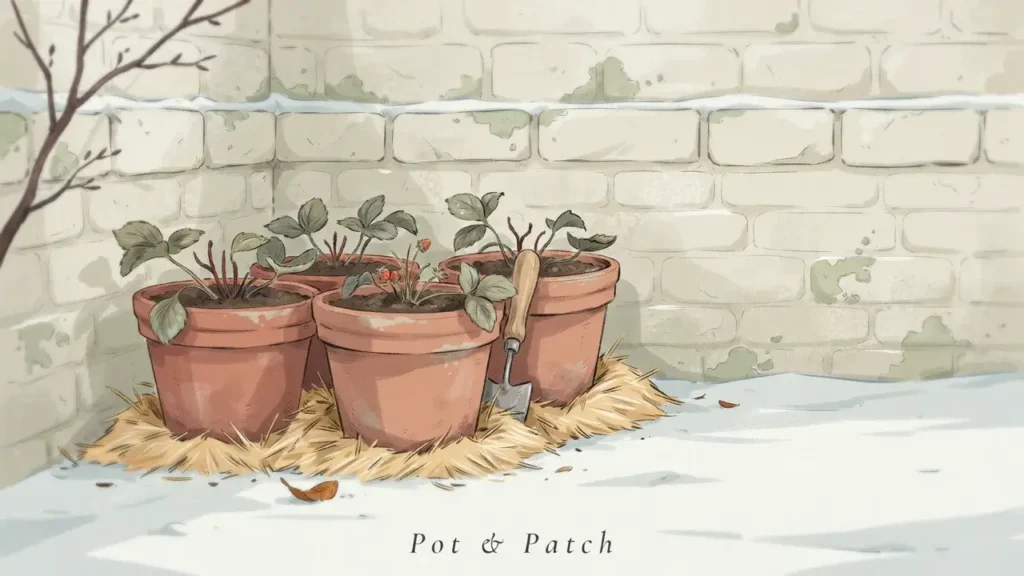
Roots in exposed containers experience colder temperatures than roots protected by surrounding garden soil.
A strawberry plant that survives winter in the ground may suffer damage when left in a small exposed pot.
Growing Strawberries as Annuals
For beginners in cold regions, replacing container strawberry plants each year is a straightforward option.
Day-neutral and everbearing varieties are particularly suitable because they can produce fruit during the planting year.
At the end of the season, remove spent plants and prepare the container for new strawberries the following spring.
Keeping Strawberry Plants for Another Year
Overwintering may be possible with suitable protection.
Options depend on your climate and may include:
- moving containers into a protected unheated location
- insulating the root zone
- using larger containers
- protecting plants from severe freezing and drying
An unheated garage can sometimes provide suitable dormant-season protection, but plants still need appropriate moisture and temperature management.
Avoid moving dormant strawberries into a warm living room and expecting normal outdoor growth.
Winter survival is not guaranteed, especially in small hanging baskets or shallow pots.
7 Common Mistakes When Growing Strawberries in Containers
1. Choosing a Container That Is Too Small
Small containers dry quickly and provide limited root space.
Use a roomy pot or planter rather than squeezing several plants into a decorative container.
2. Burying the Strawberry Crown
A buried crown can rot, while exposed roots may dry out.
Keep the crown at approximately soil level.
3. Giving Strawberries Too Little Sun
Most strawberry plants need at least six hours of direct sunlight for healthy fruit production.
4. Letting Hanging Baskets Dry Repeatedly
Hanging baskets can become dry and hot much faster than larger planters.
Check moisture frequently during warm weather.
5. Overcrowding the Container
Too many strawberry plants compete for root space, water, nutrients, and light.
Give each plant enough room to develop.
6. Allowing Every Runner to Grow
Excess runners can compete with fruit production and crowd the container.
Remove unnecessary runners when your main goal is harvesting berries.
7. Expecting Strawberries to Survive Winter Without Protection
Strawberries are perennial, but their roots are more exposed in containers.
Decide whether you will protect plants through winter or replace them the following season.
Frequently Asked Questions
What is the best container for growing strawberries?
A wide container at least 12 inches in diameter and around 8 inches deep is a useful starting point. Larger rectangular planters also work well for several plants.
Can you grow strawberries in a 5-gallon bucket?
Yes. A five-gallon bucket can provide sufficient growing space when it has working drainage holes. The number of plants should depend on the bucket’s actual dimensions and available root volume.
How many strawberry plants can grow in one pot?
A suitably sized 12-inch container may accommodate around three or four plants, but a less crowded arrangement can be easier to water and maintain.
How often should strawberries in pots be watered?
Check the growing medium regularly and water when moisture is becoming depleted. During hot weather, some containers may need daily watering, while small hanging baskets may need attention more frequently.
Do strawberries grow better in pots or in the ground?
Both can produce healthy plants. Containers offer flexibility and control over growing conditions, while in-ground strawberries generally have access to more root space and greater protection from temperature changes.
Can strawberries grow in hanging baskets?
Yes. Hanging baskets work well for strawberries, but they dry quickly and require careful moisture management.
Do strawberries come back every year in containers?
They can survive for multiple years, but overwintering is more difficult in exposed pots than in the ground. Winter protection and local climate strongly affect survival.
Growing Strawberries in Containers Successfully
Growing strawberries in containers does not require a large garden, but the plants need more than a sunny spot and occasional watering.
Start with a productive strawberry type, choose a container with enough growing space, and keep the crown at the correct planting depth. Provide at least six hours of direct sunlight, maintain consistent moisture, and remove unnecessary runners when fruit production is your main goal.
Pay particular attention to hanging baskets during hot weather and decide early whether you intend to keep plants for another season.
With suitable care, day-neutral, everbearing, and June-bearing strawberries can all become part of a productive patio, balcony, deck, or small backyard garden.