How to Prune Tomato Plants: Suckers, Leaves, and Topping Explained
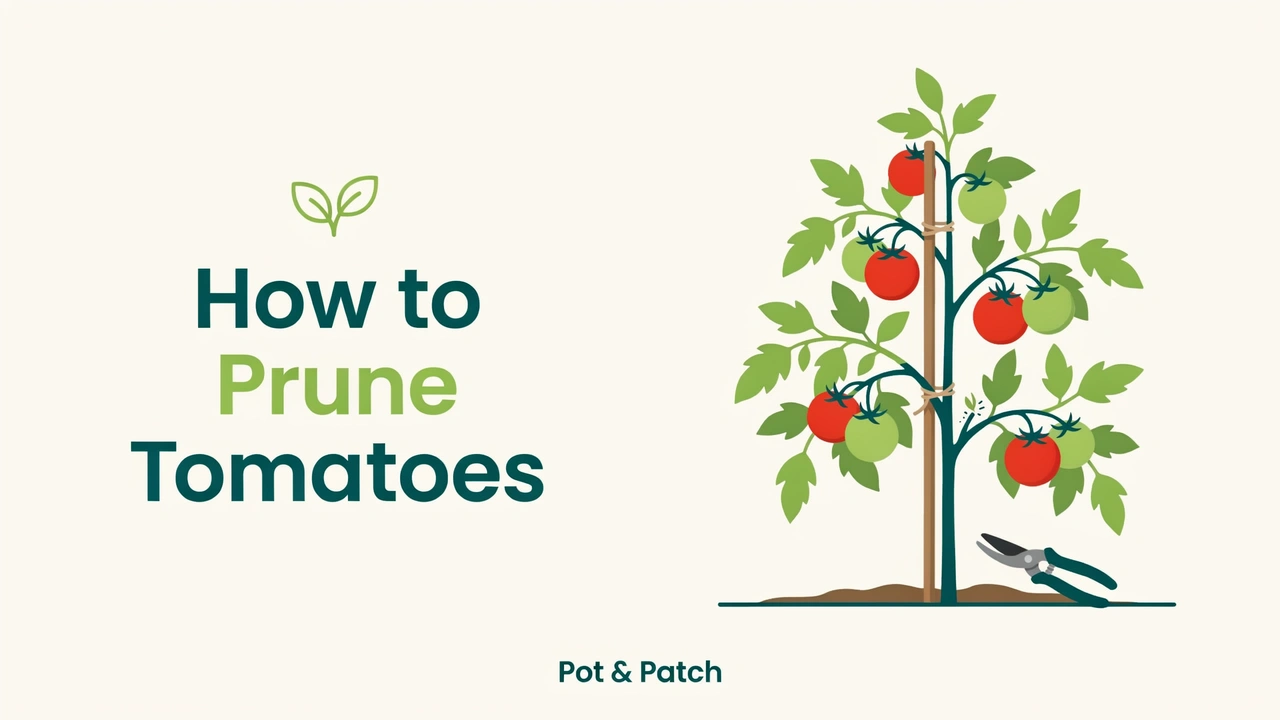
Pruning a tomato plant means removing the small side shoots and lower leaves so the plant puts its energy into fruit instead of excess growth. Done well, it means bigger tomatoes, fewer diseases, and a plant you can actually manage.
Done wrong, it can cut your harvest or expose fruit to the sun. The good news is that the rules are simple once you know what to remove and what to leave alone.
This guide covers what a sucker is, which plants to prune, the main methods, and how to handle leaves and end-of-season topping.
Why Prune Tomato Plants?
Pruning is not essential, but it earns its place for a few solid reasons.
Removing side shoots redirects the plant’s energy from leafy growth into flowering and fruiting. Opening up the canopy lets in more light and air, which lowers the risk of the fungal diseases that thrive in damp, crowded foliage. It also keeps the plant in bounds, which matters most in small gardens, containers, and tight patio corners.
There is a practical bonus too. A tidier plant makes it far easier to spot pests, disease, and problems like blossom end rot early, while there is still time to act.
Determinate or Indeterminate? This Changes Everything
Before you cut anything, find out which type of tomato you have, because they are pruned in opposite ways.
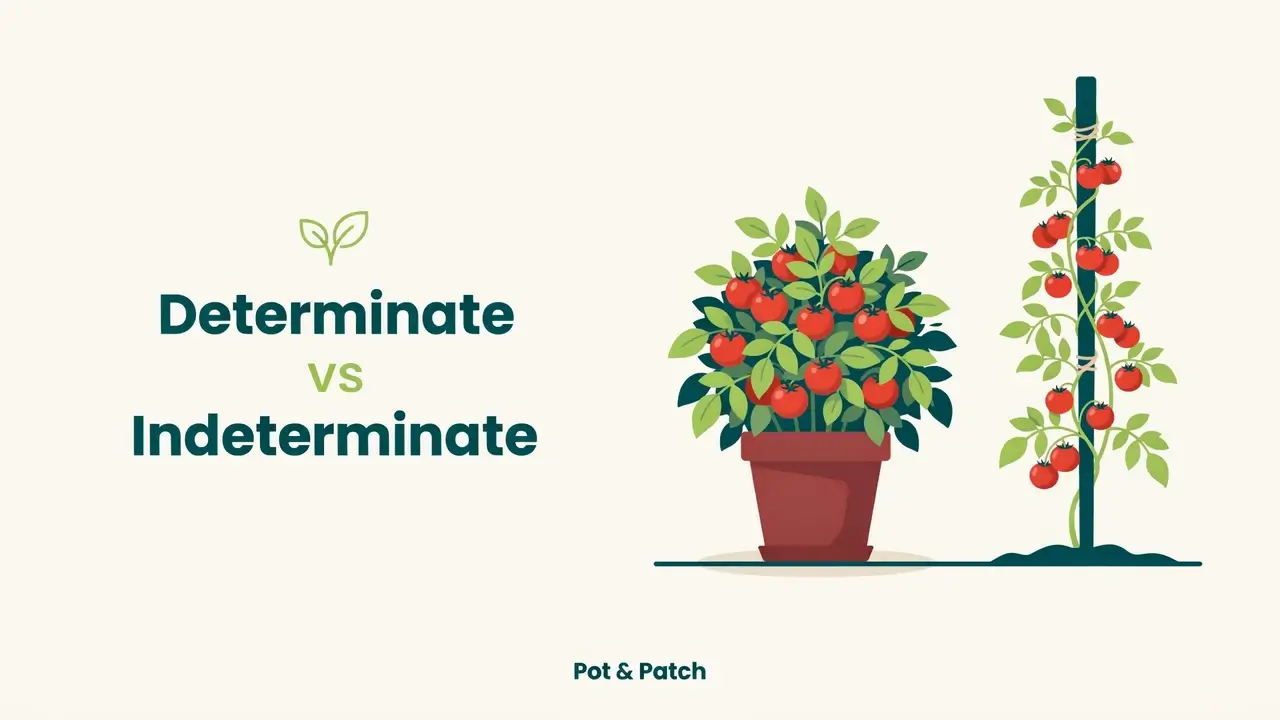
Indeterminate (vining) tomatoes grow and produce until frost. They benefit from having their suckers removed all season long, which improves airflow and channels energy into fruit.
Determinate (bush) tomatoes grow to a fixed size and set their crop in one flush. Here you remove suckers only up to the first flower cluster. There is no benefit to removing suckers above that point, and heavy pruning of a bush type simply cuts your harvest.
If you are not sure which you have, check the seed packet or plant label, or look the variety up. Our guide to determinate vs indeterminate tomatoes explains how to tell them apart and lists which popular varieties are which.
What Is a Tomato Sucker?
A sucker is the new shoot that grows in the joint between the main stem and a leaf branch.
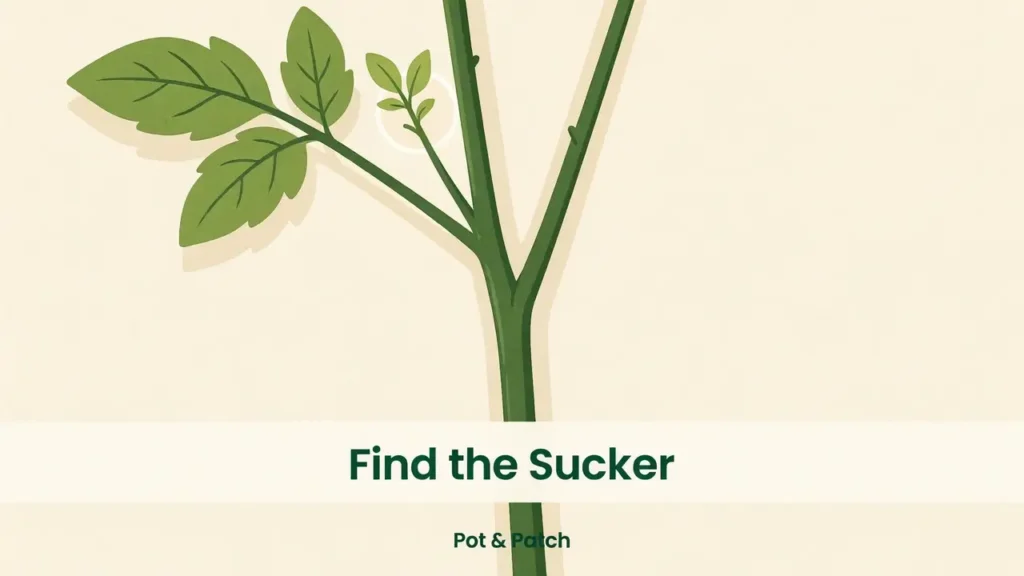
Follow the main stem up from the base. At each point where a leaf attaches (a node), look in the angle between that leaf and the stem. The small shoot growing there is the sucker. Left alone, it develops into a full stem of its own, with its own leaves, flowers, and more suckers.
Suckers are mostly leafy growth and produce little fruit on their own, which is why removing them on indeterminate plants sends more energy to the tomatoes you want.
When to Start Pruning
Start when the suckers are small, ideally under 3 inches (8 cm) long. At that size they snap off cleanly by hand and leave only a tiny wound.
Check your plants every few days during the growing season, since suckers grow fast in warm weather. Always prune on a dry day so the cuts heal quickly and you are not spreading disease through wet foliage.
Some gardeners also pinch off the earliest flowers until a young plant reaches 12 to 18 inches (30 to 45 cm) tall, so it can build strong roots first. That step is optional.
How to Remove Suckers Step by Step
Removing suckers takes seconds once you can spot them.
- Identify the main stem and follow it up from the base.
- Find the sucker growing in the angle between a leaf and the stem.
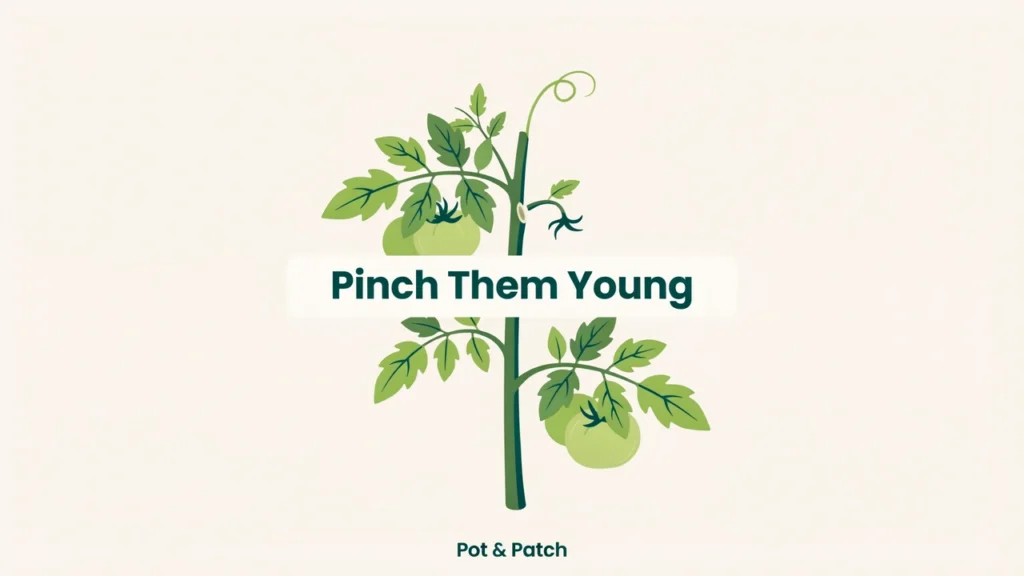
- If it is small, pinch it between finger and thumb and bend it back and forth until it snaps off.
- If it has grown past 3 inches (8 cm), use clean, sharp pruners and cut close to the main stem without tearing it.
- Clean your hands or blades between plants, or every few plants, to avoid spreading disease.
One important limit: do not strip the plant bare. If you remove too much foliage, the fruit loses its shade and can develop sunscald in strong heat. Leave enough leaves to cover the tomatoes.
Pruning Methods: Pick One
There is no single correct method. Choose the one that suits your climate and how much time you want to spend.
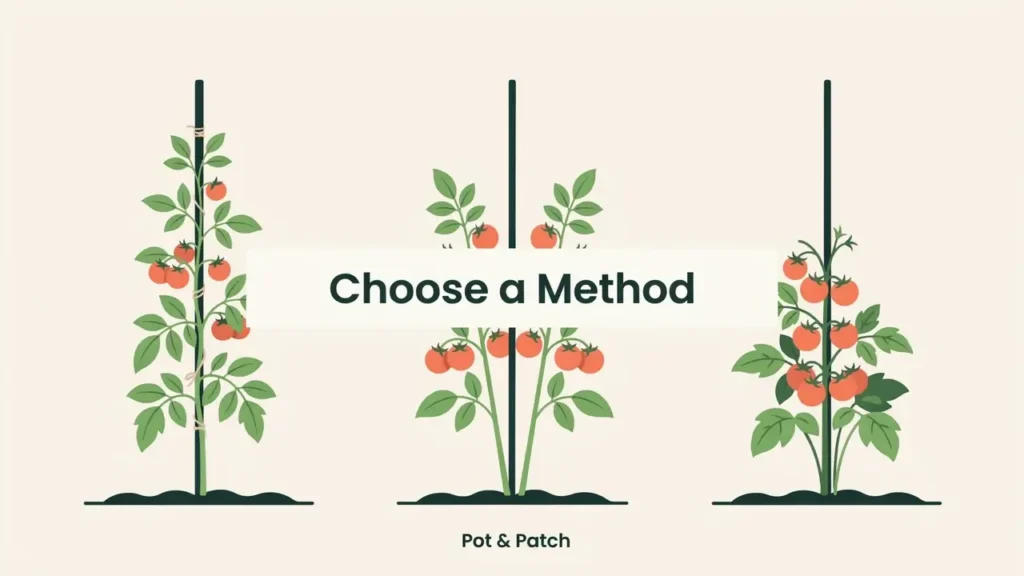
| Method | What you do | Best for |
|---|---|---|
| Single stem | Remove all suckers, keep one main stem | Tight, humid spaces where airflow matters most |
| Two stem (Y) | Keep the main stem plus the sucker just below the lowest fruit cluster, remove the rest | A balance of yield and airflow |
| Missouri pruning | Pinch the tip off each sucker but leave its two base leaves | Hot climates, where extra leaves shade fruit |
For most home gardeners with indeterminate plants, the two-stem method is a reliable middle ground. In very hot areas, Missouri pruning keeps some shade on the fruit and helps prevent sunscald.
Removing Lower Leaves
Pruning the lowest leaves is separate from suckering, and it is one of the best things you can do to prevent disease.
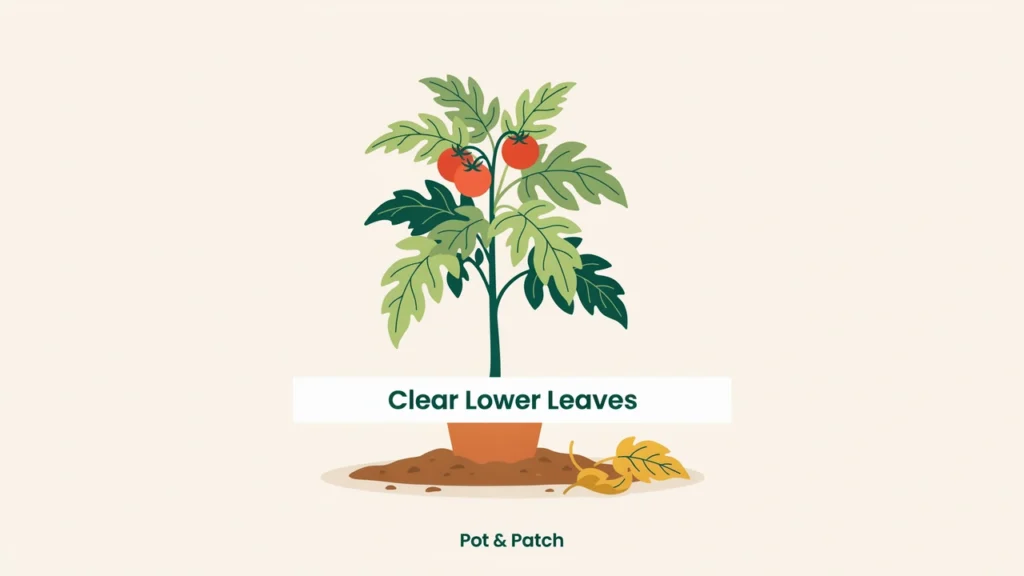
Remove the leaves and side shoots from the bottom 6 to 12 inches (15 to 30 cm) of the plant, especially any foliage that touches or hangs near the soil. Those low leaves catch soil splash during watering and rain, which is how fungal diseases such as early blight and Septoria leaf spot get started.
Keep a few habits in mind:
- Prune on a dry day and use clean, sharp pruners.
- Remove no more than a third of the plant’s foliage at any one time.
- Mulch around the base to further reduce soil splash.
- Pull off yellowing or diseased leaves whenever you spot them.
Topping at the End of the Season
Late in the year, indeterminate plants often carry fruit that will not ripen before the cold arrives. Topping fixes that.
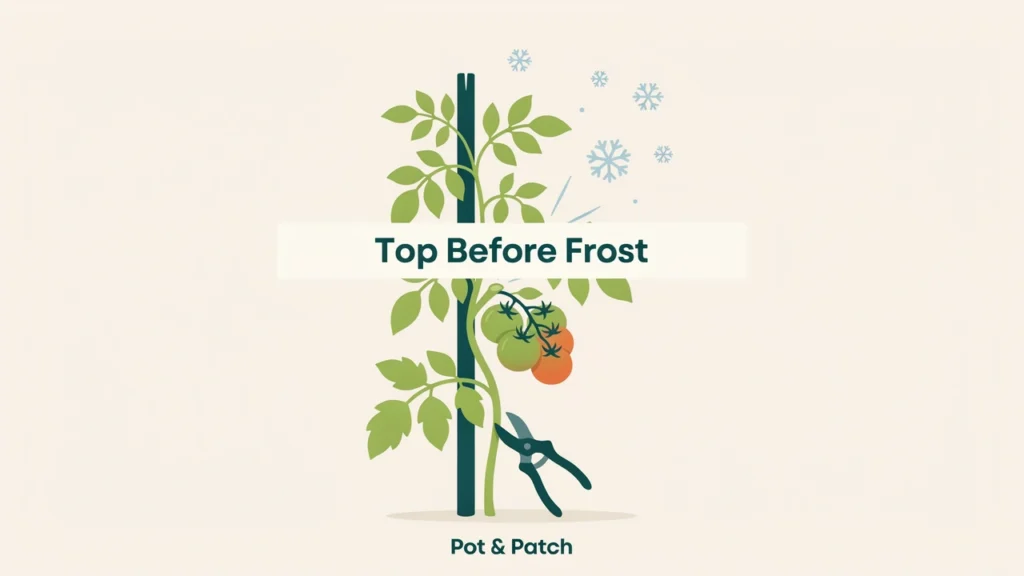
Topping means cutting off the growing tip of the main stem so the plant stops making new growth and pours its energy into ripening the tomatoes it already has. Do it about four to six weeks before your first expected fall frost, cutting just above a leaf or fruit cluster with clean pruners.
Only top indeterminate plants. Determinate types set a fixed crop, so topping them just reduces the harvest. Avoid topping any plant that is already stressed by drought or disease.
Common Pruning Mistakes
- Over-pruning. Stripping too many leaves exposes fruit to sunscald. Leave enough canopy for shade.
- Pruning determinate suckers. Removing side shoots on a bush type cuts the very branches that carry its fruit.
- Using dirty tools. Unsanitised blades spread disease from plant to plant. Wipe them between plants.
- Cutting on a wet day. Damp wounds invite infection. Wait for dry weather.
- Tearing off big suckers by hand. Once a sucker is large, pull it and you risk ripping the main stem. Cut it instead.
FAQ
Do you prune determinate tomatoes?
Only lightly. Remove suckers up to the first flower cluster and take off any leaves touching the soil, then leave the rest alone. Heavier pruning reduces the harvest.
When should you prune tomato plants?
Start once suckers appear and are small, then check every few days through the season. Always prune on a dry day.
Can you prune tomatoes too much?
Yes. Removing too much foliage exposes the fruit to sunscald and stresses the plant. Never take more than about a third of the leaves at once.
Do cherry tomatoes need pruning?
Most cherry tomatoes are indeterminate, so they respond well to regular suckering for airflow. They grow bushy, so light, consistent pruning keeps them manageable.
Can you grow new plants from the suckers you remove?
Yes. Healthy suckers can be rooted in water or moist soil to grow into new tomato plants, which is a free way to expand your crop.
Final Thoughts
Pruning tomatoes comes down to a few clear habits: know your plant type, remove suckers while they are small, clear the lowest leaves, and top indeterminate plants late in the season.
Prune a little and often rather than all at once, keep your tools clean, and always leave enough leaves to shade the fruit. Do that and you will get healthier plants and a better harvest with just a few minutes of work each week.