Best Pots for Tomato Plants: Materials, Sizes, and What to Choose
The pot you choose has a real effect on how well your tomatoes grow. The right container holds enough soil, drains freely, and keeps roots from overheating or drying out. The wrong one leaves plants stressed and thirsty all summer.
The good news is that you do not need an expensive designer planter. You need the right size, good drainage, and a material that suits your climate.
This guide compares the main pot materials for tomatoes, explains what actually matters, and gives you a quick pick for your situation.
What Makes a Good Tomato Pot?
University guidance tends to focus on four things when choosing a container: size, drainage, depth, and material or colour.
Of these, size and drainage matter most. A big enough pot with good drainage will grow a healthy tomato in almost any material, while the fanciest planter will fail without drainage. Material and colour fine-tune the result, mainly by changing how fast the soil dries and heats up.
So before worrying about looks, make sure a pot ticks these boxes:
- Holds enough soil for the variety (more on size below)
- Has several drainage holes
- Is at least 12 inches (30 cm) deep
- Is not a dark colour sitting in full sun
Best Pot Materials for Tomatoes, Compared
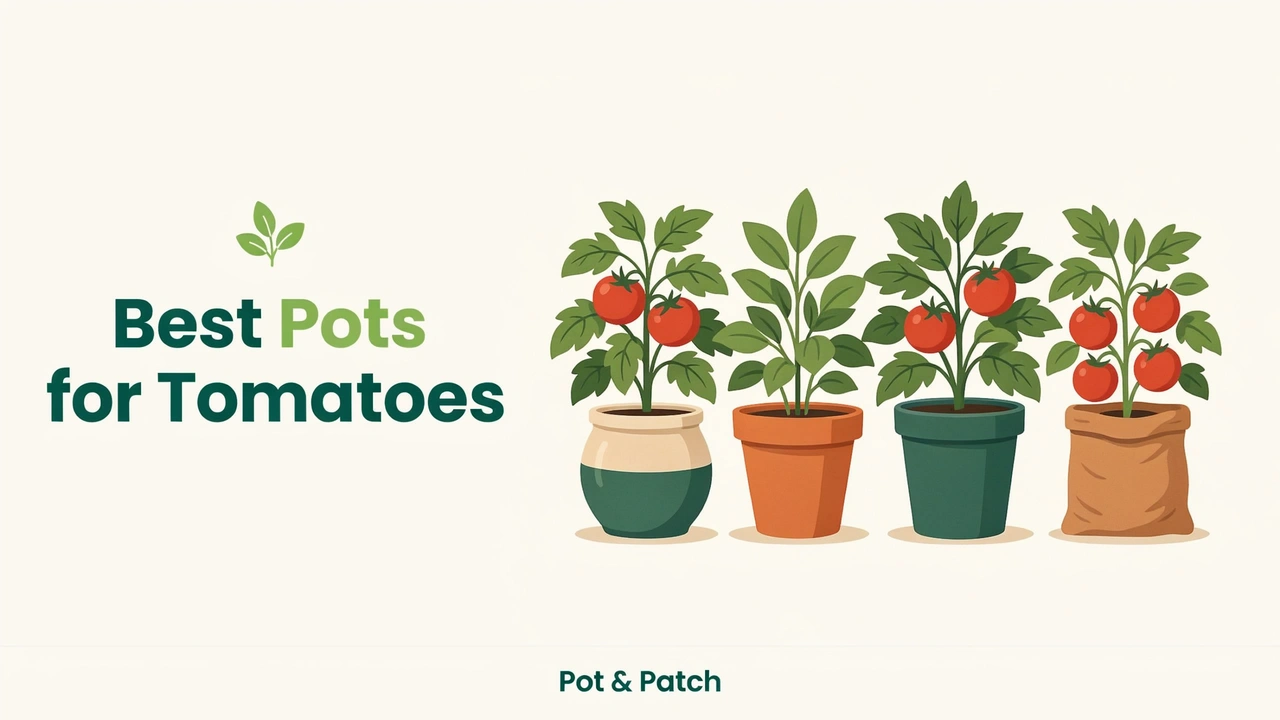
Every material has trade-offs. Containers are usually grouped by how much moisture passes through their walls: nonporous (plastic, metal, fiberglass, glazed ceramic), semi-porous (wood, pressed fibre), and porous (unglazed clay and terracotta). Porous and semi-porous pots breathe more, so they dry out faster and need watering more often.
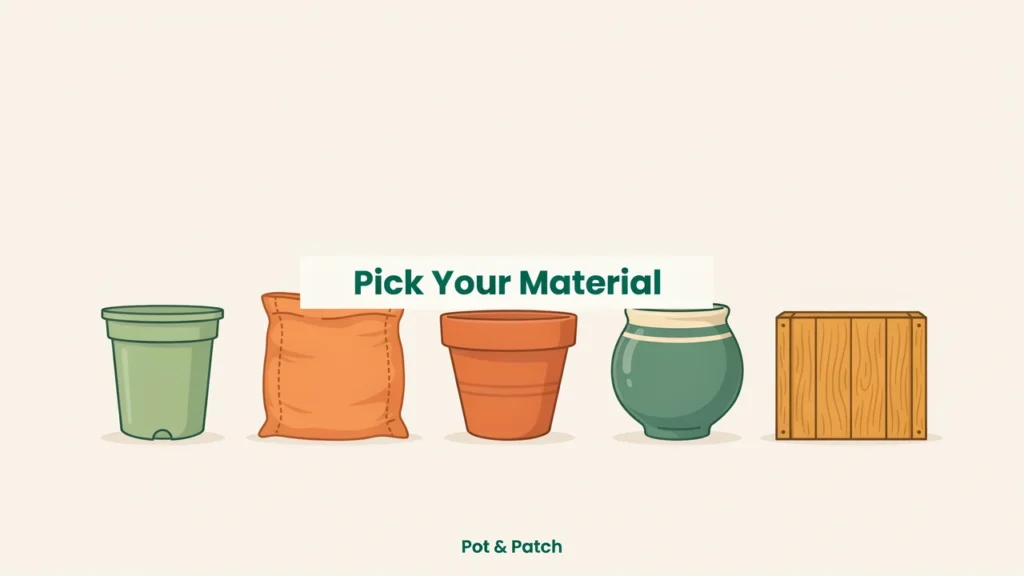
| Material | Strengths | Drawbacks |
|---|---|---|
| Plastic | Cheap, lightweight, holds moisture well, widely available | Dark colours overheat roots; cheap ones fade and crack in sunlight over time |
| Fabric grow bag | Breathable, air-prunes roots, drains well, light and foldable | Dries out faster, so needs more frequent watering |
| Terracotta / unglazed clay | Natural look, good air and water movement | Dries out fast, heavy, and can crack if left outside through winter freezes |
| Glazed ceramic | Attractive, holds moisture better than bare clay, sturdy | Heavy and pricier, can still crack in a hard freeze |
| Wood (cedar, redwood) | Insulates roots from heat and cold, sturdy, lasts about 10 years | Heavy and pricier; avoid pressure-treated wood, which can leach chemicals into the soil |
| Metal | Durable, retains moisture | Heats up fast in sun, which can cook roots |
For most growers, a light-coloured plastic pot or a fabric grow bag is the easiest, most forgiving choice.
Grow Bags vs Pots
Fabric grow bags have become a popular alternative to rigid pots, and for good reason.
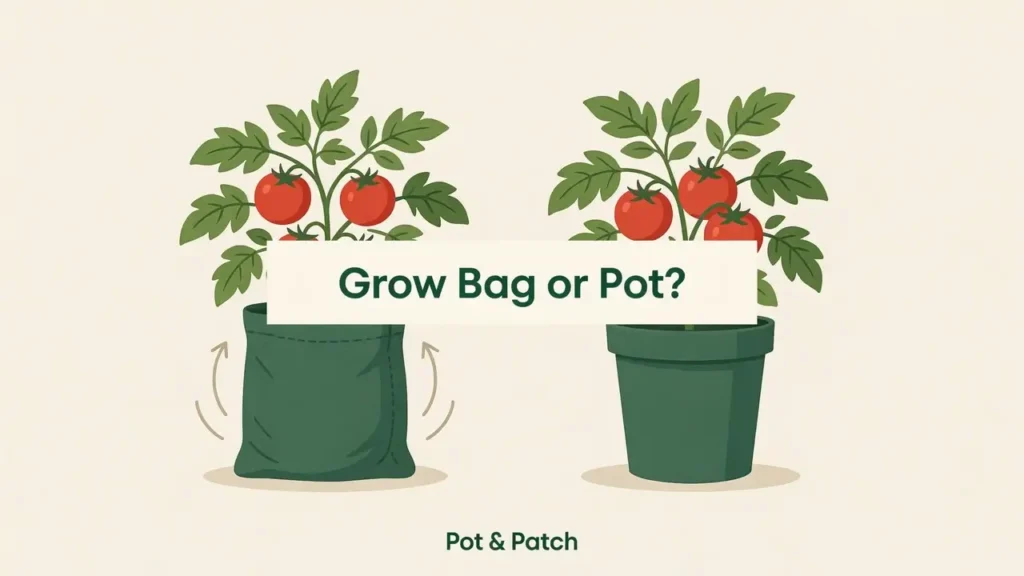
Because the fabric breathes, roots that reach the edge are naturally “air-pruned” instead of circling the pot, which encourages a denser, healthier root system. Grow bags also drain freely and are cheap, light, and easy to store flat over winter. Look for sturdy double-layer felt bags that last several seasons. The main trade-off is that they dry out faster than a solid pot, so you will water more often in hot weather.
Hard-sided pots hold moisture longer and give sturdier support for tall plants and stakes. If you tend to forget watering, a solid pot (or a self-watering one) is more forgiving. If you want the healthiest roots and easy storage, a grow bag is hard to beat.
Self-Watering Containers
A self-watering pot has a built-in reservoir in the base. The soil draws water up as it dries, keeping moisture steadier than hand-watering alone.
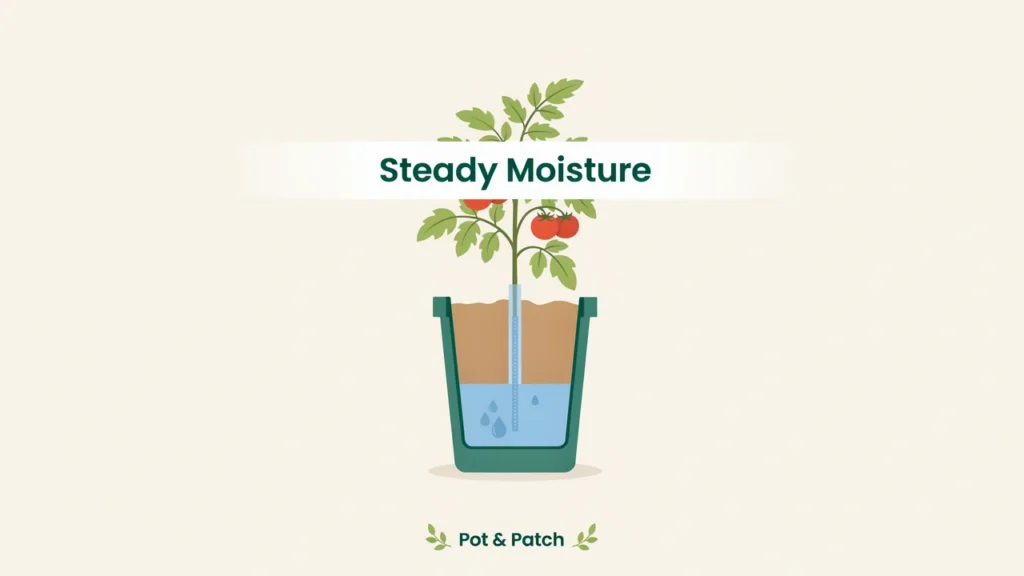
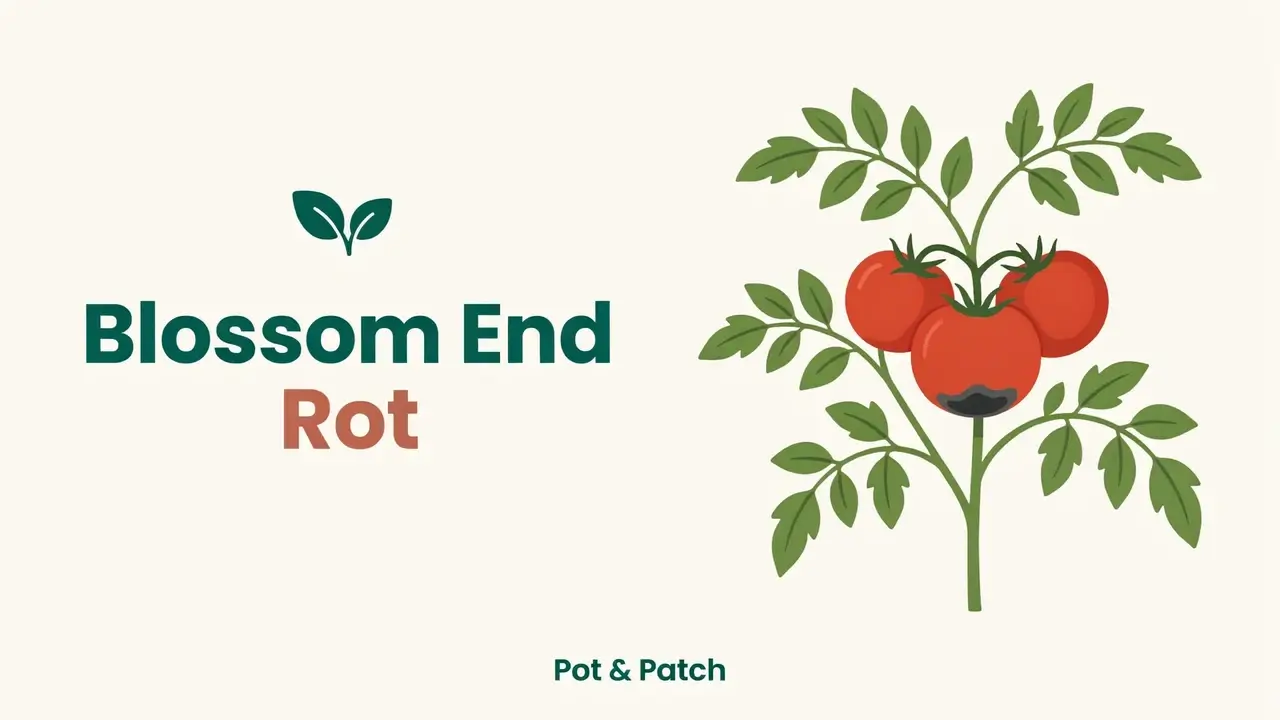
These are worth considering if you garden in a hot climate, travel, or simply forget to water. Tomatoes hate the feast-and-famine cycle that causes problems like blossom end rot, and a reservoir smooths that out. The downsides are a higher price and more weight once filled.
Drainage: The Feature You Cannot Skip
No matter the material, a tomato pot must drain. Roots left sitting in water quickly rot.
Keep these points in mind:
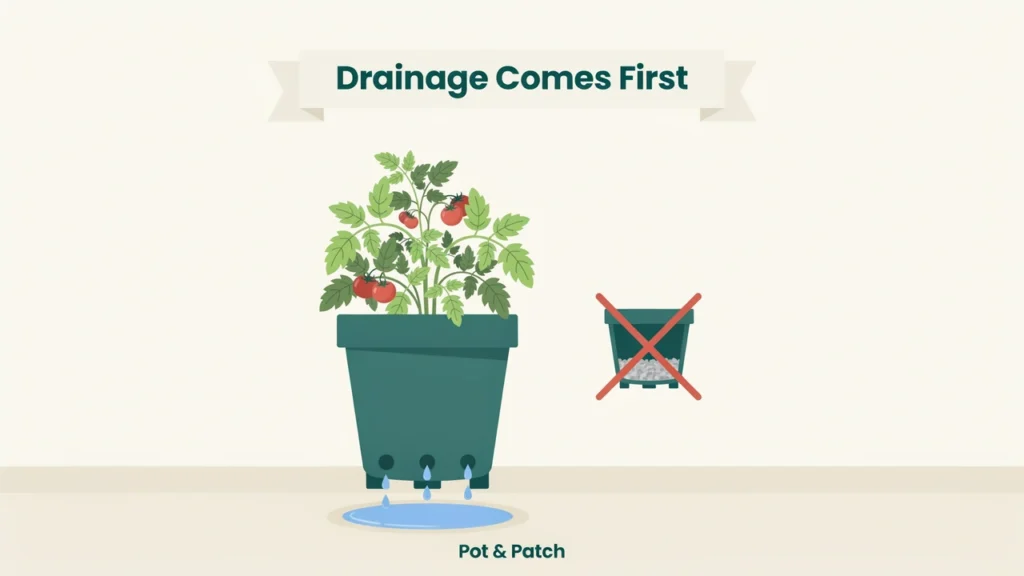
- Make sure there are several drainage holes, and drill more if a pot has too few.
- If a pot sits flat on a paved patio, add holes on the sides about 1/4 to 1/2 inch (0.5 to 1 cm) from the bottom so water can still escape.
- Raise pots on “pot feet” or a couple of bricks to help them drain and to stop water pooling underneath.
- Skip the old trick of putting gravel in the bottom. It does not improve drainage and actually leaves the soil just above it waterlogged.
If you have a decorative pot with no drainage holes, or you want to slow how fast a pot dries in the heat, try double-potting: sit a smaller pot that has holes inside the larger one. You keep the look without drowning the roots.
One practical note: drainage water can stain concrete and decking, so a saucer or tray is worth using on a nice surface, as long as you empty it after watering.
What Size Pot Do Tomatoes Need?
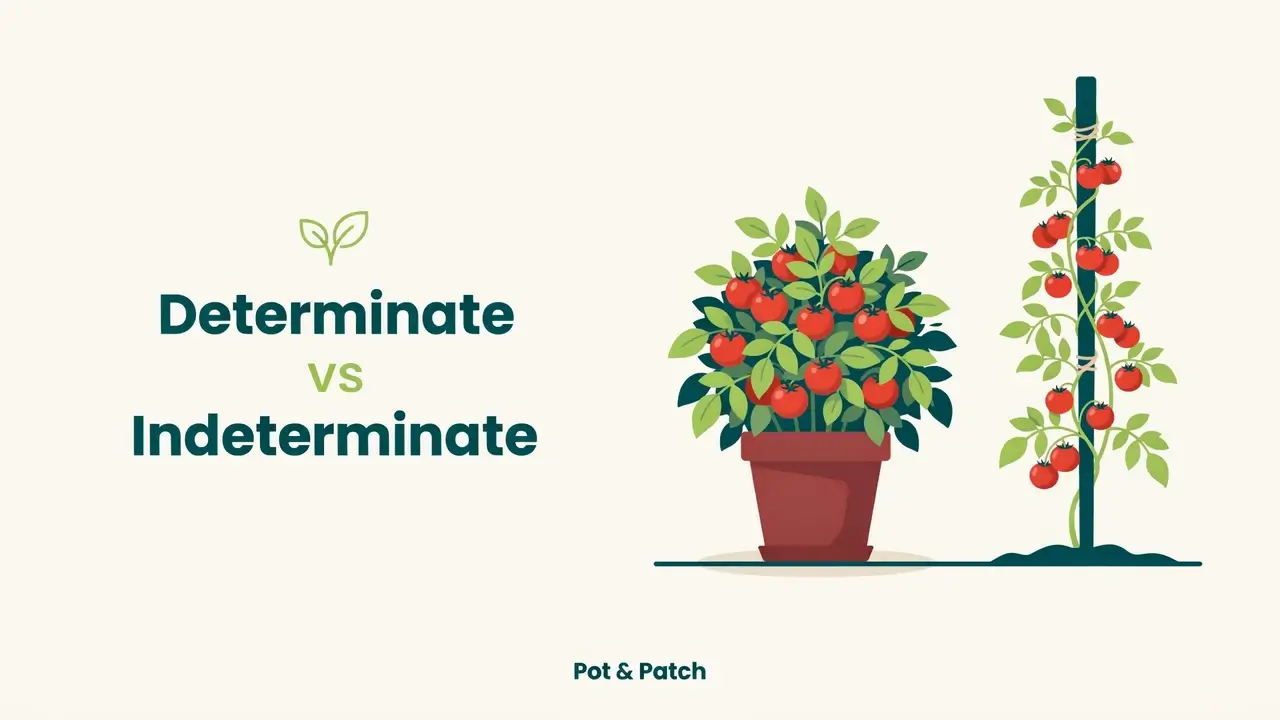
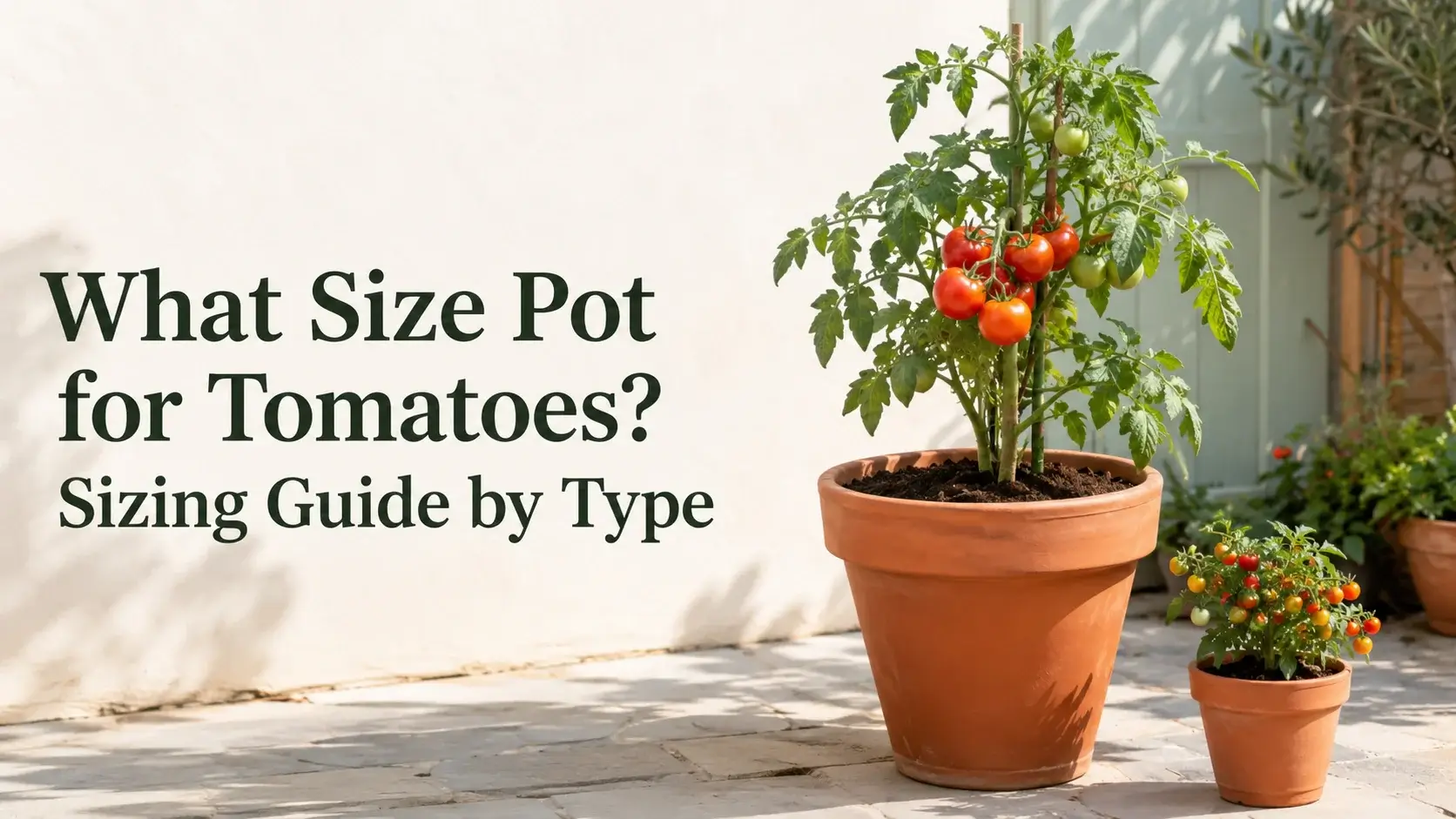
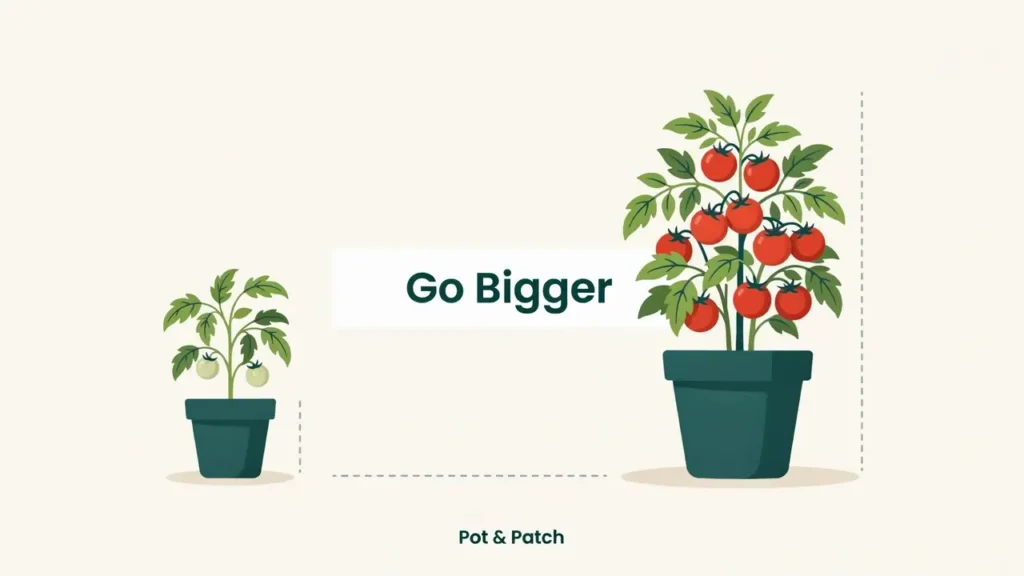
Size is where most people go wrong, so err large. As a guide, a determinate (bush) tomato needs at least a 5-gallon (19-litre) pot, while indeterminate (vining) types do far better in 10 to 20 gallons (38 to 76 litres). Aim for a depth of at least 12 inches (30 cm), and always grow one plant per pot.
For the full breakdown by variety, see our guide to the best container size for tomatoes. If you are deciding which type to grow, our guide to determinate vs indeterminate tomatoes explains why vining types need the bigger pots.
Best Pot for Your Situation
Here is a quick pick based on what matters most to you.
- Best all-round and beginner-friendly: a light-coloured plastic pot or a fabric grow bag, 10 gallons or more.
- Hot, dry climate: a light plastic or glazed pot, or a self-watering container. Avoid bare terracotta and dark metal, which dry and heat fast.
- Patio looks: glazed ceramic or a cedar planter, which also insulates roots.
- Tight budget: a 5-gallon bucket with holes drilled in the base, or inexpensive fabric grow bags.
- Need to move plants: fabric grow bags, or any large pot on a wheeled caster tray. A filled 20-inch (50 cm) pot can weigh close to 100 lbs (45 kg), so plan for it.
- Large indeterminate varieties: a 15 to 20 gallon (57 to 76 litre) fabric bag or tub.
Whatever you pick, fill it with a quality potting mix rather than garden soil, which compacts and drains poorly in a pot. Our guide to the best soil for container gardening covers the mix.
Common Pot Mistakes
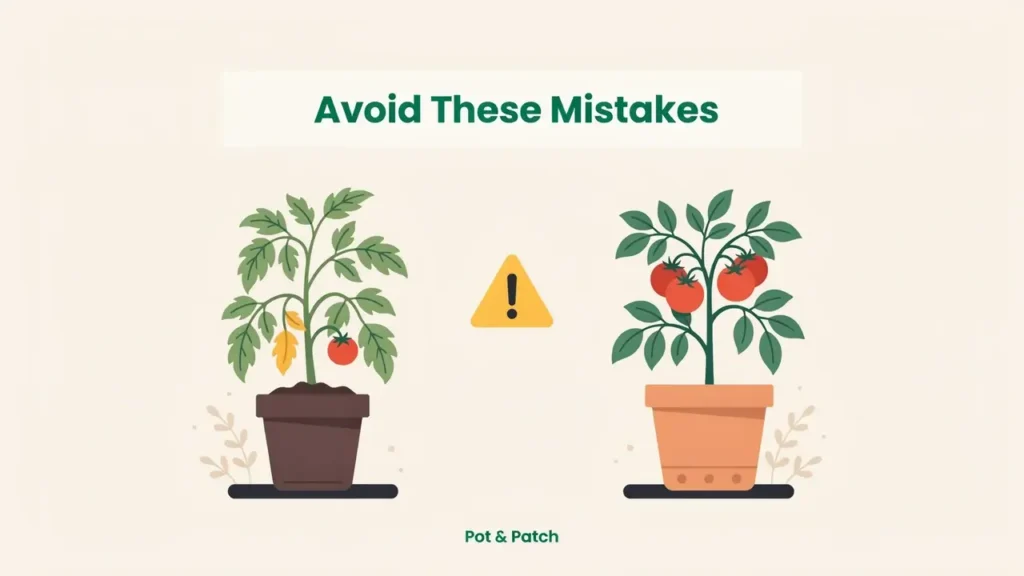
- Choosing a pot that is too small. This is the number one error. Cramped roots mean a stressed plant and a small harvest.
- No drainage holes. A pot without them drowns the roots. Drill your own if needed.
- A dark pot in full sun. Dark plastic and metal can overheat roots. Choose lighter colours or shade the pot.
- Bare terracotta in a hot, dry spot. It looks lovely but dries out fast, which means constant watering.
- Gravel in the base. It does not help drainage, so fill the whole pot with mix instead.
FAQ
What is the best material for tomato pots?
For most gardeners, light-coloured plastic or fabric grow bags work best. They are affordable, light, and manage moisture well. Glazed ceramic and cedar are good sturdier options.
Are grow bags or pots better for tomatoes?
Both work. Grow bags give healthier, air-pruned roots and store flat, but dry out faster. Solid pots hold moisture longer and support tall plants better.
Do tomatoes need a deep pot?
Yes. Aim for at least 12 inches (30 cm) of depth, and more for large vining types, since tomatoes grow extensive roots.
Can I use a 5-gallon bucket to grow tomatoes?
Yes, as long as you drill several drainage holes. A 5-gallon (19-litre) bucket is a good, cheap size for a bush variety.
Are terracotta pots good for tomatoes?
They can be, but they dry out quickly and can crack in frost. In a hot climate you will water them often, so a moisture-retaining material is usually easier.
Final Thoughts
The best pot for tomatoes is a large one with good drainage, in a material that suits your climate. Get the size and drainage right, and almost any pot will grow a healthy plant.
If you are unsure, start with a 10-gallon light-coloured plastic pot or fabric grow bag. It is cheap, forgiving, and will carry a tomato happily from seedling to harvest.