Growing Tomatoes in Containers: Beginner Guide from Plant to Harvest
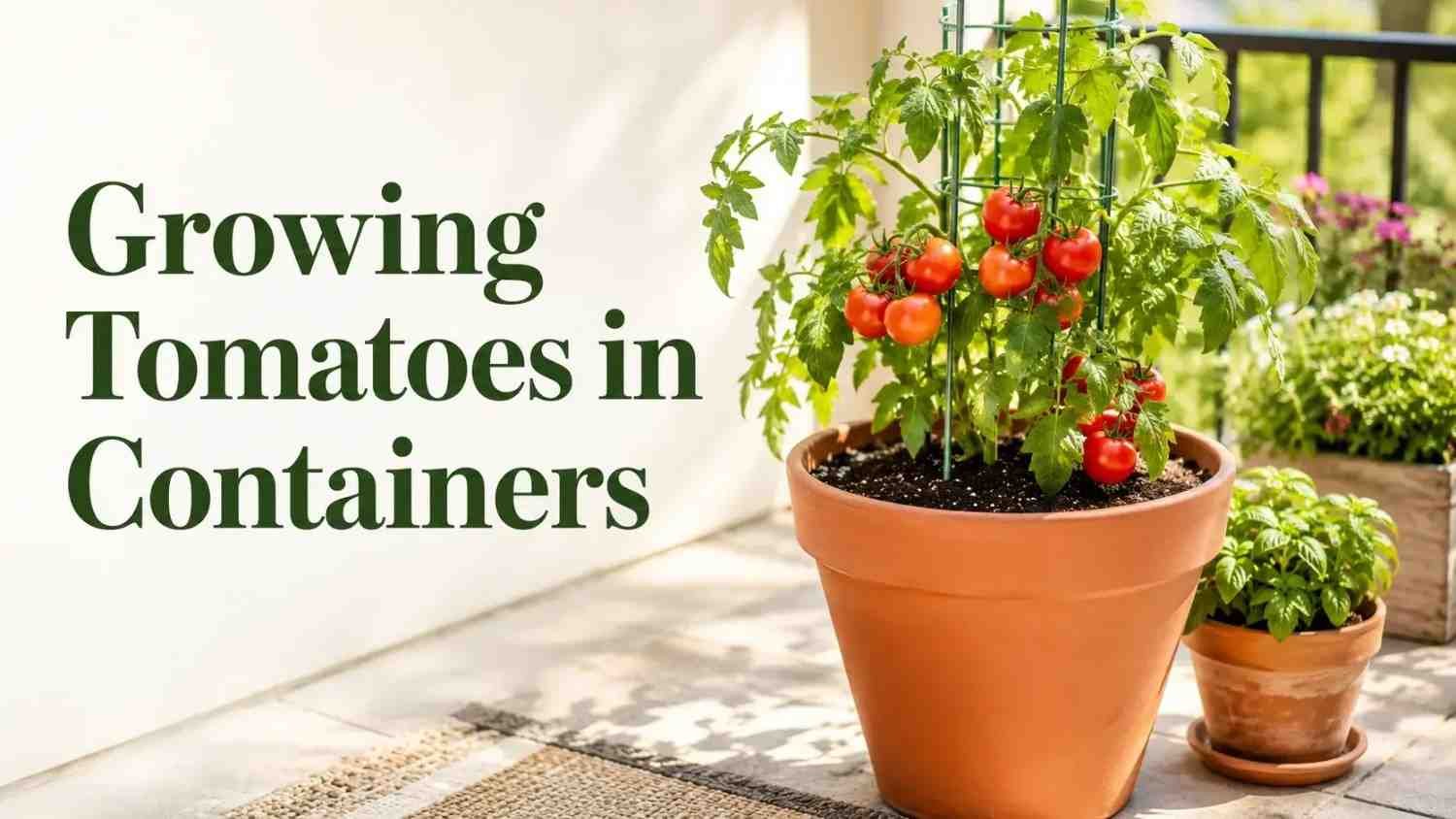
Growing tomatoes in containers makes it possible to harvest fresh tomatoes even when you do not have an in-ground garden. A sunny patio, balcony, courtyard, or small outdoor space can provide enough room for a productive plant.
Success mostly comes down to a few basics: give the roots enough space, use a well-draining potting mix, provide plenty of sunlight, water consistently, and support the plant as it grows. Container tomatoes also need closer attention than plants in the ground because pots can dry out and lose nutrients faster.
This guide covers the process from choosing a plant and pot to planting, feeding, supporting, troubleshooting, and harvesting.
What You Need for Growing Tomatoes in Containers
You do not need a complicated setup. Start with the essentials and get each one right before planting.
| What you need | What to look for |
|---|---|
| Tomato plant | A growth habit suited to your available space |
| Container | Large enough for the plant, with drainage |
| Growing medium | Quality potting mix or potting compost |
| Location | Warm and sunny, preferably protected from strong wind |
| Support | Stake, cage, or trellis when needed |
| Water | Easy access for regular watering |
| Fertilizer | A product suitable for container vegetables or tomatoes |
Tomatoes are particularly useful in container gardening because pots can be positioned wherever the best sunlight is available. Iowa State University Extension specifically recommends container growing for people with limited garden space or a sunny patio but no suitable planting ground.
Choose a Tomato Plant That Fits Your Container
Almost any tomato can potentially grow in a container, but the plant’s growth habit affects how much room and support it will need.
Iowa State notes that determinate and dwarf tomatoes are often easier in containers because they are less likely to outgrow their space.
Determinate or bush tomatoes
Determinate tomatoes grow to a more limited size and produce much of their crop over a relatively concentrated period.
Their compact habit usually makes them easier to manage on a patio or balcony. Bush plants may need less training than tall vine types, although a stake or cage can still help once branches become heavy with fruit.
Indeterminate or cordon tomatoes
Indeterminate tomatoes continue producing new stem growth during the growing season.
They can grow successfully in pots, but they need more room and stronger support. A tall stake, cage, string, or trellis helps keep the plant upright.
These taller tomatoes are also commonly described as cordon tomatoes when trained vertically. RHS guidance recommends sturdy support when growing cordon types in large pots.
Dwarf and compact tomatoes
Dwarf and patio cultivars are especially useful where floor space is limited.
They can provide the familiar tomato-growing experience without the sprawling growth of a large vine. Check the plant label for mature size rather than assuming every tomato variety will stay compact.
If you are planning several crops in a small area, our guide to the best container vegetables can help you choose plants that work well in limited space.
Choose the Right Pot or Container
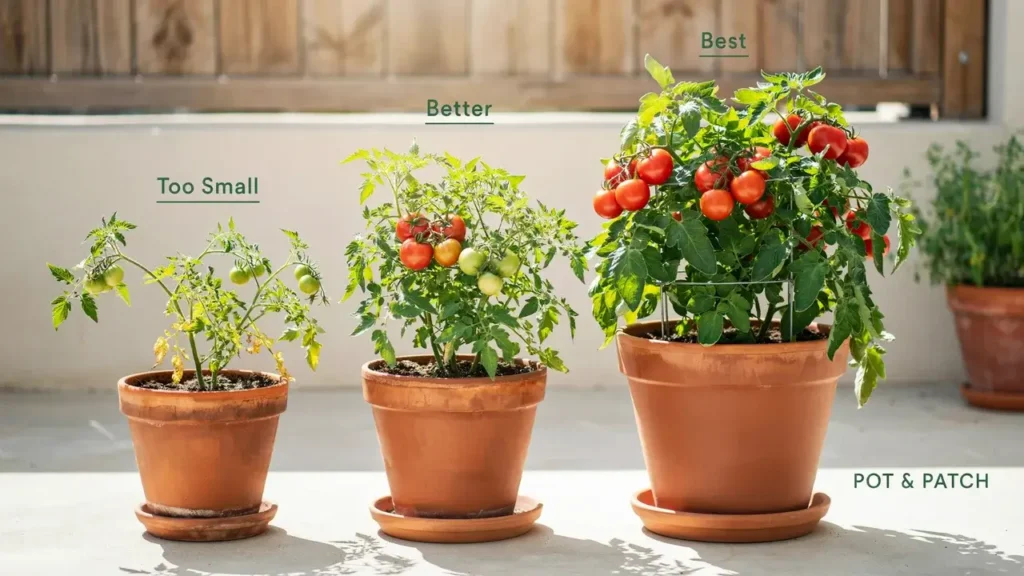
Tomatoes need more root space than many herbs and leafy vegetables. A container that is too small dries rapidly and can restrict plant growth.
There is no single pot size that fits every tomato.
Iowa State suggests at least about 2 gallons for cherry tomatoes and 4 gallons for standard tomatoes, while other horticultural guidance often recommends larger containers for easier moisture management. Gardening Australia advises roughly 20 to 25 litres of volume, while RHS recommends one tomato plant in a 30 to 45 cm pot. These differences reflect cultivar size, climate, and growing method.
The practical lesson is simple: larger containers usually give roots more room and make moisture easier to manage.
Drainage is essential
Whatever material you choose, excess water needs somewhere to escape.
A tomato pot should have effective drainage holes. Poor drainage can leave the root zone saturated and short of oxygen.
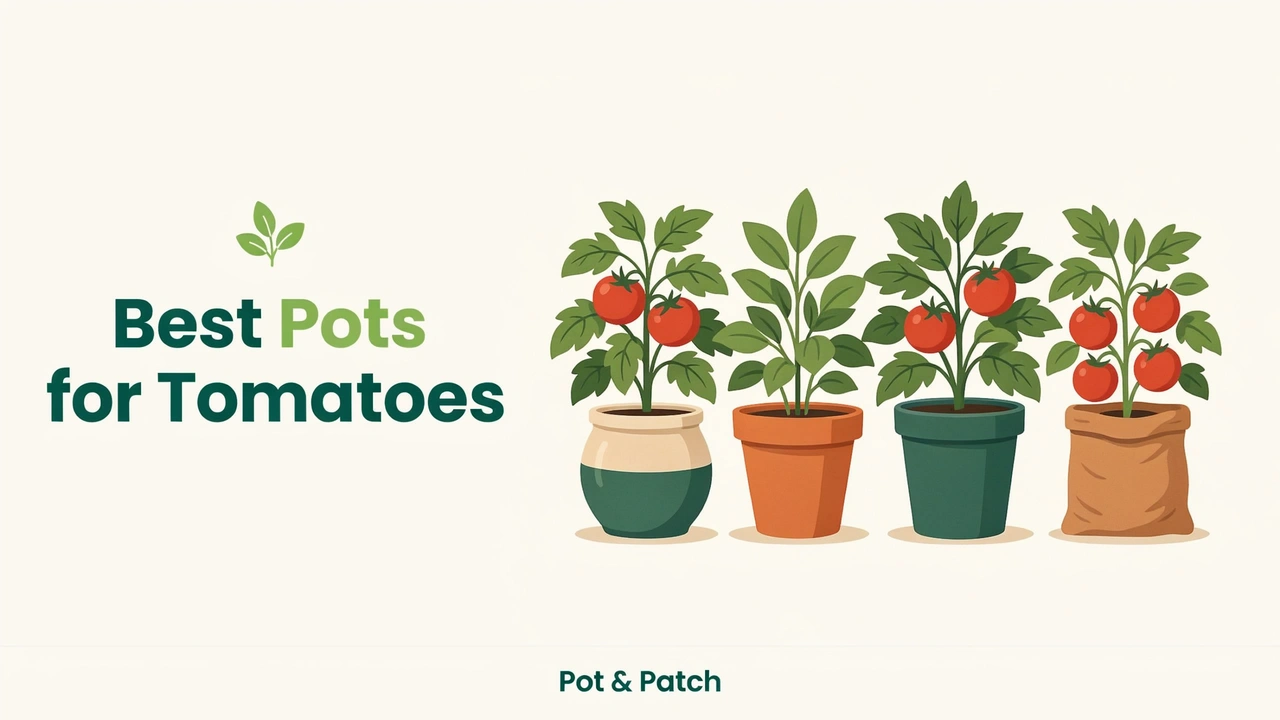
Plastic pots, fabric grow bags, wooden planters, nursery pots, and other containers can all work when they provide enough volume and drainage.
How many tomato plants should go in one pot?
For a typical individual tomato pot, one plant is the easiest arrangement to manage.
RHS recommends one tomato plant in a 30 to 45 cm pot, while standard grow bags can accommodate more than one plant because they provide a different growing volume and shape.
Crowding several full-size tomato plants into a modest pot increases competition for water, nutrients, root space, and light.
Use the Right Soil for Container Tomatoes
Garden soil is rarely the best material for filling a tomato pot.
In containers, the growing medium has to balance two jobs. It must drain excess water while still holding enough moisture for the roots between waterings.
Iowa State recommends a quality soilless potting mix because these mixes are less likely to compact and can retain moisture and nutrients while remaining relatively lightweight.
Depending on where you shop, the growing medium may be labelled as potting mix, potting soil, multipurpose compost, or peat-free compost.
RHS recommends peat-free loam-based or multipurpose compost for tomatoes in pots and grow bags.
A good mix should provide:
- reliable drainage
- enough moisture retention
- air around the roots
- a loose structure that resists compaction
- nutrients appropriate for container plants
Avoid pressing the mix down heavily when filling the pot. Roots need both moisture and oxygen.
How to Plant Tomatoes in Containers Step by Step
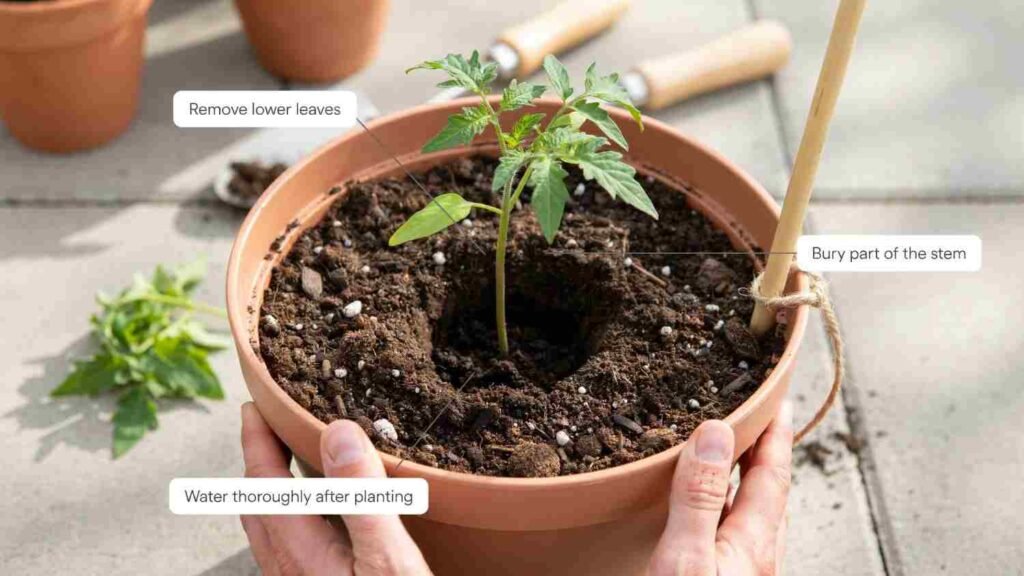
Planting tomatoes in containers correctly gives the root system a stronger start and makes later care easier.
- Choose the final location first. A large pot filled with damp growing medium becomes difficult to move.
- Check the drainage holes. Make sure excess water can leave the container freely.
- Add quality potting mix. Fill enough of the pot to position the tomato at the correct depth.
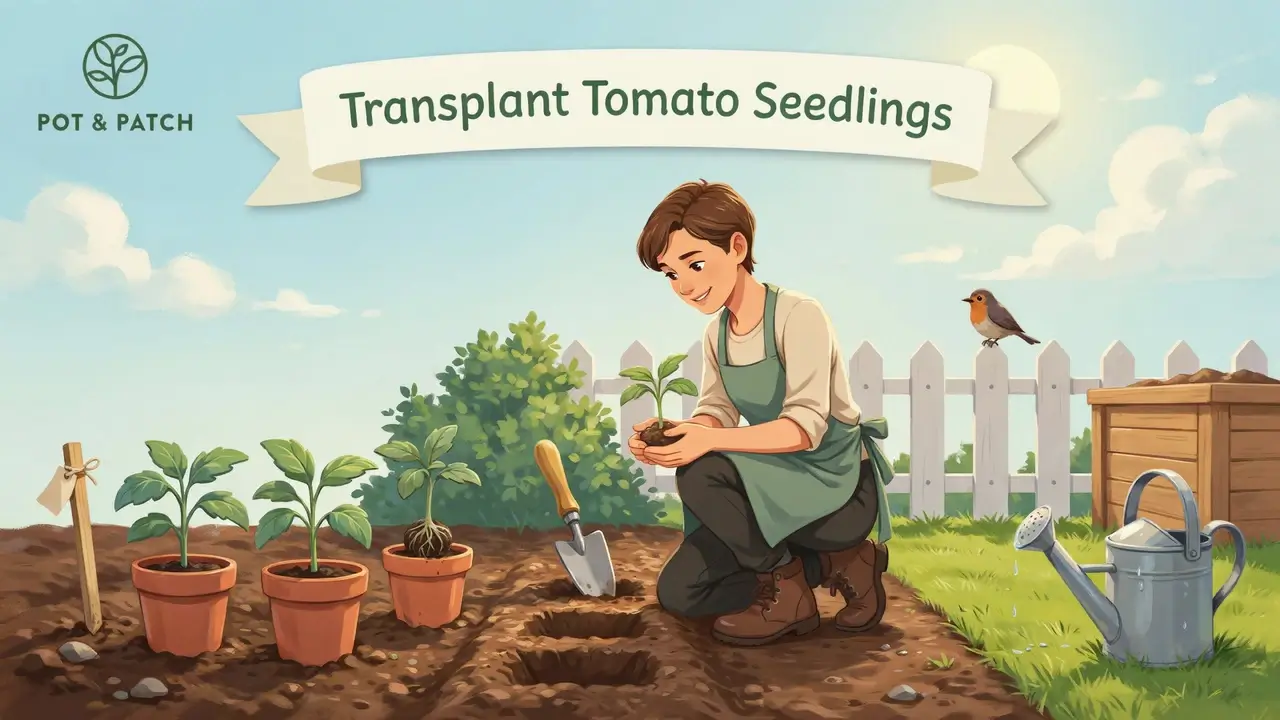
- Remove the seedling carefully. Support the root ball rather than pulling on the stem.
- Remove a few lower leaves if needed. This allows part of the stem to be planted below the original soil level.
- Plant the tomato deeply. Set the plant so a section of stem is covered.
- Fill around the root ball. Firm the mix lightly without packing it hard.
- Add support early. Installing a stake or cage now reduces the chance of damaging established roots later.
- Water thoroughly. Apply enough water to moisten the root zone and allow excess water to drain.
Tomatoes can develop additional roots along buried portions of their stems. RHS recommends deeper planting for suitable tomato transplants. Grafted tomatoes are an exception because the graft union should remain above the soil.
When can tomato pots go outside?
Tomatoes are warm-season plants and are vulnerable to frost.
The correct planting date depends on local conditions, so a fixed calendar date would be misleading.
Plants raised indoors should be gradually hardened off before they remain outside permanently. Wait until frost risk has passed and conditions are reliably warm enough for active growth.
RHS uses about 16°C (60°F) as a useful guide for moving tomatoes to their final growing position.
How Much Sun Do Tomatoes in Pots Need?
Tomatoes grown for fruit need a sunny location.
Iowa State recommends at least six hours of direct sunlight per day, while other extension guidance commonly places fruiting vegetables such as tomatoes in the six to eight hour range.
A patio against a sunny wall, an open balcony, or another bright outdoor area may work well.
Look beyond sunlight alone. Strong wind can dry containers quickly and make tall plants unstable. RHS recommends a warm, sunny, sheltered position for outdoor tomatoes, particularly tall cordon types grown in pots.
If your small space has changing sun throughout the day, watch it for several days before deciding where the tomato should stay.
How to Water Tomatoes in Pots Without Overdoing It
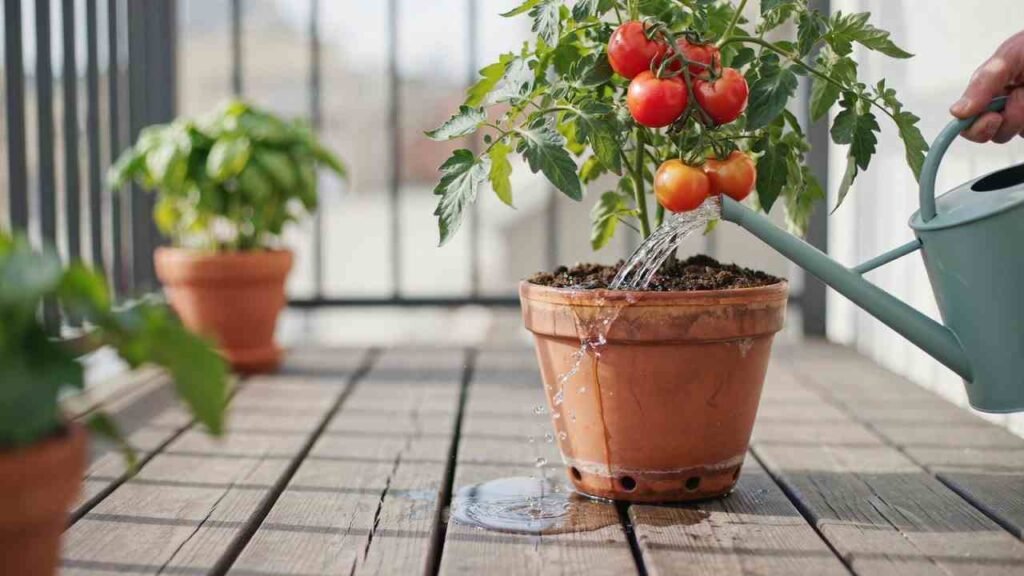
Watering is one of the most important parts of growing tomatoes in containers because a pot contains much less growing medium than a garden bed.
There is no accurate universal schedule such as “water every morning.”
A plant in a small dark pot on a hot, windy patio can use water much faster than the same variety in a large container during mild weather.
Watering frequency changes with:
- temperature
- wind
- rainfall
- sunlight
- container size
- container material
- plant size
- the growing medium
Container tomatoes may need daily watering during hot or drying conditions, but the goal is consistent moisture rather than following a fixed daily rule.
Iowa State advises watering thoroughly and allowing excess water to drain while avoiding both complete drying and prolonged saturation.
Check the pot before watering
Pay attention to the growing medium rather than only the plant’s leaves.
Wilting can indicate dry roots, but heat stress and root problems can also cause a plant to droop. Checking moisture in the pot helps you decide whether more water is actually needed.
As the plant gets larger and begins carrying fruit, its water demand can rise significantly.
Water deeply enough
A small splash across the surface may leave much of the root zone dry.
Apply water thoroughly so moisture reaches deeper roots, then allow extra water to leave through the drainage holes.
Try to water the growing medium rather than repeatedly soaking the foliage. Keeping leaves dry can help reduce conditions that favour several foliar diseases.
Avoid repeated wet and dry extremes
Big swings in water availability are particularly troublesome for fruiting tomatoes.
Inconsistent moisture is associated with fruit cracking and can contribute to blossom end rot. Maintaining a steadier root environment is more useful than trying to compensate for a very dry pot with irregular heavy watering.
A mulch layer can also help reduce moisture loss from the surface and moderate root-zone temperature during hot conditions.
Feeding and Fertilizing Container Tomatoes
Tomatoes growing in pots have access to a limited reserve of nutrients.
Regular watering can also carry nutrients out through drainage holes. Fertilizer requirements vary with the crop, pot size, watering frequency, growing medium, and product formulation.
Check the potting mix first
Some commercial potting mixes already contain starter fertilizer or slow-release nutrients.
Read the label before adding more. Applying fertilizer simply because the plant is in a pot can result in unnecessary feeding.
Feed according to plant stage and product directions
RHS advises regular feeding for container tomatoes and recommends a high-potassium tomato fertilizer as fruit develops.
Because liquid feeds and slow-release fertilizers have different concentrations, there is no sensible single dose that applies to every product.
Follow the manufacturer’s instructions and adjust your routine to the growing medium and plant response.
More fertilizer is not automatically better. Excessive nutrient applications can produce unbalanced growth and may damage roots if salts accumulate in the container.
Stake or Support Tomato Plants Early
A tomato laden with fruit can become surprisingly heavy.
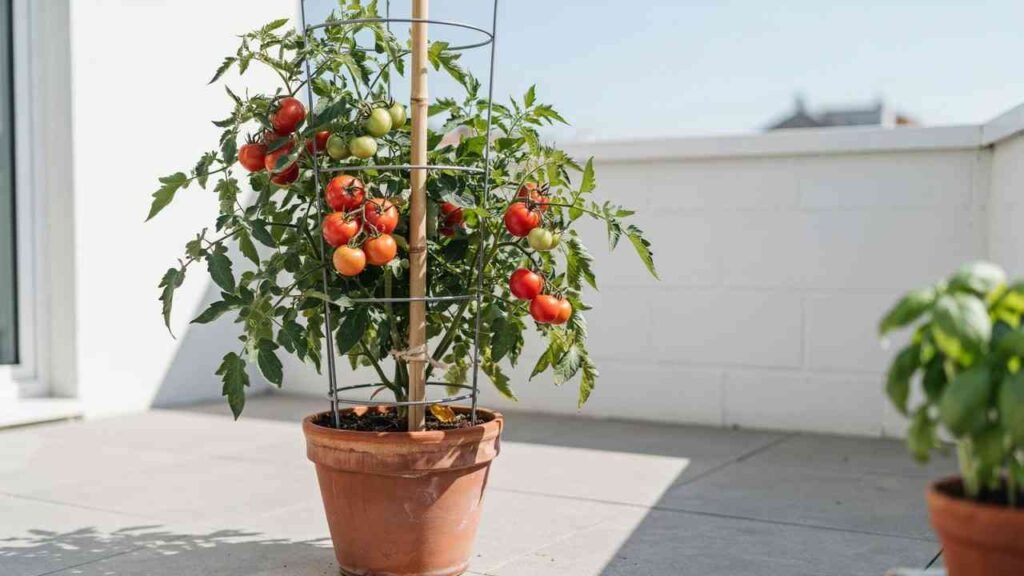
Support is easiest to install while the plant is young. Waiting until stems are sprawling makes it harder to add a cage or stake without damaging branches or roots.
Common options include:
- a single sturdy stake
- tomato cage
- vertical trellis
- bamboo canes
- vertical string in a protected growing area
Indeterminate or cordon tomatoes normally need stronger support because they continue growing upward.
Determinate and bush tomatoes are more compact, but fruit weight can still pull stems outward. Gardening Australia notes that even largely self-supporting shrub tomatoes can benefit from simple support once fruit develops.
Tie stems loosely rather than fastening them tightly against a stake. Allow room for the stem to thicken.
Should You Prune Tomatoes Growing in Containers?
Pruning should depend on the type of tomato rather than the fact that it is growing in a pot.
Bush or determinate tomatoes
Bush tomatoes generally need much less training.
Heavy pruning can remove productive growth unnecessarily. RHS guidance allows bush tomatoes to remain largely unpruned.
Remove damaged or clearly diseased material when necessary, but do not automatically strip every side shoot from a bush variety.
Cordon or indeterminate tomatoes
Cordon tomatoes are commonly trained vertically.
Side shoots that develop between the main stem and leaves may be removed as part of a single-stem training system. The main stem is then tied to its support as it grows.
This keeps a tall plant manageable in a restricted space.
The important point is that removing every sucker is not a universal tomato rule. Match pruning to the cultivar and training method.
Adjust Container Tomato Care to the Weather
The same tomato can behave very differently under hot, cool, dry, or windy conditions.
Container care should respond to the growing environment.
| Growing condition | What needs extra attention |
|---|---|
| Hot, dry weather | Moisture loss and root-zone heat |
| Mild conditions | Sun exposure and steady watering |
| Cool conditions | Warmth, frost protection, and planting timing |
| Windy balcony | Faster drying and secure plant support |
| Sheltered courtyard | Air movement and available direct sun |
During hot weather, check container moisture more often. A large plant can draw water from a pot surprisingly quickly.
In cooler conditions, wait until outdoor temperatures are suitable instead of planting according to a generic date.
Where wind is persistent, position tall pots in a more protected location and make sure the container itself is stable.
Common Problems When Growing Tomatoes in Containers
Container tomatoes make root conditions easier to control, but they can still develop physiological problems, pests, and diseases.
Start troubleshooting with the growing environment before reaching for a treatment.
| Symptom | Possible causes | What to check first |
|---|---|---|
| Wilting | Dry mix, heat stress, root damage, excess water | Moisture and drainage |
| Yellow leaves | Water stress, nutrition, natural ageing, pests, or disease | Moisture, leaf pattern, feeding |
| Cracked fruit | Fluctuating moisture | Watering consistency |
| Dark patch on fruit base | Blossom end rot | Moisture consistency and root conditions |
| Few flowers | Low light, temperature stress, plant stress, nutrition | Sun, weather, feeding |
| Flowers dropping | Heat, cold, or water stress | Recent growing conditions |
| Weak growth | Restricted roots, poor medium, low light, nutrition | Pot, roots, soil, sunlight |
Blossom end rot
A dark, sunken area at the blossom end of a tomato is usually a physiological disorder rather than an infectious disease.
It involves inadequate calcium reaching developing fruit, but that does not necessarily mean the potting mix lacks calcium.
RHS notes that soil and potting media usually contain sufficient calcium. Problems commonly arise when poor or irregular water movement prevents enough calcium from reaching the developing fruit.
For container gardeners, improving moisture consistency is often more relevant than automatically adding a calcium supplement.
Yellow leaves
Yellow leaves are a symptom, not a diagnosis.
A plant may yellow because of watering problems, nutrient issues, natural ageing, root stress, disease, or pests.
Avoid treating the plant until you have looked at where the yellowing begins, how quickly it spreads, and what the growing medium feels like.
Fruit cracking
Sudden changes in water availability can cause expanding tomato fruit to split.
Keeping the root zone more consistently moist reduces these sharp fluctuations.
Growing Tomatoes on a Patio or Balcony
Patios and balconies are natural places for tomato containers because they can provide strong sunlight without requiring an in-ground bed.
Before filling the pot, think about practical details that become harder to change later.
Consider:
- where direct sunlight falls
- whether strong wind reaches the plant
- how you will carry water to the pot
- where drainage water will go
- how heavy the filled container will become
- where a cage, stake, or trellis can fit
- whether the mature plant will block a walkway
A compact tomato can fit into surprisingly little floor space, while a taller variety can use vertical space with proper support.
If you are building a productive small-space setup rather than growing just one plant, these balcony vegetable garden ideas can help you plan the surrounding space.
Beginners who are still deciding where vegetables should go can also use our guide on how to start a small vegetable garden.
When and How to Harvest Container Tomatoes
Harvest timing depends on the cultivar rather than whether the plant is in a pot.
Look for the mature colour expected from your variety. Ripe tomatoes are not always red. Different cultivars may ripen to yellow, orange, pink, purple, green, or other colours.
A ripe fruit usually develops its characteristic mature colour and feels slightly softer than an unripe, hard tomato.
Pick carefully so you do not pull or snap nearby stems. Regular harvesting also makes it easier to notice new fruit, pests, damaged leaves, and changing water needs.
Simple Tips for Better Container-Grown Tomatoes
A few habits make tomato plants in pots much easier to manage:
- Use enough root space. Larger pots are generally more forgiving than undersized containers.
- Never ignore drainage. Roots need air as well as water.
- Choose the location before filling the pot. Large planted containers become heavy.
- Use proper potting mix. Do not fill the pot with dense garden soil.
- Install support early. It is easier before the root system fills the container.
- Check moisture frequently. Adjust watering to weather rather than a rigid schedule.
- Match pruning to tomato type. Bush and cordon plants are managed differently.
- Watch plants closely during heat and wind. Pots can dry much faster than garden soil.
- Feed according to the growing medium and fertilizer label.
- Harvest regularly once fruit reaches its mature stage.
These fundamentals matter more than complicated tricks.
Frequently Asked Questions
Can tomatoes grow well in containers?
Yes. Tomatoes are well suited to containers when they have adequate root space, drainage, sunlight, water, nutrients, and support. Dwarf and determinate cultivars are often easier to manage, although larger indeterminate tomatoes can also be grown in sufficiently large containers.
How often should I water tomatoes in pots?
There is no fixed interval that works everywhere. Hot weather, wind, a mature plant, or a smaller pot can increase watering needs considerably. Check the growing medium regularly and water thoroughly when needed rather than following a calendar alone. Some container tomatoes may need daily watering during demanding conditions.
Can I grow two tomato plants in one pot?
It depends on the container’s size and design, but one plant per conventional individual pot is easier to manage. RHS recommends one tomato in a 30 to 45 cm pot. Large troughs and grow bags can accommodate plants differently.
Do tomatoes in containers need full sun?
Tomatoes need strong light for productive growth. Aim for at least six hours of direct sunlight, with six to eight hours being a useful target where conditions allow.
Can indeterminate tomatoes grow in containers?
Yes. They usually need a larger container and strong vertical support because they continue growing during the season. Smaller determinate or dwarf varieties are often easier for beginners with limited space.
Do potted tomato plants need cages or stakes?
Tall tomatoes generally need support. Compact bush varieties may remain more self-supporting, although branches can still bend once loaded with fruit. Installing a stake or cage early is usually easier than adding one to a mature plant.
Can tomatoes grow in pots outdoors?
Yes. Containers can be used outdoors on patios, balconies, courtyards, and other sunny spaces. Tomatoes are frost-sensitive, so wait for suitably warm conditions before leaving young plants outside permanently.
Grow More Tomatoes in the Space You Have
Growing tomatoes in containers does not require a large garden, but the plant still needs the basics it would depend on in the ground. Give it enough root space, effective drainage, quality potting mix, strong sunlight, steady moisture, suitable feeding, and support as it develops.
Pay particular attention to watering because container conditions can change quickly with heat and wind. Once those fundamentals are in place, a single sunny pot can become one of the most productive parts of a patio, balcony, or small-space vegetable garden.